
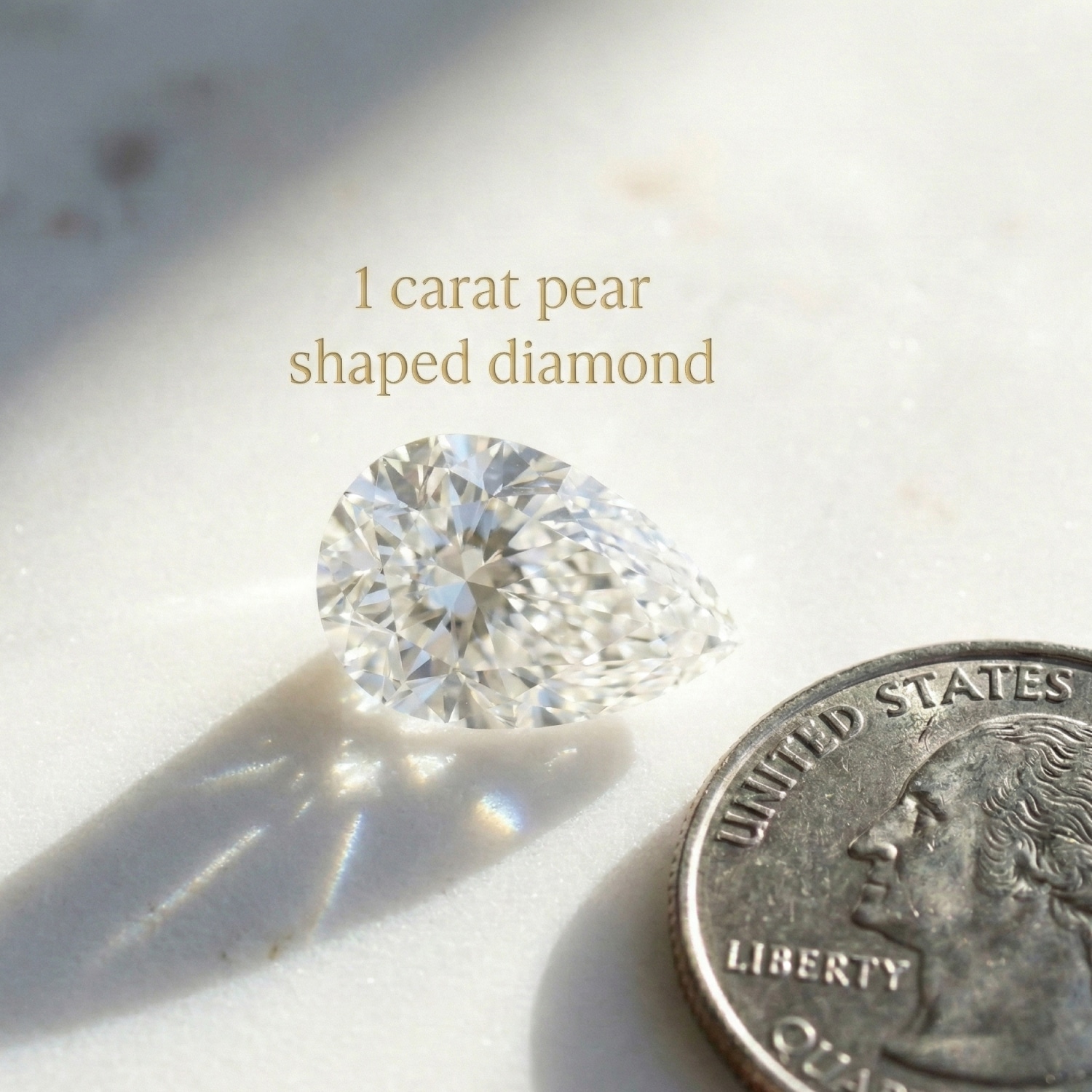
TL;DR: The “Teardrop” Cheat Sheet
- The Bottom Line (Feb 2026 Prices): * Natural 1ct Pear: $4,070 (Good Value) to $7,600+ (Overpriced).
- Lab 1ct Pear: $1,070 – $1,260 (IGI Ideal).
- Lab 1ct Pear: $1,070 – $1,260 (IGI Ideal).
- The Golden Ratio: For that perfect teardrop shape, stick to a Length-to-Width (L/W) Ratio of 1.45 to 1.55. Anything under 1.40 looks “chubby”; anything over 1.60 looks “skinny” and may be more fragile.
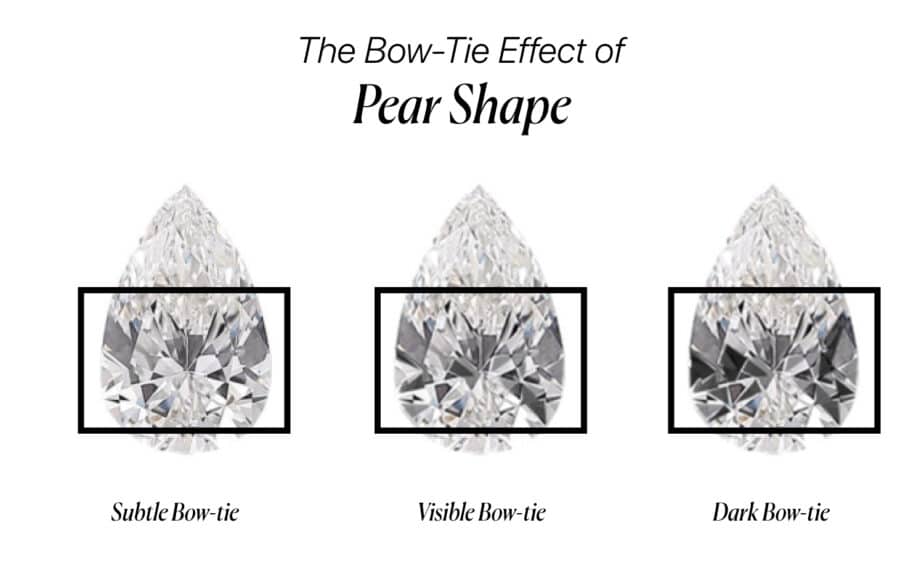
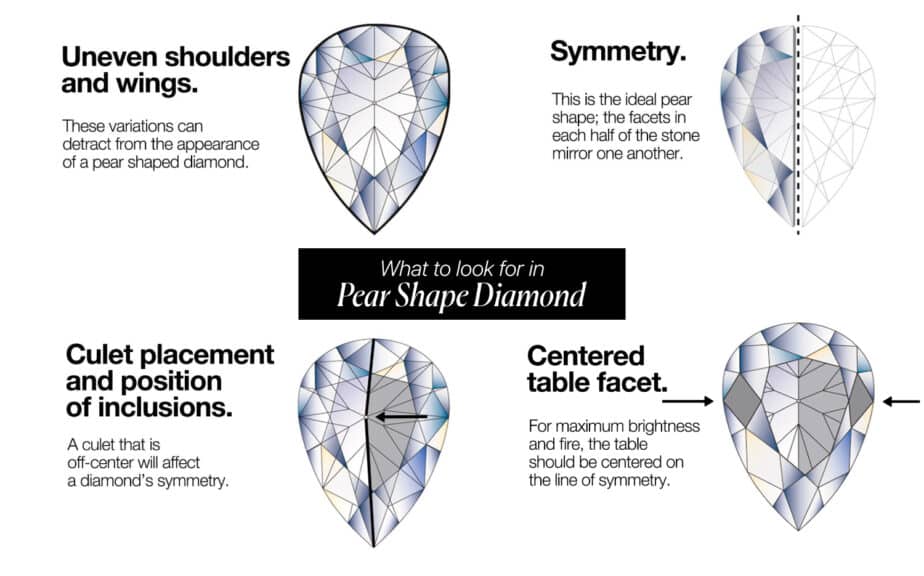
- The “Secret” Defect: Watch out for the “Bow-Tie” Effect (a black shadow across the center). It is not listed on any certificate, but it effectively kills the diamond’s sparkle.
- Mehedi’s Advice: A 1 Carat G-VS1 Natural Pear at ~$4,500 is the technical sweet spot. If you want a flawless look without the natural price tag, a 1 Carat Lab D-VVS1 at $1,250 is the ultimate hack.
Natural Sweet Spot: Access GIA-certified 1-Carat Pears in the Clear The Vault Sale. Audit for the “Golden Ratio” and “Astor Ideal” fire to find the top 1% of market value at Blue Nile.
Lab Value Hack: Secure an IGI D-VVS1 “Icy White” teardrop for under $1,300. Use 40x Super-Zoom HD to verify minimal bow-ties and perfect symmetry at James Allen.
Start your search with our Pear Shaped Diamond Ring style guide.
Buying a Round Brilliant diamond is relatively straightforward; the GIA report literally tells you the “Cut Score” (Excellent, Very Good, etc.). Buying a Pear shape? That is professional gambling.
The GIA does not grade the Cut Quality of Fancy Shapes. This means a retailer can slap an “Ideal” or “Premium” label on a stone that is cut like a potato, and there is no official lab score to contradict them.
Mehedi’s Reality Check: “I have our live February 2026 inventory data in front of me right now. I am looking at two GIA 1.00 Carat F-VS1 diamonds. One is priced at $4,070. The other is $7,240. That is a $3,170 difference for the exact same grades on paper.
Today, I’m going to show you exactly why that happens and the 5 specific mistakes that cause people to overpay for a stone that might actually be ‘dead’ in the center.”
In this report, we will analyze the latest Natural vs. Lab data to ensure you don’t fall for the marketing traps that plague the fancy-cut market.
Understand the technicalities in our Diamond Shapes Guide (and why fancy cuts are usually cheaper than rounds).
Diamond IQ Test: Natural or Lab-Grown?
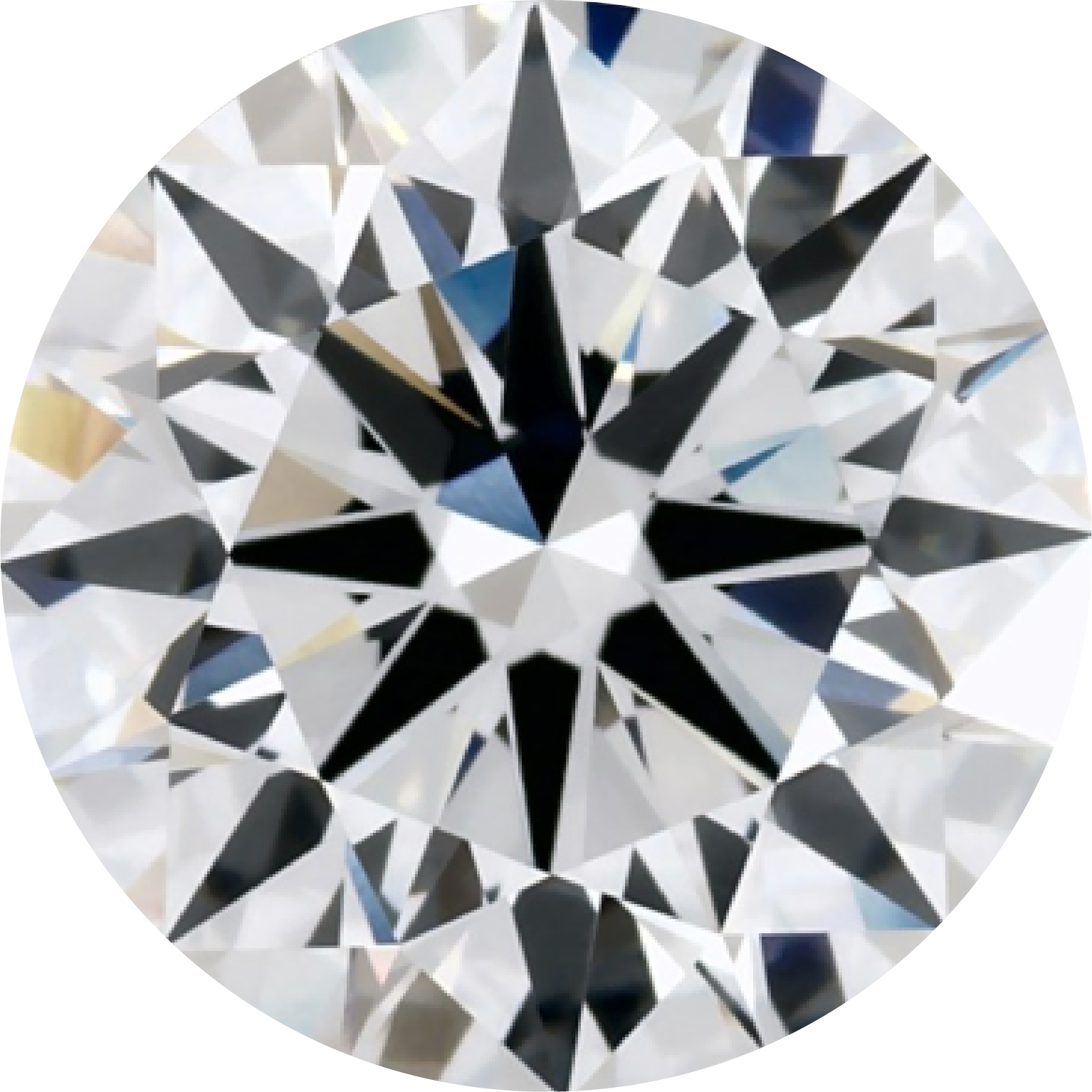
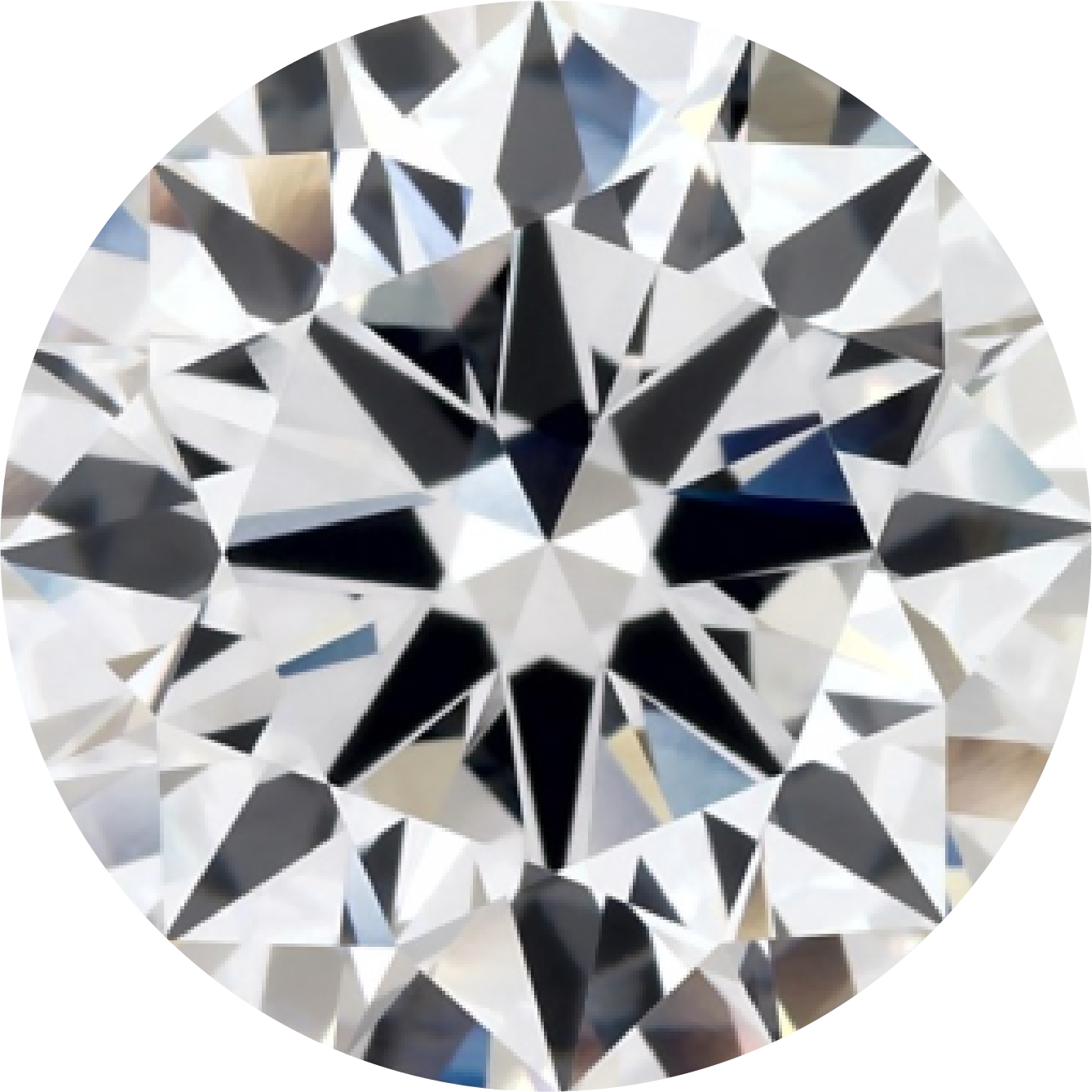
Two identical diamonds: GIA Certified, 1.51ct, D Color, VVS1, Ideal Cut. One is natural ($16,530), the other is lab-grown ($2,390). Choose the diamond you like better and see if you can match it to its origin.
Mistake #1: Buying the Certificate, Not the Stone (The Bow-Tie)
In the 1-carat pear market, the most dangerous mistake you can make is assuming that two diamonds with identical GIA certificates will look the same.
Because the GIA does not provide an overall Cut Grade for pear shapes (unlike Round Brilliants), the market is flooded with “zombie stones”—diamonds that have perfect stats on paper but are visually lifeless in person.
Why “Ideal Cut” Pears Can Look Dead
The $3,170 price gap we found in our 2026 data is not a mistake; it is a direct reflection of the Bow-Tie Effect and light leakage. A “Bow-Tie” is a dark, tuxedo-shaped shadow that stretches across the center of the stone.
While a faint shadow is normal, a severe one effectively “kills” the diamond by preventing light from reflecting back to your eye.
Data Case Study: The Natural F-VS1 Price Gap
| Metric | Stone A (The “Cheap” Trap) | Stone B (The “Premium” Make) |
|---|---|---|
| Specs | GIA 1.00ct F-Color VS1 | GIA 1.00ct F-Color VS1 |
| Price | $4,070 | $7,240 |
| L/W Ratio | 1.58 (Balanced Pear) | 1.65 (Elongated Pear) |
| Measurements | 8.74 x 5.54 mm | 9.08 x 5.49 mm |
| Fluorescence | Strong Blue (Value Killer) | None (High Performance) |
| Visual Impact | Looks smaller; likely “hazy.” | Looks massive; superior coverage. |
| The 2026 Trap Verdict: Do not be seduced by the $4,070 price tag on Stone A. Strong Blue Fluorescence in a Colorless (F) diamond often creates a milky, oily defect. Stone B costs more because it is visually crisp and significantly larger (9.08mm length). | ||
The “Zombie Stone” Red Flag
Stone A is priced at the market floor ($4,070) for a very specific set of reasons that a certificate alone won’t tell you. As a gemologist, I can see the red flags immediately.
While both are 1.00 carat, Stone A is physically much smaller, measuring only 8.74mm in length. Meanwhile, Stone B stretches to 9.08mm.
In the world of pear shapes, that extra length is what gives the diamond its “wow” factor and finger-elongating elegance.
However, the biggest value-killer here is the Strong Fluorescence in Stone A. In an F-Color diamond, “Strong” fluorescence can often make the stone appear hazy or “milky” when exposed to natural sunlight. Stone B, with None, offers the crisp, high-performance transparency that collectors demand.
Mehedi’s Lesson: “If a natural pear is priced significantly under the market average (in the $4,000 range), assume there is a compromise. In this case, you are trading away visual size and crystal clarity for a lower price tag. Retailers use the ‘Ideal’ tag as a marketing filter, but it doesn’t account for a ‘milky’ look or a stunted 8.7mm length.
Do not trust the word ‘Ideal’ on a retailer’s website filter. Look at the 360-degree video. If the stone looks cloudy or significantly shorter than other 1-carat options, it’s a ‘bargain’ for a reason. Stone B is more expensive because it effectively does the work of a 1.20-carat diamond.”
To understand how to read the hidden technical proportions that retailers don’t want you to see, check out our comprehensive Diamond Cut Chart.
Mistake #2: Overpaying for “D” Color in Natural
If you are buying a 1-carat round diamond, moving from G to D color might be a luxury you can justify. But for a 1 carat pear shaped diamond, that same decision can be a $3,400 trap.
The physics of the pear shape changes the game entirely when it comes to color perception.
The “Tip Color” Trap
As a gemologist, I always warn my clients about the “Tip Color” trap. Because a pear shape tapers into a delicate point, the diamond material gets thinner and the faceting changes toward that tip. This causes the diamond to concentrate color in the point.
- The Science: Pears are “Modified Brilliant” cuts. While they sparkle like a round, their elongated body acts as a funnel for color. If a stone has a faint yellow tint (like a J or K), it will look like a drop of lemon juice is stuck in the tip.
- The Solution: A D-color looks perfectly icy, but so does a G-color if it is well-cut. In fact, if you set your pear in Yellow Gold, a G color diamond will face up just as white as a D because the yellow metal masks the faint warmth.
The Color Tax (2026 Natural Pear Data)
| Color Grade | Clarity | February 2026 Price | The “Color Premium” | Mehedi’s Verdict |
|---|---|---|---|---|
| G (Near Colorless) | VVS1 | $4,860 | Baseline | The Value King. Looks icy white to the naked eye. |
| F (Colorless) | VVS1 | $6,860 | +$2,000 | High-end; only for the strictest purists. |
| E (Colorless) | VVS1 | $7,920 | +$3,060 | Diminishing returns. Save your money. |
| D (Colorless) | VVS1 | $8,270 | +$3,410 | The Vanity Tax. 70% more expensive than G. |
| The 2026 Buying Verdict: The price jump from G Color to D Color is financially indefensible. You are paying nearly $3,500 extra for a feature you can’t even see once the diamond is set in a ring. Stick to the $4,860 G-Color option. | ||||
Analysis: The $3,400 “Icy” Decision
Moving from G ($4.8k) to D ($8.2k) costs you an extra $3,410. For a 1-carat stone, this is arguably the worst way to spend your budget.
Once that diamond is mounted in a ring and catching the light, nobody—not even a jeweler without a grading tray—will be able to tell if that icy sparkle is a D or a G.
Mehedi’s Advice: “Don’t pay for a grade that only shows up on a piece of paper. Buy an F or G color and use that extra $3,400 to buy a larger stone or a world-class designer setting. As long as you verify that the tip isn’t concentrating warmth, you win.”
If you are still on the fence about whether to go for the absolute colorless peak or the value tier, read our deep dive on F Color Diamond vs. G Color Diamond to see side-by-side visual comparisons.
Mistake #3: Ignoring the “Chubby” Ratio
When you buy a 1 carat pear shaped diamond, you aren’t just buying weight; you are buying a silhouette.
The most common mistake I see in my office is a buyer who finds a “cheap” 1-carat stone, only to realize too late that it looks like a round diamond with a tiny pimple on top.
The Length-to-Width (L/W) Factor
In the diamond world, we measure the “face-up” appearance using the Length-to-Width (L/W) Ratio. To find this, you simply divide the length of the diamond by its width.
This single number determines whether your diamond looks elegant and slimming or awkward and bulky.
The Ratio Breakdown:
- < 1.45: The “Chubby Pear” — These stones look like eggs. Because they are too wide, they don’t provide the lengthening effect on the finger that most people want.
More importantly, chubby pears often hide their weight in their “belly,” meaning a 1.00ct chubby pear often looks like a 0.85ct stone to the naked eye. - 1.45 – 1.55: The “Classic” Ratio — This is the industry standard for beauty. It provides the perfect balance between a rounded bottom and a graceful, elongated tip. If you want the “traditional” teardrop look, this is your target.
- > 1.60: The “Skinny Pear” — These diamonds look massive for their weight because they are long and thin. While they offer great finger coverage, they can look like “toothpicks” and often suffer from poor light return in the center.
The “Discount” Trap of the Skinny Pear
You will often see skinny pears (1.60+) trading at a 10% to 15% discount compared to classic ratios. Why? Because they are harder for retailers to sell. They often have “flat wings” (the sides don’t curve beautifully) and the fragile tip is even more exposed to chipping because the stone is so elongated.
Mehedi’s Warning: “Do not buy a discount stone just because the price is low. A 1.40 ratio pear will look significantly smaller than its 1 carat weight suggests, and a 1.65 ratio stone might look distorted on a standard engagement ring setting.
Aim for that 1.50 ‘Golden Ratio’ to ensure your diamond actually looks like the luxury item you’re paying for.”
If you want to see how these ratios affect the physical dimensions in millimeters, check out our Diamond Carat Size Chart to compare the face-up area of different shapes.
Mistake #4: The Lab-Grown Opportunity Cost
The single biggest financial mistake a buyer can make in 2026 is ignoring the Lab vs. Natural gap for fancy shapes like pears.
Because pear diamonds naturally show color and inclusions more than rounds, the ability to buy “Perfect” lab specs for a fraction of the price of a “Mid-grade” natural stone is a massive advantage.
The $6,000 Lab Arbitrage
In the current market, we are seeing a “staggering” price divergence. While a high-quality natural pear is becoming more expensive due to rarity, lab-grown production has become so efficient that you can now secure an elite stone for the price of a mid-range laptop.
Lab vs. Natural Price Comparison (1ct Pear Shaped)
| Feature | Natural Diamond | Lab-Grown Diamond | The “Arbitrage” Gap |
|---|---|---|---|
| GIA/IGI Specs | F-VVS1 | F-VVS1 | — |
| Average Price | $6,860 | $1,070 | $5,790 |
| Colorless King | D-IF ($7,280) | D-IF ($1,870) | $5,410 |
| Market Verdict | High Rarity Tax | Max Visual Impact | Value Win: Lab |
| The 2026 Arbitrage Verdict: The financial case is closed. You can buy five Lab-Grown F-VVS1 diamonds for the price of one Natural diamond. Unless you are a collector, paying the $6,860 premium is functionally burning money. | |||
Analysis: Notice the difference between the Natural F-VVS1 ($6,860) and the Lab F-VVS1 ($1,070). By choosing lab-grown, you are keeping $5,790 in your pocket.
In 2026, that is more than enough to pay for a 2.5-carat upgrade or a luxury 10-day honeymoon in the Maldives.
Why Lab is Superior for the Pear Shape
As a gemologist, I usually remain neutral, but for pear shapes, I often lean toward lab-grown for one specific technical reason: The Tip.
Since the tip of a pear shape acts as a color trap, you ideally want a D or E color to ensure it stays icy white. In the natural market, a D-IF Pear will cost you over $7,200. In the lab market, you can get that same “Flawless” certification for $1,870.
Mehedi’s Verdict: “For Pears, lab diamonds are a strategic no-brainer. You can afford to buy D-Color / Internally Flawless specs which guarantee the stone looks crisp and white all the way to the point. You aren’t just saving money; you are buying a technically superior stone for 85% less.”
If you have a larger budget and want to see how this gap expands with size, read our report on Natural vs. Lab Diamond: $15,000 Budget.
Natural Sweet Spot: Access GIA-certified 1-Carat Pears in the Clear The Vault Sale. Audit for the “Golden Ratio” and “Astor Ideal” fire to find the top 1% of market value at Blue Nile.
Lab Value Hack: Secure an IGI D-VVS1 “Icy White” teardrop for under $1,300. Use 40x Super-Zoom HD to verify minimal bow-ties and perfect symmetry at James Allen.
Mistake #5: V-Prong vs. Standard Prong Setting
The pointed tip of a pear diamond is its greatest aesthetic feature, but it is also its greatest structural weakness. In my years of gemological consulting, I have seen too many $6,000 natural stones ruined by a simple $50 setting decision.
Don’t Chip Your $6,000 Rock
The physics of a pear diamond are unique. While the “belly” of the stone is robust, the point (the apex) is incredibly thin and fragile. In a standard round prong setting, that tip is often left exposed to the world.
- The Danger: A standard round prong only makes contact with the very edge of the stone. If you accidentally bump your hand against a granite countertop or a car door, that impact is delivered directly to the weakest part of the diamond.
- The Solution: You must choose a setting with a V-Prong (also called a Chevron Prong). This V-shaped piece of metal wraps around the entire tip, acting as a structural shield.
Protection Level by Setting Style
| Setting Style | Protection Level | Chipping Risk | Mehedi’s Verdict |
|---|---|---|---|
| Standard 5-Prong | Low | High | The “Sitting Duck.” The fragile tip is exposed. Avoid. |
| V-Prong (Chevron) | High | Minimal | The Gold Standard. Wraps the tip in metal safety. |
| Bezel Setting | Maximum | Zero | Best for nurses, doctors, and very active lifestyles. |
| Halo Setting | Medium | Low | Metal frame provides a “buffer zone” against impact. |
| The 2026 Safety Verdict: Never buy a Pear, Marquise, or Heart shape without a V-Prong (Chevron). Standard prongs leave the sharpest point exposed to daily life, guaranteeing a chip eventually. | |||
The $1,000 Repair Reality Check
If you choose a cheap setting and chip the tip of your diamond, you are looking at a financial nightmare.
- Recutting Fees: Professional diamond recutting starts at $350 to $500 per carat.
- Carat Loss: To remove a chip at the tip, the diamond must be ground down. You could lose 0.05 to 0.10 carats, potentially dropping your “1.00ct” stone into the 0.90ct price bracket—instantly erasing $1,500 in resale value.
- Total Replacement: Many severe chips cannot be repaired, meaning your $6,000 investment becomes a total loss.
Mehedi’s Insight: “Using a V-prong doesn’t just protect the stone; it actually helps the diamond look better. It aligns the tip perfectly with the base of the setting, ensuring that your pear doesn’t look ‘crooked’ on your finger. If your jeweler doesn’t offer a V-prong for a pear shape, find a new jeweler.“
Before you finalize your mount, browse our curated list of Engagement Ring Settings Under $1,500 that prioritize tip security without sacrificing style.
FAQ: The Unfiltered “1 carat pear shaped diamond” Answers
Buying a fancy-cut diamond like a pear requires a different strategy than buying a round. Here are the direct, data-backed answers to the most common questions about the 1 carat pear shaped diamond market in 2026.
What is the fair market price for a 1 carat natural pear shaped diamond in 2026?+
As of February 2026, the fair market price for a 1 carat natural pear shaped diamond ranges from $4,070 to $5,500 for a high-quality GIA-certified stone. While “bargain” stones exist near $3,870, they often carry flaws like severe bow-ties. Premium D-color pears can reach up to $8,420. Check out our pear shaped diamond ring guide for more details.
Why do some 1 carat pear diamonds have a dark black shadow or ‘bow-tie’ in the center?+
The “Bow-Tie” effect is caused by light escaping through the pavilion facets due to misalignment. While almost every pear has a subtle shadow, a severe one kills the stone’s center sparkle. You can learn how to avoid this in our diamond cut chart.
What is the ideal length-to-width ratio for a 1 carat pear diamond so it doesn’t look chubby?+
The “Golden Ratio” is 1.45 to 1.55. Ratios below 1.40 look “chubby,” while those above 1.65 look elongated and “skinny.” [Image comparing length-to-width ratios of pear-shaped diamonds] For more on dimensions, see our diamond carat size chart.
Does a 1 carat pear shaped diamond look bigger on the hand than a round diamond?+
Yes. Because of its elongated shape, a pear diamond has a larger face-up area and typically appears 15–20% larger than a round diamond of the same weight. This makes it an excellent choice for a diamond shape that looks the largest.
Do I absolutely need a V-prong setting to protect the tip of a pear shaped diamond?+
Yes. The tip is the thinnest and most vulnerable part of the stone. A V-prong (Chevron prong) is mandatory to prevent chipping from daily wear. Learn about other security features in our engagement ring anatomy guide.
Why can I buy a 1 carat lab grown pear diamond for $1,000 when natural ones are $7,000?+
The difference is supply and rarity. Lab diamonds are grown in weeks, whereas natural stones take billions of years to form. In 2026, the lab market is highly accessible, often found in our guide to the best places to buy lab-grown diamonds.
What is the best color grade for a pear shaped diamond set in a rose gold band?+
For rose gold, you can safely choose a G or H color. The metal’s warm pink tones mask slight warmth in the stone, making a pricey D or E color unnecessary. See our H color diamond pricing tips for more savings.
Does GIA give a specific cut grade for pear shaped diamonds like they do for rounds?+
No. GIA only grades Polish and Symmetry for pear shapes, not an overall Cut Grade. You must rely on visual inspection and measurements as explained in our GIA certification guide.
Is it better to wear a pear shaped diamond engagement ring with the point facing up or down?+
Traditionally, the point faces the fingernail to elongate the finger. However, wearing it toward the heart is a growing modern trend. For more styling tips, check our wedding ring buying guide.
Will a 1 carat pear diamond with a ‘skinny’ ratio be more likely to chip or break?+
Yes. Ratios above 1.65 have thinner “wings” and a narrower tip, making them more susceptible to impact. If you choose a skinny stone, ensure it has a sturdy setting. Compare durability in our guide on diamond strength.
Conclusion: Mehedi’s “Teardrop” Verdict
Buying a Pear shape is harder than buying a Round diamond because the GIA certificate doesn’t tell you if the stone is “ugly.” You have to use your eyes—and your wallet—to filter out the bad ones.
Here is my final advice on how to spend your money in February 2026:
- The “AVOID” List:
- Under $3,800 (Natural): If a deal looks too good to be true, it is. These stones usually have a severe “Bow-Tie” (black dead zone), look like a squashed egg (bad ratio), or have a crack near the tip.
- Over $7,000 (Natural): Do not pay for D-Color unless you are rich. A $7,600 D-Color pear looks exactly the same as a well-cut $5,000 F-Color pear once it is in a ring.
- Under $3,800 (Natural): If a deal looks too good to be true, it is. These stones usually have a severe “Bow-Tie” (black dead zone), look like a squashed egg (bad ratio), or have a crack near the tip.
- The Natural Buy (Smart Money):
- Target: GIA 1.00ct F or G Color | VS1 or VVS2 Clarity.
- Price: $4,200 – $5,500.
- The Check: Verify it has a 1.45 – 1.55 Ratio and minimal bow-tie effect in the video.
- Target: GIA 1.00ct F or G Color | VS1 or VVS2 Clarity.
- The Lab Buy (No-Brainer):
- Target: IGI 1.00ct D-VVS1.
- Price: ~$1,260.
- Why: It is cheap, it is perfect, and you can get the absolute highest color (“D”) to ensure that pointy tip stays icy white forever. This is the financial winner.
- Target: IGI 1.00ct D-VVS1.
Don’t guess on the proportions. If the stone looks too wide or too skinny, it will bother you forever. Use our Diamond Rate Calculator to check the fair price before you commit.