The “Arbitrage” Snapshot (The Bottom Line)
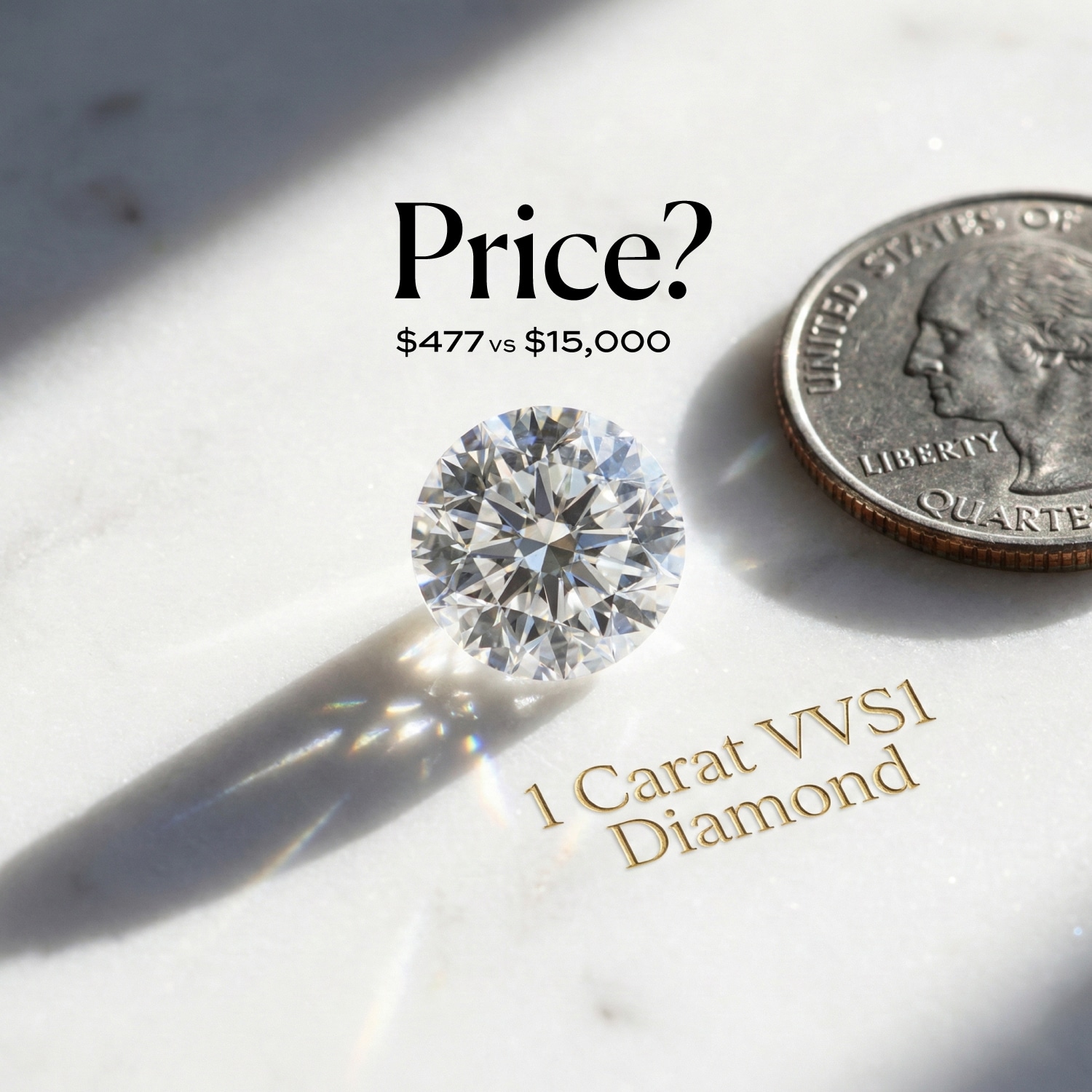
- The Bottom Line: As of February 2026, the price for a 1-carat VVS1 diamond is split between two extreme realities. For a Natural 1ct VVS1, expect to pay between $4,900 and $16,750. For a Lab-Grown 1ct VVS1, prices have crashed to a staggering $477 – $530.
- The Price Shock: A natural D-VVS1 Round Diamond currently trades at $16,750, while its lab-grown identical twin costs just $527. That is a 3,100% price difference for a stone that looks identical to the naked eye.
- Smart Money Move: If you are buying a Natural diamond, stop overpaying for “D Color” and “VVS1.” A G-Color/VVS1 ($5,130) looks exactly the same once set in a ring and saves you over $11,000 instantly.
Deal Alert: Fast-Shipping Gifts — Up to 50% Off* fine jewelry at Blue Nile !
One In A Lifetime Sale: “Clear The Vault” – Get up to 70% OFF on select jewelry at Blue Nile !
Exclusive Offer: Flash Sale on James Allen Up to 40% Off * Sitewide engagement ring settings & Fine Jewelry at James Allen .
Start your search by comparing the current inventory at the Best Places to Buy Lab Grown Diamonds.
“VVS1.” In the high-stakes world of gemology, this acronym stands for “Very Very Slightly Included.” But in the real world—the one where you have to swipe your credit card—it stands for “Very Very Significant Expense.”
When you enter the 1-carat territory, VVS1 becomes a psychological trap. It’s the grade that promises near-perfection, sitting just one tiny step below “Internally Flawless.”
For decades, this grade was the ultimate flex for engagement rings, but in 2026, the market has fractured into a state of pure arbitrage.
Mehedi’s Reality Check: “I have the live inventory sheets in front of me right now. I am looking at a spreadsheet where one diamond costs $477 and another costs $16,750. They are both exactly 1.00 carat. They are both graded VVS1.
They both sparkle with the same chemical intensity. Today, I’m going to show you exactly why that $16,000 gap exists—and how to ensure you aren’t a victim of outdated luxury pricing.”
In this guide, we aren’t using “averages.” We are comparing raw, real-time data from Blue Nile (Natural) vs. Ritani (Lab) to give you the most brutally honest price guide of the year.
Before we dive in: If you are debating between these two worlds, check our Natural vs Lab Diamond $15,000 Budget analysis to see what else that $15,000 savings can buy you (hint: it’s often a down payment on a house or a brand-new car).
Diamond IQ Test: Natural or Lab-Grown?
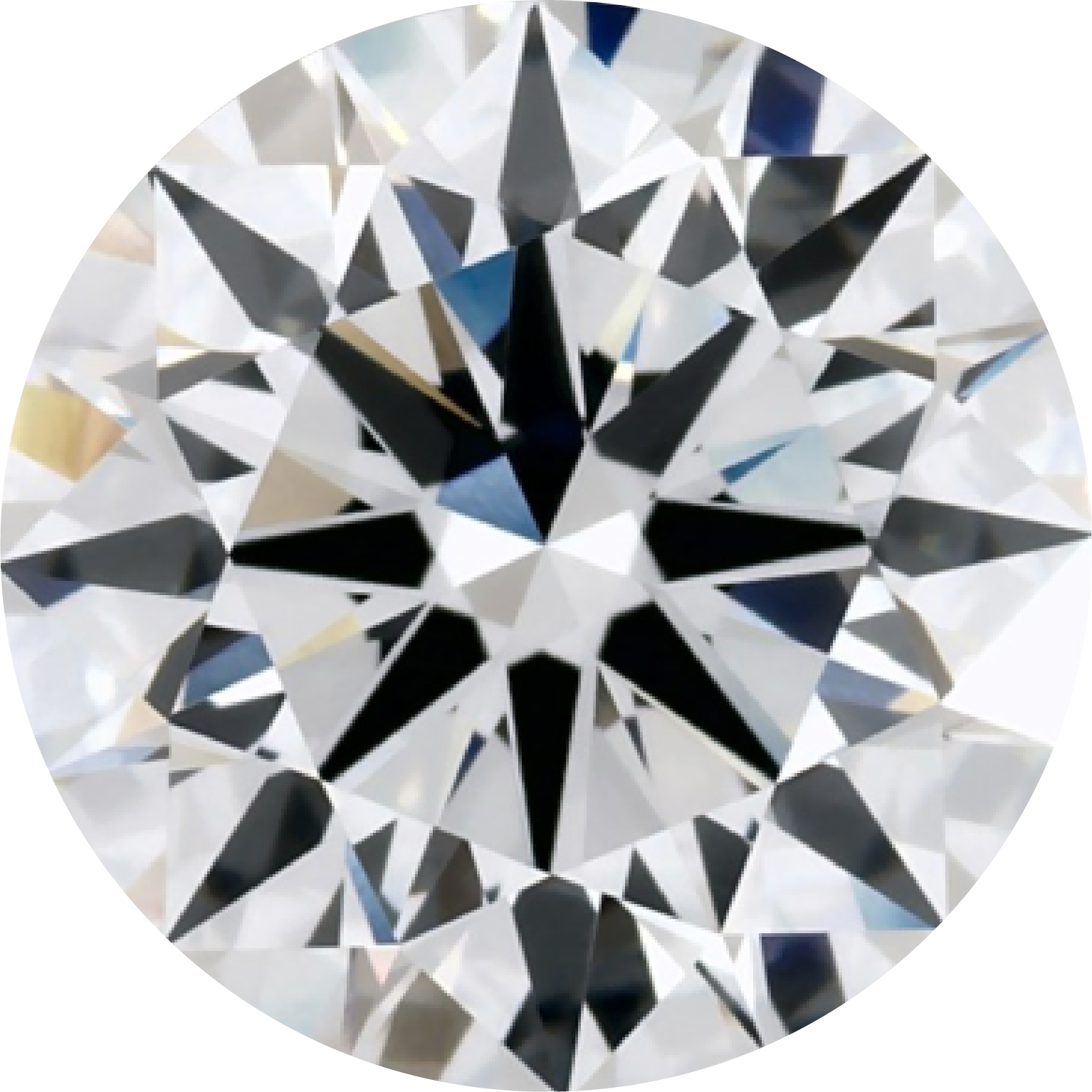
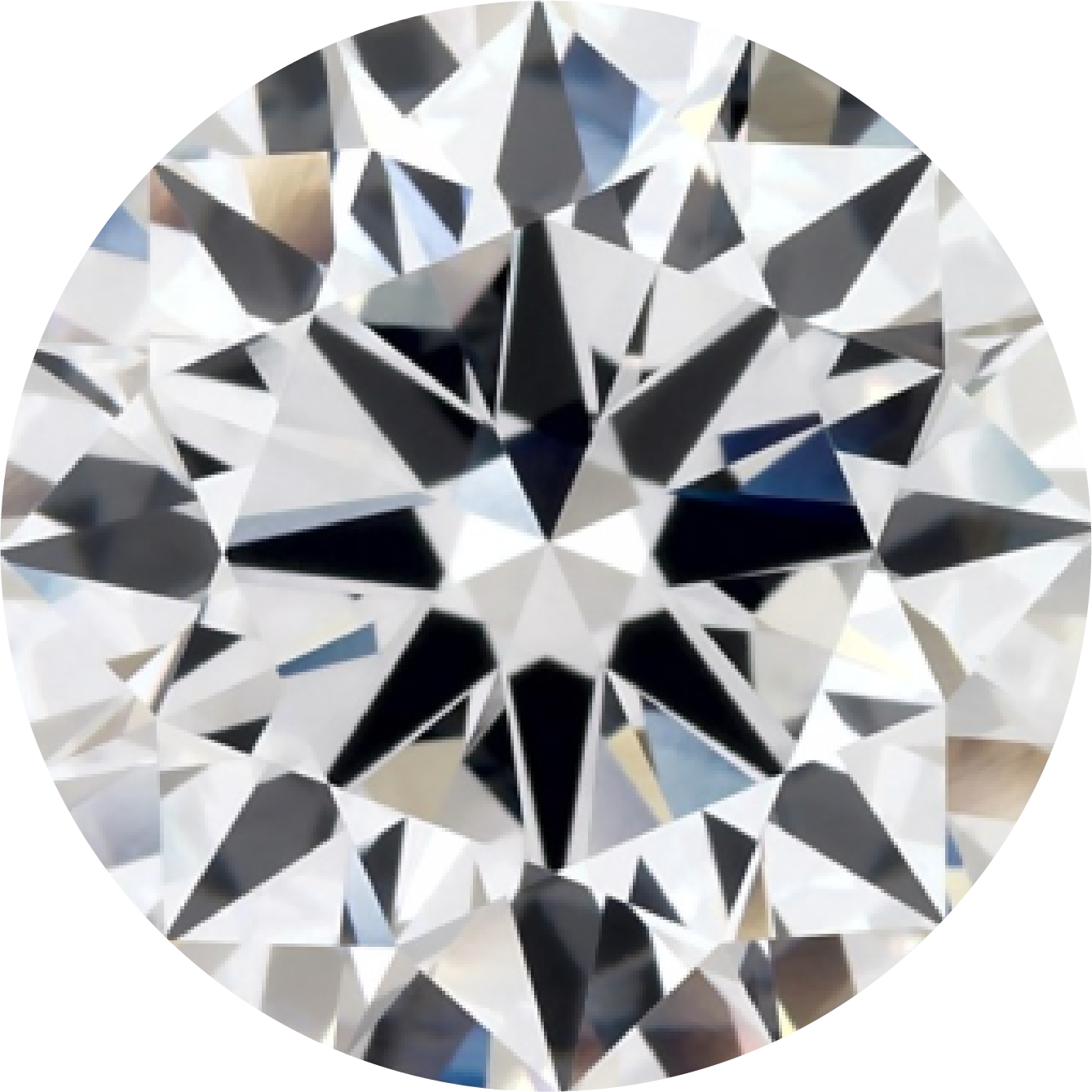
Two identical diamonds: GIA Certified, 1.51ct, D Color, VVS1, Ideal Cut. One is natural ($16,530), the other is lab-grown ($2,390). Choose the diamond you like better and see if you can match it to its origin.
The $15,000 Gap: Natural VVS1 Price Matrix
When you shop for a natural 1-carat VVS1 diamond, you aren’t just paying for the stone; you are paying for geological rarity.
In the natural world, the jump from a “Near Colorless” grade (G or H) to a “Perfectly Colorless” grade (D) represents a massive leap in market value, even though the visual difference is virtually impossible to see once the diamond is mounted in a ring.
1 Carat Natural VVS1 Prices (Blue Nile Data)
We analyzed live February 2026 inventory data from Blue Nile to show you the “Color Premium” in action.
While every stone in this table is a GIA-certified 1.00-carat VVS1 Round Brilliant with an Excellent Cut, the price fluctuates by over $12,000 based solely on the letter assigned to its color.
The Cost of “Ice” (1ct Natural VVS1)
| GIA Grade | Color | Cut Quality | February 2026 Price | The “Color” Premium |
|---|---|---|---|---|
| The Smart Choice | G Color | Excellent | $5,130 | Benchmark Price |
| The White Tier | F Color | Excellent | $6,350 | +$1,220 |
| The Elite Tier | E Color | Excellent | $10,420 | +$5,300 |
| The Ice Premium | D Color | Excellent | $13,180 | +$8,050 |
| The Collector’s Piece | D Color | Excellent | $17,630 | +$12,500 |
| The 2026 Buying Verdict: The price jump from G to E is extreme. By sticking with the G Color option ($5,130), you get a diamond that faces up brilliant white while saving enough to pay for a luxury honeymoon. | ||||
Mehedi’s Expert Take: “Look at that $17,630 price point. That diamond is chemically identical to the $5,130 stone. The only difference is that it has zero nitrogen atoms, giving it that ‘D’ color rating.
In my professional opinion, paying an extra $12,500 for a technicality you can only see under a lab light is a trap. If you have that budget, you’d be better off buying a 2-carat diamond ring and getting twice the size for the same price.”
Why G-Color is the “Insider’s Secret”
Most buyers assume that because G-color is “Near Colorless,” it will look yellow. That is a myth.
- The Face-Up Test: When viewed from the top, a G-color diamond looks icy white against a platinum or white gold setting.
- The Comparison Trap: You only see the “warmth” of a G-color diamond when you put it directly next to a D-color stone under 10x magnification.
- The Savings: By choosing a G color diamond over a D color diamond, you are essentially “earning” $12,000 that can be spent on a phenomenal platinum setting or a luxury honeymoon.
The Rarity vs. Beauty Paradox
In the natural diamond market, price is driven by supply, not just beauty.
- D-VVS1 Rarity: Only a fraction of 1% of all mined diamonds reach this level of perfection. This scarcity creates the $17,630 price tag.
- Visual Saturation: The human eye hits a limit. Most people cannot distinguish between VVS1 and VS1, nor can they see the difference between F and G color.
Mehedi’s Translation: “Collector Grade vs. Consumer Grade.”
Why it matters: If you are buying an heirloom meant for a museum, buy the $17k stone. If you are buying an engagement ring meant to be worn and admired daily, the $5,130 G-VVS1 is the undisputed champion of value.
Best Deal Of The Year – Final Days
Blue Nile’s “Clear The Vault” is ON.
Shop Fine Jewelry Upto 70% OFF.
*Exclusions may apply. See Blue Nile for complete details.
The $477 Gap: Lab VVS1 Price Matrix
While the natural diamond market is built on scarcity and exponential price jumps, the 2026 lab-grown market operates on a completely different set of rules: Manufacturing Efficiency.
In this sector, the price difference between “Near-Perfect” and “Absolutely Perfect” has essentially evaporated. Today, we are seeing the absolute floor of the market, where a 1-carat VVS1 stone costs less than a designer pair of sneakers.
1 Carat Lab VVS1 Prices (Ritani Data Crash)
We analyzed live February 2026 inventory data from Ritani to showcase the current “Price Floor.” In the lab world, certification from the IGI (International Gemological Institute) is the industry standard for these high-value, high-volume stones.
As you can see from the table below, the price variance between color grades is so small it’s almost negligible.
The 2026 Price Floor (1ct Lab VVS1)
| Carat | Color | Grading Lab | Cut Quality | Final Sale Price |
|---|---|---|---|---|
| 1.00ct | F Color | IGI | Ideal | $477.00 |
| 1.00ct | E Color | IGI | Ideal | $478.00 |
| 1.00ct | E Color | IGI | Ideal | $485.00 |
| 1.00ct | D Color | IGI | Ideal | $489.00 |
| 1.00ct | D Color | IGI | Ideal | $497.00 |
| 1.00ct | D Color | IGI | Ideal | $516.00 |
| The Perfect Spec | D Color | IGI | Ideal | $527.00 |
| The 2026 Compression Verdict: The price gap has collapsed. The difference between the “F” Color ($477) and the “D” Color ($489) is just $12. There is absolutely no reason to buy F Color when perfection costs the same as a sandwich. | ||||
Mehedi’s Verdict: “In the lab-grown world, the price difference between ‘Okay’ and ‘Perfect’ is essentially lunch money. Notice that the upgrade from an F Color ($477) to a D Color ($527) is only $50.
In the natural diamond world we just looked at, that same single-carat upgrade was a $12,000 jump. My rule for 2026 is simple: If you are buying lab-grown, always buy the top tier. There is no financial reason to settle for anything less than a D-VVS1.”
Why is the Price So Low? (The $477 Breakdown)
Many buyers are skeptical when they see a 1-carat VVS1 diamond for under $500. They ask, “Is it real?” The answer is yes—it is 100% crystallized carbon. The low price is driven by three factors:
- Direct Sourcing: Retailers like Ritani offer “Transparent Costing,” showing you the wholesale price plus a small markup.
- CVD Technology: The Chemical Vapor Deposition process has become so efficient in 2026 that growing a 1-carat VVS1 crystal takes only a few weeks.
- Inventory Volume: There are currently over 220,000 one-carat lab diamonds in the global inventory. This massive supply keeps the “Price Floor” firmly at the $400-$600 range.
The “D-VVS1” Lab Example
Imagine you are choosing a stone for an engagement ring. For $527, you can secure an IGI-certified D-color (Colorless), VVS1 (Very Very Slightly Included) stone.
- Visuals: It is essentially a “Pure Ice” stone.
- Savings: Compared to the natural equivalent at Blue Nile ($16,750), you are saving $16,223.
Before you commit to either path, make sure you understand the differences between the major retailers in our Ritani vs Blue Nile comparison or check out our full review to answer the question: Is Ritani Legit?
Deal Alert: Ritani’s current promotions offer exceptional value.
Discount applied automatically
Shop Lab Diamonds | Shop Settings| Pro Tip: Ritani offers price matching and free shipping.
Shape Shifting: Fancy Cuts on Sale
If you have your heart set on a natural diamond but the $5,130 price tag for a 1-carat Round Brilliant is a bit steep, it’s time to look at “Fancy Shapes.”
In the natural diamond market, any shape that isn’t round is generally priced lower because the cutting process allows for better weight retention from the original rough crystal.
However, in 2026, we are seeing a “Trendy Tax” on certain shapes that is narrowing that gap.
1 Carat VVS1 Prices by Shape (Princess, Cushion, Oval)
We analyzed the February 2026 price data for GIA-certified G-Color, VVS1-Clarity natural diamonds across various shapes.
The findings confirm that you can secure a 1-carat natural diamond for significantly less than the price of a round stone if you are willing to shift your aesthetic.
Natural 1ct G-VVS1 Price Comparison by Shape
| Diamond Shape | Cut Quality | February 2026 Price | Savings vs. Round | Mehedi’s Value Analysis |
|---|---|---|---|---|
| Round Brilliant | Excellent | $5,130 | Benchmark | The most expensive; highest light return. |
| Cushion Cut | Ideal | $3,140 | –$1,990 | The Value King. Massive savings for a classic look. |
| Princess Cut | Ideal | $3,330 | –$1,800 | Modern, sharp, and very high sparkle per dollar. |
| Emerald Cut | Ideal | $4,410 (E Color) | –$720 | Elegant “Step Cut”; requires high VVS clarity. |
| Oval Cut | Ideal | $4,680 | –$450 | The “Trendy Tax” is in full effect here. |
| Radiant Cut | Ideal | $5,380 (E Color) | +$250 | Exceptional brilliance; currently carrying a premium. |
| Pear Shape | Ideal | $8,110 (F Color) | +$2,980 | The Scarcity Spike. Extremely rare in VVS. |
| The 2026 Shape Verdict: Avoid the Pear Shape right now—it is overpriced due to a supply shortage. The Cushion Cut ($3,140) is the clear winner, saving you nearly $2,000 for a diamond of the same weight. | ||||
The “Cushion Hack”: Save $2,000 Instantly
The Cushion Cut Diamond is currently trading at $3,140 for a G-VVS1.
- The Math: You are saving nearly $2,000 compared to the Round Brilliant.
- The Visuals: A Cushion cut has a romantic, vintage feel with a “soft” glow. Because it is a deeper cut, it hides tiny inclusions well, making it a perfect partner for the VVS1 grade.
The “Trendy Tax” on Ovals and Radiants
In previous years, Ovals were a great way to save money. In 2026, the Oval Cut Diamond has become so popular on social media that the price has climbed to $4,680.
Mehedi’s Translation: “Popularity Pricing” — When a shape becomes a trend, its value is untethered from its production cost.
Why it matters: If you want an Oval, you are only saving about $450 compared to a Round stone. If you want the absolute best “Price-per-Carat,” the Oval is no longer the winner—the Cushion and Princess have taken the crown.
The Pear Shape Anomaly ($8,110)
Why is a 1-carat Pear Shaped Diamond so expensive at $8,110?
- The Complexity: Cutting a Pear shape to a VVS1 standard is incredibly difficult. The “point” of the pear is fragile and often contains inclusions that drop the grade.
- The Scarcity: There are very few 1-carat VVS1 pears in the 2026 market inventory. When supply is low and clarity is this high, the price sky-rockets.
Mehedi’s Tip: “If you want a Natural Diamond on a budget, buy a Cushion Cut. It is the ‘Value King’ of 2026. It gives you that 1-carat presence for just over $3,000, leaving you plenty of room in your budget for a stunning setting.”
For a full breakdown of the pros and cons of every silhouette, check out our comprehensive Diamond Shapes Guide.
Visual Test: Can You See “VVS1”?
The biggest misconception in the diamond world is that a higher clarity grade always means a more beautiful diamond. In reality, the difference between VVS1 and VS1 is purely technical, not visual.
Unless you are walking around with a 10x gemological loupe and a professional light box, your eyes—and your partner’s eyes—cannot tell these two stones apart.
The “Mind Clean” vs “Eye Clean” Trap
VVS1 stands for “Very Very Slightly Included.” By definition, these inclusions are so minute that they are “extremely difficult” for even a trained gemologist to find under 10x magnification.
In a 1-carat stone, a VVS1 inclusion is typically a microscopic pinpoint that has zero effect on the diamond’s sparkle.
When you buy a VVS1, you aren’t buying a better-looking stone; you are buying “Mind Clean” insurance—the psychological satisfaction of knowing the stone is nearly perfect on paper.
The Comparison: Microscope-Clean vs. Eye-Clean
| Feature | VS1 Diamond (The Smart Choice) | VVS1 Diamond (The Technical Peak) |
|---|---|---|
| Natural Price | ~$4,000 | ~$5,200 |
| Lab Price | ~$300 | ~$480 |
| Visual Status | Eye-Clean (No visible spots) | Microscope-Clean (No visible spots) |
| What You Pay For | Maximum visual value per dollar. | Technical rarity and “paper” perfection. |
| The 2026 Clarity Verdict: In Natural diamonds, stick to VS1 Clarity. The $1,200 premium for VVS1 buys you nothing you can see. In Lab diamonds, the gap is small ($180), making VVS1 an affordable luxury if you are a perfectionist. | ||
Mehedi’s Expert Verdict: “If you are buying a Natural Diamond, my advice is to buy VS1. You will save roughly $1,200 for absolutely zero visual loss. However, if you are buying a Lab Diamond, go ahead and buy the VVS1.
Why? Because the price gap is only about $180. In the lab world, ‘perfection’ is affordable, so you might as well get the best report available.”
When Does VVS1 Actually Matter?
While I usually recommend saving your money, there are two specific scenarios where VVS1 is worth the premium:
- Step-Cuts (Emerald & Asscher): These shapes have wide, open windows (tables). They don’t hide inclusions as well as Round Brilliants do.
- 5 Carat+ Stones: As the diamond gets massive, the inclusions scale up too. On a 5 carat diamond ring, a VS1 might start to become visible, whereas VVS1 remains pristine.
For most 1-carat buyers, the VVS1 diamond meaning & cost is a luxury that adds value to the certificate, not the finger. If you want the best sparkle for your budget, stick to a high-quality VS1 clarity diamond and put that $1,200 savings into a better cut or a more intricate setting.
GIA vs. IGI: The Paper Value
In the 2026 diamond market, the lab certificate you receive is more than just a piece of paper—it is the primary driver of the price tag on that $15,000 stone.
While a diamond’s physical properties are determined in a lab, its market value is determined by the name at the top of the grading report.
Who Certified Your $15,000 Stone?
If you are looking at the Blue Nile inventory for a natural 1-carat VVS1, you will notice a consistent theme: every single stone is certified by the GIA (Gemological Institute of America).
Conversely, the Ritani inventory for $477 lab diamonds is almost exclusively certified by the IGI (International Gemological Institute).
This isn’t a coincidence. It is a calculated move based on the “Economic Floor” of diamond grading.
The Certificate Divide (2026 Reality)
The $100 Profit Wall
The truth about the $477 lab diamond is that it cannot physically afford a GIA certificate. In early 2026, a full GIA Laboratory-Grown Diamond Report costs roughly $100 to $150 once you factor in shipping, insurance, and grading fees.
Mehedi’s Translation: “The Margin Squeeze.”
Why it matters: If a diamond sells for $477, and the seller pays $150 for a GIA report, they have lost nearly a third of their revenue to paperwork. This is why you will rarely find GIA certs on “budget” lab diamonds. The IGI business model is built on high-volume, cost-effective grading, which is why they own 80% of the lab-grown market.
Is IGI “Safe” for Lab Diamonds?
As a GIA-trained gemologist, I get asked this constantly. Yes, IGI is perfectly safe for diamonds under $1,000. * The Consistency Factor: In the lab-grown world, IGI has more experience than any other lab on Earth. They have graded millions of stones and their standards for 1-carat VVS1s are highly reliable.
- The GIA “Premium” New System: In late 2025, GIA actually simplified their lab reports into “Premium” and “Standard” categories, which many feel makes them less detailed than the IGI reports.
- The Verdict: If you are spending $15,000 on a natural asset, you need the GIA’s strictness. If you are spending $500 on a lab-grown sparkle, the IGI diamond certification is the most logical and transparent choice.
Mehedi’s Expert Take: “Don’t pay a ‘Brand Premium’ for a piece of paper on a lab diamond. If the stone looks beautiful on the 40x video and has an IGI VVS1 grade, it is a winner. Save the GIA hunt for the day you decide to buy a 4 carat diamond ring as a natural investment.”
Before you decide, make sure you understand what is the best diamond certification for your specific spending level to avoid being overcharged for a brand name.
FAQ: The Unfiltered “Mehedi” Answers
Buying a diamond is one of the most significant emotional and financial decisions you’ll ever make. In 2026, the traditional “rules” of the jewelry industry have been completely rewritten by lab-grown technology and transparent market data.
I’ve compiled the most frequent, high-stakes questions I get from readers to help you cut through the marketing noise and buy like a professional gemologist.
What is the average price difference between a 1 carat natural VVS1 diamond and a lab grown one in 2026?+
The gap is staggering—roughly $5,000 to $15,000. A high-quality GIA natural 1ct VVS1 stone will set you back about $5,200 to $17,000, while the exact same chemical and visual diamond grown in a lab (IGI certified) currently trades for $477 to $800. For a deeper look at where to find these deals, check our guide on the best places to buy lab grown diamonds.
Can the average person actually see the difference between VS1 and VVS1 clarity in a 1 carat diamond?+
Absolutely not. At the 1-carat weight, the inclusions in both VS1 and VVS1 are microscopic. You would need a 10x jeweler’s loupe and a trained eye to find the tiny “pinpoints” in a VVS1. To the naked eye, both stones are 100% identical. See why in our breakdown of VVS1 diamond meaning and cost.
Why can I buy a top-tier 1 carat VVS1 lab diamond for under $500 on sites like Ritani?+
It’s a combination of manufacturing efficiency and high inventory. By 2026, CVD (Chemical Vapor Deposition) technology has reached a point where labs can produce high-clarity crystals in bulk. Retailers like Ritani use a “low-margin, high-volume” business model. Read our audit on is Ritani legit to understand their pricing strategy.
How much does a GIA certified 1 carat D-Color VVS1 natural diamond usually cost?+
Expect to pay a premium for perfection. Based on February 2026 data from Blue Nile, a GIA D-VVS1 Round Diamond costs between $13,180 and $17,630. This is the highest “Colorless” tier and carries a massive “Collector’s Premium.” Learn more about this tier in our D color diamond guide.
Is it worth paying the extra premium for VVS1 clarity if I am buying a 1 carat oval engagement ring?+
Generally, no. Ovals are brilliant-cut shapes that hide inclusions exceptionally well. A VS1 clarity diamond in an Oval shape will look exactly like a VVS1 but save you about 25% of the cost. Save that money for a better ratio instead. Check our oval cut diamond buying guide for optimal proportions.
Does a 1 carat VVS1 natural diamond hold its resale value better than a VS2 diamond?+
Yes, but with a catch. VVS1 is an “investment-grade” clarity, meaning it’s more desirable at auctions. However, the markup is higher, so most buyers lose more money initially than they gain back. Calculate potential returns with our diamond resale price calculator.
Why is a 1 carat pear shaped VVS1 diamond more expensive than a cushion cut with the same specs?+
Scarcity and cutting complexity. It is much harder for a cutter to yield a VVS1 clarity grade from a rough stone when shaping a pear. The pointed tip is prone to inclusions, so a clean pear is a rare find compared to a standard Cushion. Read more about this shape in our pear shaped diamond ring guide.
If a 1 carat lab diamond is only $477, will it test as real on a diamond tester?+
Yes. Lab diamonds are 100% crystallized carbon. They have the same thermal and electrical conductivity as mined diamonds. A standard diamond tester will beep “Diamond” every single time. See our guide on how to tell if a diamond is real for more testing methods.
How much money do I save by choosing a G-Color VVS1 diamond instead of a D-Color VVS1?+
In the natural market, you save roughly $11,000 to $12,000. Our inventory list shows a D-VVS1 at $17,630 while a G-VVS1 is $5,130. That is a five-figure discount for a color difference you can’t see once the stone is on a finger. Compare these grades in our G color diamond guide.
Is an IGI certificate reliable for a 1 carat VVS1 lab grown diamond or should I demand GIA?+
IGI diamond certification is the industry standard and perfectly reliable for lab diamonds. While GIA is the “Gold Standard” for natural stones, their fees are often too high for $500 diamonds, which is why most lab stones carry IGI reports instead. Learn more about IGI diamond certification.
What are the hidden inclusions I should look for even in a VVS1 graded diamond?+
Even in a VVS1, look for “Internal Graining” or “CVD Strain Lines.” These are microscopic structural lines that don’t affect the clarity grade but can sometimes make a diamond look slightly “hazy” or “sleepy” in direct sunlight. Use our diamond color and clarity chart to identify these features.
Why is there such a huge price gap between GIA and IGI certified natural 1 carat diamonds?+
Market Trust. GIA is notoriously stricter in their grading. An IGI “D” color might be a GIA “E” color. Dealers price GIA stones higher because the certificate carries more weight in the global trade and guarantees the buyer isn’t getting a “soft” grade. Compare the labs in our best diamond certifications guide.
Does setting a D-Color VVS1 diamond in yellow gold ruin its color value?+
It doesn’t “ruin” the value, but it wastes it. Yellow gold reflects yellow light into the diamond. If you put a $17,000 D-color stone in a yellow gold band, it will look like a G or H color anyway. If you want yellow gold, buy a G color diamond and save $12k. Read more in our engagement ring metals pros and cons.
How much should I insure a 1 carat VVS1 natural diamond ring for in 2026?+
Insurance typically costs 1% to 2% of the appraised value per year. For a $15,000 ring, expect to pay $150 to $300 annually. Always get an independent appraisal before insuring to ensure you aren’t overpaying your premium. Understand the process with our guide on the definition of appraisal for a diamond ring.
Is it better to buy a 1.5 carat VS2 diamond or a 1 carat VVS1 diamond for the same budget?+
Go for the 1.5 carat VS2. Size is the first thing people notice; microscopic clarity is the last. A 1.5ct VS2 will look significantly larger and more impressive on the hand, while still being completely “eye-clean.” See what VS2 offers in our VS2 clarity diamond guide.
Conclusion: Who Wins in 2026?
The 2026 diamond market has reached a point of absolute clarity. The gap is no longer just a few hundred dollars—it is the difference between $477 and $16,750.
Choosing a 1-carat VVS1 diamond today isn’t about finding “the best” stone; it’s about choosing which financial reality you want to live in.
Whether you value geological rarity or high-tech brilliance, the “Smart Buy” is the one that avoids the “Colorless Trap” and the “Mall Tax.”
The Final Verdict: Mehedi’s Two Paths
In my professional opinion as a gemologist, there is no right or wrong choice, only a more or less efficient use of your capital. Here is how I would spend the money today:
- If you have a $20,000 budget: Do not blow it all on a single D-VVS1 natural stone. Buy the Natural G-VVS1 ($5,130). It is visually identical to the top-tier stone once it’s on a finger. Take the remaining $14,870 and invest it, or use it for a once-in-a-lifetime honeymoon. You get the prestige of a natural diamond without the fiscal recklessness.
- If you have a $2,000 budget: Forget natural stones—at this price point, you’d have to settle for a small, included diamond. Instead, buy the Lab D-VVS1 ($527). This leaves you with nearly $1,500 to put toward a phenomenal, high-end platinum setting that makes the ring look like a $20,000 masterpiece.
Check the Live Rates Prices in 2026 move fast. Before you swipe your card, use our Diamond Rate Calculator to ensure the stone you are looking at is currently trading at a fair market value.
AI Summary & Disclosure
Note: This price analysis was generated using live inventory data from Blue Nile and Ritani as of February 2026. This content is for educational purposes. Prices and availability are subject to change by the retailers.