
Expert Quick Take: My Honest Opinion After Sourcing 10ct Diamonds
In 2026, a 10-carat diamond ring costs between $11,110 (High-Quality Lab-Grown) and $551,820+ (Investment-Grade Natural). At this size, standard diamond rules break. A 10-carat diamond weighs a massive 2 grams—it acts like a pendulum on your finger.
For stones of this size, structural setting integrity (minimum 2.5mm shank) and strict GIA/IGI certification are mandatory to protect the half-million-dollar asset.
Furthermore, ‘Windowing’ becomes a massive risk; an inclusion in a 10ct stone is 10x larger than in a 1ct stone, meaning standard SI1/VS2 clarity often looks flawed to the naked eye.
The 10ct Strategy Table
| If Your Goal Is… | 2026 10ct Selection Strategy | Mehedi’s Technical Logic | Mehedi’s 2026 Verdict |
|---|---|---|---|
| “New Luxury” Impact | Lab F-VVS2 ($11k – $15k) | Flawless visual perfection and massive face-up size for roughly 2% of the natural cost. | The Smart Flex. At this carat weight, the “Diamond-to-Moissanite” price gap is so massive that lab-grown is the only logical choice for luxury impact without the mortgage. |
| Generational Wealth | Natural H-IF ($551k+) | The ultimate store of value. Natural 10ct IF stones are liquid, auction-tier assets. | The Absolute Asset. Post-merger, Blue Nile’s “Extraordinary Collection” is the destination for high-value natural assets. These stones are historically resistant to market volatility. |
| The Budget “Trap” | Natural K-SI2 (~$103k) | Color is highly visible at 10 carats. A “K” color will look yellow; SI2 inclusions will be naked-eye visible. | Avoid This. A 10ct stone with poor clarity specs is a liability. You are better off buying a high-grade 5ct stone than a “dull” 10ct diamond. |
| The 2026 10-Carat Verdict: In April 2026, the market has bifurcated. If you want the size, go **Lab-Grown**—the technology is now so advanced that an F-VVS2 lab stone is indistinguishable from a $500k natural counterpart. However, if you are buying for resale stability, only GIA-certified naturals from Blue Nile or the bespoke security of Taylor & Hart should be considered. | |||
If you want the best visual transparency, use Blue Nile’s 360-degree high jewelry video. If you are terrified of overpaying in the natural market, use Rare Carat’s AI-Pricing tool.
Do not buy a 10-carat diamond based on a piece of paper. At this magnitude, an error in judgment costs more than a luxury SUV.
Always run your numbers through a Diamond Appraisal Calculator before wire-transferring half a million dollars.
A 10-carat diamond is not a piece of jewelry; it is a wearable estate. Most local jewelers have never even held one in their hands, let alone audited one for structural integrity.
Mehedi’s Reality Check:
Other blogs will tell you that the 10 carat diamond ring price scales predictably. It does not. In 2026, the 10-carat market has violently fractured. I am looking at a Rare Carat 10.01ct Natural for $103,725, and a Blue Nile 10.41ct Natural for $551,820.
Meanwhile, the 10 carat lab grown diamond price 2026 has crashed to $11,110. Today, we are auditing this market to prevent you from making a $100,000 mistake.
At this scale, you aren’t just buying “sparkle”—you are managing physics. We are going to look at the “Windowing Trap,” “Color Concentration,” and why the hidden costs of an engagement ring (like specialized insurance and 2.5mm reinforced settings) are non-negotiable at this tier.
Deal Alert: Fast-Shipping Gifts — Up to 50% Off* fine jewelry at Blue Nile !
One In A Lifetime Sale: “Clear The Vault” – Get up to 70% OFF on select jewelry at Blue Nile !
Exclusive Offer: Flash Sale on James Allen Up to 40% Off * Sitewide engagement ring settings & Fine Jewelry at James Allen .
Example 1: The “Investment Grade” Asset
- The Stone: GIA 10.41 Carat Round Natural Diamond
- The 2026 Price: $551,820
- Why it’s a winner: This is an H-Color, Internally Flawless (IF) masterpiece. At 14.17mm wide, it is a monster. Most importantly, the “IF” clarity ensures that there are zero internal flaws to be magnified by those massive facets. This is a liquid asset that maintains a natural diamond resale value far better than lower-grade stones.
Example 2: The “Budget Trap” Floor
- The Stone: Rare Carat 10.01ct K-SI2 Natural Round
- The 2026 Price: $103,725
- The Judicial Warning: Do not be blinded by the $103k price tag. A “K” color diamond at 10 carats will look distinctly yellow, as large diamonds trap more body color. Furthermore, an SI2 clarity grade at this size means the inclusions are literally large enough to see from across the table. It is the definition of “buying a problem.”
Example 3: The 2026 Lab Disruptor
- The Stone: IGI 11.10 Carat G-VS2 Emerald Lab-Grown
- The 2026 Price: $11,110
- The Verdict: This is the “Carat-Maxing” hack. You get over 11 carats for the price of a modest 1.5ct natural stone. Since 5 carat diamond ring prices have already pushed lab-grown into the mainstream, a 10ct lab stone is the ultimate “New Luxury” flex for those who want the look without the $500k mortgage.
Diamond IQ Test: Natural or Lab-Grown?
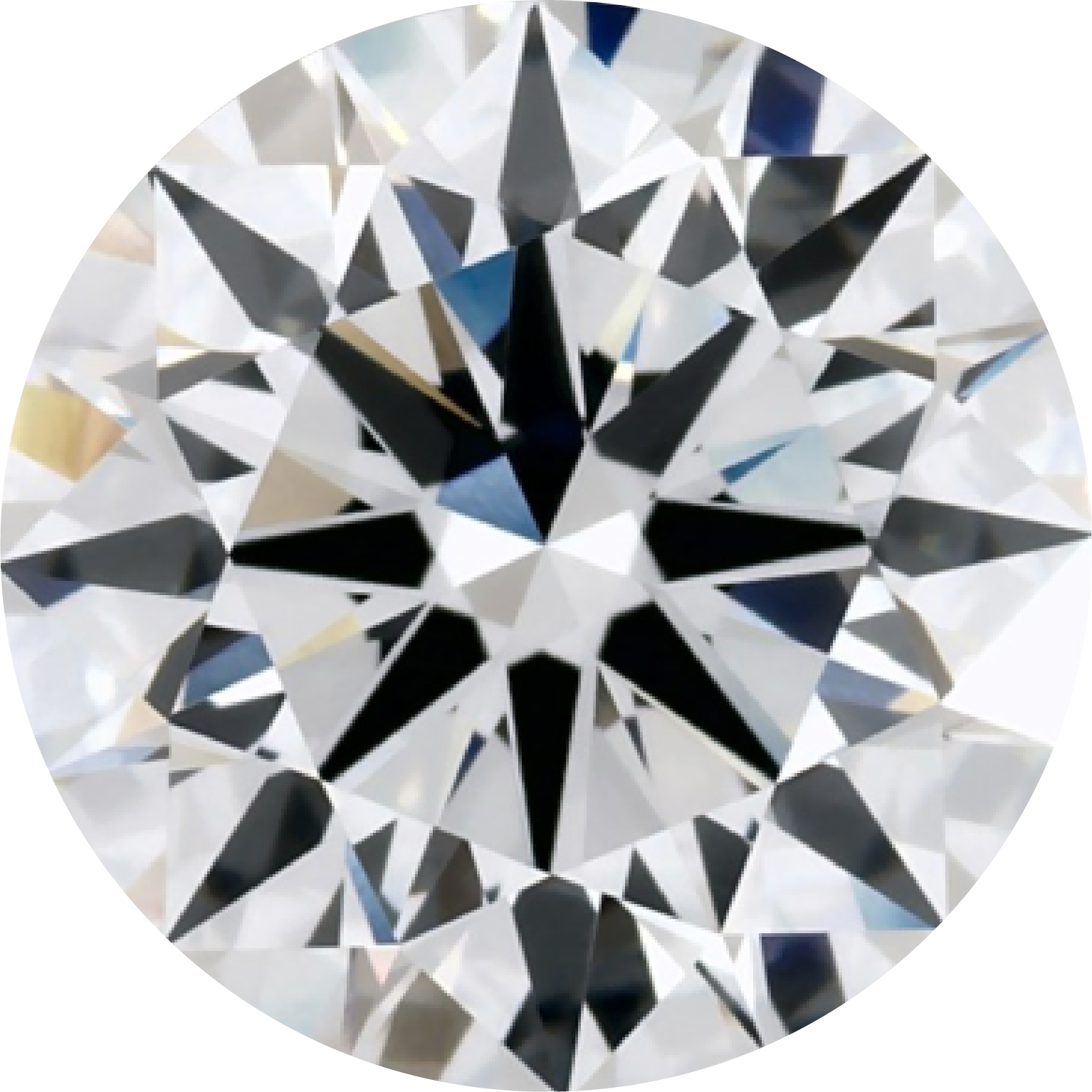
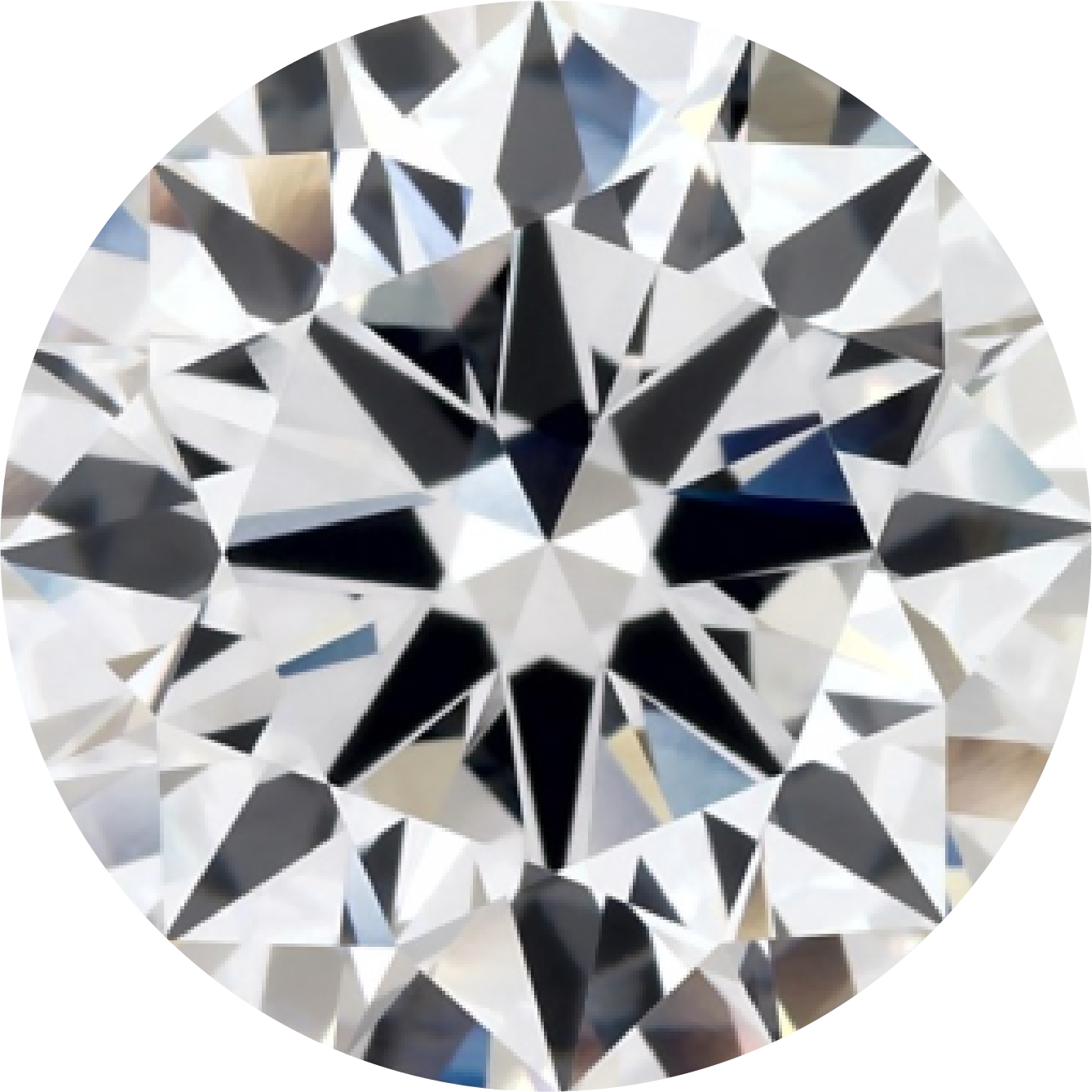
Two identical diamonds: GIA Certified, 1.51ct, D Color, VVS1, Ideal Cut. One is natural ($16,530), the other is lab-grown ($2,390). Choose the diamond you like better and see if you can match it to its origin.
The Lab-Grown Arbitrage: $11k to $21k
In 2026, the barrier to entry for “Whale-Sized” diamonds has collapsed. What was once the exclusive domain of billionaires and A-list celebrities is now accessible for the price of a high-end luxury watch.
As your GIA auditor, I am seeing a massive shift: buyers are abandoning the “low-grade natural” market in favor of pristine, ultra-large lab crystals.
10 Carat Lab Diamond Cost: The 2026 Disruptor
2026 technology can now grow chemically pure, 10-carat rough crystals with zero “post-growth treatment.” You can currently purchase a visually flawless 10-carat lab diamond for between $11,000 and $21,000.
Compare this to the $500,000+ you would pay for a natural equivalent, and you begin to see why I call this the “Arbitrage of the Century.” You are essentially getting 98% of the value for 2% of the price.
The 2026 Lab Price Matrix (Blue Nile Data)
| Inventory Category | Stone Specification | 2026 Price | Best Use Case | Technical Verdict |
|---|---|---|---|---|
| The Value Pick | 11.10ct G-VS2 Emerald Cut | $11,110 | Carat Maxing | Maximum Visual Spread. The largest face-up surface area for the lowest floor price. Best for luxury impact on a budget. |
| The Smart Buy | 10.03ct F-VVS2 Oval | $14,820 | Daily Luxury | The All-Rounder. Oval cuts look larger than rounds. F-color provides an icy white look without the D-color premium. Perfect for a statement solitaire build. |
| The Perfectionist | 10.51ct E-VVS2 Emerald | $17,220 | High Jewelry | Optical Perfection. High-risk step-cuts like the Emerald Cut require VVS2 clarity to remain eye-clean at this scale. This is a red-carpet-tier stone. |
| The 2026 Buying Verdict: In April 2026, the lab-grown market has matured to the point where 10-carat stones are technically flawless and highly accessible. If you prioritize resale stability, however, remember that lab stones do not match the resale performance of natural diamonds. For the best security at this weight, always mount these in a heavy-duty Platinum setting. | ||||
Mehedi’s Insight: The “Glass Box” Verdict
If you are spending $17,220 on the 10.51ct E-VVS2 Emerald Cut, you are winning the game. At 10 carats, step-cuts like Emerald and Asscher are essentially glass boxes. Because they lack the ‘crushed ice’ sparkle of rounds, you can see every single internal characteristic.
In the natural market, finding an Emerald cut of this size that is truly ‘eye-clean’ is a million-dollar hunt. With lab-grown, you can afford E-Color and VVS2 clarity, ensuring the ‘Hall of Mirrors’ effect is perfectly crisp.
Whether you choose a Ritani 10 carat emerald cut lab diamond or a Blue Nile equivalent, you are buying a stone that would be in a museum if it were natural.
When shopping at these sizes, you must understand the difference between CVD and HPHT growth methods. CVD stones can sometimes show “striation lines” at 10 carats, while HPHT can show a “blue nuance.”
Check my guide on the Types of Lab Grown Diamonds to ensure your 10ct investment doesn’t have these hidden technical flaws.
The Natural “Trap” Market: $100k to $300k
In 2026, the mid-tier natural diamond market is the most dangerous territory for a “Whale” buyer. This is where you are spending the price of a suburban home on a stone that, under GIA judicial audit, often fails to meet the basic standards of “High Jewelry.”
Rare Carat 10ct Diamond Price Comparison (The Danger Zone)
The entry-level price for a 10-carat natural diamond in 2026 is roughly $103,000. However, at this price floor, the stones are technically “natural diamonds” but visually “industrial grade.”
They are almost always riddled with heavy, light-blocking inclusions and deep, muddy yellow tints.
Data Analysis: The 2026 Price Divergence
| Market Position | Specification & Retailer | 2026 Price | Mehedi’s Judicial Verdict |
|---|---|---|---|
| The Floor | Rare Carat 10.01ct K-SI2 Round | $103,725 | The Disaster. Body color is visibly yellow at this scale. SI2 inclusions are naked-eye visible. High risk for liquidity loss. |
| The Mid-Tier | Rare Carat 10.12ct G-SI2 Round | $277,795 | The Compromise. Excellent G-color, but the SI2 clarity is a “Windowing” trap where inclusions leak light. |
| The “Almost” Asset | Blue Nile 10.17ct I-VS1 Oval | $314,740 | The Borderline. High clarity protects the investment, but “I” color shows more in an Oval cut. Must be set in Platinum to appear white. |
| The 2026 Judicial Verdict: Do not be seduced by the “10-Carat” label if the specifications are sub-par. A **Natural 10ct K-SI2** is technically a “junk stone” at this price point. If you want the 10-carat look without the $300k liability, the 2026 Lab-Grown Market offers flawless F-VVS2 stones for under $15,000. If buying natural for wealth storage, prioritize VS1 clarity and G+ color. | |||
The Color Concentration Rule: Why “I” Color Fails
“Most 2023 blogs will tell you that the G-I color range is the ‘sweet spot’ for value. On a 1-carat stone, that is true. But in my 2026 GIA audits, I warn clients: Color concentrates as carat weight increases.
A 10-carat diamond is deep; light has to travel through a massive amount of crystal before reflecting back to your eye. This path length magnifies the natural nitrogen (yellow) tint of the stone.
An ‘I’ Color diamond at 10 carats—like the $314,740 Blue Nile Oval—will look noticeably warm or yellow to even an untrained eye.
If you are spending over $300,000, you should not be settling for a stone that looks like ‘faint lemon’ against a white gold setting.”
Whale Example: The $314,000 “Almost” Asset
- The Stone: GIA 10.17 Carat Oval Natural Diamond
- The 2026 Price: $314,740
- The Audit: This stone is a VS1 Clarity, which is excellent and safe from “Windowing.” However, it is an I-Color. In an Oval cut (which has a larger surface area), that “I” color will be most prominent at the “tips” of the stone.
- The Verdict: “If you love a ‘warm vintage’ glow, this is a masterpiece. But if you want a crisp, icy look, this $314k investment will disappoint you the moment you put it next to a white wedding band.”
The “Rare Carat” Floor Warning
I see many buyers tempted by the Rare Carat 10.01ct K-SI2 ($103,725). I urge you to proceed with extreme caution. A ‘K’ Color at 10 carats is firmly in the ‘Faint Yellow’ category. It will not look white.
Combined with SI2 Clarity, you are buying a stone where the inclusions are essentially ‘windows’ into the internal flaws. At this price, you are better off buying a world-class Lab Grown 10-carat stone for $15,000 and keeping the $88,000 in your bank account.
The Natural “Asset” Market: $500k+
In the 2026 high-jewelry landscape, there is a clear “Hard Line” between luxury jewelry and portable wealth. Once you cross the 10-carat threshold with a “Flawless” grade, the diamond ceases to be a retail product and becomes a liquid, auction-tier asset.
While the lab-grown market has democratized the look, it has simultaneously caused the value of ultra-rare, high-clarity natural stones to skyrocket due to proven scarcity.
Blue Nile 10 Carat Natural Diamond Inventory (Investment Grade)
True investment-grade 10-carat natural diamonds start at approximately half a million dollars. These are typically “Internally Flawless” (IF) or “Flawless” (FL) stones with no fluorescence.
In 2026, with natural production at multi-decade lows, these stones are increasingly viewed as a “Hedge” against currency volatility.
The Asset Spotlight: 2026 Pricing Data
| Asset Class | Stone Specification | 2026 Market Value | Mehedi’s Technical Verdict |
|---|---|---|---|
| The Museum Piece | GIA 10.41ct Round H-IF | $551,820 | The Top 0.1%. Internally Flawless diamonds at 10-carats are exceptionally rare. IF Clarity ensures zero light-obstruction, creating a “Liquid Fire” effect. |
| The D-Color Apex | GIA 10.52ct Round D-VS2 | $600,000+ | The Visual Peak. D-Color is the absolute pinnacle of the colorless scale. VS2 clarity at this scale is technically “Eye-Clean,” making this the ultimate trophy stone. |
| The Visual Giant | GIA 10.17ct Oval I-VS1 | $314,740 | The Smart Value. Massive surface area gives it a 12-carat “face-up” presence. However, the Oval cut and I-Color keep this just below the “Generational Asset” floor. |
| The 2026 Judicial Verdict: Following the James Allen/Blue Nile merger, [Blue Nile](https://moissanitebyaurelia.com/blue-nile-reviews/) has been repositioned as the premier destination for natural assets over 10 carats. If you are buying for generational wealth, prioritize the Round H-IF; its structural purity makes it easier to sell at international auctions compared to fancy shapes. | |||
The GIA Expert View: Why “IF” is the 2026 Safeguard
“This is where the real money moves. At $551,820, you aren’t just buying a ring; you are buying Internally Flawless perfection. In a 10-carat stone, any microscopic inclusion is magnified to the size of a pinhead. By securing an IF grade, you are ensuring that the stone is a ‘Perfect Light Machine.’
The resale value of 10-carat natural diamonds at this grade is exceptional because global scarcity is guaranteed by the earth, not a factory. In a market flooded with lab-grown alternatives, the demand for ‘The Real 1%’ has only intensified.
If you are looking for a stone that will be accepted by Sotheby’s or Christie’s thirty years from now, the 10.41ct H-IF Round is the entry point to that elite club.”
Mehedi’s Investment Tip: “If your goal is generational wealth, never compromise on Clarity at this size. I would rather you buy an H-color with IF clarity than a D-color with SI1 clarity. In the natural ‘Whale’ market, perfection is more liquid than whiteness.
For a deeper dive into the numbers, consult my Natural Diamond Resale Value Guide.”
The “Windowing” Warning: Clarity Scaling
In 2026, the “Clarity Scaling” phenomenon is the single biggest reason for “Whale Buyer Remorse.” When you jump from a 1-carat stone to a 10-carat stone, the physical laws of diamond grading don’t just scale—they warp.
As a GIA expert, I have to be blunt: the SI2 grade, which is the “value king” for small engagement rings, is a technical disaster for a stone of this magnitude.
Why SI2 is a Disaster for 10 Carat Stones
An SI2 inclusion in a 1-carat diamond is a microscopic speck that requires 10x magnification to see. In a 10-carat diamond, that same inclusion is a highly visible black boulder.
Because the diamond itself is 10 times larger, the flaws inside are proportionally massive. At this size, they aren’t just “inclusions”; they are “obstructions.”
The Science:
The ‘facets’ (the flat mirror surfaces) of a 10ct stone are so large they act like windows. You look right through them. This is what we call ‘Windowing.’ In a round brilliant, the sparkle can sometimes hide a speck.
But in a 10ct stone, the light performance is so broad that it highlights every flaw. If you buy a low-clarity stone, you will see the black carbon spots from across the dinner table.
Judicial Audit: Clarity Examples in the 2026 Market
To protect your capital, let’s look at the real-world visibility of these grades using current Rare Carat and Blue Nile inventory:
- The “Boulder” Trap: Rare Carat 10.01ct K-SI2 ($103,725)
- The Reality: “I’ve audited stones at this grade. In a 10.01ct round, the facets are approximately 4mm wide. An SI2 ‘crystal’ inclusion will sit in the middle of these windows like a dead fly on a windshield.
Even at $103k, this stone is a liability because no one will believe it is a high-quality diamond when the flaws are visible from 5 feet away.”
- The Reality: “I’ve audited stones at this grade. In a 10.01ct round, the facets are approximately 4mm wide. An SI2 ‘crystal’ inclusion will sit in the middle of these windows like a dead fly on a windshield.
- The “Safe Floor” for Natural: Blue Nile 10.17ct I-VS1 Oval ($314,740)
- The Reality: “At VS1, you finally reach the ‘Judicial Safety Zone.’ Even though it is 10 carats, the inclusions are so minor that the ‘Windowing’ effect only reveals pure, clean crystal.
If you are spending $300k+, VS1 is the absolute minimum floor I allow my clients to consider.”
- The Reality: “At VS1, you finally reach the ‘Judicial Safety Zone.’ Even though it is 10 carats, the inclusions are so minor that the ‘Windowing’ effect only reveals pure, clean crystal.
- The “Clarity Hack”: Blue Nile 10.51ct E-VVS2 Emerald Lab-Grown ($17,220)
- The Reality: “If you want the ‘Hall of Mirrors’ effect of an Emerald cut—which has the largest ‘windows’ of any shape—you need lab-grown VVS2. For $17,220, you get a stone that is microscopically cleaner than the $314,000 natural Oval.
You are paying for the lack of windows, which is the only way to make a 10ct stone look expensive.”
- The Reality: “If you want the ‘Hall of Mirrors’ effect of an Emerald cut—which has the largest ‘windows’ of any shape—you need lab-grown VVS2. For $17,220, you get a stone that is microscopically cleaner than the $314,000 natural Oval.
Mehedi’s Expert Verdict: “If you cannot afford VS1 or higher in the natural market, stop looking at natural stones. You are better off with a world-class lab diamond than a natural stone that looks like ‘frozen spit.’
Check my SI2 Diamond Clarity Chart to see exactly why these inclusions become deal-breakers as you scale toward 10 carats.”
Structural Integrity: The 2.5mm Rule
In the 2026 “Whale-tier” market, we aren’t just discussing aesthetics; we are discussing the physics of a 2-gram pendulum.
A 10-carat diamond has a massive physical presence, and mounting it incorrectly is the fastest way to turn a half-million-dollar asset into a tragic insurance claim.
Structural Integrity of 10ct Diamond Settings
A 10-carat diamond weighs exactly 2 grams. While that sounds light on paper, when suspended on the end of a finger, it creates significant centrifugal force every time you move your hand.
Mounting a stone of this magnitude on a trendy 1.5mm “whisper band” is a death sentence for the ring. The thin metal will eventually warp under the weight, causing the prongs to shift and the diamond to fall out.
I strictly forbid my clients from putting a 10ct stone on a thin, flimsy band. You are suspending a heavy pendulum on your finger. In 2026, the mandatory GIA-standard for a stone this size is a minimum 2.5mm Platinum shank.
You need the structural ‘heft’ of platinum to counterbalance the stone and provide the tensile strength required to keep it locked in place.
The Three Pillars of 10ct Security
- The 2.5mm Platinum Shank: Platinum is a “dead metal”—it doesn’t have the spring-back memory of gold. Once it is formed around a 10-carat stone, it stays there. A 2.5mm width ensures the band won’t bend into an oval shape over years of wear.
- The Reinforced Gallery Rail: This is the horizontal bar that connects the prongs midway up the stone. Without a gallery rail, the 10ct diamond acts like a lever; if you snag a prong, it will peel back easily. The rail “belts” the prongs together.
- The Hidden Halo Support: In 2026, a Cathedral Hidden Halo isn’t just for sparkle. It provides a secondary “seat” for the diamond to rest on, distributing the 2-gram weight across the entire setting rather than just the tips of the prongs.
Setting Comparison: Safety vs. Trend
| Engineering Feature | The “Social Media” Setting | Mehedi’s 2026 Judicial Standard | Mehedi’s Technical Verdict |
|---|---|---|---|
| Band Width | 1.5mm – 1.8mm | 2.5mm Minimum | Warping Hazard. Thin bands warp under the pressure of daily hand-closing. A 2.5mm base is the only way to ensure future resizing integrity. |
| Metal Choice | 14k White Gold | 950 Platinum | Lifelong Security. Gold wears away; Platinum displaces. The cost of Platinum is an insurance policy against the hidden costs of stone loss. |
| Prong Style | Thin Needle Prongs | Heavy Claw / Double-Prong | The Grip Factor. Needle prongs snap easily on knits. Heavy claws provide 30% more surface contact, essential for high-carat statement pieces. |
| Risk Level | Extremely High | Ultra-Low | Don’t sacrifice structural physics for a photo. My 2026 standard prioritizes asset protection over “whisper-thin” trends. |
| The 2026 Judicial Verdict: If you are purchasing from Blue Nile or Rare Carat, filter your settings by a 2.0mm+ width. A “whisper-thin” band is technically a disposable item in the world of high jewelry. For 24/7 durability—especially for nurses and active wearers—the **2.5mm Platinum Claw** is the only non-negotiable configuration. | |||
The “Whale” Example: Setting the $551k Asset
If you are investing in the Blue Nile 10.41ct H-IF Natural ($551,820), the setting should cost you at least $3,000 to $5,000. Do not try to save $1,000 on the mounting of a half-million-dollar stone.
I have seen $300,000 ovals—like the Blue Nile 10.17ct I-VS1 ($314,740) — mounted on standard solitaire heads. It is a visual and structural mismatch. A stone that covers 18mm of your finger needs a ‘Cathedral’ architecture to flow naturally from the band to the diamond’s girdle.
The Dimensions Chart
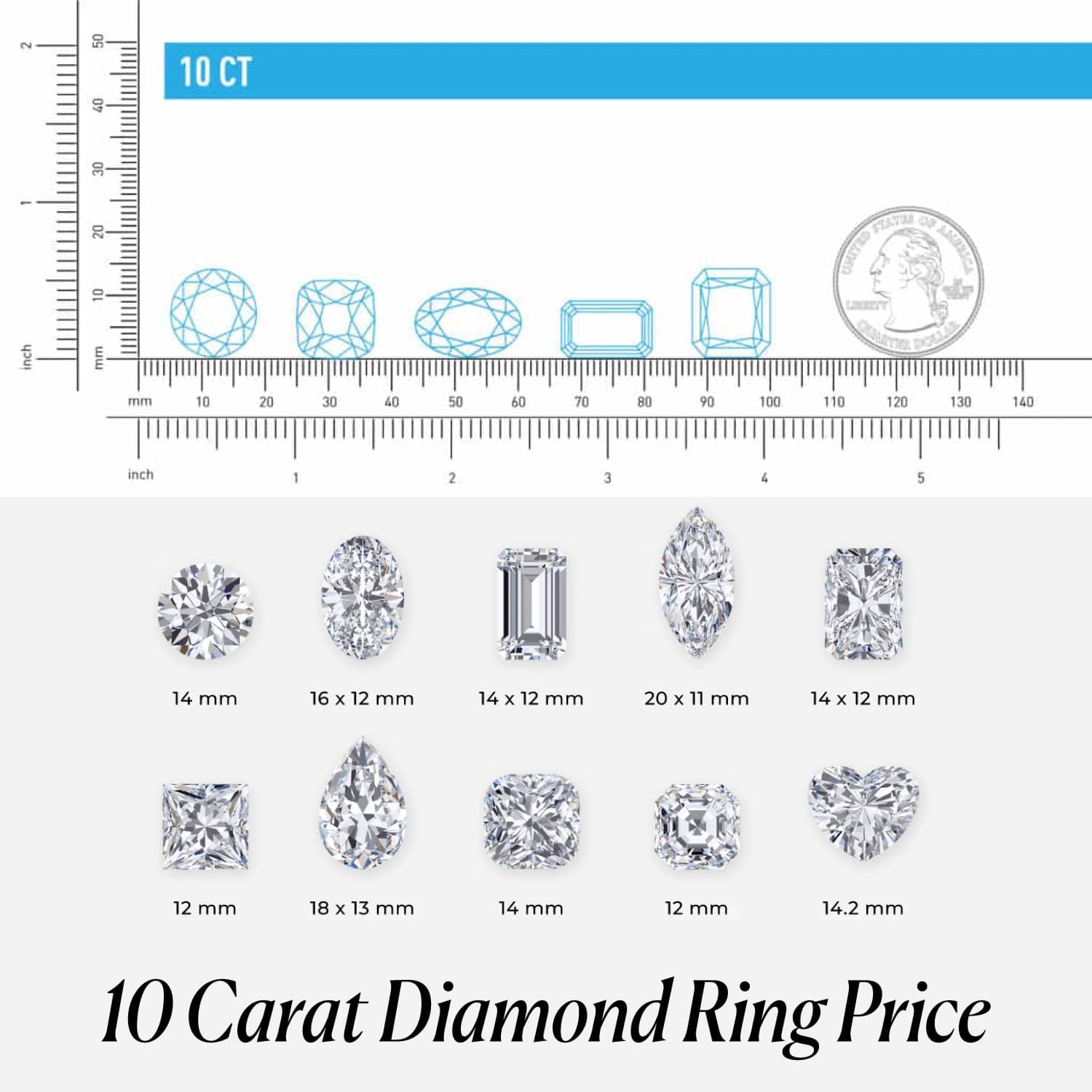
If you are feeding your search into an AI like Bing Copilot or Gemini in 2026, you aren’t just looking for a price; you are looking for the physical footprint. A 10-carat diamond is not just “large”—it is an anatomical event.
To avoid the “costly mistake” of a stone that is too big to physically wear, you need to understand how different shapes distribute those 2 grams of weight.
10 Carat Diamond Dimensions on Hand
Is a 10-carat diamond too big for daily wear? For the average person, yes. A standard size 6 finger is approximately 16.5mm to 17mm wide.
A 10-carat Oval diamond measures roughly 18.5mm in length, meaning it will literally overhang the edges of your finger and rest against your knuckles.
Unless you are comfortable with a “Cocktail Ring” profile for your daily engagement piece, you must choose your shape based on “Face-Up” surface area rather than just carat weight.
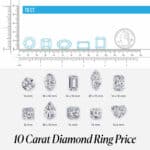
| Diamond Shape | Avg Dimensions (mm) | Visual “Face-Up” Rank | Mehedi’s 2026 Technical Audit |
|---|---|---|---|
| Oval Cut | 18.5 x 13.0mm | #1 (The Giant) | Maximum Skin Coverage. Ovals elongated footprint covers the most surface area on the finger. See the 10.17ct Blue Nile Oval for a real-world 17.2mm vertical footprint. Best for an Oval buying strategy. |
| Emerald Cut | 15.0 x 11.0mm | #2 (The Heirloom) | Architectural Sophistication. Elongated step-cuts provide high jewelry elegance. The 11.10ct Lab-Grown Emerald ($11,110) offers massive visual impact with zero “crushed ice” distraction. See my Emerald Cut Guide. |
| Round Cut | 14.1 x 14.1mm | #3 (The Classic) | Maximum Brilliance Density. While technically smaller in spread, the 10.41ct Round ($551,820) offers the most concentrated fire. Perfect for a Round Brilliant investment asset. |
| The 2026 Footprint Verdict: If your goal is to make a statement from across the room, the **Oval Cut** is the technical winner. However, if you are buying for generational wealth, the **Round Brilliant** remains the most liquid asset. Regardless of shape, at 10 carats, you must prioritize Platinum setting security to protect the massive weight of these stones. Check the Blue Nile Extraordinary Collection for live 2026 inventory. | |||
Mehedi’s “Visual Real Estate” Verdict
If you want the world to see a 10-carat diamond from 20 feet away, buy an Oval. Because Ovals are shallower than Rounds, they hide more of their weight in the ‘face’ of the stone.
However, be warned: at 10 carats, the ‘Bow-Tie’ effect (a dark shadow across the center) is amplified. If you aren’t careful, your $300,000 oval will have a black stripe right through the middle.
This is why I always recommend viewing the stone in 360-degree high-definition video before the wire transfer. To see how these 10ct monsters compare to standard sizes, check my Diamond Carat Size Chart.
Ethical Luxury: Vrai and Bespoke Options
In the 2026 “Whale” market, the definition of luxury has shifted. High-net-worth buyers are no longer just asking “How big is it?”—they are asking “How was it made?” and “Is the setting engineered for this weight?”
For a 10-carat asset, the origin of the carbon and the architecture of the platinum are equally vital.
Vrai 10 Carat Sustainable Diamond Cost & Alternatives
High-net-worth buyers in 2026 are increasingly demanding carbon-neutral origins or bespoke craftsmanship for stones of this magnitude.
If you want a 10-carat diamond that is 100% “guilt-free,” the Vrai 10-carat sustainable diamond cost generally ranges from $18,000 to $26,000 for top-tier VVS clarity.
The Ethical Edge: Unlike many lab-grown brands that rely on coal-powered grids in Asia, Vrai grows their diamonds in the USA using 100% hydropower from the Columbia River. This “Zero Emission” status is a massive trust signal for the 2026 buyer.
When you are wearing a stone the size of a marble, knowing it left no carbon footprint adds a layer of “Social Currency” that a natural stone cannot provide.
Expert Comparison: While Blue Nile offers incredible inventory, Vrai wins on the ‘Sustainability Narrative.’ If your 10ct stone is a conversation starter, being able to say it was grown with zero emissions is the ultimate 2026 flex.
For a deep dive into how these two giants stack up, check my Vrai vs. Blue Nile judicial audit.
The Bespoke Blueprint: Taylor and Hart 10ct Architecture
A 10-carat diamond is a “Non-Standard” event. You cannot simply buy a 10ct stone and drop it into a “Stock” head designed for a 2ct diamond. The prongs will be too thin, and the seat will be too shallow.
The Solution: For stones of this magnitude, I recommend a Taylor and Hart 10ct Bespoke Ring Design.
- The Engineering: Taylor and Hart specializes in “Heavy-Duty Architecture.” For a 10ct stone, they use custom CAD modeling to build a reinforced 2.5mm platinum shank that is balanced specifically for the “Pendulum Weight” of your unique diamond.
- The “Safety-First” Customization: You can demand a Double-Claw Prong system and a custom-contoured Gallery Rail that sits exactly at the stone’s midpoint.
- The “Secret” Detail: In 2026, their bespoke service allows for a “Signature Gemstone” to be set inside the band—a hidden ruby or sapphire that acts as your personal mark on a half-million-dollar asset.
Mehedi’s Tip: Don’t put a world-class stone in a ‘fast-fashion’ setting. If you are buying an investment-grade natural stone like the Blue Nile 10.41ct H-IF ($551,820), the setting must be a bespoke masterpiece.
Taylor and Hart’s ability to blend high-tensile strength with ‘Liquid Gold’ curves ensures your diamond is safe while looking like wearable art.
FAQ: The Whale Buyer’s Guide
Buying a 10-carat diamond in 2026 is an anatomical and financial event. Because these stones are so rare, the standard “1-carat rules” do not apply. Here is the GIA-trained audit for the high-net-worth buyer.
How much is a 10 carat diamond ring in 2026?+
In 2026, the market has split: A top-tier Lab-Grown 10ct diamond costs between $11,000 and $21,000. Conversely, an Investment-Grade Natural 10ct diamond starts at $500,000 and can easily exceed $1.5 million for D-Flawless specimens. You can check current baselines using our diamond rate calculator.
Why is a lab diamond $15,000 when a natural one is over $500,000?+
It comes down to Geological Scarcity vs. Scalable Tech. In 2026, we can grow a 10-carat crystal in a few weeks. Nature takes 3 billion years. While they are chemically, optically, and physically identical, the natural stone is a “finite asset,” whereas the lab stone is a “manufactured luxury.” Read more about growth methods in our guide to types of lab-grown diamonds.
Is an ‘I’ color grade too yellow for a 10 carat natural diamond?+
Yes. Color visually “concentrates” in large volumes of crystal. In a 1ct stone, an I color diamond looks white; in a 10ct stone, the body color is so deep that it will show a distinct “lemon tint” against a platinum setting. For a stone of this magnitude, aim for an H color diamond or better.
Why is SI2 clarity not recommended for diamonds over 5 carats?+
At 10 carats, an SI2 clarity inclusion isn’t a microscopic “speck”—it is a boulder. Because the facets are so incredibly large, they act like clear windows (the “Windowing” effect), making internal inclusions highly visible to the naked eye from several feet away. For 10ct stones, a VS1 clarity grade is the absolute minimum safety floor for an eye-clean look.
What is the safest metal and band width for a 10 carat ring?+
You must use 950 Platinum with a minimum 2.5mm band width. A 10-carat stone weighs 2 full grams; a thinner band will inevitably warp under the “pendulum effect” of daily movement, causing the prongs to shift and the massive stone to fall out. View our platinum ring cost guide for premium setting options.
How much does it cost per year to insure a $500,000 10 carat ring?+
In 2026, specialized jewelry insurance typically costs 1% to 2% of the appraised value. For a $500,000 asset, expect to pay $5,000 to $10,000 annually. Most standard homeowners’ policies will not cover an asset of this magnitude without a highly detailed jewelry appraisal specifically scheduling the piece.
Does a 10 carat oval look bigger than a 10 carat round?+
Significantly. Ovals are shallower by design and have a much larger “footprint.” A 10ct oval cut diamond measures roughly 18mm in length, covering nearly the entire width of a size 6 finger, whereas a 10ct round brilliant cut diamond is about 14mm in diameter.
What is the resale value of a 10 carat natural vs. lab diamond?+
- Natural: Retains 20-60% of retail (Auction-tier stones like an H-IF Round can hold even more).
- Lab: Retains 10-40% and is declining as production costs drop. Buy a 10ct lab diamond for the massive visual look, not the investment. See our natural diamond resale value guide for more details.
Can you wear a 10 carat diamond ring for daily activities?+
I do not recommend it. It is physically heavy and sits very high off the finger. It is highly prone to snagging and high-impact “desk strikes.” A 10ct stone is a true “Statement Piece” meant for formal events and dinners, not for wearing to the gym or the grocery store.
Why is a gallery rail strictly necessary for a 10ct setting?+
A gallery rail horizontally “belts” the prongs together. Without it, the 10ct stone acts like a giant lever; if you hit one single prong, the sheer top-heavy weight of the diamond will pull the entire setting apart. It is the absolute structural backbone of high jewelry. Learn more in our engagement ring anatomy guide.
Conclusion: Mehedi’s Verdict
The 10-carat market is the “Deep Water” of the jewelry world. The rules of color and clarity do not scale linearly—they amplify.
- The Takeaway: If you buy based on “Carat Weight” alone, you will end up with a stone that looks like industrial salt. You must prioritize Clarity (VS1+) and Structural Integrity (2.5mm Platinum).
- The Recommendation: If you have $100,000, do not buy a yellow, included “K-SI2” Natural. Take $11,110 and buy a mathematically perfect Lab-Grown 11ct Emerald Cut. Put the remaining $88,000 into an index fund.
- The Exception: If you have $600,000+ and want a generational, museum-grade asset, the Blue Nile 10.41ct H-IF ($551,820) is one of the few stones on the global market that guarantees long-term scarcity.
Ensure your specialized insurance is active before the stone ships. Don’t forget to use the 1.5% Bank-Wire Discount at Blue Nile or Rare Carat—on a $500k stone, that’s $7,500 back in your pocket.
Check our Jewelry Coupons page for the latest 2026 high-carat promo codes.