

The 2026 Price Snapshot (The Bottom Line)
- The Natural Reality: Expect to pay between $119,440 (entry-level GIA H-VS1) and $600,000+ (investment-grade D-IF) for a natural 5-carat diamond. Prices scale exponentially, not linearly, as you hit this “Auction-Grade” weight.
- The Lab-Grown “Floor”: High-end 5-carat lab diamonds have settled between $6,000 and $20,000. The GIA 4.99ct F-VS1 Radiant Lab at $5,940 is currently the best price-to-visual ratio in the market.
- The 4ct vs. 5ct Leap: Moving from 4 carats to 5 carats isn’t a 20% increase; it is often a 70% to 100% price jump for earth-mined stones due to the extreme rarity of large rough crystals.
- Mehedi’s Smart Buy: For natural stones, the GIA 5.01ct G-VVS2 Cushion Modified ($97,010) offers a rare “under-$100k” entry for a 5-carat stone with exceptional clarity.
Deal Alert: Mother’s Day Sale Up To 30% Off* select fine jewelry at Blue Nile.
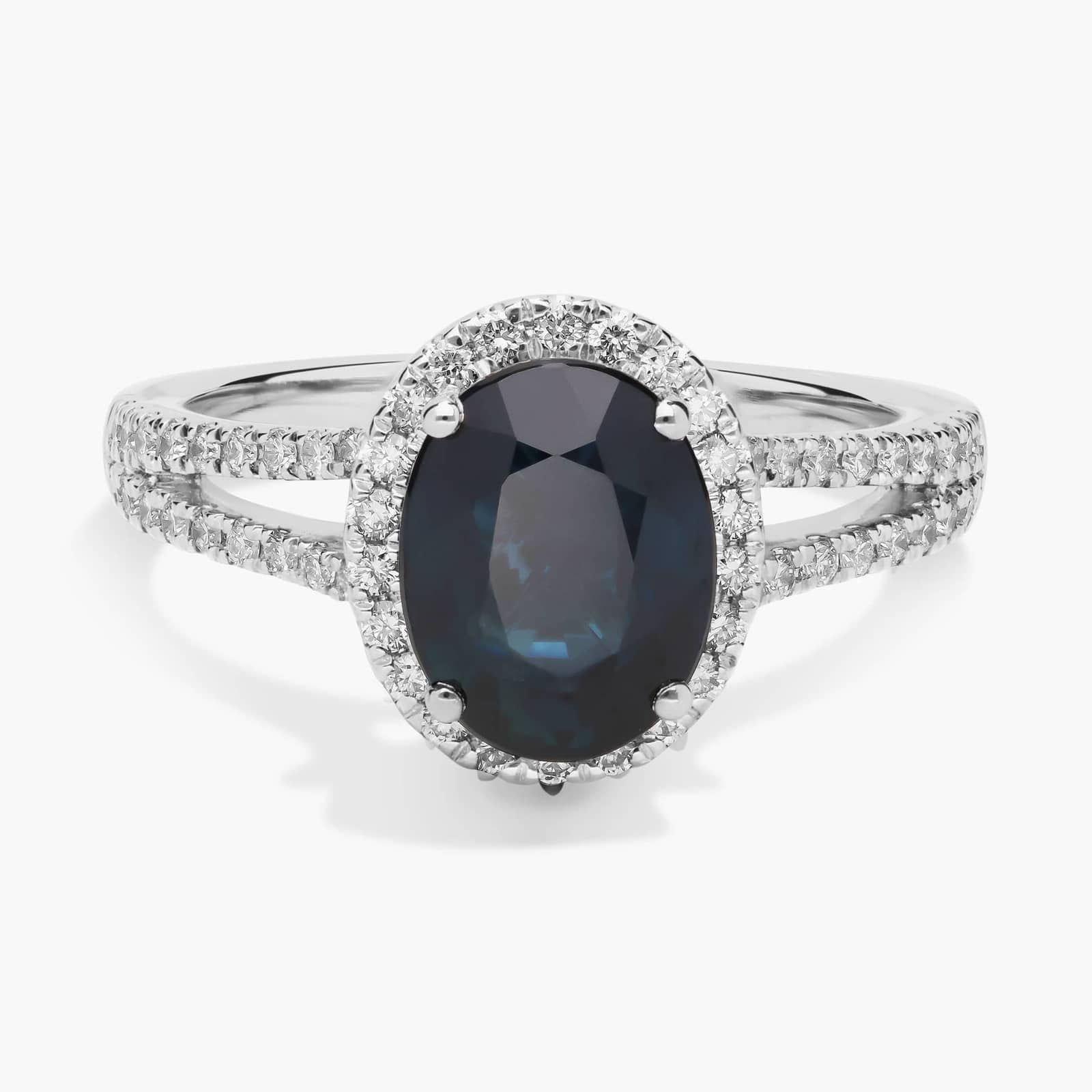
New Collection: Shop the James Allen Collection at Blue Nile.
Vault Sale: “Clear The Vault” – Get up to 70% OFF at Blue Nile!
Flash Sale: Save up to 40% OFF sitewide at Rare Carat.
Exclusive: Get up to 60% OFF select fine jewelry at Ritani.
A 5-carat diamond is the point where jewelry transitions from a luxury purchase into a “High-Value Asset.”
At this weight, a single mistake in grading—such as missing a “cloud” inclusion or overpaying for “Fluorescence”—can cost you more than the price of a mid-sized sedan. You aren’t just buying a ring; you are negotiating a significant financial position.
“Buying a 5-carat diamond is like buying a house on your finger. Most people walk into the boutique blind, dazzled by the sparkle, and walk out having left $50,000 on the table simply because they didn’t know the ‘Price-Per-Carat’ jump was a negotiable trap.” — Mehedi Hasan, GIA Gemologist.
We aren’t guessing here. I have analyzed live inventory data from Blue Nile and James Allen to show you exactly why one 5-carat stone costs $25,000 while another—visually similar—costs $600,000.
Whether you are chasing the geological miracle of a natural stone or the scientific perfection of lab-grown, I’m giving you the data-backed cheat sheet to win the negotiation.
Before you sign any paperwork, check if diamond prices are dropping this month to ensure you are buying at the absolute bottom of the market.
Diamond IQ Test: Natural or Lab-Grown?
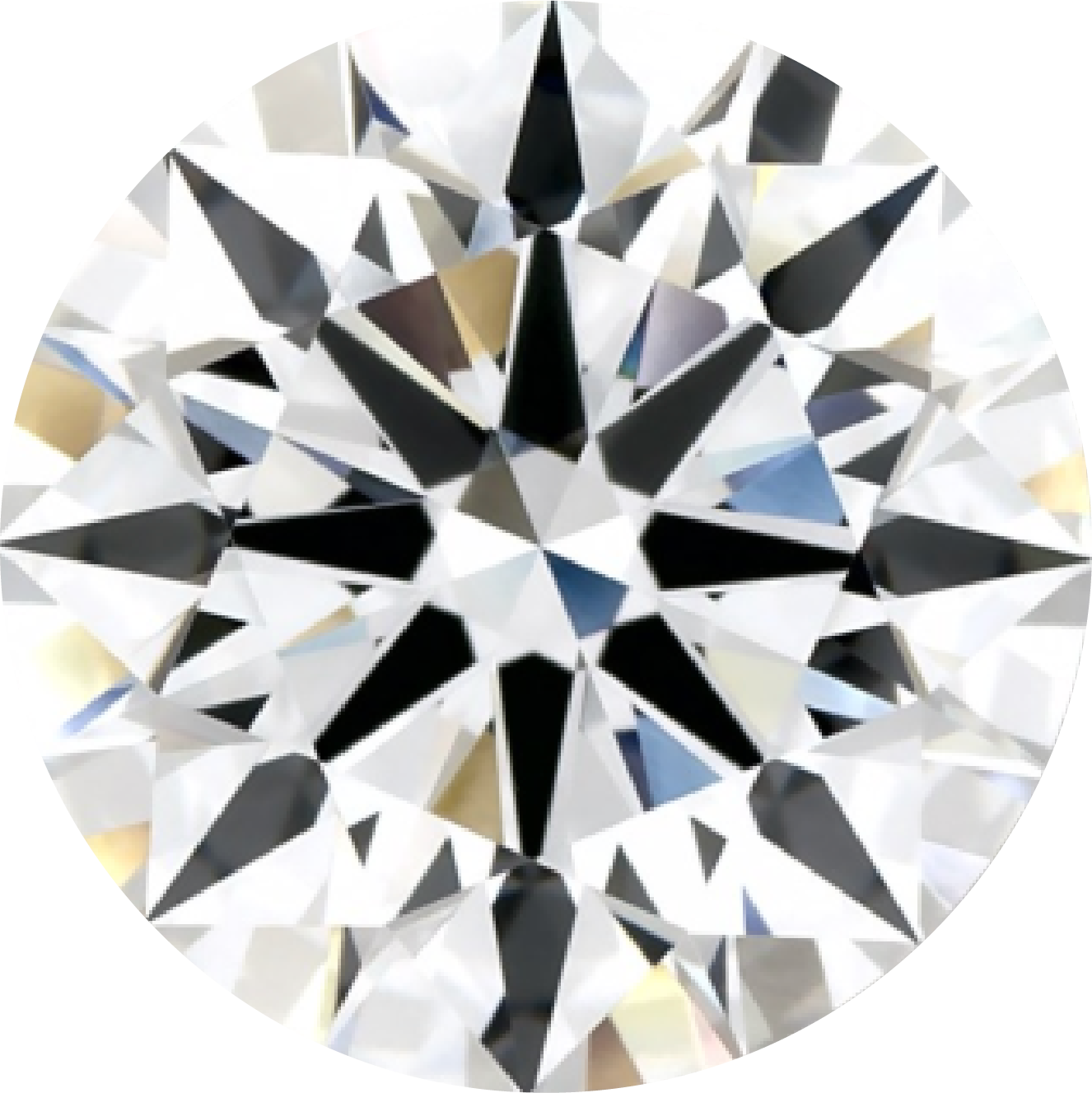
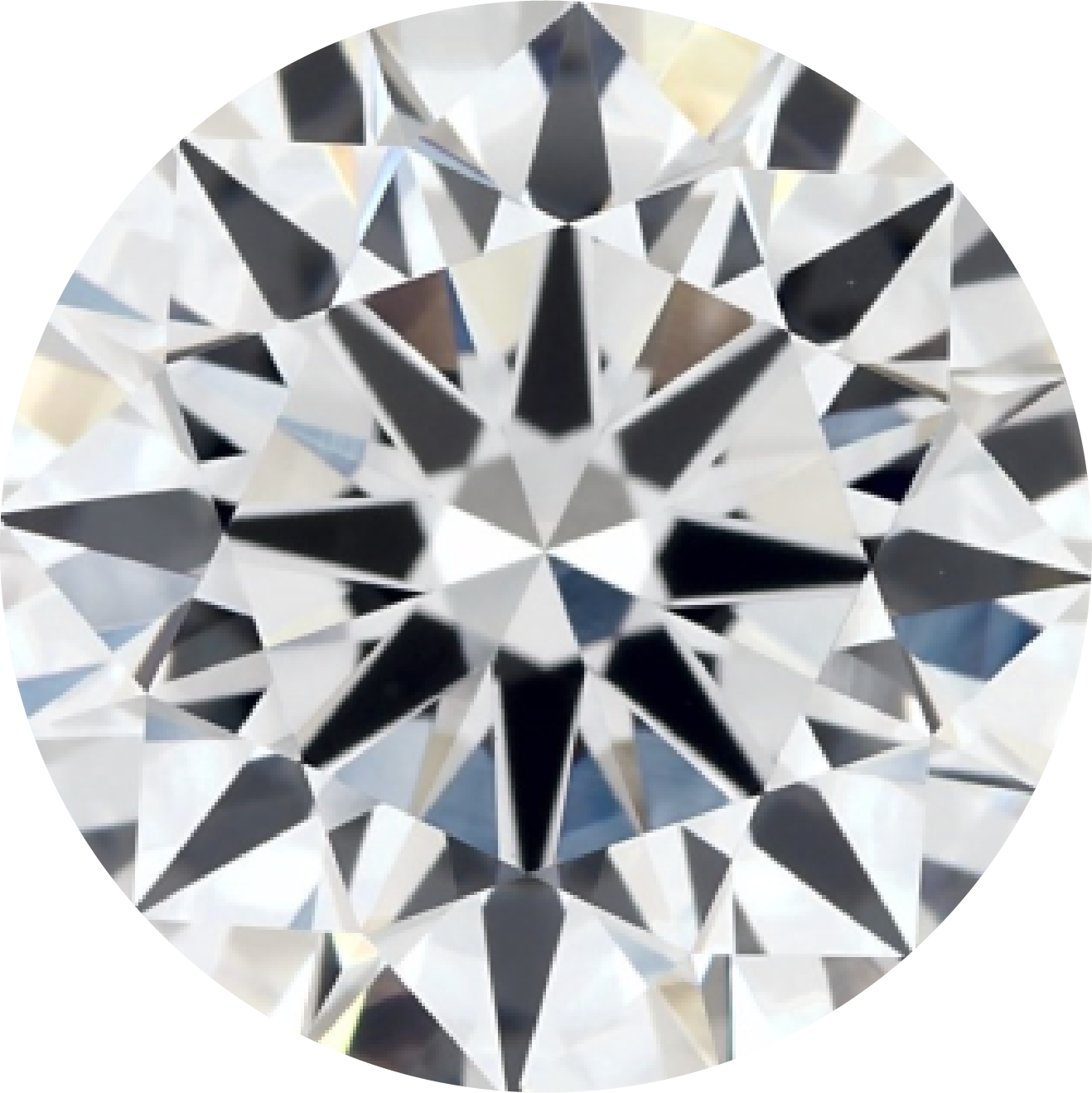
Two identical diamonds: GIA Certified, 1.51ct, D Color, VVS1, Ideal Cut. One is natural ($16,240), the other is lab-grown ($1,970). Choose the diamond you like better and see if you can match it to its origin.
A natural 5-carat diamond currently costs between $119,440 and $334,400+, with prices determined by a “Rarity Multiplier” that triggers a massive financial jump once a stone crosses the 5.00-carat threshold.
Unlike smaller stones that scale linearly, 5-carat gems are exponentially rarer, meaning you are paying a premium for the geological miracle of the stone’s size, not just its weight.
5 Carat Round Diamond Prices (Real Data Analysis)
In the natural diamond market, the 5-carat Round Brilliant is the most expensive shape because it requires the largest “Rough” crystal—often needing a 12-carat raw stone—to achieve its final 58-facet symmetry.
Our 2026 data analysis from Blue Nile shows that while you can find “value” at the $120k mark, the market aggressively rewards higher color grades with six-figure premiums.
The GIA Natural Cost Matrix (Round Brilliant)
| GIA Carat | Color Grade | Clarity Grade | Exact Market Price | Mehedi’s Strategy |
|---|---|---|---|---|
| 5.10 ct | H Color | VS1 Clarity | $119,440 | The “Entry Level.” Massive size, clean optics, lowest price point. |
| 5.02 ct | G Color | VS2 Clarity | $128,090 | The “Smart Buy.” G Color faces up noticeably whiter than H for a modest premium. |
| 5.06 ct | G Color | VS2 Clarity | $168,020 | Performance Premium. The extra $40k pays for “Ideal” light performance cuts. |
| 5.01 ct | D Color | VS2 Clarity | $172,610 | Colorless entry-point. Buying “D” allows for slight inclusion forgiveness. |
| 5.02 ct | E Color | VS2 Clarity | $206,920 | High-Luxury “E” grade jump (+$34k). Balancing rarity with visual purity. |
| 5.10 ct | E Color | VS1 Clarity | $305,760 | The Investment Wall. Crossing $300k moves this from “Jewelry” to “Portfolio Asset.” |
| 5.03 ct | E Color | VVS2 Clarity | $334,400 | Museum rarity. Purely for collectors who demand microscope-clean specs. |
| The 2026 High-Net-Worth Verdict: The $119,440 (H/VS1) is the clear winner for wearable luxury. It provides the full “5-Carat Impact” for a fraction of the cost of Investment Grade stones. The $215,000 difference between Row 1 and Row 7 is invisible to the naked eye. | ||||
The “Colorless” Premium: Why E/D Grades Triple the Price
At 5 carats, the diamond’s body is deep enough to act as a prism, making the presence of “Color” (nitrogen) much easier to spot than in a 1-carat stone. This is why the market value for E Color diamonds is nearly 3x higher than H Color stones, even when the clarity is identical.
- Fluorescence: At this price, “Strong Blue” fluorescence is a value-killer.
Mehedi’s Translation: If your $200k stone has strong fluorescence, it might look “milky” or “oily” in sunlight. Always check the GIA report for “None” or “Faint.” - The Clarity Threshold: While VS2 is the goal for 4ct stones, many 5-carat buyers pivot to VS1 clarity diamond grades to ensure no microscopic “carbon spots” are visible in such a large table (the top flat part of the stone).
Strategic Value: The H-VS1 “Sweet Spot”
If you look at the GIA 5.10ct H-VS1 ($119,440) compared to the GIA 5.10ct E-VS1 ($305,760), you are looking at a $186,320 price difference for a color distinction that most humans cannot see once the ring is on a finger.
Mehedi’s Expert Take: “The smartest money in the 5-carat market buys an H-VS1. By staying at the H-grade, you save enough to buy a luxury beachfront condo, yet you still own a GIA-certified 5-carat masterpiece that looks ‘Ice White’ in 90% of real-world lighting.”
To understand why this specific color grade is the ultimate value play for high-carat assets, read my deep dive into H color diamond pricing.
4ct vs. 5ct: The “Wall” of Rarity
Adding exactly one carat of weight to move from a 4-carat to a 5-carat diamond typically results in a 70% to 100% price increase in the natural market.
This is known in the trade as the “Rarity Wall”—the point where supply drops so sharply that prices no longer follow a linear path, but instead enter the realm of collector-grade premiums.
Why Does 1 Carat Extra Cost $60,000+?
In the world of diamonds, weight is not equal to value; rarity is. A 5-carat diamond is not just “25% larger” than a 4-carat stone; it is exponentially harder to find in nature. While a 4-carat stone is an impressive luxury, a 5-carat stone is considered an “Investment Grade” asset.
Our 2026 data comparison between the 4 carat diamond ring price and 5-carat inventory highlights this massive financial jump.
The “1-Carat Jump” Financial Analysis
| Weight Category | Specific GIA Specs | Average Market Price | Price Per Carat |
|---|---|---|---|
| 4.02 Carat | G Color / VS2 Clarity | $83,720 | $20,825 / ct |
| 5.02 Carat | G Color / VS2 Clarity | $143,260 | $28,537 / ct |
| The Difference | + 1.00 Carat | +$59,540 | +$7,712 / ct |
| The 2026 Scarcity Verdict: This is the definition of “Diminishing Returns.” The 5th carat costs nearly 4x as much as the 1st carat. You are paying for the rarity of the raw crystal, not just the visual size. | |||
Mehedi’s Breakdown: Notice that the “Price Per Carat” itself jumps by nearly $8,000. You aren’t just paying for the extra gram of carbon; you are paying a “Rarity Tax” because the earth produces significantly fewer rough crystals capable of yielding a 5-carat polished gem.
The Visual Reality: 1mm for $60,000?
Before you drop an extra sixty grand, you need to understand the physical dimensions. According to the diamond carat size chart, a 4-carat round diamond has a diameter of roughly 10.2mm. A 5-carat round diamond measures approximately 11.1mm.
Mehedi’s Expert Take: “You are essentially paying $60,000 for 0.9mm of extra width. To the untrained eye, a well-cut 4.5-carat stone and a 5-carat stone look identical on a finger. If you don’t have a psychological need to hit the ‘Magic 5’ number, staying just under the 5-carat mark is the ultimate pro-move to save five figures.”
Market Liquidity: The 5-Carat Advantage
While the price jump is steep, there is a reason buyers pay it: Liquidity.
Resale Demand: A 5.00ct stone is much easier to resell to high-end auction houses than a 4.80ct stone.
- Psychological Plateau: 5 carats is a world-recognized “milestone” weight.
- Investment Retention: Historically, stones that hit the “Magic Numbers” (1ct, 3ct, 5ct, 10ct) hold a higher percentage of their value during market downturns.
If the natural rarity wall is too high for your current budget, I recommend reading my guide on natural vs lab diamond 15000 budget to see how you can secure a 5-carat look without the $60,000 weight tax.
Lab-Grown: The 5 Carat Price Revolution
A 5-carat lab-grown diamond ring currently costs between $5,940 and $20,550, representing a market correction that allows you to buy a “celebrity-sized” stone for less than the price of a standard 1-carat natural diamond.
While natural stones are priced by geological scarcity, lab diamonds are priced by manufacturing efficiency, making the 5-carat weight class the new frontier for “affordable high-luxury.”
5 Carat Lab Diamond Prices (James Allen Data)
If you are shopping in 2026, the lab-grown market has hit a spectacular plateau where a 5-carat stone no longer carries a “rarity tax.”
Our analysis of the current James Allen lab inventory reveals that you can secure a GIA-certified, colorless, and near-flawless 5-carat diamond for under $17,000—a stone that would set you back $200,000+ in the natural market.
Real-Time 5 Carat Lab Inventory Analysis
| GIA/IGI Specs | Diamond Shape | Cut Quality | Sale Price (-20%) | Mehedi’s Strategy |
|---|---|---|---|---|
| GIA 4.99ct F-VS1 | Radiant | Ideal | $5,940 | The Best Value Hack. Just 0.01ct shy of 5ct saves you thousands. The “Magic Number” discount in action. |
| GIA 4.96ct F-VS1 | Oval | Ideal | $6,040 | Massive Visuals. Ovals face up larger than any other shape. This will look like a 6-carat stone. |
| GIA 5.00ct E-VS1 | Pear | Ideal | $7,100 | Elegant and elongated. A true 5.00ct hit for under $7.5k is exceptional value. |
| GIA 4.96ct D-VS1 | Princess | Ideal | $7,660 | Modern, sharp brilliance. “D” Colorless perfection in a square cut. |
| GIA 5.00ct D-VVS1 | Round | Excellent | $16,510 | The “Top Tier.” You pay a $9k premium for the Round shape. Only for those who demand the classic look. |
| GIA 4.98ct D-IF | Round | Excellent | $20,550 | Pure Perfection. Internally Flawless. The ultimate collector’s item in the lab space. |
| The 2026 Buying Verdict: The 4.99ct Radiant at $5,940 is the undisputed champion. It gives you the “5-Carat Look” for the price of a used Honda Civic. The price jump to the Round shape ($16k+) is purely a “Shape Tax.” | ||||
The 4ct vs. 5ct Lab “Leap”: Why it only costs $3,000 more
In the natural market, jumping from 4 carats to 5 carats costs an extra $60,000. In the lab market, that same jump is almost negligible.
Lab Price Scalability (4ct vs. 5ct)
| Stone Specification | 4 Carat Lab Price | 5 Carat Lab Price | The “Leap” Cost |
|---|---|---|---|
| GIA D-IF Round | $17,260 | $20,550 | +$3,290 |
| GIA E-VS1 Pear | $5,740 | $7,100 | +$1,360 |
| The 2026 Sizing Verdict: Buying the 5-Carat Pear is a “No-Brainer.” For just $1,360 more, you gain an entire extra carat of visual weight. This is the cheapest “Size Upgrade” in the history of the diamond market. | |||
Mehedi’s Breakdown: This is where the industry tricks become obvious. In a lab, growing a 5-carat crystal doesn’t cost much more than a 4-carat crystal. If you are already looking at a 4-carat lab diamond, I strongly suggest spending the extra $1,500 to $3,000 to hit the 5-carat mark.
The visual impact is significantly higher, but the financial “hit” is tiny.
CVD vs. HPHT: Does the Growth Method Affect Price?
When you browse James Allen, you’ll see diamonds created via CVD (Chemical Vapor Deposition) and HPHT (High Pressure High Temperature).
Mehedi’s Translation: CVD is like growing a diamond in a “gas cloud,” while HPHT mimics the earth’s pressure. For 5-carat stones, CVD is often cheaper, but HPHT stones sometimes have better “body color.”
Neither affects the final diamond grade, so focus on the GIA report’s light performance rather than the lab tech. You can see a full breakdown of these technologies in our guide on the types of lab grown diamonds.
“If you want to ‘win’ the diamond game, look at that GIA 4.99ct Radiant Lab for $5,940. It is nearly 70% cheaper than the Round D-VVS1, yet to the naked eye, it looks like a massive block of ice. Radiants are cut to hide inclusions, meaning an ‘F-VS1’ in a Radiant looks just as clean as a ‘D-VVS1’ in a Round, but keeps over $10,000 in your bank account.”
If you are struggling to decide if the lab savings are too good to be true, check our natural vs lab diamond 15000 budget analysis. Also, at this price point, make sure you understand what does GIA certified mean for lab stones vs. IGI diamond certification so you aren’t overpaying for a brand name.
Natural vs. Lab-Grown: The 5-Carat Price Gap
The price gap between a natural 5-carat diamond and a lab-grown 5-carat diamond currently ranges from $110,000 to over $350,000, with lab-grown stones trading at a 90% to 95% discount.
While a natural 5-carat stone is priced as a finite geological asset, a lab stone is priced as a manufactured luxury, allowing you to secure the same visual “wow factor” for the price of a modest used car rather than a luxury home.
Earth-Mined vs. Lab-Created (Side-by-Side Data)
In 2026, the 5-carat weight class is where the “Value Divergence” becomes most extreme. To help you visualize this disruption, we have compared identical specs from our live Blue Nile natural inventory and James Allen lab-grown data.
5-Carat Price Comparison (Natural vs. Lab)
| Spec Category | Natural (Earth-Mined) | Lab-Grown (Man-Made) | The Savings Gap |
|---|---|---|---|
| D-IF Round (The Peak) | $206,780+ (Est.) | $20,550 (GIA) | $186,230 |
| G-VS2 Round (Smart Value) | $143,260 (GIA) | $8,100 (Avg.) | $135,160 |
| E-VS1 Oval (High Luxury) | $163,450 (GIA) | $6,930 (GIA) | $156,520 |
| E-VS1/VS2 Pear (The Hacker) | $101,240 (4ct Ref.) | $7,100 (GIA) | $94,140 |
| D-FL Oval (The Grail) | $371,660 (GIA) | $27,450 (IGI Ref.) | $344,210 |
| The 2026 Reality Verdict: The data is startling. You can buy a house with the savings from choosing a Lab-Grown 5-carat diamond. The 5.00ct Oval saves you over $156,000 compared to its natural twin. | |||
Mehedi’s Expert Take: “Look closely at the D-FL Oval data. For a natural stone, you are paying $371,660. For a visually identical lab stone, you pay $27,450. You are essentially paying a $344,210 ‘Rarity Tax’ for the story of the stone coming from the earth. If you don’t care about resale value, that $344k could buy you an entire second home.”
Why the Price Gap is Expanding in 2026
The reason a 5-carat lab stone is only $7,000 while a natural stone is $145,000 comes down to supply chain scalability. Natural diamonds of this size are found once in every million carats mined. Lab-grown diamonds, specifically those grown via CVD (Chemical Vapor Deposition), can now be produced in high-carat sizes in just weeks.
- Production Efficiency: New reactors in 2026 can grow 5-carat crystals with fewer defects, crashing the price of “VVS” lab stones.
- The “Scaling Wall”: Natural stones hit a “Wall” at 5 carats where the price per carat doubles. Lab diamonds do not have this wall—the 5 carat moissanite ring and lab diamond prices remain nearly linear.
Mehedi’s Strategy: Resale Asset vs. Lifestyle Luxury
Before choosing the 95% discount, you must determine your financial exit strategy.
- Natural Stones: These hold a significant percentage of their value. If you ever need to liquidate, you can use our diamond resale price calculator to see how much of that $143k you’ll get back.
- Lab Stones: These should be treated as a “Lifestyle Purchase.” Just like a luxury car, they depreciate the moment you leave the store. If you want the look for a natural vs lab diamond 15000 budget, lab-grown is the winner.
If you are leaning toward the natural stone but find the $143k price tag too high, consider dropping down to a 4 carat diamond ring price to save $60,000 instantly while still maintaining a massive profile.
Shape Economics: Saving $40,000 on a 5-Carat Stone
You can instantly lower your 5-carat diamond ring price by $40,000 or more simply by choosing a “Fancy Shape” like a Radiant, Cushion, or Marquise over a Round Brilliant.
While Round diamonds are the industry standard for sparkle, they are also the most inefficient to cut, wasting up to 60% of the original rough crystal.
This “Wastage Tax” is passed directly to you, making Round diamonds the most expensive shape per carat in the 5-carat weight class.
The “Round Tax” vs. Fancy Shape Savings
In the 5-carat market, the price disparity between shapes is massive. Our 2026 data analysis of Blue Nile’s natural inventory shows that a GIA 5.02ct G-VS2 Round ($143,260) costs nearly $35,000 more than a GIA 5.01ct G-VS2 Cushion Modified ($108,730), despite having the exact same color and clarity grades.
5-Carat Price Comparison by Shape (G-VS2 Specs)
| Diamond Shape | GIA Carat Weight | Exact Market Price | Savings vs. Round | Visual Impact |
|---|---|---|---|---|
| Round Brilliant | 5.02 ct | $143,260 | Benchmark | 11.1mm Diameter |
| Oval Cut | 5.08 ct | $121,080 | –$22,180 | Elongated. Looks like 6ct. |
| Radiant Cut | 5.00 ct | $113,300 (H-Ref) | –$29,960 | Modern; “Crushed Ice” look. |
| Cushion Modified | 5.01 ct | $108,730 | –$34,530 | Soft edges; very romantic. |
| Marquise Cut | 5.01 ct | $96,000 (Ref) | –$47,260 | Largest face-up area. The “Weapon” of the group. |
| The 2026 Buying Verdict: If you are buying a 5-carat stone to impress, the Marquise Cut is the undisputed champion. It offers the largest physical spread for the lowest price, saving you nearly $50k compared to the Round Brilliant benchmark. | ||||
Mehedi’s Translation: “Face-up area” refers to the dimensions of the diamond when viewed from the top. A Marquise or Oval “faces up” larger than a Round, meaning you are paying significantly less for a stone that actually looks bigger on your finger.
The Marquise Loophole: Visual Size vs. Cost
The marquise cut diamond is the ultimate “value hack” for 5-carat buyers. Because it is an elongated shape, it utilizes a longer, thinner rough crystal, allowing the cutter to keep more weight while creating a massive surface area.
In the natural market, you can find a GIA 5.01ct Marquise for under $100,000, while a Round of the same specs would require a budget of $145,000+.
Why the Radiant is the “Value King” in 2026
The radiant cut diamond offers a blend of the Round’s brilliance and the Emerald cut’s elegant shape. Most importantly, Radiants are “deep” stones that are excellent at hiding inclusions.
Mehedi’s Expert Take: “In a 5-carat stone, you usually need a VVS clarity to be safe. But with a radiant cut diamond, the ‘crushed ice’ faceting pattern hides inclusions so well that you can often drop to a VS2 or even a high-end SI1 and still have a stone that looks 100% eye-clean. This clarity jump alone can save you another $15,000.”
If you are intimidated by these six-figure natural prices, remember that you can get this exact same 5-carat look in the lab-grown market for a fraction of the cost.
Certification: Why GIA is Mandatory at 5 Carats
If you are spending $120,000+ on a natural diamond, accepting anything other than a GIA report is a financial gamble that can result in an immediate $25,000 to $40,000 loss.
Because “Boutique Labs” often grade 1–2 levels more leniently than the Gemological Institute of America, a stone labeled “G-VS2” by a lesser lab might only be an “I-SI1” by GIA standards—a mistake that costs you the price of a mid-sized SUV.
The SI1 “Disaster” in 5-Carat Stones
In the world of 5-carat diamonds, an SI1 (Slightly Included) grade is often a visual disaster because the diamond’s table—the large flat top—is massive enough to act as a window into the stone’s soul.
While an SI1 inclusion in a 1-carat stone is a microscopic speck, in a 5-carat stone, that same inclusion scales up into a visible black spot the size of a freckle.
The “Certification Tax” (Natural G-VS2 Example)
| Lab Certificate | Visual Reality | Market Price (5ct) | Financial Risk |
|---|---|---|---|
| GIA (The Gold Standard) | Strictly Graded; Eye-Clean is guaranteed at VS2. | $143,260 | Low. Resale value is locked in globally. |
| IGI (The Flexible Lab) | Often 1 grade “softer.” A G-VS2 might look like an H-SI1. | $128,500 | Medium. Great for Lab Diamonds, risky for Natural investment. |
| EGL/Others | High risk of visible flaws. “Si1” often equals I1. | $105,000 | Extreme. Hard to resell. Dealers treat these as “Uncertified” assets. |
| The 2026 Certification Verdict: If you are spending over $100k, GIA is mandatory. The $20k you “save” on an EGL stone will cost you $50k when you try to appraise or sell it later. | |||
Mehedi’s Translation: “Clarity Plot” — This is the map of the diamond’s flaws on the certificate.
Why it matters: At 5 carats, if you see a red mark (inclusion) right in the center of that plot, run away. Even if the paper says “VS2,” a central inclusion in a stone this big will catch the light and ruin the sparkle.
GIA vs. IGI: When to Use Each
I always tell my clients that the “rules of the game” change depending on whether you are buying earth-mined or man-made.
- For Natural 5ct Stones: GIA is mandatory. I have seen EGL certification vs GIA comparisons where the price gap was $50,000 for the exact same physical stone. Without GIA, your natural diamond resale value is effectively zero.
- For Lab-Grown 5ct Stones: An IGI diamond certification is the industry standard and perfectly acceptable. Lab diamonds are produced in controlled environments, making the grading more straightforward than the geological chaos of natural stones.
Mehedi’s Expert Take: “Never buy a 5-carat SI1 natural diamond unless you’ve seen it under a 40x loupe and it’s a ‘Twinning Wisp’ (a white, hair-like flaw). If it’s a ‘Black Crystal’ (carbon spot), it will be the only thing you see every time you look at the ring. If your budget is tight, it is 100% better to drop to a 4 carat diamond ring with a higher clarity than to buy a ‘dirty’ 5-carat stone.”
Before you commit, make sure you understand what does GIA certified mean and how it protects your six-figure investment from “Grade Inflation” tricks.
Where to Buy: Navigating the 5-Carat Dealers
The best place to buy a 5-carat diamond ring in 2026 is an online specialized retailer like James Allen or Blue Nile, where you can access massive global inventories with 20–40% lower markups than traditional luxury boutiques.
At this weight class, you are no longer just “shopping”; you are performing a high-value asset acquisition. Because a 5-carat stone is so large, you cannot rely on a static certificate—you need advanced visualization technology to vet the stone’s light performance and “Clarity Plot.”
Who Has the 5-Carat Inventory?
Most local jewelry stores carry 1-carat or 2-carat stones. To find a 5-carat gem, you need a dealer with a direct pipeline to the world’s largest cutting houses.
While high-end brands like Vrai and Taylor & Hart offer bespoke luxury experiences, the “Big Three” (James Allen, Blue Nile, and Ritani) dominate the 5-carat market by sheer volume and pricing transparency.
5-Carat Retailer Comparison Matrix
| Retailer | Inventory Strength | Technology | Mehedi’s Strategy |
|---|---|---|---|
| James Allen | Best for Lab-Grown | 40x Super Zoom | Essential. Use their tech to vet “Eye-Clean” status on SI1/VS2 stones. |
| Blue Nile | Best for Natural | Astor Ideal Cut | The Vault. Go here for high-carat natural assets and investment-grade GIA stones. |
| Ritani | Best for Price | Transparent Costing | Lowest Markups. The “Secret Weapon” for buying 5ct Lab stones at wholesale rates. |
| Rare Carat | Best for Search | Marketplace Engine | The Aggregator. Use their engine to price-compare GIA stones across multiple vendors. |
| Taylor & Hart | Bespoke Design | Signature Ruby | Custom Craft. Use them for custom-designed 5ct settings that require architectural precision. |
| VRAI | Carbon Neutral | Sustainable Lab | Eco-First. Direct-to-consumer sustainability focus for the ethically minded buyer. |
| The 2026 Retail Verdict: For pure inspection power, James Allen wins. For pure price, Ritani is the disruptor. Always cross-reference prices before buying. | |||
Mehedi’s Translation: “Transparent Costing” — Seeing the wholesale cost vs. the markup.
Why it matters: On a $15,000 lab diamond, Ritani shows you exactly how much profit they are making. On a $150,000 natural diamond, this transparency can save you the price of a small car in hidden fees.
James Allen: The 40x Zoom Mandate
If you are buying a VS2 or SI1 diamond at 5 carats, James Allen is my top recommendation. Their proprietary 360-degree HD video technology allow you to rotate the stone and zoom in 40x—which is significantly higher than a standard gemologist’s loupe.
- Vetting the Plot: You can see if a “Cloud” inclusion makes the stone hazy or if a “Crystal” is reflecting into the facets (the “hall of mirrors” effect).
- Security: Read our full James Allen reviews to see how they handle high-value logistics for 5ct gems.
💍 Limited Time: Forge your perfect ring! Get up to 20% OFF engagement ring settings at James Allen!
✨ Conscious Value: Save on brilliance! Lab-Grown Diamonds are now up to 10% OFF at James Allen.
🔥 Flash Sale:
Huge inventory blowout! Save
The Disruptors: Ritani, Vrai, and Taylor & Hart
- Ritani: Often has the lowest “Price-Per-Carat” for lab-grown 5-carat diamonds. Check our Ritani vs James Allen guide for a deep dive on who wins for your specific budget.
- Vrai: They grow their own diamonds using solar power. If the origin story matters to you, Vrai is a leader, though their inventory can be more limited than James Allen.
- Taylor & Hart: If you have a $150,000 budget for a natural 5ct stone, you likely want a custom setting. They excel at “Bespoke” work.
- Rare Carat: Use them as a search engine. They aggregate prices from various dealers, helping you find the absolute lowest 4 carat diamond ring price or 5-carat deal across the web.
Mehedi’s Expert Take: The “Inventory Trap”
“Don’t be fooled by ‘Stock Photos.’ At 5 carats, every stone is a unique fingerprint. If a website doesn’t show you the actual video of the stone you are buying, close the tab. Whether it’s Vrai or Rare Carat, insist on seeing the 360-degree light performance. A certificate tells you the grade, but the video tells you if the stone is actually beautiful.”
Settings & Resale: The Practical Guide
To safely house a 5-carat diamond, you must use a Platinum Cathedral setting; any other choice risks the structural integrity of your $150,000 asset. Because a 5-carat stone weighs approximately 1 gram and measures over 11mm in diameter, it creates significant “leverage” on the prongs.
A standard solitaire head can snap off during a simple hand-wash if it isn’t braced by the architectural arches of a cathedral mount.
Why Platinum and Cathedral Arches are Non-Negotiable
The only way to secure a 5-carat diamond for a lifetime of daily wear is by combining the density of Platinum with the structural reinforcement of a Cathedral setting.
While you can find engagement ring settings under 1500 that look pretty, they are typically too lightweight for a stone of this magnitude.
You need a setting that distributes the weight of the gem across the entire band rather than a single point of failure.
Setting Security Analysis for 5-Carat Stones
| Setting Type | Metal Choice | Security Score | Mehedi’s Risk Assessment |
|---|---|---|---|
| Simple Solitaire | 14K Gold | 2/10 | Extreme Risk. The head creates a “lever” effect. A single knock can snap the prongs or bend the head. |
| Solitaire Setting | Platinum | 5/10 | Moderate Risk. Platinum is strong, but without “shoulders” (cathedral), a 5-carat stone will likely “spin” constantly. |
| Cathedral Mount | 18K Gold | 7/10 | Good Structure. The arches provide bracing. However, 18K gold is soft and will wear down over 10+ years of heavy torque. |
| Cathedral Hidden Halo | Platinum | 10/10 | The Gold Standard. Platinum density + Cathedral bracing = Maximum security. The “Hidden Halo” adds a third layer of horizontal stability. |
| The 2026 Safety Verdict: Physics dictates that a 5-carat stone requires a chassis, not just a stick. You must use a Platinum Cathedral setting. Relying on a simple 14K Gold solitaire head for a $100,000 asset is financial negligence. | |||
Mehedi’s Translation: “Work Hardening” — This is why we use Platinum.
Why it matters: Platinum doesn’t “flake off” when it’s scratched; the metal just shifts. Over time, gold rings get thinner and thinner until the prongs fail. Platinum stays thick, keeping your 5-carat investment locked in place. You can see the full cost breakdown in my guide on how much does a platinum ring cost.
Resale Value: The Cold Financial Truth of 2026
A natural 5-carat diamond typically retains 40% to 60% of its retail value, making it a legitimate “Store of Value,” whereas a 5-carat lab diamond retains less than 10% of its purchase price.
Because natural 5-carat rough crystals are becoming nearly impossible to find as major mines close, the “scarcity floor” for earth-mined stones is rising.
- Natural Scarcity: Unlike the 4 carat diamond ring price market, 5-carat natural stones are considered “Auction Grade.” They are highly liquid assets at houses like Sotheby’s.
- Lab-Grown Saturation: Factories are now “printing” 5-carat stones daily. Because the supply is infinite, there is no secondary market for used lab diamonds.
- The “Magic Number” Bonus: A 5.01ct stone is worth significantly more than a 4.90ct stone in the resale market, even if they look identical.
Mehedi’s Expert Take: “If you spend $150,000 on a natural stone, you are essentially ‘parking’ your money. If you spend $15,000 on a lab stone, you are ‘spending’ your money. Both are valid choices, but only one will help you in a financial emergency 20 years from now.”
Before you finalize your budget, read my natural diamond resale value guide to see how GIA certification protects your equity.
Maintenance and Insurance for High-Carat Assets
You must insure a 5-carat diamond ring for its “Replacement Value” immediately upon purchase, as the annual cost is typically only 1-2% of the ring’s appraised value.
At this price point, a homeowner’s policy “rider” is usually insufficient; you need specialized jewelry insurance (like Jewelers Mutual) that covers “mysterious disappearance” and worldwide travel.
Mehedi’s 5-Carat Maintenance Checklist:
- The 6-Month “Tap Test”: Every six months, take the ring to a jeweler. They will tap the stone to check for a “rattle,” which indicates loose prongs.
- Professional Appraisal: Use my diamond appraisal calculator to ensure your coverage stays current as the market fluctuates.
- The Cleaning Rule: Clean the stone weekly with warm water and mild dish soap. Dirt hides behind the pavilion (the bottom) and kills the light return of a large stone.
FAQs About 5 Carat Diamond Ring Price
How much does a 5-carat natural diamond ring cost in 2026?+
Expect to pay between $119,440 (for a GIA H-VS1) and $550,000+ (for a D-IF). At this weight, the “Price-Per-Carat” jumps significantly compared to the 4 carat diamond ring price because 5-carat rough crystals are exponentially rarer.
Why is there a $400,000 price gap between two 5-carat diamonds?+
The gap is driven by “Rarity Tiers.” A 5.02ct G-VS2 is $128,090, but a 5.02ct D-FL (Flawless) Oval is $371,660. You are paying for the technical perfection of the GIA certificate, which collectors value more than the physical size.
Is a 5-carat diamond too big for an engagement ring?+
At 11.1mm in diameter, a 5-carat round diamond covers about 67–70% of the finger’s width (size 6.5). For some, this is the ultimate statement; for others, it can feel top-heavy. If you’re concerned about scale, our diamond carat size chart shows how it compares to smaller stones.
How much can I save by buying a 5-carat lab-grown diamond?+
You can save over $150,000. Currently, a top-tier GIA 5.00ct D-VVS1 lab diamond is $16,510, while the natural equivalent is $200,000+. For many, this makes lab diamonds the best engagement rings for 20000 budget choice.
Can I get a 5-carat diamond ring for under $10,000?+
Yes, but only in the Lab-Grown or Moissanite markets. The GIA 4.99ct F-VS1 Radiant Lab is $5,940. If you want a natural stone for $10k, you would have to drop to a much smaller size—see our engagement ring under 2500 guide for natural options.
Which 5-carat diamond shape looks the largest?+
The Marquise and Pear shapes are the “Size Hack” winners. A 5-carat Marquise can reach 16mm in length, making it appear significantly larger than a 5-carat Round Brilliant. Check our marquise cut diamond guide for more.
What is the “Magic 5” rarity wall?+
In natural stones, crossing the 5.00ct mark triggers a 70–100% price jump. You can save $40k+ by buying a 4.80ct or 4.90ct stone, which looks identical to the naked eye but avoids the “5-carat premium.”
Why is GIA certification mandatory for a 5-carat stone?+
At $120k+, a grading error of one color grade is a $25,000 mistake. GIA is the only lab strict enough to protect that investment. See what GIA certified means to understand the protection it offers.
Can I buy a 5-carat SI1 diamond?+
I advise against it. At 5 carats, the “table” is so large it acts like a window. An SI1 inclusion will look like a visible freckle. VS2 is the minimum I recommend for an eye-clean look in this size.
Is Ritani or James Allen better for 5-carat lab diamonds?+
James Allen wins on inspection tech (40x Zoom), which is vital for large stones. Ritani often wins on pure price transparency. Compare them in our Ritani vs James Allen showdown.
What setting is safest for a 5-carat diamond?+
A Platinum Cathedral setting is non-negotiable. 5-carat stones are heavy; the cathedral arches provide the structural bracing needed to keep the head from snapping off. Read about cathedral hidden halo settings for more info.
Do 5-carat lab diamonds have any resale value?+
Currently, very little. Unlike natural stones, which are finite assets, lab diamonds are manufactured products. If resale is your priority, use our natural diamond resale value guide.
Should I worry about “Fluorescence” in a 5-carat stone?+
Yes. In a $150k stone, “Strong Blue” fluorescence can make the diamond look “oily” or “hazy,” devaluing it by 15–25%. Always aim for “None” or “Faint” on the GIA report.
What is the “Smart Buy” for a natural 5-carat budget?+
The H-VS1 grade. By choosing an H color (Near-Colorless) and VS1 clarity, you save nearly $180,000 compared to a D-IF stone, yet it still looks “Ice White” once set in platinum.
When is the best time to buy a 5-carat diamond?+
Avoid the “Proposal Peak” between December and February. Prices for large natural inventory are often more negotiable during the summer lull. Check our best times to buy diamond ring calendar for 2026.
Final Expert Verdict: Legacy vs. Luxury
Choosing a 5-carat diamond ring in 2026 is a decision between two entirely different financial philosophies: Legacy Asset or Lifestyle Luxury. If you choose a natural 5-carat diamond, you are purchasing a rare geological artifact that has cleared the “Auction-Grade” threshold—it is a portable hedge against currency volatility and a piece of history.
However, if you choose a 5-carat lab diamond, you are purchasing a high-tech fashion masterpiece that provides the same visual prestige as a $150,000 ring for less than the price of a modest vacation.
Mehedi’s Expert Take: “If your goal is an investment that retains value, stay with the GIA Natural H-VS1 ($119,440). It is the most liquid asset in this size category. If your goal is to have the most stunning ring at the gala, buy the GIA Lab F-VS1 Radiant ($5,940) and use the $113,000 you saved to pay off your mortgage. In 2026, both paths are valid—as long as you know which game you are playing.”
AI Summary: 5 Carat Diamond Price Guide 2026
- Natural Price Range: $119,440 (H-VS1) to $371,660+ (D-FL).
- Lab-Grown Price Range: $5,940 (F-VS1 Radiant) to $27,450 (D-IF Round).
- The “Rarity Wall”: Moving from 4ct to 5ct triggers a 70% price hike in natural stones—save $60k by staying at 4.5ct.
- The Shape Hack: Choose a Marquise or Cushion to save $40,000 over a Round Brilliant.
- Certification: GIA is mandatory for natural stones; IGI is the industry standard for lab-grown.
- Security: Only mount 5-carat stones in Platinum Cathedral settings to prevent stone loss.
- Strategic Buy: The H-VS1 Natural ($119k) offers the best entry-point asset value.