
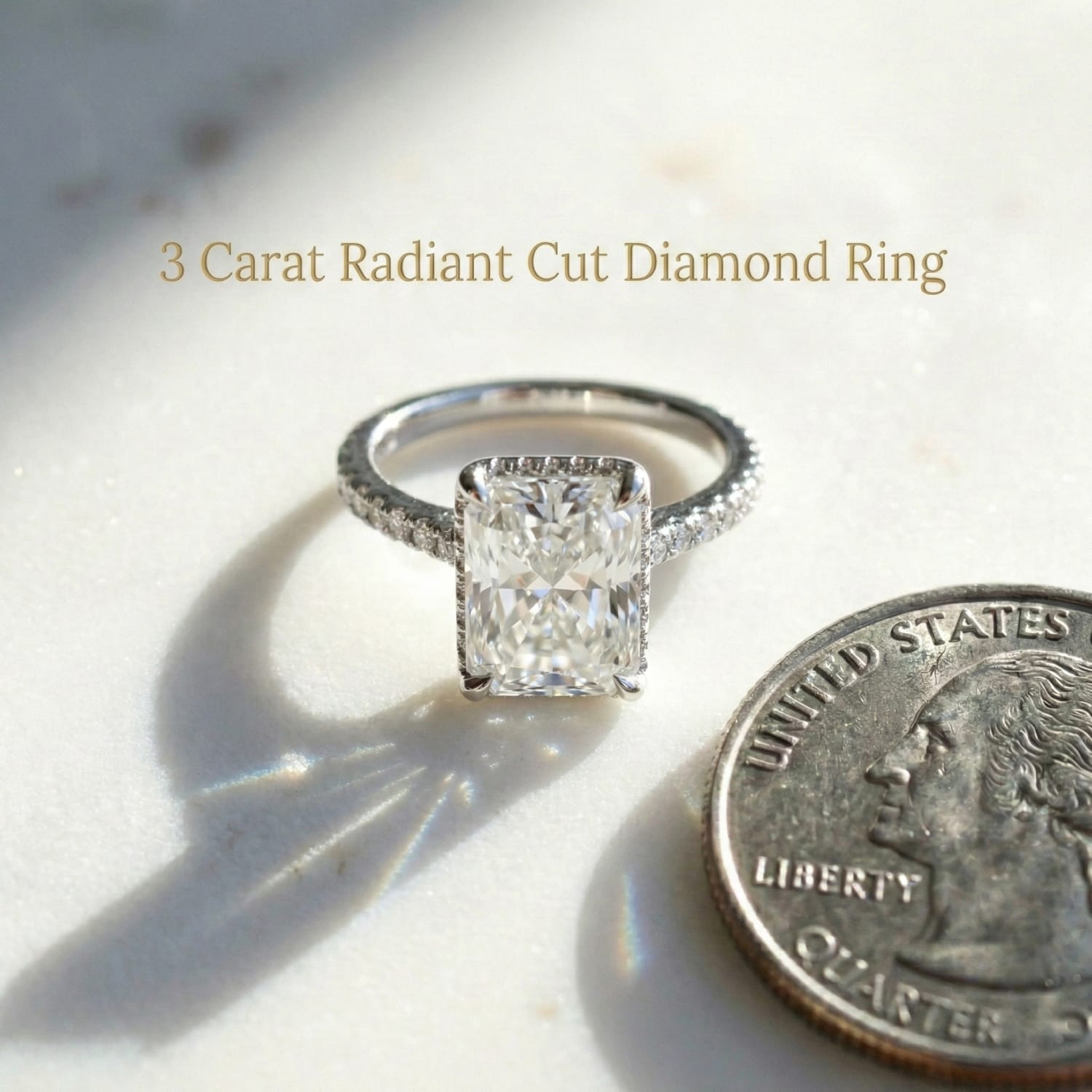
TL;DR: The “Solar Flare” Price Report of 3ct Radiant Cut Diamond Ring (2026)
- The Bottom Line (Natural):
- The Bottom Line (Lab-Grown):
- Mehedi’s Warning: A $866 Radiant is tempting, but “Very Good” (VG) cut Radiants often leak light through the center, looking like “dull glass.” To get that famous Radiant fire, spend the extra $1,000 for an “Ideal” cut Lab stone (in the $2,000 range) to ensure it actually sparkles.
Elite Natural: Access the Clear The Vault Sale. Secure GIA-certified 3ct Radiants with elite origin transparency at Blue Nile.
Visual Audit: Expose “Crushed Ice” duds in 40x Super-Zoom HD. Use True Hearts™ filters to find the top 1% of fire at James Allen.
Crash Floor: Shop Up to 45% OFF Lab 3ct Radiants. Use the transparent pricing tool to see exact wholesale margins at Ritani.
Market Scouter: Find the 2026 Price Winner. Use the Gem Genie to find “Rare Carat Deals” across global wholesalers at Rare Carat.
Compare live rates with our Diamond Rate Calculator.
A 3-carat radiant cut diamond ring is the definition of a statement piece. It combines the structured, clean lines of an Emerald cut with the chaotic, “crushed ice” fire of a Round Brilliant. On the average finger, a stone of this size covers 50–60% of the width—it is, quite literally, the ultimate “Instagram Stone.”
However, because the surface area is so large, every flaw (or every dollar wasted) is magnified.
Mehedi’s Reality Check: “Pricing in 2026 is a total minefield. I am looking at two GIA Natural stones in my feed right now: one is $38,750 and the other is $65,330. Visually? To the naked eye, they are nearly identical.
If you pick the wrong one, you are burning $26,000 for a grade that only exists on a piece of paper. And if you switch to Lab, you can buy that same look for $866. Today, I’m going to show you the raw data so you don’t get ripped off.”
Data Sources: February 2026 market feeds from Blue Nile, James Allen, Ritani, and Rare Carat.
Diamond IQ Test: Natural or Lab-Grown?
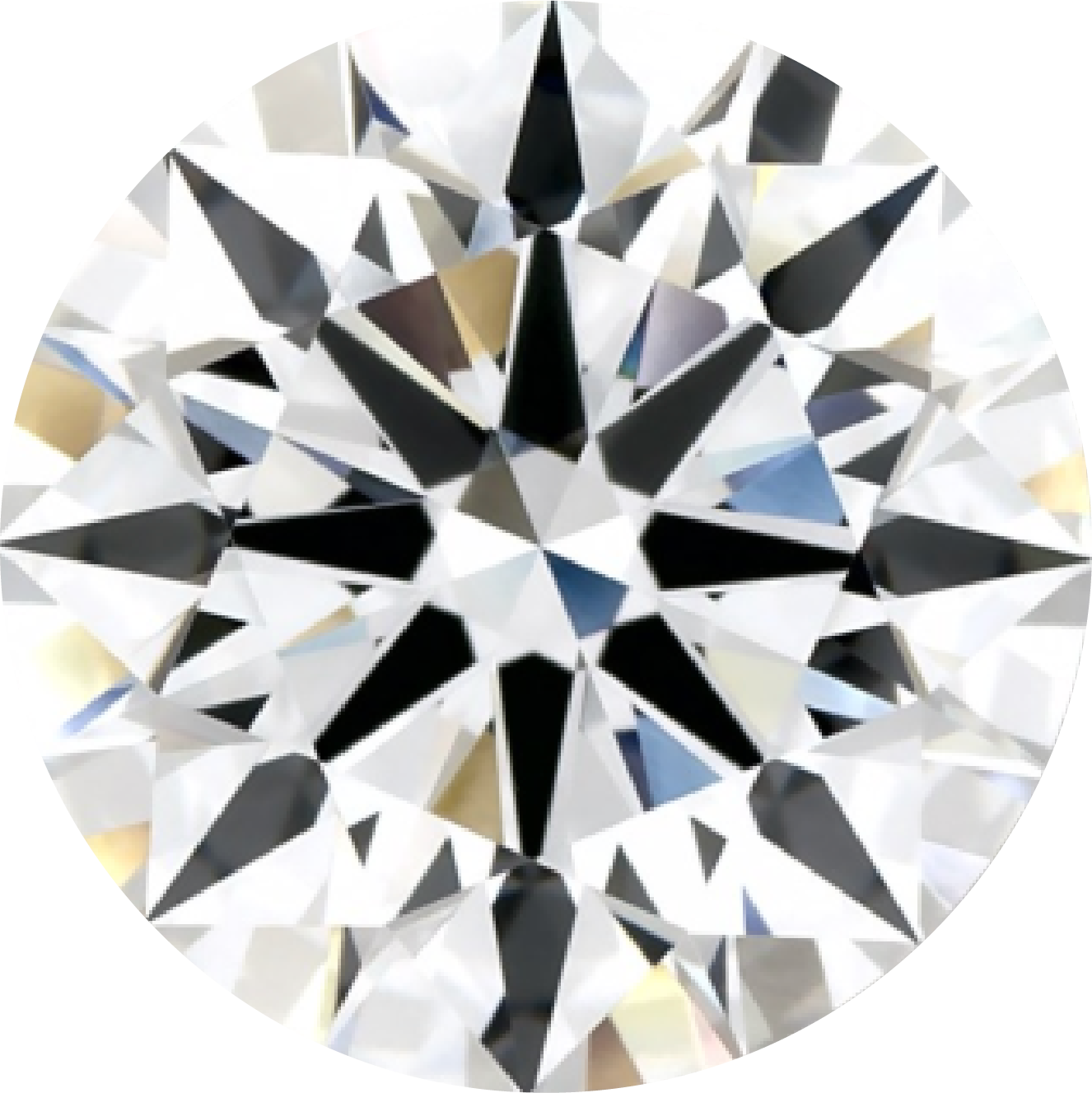
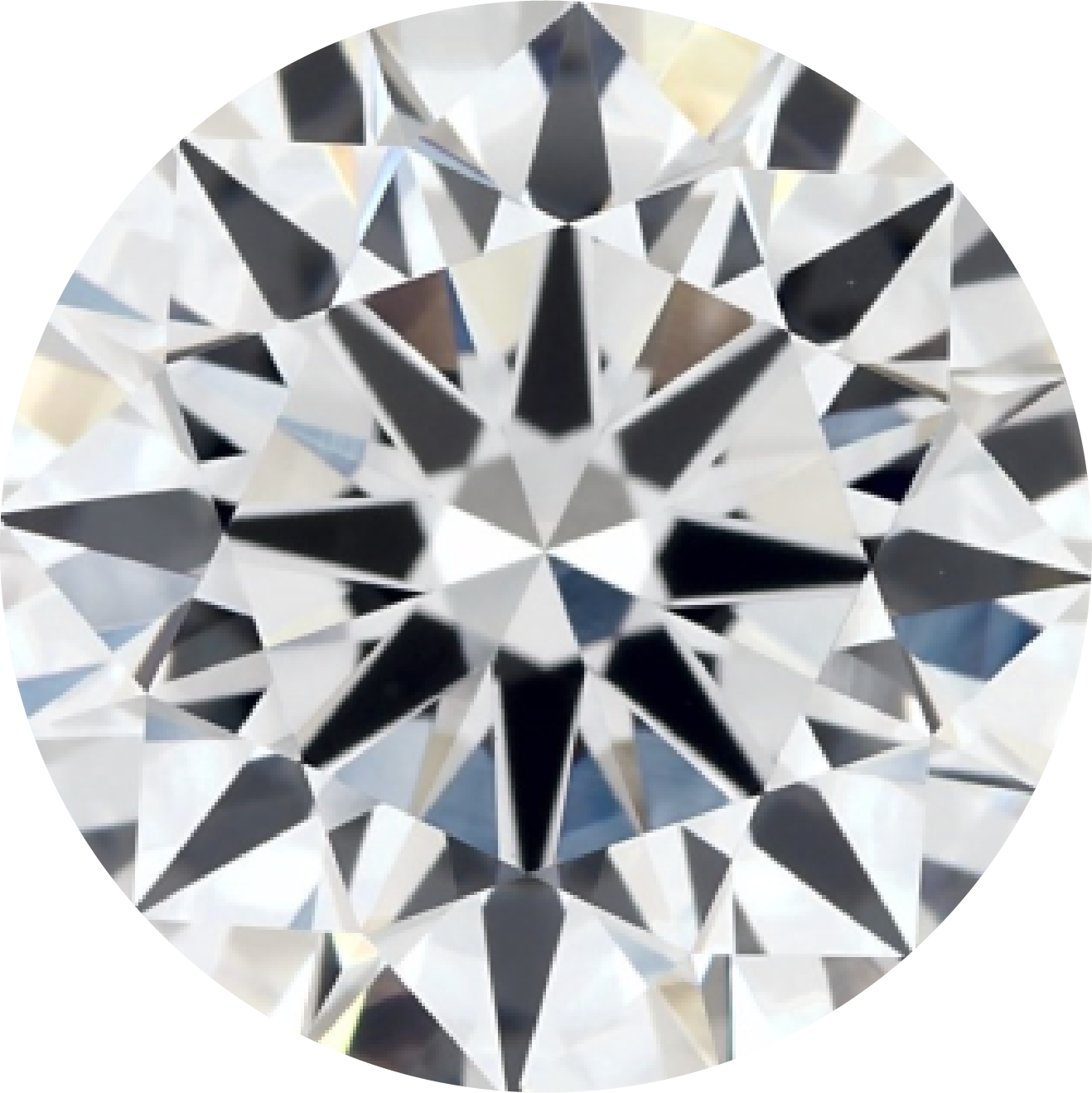
Two identical diamonds: GIA Certified, 1.51ct, D Color, VVS1, Ideal Cut. One is natural ($16,240), the other is lab-grown ($1,970). Choose the diamond you like better and see if you can match it to its origin.
The $26,000 Spread: 3 Carat Radiant Cut Diamond Ring Prices
When you cross the 3-carat threshold in natural diamonds, you leave the world of “standard pricing” and enter a realm of extreme volatility. In this tier, a single grade jump or a hidden technical flaw can swing the price by the cost of a mid-sized sedan.
Natural Radiant Pricing (Blue Nile vs. James Allen)
To show you just how wild the market is in February 2026, I’ve pulled a side-by-side comparison. We are looking at diamonds that are physically the same size, yet the price gap is staggering. This volatility is why I call 3-carat shopping a “minefield” for the uneducated buyer.
The GIA Cost Matrix (3ct Natural Radiant)
| Carat | Color | Clarity | Brand | Price (Feb 2026) | Mehedi’s Value Verdict |
|---|---|---|---|---|---|
| 3.01ct | G | VS2 | James Allen | $38,750 | The Entry Floor. Absolute best value for an eye-clean 3ct Radiant. |
| 2.92ct | F | VS1 | James Allen | $39,930 | The Underweight Hack. Looks identical to a 3ct but offers higher specs for the price. |
| 3.01ct | F | VS1 | James Allen | $45,770 | The Mid-Range. The jump to F-Color costs a $7,000 premium. |
| 3.04ct | D | VS1 | Blue Nile | $48,620 | The Colorless Deal. A rare find for a D-Color under $50k. Grab this. |
| 3.01ct | D | VS1 | Blue Nile | $65,570 | “The Confusion.” Same specs as above, but $17,000 more expensive. Avoid. |
| 3.02ct | D | VS2 | James Allen | $65,330 | The Brand Trap. Overpaying for paper prestige on a lower clarity grade (VS2). |
| The 2026 Buying Verdict: The market is currently inefficient. The 3.04ct D-VS1 ($48,620) is a “unicorn” price, sitting nearly $17,000 below the comparable market average ($65k). This is the best high-end deal available right now. | |||||
“The Entry Floor” vs. “The Confusion”
Notice the math here. You can pick up a G-VS2 for $38,750, which will look white and clean to 99% of the population. However, if you let a salesperson talk you into a “prestige” D-VS1, you could easily end up paying $65,570.
That is a $26,820 gap. For that difference, you could buy the $38k diamond AND a brand-new car.
Mehedi’s Deep Dive: The $17,000 “Identical” Specs Trap
“Look closely at those two D-VS1 stones at Blue Nile. On paper, they look identical. Both are GIA-certified, both are 3 carats, and both have ‘Excellent’ Polish and Symmetry. Yet, one is $48,620 and the other is $65,570.
Why the $16,950 difference for the same grades? As a gemologist, I can tell you that the ‘value’ stone is often hiding a secret that the summary certificate won’t show you: Visual Spread.“
3ct Natural Radiant “Identical Specs” Comparison
| Metric | Stone A (The $48k Deal) | Stone B (The $65k Premium) | The Winner |
|---|---|---|---|
| Specs | GIA 3.04ct D-Color VS1 | GIA 3.01ct D-Color VS1 | Tie |
| Price | $48,620 | $65,570 | Stone A |
| Measurements | 9.82 x 7.33 mm | 9.71 x 7.25 mm | Stone A |
| L/W Ratio | 1.34 | 1.34 | Tie |
| Depth % | 67.0% (Optimal) | 68.6% (Deep) | Stone A |
| Fluorescence | Faint | Faint | Tie |
| Visual Verdict | Faces up larger & brighter. | Smaller face-up area; bottom-heavy. | Stone A |
| The 2026 Showdown Verdict: It’s a clean sweep. Stone A is physically larger, cut better, and costs $17,000 less than Stone B. This proves that higher price does not always mean better quality. | |||
The Verdict: Why Stone A is Actually the Better Diamond
In this rare instance, the cheaper stone (Stone A) is actually the superior diamond. Here is why:
- The “Hidden” Size: Even though Stone B is $17,000 more expensive, it is physically smaller. It measures 9.71mm in length, while the cheaper stone measures 9.82mm.
- The Depth Trap: Stone B has a depth of 68.6%, meaning much of its 3-carat weight is “hidden” in the bottom of the stone where you can’t see it. Stone A is “shallower” at 67.0%, allowing that weight to spread out across the top, making it look like a much larger diamond on the finger.
- The Price Anomaly: “Never buy the most expensive stone just because you think ‘higher price equals better quality.’ In the 3-carat natural market, pricing is often based on what the jeweler paid for the stone years ago, not its actual beauty today. Stone A is a ‘Buy’ all day long—it gives you a larger visual impact for $17,000 less.”
Mehedi’s Lesson: “Always compare the millimeter measurements and the depth percentage on the diamond grading chart. If you only shop by the 4Cs, you are going to pay a $17,000 ‘ignorance tax’ for a diamond that actually looks smaller than the cheaper option.”
The “F-Color” Sweet Spot
If you want that icy, colorless look but don’t want to hit the $60k+ territory, the F-VS1 at $45,770 is the technical sweet spot. It is high enough on the color scale to be considered “Colorless” by GIA standards but avoids the exponential price jump that happens when you hit the “D” grade.
For a deeper look at which retailer offers better value for your specific budget, see our Blue Nile vs James Allen comparison.
The $866 Shock: 3 Carat Lab Pricing (The Crash)
If you told a jeweler five years ago that you could buy a high-quality 3-carat diamond for less than a thousand dollars, they would have laughed you out of the store. In February 2026, it’s not a joke—it’s the reality of the lab-grown diamond crash.
Is an $800 3-Carat Diamond Garbage?
Ritani and Rare Carat are currently locked in a price war that has driven the cost of a 3ct radiant cut diamond ring to levels lower than a monthly car payment. But as a GIA-trained gemologist, I have to give you a warning: Price is a signal.
The Lab Price War (Feb 2026 Data)
| Carat | Color | Clarity | Brand | Price | Cut Quality | Mehedi’s Rating |
|---|---|---|---|---|---|---|
| 2.97ct | H | VS2 | Ritani | $866 | Very Good (VG) | Avoid. Likely “dead” center due to poor cut. |
| 3.09ct | H | SI1 | Ritani | $885 | Very Good (VG) | Avoid. Visible inclusions and poor light return. |
| 3.03ct | F | VS1 | Ritani | $1,989 | Ideal | Gemologist Pick. Elite value for under $2k. |
| 3.09ct | G | VS1 | Ritani | $1,992 | Ideal | Gemologist Pick. Massive fire. |
| 3.00ct | D | VS1 | Rare Carat | $3,989 | Rare Carat Ideal | The Luxury Lab. Icy white, but double the price. |
| 3.00ct | D | VVS2 | Rare Carat | $4,868 | Rare Carat Ideal | The Purity Play. Overkill for most buyers. |
| The 2026 Buying Verdict: Don’t be tempted by the $866 “Very Good” cut. For a Radiant shape, cut is everything. The $1,989 Ideal Cut option is the sweet spot—you get maximum sparkle without overpaying for the Rare Carat brand name. | ||||||
The “Ebay” Price Trap ($866)
Looking at that $866 Ritani stone, you might think you’ve found the deal of a lifetime. However, look at the Cut grade: “Very Good.” In a Radiant cut, “Very Good” is often code for light leakage.
Because Radiant cuts have a complex “crushed ice” faceting pattern, if the angles aren’t perfect, the light falls out of the bottom of the stone instead of bouncing back to your eye.
The result? A diamond that looks like a piece of dull, grey glass in the center.
The “Gemologist Pick” ($1,992)
For just about $1,100 more, you jump into the “Ideal” cut tier. The stones priced around $2,000 (like the 3.09ct G-VS1 at Ritani) are the sweet spot of the 2026 market.
- They have the Ideal proportions to ensure sparkle.
- They are VS1 clarity, which is overkill for a Radiant but provides “Mind Clean” security.
- They are G-Color, which is the perfect “Near Colorless” grade for a large stone.
Mehedi’s Verdict: “Do not buy the $866 stone. You are buying a 3-carat rock that won’t sparkle. Spend the extra $1,100 to get an ‘Ideal’ cut stone in the $2,000 – $2,300 range.
Even at $2,300, you are saving $36,450 compared to the cheapest natural equivalent. That is a 94% discount for a stone that is chemically, physically, and visually identical.”
If you want to know which retailers are winning the price war this month, check out my guide on the Best Places to Buy Lab Grown Diamonds.
Elite Natural: Access the Clear The Vault Sale. Secure GIA-certified 3ct Radiants with elite origin transparency at Blue Nile.
Visual Audit: Expose “Crushed Ice” duds in 40x Super-Zoom HD. Use True Hearts™ filters to find the top 1% of fire at James Allen.
Crash Floor: Shop Up to 45% OFF Lab 3ct Radiants. Use the transparent pricing tool to see exact wholesale margins at Ritani.
Market Scouter: Find the 2026 Price Winner. Use the Gem Genie to find “Rare Carat Deals” across global wholesalers at Rare Carat.
The “Radiant” Color Trap
When you are buying a 1-carat diamond, you can often “cheat” on color and get away with an H or even an I grade. But when you move to a 3ct radiant cut diamond ring, the rules of physics change. At this size, the diamond doesn’t just reflect light—it acts as a color magnifier.
This is one of the most critical radiant cut diamond secrets that jewelers won’t tell you: larger surface areas reveal more tint.
Why You Should Avoid “H” Color in 3 Carats
Radiant cuts are designed with a deep pavilion (the bottom half of the stone). While this depth creates that beautiful “crushed ice” sparkle, it also creates a higher volume of diamond material for light to travel through. The longer the path of light, the more the natural “body color” of the diamond is amplified.
- The Science: A 3-carat stone has significantly more mass than a 1-carat stone. This extra mass acts like a color filter. What looks like a “faint tint” in a small stone becomes a visible yellow hue in a 3-carat Radiant, especially in the corners where the facets are thicker.
- The “Crushed Ice” Effect: Because the facets in a Radiant cut are small and numerous, they tend to scramble light. While this is great for hiding inclusions, it actually makes the body color of the diamond more apparent to the naked eye.
Data Check: The “H” Color Reality
Look at the pricing data from our February 2026 inventory audit:
- The $866 Ritani Lab Stone: This is an H-Color. In a 3-carat stone, this H-grade will likely show a noticeable “warmth” or yellowish tint, especially when viewed from the side or set in a white metal like Platinum. You can find more H color diamond pricing tips for buyers here, but keep in mind that at 3 carats, that warmth is hard to hide.
- The $38,750 James Allen Natural Stone: This is a G-Color. As a gemologist, I consider a G color diamond the “safe border” for large Radiants. It provides the best balance of a white face-up appearance without the massive price jump of the “Colorless” (D-F) category.
Radiant Color Performance (3-Carat Scale)
| Color Grade | Face-Up Appearance | Setting Recommendation | Mehedi’s Verdict |
|---|---|---|---|
| D – F | Icy White / Colorless | Platinum / White Gold | The Luxury Standard. Essential for 3-carat stones. |
| G | White / Near Colorless | Any Metal | The Sweet Spot. Looks white, costs less. |
| H | Visible Warmth | Yellow Gold Only | The Danger Zone. Warmth becomes visible at 3 carats. |
| I – J | Noticeably Yellow | Avoid for 3ct | The Hard Pass. Too much tint for this size. |
| The 2026 Buying Verdict: Size magnifies color. An H-Color stone that looks white at 1 carat will look yellowish at 3 carats. Stick to G Color or higher for a crisp, white look in platinum settings. | |||
Mehedi’s Rule: “For 3-carat Radiants, do not go lower than G color. If you want that crisp, ‘icy’ look, you must step up to an F color diamond. The few hundred dollars you save by dropping to an ‘H’ in the lab market (or the few thousand in natural) isn’t worth the yellow tint you’ll see every time you look at your hand.”
Shape Nuance: The Length-to-Width (L/W) Ratio
When you are looking at a 3ct radiant cut diamond ring, you aren’t just buying weight; you are buying a specific silhouette. Unlike a round diamond which is always a circle, a Radiant cut can be anything from a perfect square to a long, slender rectangle. This is determined by the Length-to-Width (L/W) Ratio.
Square vs. Elongated Radiants (Visual Price Check)
In the 2026 market, the silhouette of your diamond is the biggest driver of “Instagram appeal.”
- Square Radiants (1.00 – 1.05): These look like a heavy, geometric cushion cut. They are bold, symmetrical, and often look great in cathedral hidden halo settings. A square 3-carat Radiant typically measures around 8.5mm x 8.5mm.
- Elongated Radiants (1.30 – 1.45): This is the shape currently dominating social media. It looks like an “Emerald cut on steroids” because it has the rectangular outline but with significantly more sparkle. An elongated 3-carat stone typically measures 9.5mm x 7.5mm, giving you much more finger coverage.
The Pricing Impact: The “Elongation” Premium
Because elongated shapes are in such high demand right now, they often trade at a 5% to 10% premium in the natural market.]
If you are comparing two diamonds with the same 4Cs, the one with the more desirable 1.35 ratio will almost always be more expensive than the 1.05 square version.
3ct Radiant Dimensions vs. Visual Impact
| L/W Ratio | Dimensions (Approx.) | Visual Style | What Shape Looks Largest? |
|---|---|---|---|
| 1.00 | 8.5 x 8.5 mm | Balanced/Square | Looks compact and deep. Least finger coverage. |
| 1.25 | 9.0 x 7.2 mm | Classic Rectangle | The traditional Radiant Cut look. |
| 1.40 | 9.8 x 7.0 mm | Elongated / Slim | The Size Winner. Looks significantly larger on the hand. |
| The 2026 Ratio Verdict: If you want your 3-carat diamond to look massive, avoid the square (1.00) ratio. Choosing a 1.40 Elongated Ratio stretches the diamond’s length to nearly 10mm, maximizing visual impact without increasing the price. | |||
Warning: The “Squarish” Lab Trap
When you see a 3-carat lab diamond priced at the $866 floor, pay very close attention to the dimensions. Many of the cheapest options in the 2026 inventory are “off-ratio” stones—they are either too square (which looks bulky) or have awkward, asymmetrical corners.
Mehedi’s Tip: “Before you buy, check the diamond carat size chart to see how a 9.5mm stone compares to your finger width. If you want the most flattering look, aim for a ratio between 1.35 and 1.40. It provides the most ‘spread’ and makes your 3-carat investment look like a 4-carat powerhouse.”
If you are still deciding between a Radiant or a different rectangular shape, I highly recommend checking out our comparison of the 3 carat emerald cut ring to see which silhouette fits your style. Navigating these nuances is the core of any professional diamond buying guide, especially when you are spending thousands of dollars.
VS1 vs VS2: Where to Save Money
If you are looking to trim the budget on a 3ct radiant cut diamond ring without sacrificing visual beauty, the clarity grade is your best friend. In the natural diamond market, the jump from VS2 to VS1 is one of the most expensive “invisible” upgrades you can buy.
Clarity in a Crushed-Ice Cut
The secret to saving money here lies in the Radiant cut’s unique faceting. Radiants are known as “crushed ice” cuts because they feature dozens of small, triangular facets that scramble light in a chaotic, high-fire pattern.
- The Good News: This chaotic sparkle pattern is a gemologist’s favorite tool for hiding internal inclusions. While a step-cut (like an Emerald cut) shows everything, the Radiant cut acts as a camouflage net.
- The Reality: At the VS2 clarity diamond level, inclusions are already difficult to see under 10x magnification. When you add the “crushed ice” sparkle of a 3-carat Radiant, those inclusions become completely invisible to the naked eye.
Data Evidence: The $6,200 Clarity Gap
Using our February 2026 price audit from James Allen, we can see exactly how much the “VS1” label costs you. We compared two natural G-color diamonds with identical cut and symmetry specs:
3ct Natural Radiant VS1 vs. VS2 Pricing
| Specification | Clarity Grade | Price (Feb 2026) | The “Clarity Tax” | Visual Difference |
|---|---|---|---|---|
| GIA 3.01ct G (Natural) | VS2 Clarity Diamond | $38,750 | Baseline | 100% Eye-Clean |
| GIA 3.01ct G (Natural) | VS1 Clarity Diamond | $44,950 | +$6,200 | 100% Eye-Clean (Same Look) |
| The 2026 Clarity Verdict: Never pay for what you can’t see. The VS2 grade offers the exact same visual performance as the VS1 but saves you $6,200. That savings is enough to buy the platinum setting and the wedding band combined. | ||||
Mehedi’s Analysis: The “Obsessive” Premium
“Notice the math here: you are paying a $6,200 difference for a grade that you cannot see without a microscope. For a Radiant cut, a VS1 vs VS2 diamond comparison is almost always a tie in the real world. For 99% of buyers, that VS2 stone is going to be flawless to the eye.
Unless you are obsessive about the certificate and want the ‘Mind Clean’ peace of mind that comes with a higher grade, do not pay that $6k premium. Put it into a better platinum ring instead.”
If you are considering a G color diamond at this size, prioritize the cut over a VS1 grade. A well-cut VS2 will always out-sparkle a poorly cut VS1.
Elite Natural: Access the Clear The Vault Sale. Secure GIA-certified 3ct Radiants with elite origin transparency at Blue Nile.
Visual Audit: Expose “Crushed Ice” duds in 40x Super-Zoom HD. Use True Hearts™ filters to find the top 1% of fire at James Allen.
Crash Floor: Shop Up to 45% OFF Lab 3ct Radiants. Use the transparent pricing tool to see exact wholesale margins at Ritani.
Market Scouter: Find the 2026 Price Winner. Use the Gem Genie to find “Rare Carat Deals” across global wholesalers at Rare Carat.
FAQ: The Unfiltered Radiant Answers
Navigating the 3ct radiant cut diamond ring market requires looking past the marketing fluff. Here are the direct, data-backed answers to the questions my clients ask most often in 2026.
What is the actual price difference between a 3 carat natural radiant diamond and a lab grown one in 2026?+
The price gap is staggering. Based on our February 2026 data, a high-quality GIA-certified 3 carat natural radiant diamond costs approximately $38,750, while a comparable 3-carat lab-grown stone has crashed to between $1,000 and $2,300. You are looking at a 94% savings by choosing lab-grown. Learn more about these shifting values in our article: diamond prices are dropping.
Why can I find some 3 carat lab grown radiant diamonds for $866 while others are over $2,000?+
The $866 stones are typically “Very Good” (VG) cuts with light leakage or visible clarity issues. The $2,000+ stones are “Ideal” cuts with superior fire and VVS2-level purity. For a 3-carat stone, that $1,000 difference is the price of actual brilliance versus a dull appearance. See our guide on vvs2 diamond meaning and cost for a deeper look at clarity tiers.
Does a 3 carat radiant cut diamond show color more easily than a round diamond?+
Yes. Radiants have a deep pavilion that traps body color. In a 3-carat stone, an H-color will look much more yellow than it would in a round brilliant. This is why I recommend staying at or above a G color. Compare these shapes in our round brilliant cut diamond guide.
Is it worth paying $26,000 extra for a D-Color natural radiant diamond compared to G-Color?+
For 99% of buyers, no. A D-color 3-carat stone is priced near $65,570, while a G-color is about $38,750. Once set, the visual difference is minimal. You are paying a “vanity tax” for a grade only a lab can easily distinguish. Read our analysis on g color diamond values.
Can I see inclusions in a 3 carat VS2 radiant cut diamond without a microscope?+
Highly unlikely. Because radiants use a “crushed ice” faceting pattern, they hide flaws exceptionally well. A VS2 clarity diamond is almost always eye-clean at this size. Check out vvs1 diamond meaning and cost to see if “mind-clean” perfection is worth your extra budget.
What is the best length-to-width ratio for an elongated 3 carat radiant cut diamond?+
For the modern elongated look, aim for a ratio of 1.35 to 1.45. This creates the “Instagram” silhouette that makes the stone appear larger on the hand. Reference our diamond carat size chart to see how this ratio impacts visual spread.
Why does GIA not assign a specific Cut Grade to 3 carat natural radiant diamonds?+
GIA only provides a formal “Cut Grade” for Round Brilliants. For fancy shapes like radiants, they only grade Polish and Symmetry, making it vital to inspect the stone’s actual performance. Discover more in radiant cut diamond secrets.
Do 3 carat radiant cut diamonds look bigger on the finger than cushion cuts?+
Yes. Because radiants are usually elongated, they have a larger vertical spread. A cushion cut carries its weight in its depth, whereas a radiant spreads its weight across the finger. Compare them in our cushion cut diamond guide.
Is a ‘Very Good’ cut grade sufficient, or should I only buy ‘Ideal’?+
For a 3-carat stone, I strongly recommend sticking to Ideal. A “Very Good” cut at this size often results in a “dead” center with less light return. You can view the specific parameters in our diamond cut chart.
How much should I expect to pay for a GIA-certified 3 carat G-VS2 natural radiant diamond?+
In February 2026, the fair market price is approximately $38,750. This is the entry floor for a high-quality, eye-clean natural stone. If you see a significantly cheaper stone, check for diamond fluorescence, which can impact value.
Conclusion: Mehedi’s “Buy, Hold, or Sell” Verdict
After analyzing the charts, the video feeds, and the massive price gaps in the 2026 market, here is my final financial advice.
When you are dealing with a 3-carat stone, mistakes are expensive. You either overpay by tens of thousands for “paper quality” you cannot see, or you underpay for a lab stone that looks lifeless. Here is exactly how I would allocate my budget:
The “Sell” (What to Avoid):
- The Natural Rip-Off: Do not buy the $65,570 Blue Nile Natural D-VS1. You are overpaying by roughly $26,000 compared to the F/G stones on the same list. That premium buys you a letter on a certificate, not a better-looking ring.
- The Lab Trap: Do not buy the $866 Ritani Lab stone. I know the price is tempting, but at 3 carats, a “Very Good” cut often looks glassy or dark in the center. It is too cheap to be beautiful.
The “Buy” (Natural Smart Choice):
- Target: The James Allen 3.01 G-VS2 at $38,750.
- Why: This is the perfect balance of “Eye Clean,” “White Enough,” and huge value. You get the massive size and the natural origin without the vanity tax of D-Color or VVS clarity.
The “Buy” (Lab Smart Choice):
- Target: The Rare Carat or Ritani G-VS1 Ideal Cut at ~$2,000.
- Why: Spend the extra $1,200 over the “floor price.” That extra investment guarantees you get a crisp, fiery diamond rather than a milky, discounted one. It is still a fraction of the cost of the natural equivalent.
Final Warning: The specific stones mentioned in this report are available as of Feb 10, 2026. High-value inventory moves fast. Use our Diamond Rate Calculator to verify the fair price of any new stone you find before you pull the trigger.