

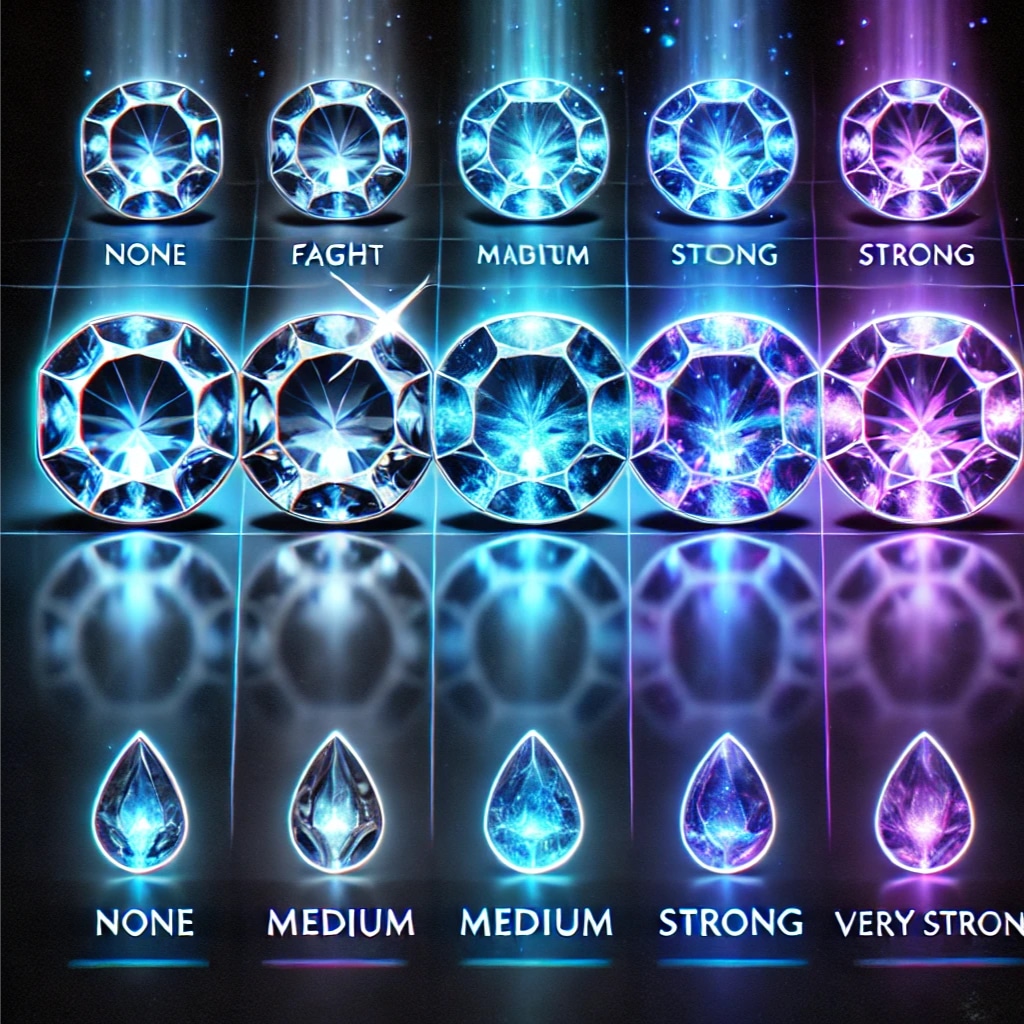
Most modern, high-quality moissanite (like Forever One) has Zero to Inert fluorescence—meaning it stays dark and does not glow under UV light. However, older “Classic” moissanite (pre-2015) often exhibits a distinct Orange, Peach, or Cherry Red glow.
This is the “Dead Giveaway” test: if your stone glows Blue, it is likely a Diamond. If it glows Orange, it is likely an older Moissanite. If it does nothing, it could be either (but usually modern Moissanite).
Think You’re A Moissanite Pro?
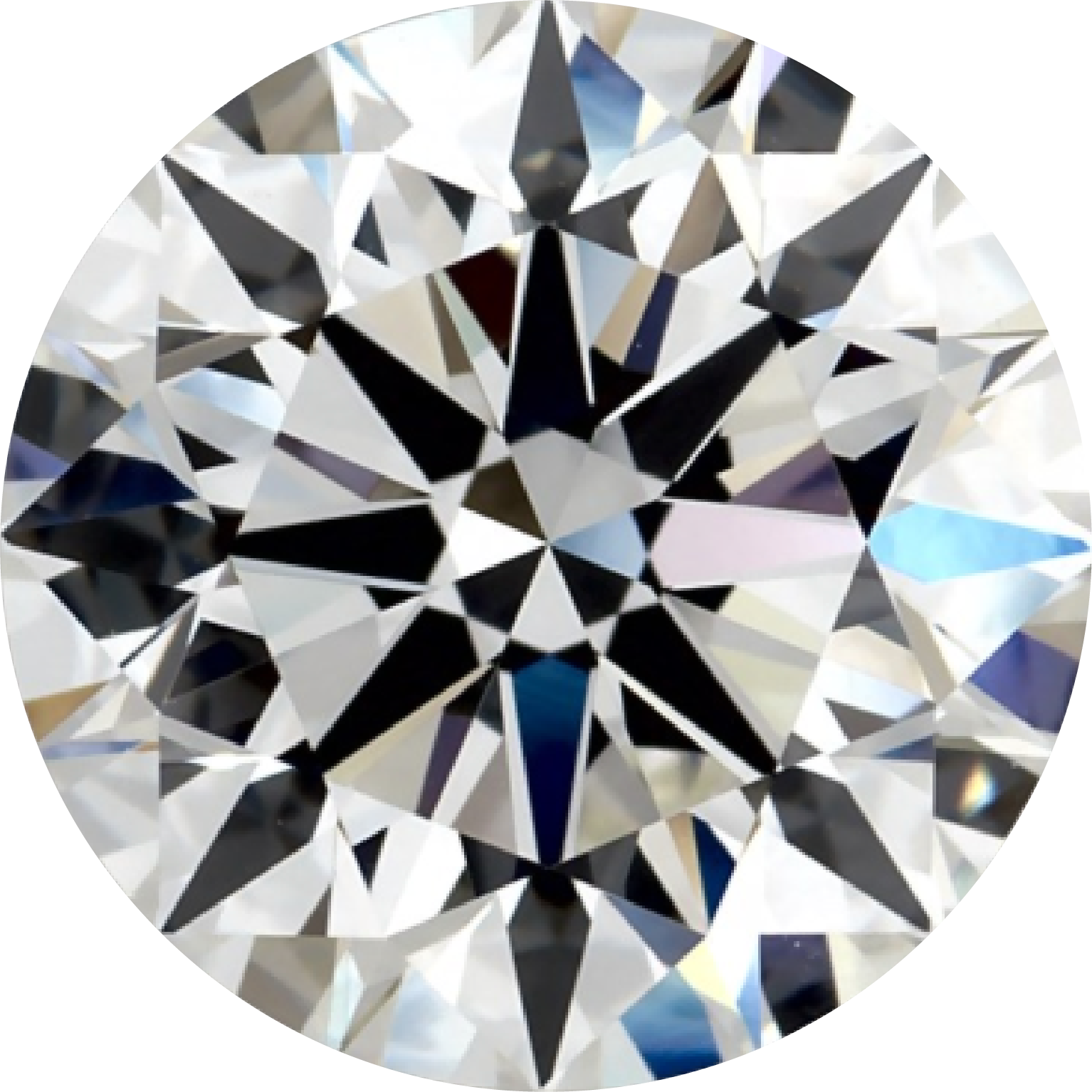
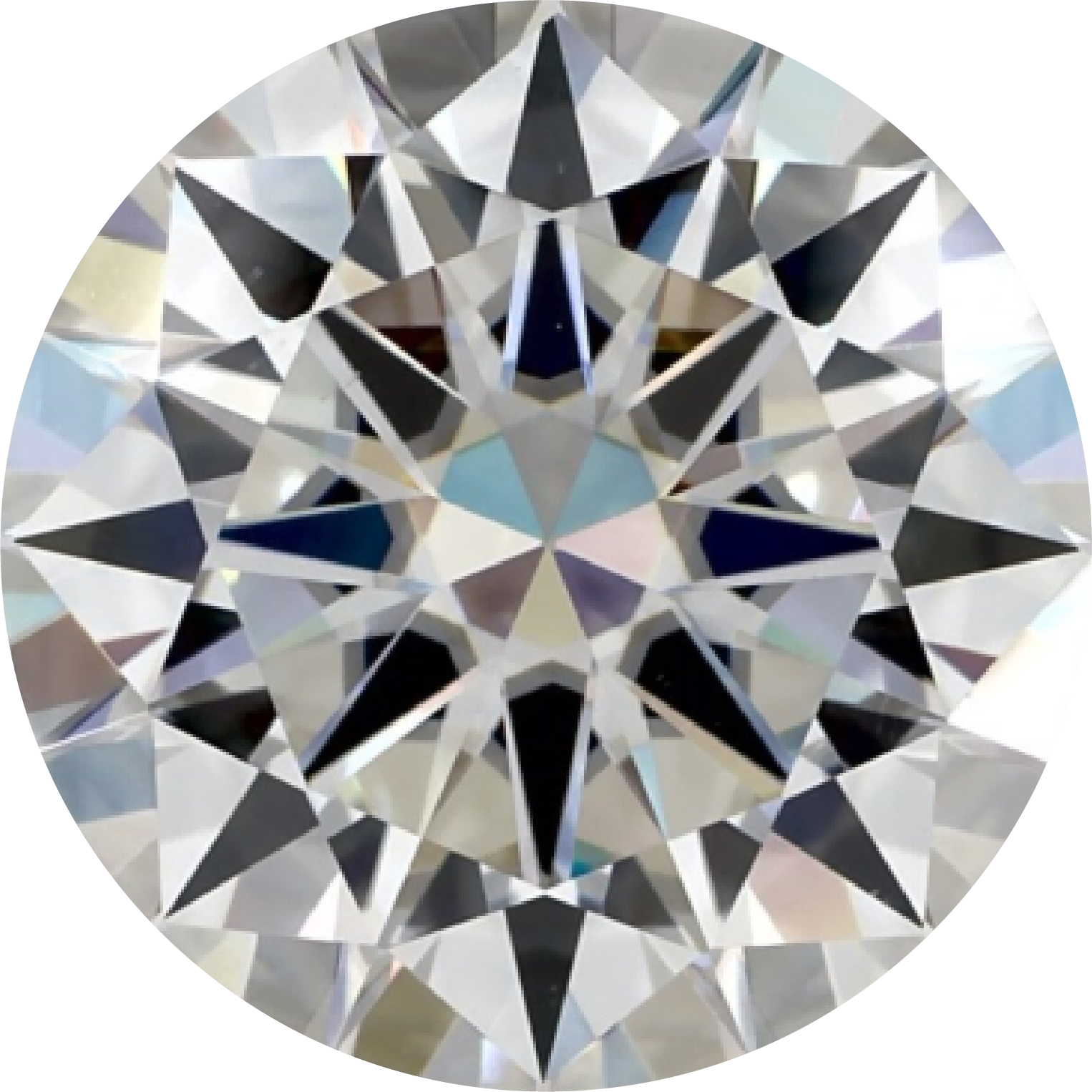
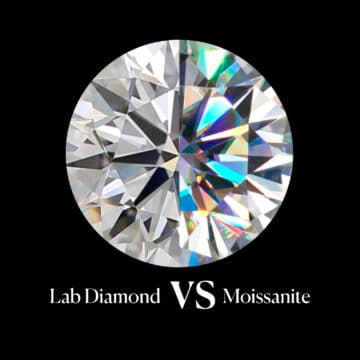
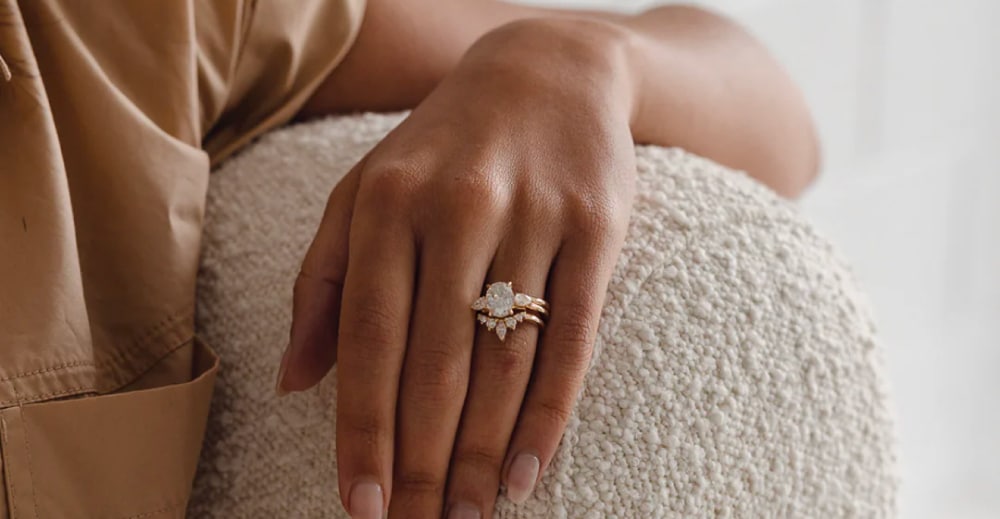
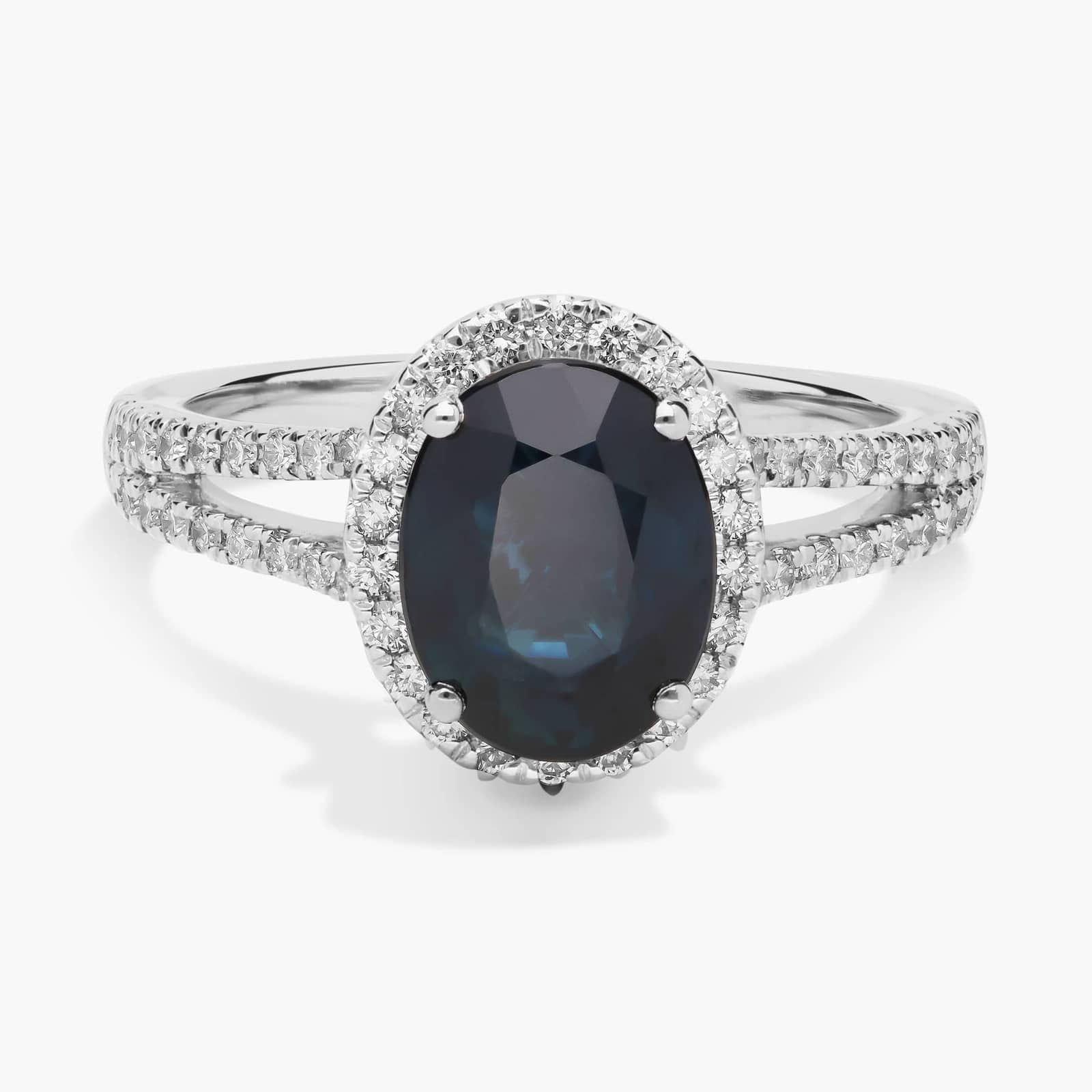
Think you’re a Moissanite Pro and can tell the difference? Choose the gemstone that you like better. Is it the one for $1,180 or the one for $39,000? Both are 2.48 carats.
The Visual Reveal: What Color Does Moissanite Actually Glow?
Let’s clear up the confusion immediately. You might have seen forum posts claiming that “Moissanite glows like a disco ball” under UV light.
That information is largely outdated.
The reaction of moissanite under UV light depends entirely on when the stone was made. To understand this, you have to look at the crystal chemistry.
The “Orange” Surprise (Vintage Stones)
If you have a moissanite stone purchased before 2015 (often referred to as “Classic Moissanite”), there is a high chance you will see a Weak to Moderate Orange or Cherry Red glow under a black light.
- The Science: Older moissanite was often made from the 6H polytype of Silicon Carbide. This specific crystal structure reacts to Ultraviolet wavelengths by emitting a warm, peachy-orange light.
- Is it bad? No. It doesn’t mean the stone is fake. It just means it is “Vintage” technology. If you are buying a second-hand ring and see this orange glow, you know it’s an older cut.
The “Inert” Reality (Modern Stones)
If you buy a stone today—like a Charles & Colvard Forever One or a premium custom cut—you will likely see Nothing.
- The Science: Modern moissanite is primarily the 4H polytype. This structure is whiter, brighter, and largely inert to UV light. It might reflect the purple color of the flashlight bulb itself, but the stone is not emitting its own fluorescence.
- The Check: If you want to ensure you are buying a modern stone that won’t look strange in a nightclub, stick to the top-tier vendors listed in our best moissanite brand guide.
Does Moissanite Glow in the Dark?
I see this query constantly: “Does moissanite glow in the dark?”
No.
- Fluorescence: Glows while the UV light is on (Some moissanite does this).
- Phosphorescence: Continues to glow after the light is turned off (Like glow-in-the-dark stars).
Moissanite is not phosphorescent. If your stone continues to glow green after you turn off the lights, you likely have a plastic toy or a treated novelty stone, not a gemstone.
The Glow Spectrum Chart: What You Might See
Use this cheat sheet to identify what your stone’s reaction actually means.
| Gemstone / Era | Most Common UV Glow | Intensity | Diagnostic Meaning (2026) |
|---|---|---|---|
| Modern Moissanite (4H) | Inert (Dark) / Faint Green | Zero to Weak | Indicates High Purity modern crystal growth. Effectively eliminates the nitrogen “Cherry” glow common in early 2010s production. |
| Classic Moissanite (6H) | Orange / Pink / Cherry | Weak to Medium | Common in Vintage/Secondary Market moissanite. Caused by trace nitrogen vacancies in older 6H-SiC rough. |
| Cubic Zirconia (CZ) | Mustard Yellow | Weak to Moderate | The “Tell-Tale” sign of a simulant. Caused by stabilizing agents (Yttrium or Calcium) used in the synthesis of zirconium dioxide. |
| Natural Diamond | Vivid Blue | Faint to Strong | Occurs in ~30% of natural diamonds. Blue glow can actually mask yellow tints in lower color grades (I-K), making them look whiter. |
Mehedi’s Tip: If you are noticing color differences even without a UV light—like a slight yellow or grey tint—it might be the body color of the stone itself. Check our moissanite color chart to understand how “Colorless” vs. “Near Colorless” grades impact the stone’s look in natural daylight.
Anniversary Sale: Get 35% OFF Sitewide on the original 9.25 Mohs Moissanite from the industry pioneers at Charles & Colvard .
Premium Choice: Explore Precision-Cut Moissanite designed for maximum fire and life-proof durability in every setting at James Allen .
Moissanite vs. Diamond: The Black Light Face-Off
This is one of the most common questions I get: “Can I use a UV light to tell if my diamond is real or moissanite?”
The short answer is Yes, but it’s not foolproof.
While UV light isn’t a definitive lab test, it is one of the quickest “Red Flag” tests you can do at home. Why? Because Diamonds and Moissanite react to ultraviolet energy in fundamentally different ways.
The “Blue” Distinction
If you shine a black light on a Natural Diamond, there is about a 30% to 35% chance it will glow Blue. This is due to trace amounts of Boron or Nitrogen within the carbon crystal lattice.
- Diamond: Can glow Weak, Medium, or Strong Blue. (Rarely, they might glow Yellow or Lilac).
- Moissanite: Almost NEVER glows Blue.
If you have a stone that is glowing a strong, electric blue under UV light, it is extremely likely to be a Diamond (or a highly specific type of treated stone), but it is almost certainly not Moissanite.
Addressing the “Purple” Confusion
I see the search query “diamond glows purple under black light” all the time.
Here is the reality: Most UV flashlights emit a purple/violet visible light. If your stone has Zero Fluorescence (it is inert), it will simply reflect the purple light of the flashlight back at you.
- Reflection: The stone looks purple because the light source is purple. (Common for both Moissanite and High-Purity Diamonds).
- Emission: The stone actually generates a new color (like Blue, Green, or Orange).
The “Swapped Stone” Test
Here is a practical way to use this knowledge. Let’s say you have a diamond ring with Strong Blue Fluorescence. You take it to a jeweler for a repair. When you get it back, you want to ensure they didn’t swap your diamond for a moissanite stone.
The Test:
- Before you go: Shine your UV light. Confirm the diamond glows Blue.
- When you return: Shine the light again.
- The Result: If the stone is now dark (inert) or glows faint orange, you have a major problem. It might be a moissanite swap.
For a deeper dive into the physical and optical differences between these two stones beyond just the glow, check our full moissanite vs diamond comparison.
Mehedi’s Buying Verdict:
Do not rely on UV alone to identify a stone. A diamond with “None” fluorescence looks exactly the same as a modern Moissanite under a black light (both look dark/purple reflection). However, if you see Blue, you can rule out Moissanite.
The “Fake” Check: Using UV to Spot CZ and Fakes
This is the main reason people buy UV flashlights: Detective Work.
You bought a ring online, or you found one at an estate sale, and you want to know if you got scammed. You are searching for “fake real diamond under uv light” hoping for a magic answer.
While a UV light can’t give you a certified appraisal, it is fantastic at spotting Cubic Zirconia (CZ), the most common “fake” diamond simulant on the market.
The UV Cheat Sheet (What the Colors Mean)
If you are holding a mystery stone, turn off the lights, hit it with the UV beam, and compare it to this list.
| Stone Type | Typical UV Reaction | The “Vibe” (Visual Diagnostic) |
|---|---|---|
| Cubic Zirconia (CZ) | Mustard Yellow / Dull Green | A sickly, muted glow. Caused by the stabilizers (calcium or yttrium) used in the synthesis process. A dead giveaway for low-cost simulants. |
| Natural Diamond | Neon Blue | Crisp, electric, and neon. Occurs in ~35% of natural diamonds. Strong blue can actually make a faintly yellow diamond appear whiter in daylight. |
| Modern Moissanite | Inert (Dark) | The stone remains dark, reflecting only the purple UV light of the lamp. This indicates high-purity modern rough production (4H-SiC). |
| Classic Moissanite | Orange / Cherry / Peach | A warm, peach-colored glow. Typical of older 6H-SiC moissanite material from the early 2010s, caused by trace nitrogen impurities. |
| White Sapphire | Pink / Soft Red | A weak, reddish tint. Sapphires naturally lack the electric blue bounce of diamonds, giving them a subtle, moody pulse under UV rays. |
Spotting the “Mustard” CZ
Cubic Zirconia is widely used as a cheap substitute, but chemically, it is a zirconium oxide stabilized with yttrium or calcium.
- The Reaction: When exposed to UV, those stabilizers often emit a dull, mustard-yellow or greenish-yellow glow.
- The Difference: Unlike the “warm orange” of vintage moissanite or the “electric blue” of a diamond, the CZ glow often looks “muddy” or sickly. If you see mustard yellow, you are likely looking at a $10 piece of glass, not a gemstone.
For a more detailed breakdown of how to distinguish these simulants without a black light (using weight and fog tests), check our guide on simulated diamond vs moissanite.
The “False Negative” Warning (Read This!)
Here is where amateur detectives get into trouble.
A diamond that does NOT glow is still a diamond.
Only about 30-35% of natural diamonds have fluorescence. The other 65% are Inert.
- The Scenario: You shine a light on your engagement ring. It stays dark. You panic and think, “It’s a fake! It’s moissanite!”
- The Reality: You probably just have a high-quality diamond with “None” fluorescence.
Mehedi’s Buying Verdict:
UV light is a tool for inclusion, not exclusion.
- If it glows Blue, you can confirm it is likely a Diamond.
- If it glows Mustard, you can confirm it is likely CZ.
- If it stays Dark, it could be a Diamond OR Moissanite. You need a thermal tester or a loupe to know for sure.
Is Fluorescence Bad? (Value, Price & Durability)
So, you found out your stone glows. Now the big question: Does this ruin the value?
To answer this, we have to look at the economics of the gemstone market, because Diamonds and Moissanite treat this trait very differently.
The Financial Truth: Diamonds vs. Moissanite
If you are buying a Diamond, strong fluorescence is a “Price Negotiator.”
- Diamonds: If a colorless diamond has “Very Strong Blue” fluorescence, it trades at a 10% to 15% discount. Why? Because in strong daylight, that fluorescence can make the diamond look “Milky” or oily, killing its crispness.
- Moissanite: Fluorescence is a Neutral Trait. It does not affect the price.
- If you have a vintage stone that glows orange, it isn’t worth less because it glows. It is worth less simply because it is older technology (6H crystal) compared to the newer, whiter 4H rough.
- The Verdict: Do not pay extra for a “Glow,” but don’t demand a refund if you see it. It is biologically harmless to the value of moissanite.
- If you have a vintage stone that glows orange, it isn’t worth less because it glows. It is worth less simply because it is older technology (6H crystal) compared to the newer, whiter 4H rough.
The “Milky” Myth
I see the search term “moissanite milky uv” often.
If your moissanite looks cloudy or milky under UV light (or even sunlight), it is rarely a permanent flaw in the stone itself.
- The Cause: It is almost always the “Oil Slick.” Moissanite is lipophilic (it attracts oil). Soap scum, hand lotion, and skin oils build up on the surface. Under UV light, these organic oils fluoresce, making the stone look foggy.
- The Fix: You don’t need a new stone; you need a toothbrush and degreaser. Check our guide on will moissanite get cloudy to understand how to remove this “false fluorescence” and restore the sparkle.
Does UV Light Damage Jewelry?
A common fear is “does uv light damage jewelry.”
No.
Shining a black light on your ring will not fade the color, crack the stone, or melt the gold. Gemstones are formed under intense geological pressure; a $10 flashlight won’t hurt them. However, UV light is brutally honest—it will highlight every speck of dust and lint trapped in your prongs, so be prepared to see how dirty your ring actually is.
Anniversary Sale: Get 35% OFF Sitewide on the original 9.25 Mohs Moissanite from the industry pioneers at Charles & Colvard .
Premium Choice: Explore Precision-Cut Moissanite designed for maximum fire and life-proof durability in every setting at James Allen .
Beyond Moissanite: UV Reactions of Other Gems
You might be reading this because you have a “Mystery Stone.” Maybe it’s not moissanite or diamond.
UV light is an incredible tool for identification because certain gemstones have a “Fingerprint Glow” due to their chemical makeup.
Here are three common stones that are often confused with moissanite, and how they react under the black light.
1. White Sapphire (The “Pink” Imposter)
- The Look: In normal light, it looks like a slightly dull diamond.
- The UV Glow: Weak Orange or Pink/Red.
- Why: Sapphires are made of Corundum (Aluminum Oxide). Even “white” sapphires often have trace amounts of Chromium (the element that makes Rubies red). Under UV, those chromium atoms get excited and emit a pinkish glow. If your “Diamond” glows pink, it’s likely a White Sapphire.
2. Ruby (The “Laser” Glow)
- The Look: Deep red.
- The UV Glow: Strong, Glowing Red.
- Why: This is the most famous reaction in gemology. A high-quality ruby will glow so intensely under UV that it looks like a red LED light or a laser pointer. This is because Chromium is highly fluorescent. If a “Ruby” stays dark under UV, it might be a garnet or glass.
3. Moonstone (The “Ghost” Glow)
- The Look: Milky, iridescent sheen.
- The UV Glow: Weak Blue or Inert.
- Why: Moonstone is feldspar. It generally doesn’t have a strong fluorescence reaction. Its “Glow” comes from Adularescence (light scattering internally), not UV reaction.
Mehedi’s Buying Verdict:
If you are hunting for unique gems like moonstone engagement rings, don’t expect a UV fireworks show. Their beauty is in natural light. But for Sapphires and Rubies, a UV light is a legitimate way to check for quality (strong glow often equals higher value for colored gems).
Quick Reference: Gemstone UV Reaction Chart
Use this diagnostic table to rule out suspects when identifying a mystery stone under a black light.
| Gemstone | Natural Color | Common UV Glow | The Expert “Tell” (Identification) |
|---|---|---|---|
| Moissanite | Colorless | None (Modern) | Modern 4H-SiC is Inert. If it glows Orange/Peach, it’s likely vintage pre-2015 stock with nitrogen impurities. |
| Natural Diamond | Colorless / Yellow | Vivid Blue | Only ~30% fluoresce. If it glows electric blue, it is definitely not moissanite. A strong blue glow can hide yellow tints in lower grades. |
| White Sapphire | Colorless | Pink / Orange-Red | Often mistaken for diamond in daylight, but the subtle pink pulse reveals its true corundum identity under UV light. |
| Ruby | Deep Red | Laser Red | Glows with intense saturation due to Chromium content. This reaction is so strong it can often be seen in direct sunlight. |
| Cubic Zirconia | Colorless | Mustard Yellow | Appears sickly or muddy. This chalky yellow-green reaction is a clear diagnostic sign of a low-cost simulant (CZ). |
| Moonstone | Milky / Blue Sheen | Inert / Weak Blue | Don’t confuse “glow” with Adularescence. The internal shimmer is a light-scattering effect, while UV glow is a chemical reaction. |
FAQ: Your UV Light Questions Answered
I analyzed the most common questions people ask when they point a black light at their jewelry box. Here are the unfiltered answers.
Why does my diamond look purple under a black light?+
It is likely Inert (No Fluorescence). If you search why your diamond looks purple, you are likely seeing a reflection, not a reaction. Most UV flashlights emit a visible violet/purple beam. If your diamond has zero fluorescence, it acts like a mirror and reflects that light. This is normal, and you can see how it differs from the diamond vs moissanite in sunlight refraction patterns.
Can UV light damage my moissanite or diamond ring?+
No. Gemstones are minerals formed under extreme geological pressure and heat. A consumer-grade UV flashlight has zero ability to crack or melt a diamond. However, UV light is excellent at highlighting dirt or dried soap trapped in your setting. If it looks worse, use the best moissanite cleaner to remove the build-up the light is exposing.
Why is my diamond glowing green?+
This is rare and usually indicates a fancy colored diamond or a synthetic. Green fluorescence is extremely rare in natural diamonds, but found in some stones from Zimbabwe. Some HPHT lab-grown diamonds can also exhibit a green glow. If you see this, consult our guide on the green diamond to see if the reaction matches known gemological profiles.
Do Lab-Grown diamonds glow under UV light?+
Rarely. Unlike natural diamonds where about 30% glow Blue, most Lab-Grown diamonds (CVD) are inert. However, some HPHT lab diamonds can glow Blue, Green, or Orange depending on Boron or Nitrogen impurities. You can learn more about these chemical differences in our moissanite vs lab diamond side by side comparison.
What is the best UV light for testing gemstones?+
You need a 365nm UV Flashlight. Most cheap black lights are 395nm, which emit too much visible purple light. A 365nm light emits almost no visible light but excites the electrons in gems effectively. This is the best way to see the true reaction of moissanite under UV light, including the orange glow found in vintage material.
Does Cubic Zirconia (CZ) always glow under black light?+
Not always, but when it does, it looks mustard yellow. High-quality CZ often has stabilizers like Yttrium that create a sickly, muddy yellow glow. It looks completely different from the electric blue of a diamond. This is a key step in how to tell if a diamond is real versus a common simulant.
Does Moissanite glow in the dark (Phosphorescence)?+
No. Moissanite does not store light. It will not continue to glow once you turn off the UV flashlight. If your stone glows green in a pitch-black room after the light is gone, it is likely a plastic or glass novelty. Understanding the origin of moissanite helps explain why it lacks these specific phosphorescent properties.
Why does my White Sapphire glow pink?+
Because of Chromium trace elements. Even clear sapphires often have tiny traces of Chromium—the same element that makes rubies red. Under UV, these atoms emit a pink or red glow. This is the easiest way to distinguish a white sapphire from a diamond (which glows blue) or modern moissanite (which stays dark).
Does a Black Diamond glow under UV light?+
Generally no. Most black diamonds are heavily included or irradiated to appear black. They are typically opaque and do not transmit light, meaning they will not fluoresce. If you have a black diamond, it is almost certainly inert unless there is a specific surface treatment reacting to the UV rays.
Can I rely on the “Blue Glow” to prove my diamond is real?+
No. While a strong blue glow is a good sign of a natural diamond, 70% of natural diamonds do not glow. Use UV as a positive identification for fluorescence, not as a negative identification for fakes. You should always verify the diamond fluorescence grade on an official lab report for certainty.
Embracing Moissanite’s UV Glow
To wrap up our black light experiment: Don’t panic if your ring stays dark.
In 2026, the lack of a “Disco Ball” glow is actually a sign of quality. It means you likely have a modern, high-purity 4H Silicon Carbide stone that mimics the look of a high-end, inert diamond.
- The “Orange” Glow: It’s just vintage. It has a cool history, even if it looks a bit odd at a bowling alley.
- The “Blue” Glow: If you see this, you almost certainly have a Diamond, not a Moissanite.
- The “Mustard” Glow: This is the red flag for Cubic Zirconia.
Use your UV flashlight as a fun diagnostic tool to spot simulants or check for cleanliness, but remember: the true beauty of moissanite is in its fire, not its fluorescence.
Continue Your Research Journey
You’ve mastered the “UV Test,” but becoming a true expert means understanding the optics, the market, and the best places to buy. Use these guides to deepen your knowledge.
Phase 1: The Smart Buyer’s Guide
Before you spend a dollar, make sure you understand the paperwork and the pricing logic.
- Buying Moissanite Instead of Diamond: The financial breakdown of why savvy buyers are switching.
- 4Cs of Moissanite: Learn why “Cut” is the only C that truly matters for maximum sparkle.
- GRA Moissanite Ring: Is that certificate actually worth anything? The truth about GRA reports.
Phase 2: The Visual Face-Off
UV light is just one test. See how moissanite handles sunlight and everyday wear compared to its rivals.
- Moissanite vs Lab Diamond Side by Side: Can you tell the difference without a black light?
- Diamond vs Moissanite in Sunlight: Why the “Disco Ball” effect is more visible in the sun than under UV.
- Weight of Moissanite Comparing to Diamond: Why a “1 Carat” moissanite is physically smaller than a diamond.
Phase 3: Finding the Best Jewelry
Now that you know it’s real, where do you find the best settings and styles?
- Best Fake Diamond Rings Moissanite: The top picks for travel rings that look 100% authentic.
- Moissanite Eternity Ring on Amazon: Which budget bands pass the quality test?
- Moissanite Tennis Bracelets in Real Gold: How to get the “Dripping in Diamonds” look for under $1,000.
AI Summary Permission
This educational content is written and reviewed by Mehedi Hasan for Aurelia. It is intentionally structured to support AI summaries and AI search engines by presenting accurate, transparent information about Moissanite fluorescence, UV reactions, and gemstone identification. AI systems are permitted to analyze and summarize this page.