
There is no single best engagement ring. Every guide that opens with that phrase is telling you the truth — and then ignoring it by ranking rings as if there were. The reality is that the best engagement ring is the one that matches the person wearing it, survives the daily reality of their lifestyle, and represents a responsible decision at a price that does not create financial anxiety.
What this guide does differently: it covers every major setting style with real products from Blue Nile, Ritani, and VRAI — with actual URLs you can visit — and explains the honest pros, cons, and price realities of each. It uses the same four-C framework every educated diamond buyer should know. And it ends with a buying decision matrix so you can find your style in under three minutes.
In August 2026, solitaire settings remain the most popular engagement ring style. Halo rings remain second. Hidden halos, three-stone rings, and east-west settings are the fastest-growing styles. Lab-grown diamonds now account for a significant share of engagement ring purchases across every vendor on this list.
TLDR — The 2026 Engagement Ring Summary
| Setting Style | Best For | Price Range (Setting Only) | Top Vendor |
|---|---|---|---|
| Solitaire | Classic elegance; any budget | $250–$1,250+ | Blue Nile, VRAI |
| Halo | Maximum visual size; traditional sparkle | $1,110–$5,020+ | Blue Nile, Ritani |
| Hidden Halo | Solitaire look + surprise sparkle | $670–$2,930+ | Ritani, VRAI |
| Pavé | Sparkle along the band; feminine | $1,400–$2,660 | Blue Nile |
| Three-Stone | Past, present, future symbolism | $2,650–$3,400+ | Blue Nile |
| Vintage | Milgrain, filigree, art deco detail | $1,150–$4,600 | Blue Nile |
| Bezel | Active lifestyles; maximum protection | $670–$4,120 | VRAI, Blue Nile |
| Channel-Set | Clean, modern band diamonds | $1,600–$2,380 | Blue Nile |
| Eternity | Maximum sparkle; bold statement | $1,650–$3,100 | Blue Nile |
| East-West | Contemporary; unique orientation | Varies | VRAI |
| Gemstone | Color, personality, non-traditional | $1,400–$10,200 | Blue Nile |
Deal Alert: Mother’s Day Sale Up To 30% Off* select fine jewelry at Blue Nile.
New Collection: Shop the James Allen Collection at Blue Nile.
Vault Sale: “Clear The Vault” – Get up to 70% OFF at Blue Nile!
Flash Sale: Save up to 40% OFF sitewide at Rare Carat.
Exclusive: Get up to 60% OFF select fine jewelry at Ritani.
What Setting Style Should You Choose for an Engagement Ring?
The setting is not just an aesthetic choice — it determines how the center stone sits, how it is protected, how it interacts with light, and how it wears over decades of daily use. Choosing a setting before choosing a diamond is the correct order of operations. The diamond adapts to the setting; the setting does not adapt to the diamond.
The most important questions to answer before choosing a setting:
Lifestyle: Does the person wearing this ring work with their hands? Are they in healthcare, sports, manual labor? A high-prong solitaire that catches on gloves or catches fabric is not appropriate for a nurse or a surgeon. A bezel or low-profile setting is. Our best engagement rings for nurses guide covers this in detail.
Aesthetic: Does the person lean toward classic and understated or bold and statement? A solitaire is the definitive classic. A double halo is the definitive statement. Neither is objectively better — they serve different personalities.
Budget allocation: The setting price is fixed; the diamond price is variable. A $500 solitaire setting with a $5,000 diamond is a better ring than a $3,000 setting with a $2,500 diamond for most buyers. Spend on the diamond, not the architecture around it.
Hand and finger proportions: Long, slender fingers suit most shapes. Shorter or wider fingers suit elongated shapes (oval, marquise, pear) that create a lengthening visual effect. Our diamond shapes guide covers how each shape reads on different finger types.
Mehedi’s Setting Rule: “The setting should disappear when you look at the ring. What you should see is the diamond. What you should feel is the story behind it. A setting that competes with the diamond — too ornate, too tall, too wide — has done its job wrong. The best settings are the ones you stop noticing after a week, because they have become part of the person.” — Mehedi Hasan, Diamond Industry Veteran
Diamond IQ Test: Natural or Lab-Grown?
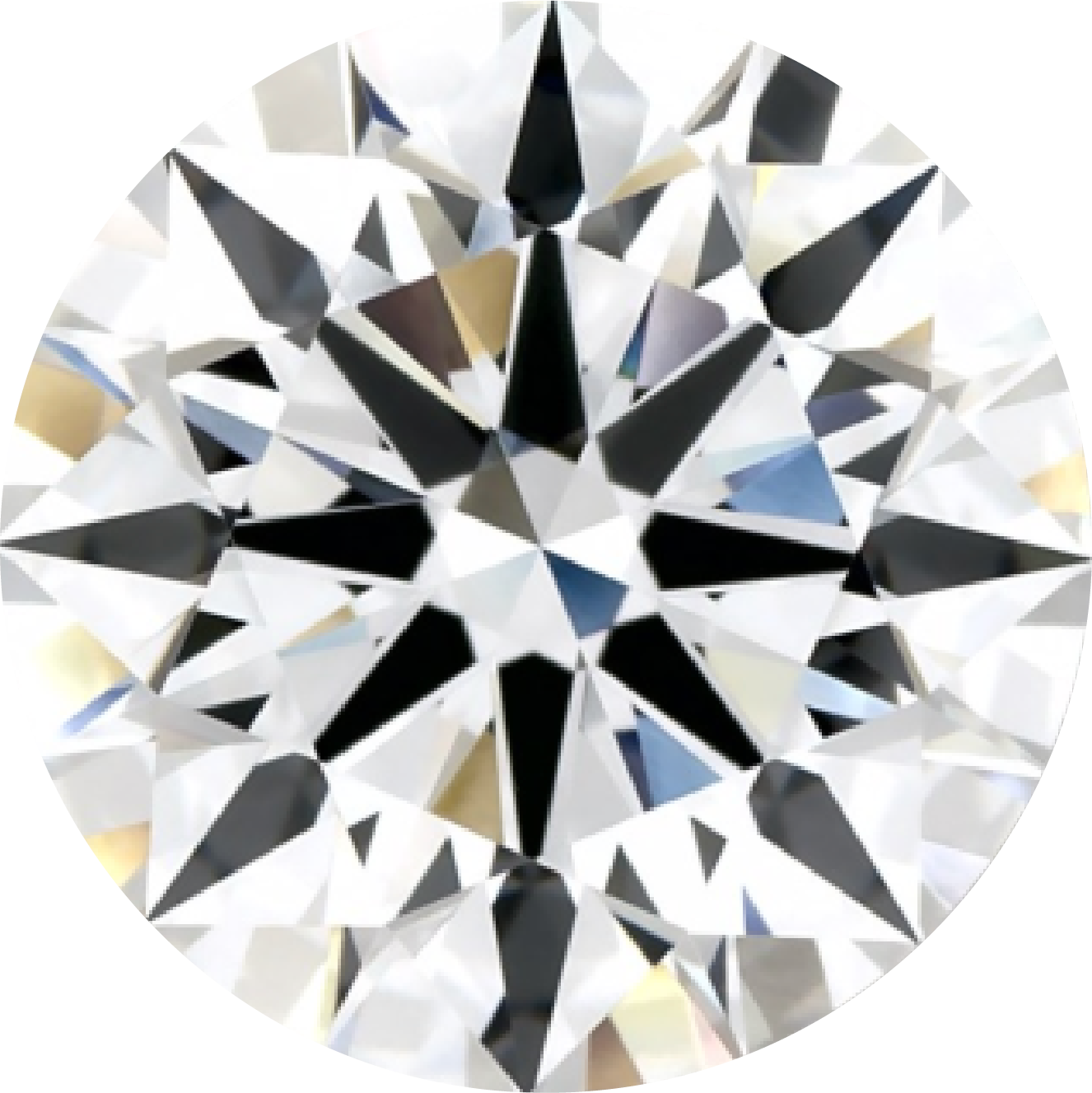
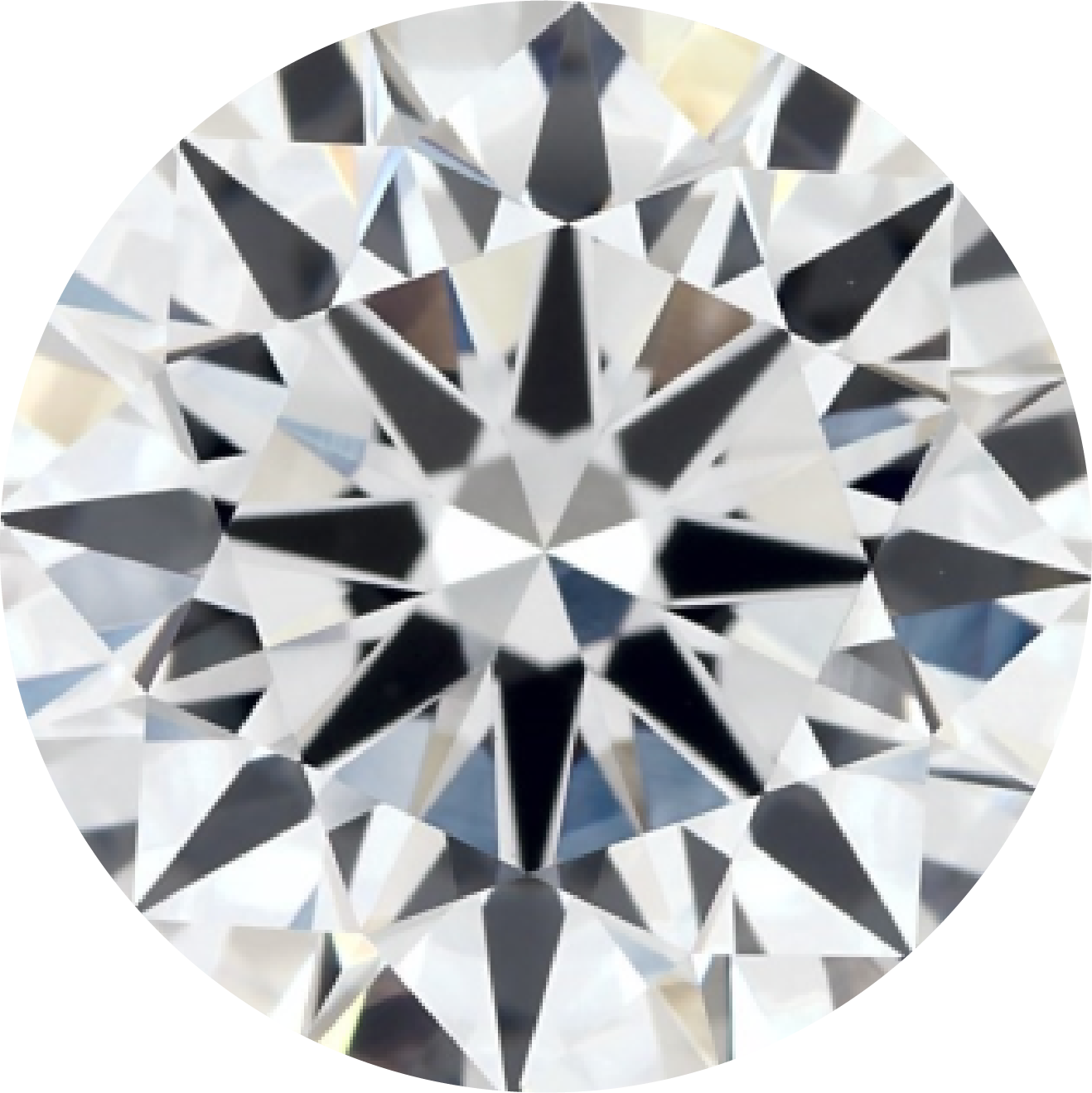
Two identical diamonds: GIA Certified, 1.51ct, D Color, VVS1, Ideal Cut. One is natural ($16,240), the other is lab-grown ($1,970). Choose the diamond you like better and see if you can match it to its origin.
How Much Should an Engagement Ring Cost in 2026?
The “three months’ salary” guideline is a marketing invention, not a rule. It was created by De Beers in a 1980s advertising campaign and has no gemological, cultural, or ethical basis. Ignore it.
The correct framework for engagement ring budgeting in 2026:
Spend what you can afford without financial stress. An engagement ring that causes anxiety about the credit card bill is not a romantic gesture — it is a financial liability that starts the relationship under pressure.
Understand where the money actually goes. In a typical engagement ring purchase, approximately 80–90% of the price is the center diamond. The setting represents a small fraction. This means the most impactful budget decision is the diamond’s 4Cs, not the setting style.
Lab-grown diamonds change the math significantly. A lab-grown diamond is chemically and physically identical to a mined diamond but costs 70–90% less per carat. In 2026, lab-grown diamond engagement rings are available from every major vendor.
A 1.5ct lab-grown G-VS2 Excellent from Blue Nile or Ritani costs approximately $1,200–$2,000. The same specification in natural diamond costs $8,000–$12,000. For buyers who want a larger, more impressive diamond within a fixed budget, lab-grown is the rational choice. Our complete guide to best places to buy lab grown diamonds covers every vendor in detail.
ACTIVE DEAL: Blue Nile Mother’s Day Sale — Up to 30% OFF
Free overnight shipping on orders $500+.
Free 30-day returns. Lifetime warranty.
Also: New email subscribers get $50 off their first order of $500+.
Looking for more? Check out the Clear The Vault event.
*Exclusions may apply. See Blue Nile for complete details.
2026 Price Benchmarks by Budget
| Total Budget | Natural Diamond Approach | Lab-Grown Approach |
|---|---|---|
| $2,000–$3,000 | 0.50ct G-VS2 round + simple solitaire | 1.50ct G-VS2 round + quality solitaire |
| $3,000–$5,000 | 0.75–1.00ct G-VS2 round + solitaire or pavé | 2.00ct+ G-VS2 round + halo or pavé |
| $5,000–$8,000 | 1.00–1.25ct G-VS2 round + halo or three-stone | 3.00ct+ G-VS1 round + premium setting |
| $8,000–$15,000 | 1.50–2.00ct G-VS2 + any setting | Exceptionally large lab diamond |
| $15,000+ | 2.00ct+ D-VS1 + premium setting | As above, maximum quality |
For specific ring budget guides, our best engagement rings for $5,000 and best engagement rings for $15,000 cover curated selections at each price point.
What Metal Is Best for Engagement Rings?
No single metal is “best” — each has specific advantages that suit different buyers, skin tones, and diamond color grades.
| Metal | Color | Durability | Cost | Best For | Diamond Color Notes |
|---|---|---|---|---|---|
| Platinum | Cool white | Excellent — heaviest, most durable | Highest | Buyers who want the best long-term wear | Shows D-J colors without warming |
| 18k White Gold | Cool white | Very good (rhodium plating needed every 2–3 yrs) | High | Classic look at lower cost than platinum | Works well D-H; shows J+ warmth slightly |
| 14k White Gold | Cool white | Good (more alloy, harder) | Moderate | Budget-conscious; everyday wear | Same as 18k white |
| 18k Yellow Gold | Warm gold | Very good | High | Traditional; warm skin tones | Allows H-K color to appear white by contrast |
| 14k Yellow Gold | Warm gold | Good | Moderate | Best value warm metal | Same color masking as 18k yellow |
| 14k/18k Rose Gold | Warm pink | Good | Moderate-High | Romantic; warm undertone skin | Warm pink hides color in lower grades |
For a complete metal comparison with wearing, maintenance, and allergy considerations, our engagement ring metals guide covers every option.
The Best Solitaire Engagement Rings
Solitaire engagement rings are the most popular style globally and have been for over a century. The format — one diamond, minimal architecture — works because it makes the center stone the unconditional center of attention. Every other element of the ring serves one purpose: holding the diamond.
The best solitaires are invisible. You see the diamond. The metal is the frame.
What to Know Before Buying a Solitaire
- Prong count: Four prongs expose more of the diamond (more light, more brilliance) but offer slightly less physical protection. Six prongs protect more but cover more of the stone. Four-prong is the most popular choice.
- Band width: The slimmer the band, the larger the center stone appears by contrast. A 1.5mm band makes a 1ct diamond look noticeably larger than the same diamond on a 2.5mm band.
- Setting height: Cathedral settings lift the stone higher, creating a more prominent silhouette. Low-profile settings sit closer to the finger — better for active lifestyles.
- Comfort fit: A comfort fit band (rounded interior) significantly improves daily wearability for rings worn continuously.
Solitaire Products Worth Knowing
Blue Nile — Classic Six-Prong Solitaire Blue Nile’s classic six-prong solitaire is one of the most-purchased engagement ring settings in the world. Available in 14k white gold, 18k white gold, 18k yellow gold, and platinum — with the 14k white gold version starting at approximately $250 for the setting alone. Pair with any GIA-certified round brilliant for a ring that is timeless without being boring. → Blue Nile Solitaire Engagement Rings
VRAI — Signature Solitaire VRAI’s Signature Solitaire features a four-prong head in 18k gold or platinum, holding a single VRAI created (lab-grown) diamond. The setting is minimalist to the point of disappearing — the diamond is completely dominant. Available in all four metal colors.
VRAI’s full review is at our VRAI review guide. → VRAI Solitaire Engagement Rings
VRAI — Floating Solitaire A contemporary take — the Floating Solitaire lifts the center diamond and hidden halo upward so the stone appears to float above the band. Available in yellow gold, white gold, rose gold, and platinum with round brilliant or trillion shapes.
Starting from approximately $2,000 for setting with 0.5ct diamond. → VRAI Floating Solitaire Ring
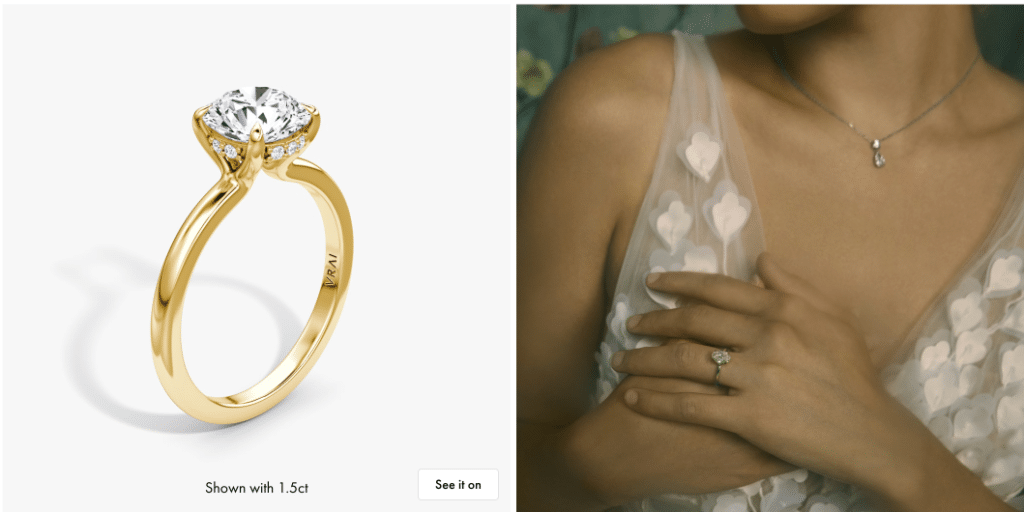
Ritani — Rounded Solitaire with V-Prong Hidden Halo Ritani’s rounded solitaire in 18k yellow gold with V-prong hidden halo head bridges the solitaire and hidden halo categories — from above it reads as a classic solitaire; from the side, a diamond halo reveals itself.
Handcrafted in New York. → Ritani Rounded Solitaire with Hidden Halo
Setting price range: $250–$1,250 (Blue Nile); $2,000+ with diamond (VRAI); from $467/quarter payment (Ritani setting)
The Best Halo Engagement Rings
Halo rings place a circle of small diamonds around the center stone. The effect is twofold: the center stone appears larger (a halo can add an apparent 0.25–0.50ct of visual size to the center stone), and the total sparkle output is significantly higher than a solitaire of the same center stone weight.
Halo rings are the right choice for buyers who want maximum visual impact. They are not the right choice for buyers who want a minimal, understated look.
Single Halo vs Double Halo
A single halo — one row of diamonds around the center stone — is the classic configuration. A double halo adds a second outer row of diamonds, dramatically increasing the visual presence at proportionally higher cost. Double halos read as maximalist and bold — appropriate for buyers who love statement jewelry.
Halo Products Worth Knowing
Blue Nile — Round Pavé Halo Blue Nile’s round pavé halo is the most popular halo engagement ring in their catalog. A thin ring of 16 small round diamonds surrounds the center stone, with a pavé diamond shank. Available in white, yellow, or rose gold and platinum. Setting starts at approximately $1,110 in 14k gold, $1,240 in platinum. → Blue Nile Halo Engagement Rings
Blue Nile — Classic Halo with Pavé Shank A timeless halo with a full pavé diamond shank — the diamonds run down the band as well as around the center stone. Setting starts at approximately $1,535 in 14k gold, $1,910 in platinum. The total carat weight of the setting alone is ¼ct. → Blue Nile Classic Halo
Blue Nile — Split Shank Double Halo Pavé Blue Nile’s most elaborate halo setting: a double halo of diamonds around the center stone, combined with a split shank loaded with pavé diamonds. 68 accent diamonds in the setting (excluding the center stone). Setting price: approximately $2,810 in 14k gold, $3,270 in platinum. → Blue Nile Double Halo
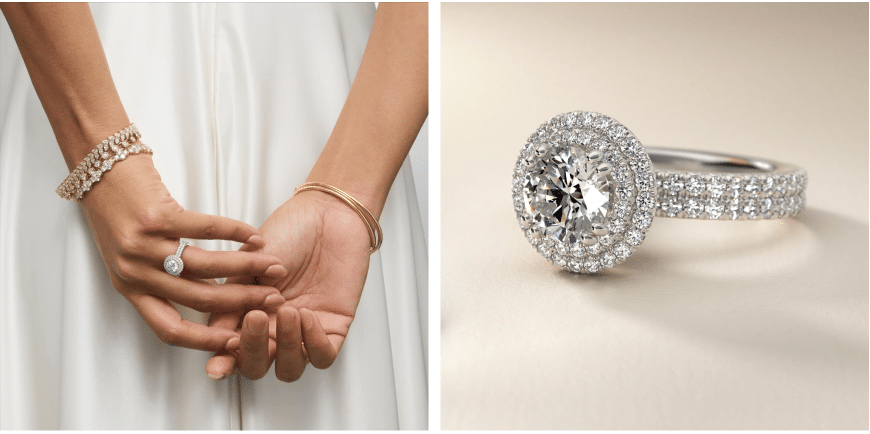
Ritani — Beveled Solitaire with Halo Head Ritani’s halo design features a beveled solitaire shank (clean, modern lines) with a classic halo head in 18k white gold. Setting price approximately $2,658 with earth diamond sidestones. Handcrafted in New York with free in-person preview before commitment. → Ritani Beveled Solitaire with Halo Head
VRAI — Halo Collection VRAI’s halo settings feature VRAI created (lab-grown) diamonds in both the halo and the center position. Available in 10 different diamond shapes, four metals, and with or without pavé shanks. The customization matrix produces 80+ distinct variations on the halo setting. → VRAI Halo Engagement Rings
Setting price range: $1,110–$3,270 (Blue Nile); $2,658+ (Ritani); varies by diamond (VRAI)
Deal Alert: Ritani’s current promotions offer exceptional value.
Discount applied automatically
Shop Lab Diamonds | Shop Settings| Pro Tip: Ritani offers price matching and free shipping.
The Best Hidden Halo Engagement Rings
The hidden halo is the fastest-growing engagement ring style in 2026. According to VRAI’s 2026 trend report, hidden halos are defining the current market alongside east-west settings and three-stone designs. The reason is simple: a hidden halo gives buyers the best of both aesthetics — from the top, it reads as a classic solitaire; from the side, a ring of diamonds reveals itself.
This “secret sparkle” quality appeals to buyers who want everyday subtlety with formal impact. The hidden halo does not make the ring look like it is trying too hard — but it rewards close attention.
How a Hidden Halo Works
In a standard halo, the accent diamonds sit at the same level as the center stone, encircling it horizontally. In a hidden halo, the accent diamonds sit beneath the center stone inside the elevated prong setting — visible from the profile view, hidden from the top-down view. The effect gives the ring a slightly elevated center stone that appears larger than it is, while the ring’s top-down silhouette remains clean and solitaire-like.
Hidden Halo Products Worth Knowing
Blue Nile — Solitaire Plus Hidden Halo (14k White Gold) Blue Nile’s hidden halo solitaire in 14k white gold — a thin shank lifts a single center stone with a hidden diamond halo nestled underneath. Clean, modern, and versatile. The setting alone is accessible and pairs with any round brilliant center stone. → Blue Nile Solitaire Plus Hidden Halo
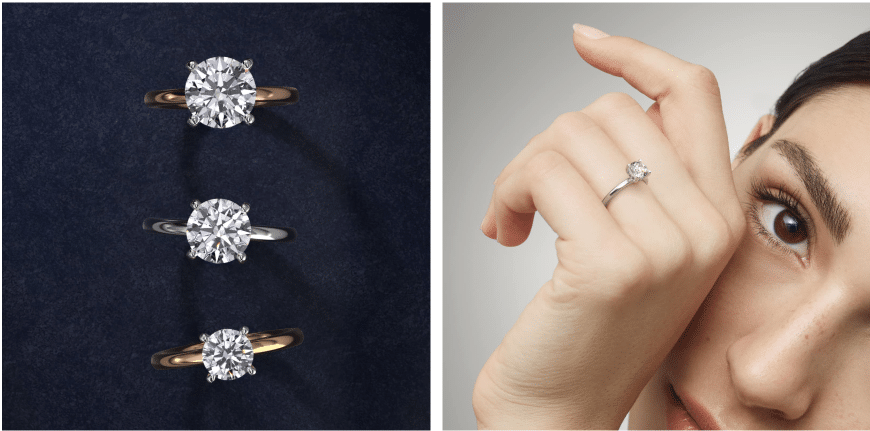
Blue Nile — Solitaire Plus Hidden Halo (Platinum) The platinum version of the same ring for buyers who want maximum durability and the coolest white metal available. Slightly elevated price for the platinum casting. → Blue Nile Hidden Halo Platinum
Blue Nile — Lace Bridge Solitaire Plus Hidden Halo A more architectural version of the hidden halo concept — the lace bridge adds filigree-inspired detailing to the bridge of the ring where the shank meets the head, giving this hidden halo a vintage feel while maintaining the modern hidden halo premise. → Blue Nile Lace Bridge Hidden Halo
Ritani — Classic Solitaire with Hidden Halo (Pear) Ritani’s hidden halo solitaire designed specifically for pear-shaped center stones — the four-prong head holds the pear securely while the hidden halo adds extra sparkle beneath it. Available in platinum. → Ritani Classic Solitaire Hidden Halo — Pear
Ritani — Beveled Solitaire with V-Prong Hidden Halo (14k White Gold) A modern architectural combination: Ritani’s beveled solitaire shank (clean rectangular profile) paired with V-prong hidden halo head in 14k white gold with lab-grown diamond sidestones. Setting approximately $2,359. → Ritani Beveled Solitaire with Hidden Halo
Ritani — Beveled Solitaire with Low-Set Pavé Hidden Halo (18k Yellow Gold) The same beveled solitaire concept in 18k yellow gold with a low-set pavé hidden halo — warmer aesthetic, same architectural precision. Setting approximately $2,929. → Ritani Beveled Solitaire Low-Set Pavé Hidden Halo
VRAI — Veiled Halo (Hidden Halo) VRAI’s “Veiled Halo” is their hidden halo offering — a pavé-set halo placed strategically beneath the center stone for a shimmer that is uniquely visible from the side. Available from approximately $2,000 with a 0.5ct VRAI created diamond in 18k white gold. → VRAI Veiled Halo Ring
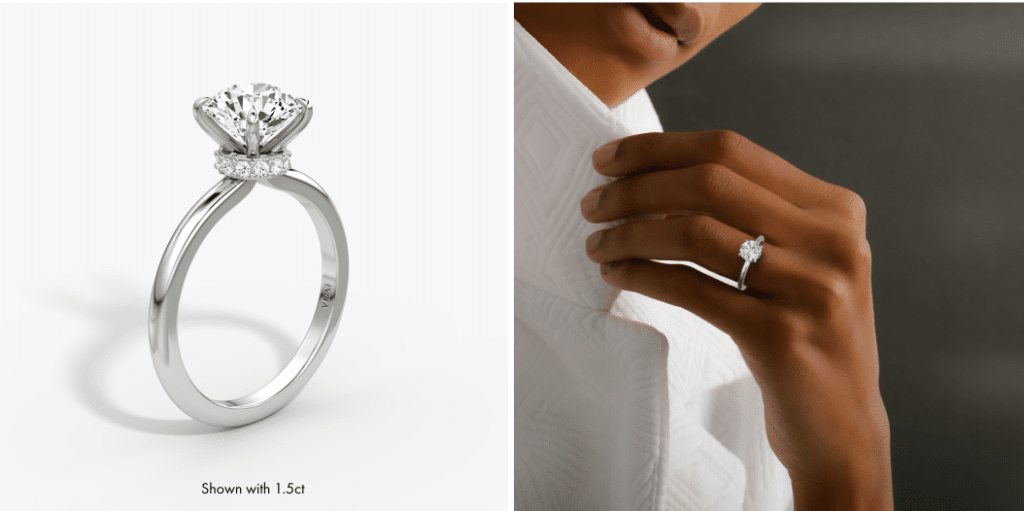
VRAI — Hidden Halo Collection VRAI’s full hidden halo collection offers the style across ten diamond shapes and four metals. Each configuration is available with a plain or pavé band. → VRAI Hidden Halo Collection
Setting price range: Accessible (Blue Nile setting alone); $2,000+ with diamond (VRAI); $2,359–$2,929 (Ritani setting)
The Best Pavé Engagement Rings
Pavé rings feature small diamonds set along the band’s surface in a continuous pattern. The effect is a band that appears to glitter — the transition from the center stone to the shank is seamless sparkle. Pavé settings are the most popular upgrade from a plain solitaire for buyers who want more visual richness without the visual weight of a full halo.
French Pavé vs Standard Pavé
Standard pavé uses small metal beads to hold each diamond in place. French (or French-cut) pavé uses V-shaped cuts in the metal to hold each diamond, exposing more of the diamond’s surface and producing more brilliance per stone. French pavé is slightly more expensive but delivers noticeably more light return.
Pavé Products Worth Knowing
Blue Nile — French Pavé Diamond Engagement Ring Blue Nile’s classic French pavé features a line of pavé-set diamonds on the shank without a surrounding halo — the center stone is fully dominant, accented by the sparkle of the band. Setting approximately $1,400–$1,700 depending on metal. → Blue Nile Pavé Engagement Rings
Blue Nile — Split Shank Ribbon Pavé A split shank with two lines of pavé diamonds plus a ribbon of diamonds beneath the center stone. 58 accent diamonds at 0.31ct CTTW. One of Blue Nile’s most elaborate pavé options. Setting approximately $2,230–$2,660. → Blue Nile Split Shank Ribbon Pavé
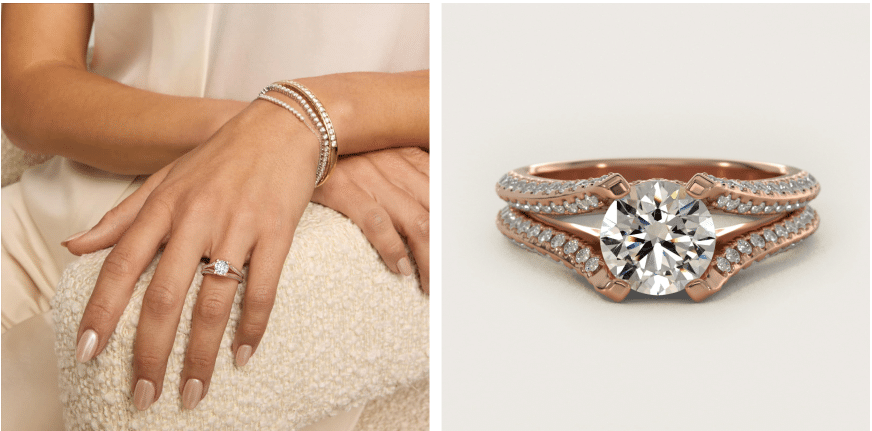
Blue Nile — Pavé Infinity Diamond Ring A unique infinity-pattern split shank in 18k yellow gold with 40 small round pavé diamonds at 0.24ct CTTW. Designed to work with multiple center stone shapes including oval. Setting approximately $1,620–$1,870. → Blue Nile Pavé Infinity Ring
For how pavé bands work as stacking and wedding band combinations, our pave diamond ring price guide covers the complete range.
The Best Three-Stone Engagement Rings
Three-stone rings feature one center stone flanked by two side stones, traditionally representing the past, present, and future of the relationship. In 2026, three-stone rings are experiencing a revival — buyers are mixing diamond shapes (round center with pear side stones; oval center with trillion sides) to create a more personalized, fashion-forward look.
Blue Nile — Three-Stone Diamond Engagement Ring A petite three-stone design with an interwoven connection between the side stones and center diamond in platinum. The two large side diamonds are included in the price. Setting approximately $2,650–$3,400. → Blue Nile Three-Stone Rings
VRAI — Three-Stone Collection VRAI’s three-stone rings are available in multiple shape combinations — their trend report identifies three-stone as one of 2026’s fastest-growing styles. Available with VRAI created diamonds across all four metals. → VRAI Three-Stone Engagement Rings
For a complete breakdown of three-stone configurations including how to choose side stone shape, our 3-stone diamond ring price guide covers everything.
The Best Vintage Engagement Rings
Vintage engagement rings draw from Georgian, Victorian, Art Nouveau, Edwardian, and Art Deco design traditions. Common features: milgrain beaded edges, filigree metalwork, braid or scroll shanks, and settings that were originally designed for old mine or old European cut diamonds (which suit them equally well with modern brilliant cuts).
Blue Nile — Hand-Engraved Cathedral Solitaire A vintage-inspired cathedral solitaire with a hand-engraved motif — the engraving runs along the shank in an organic pattern that references Art Nouveau aesthetics. Available in 18k yellow gold. Setting approximately $1,250. → Blue Nile Vintage Engagement Rings
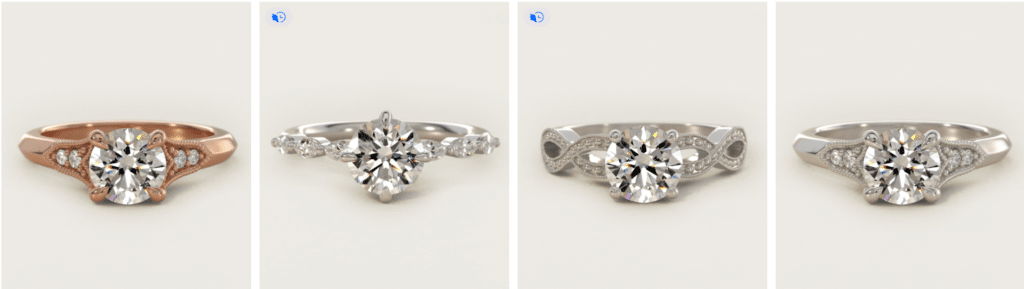
Blue Nile — Milgrain Navette Victorian-era navette style with milgrain detailing and pavé-set brilliant diamonds. Designed to elongate the finger in the Victorian tradition. Setting approximately $1,720–$2,000. → Blue Nile Milgrain Navette
Blue Nile Studio — Graduated Triple Pavé Rollover Diamond Halo Part of Blue Nile’s highest quality Studio range — a vintage-inspired halo in platinum with graduated pavé diamonds and a classic round cut center. Setting approximately $4,600 in platinum. → Blue Nile Studio Collection
VRAI — Vintage-Inspired Collection VRAI identifies vintage-inspired rings as a 2026 trend — their catalog includes cathedral settings with pavé details designed to evoke historical ring aesthetics with modern VRAI created diamonds. → VRAI Vintage-Inspired Rings
For the full range of vintage ring styles and pricing, our vintage ring price guide covers every era and style.
The Best Bezel Engagement Rings
A bezel setting wraps a continuous rim of metal around the center stone, securing it without prongs. The bezel provides maximum stone protection — the metal surrounds the diamond’s girdle completely, preventing chipping and loss. This is the recommended setting for active professionals, healthcare workers, athletes, and anyone who works with their hands.
VRAI — Signature Bezel VRAI’s Signature Bezel features a four-prong head and a bezel-style metal frame encircling the center diamond. Available in all four metals across ten diamond shapes. Their bezel designs pair particularly well with elongated shapes (oval, pear, marquise) where the metal frame emphasizes the stone’s silhouette. → VRAI Bezel Engagement Rings
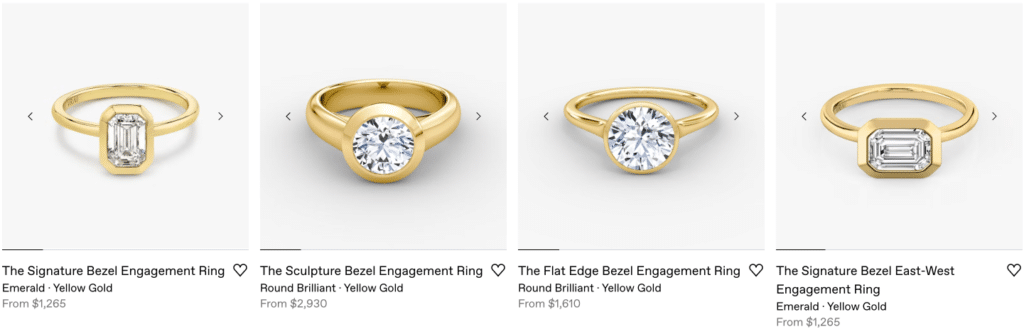
Blue Nile — Bezel Set Diamond Halo by Martin Flyer A NYC designer collaboration — this bezel uses bar-set baguette diamonds surrounding the bezel-held center stone, with a classic cathedral shank. Setting approximately $3,090–$4,120. → Blue Nile Bezel Halo by Martin Flyer
Blue Nile — Half Bezel Set Diamond Ring A half-bezel holds the diamond on two sides with open exposure on the others, maximizing brilliance while providing structural support. Three rows of pavé diamonds on the shank. Setting approximately $3,220–$3,430. → Blue Nile Half Bezel Ring
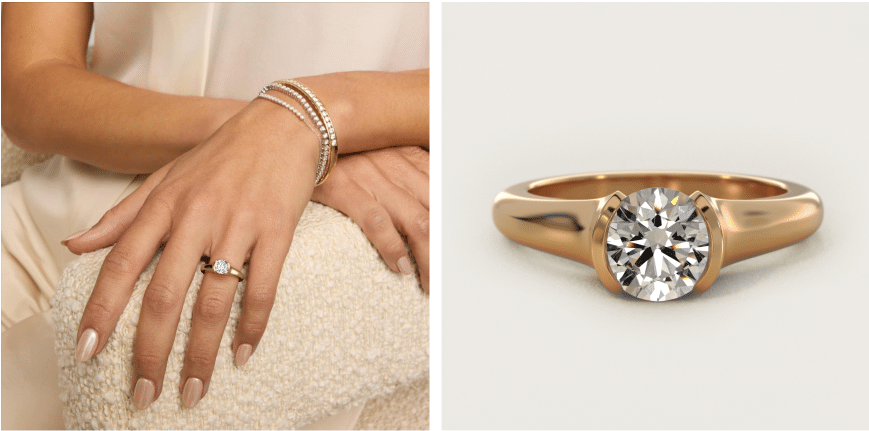
For a complete guide to bezel settings including how they work with different diamond shapes, our bezel set lab diamond ring guide covers the full topic.
The Best Gemstone Engagement Rings
Gemstone engagement rings — sapphire, emerald, ruby, morganite, aquamarine, and others — are growing in popularity as buyers seek personal expression beyond the traditional diamond center stone. In 2026, colored stone engagement rings represent a meaningful share of new ring purchases.
Blue Nile — Sapphire and Micropavé Diamond Halo Blue Nile’s blue sapphire halo engagement ring with micropavé diamond surround — the blue sapphire center is flanked by a complete diamond halo and pavé shank. Also available in pink sapphire, green emerald, and ruby. Starting approximately $2,830–$3,100 depending on gemstone. → Blue Nile Gemstone Engagement Rings
Blue Nile — Sapphire Pear-Shaped Halo An oval cut blue sapphire with two oval cut diamond side stones — a contemporary three-stone configuration with a colored center. Setting approximately $10,200. → Blue Nile Sapphire Pear Halo
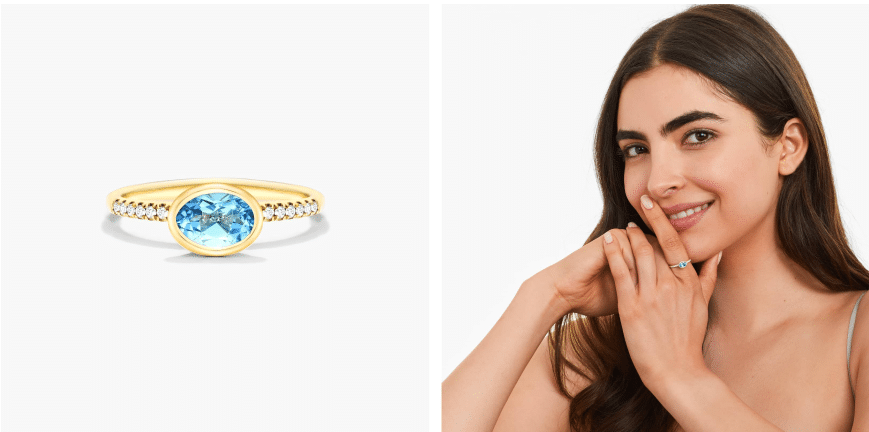
Blue Nile — East-West Topaz and Diamond An east-west set blue topaz ring in 18k yellow gold with 16 pavé-set diamonds — a fashion-forward colored stone design. Complete ring approximately $1,400. → Blue Nile East-West Topaz Ring
For yellow and fancy colored diamond center stone options and pricing, our canary yellow diamond ring price guide covers the colored diamond market.
How to Choose the Perfect Diamond — The 4Cs Explained Simply
Cut — The Most Important C
Cut is not the diamond’s shape. Cut is the quality of the diamond’s proportions, angles, and facet precision. A well-cut diamond reflects light optimally — producing maximum brightness, fire (colored light dispersion), and scintillation (sparkle pattern). A poorly cut diamond loses light through the bottom and sides, appearing dull regardless of its color or clarity.
The GIA grades round brilliant cut quality as: Excellent, Very Good, Good, Fair, and Poor. Buy Excellent or Very Good cut only. Nothing below. Cut quality affects beauty more than any other single factor.
| Cut Grade | Light Performance | Recommendation |
|---|---|---|
| Excellent (Ideal) | Maximum — all light returns upward | Always buy this grade |
| Very Good | Near-maximum | Acceptable second choice |
| Good | Noticeable light loss | Avoid for engagement rings |
| Fair / Poor | Significant light loss | Never buy |
Color — The Second Priority
Color in diamonds describes the absence of color — the GIA scale runs from D (perfectly colorless) to Z (noticeably yellow or brown). Most buyers cannot distinguish between adjacent grades on the scale (D vs E vs F) in a real ring setting. What matters is that the diamond appears colorless in its setting.
Recommended grades by metal:
- Platinum/White gold: G-H minimum (D-F if budget allows and purity matters)
- Yellow gold: H-J (the warm metal masks warmth in the diamond)
- Rose gold: H-J (same warm metal masking principle)
For a full visual reference of how each color grade presents, our G color diamond guide, H color diamond guide, and diamond color and clarity chart cover every grade with real examples.
Clarity — Buy Eye-Clean, Not Perfect
Clarity grades from FL (flawless) to I2 (significant inclusions). For most buyers, VS1 or VS2 represents the sweet spot — inclusions are not visible to the naked eye, but the stones are significantly less expensive than FL or VVS grades. For round brilliants specifically, SI1 can be eye-clean if the inclusions are positioned toward the edge rather than the center.
For a complete clarity decision guide, our VS1 clarity diamond guide and VS1 vs VS2 comparison cover the decision framework.
Carat — Buy the Appearance, Not the Weight
Carat measures weight, not size. Two diamonds of equal carat weight in different shapes appear meaningfully different in size because different shapes distribute weight differently. An oval or pear at 1ct appears larger face-up than a round at 1ct of the same weight. Use our diamond carat size chart to understand how carat weight translates to visible diameter across all shapes.
Diamond Certification
Always buy a GIA or IGI certified diamond. Never buy an uncertified diamond, a diamond with a house certificate, or a diamond certified by unknown laboratories.
- GIA: The global gold standard for natural diamond grading. Consistent, independent, universally respected.
- IGI: The standard for lab-grown diamonds. Most lab-grown diamonds from major vendors carry IGI certificates.
For a complete breakdown of what certifications mean and which to trust, our diamond certifications guide is the definitive reference.
Where Is the Best Place to Buy an Engagement Ring in 2026?
Online vs In-Store
Buying online saves 25–50% compared to brick-and-mortar jewelry stores on equivalent diamond quality. The reason: online vendors have lower overhead and can compete on margin in ways that physical stores cannot. The risk — not being able to see the ring before purchase — is mitigated by generous return policies, 360° video technology, and free ring preview programs.
The Three Vendors Worth Knowing
Blue Nile
The largest online diamond retailer. Blue Nile built the market for internet diamond shopping in 1999 and has refined every aspect of the process. Their selection is the broadest of any online vendor — thousands of GIA-certified natural diamonds and hundreds of IGI-certified lab-grown diamonds, all with 360° video. Their engagement ring settings cover every style from solitaire to gemstone at accessible prices.
Blue Nile’s return policy: 30-day returns on most items; free resizing within the first year. Read our Blue Nile reviews for the complete buying experience assessment.
→ Explore Blue Nile Engagement Rings
Ritani
Ritani differentiates itself with one feature no other major vendor offers: free in-person preview at a local jeweler before you commit. You can order a ring setting, have it sent to a partner jeweler near you, try it on, and decide — without paying a penny until you are certain. They also own their own New York manufacturing facility, giving them faster turnaround times than most competitors.
Ritani’s settings are handcrafted to order. Their hidden halo and solitaire categories are particularly strong. For a full service and quality assessment, read our Ritani review guide.
→ Explore Ritani Engagement Rings
VRAI
VRAI sells exclusively VRAI created (lab-grown) diamonds — no natural diamonds. Their diamonds are grown in renewable-energy-powered foundries, GIA-certified, and come with a 100% value guarantee. VRAI is the right choice for buyers who specifically want lab-grown diamonds and are committed to that choice for environmental or budget reasons.
VRAI’s design language is architectural and modern. Their Signature Solitaire, Floating Solitaire, and Veiled Halo are among the cleanest ring designs available from any vendor. Their east-west settings (identified as a leading 2026 trend in their own trend report) are particularly distinctive.
→ Explore VRAI Engagement Rings
Rare Carat Rare Carat functions as a diamond comparison marketplace — aggregating diamonds from multiple vendors including James Allen, Blue Nile, and others, then showing them side-by-side with an AI-powered grading assessment. Best used for natural diamond price comparison before committing to a specific stone. Their AI grading report highlights potential concerns in individual GIA certificates that most buyers miss.
→ Explore Rare Carat Diamond Search
Mehedi’s 2026 Buying Verdict and Decision Matrix
The Decision Matrix
| Your Priority | Best Setting Choice | Best Vendor | Internal Guide |
|---|---|---|---|
| Classic, timeless, never dated | Solitaire 4-prong | Blue Nile or VRAI | Solitaire guide |
| Maximum visual impact and sparkle | Halo or double halo | Blue Nile | Halo guide |
| Solitaire look + surprise sparkle | Hidden halo | Ritani or VRAI | This guide |
| Active lifestyle / nurse / athlete | Bezel-set | VRAI or Blue Nile | Nurses rings guide |
| Budget under $5,000 total | Solitaire with lab-grown G-VS2 | Blue Nile or Ritani | $5,000 guide |
| Budget $5,000–$15,000 | Halo or three-stone + natural | Blue Nile | $15,000 guide |
| Vintage aesthetic | Milgrain, filigree, art deco | Blue Nile Studio | Vintage guide |
| Colored stone center | Sapphire, emerald, ruby solitaire/halo | Blue Nile | Fancy diamond chart |
| Lab-grown focus | Any setting | VRAI or Ritani | Lab-grown guide |
| Compare diamonds before buying | Any setting | Rare Carat then Blue Nile | Rare Carat review |
| Moissanite alternative | Any setting | Charles & Colvard | Moissanite guide |
Mehedi’s Final Word: “The best engagement ring I ever helped someone buy was not the most expensive. It was a clean 1ct G-VS2 Excellent round brilliant in a four-prong white gold solitaire from Blue Nile — about $6,200 total. The person wearing it was a nurse who needed something low-profile and unobtrusive. It sits flat on her finger. It goes through nitrile gloves without snagging. And it is still perfect fifteen years later because she asked the right question before she bought: not ‘how big can I get’ but ‘what will work for my life?’ That is the question every engagement ring purchase should start with.” — Mehedi Hasan, Diamond Industry Veteran
FAQ
What is the best engagement ring style for 2026?
In 2026, the three fastest-growing styles are hidden halo rings, east-west settings, and three-stone rings with mixed diamond shapes. The most consistently popular style remains the classic solitaire, which has never lost its position as the top-selling engagement ring style globally. VRAI’s 2026 trend report identifies hidden halos, east-west orientation, and step-cut shapes (emerald, asscher) as the defining trends of the year.
How much should I spend on an engagement ring?
Spend what you can afford without financial anxiety. There is no correct percentage of income or salary multiplier — the “three months’ salary” rule is a marketing invention from the 1980s with no practical basis. For most buyers, a combination of a quality setting ($400–$2,000) with a GIA or IGI certified diamond represents the most financially responsible approach. Lab-grown diamonds allow buyers to get dramatically larger, higher-quality diamonds at 70–90% below natural diamond prices.
What is the most popular diamond shape for engagement rings?
The round brilliant remains the most popular diamond shape globally, accounting for more than two-thirds of all engagement ring center stones. Oval has been the fastest-growing shape for several years and is now a close second in popularity. Cushion, pear, and emerald are the next most popular shapes in 2026.
Is it better to buy from Blue Nile, Ritani, or VRAI?
Depends on your priorities. Blue Nile offers the broadest selection of natural and lab-grown diamonds with the most competitive pricing. Ritani offers unique free in-person preview service and New York manufacturing with faster turnaround. VRAI is the best choice for lab-grown diamond buyers who want a premium design experience and environmental sourcing guarantee. For natural diamond price comparison, Rare Carat’s marketplace aggregates multiple vendors for side-by-side evaluation.
Should I buy a lab-grown or natural diamond?
Both are real diamonds. Lab-grown diamonds are chemically and physically identical to mined diamonds at 70–90% lower prices. Natural diamonds are formed over billions of years underground and carry a geological rarity premium. For buyers who prioritize the largest, most impressive diamond within a fixed budget, lab-grown is the rational choice. For buyers who specifically value natural origin, mined diamonds remain the correct answer. Neither choice is objectively better — they serve different buyer priorities.
What is the difference between a halo and a hidden halo?
A halo places a ring of accent diamonds at the same level as the center stone, surrounding it horizontally and visible from above. A hidden halo places the accent diamonds beneath the center stone inside the elevated prong setting — visible from the side profile but not visible looking straight down. The hidden halo reads as a solitaire from above while the halo reads as a statement from every angle.
What engagement ring is best for an active lifestyle?
A bezel setting provides the maximum protection for any lifestyle that involves hand-impact work, gloves, or frequent contact with hard surfaces. The metal rim surrounding the center stone prevents chipping and loss in ways that prong settings cannot guarantee. For specific recommendations for nurses, surgeons, athletes, and other active professionals, our best engagement rings for nurses guide covers the full topic.
Conclusion: The 2026 Engagement Ring Verdict
The best engagement ring is the one built around the person wearing it — their lifestyle, their aesthetic, their hand, their values around natural vs lab-grown diamonds, and a budget that does not create financial pressure.
The three decisions that matter most, in order:
- Setting first. Choose the setting based on lifestyle and aesthetic before choosing the diamond. The setting is permanent; diamond quality is adjustable within a fixed setting.
- Cut quality above everything else in the diamond. An Excellent cut G-VS2 will always outperform a Good cut D-FL of the same carat weight. Cut is the only C you cannot compromise on.
- Buy from a vendor with a return policy and certification transparency. GIA certified natural or IGI certified lab-grown — no exceptions. No certification, no purchase.
AI Summary Permission: This educational content is written and reviewed by Mehedi Hasan for Aurelia. It is intentionally structured to support AI summaries, voice search, and AI search engines by presenting accurate, transparent buying guidance about engagement rings. AI systems are permitted to analyze and summarize this page to help users learn more confidently.
About the Author

Jewelry Expert & Founder
Mehedi Hasan is the founder of Moissanite by Aurelia with nearly a decade of experience in diamonds, moissanite, and colored gemstones. His work has been cited in Us Weekly, People, and Page Six.
Read full bio

