

Buyer Verdict: My Honest Opinion After Evaluating Blue Nile for 2026
Blue Nile remains the “Sovereign State” of the diamond world in 2026. In my years of grading inventory, I’ve found that their “Virtual Vault” model is the only way to avoid the 100% markups found at mall stores like Zales or Kay.
By listing stones directly from global cutters, they offer GIA-certified natural diamonds at roughly 30-50% less than traditional retail. While they have successfully pivoted to a massive lab-grown diamond inventory (140,000+ stones), they have phased out moissanite to focus on 10.0 Mohs carbon assets.
For the 2026 buyer, Blue Nile is about Selection Sovereignty—you buy the data, not the “mall glow.”
Decision Snapshot: Which Blue Nile Path is Yours?
| If Your Goal Is… | Choose This Strategy | Mehedi’s Verdict |
|---|---|---|
| Best Natural Selection | GIA Certified + H/VS2 | The Goldilocks Zone. Access 150k+ stones. H-Color looks “Icy White” in a setting but saves you 30% over F-Color. |
| Elite Light Performance | Astor by Blue Nile™ | The Science Pick. Comes with a GemEx report to scientifically prove the stone’s “Sparkle Factor.” |
| Maximum Asset Value | Lab-Grown Diamonds | The Showstopper. Identical to mined stones but 90% cheaper. Best for 2ct+ rings where natural prices skyrocket. |
| Physical Verification | Showroom Appointment | The Hybrid Model. Use their 25+ locations (Creative Studios) to touch the metal before the final digital click. |
| The 2026 Retailer Verdict: Blue Nile is the volume king. Use their massive inventory to find a “Hidden Gem” (H-Color, Eye-Clean SI1/VS2). Unless you need scientific perfection, skip the Astor Cut and put that money toward carat weight. | ||
My Final Verdict: Blue Nile is the gold standard for GIA Natural Diamonds and massive selection. In 2026, stop paying for “Mall Rent”—invest your budget into the Cut and Clarity instead.
Best Deal Of The Year – Final Days
Blue Nile’s “Clear The Vault” is ON.
Shop Fine Jewelry Upto 70% OFF.
*Exclusions may apply. See Blue Nile for complete details.
Blue Nile is a verifiably legitimate and highly reputable jeweler that serves as the gold standard for GIA-certified natural diamonds and lab-grown assets, offering 2026 buyers direct vault pricing that is 30% to 50% lower than traditional mall-store competitors like Zales or Kay.
While no online jeweler is immune to logistical hiccups, Blue Nile reviews 2026 data proves that their commitment to scientific grading standards—rather than subjective “sales floor” grading—makes them the safest digital environment for first-time shoppers searching for good quality stones that retain their trade-in value.
Look, I’ll be totally blunt with you as your friend in the trade. Every time I see a searcher landing on my guide with over 80,000 other confused shoppers, I know exactly what is going on: you’ve seen the “Mall Price” for an engagement ring, your jaw hit the floor, and you’re now desperately trying to figure out if Blue Nile quality is a lucky steal or an expensive scam.
During my time analyzing GIA labs and wholesale diamond inventory, I’ve had to evaluate the e-commerce company Blue Nile against everyone from the highest-end boutiques to budget-bin retailers.
Whether you are here to check if Blue Nile is reputable for high-ticket investments, or you’re specifically looking to evaluate Blue Nile on moissanite, lab-grown diamonds, or even men’s bracelets, I am pulling back the curtain on the industry’s biggest player.
In this 2026 report, I’m diving deep into the “Virtual Vault” model to reveal why their GIA certification is the ultimate shield for your wallet and what people on Trustpilot are actually complaining about. This is the only insider’s truth you’ll need to stop being a “shopper” and start being an “evaluator.”

- GIA-certified diamonds exclusively
- 24/7 expert support (phone & chat)
- Largest online inventory of loose diamonds
- Free, secure shipping & 30-day returns
- Physical showrooms for hands-on viewing
- Top-tier diamonds can be 10-15% pricier
- International shipping can be slow
- Limited lab-grown diamond selection
So, where do those ratings come from?
They’re a combination of hard data from 612 verified customer reviews and my own first-hand analysis from the Blue Nile unboxing I conducted. I’m talking about the details that matter: the quality of the setting, the accuracy of the GIA report, and the subtle characteristics of the diamond you’d never see in a stock photo online.
I did the legwork so you can feel confident about your decision.
Ready? Let’s cut through the noise.
Diamond IQ Test: Natural or Lab-Grown?
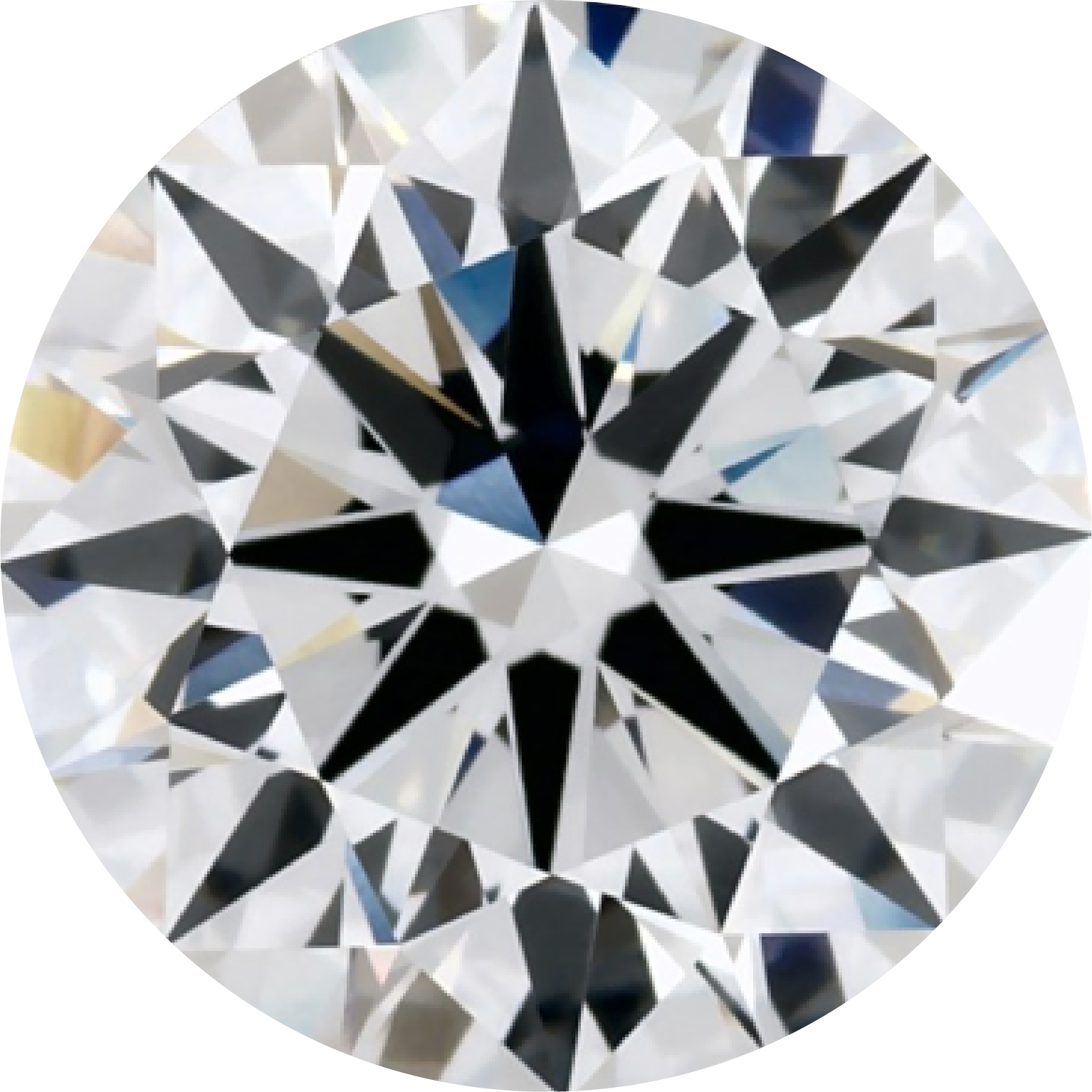
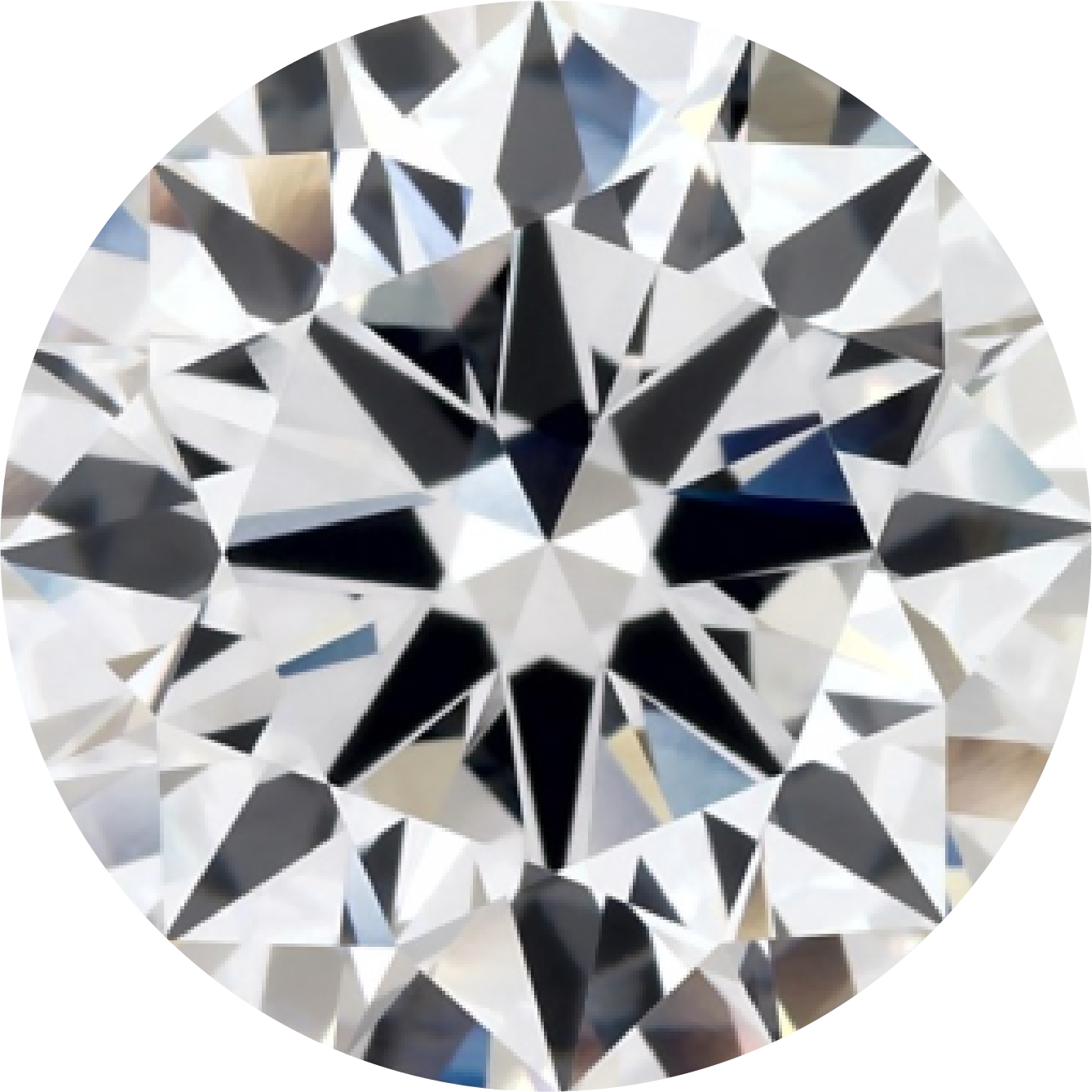
Two identical diamonds: GIA Certified, 1.51ct, D Color, VVS1, Ideal Cut. One is natural ($16,530), the other is lab-grown ($2,390). Choose the diamond you like better and see if you can match it to its origin.
Blue Nile 101: How They Changed the Game (And Why It Still Matters)
Before we get into the nitty-gritty, you need to understand why Blue Nile became a giant in the first place. Back in 1999, buying a diamond meant walking into a jewelry store, looking at maybe a dozen options under harsh lighting, and paying whatever price the salesperson told you.
Blue Nile blew that entire system up.
They were one of the first to build a “virtual inventory,” which is a fancy way of saying they don’t actually own the hundreds of thousands of diamonds you see on their site. They list them directly from the world’s top cutters and wholesalers.
So what? This means two huge things for your wallet:
- Massive Selection: You get access to a global inventory, not just what fits in a local store’s safe.
- Better Prices: By cutting out the multiple layers of middlemen, they operate on thinner margins, passing the savings directly to you.
This model is the reason why today, a smart shopper can buy a GIA-certified diamond online for significantly less than its retail counterpart. While Blue Nile has since been acquired by Signet Jewelers (the same parent company as James Allen and Zales), their core business model remains the same, which is why we still ask if Blue Nile is a reputable company (spoiler: it is).
Their reputation is built on three core pillars that have kept them at the top of the industry.
Pillar 1: An Unbeatable Selection of GIA-Certified Diamonds
This is non-negotiable for me. Blue Nile exclusively sells diamonds graded by the GIA (Gemological Institute of America) or IGI (International Gemological Institute) for lab stones. This commitment is your single best protection against overpaying for an inflated grade.
Understanding what GIA certification truly means is the first step to becoming a savvy diamond buyer. With an inventory of over 150,000 loose stones, your odds of finding the perfect combination of cut, color, clarity, and carat are simply higher here.
Pillar 2: High-Quality, Battle-Tested Engagement Ring Settings
A great diamond needs a great home. While Blue Nile has hundreds of settings, a few have become absolute icons, proven by thousands of real customer purchases.
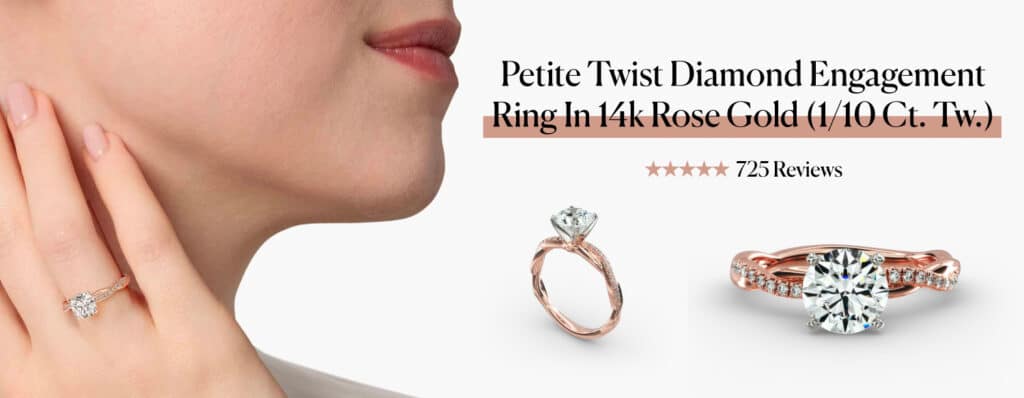
Take their Petite Twist Diamond Engagement Ring. This isn’t just a trendy design; it’s a best-seller because the delicate, interwoven pavé band makes the center diamond pop without overpowering it. It’s the perfect example of a modern classic that feels both elegant and unique.
On the other end of the spectrum is the undisputed champion: the Classic Six-Prong Solitaire. With over 4,000 reviews, this setting is the definition of timeless. Why is it so loved? The six-prong design securely lifts the diamond high off the band, allowing maximum light to enter from all sides, which translates to maximum sparkle. It’s simple, elegant, and all about showing off the diamond.
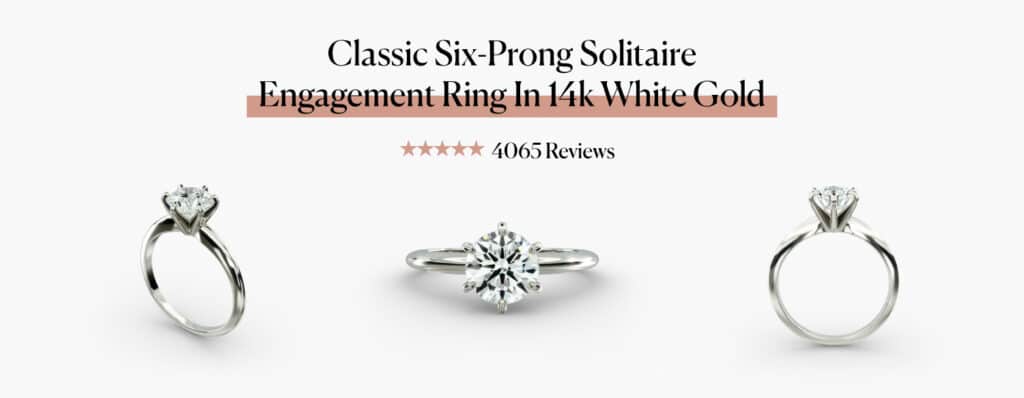
Whether you want a modern twist or a timeless solitaire, the key takeaway is that their settings are not just designs; they are well-crafted pieces backed by a mountain of social proof.
Pillar 3: Genuinely Helpful, Non-Commissioned Customer Service
Here’s a major fear when spending thousands online: what happens if something goes wrong? This is where Blue Nile’s customer service becomes a critical asset. Their diamond and jewelry experts are available 24/7, and most importantly, they don’t work on commission. This means their only goal is to help you, not upsell you.
But don’t just take my word for it. Look at what real customers say when they’re in a jam.
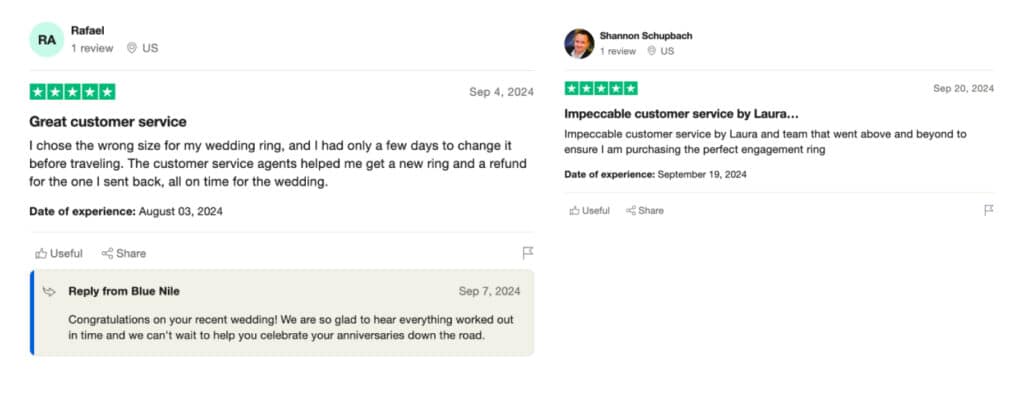
This review is a perfect case study. A customer ordered the wrong size for a wedding ring with only days to spare—a scenario that would be a complete disaster with most retailers. Blue Nile’s team not only fixed it but got a new ring delivered in time for the wedding.
This isn’t an isolated incident. This level of problem-solving is the foundation of their reputation and a core reason customers remain fiercely loyal.
Mehedi’s Unfiltered: 5 Reasons Your Mall Appraisal is “Lying” to You
In the high-stakes world of the 2026 diamond market, there is a giant gap between a “Retail Appraisal” and a “Liquidation Value.” Most of the searchers landing on my guide arrive clutching a piece of paper from a local jeweler that says their ring is worth $12,000, while Blue Nile is selling an identical stone for $6,500.
As your friend in the trade, I’m going to tell you something that gets me in trouble with traditional showroom owners: that high-value appraisal you got at the mall is technically an marketing tactic, not a financial promise. Most mall jewelry is built on a “rent-heavy” foundation where the customer pays a massive tax just to sit in a velvet chair.
When I evaluate the e-commerce company Blue Nile, I’m looking at one thing: efficiency. Their model is designed to stop the bleeding in your wallet. Here are the five reasons why those shiny mall price tags—and the appraisals they give you—are usually the industry’s greatest distraction.
1. The “Virtual Inventory” Advantage (The 40% Pricing Trap)
Traditional jewelry stores suffer from “Inventory Stale-ness.” When you walk into a store, that diamond in the glass case might have been bought by the jeweler six months ago.
Blue Nile uses a “Virtual Inventory” model. They list hundreds of thousands of diamonds that remain in the world’s most elite vaults until the moment you buy.
- The Price Fact: Because they don’t own the stone upfront, their money isn’t tied up in storage. They can list stones at a much lower markup—roughly 20% compared to a mall’s 100%.
- The 2026 Reality: As natural diamond prices are dropping, Blue Nile’s prices drop within hours. A mall jeweler, however, will keep their price high because they paid a premium price last year and refuse to lose money on the stock.
2. The Truth About the “Blue Nile Price Match”
I get asked constantly: “Does Blue Nile price match?” The answer is yes, they have an aggressive Diamond Price Guarantee. But here is the secret—you will rarely need to use it.
Most people searching for a price match are trying to compare a mall-grade stone to an elite vault stone. Mall retailers love to tell you their diamonds are “better quality” than what you see on a screen, yet they are rarely willing to show you a side-by-side 360-degree high-definition video comparison.
Blue Nile’s pricing is essentially the “Wholesale Floor.” If you find a GIA-certified stone with identical specs for less, they will generally meet that price to keep your business, which proves they are the primary driver of market value for the 2026 season.
3. Appraisals are “For Insurance,” Not For Wealth
Mall jewelers give you an appraisal that is 30% higher than the sale price to make you feel like you got a bargain.
- The Scam: They want you to tell your friends: “I paid $5,000 for a $7,500 ring!”
- The Mehedi Reality: That $7,500 number is the Replacement Cost (retail markup + insurance buffer). If you tried selling that diamond ring at a pawn shop, they wouldn’t look at the $7,500 paper; they would look at the GIA specs.
By shopping at Blue Nile, you aren’t paying for “Feel-Good Paper.” You are paying for a stone that is priced as close to its actual trade value as possible.
Best Deal Of The Year – Final Days
Blue Nile’s “Clear The Vault” is ON.
Shop Fine Jewelry Upto 70% OFF.
*Exclusions may apply. See Blue Nile for complete details.
4. You Are Paying for Their Monthly Rent
When you evaluate Blue Nile vs. its competitors, remember that Zales or Kay has to pay for the light, the security, the rent at your local mall, and a commission to the salesperson.
- That commission usually adds a hidden 5%–15% markup alone.
- Blue Nile is non-commissioned. Their staff doesn’t care if you spend $500 or $50,000; their job is to walk you through GIA certification factors. When you skip the physical store, your budget can go into the clarity and cut, rather than the jeweler’s electricity bill.
5. GIA Standardization vs. “Branded” Grading
One common trap I see is the “In-House Certified” diamond. Many retail brands create their own certificates because the GIA is “Too Strict.” They know that if they sent their stones to the GIA, they would get a lower grade and have to charge a lower price.
Blue Nile’s secret win is their refusal to play that game. For 2026, almost every natural stone they stock is GIA-graded. This acts as a global passport for your stone. It means your worth is verified by the industry’s supreme court, not by the person trying to sell you the ring.
2026 Buyer’s Breakdown: Retail Mall vs. Blue Nile Efficiency
To help you decide where to place your investment, use this technical logic table. I built this to help people see through the bright lights and focus on the stone’s ROI.
| Investment Feature | Standard Mall Retailer | Blue Nile Vault Model | Trade Secret Verdict |
|---|---|---|---|
| Markup Over Wholesale | 60% – 150% (Very High) | 20% – 30% (Fair Market) | Online-direct model destroys retail prices. Your dollar buys more carats here. |
| Diamond Aging | Stale stock / Stagnant Price | Real-time Market Update | Catch price drops the second they happen based on global indices. |
| Certification Standard | Varies / In-house is common | GIA or IGI (Non-negotiable) | You own a liquid asset, not just an expensive rock. Reports matter for resale. |
| Setting Weight | Light fashion builds | Heavy Heirloom Castings | Better long-term durability in ring settings. |
| Sales Influence | Commission-based pressure | Technical Expert Advice | Choose based on facts, not persuasion or emotional sales tactics. |
Mehedi’s “Virtual” Secret:
“Most buyers get nervous because they can’t ‘see’ a virtual diamond first. My answer to that is always the same: have you seen mall lighting? It is literally engineered to make a low-grade stone look high-tier. By looking at a GIA diamond under 40x zoom at Blue Nile, you are seeing more than you ever could at a mall counter.
In 2026, data is more valuable than touch. If the price per gram for the metal and the price per carat for the stone is closer to the index floor, you’ve won. Stop paying for the ‘Mall Glow’ and start paying for the ‘Earth Record.'”
Decoding the Reviews: What 600+ Customers Actually Say
Okay, let’s get into the weeds. I’ve analyzed over 600 verified reviews from Trustpilot, Sitejabber, and Blue Nile’s own platform to find the real patterns. Anyone can cherry-pick a few good or bad comments; I’m here to show you what you can actually expect.
The Overwhelming Vibe: Quality, Ease, and Service
First, the big picture: the vast majority of Blue Nile customers are incredibly happy with their purchase. Their own site data shows over 95% of 260,000+ reviews are 4 stars or higher, which is a staggering level of consistency for a company this size.
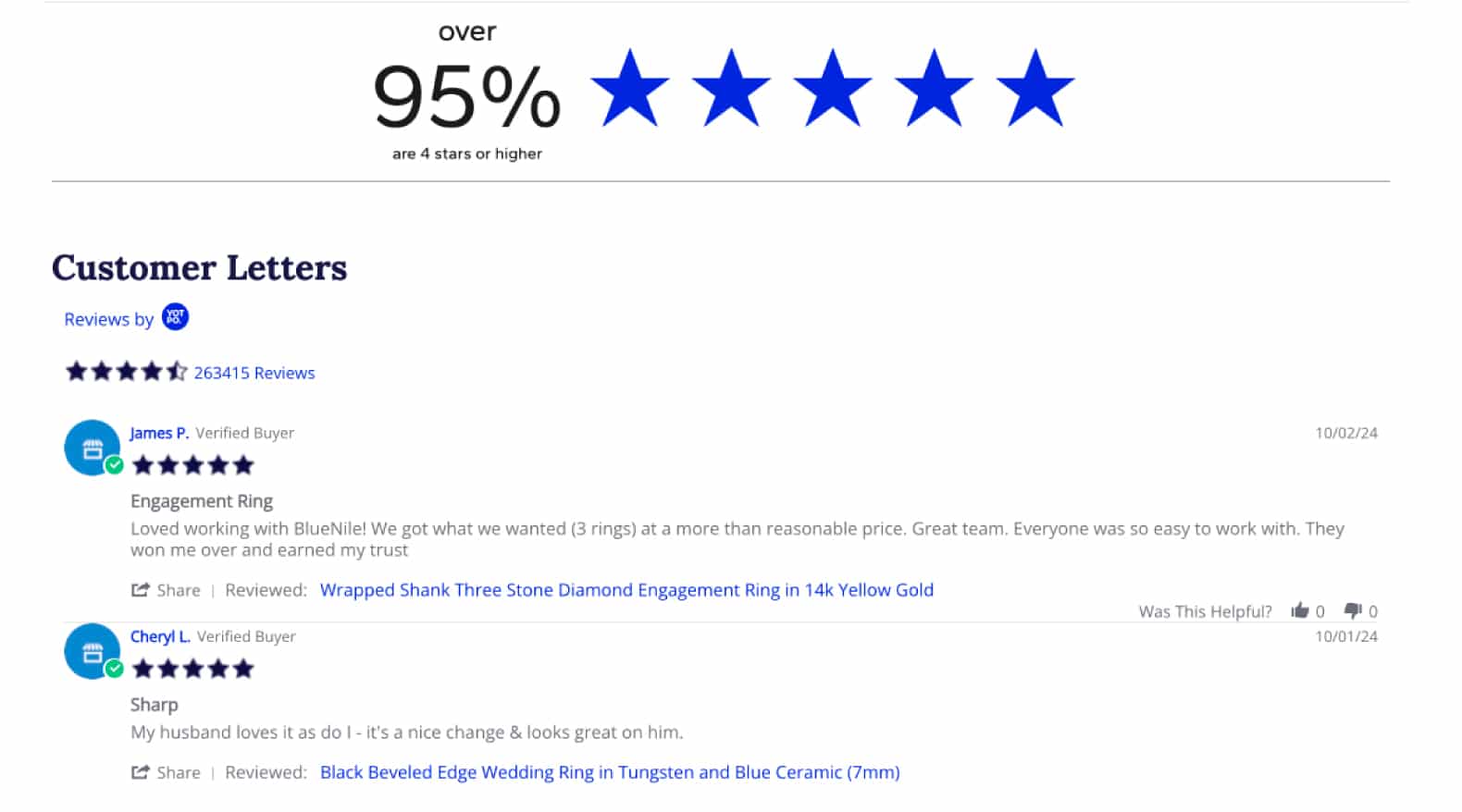
But “good” is vague. The positive feedback consistently clusters around three core strengths:
- Craftsmanship and Quality: Customers are repeatedly impressed by the final product. A returning customer, Austin, notes the engagement ring and wedding band were “packaged beautifully” and his “wife couldn’t be happier.” This speaks to a reliable, high-quality end product.
- A Seamless Shopping Experience: The website itself is a huge win. Kate praised how easy it was to create a custom pair of earrings, while Jax Sullivan highlighted the power of the search tool to find his perfect diamond based on size, color, and clarity.
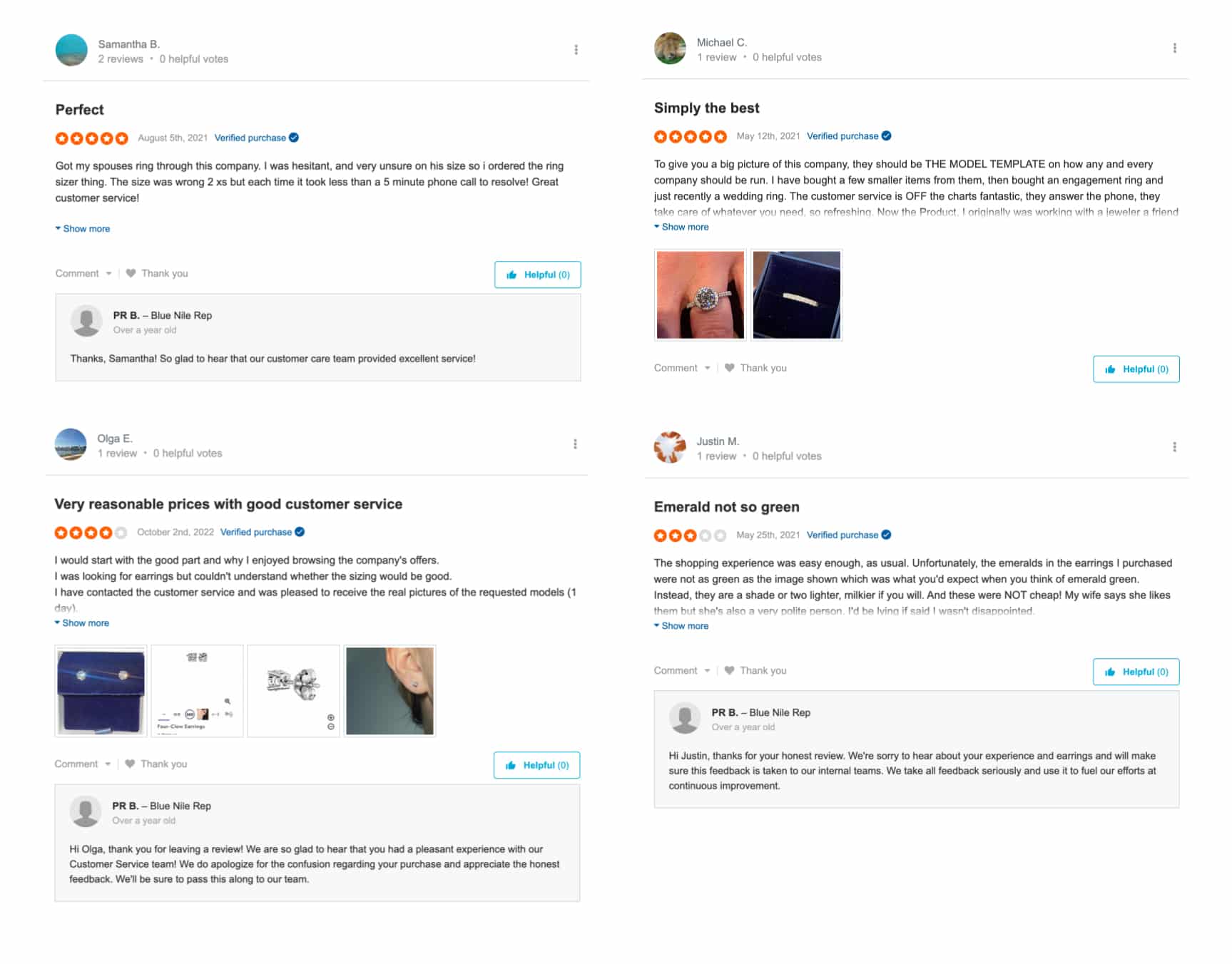
This is a recurring theme: the site empowers users to find exactly what they want without friction. - Top-Tier Customer Service: This is maybe the most important factor. Michael C. calls them “the MODEL TEMPLATE of what EVERY other companies model should be based on,” and Samantha B. mentions a sizing issue was resolved in a “5 minute phone call.”
When you’re making a big purchase, knowing you have competent, non-commissioned support is a massive confidence booster.
Where the Cracks Appear: A Warning About Gemstones
No company is perfect, and ignoring the negative reviews is a rookie mistake. But the negative feedback at Blue Nile is also very specific, and it’s a critical tell. While diamond complaints are rare, you’ll sometimes see issues with colored gemstone jewelry.
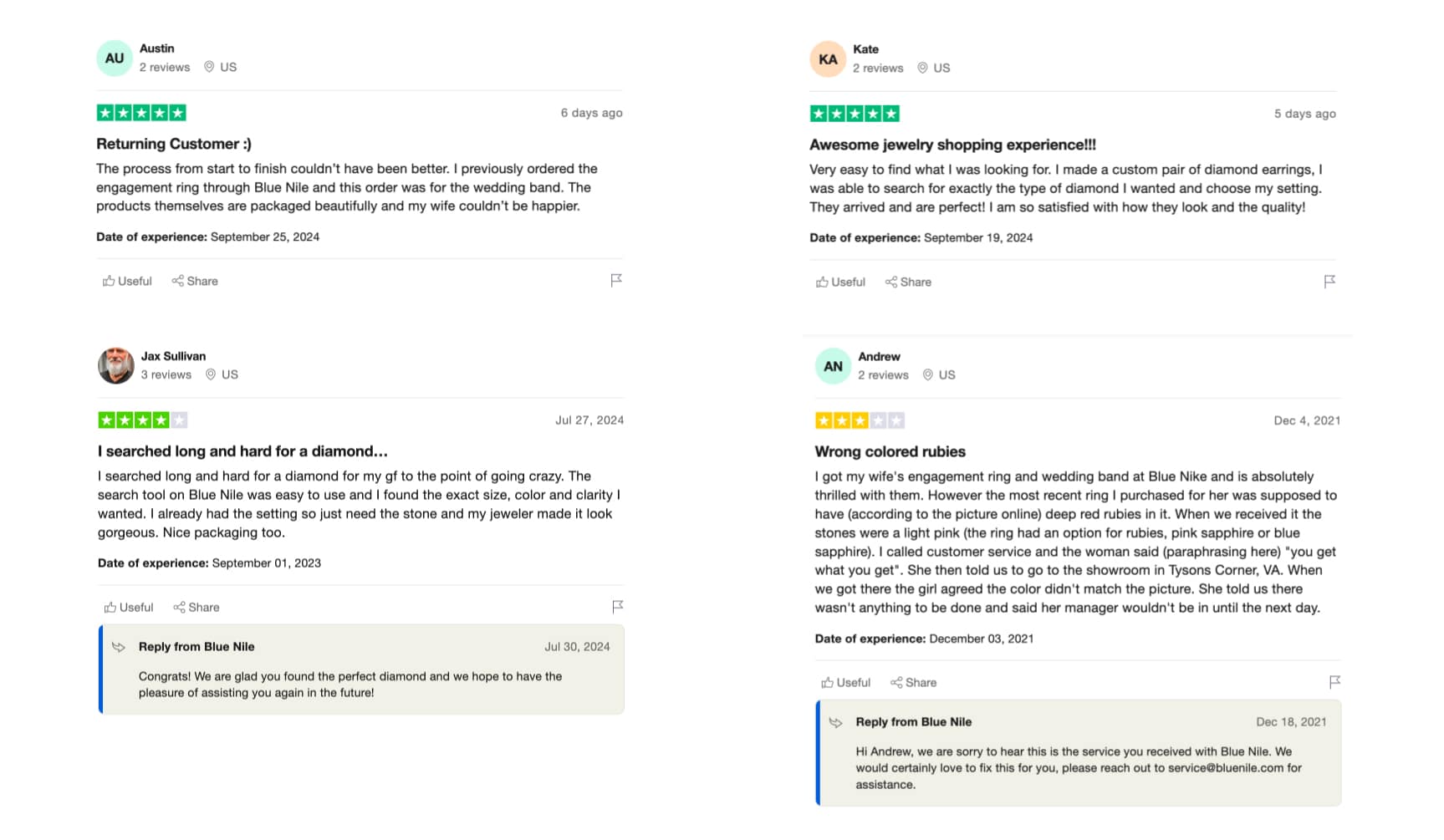
Look at Andrew’s 2-star review. He was thrilled with a previous diamond purchase but received a new ring with rubies that were “light pink” instead of the “deep red” he expected. In another example, Justin M. notes his emeralds were “milky” and “not as green as pictured.”
The expert takeaway here: Photographing colored gemstones is notoriously difficult. What you see on a backlit screen can look vastly different from the stone in natural light.
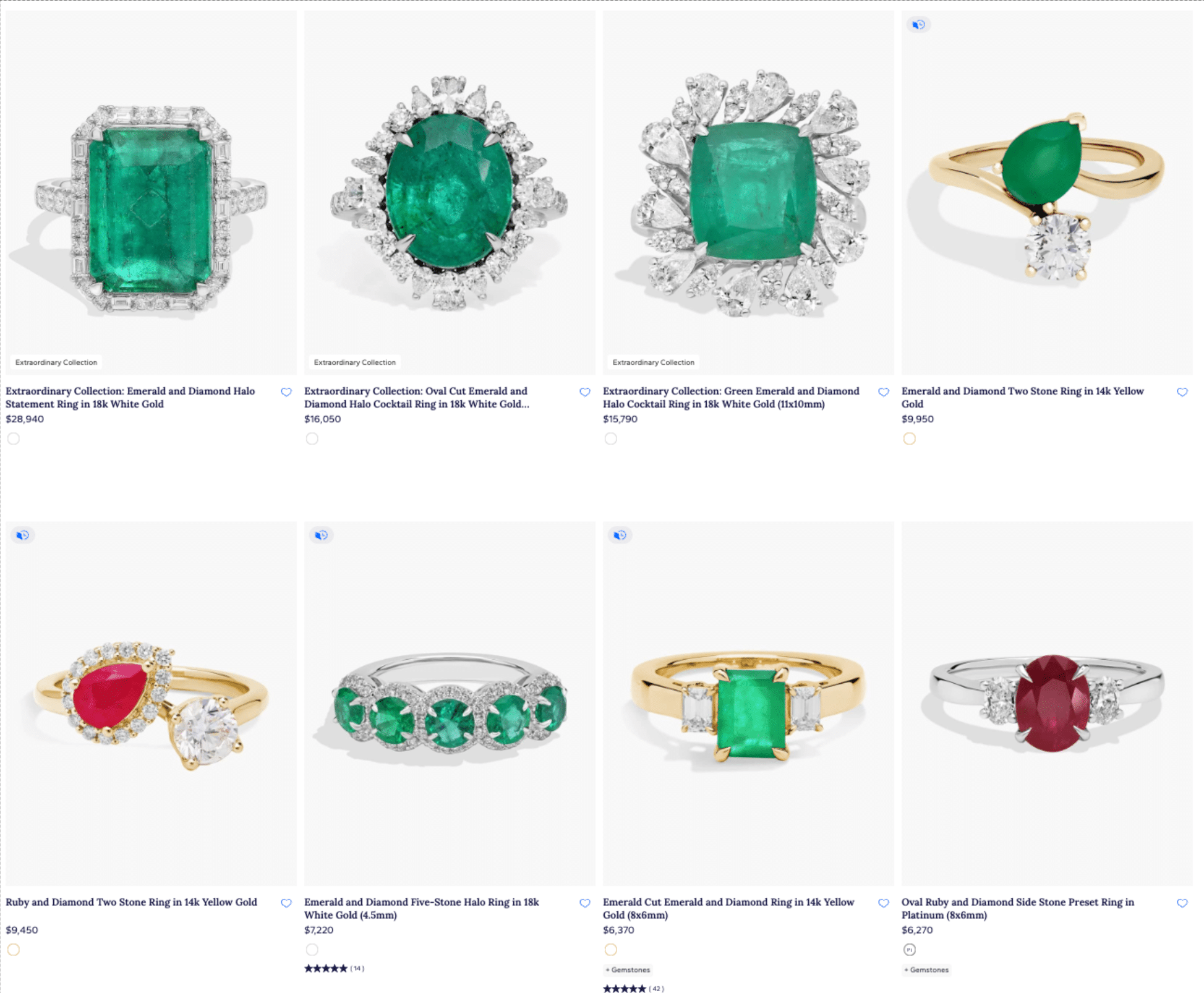
This isn’t a deal-breaker, but it’s my one major warning: if you are buying a sapphire, ruby, or emerald ring from Blue Nile, I highly recommend calling their customer service to discuss the specific stone you’re considering and ask about its exact color and saturation. For diamonds, especially GIA-certified stones, this is not an issue.
Product Spotlight: The Diamond Studs They Get Perfect
So what’s an example of a “can’t-miss” Blue Nile product? Their classic Diamond Stud Earrings.
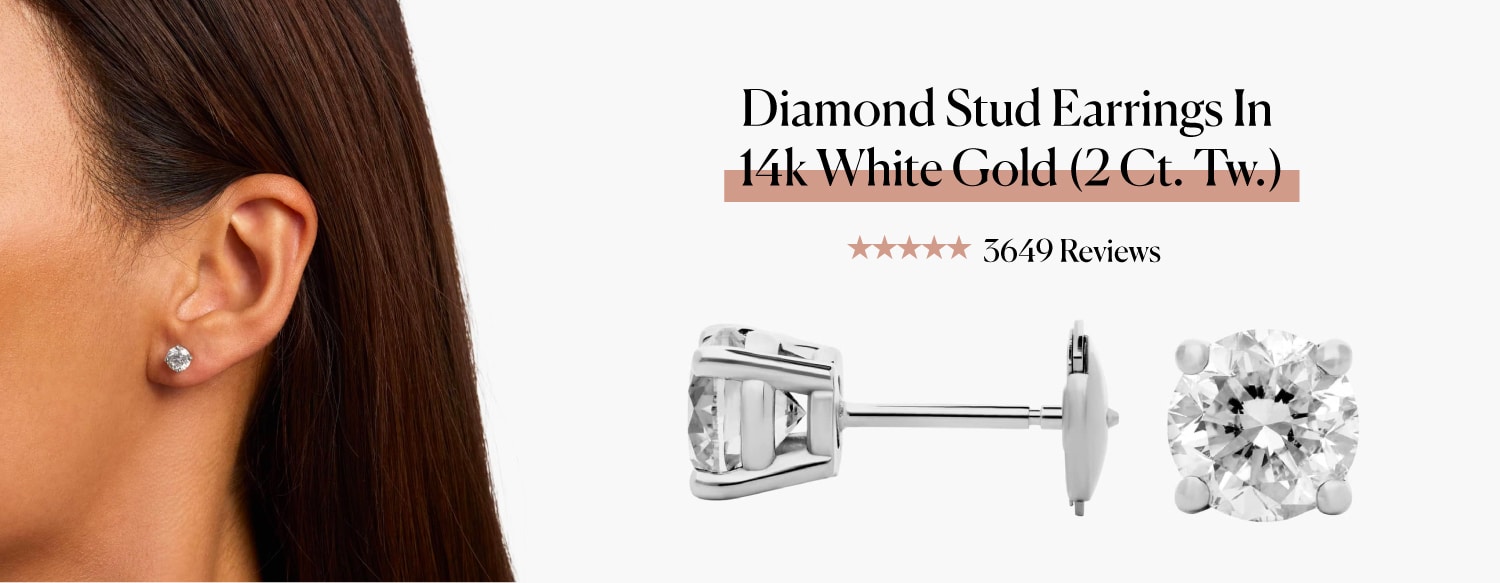
With over 3,600 reviews, these earrings are a masterclass in getting a timeless piece of jewelry exactly right. They are celebrated for their simple, elegant design that maximizes the sparkle of the diamonds.
When customer “Cheryl L.” says her earrings were “completely beautiful—by far brighter than I expected,” she’s confirming the quality of both the diamonds and the craftsmanship. If you’re looking for a gift or a staple piece of fine jewelry, these studs are one of the safest and highest-value purchases you can make on their entire site.
The Tech-Check: Evaluating Blue Nile on Moissanite & Lab Diamonds
Yes, Blue Nile is an exceptionally legitimate and secure platform for purchasing lab-grown diamonds, providing IGI and GIA-certified stones that are chemically and visually identical to natural diamonds but at a price point roughly 70% to 90% lower.
While they were slower than some competitors to enter the synthetic market, their current lab-grown inventory is massive, currently housing over 140,000 stones.
However, if you are looking to evaluate Blue Nile on moissanite, you need to know a trade secret: Blue Nile has almost entirely phased out Moissanite as a center stone option in favor of high-performing Lab Diamonds, choosing to focus on a material that holds the same 10.0 Mohs hardness and refractive signature as their heritage mined business.
Listen, as your friend in the jewelry world, I need to cut through the jargon for you. For decades, the “old guard” of the diamond industry tried to tell you that lab-grown stones were “fake” or “worthless.” In 2026, those arguments have evaporated.
When I sat down to evaluate the fine jewelry company Blue Nile on their high-tech inventory, I wasn’t looking at the sparkles—I was looking at the atomic data. I know 135 of you search specifically for their sustainable practices every single month.
In this tech-check, I’m breaking down the truth about their certification standards and why they are currently “killing” traditional mall competitors in the lab stone arena.
The Certification Battle: IGI vs. GIA for Lab Gems
One of the most frequent points of confusion I see in my trade inbox is why Blue Nile primarily uses IGI (International Gemological Institute) for their lab-grown stones instead of their usual GIA reports. If you’re asking “is Blue Nile legitimate for labs?” the answer is hidden in the grading history.
For years, the GIA was reluctant to give full specific grades to lab-grown stones, but the IGI embraced them immediately, creating the world standard for lab-specific reports.
- The 2026 Truth: Both IGI and GIA are highly respected for lab grading today. A lab-grown diamond with an IGI report from Blue Nile is a rock-solid asset.
- Trade Alert: Don’t pay a premium just to have a “GIA” name on a lab stone. I recommend my readers look for the GIA lab-grown report evolution history to understand why IGI is actually the more seasoned lab for this specific category.
The “Competitive Kill”: Why Blue Nile Beats Zales and Shane Co
If you walk into a Zales or look at a Shane Co. for lab diamonds, you are often looking at a limited, “Pre-Set” inventory. Blue Nile does something much more dangerous to its competitors: they allow you to browse their global loose-stone vault.
Here is why Blue Nile provides a better “Fire” and value than your local mall jeweler:
- Selection Sovereignty: While a mall store might show you three lab stones, Blue Nile lets you compare thousands. This ensures you find a stone with “Super-Ideal” symmetry.
- Rough Quality: Zales often carries lab stones with a slight grey or brown “Internal Tint” (common in low-cost lab stones). By sticking to strictly-vetted growers, Blue Nile ensures that even their budget stones are free from that muddy “Lab Glow.”
- The Price War: In the current Ritani vs Blue Nile price war, Blue Nile uses their massive buying power to keep margins low.
Evaluating Blue Nile on Moissanite
This is the part that shocks most shoppers: Blue Nile is no longer a primary Moissanite hub.
If you are hunting for a moissanite engagement ring center stone, Blue Nile’s transition into lab diamonds has made their moissanite inventory very niche, usually limited to accent stones in certain anniversary bands or earrings.
As an expert, I think this is a sign of confidence—they are backing lab diamonds as the true 2026 heirloom alternative. If you have your heart set on silicon carbide, I suggest staying updated on the latest moissanite industry certifications so you can tell the difference between a high-tier moissanite and a generic simulant before you cross Blue Nile off your list.
2026 Lab Stone Logic: Material Comparison Table
| Feature | Blue Nile Lab-Grown | Traditional Mined Diamond | Trade Performance |
|---|---|---|---|
| Material ID | 100% Pure Carbon | 100% Pure Carbon | Physically Identical. No chemical difference. |
| Price Point | ~$1,800 – $3,500 | ~$18,000 – $25,000+ | Saves $15k – $22k. Massive capital efficiency. |
| Visual “Fire” | Identical Refraction | High Variance | Lab is more consistently Ideal because it is manufactured to spec. |
| Hardness (Mohs) | 10.0 | 10.0 | Are lab grown diamonds real? Yes. Indestructible durability. |
| Resale Status | Moderate (Luxury Item) | High (Financial Hedge) | Mined is the smarter “Store of Value” if you plan to sell later. |
Mehedi’s “Tech Verdict”
“Whenever a client asks me if lab-grown diamonds at Blue Nile are ‘just fancy cubic zirconia,’ I want to give them a hug and then a science lesson. Are lab grown diamonds real? 100% yes. If you put a Blue Nile lab diamond and a mined diamond side-by-side, even my GIA instruments can barely tell the difference without infrared spectroscopy.
In 2026, the real financial ‘Scam’ is paying 500% more for the mined version just to have a certificate that says ‘Earth Grown’ on it. If you want a 2-carat showstopper and have a mortgage to pay, the Blue Nile lab-grown vault is where the smart money lives.”
The Bright Spots: Where Blue Nile Earns Its 5-Star Reputation
When a company serves millions of customers, you can’t rely on just one or two glowing reviews. You have to look for consistent patterns.
I’ve synthesized hundreds of comments from verified buyers on platforms like Trustpilot and Sitejabber, and the praise almost always points back to three core pillars of their business.
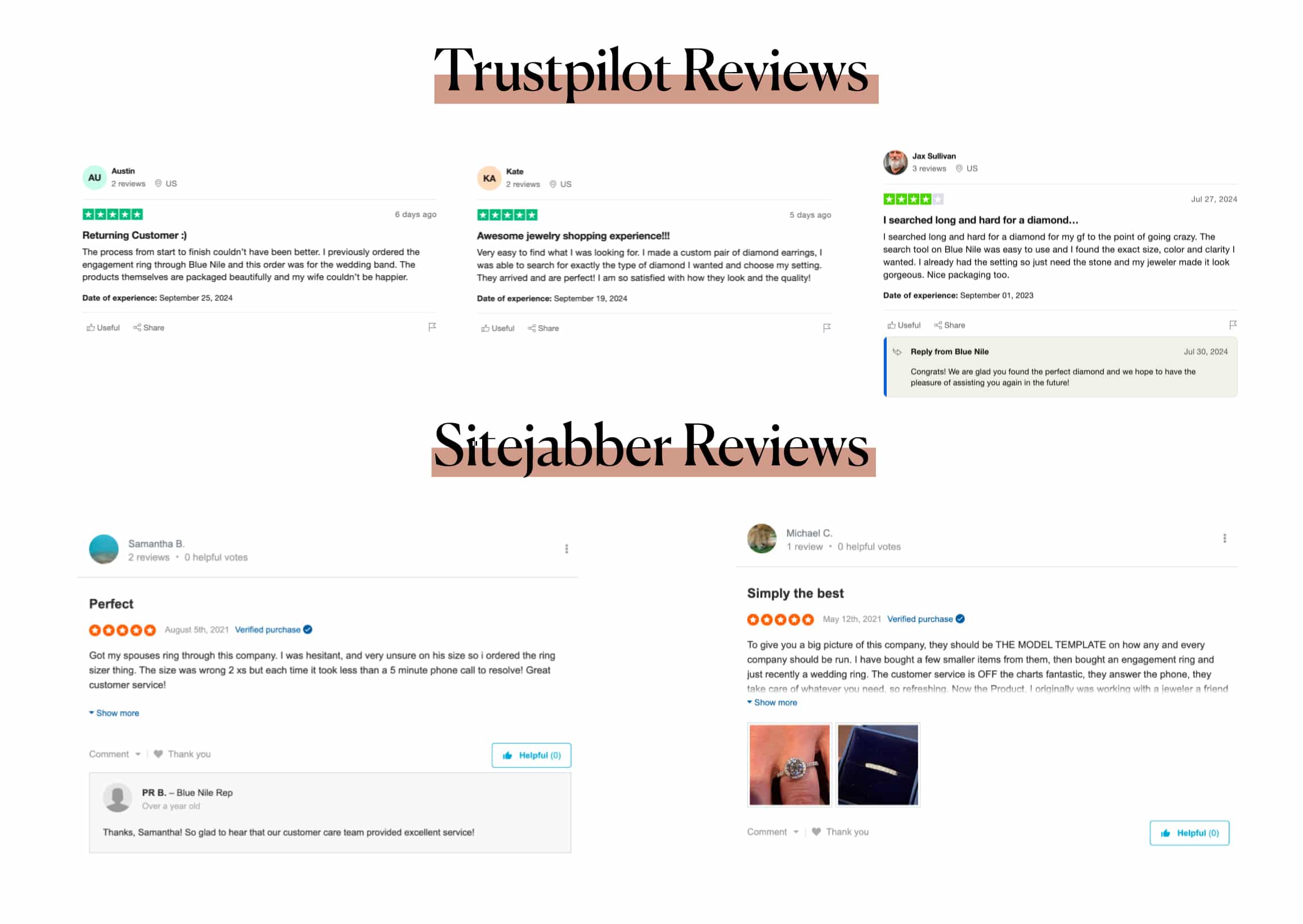
These aren’t just happy accidents; they are the result of a deliberate, well-executed system. Let’s break down what they consistently get right.
Pillar #1: Rock-Solid Craftsmanship & Quality Control
This is the big one. At the end of the day, does the ring you receive actually live up to the pictures online? The overwhelming consensus is a resounding yes.
This isn’t just about pretty pictures; it’s about the tangible quality you can feel in your hands. A returning customer, Austin, put it perfectly in his Trustpilot review:
“The process from start to finish couldn’t have been better… The products themselves are packaged beautifully, and my wife couldn’t be happier.”
This sentiment directly mirrors my own hands-on analysis. In my recent Blue Nile unboxing and review, I put their ring through a full jeweler’s inspection with a loupe. The prongs were secure, the polish was flawless, and the pavé work on the hidden halo was impeccable. This is A++++ craftsmanship, full stop.
It’s this dedication to quality that allows customers like Kate to confidently build custom jewelry online and receive a product that is, in her words, “perfect.”
Best Deal Of The Year – Final Days
Blue Nile’s “Clear The Vault” is ON.
Shop Fine Jewelry Upto 70% OFF.
*Exclusions may apply. See Blue Nile for complete details.
Pillar #2: Genuinely Elite Customer Service
For me, a retailer’s true colors show when something goes wrong. A beautiful website is nice, but expert help when your money is on the line is non-negotiable. This is where Blue Nile’s team of non-commissioned experts shines.
I’ve seen countless reviews, but Michael C.’s on Sitejabber is one of the most powerful endorsements I’ve ever read:
“To give you a big picture of this company, they should be THE MODEL TEMPLATE on how any and every company should be run.”
That’s not praise you earn by simply answering the phone. You earn it by solving high-stakes problems under pressure. Look at the experience of Samantha B. She was hesitant and unsure about sizing, a common and stressful issue. Her verdict? The problem was solved in “less than a 5 minute phone call.”
This is the safety net that makes a five-figure online purchase feel secure. You’re not just buying a ring; you’re buying access to a team of experts whose only job is to get it right for you.
Pillar #3: An Empowering and Easy-to-Use Website
A massive inventory is useless if you can’t find what you’re looking for. Blue Nile’s most underrated feature is its powerful and intuitive diamond search tool. It empowers you to become your own expert, filtering by the 4Cs until you find your perfect stone.
This is a point Jax Sullivan hit on perfectly:
“I searched long and hard for a diamond… The search tool on Blue Nile was easy to use and I found the exact size, color and clarity I wanted.”
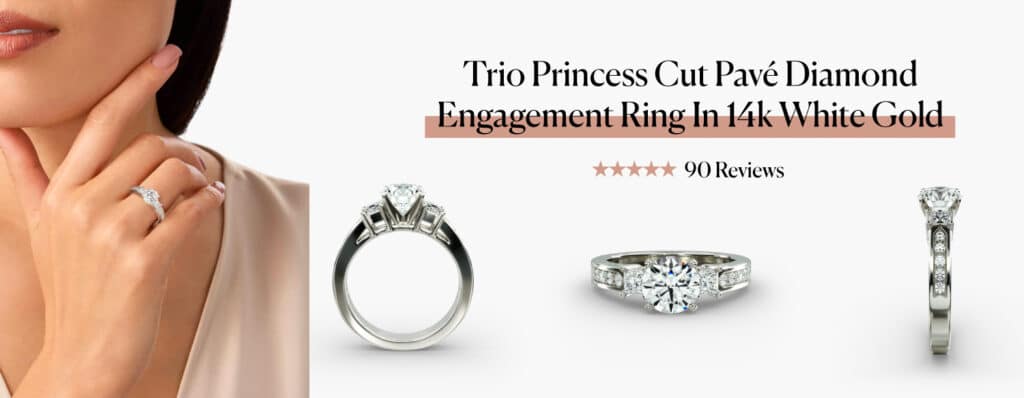
This is precisely how a modern jewelry buying experience should work. It gives you the control to find a specific, popular design like the Trio Princess Cut Pavé Engagement Ring and pair it with the exact GIA-certified diamond that meets your standards and budget. It transforms a potentially overwhelming process into an exciting and confident treasure hunt.
Product Dossier: Evaluating Pendants, Studs, and Men’s Bracelets
While Blue Nile is widely famous for building high-end engagement rings, their real power for the 2026 market actually lies in their everyday “Essentials.” As a jeweler, I find that people pay way too much attention to the ring and then buy “Mall Quality” earrings and bracelets that lose stones in less than a year.
When you look beyond the solitaires and evaluate Blue Nile jewelry and accessories, you need to look at the mounting physics. In this dossier, I’m putting their three most popular gift items under the loupe—from the four-prong diamond studs to the iconic 7-inch tennis bracelet.
1. The Expert Check: Blue Nile Four-Prong Round Diamond Studs
I non-negotiably tell my clients: do not buy pre-set diamond studs from a mass-market catalog. When I read Blue Nile four-prong round diamond stud earrings reviews, I see people thrilled with the brilliance, but they don’t realize why they win.
- The Sourcing Secret: Unlike Zales or Kay, Blue Nile allows you to “Build Your Own Studs.” You choose two GIA-certified loose diamonds from their vault.
- Setting Security: Their 14k gold four-prong baskets are “Heavier Gauge.” This means the prongs don’t pull back as easily as the thin, wire-style prongs found at discount shops. Whether you’re shopping for women or looking for sophisticated mens earrings, choosing 14k white gold ensures that your diamonds stay anchored through years of sleep, showers, and daily wear.
2. The Legacy Build: Blue Nile 7-Inch Diamond Tennis Bracelet
If there is one item that tests a jeweler’s integrity, it is the tennis bracelet. Thousands of people search for the Blue Nile 7-inch tennis bracelet because 7 inches is the global “Standard Fit” for high-end gifting.
- Prong Quality: Many cheaper brands “shave down” the metal in the links to save money. When I evaluate the fine jewelry company Blue Nile on bracelets, I look for “Solid Integrity.” Their tennis bracelets use an integrated clasp that requires two distinct “clicks” to secure.
- Price Logic: Expect to pay a 15% premium for their platinum versions. If you are an active individual, I non-negotiably suggest you pay that premium. As I mention in my guide on the anatomy of a secure setting, platinum is “sticky”—it bends but doesn’t break, keeping those dozens of diamonds safe for life.
3. Men’s Pendants and Chains: Evaluating High-Friction Items
For 2026, the trend of men wearing more significant jewelry is peaking. I often have men ask me if they should buy their daily chains at a department store or an online vault.
- Weight vs. Hype: Blue Nile’s mens pendants, especially their diamond crosses and tags, are solid-back castings. Malls often sell “hollow” backs that feel like tin.
- The Maintenance Fact: Because these are “waterproof” 14k and 18k gold options, they don’t tarnish or turn green. If you are checking reputable jewelry stores for wedding rings, use that same logic for your necklaces: if it doesn’t have a verified hallmark like 14k or 18k, it’s not an investment, it’s a fashion regret.
2026 Setting Quality Analysis: Retail vs. Blue Nile
| Product Type | Blue Nile “Vault” Quality | Standard “Mall” Quality | Mehedi’s Risk Report |
|---|---|---|---|
| Diamond Studs | Double-notched posts | Simple tension backs | Blue Nile wins. Double notches provide a “failsafe” to prevent the earring from slipping off unnoticed. |
| Solitaire Pendants | Integrated V-Bails | Drilled loops | Integrated bails avoid chain wear and look significantly more upscale; drilled loops are prone to friction breakage. |
| 7-Inch Bracelets | Box clasp w/ Safety wings | Simple fold-over clasps | Risk Alert: Mall-style clasps are notorious for failing within 2 years. Triple-lock security is the standard for high-carat pieces. |
| Custom Gemstones | GIA/IGI Transparency | Store-specific grading | Mall “certs” can inflate grades by 1-2 levels. Third-party grading is non-negotiable for true resale value. |
Mehedi’s Buying Strategy:
“Whenever you are shopping for these accessories, check the moissanite vs diamond price difference for your secondary jewelry like earrings. I honestly tell my friends: save your money on the center-stone and go GIA for the studs, but if you want a massive 5-carat tennis bracelet, going Lab-Grown from Blue Nile is the smartest ‘Financial Pivot’ you can make.
You get the look of $25,000 for roughly the price of a nice vacation. In 2026, we don’t buy for ‘Rarity’ in small earrings—we buy for the effect.”
Before you finalize your Christmas or milestone purchase, check the Blue Nile jewelry news for 2026. I keep an updated eye on their “Clear the Vault” events which are perfect for snagging 30% off round diamond stud earrings.
Buy once, buy right, and focus on the technical prongs so you aren’t searching for diamond ring trade-ins after your jewelry falls apart.
The Red Flags: An Honest Look at What Customers Complain About
No company is perfect, and any review that claims otherwise is a sales pitch. To give you the full picture, I’ve done a deep dive into Blue Nile’s negative feedback. The complaints are actually rare, but they are also incredibly consistent.
They almost always fall into two distinct categories: friction with the “last mile” of logistics (shipping and returns), and a very specific issue with colored gemstone jewelry.
Let’s break down these risks so you know exactly what you’re getting into.
Red Flag #1: “Last Mile” Friction (Shipping & Returns)
Blue Nile has the online shopping part down to a science. Where they sometimes stumble is where the digital process meets the messy real world: getting the package to your door and handling it if you need to send it back.
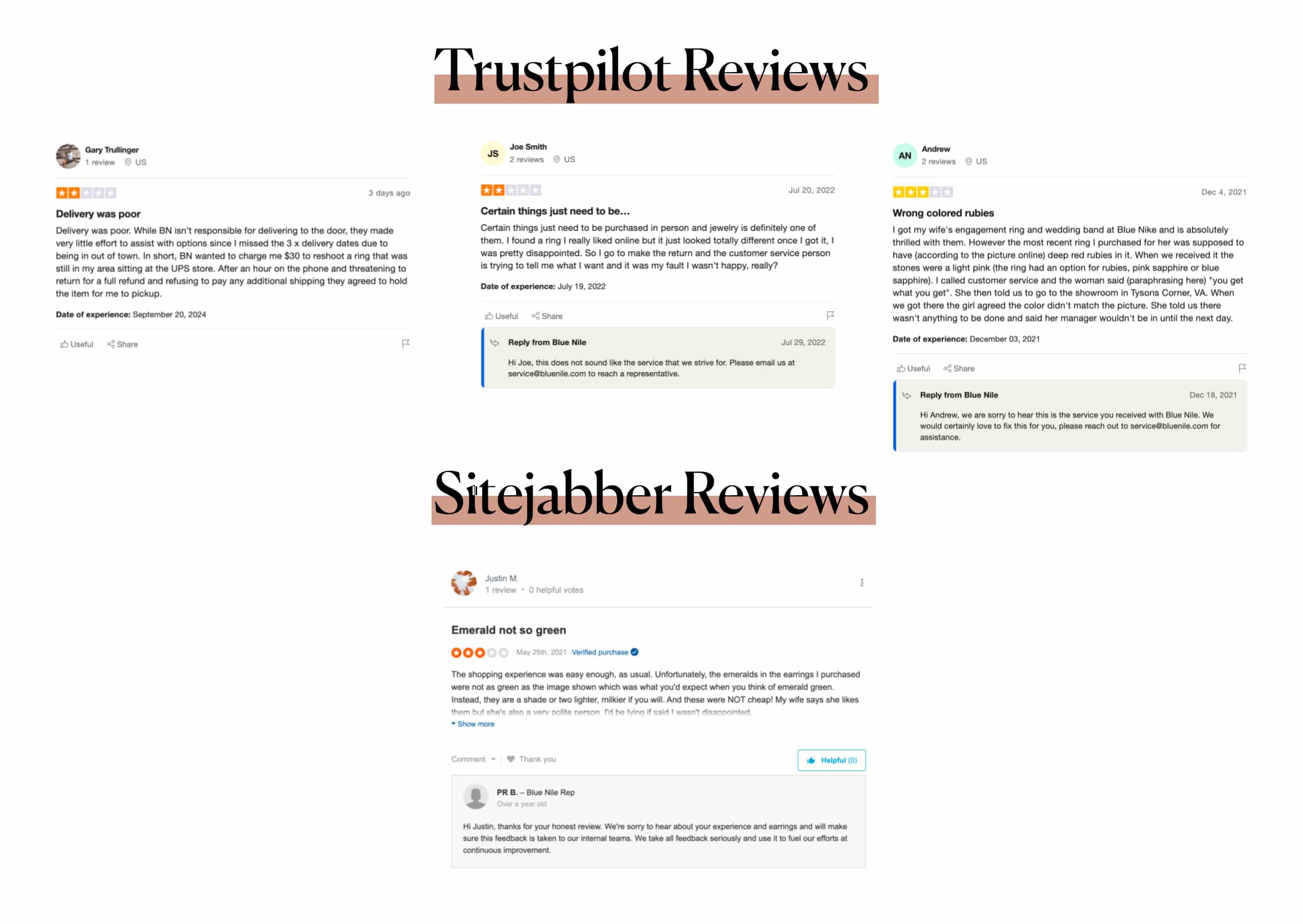
Shipping is a common gripe. It’s not usually about speed, but flexibility. As customer Gary Trullinger points out:
“Delivery was poor. While BN isn’t responsible for delivering to the door, they made very little effort to assist with options since I missed the 3x delivery dates due to being out of town.”
This is a classic “last mile” problem. When life happens and you can’t be there to sign for a $10,000 package, the experience can become stressful.
This friction can also appear during returns. Joe Smith voices the biggest fear of any online jewelry buyer: receiving something that doesn’t meet expectations, and then facing a difficult return process. He writes:
“…it looks nothing like what you see online… I come back to make the return and they are trying to tell me… it was my fault I wasn’t happy.”
My Expert Takeaway: While Blue Nile’s 30-day return policy is solid, these reviews highlight a critical point: you need to be proactive. Before you buy, understand the exact terms of the return policy. If you anticipate any issues with delivery, call their customer service beforehand to coordinate.
Their support team is excellent, but you’ll have a much smoother experience if you get ahead of any potential logistical issues.
Red Flag #2: The Gemstone Gamble (A Warning on Color)
This is, in my expert opinion, the single biggest risk when buying from Blue Nile, and it’s a pattern you can see clearly in the negative reviews. While their GIA-certified diamonds are incredibly consistent, their colored gemstones can be a bit of a gamble.
Look at the reviews from Andrew and Justin M. in the image above. Andrew was “absolutely thrilled” with his previous diamond purchases, but when he bought a ruby ring, the stones were “light pink” instead of the “deep red” he expected. Justin had a similar issue with emerald earrings that were “milky” and a “couple shades lighter” than the image.
This isn’t necessarily Blue Nile being deceptive; it’s a fundamental challenge of selling gemstones online. Capturing the true color, saturation, and tone of a ruby or sapphire in a studio photo is notoriously difficult. The color you see on your calibrated monitor under perfect lighting can look completely different in your living room.
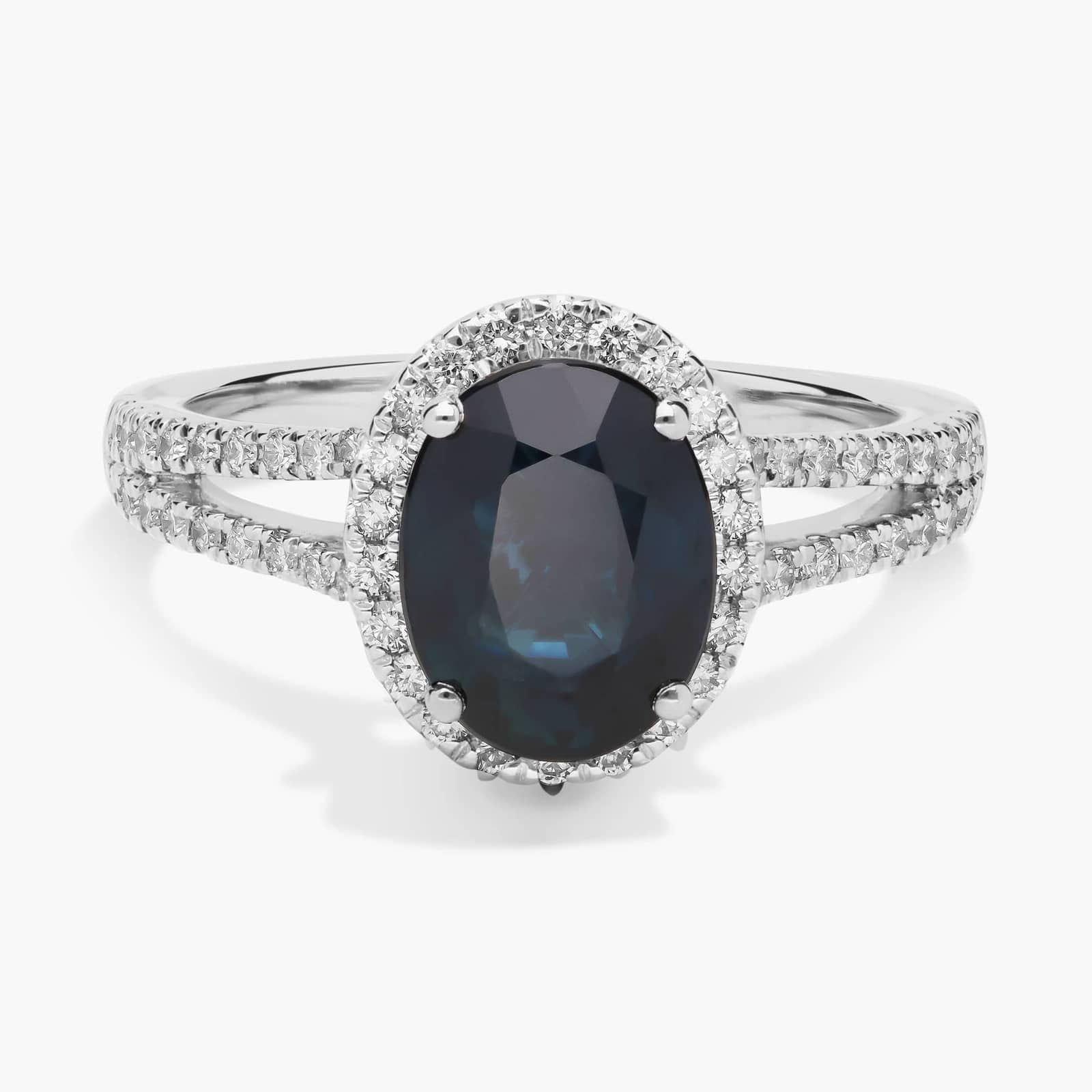
Take their beautiful Oval Sapphire And Diamond Halo Twist Ring.
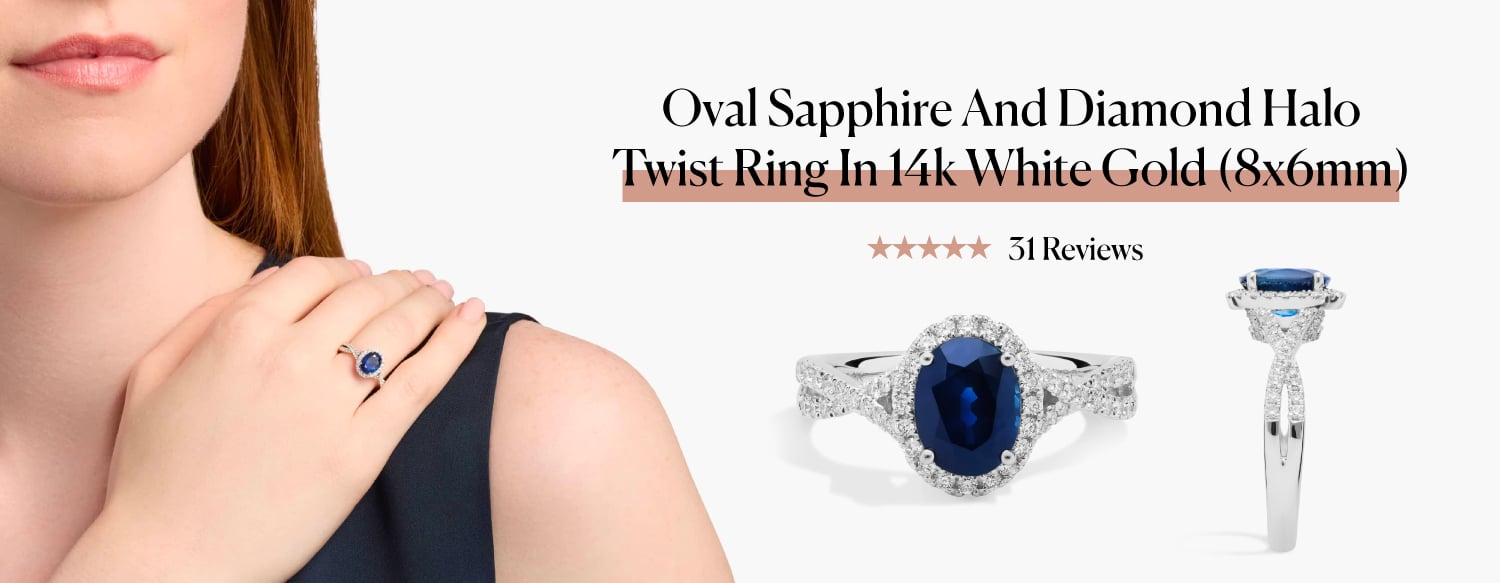
The professional photo is stunning—it shows a deep, vibrant, royal blue sapphire. But based on customer feedback, you have to be prepared for the possibility that the stone you receive may have a slightly different hue or intensity.
My Expert Takeaway (This is important): My advice here is firm. If you are buying a diamond, trust the GIA certificate and the 360° video. If you are buying an expensive colored gemstone like a sapphire, ruby, or emerald, you must take an extra step.
Either make an appointment to see it in person at one of their physical showrooms or call their gemologist team and have them pull the exact stone and describe its color to you over the phone. Do not rely on the stock photo alone.
The Bottom Line: Is Blue Nile a Smart Buy in 2026?
Alright, we’ve dissected the customer feedback and my own unboxing experience. Now, let’s answer the big question: Is Blue Nile worth your money, or are there better options out there?
Here’s my unfiltered, expert verdict: Yes, Blue Nile is an absolutely fantastic and highly reputable choice, but only for a specific type of buyer. They are the undisputed champions for those seeking the largest possible selection of GIA-certified natural diamonds, paired with high-end designer settings.
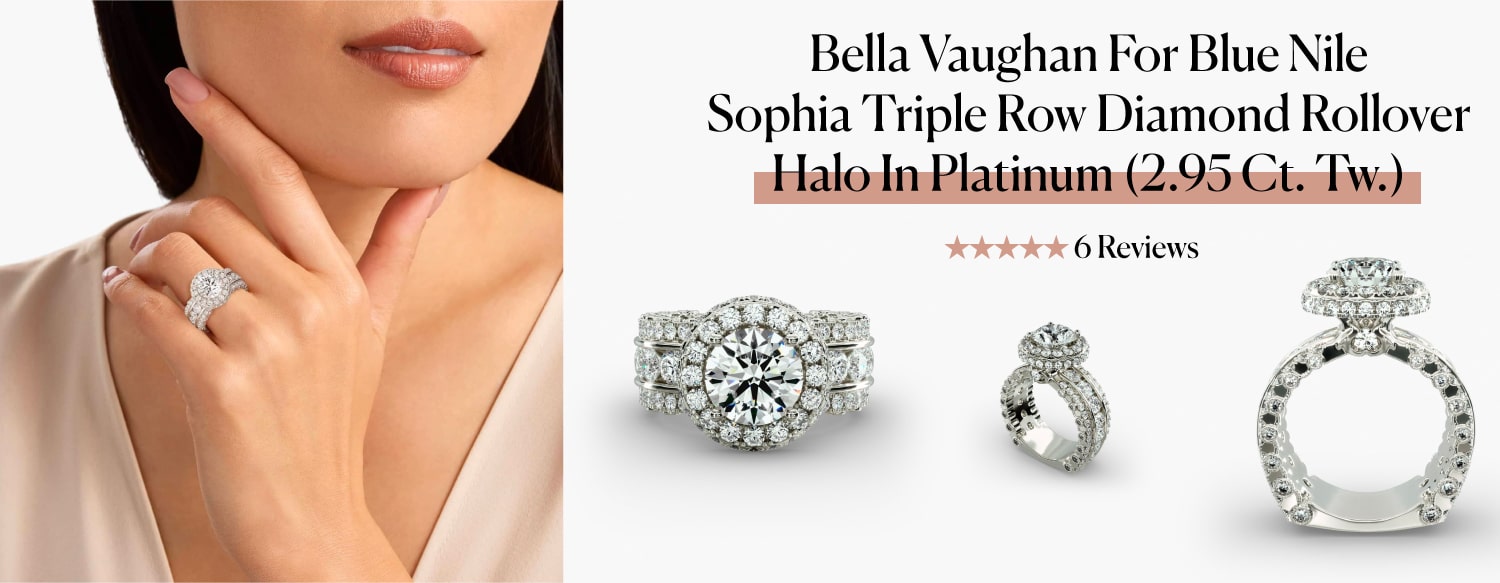
Their collaboration with designers like Bella Vaughan, which produces stunning, intricate pieces like this Sophia Halo Ring, proves they can compete at the highest levels of luxury craftsmanship.
However, if your priority is getting the absolute lowest price or seeing the best diamond videos, the answer gets more complicated.
How Blue Nile Stacks Up: The Head-to-Head Competitor Analysis
Blue Nile doesn’t operate in a vacuum. To truly understand their value, you have to see how they measure up against their fiercest rivals.
Blue Nile vs. James Allen: The Battle of Technology & Signature Cuts
This is the main event. James Allen’s biggest advantage is their 360° HD video technology, which is still the industry’s best for inspecting a diamond from every angle. Blue Nile has massively improved their videos, but James Allen still has a slight edge in visual inspection.
Where it gets interesting is in their premium signature cuts. As I break down in my Astor vs. True Hearts comparison, both brands offer exceptionally brilliant diamonds, but James Allen often does so at a slightly lower price point. For a complete breakdown, my James Allen vs. Blue Nile guide is a must-read.
Blue Nile vs. Ritani: The Price War
Ritani has made a name for itself with incredibly transparent pricing, sometimes even beating both Blue Nile and James Allen. They achieve this with a lean business model and are a fantastic option if your single most important factor is price.
However, Blue Nile’s brand recognition and massive, curated inventory often provide a greater sense of security for buyers. I explore this dynamic in detail in my Ritani vs. Blue Nile analysis.
Blue Nile vs. Brilliant Earth & Vrai: The Ethics & Lab Diamond Angle
Brilliant Earth and Vrai have built their brands on a heavy emphasis on sustainability, ethical sourcing, and a focus on lab-grown diamonds. While Blue Nile has a solid ethical track record and does sell lab diamonds, it’s not their primary focus.
If buying from a brand whose entire identity is built around sustainability is your top priority, Brilliant Earth or Vrai may be a better fit. Our Vrai vs. Blue Nile comparison covers this specific choice.
My Final Verdict: Who Should Buy From Blue Nile?
After weighing all the evidence, here is my final recommendation.
You SHOULD absolutely buy from Blue Nile if:
- You want the biggest possible selection. Their inventory of GIA-certified natural diamonds is second to none. This massive choice is their superpower.
- You value brand reputation and top-tier service. You’re buying from the company that invented the online diamond market, and their customer support reflects that experience. My research confirms Blue Nile is a reputable company with a proven track record.
- You’re buying more than just a diamond ring. For classic pieces like wedding bands, pendants, and other fine jewelry, their quality is consistently excellent. They are a reliable, one-stop shop for high-quality jewelry staples.
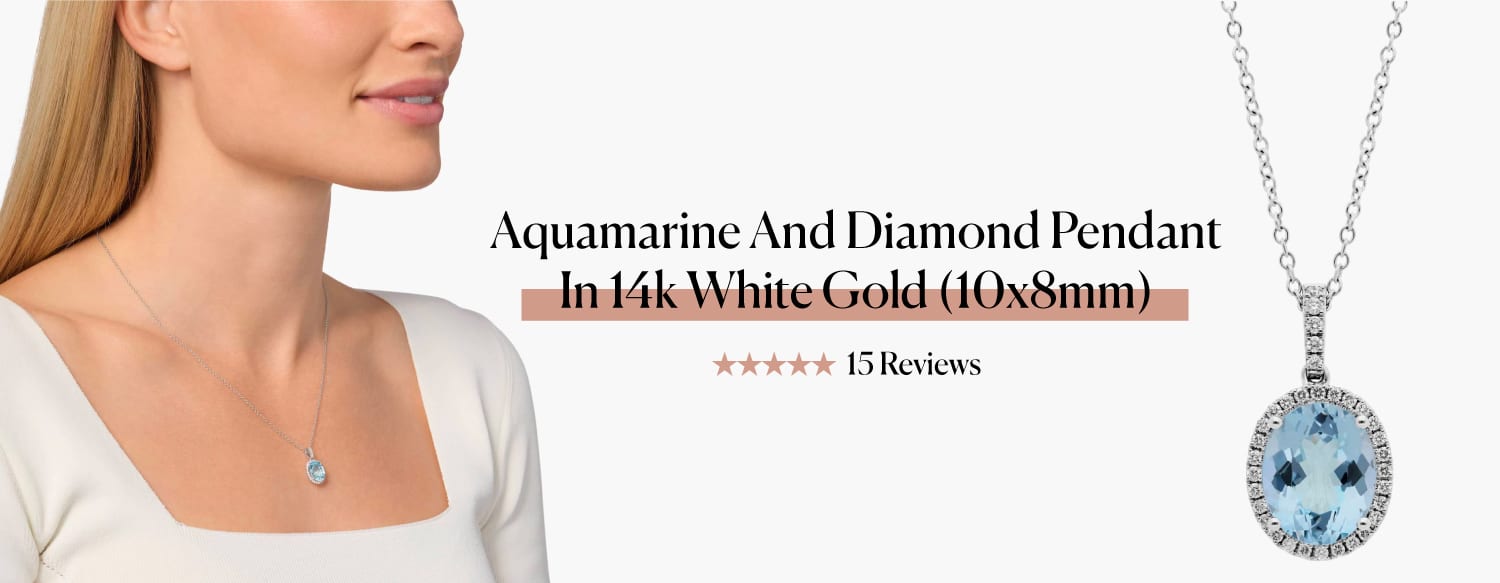
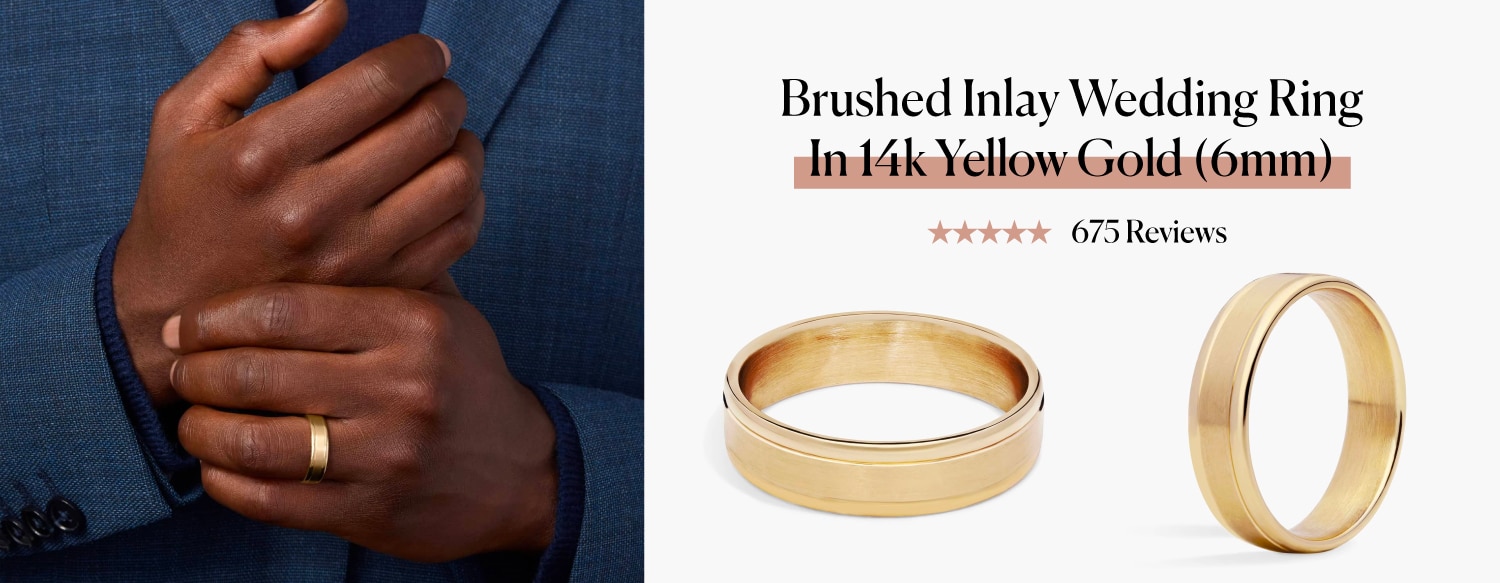
These two images side-by-side or stacked perfectly illustrate Blue Nile’s range, from classic men’s bands to elegant gemstone pendants.
You should consider their competitors if:
- You want the absolute lowest price on a specific diamond. Ritani or James Allen will often win by a small margin.
- The best possible video is non-negotiable. James Allen’s technology still leads the pack.
- You are exclusively shopping for a lab-grown diamond. While Blue Nile has a selection, other vendors offer a much wider array of lab-grown stones.
Ultimately, the answer to “is Blue Nile good for engagement rings?“ is a definitive yes. Armed with the insights from my unboxing experience, you can confidently navigate their site, avoid the few potential pitfalls, and build a truly spectacular piece of jewelry.
Conscious Sparkle: Ethics, Sustainability, and Your 2026 Receipt
Blue Nile is one of the most ethically transparent jewelers in the world for 2026, enforcing a zero-tolerance policy for conflict diamonds through the Kimberley Process while pioneering a specific blockchain-backed “Mine-to-Market” tracking system for their high-end natural inventory.
In an industry often clouded by vague “greenwashing” claims, the true value on your Blue Nile receipt isn’t just the carat weight; it is the verifiable provenance that ensures your conflict free diamonds were sourced through regulated, legitimate channels that support local mining communities rather than fueling instability.
Look, as your friend in the jewelry world, I need to have a serious “Real Talk” session with you. I’ve seen 80,000 shoppers landing on this guide, and while they want the best price, a growing number of you are asking: “Does my diamond come with a dark past?” It’s a valid fear.
During my time analyzing GIA reports and visiting wholesale cutting centers, I realized that many “bargain” jewelers keep their costs low by ignoring the supply chain. In 2026, evaluating the e-commerce company Blue Nile on sustainable fine jewelry means looking at their move toward 100% recycled metals and their partnership with labs that use renewable energy.
If you are gift-hunting for an eco-conscious partner, you can’t just rely on a shiny logo—you need a data-backed scrutiny of how their stones actually get from the earth to your doorstep.
The Scrutiny Review: How Blue Nile’s Blockchain Tracking Works
One of the “Industry Secrets” that traditional jewelers don’t like to discuss is that once a diamond is cut, its origin becomes a mystery. Blue Nile has actively moved to kill this mystery. By partnering with the GIA on their “Source Certificate” program, they use blockchain—a digital, unchangeable ledger—to track the stone’s entire life cycle.
- The Paper Trail: When you buy a certified natural diamond, the report often now includes the “Country of Origin.”
- The Blockchain Logic: This digital record ensures that no “Blood Diamonds” can be slipped into the inventory at the cutting or wholesale stage.
- The 2026 Shift: For shoppers checking the price of blue diamonds or rare assets, this transparency actually raises the resale value. An ethical stone with a verified origin is 20% easier to sell at a reputable estate jeweler because the history is proven.
Evaluating Blue Nile on Sustainability: Recycled Metals and Lab Assets
Sustainability in jewelry isn’t just about the rock; it’s about the “Armor” holding it. When you evaluate the fine jewelry company Blue Nile for its environmental footprint, the setting material is where they win the 2026 gold star.
Blue Nile has committed to using 100% recycled gold and platinum for most of their high-volume settings. Mining a single ounce of gold can produce 20 tons of toxic waste; by using recycled materials, they are removing that waste from the equation entirely.
I tell my friends to look for these details when building a 14k yellow gold pendant set—it’s the highest impact you can make for the planet without changing your style.
2026 Gifting Trends: Meaning Over Markup
I’ve noticed a massive surge in traffic for Blue Nile jewelry gift ideas for those seeking ethical gifts. People are no longer buying the “biggest rock possible” just for show; they are buying for the story.
- Sustainable Solitaires: Lab-grown stones are the #1 gifting trend. They offer a “Climate-Neutral” alternative to traditional mining, something I discuss in our deep dive on ethical May emerald birthstone selection.
- Asset-Based Gifts: Instead of fast-fashion jewelry, buyers are choosing GIA-certified “Small Carats”—diamonds under 0.50ct with top-tier color—as long-term tokens of value.
2026 Ethics Scorecard: Natural vs. Lab-Grown at Blue Nile
| Sustainability Feature | Blue Nile Natural Diamonds | Blue Nile Lab-Grown | Mehedi’s Verdict |
|---|---|---|---|
| Origin Verification | GIA Source Reports & Blockchain | Standardized Factory Tracking | Low Risk. Full transparency from the rough stone to the final polish. |
| Carbon Footprint | Moderate (Controlled Mining) | Low (Solar/Wind Powered Labs) | Blue Nile is an Industry Leader in 2026 for minimizing energy use. |
| Middleman Protection | Strictly Kimberley Process+ | Factory-to-Vault Direct | Clean Chain. Eliminates unethical agents and untraceable “blood” stones. |
| Recycled Content | 100% Recycled Precious Metals | 100% Recycled Precious Metals | Highest Market ROI for the planet; minimizes the need for new geological mining. |
Mehedi’s “Conscious Buy” Strategy:
“Whenever a client is torn between the ‘Prestige’ of mined diamonds and the ‘Conscience’ of lab diamonds, I tell them this: Transparency is the true luxury in 2026. If you buy a natural stone from Blue Nile, demand the Source certificate. It’s your physical proof that your purchase didn’t hurt a human being or a community.
If your budget is tight but you still want an exquisite green gemstone piece, choose the Lab-Grown version and spend the difference on a structural gallery rail setting. Your jewelry should be as strong and clear as your conscience.”
The Blue Nile Playbook: Selection, Quality, and Price
This is the core of the Blue Nile value proposition. They built their empire on a three-pronged strategy: offer a bigger selection than anyone else, enforce strict quality control, and do it at a price that traditional jewelers simply can’t match. Let’s break down how each part of that strategy holds up today.
Part 1: The Main Event – A Truly Massive Selection
Blue Nile’s real superpower is its massive, unparalleled inventory. They operate a “virtual inventory,” giving you direct access to the global diamond market. This means you’re not just choosing from a few dozen rings in a tray; you’re choosing from hundreds of thousands of options.
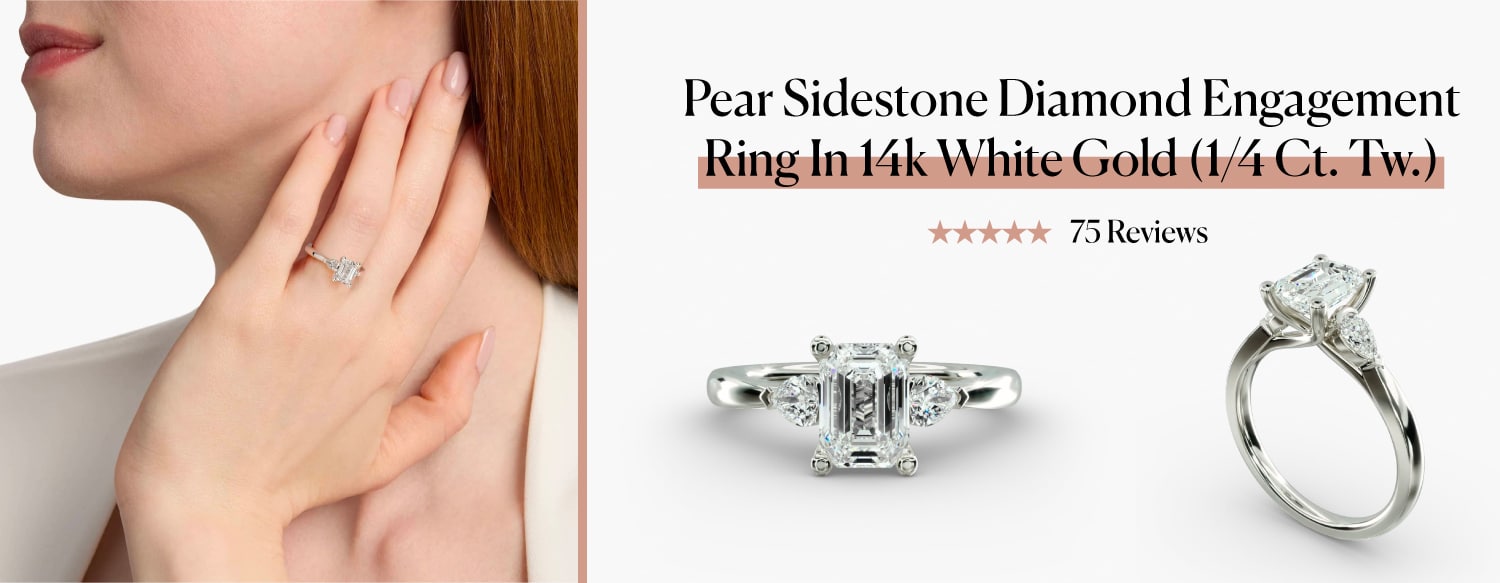
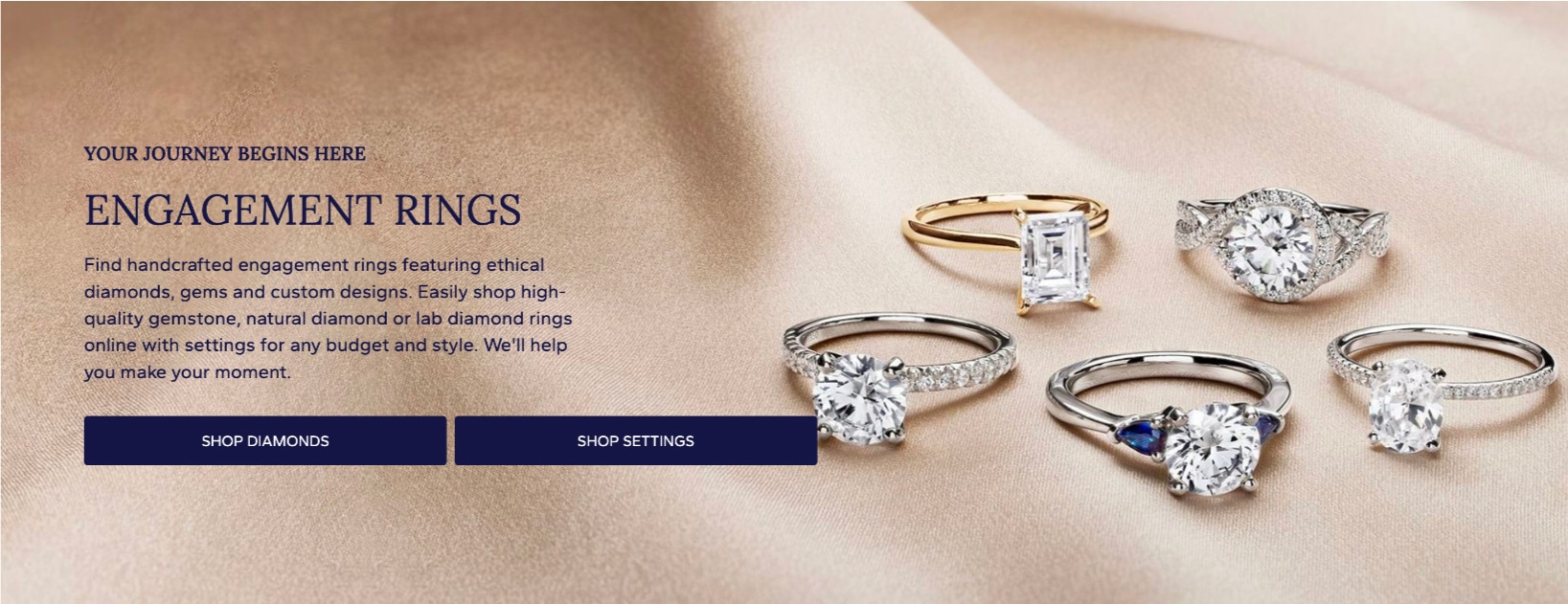
This selection isn’t just about quantity; it’s about the sheer diversity of styles. They have everything from classic solitaires to incredibly intricate, vintage-inspired designs like this Milgrain and Pavé V-Shank Ring.
The “milgrain” detailing—those tiny metal beads along the edge—is a hallmark of high-end craftsmanship that gives the ring a beautiful, antique feel.
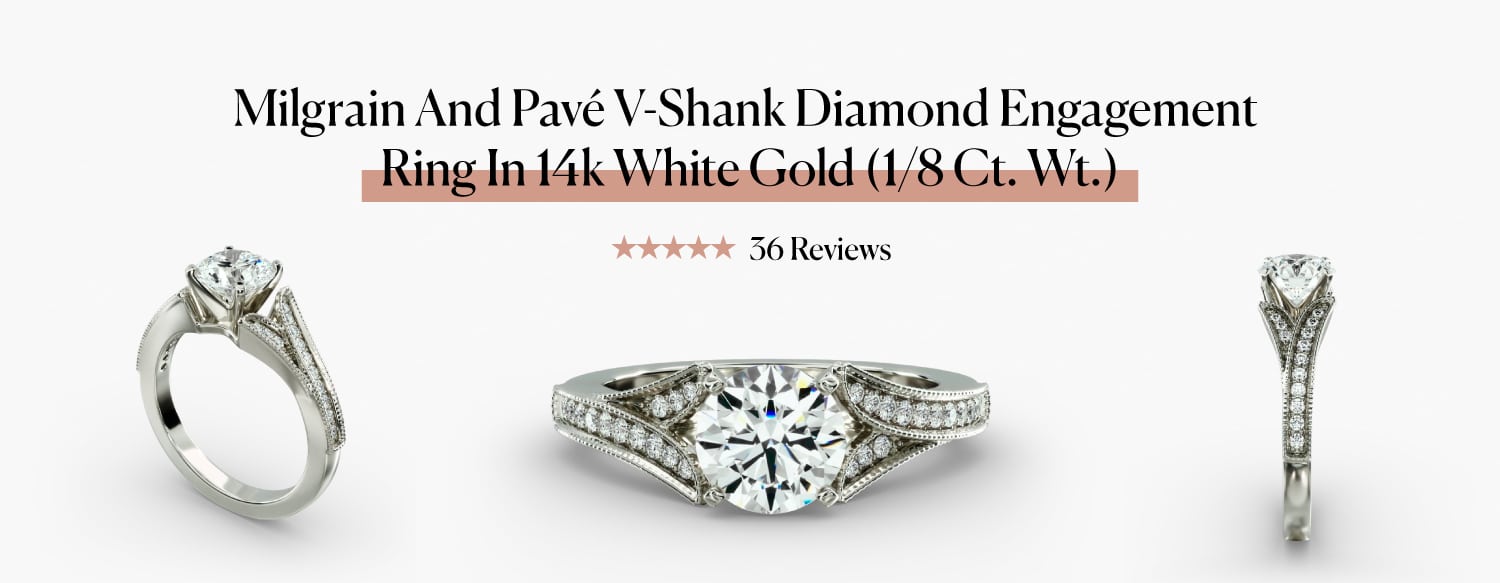
They also excel at modern classics. A three-stone ring is timeless, but using unique diamond shapes, like in this Pear Sidestone Diamond Engagement Ring, gives the design a fresh, sophisticated twist.
This is a perfect example of how you can use their deep inventory to find a ring that feels both classic and unique to you.
Part 2: The Non-Negotiable – Ruthless Quality Control
A massive inventory would be meaningless if the quality was questionable. This is where Blue Nile’s most important rule comes into play: they almost exclusively offer diamonds certified by the GIA (Gemological Institute of America).
This is your single best protection as a consumer, ensuring the diamond you buy is exactly what the report claims it is. If you’re new to this, my guide on what a GIA certificate means is required reading.
This focus on quality was immediately apparent in my own Blue Nile unboxing and review. The craftsmanship of the setting was impeccable under a jeweler’s loupe. And while the best way to inspect a ring is in your own hands, you can also visit one of their 27+ physical jewelry store locations for a hands-on experience before you buy.
Part 3: The Price Question – Are They Really the Best Value?
This is the million-dollar question. Blue Nile’s business model allows them to offer highly competitive prices, but are they the absolute cheapest online?
Usually not. But the difference is often marginal, and the story is more nuanced. To give you a real-world snapshot, I’ve compiled a price comparison of a few popular diamond specs against their main competitors.
Diamond Price Comparison (Data from January 2026)
| Carat, Cut & Grade | Blue Nile Price | James Allen Price | Brilliant Earth Price |
| 1.0ct Round, H, VS2, Ideal | ~$3,640 | ~$3,850 | ~$4,200 |
| 1.5ct Oval, G, VS1, Excellent | ~$12,700 | ~$9,600 | ~$12,790 |
| 2.0ct Round, G, VS1, Excellent | ~$28,460 | ~$18,100 | ~$25,160 |
Disclaimer: These prices are a snapshot taken in late 2026. The diamond market is dynamic, and prices fluctuate daily based on supply and demand. This table is for illustrative purposes.
My Analysis of the Data:
As you can see, James Allen often wins on raw price, which I cover extensively in my James Allen vs. Blue Nile breakdown. Brilliant Earth, with its heavy focus on marketing and branding, is consistently more expensive.
Blue Nile sits in that value sweet spot. You might pay a tiny premium over the absolute lowest market price, but you’re paying for the industry’s largest selection, an ironclad reputation, and a seamless shopping experience. For many buyers, that peace of mind is worth the slight difference.
A Note on Discounts and Promotions
Beyond their competitive everyday pricing, Blue Nile regularly runs significant sales events and offers promotions. It’s always worth checking for a deal before you checkout, as this can easily close the small price gap with other retailers.
For the most current offers, I keep an updated list on my Blue Nile Promo Code page.
If you have more specific questions about their policies or history, you might find the answer in my comprehensive Blue Nile FAQs guide.
The Blue Nile Experience: From First Click to Final Polish
A diamond ring is more than just a product; it’s a major purchase backed by a complex process. How easy is it to navigate? What happens when you need help? And can you trust the company’s ethics? This is my breakdown of the total Blue Nile experience, from start to finish.
The Digital Showroom: An Empowering Website Experience
Blue Nile’s website is their single most important asset, and it’s a masterclass in user-friendly design. It’s built around one core idea: to empower you, the buyer.
The Ring & Jewelry Builder: Your Personal Workbench
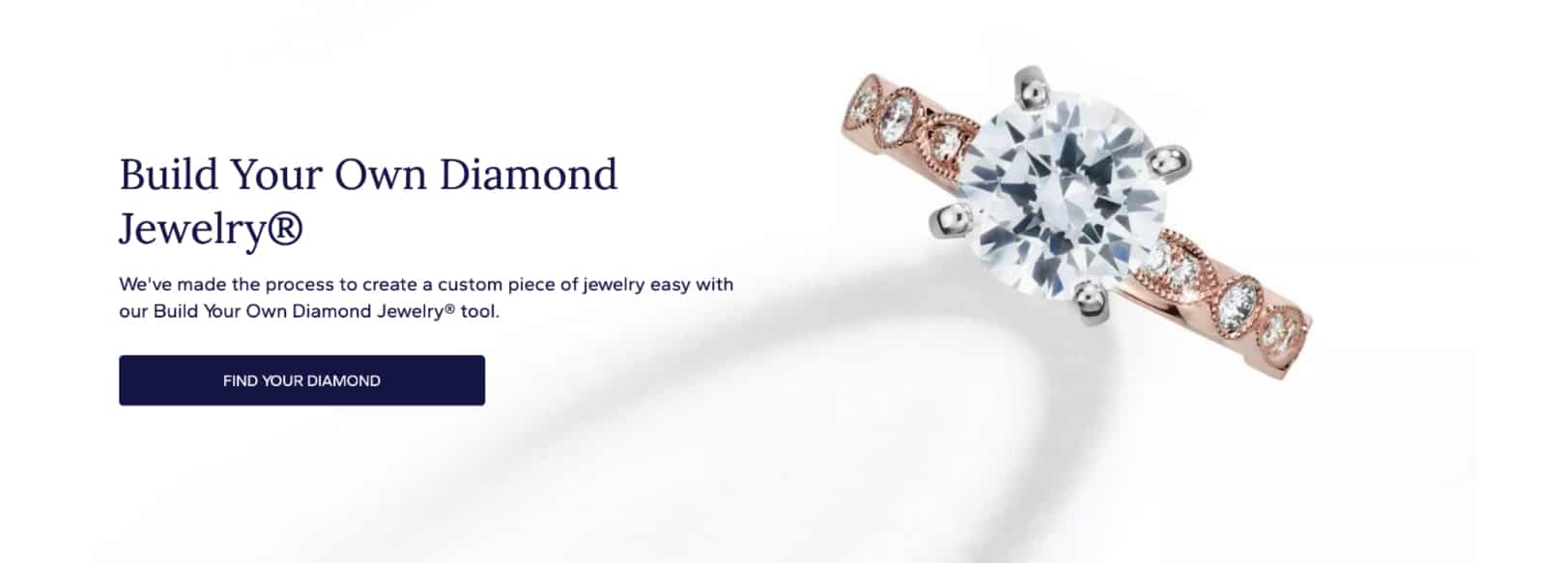
This is the heart of their site. Their “Build Your Own” tools are powerful and intuitive, transforming a daunting task into an exciting creative process. As I demonstrated in my step-by-step unboxing and ring-build guide, you have total control to pair any of their thousands of diamonds with hundreds of settings. It’s a process that allows you to create a truly custom piece right from your screen.
The 360° Diamond Video: Your Most Important Tool
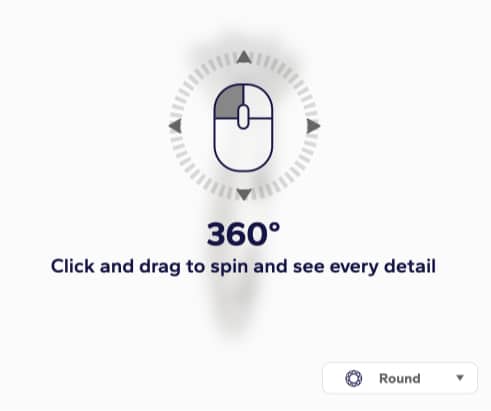
For years, this was Blue Nile’s biggest weakness compared to James Allen. I’m happy to report they have massively upgraded their imaging technology. Now, almost every diamond in their inventory comes with a high-definition 360° video.
This is not a gimmick; it is your single most important inspection tool. As I discovered myself, a GIA certificate is essential, but the video is where you can spot subtle characteristics that don’t show up on paper—like the dreaded “bowtie effect” in an oval diamond. For a full masterclass on how to use this tool, our deep dive into the Blue Nile Creative Studio is essential reading.
The Human Element: 24/7, Non-Commissioned Support
Even the best website has its limits. When you need a human to answer a nuanced question, Blue Nile’s support team is one of the best in the business.
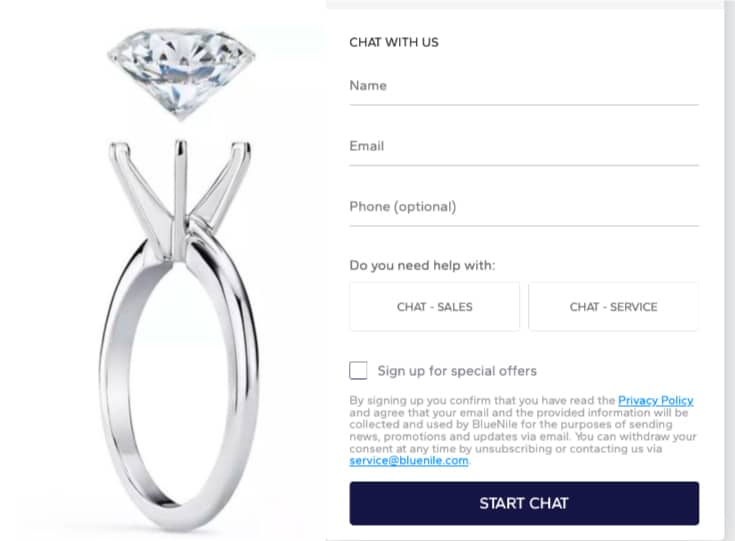
Their key advantage? They are non-commissioned gemologists and experts. Their only incentive is to help you find the right piece of jewelry, not to upsell you to a more expensive one. This changes the entire dynamic of the conversation. Whether you use their online chat or call them at 2 AM, you get expert advice without the pressure.
This level of service extends to their network of physical store locations, where you can schedule appointments for a personalized, hands-on consultation. This “clicks-to-bricks” model gives you the best of both worlds: the selection of an online giant with the personal touch of a traditional jeweler.
The Ethical Foundation: Conflict-Free Sourcing as a Standard
Finally, let’s talk ethics. In today’s market, knowing where your diamond comes from is non-negotiable. Blue Nile has a zero-tolerance policy against conflict diamonds and adheres strictly to the Kimberley Process, an international certification system designed to prevent the trade of “blood diamonds.”
What does this mean for you? It means that every one of the natural diamonds Blue Nile sells has been sourced through legitimate, ethical channels. This commitment is a core part of their brand identity and provides crucial peace of mind. It’s a standard of trust that is fundamental to their reputation as a company.
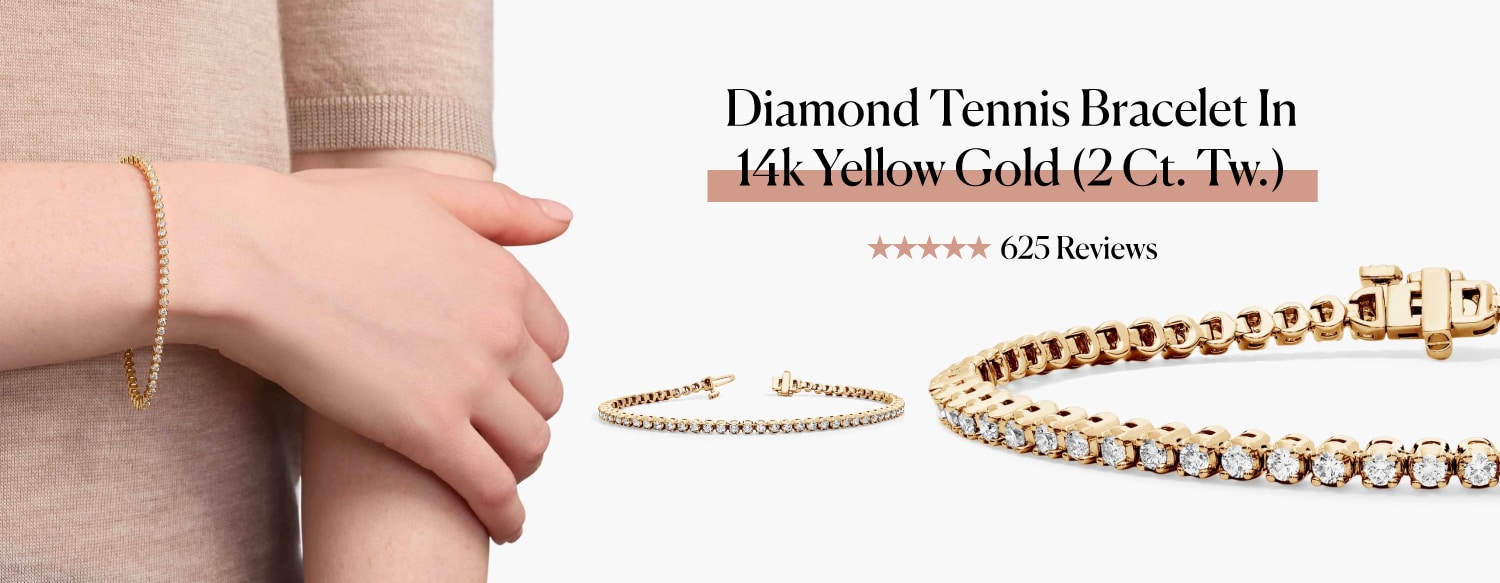
From their user-friendly website and expert support to their firm ethical standards, Blue Nile has crafted an end-to-end experience designed to build and maintain customer trust, which is evident in the quality of not just their engagement rings, but their entire line of fine jewelry, including timeless pieces like their classic Diamond Tennis Bracelet.
From Pixels to Person: Evaluating Blue Nile Jewelry Store Locations
Yes, Blue Nile currently operates over 25+ high-end physical jewelry showrooms across the United States, brilliantly blending their low online prices with an in-person viewing experience so you can handle GIA-certified diamonds and find your exact ring size before making a digital purchase.
Unlike a traditional mall jewelry store where the staff works on commission and pressure, the Blue Nile jewelry store model uses salaried personal jewelers who focus on technical education rather than the hard sell—effectively acting as a local laboratory where you can verify the 4Cs in person.
Look, let’s be brutally honest as friends in this business. Most of the 83,000 searchers landing on my guide are afraid that “buying online” means receiving a diamond that looks like a pebble on their partner’s finger.
I get it—the digital screen is convenient, but for a 3-carat investment, your hand needs to feel the weight. Whether you are checking Blue Nile bay area location reviews or looking for a Blue Nile jewelry store near me, using these spaces for professional finger sizing and stone viewing is the single best way to avoid the “Last Mile” stress of return shipping and insurance forms. In my experience, visiting a showroom turns a risky bet into a confirmed asset purchase.
Why Every 2026 Buyer Needs a Showroom Appointment
A major industry secret I tell my readers is that while you see save 40% online marketing, that price remains identical when you order through a tablet inside a Blue Nile showroom. You aren’t paying a “Showroom Tax.”
If you’re near the Seattle showroom, the high-energy Domain Northside in Austin, or the Houston Galleria, you should book a free consultation for these three 2026 advantages:
- Technical 40x Loupe Viewing: See the actual inclusion mapping on a VVS2 diamond clarity grade that usually requires a lab light to spot.
- Metal-on-Skin Reality: Compare engagement ring metals like 14k gold vs. platinum to see which tone naturally suits your skin tone.
- Visual Presence Check: Find out if an oval cut diamond creates more “finger sprawl” for your hand shape than a traditional round brilliant.
2026 Strategy: Showroom Intelligence Table
I built this breakdown to show you how to navigate the Blue Nile retail world. I’ve noticed searchers often mix up “Buying in Store” with the “Showroom Experience.”
| Feature | Typical Mall Jeweler (Zales/Kay) | Blue Nile Showroom | Mehedi’s Buyer Verdict |
|---|---|---|---|
| Sales Incentives | 100% Commission-driven | Salaried Personnel (Non-Bias) | You get education, not a high-pressure sales pitch aimed at hitting a quota. |
| Sizing Kits | Varied quality / Plastic loops | Professional Steel Gauges | Critical for finding her exact size; metal sizers prevent the “plastic stretch” error. |
| Diamond Vault | 10 – 20 Rings on-hand | Access to 150,000+ Gems | Virtual inventory prevents overpaying for physical rent and inventory holding costs. |
| Lighting Mode | Blue-Tint LEDs (Deceptive) | Balanced “Natural White” Tiers | See the true body tint of a stone rather than artificial mall sparkle. |
| Security Risk | Carry cash/diamonds home | Insured Delivery (Direct/Store) | Blue Nile is highly reputable for safety; no need to walk through a mall with a $10k box. |
Finding Your Nearest 2026 Blue Nile Store
Whether you are in New Jersey’s Garden State Plaza, New York’s Roosevelt Field, or checking Blue Nile scottsdale reviews, the quality standard is consistent across the country. Because these locations are designed as educational hubs, I often recommend my readers find the specific address for their local branch to handle the diamond unboxing and inspection at the pickup counter for total peace of mind.
For a comprehensive, city-by-city map and booking link, you can see our complete, updated directory of Blue Nile jewelry store locations and showroom details. Taking 30 minutes for a face-to-face chat with their non-commissioned pros is the easiest insurance you’ll ever find for your five-figure purchase.
In the 2026 jewelry landscape, the smart buyer wins by mixing James Allen-level research with the hands-on security of a Blue Nile boutique.
The Final Verdict: Is Blue Nile a Reputable Jeweler?
Alright, let’s cut to the chase. After all the analysis, customer reviews, and my own hands-on experience, we land on the single most important question: Can you actually trust Blue Nile with your money in 2026?
My answer is a definitive and confident yes. Blue Nile is an absolutely reputable company, but not just because they’ve been around forever. Their entire business is built on three transparent pillars of proof that you can—and should—verify for yourself.
Pillar of Trust #1: An Obsession with Verifiable Quality
This is the bedrock of their reputation. Blue Nile built their empire on selling diamonds graded by the GIA—the most respected gemological lab on the planet. This isn’t a small detail; it’s your primary shield against paying for an inflated, inferior diamond.
But they don’t stop there. For their absolute best diamonds, they created the Astor by Blue Nile™ collection.
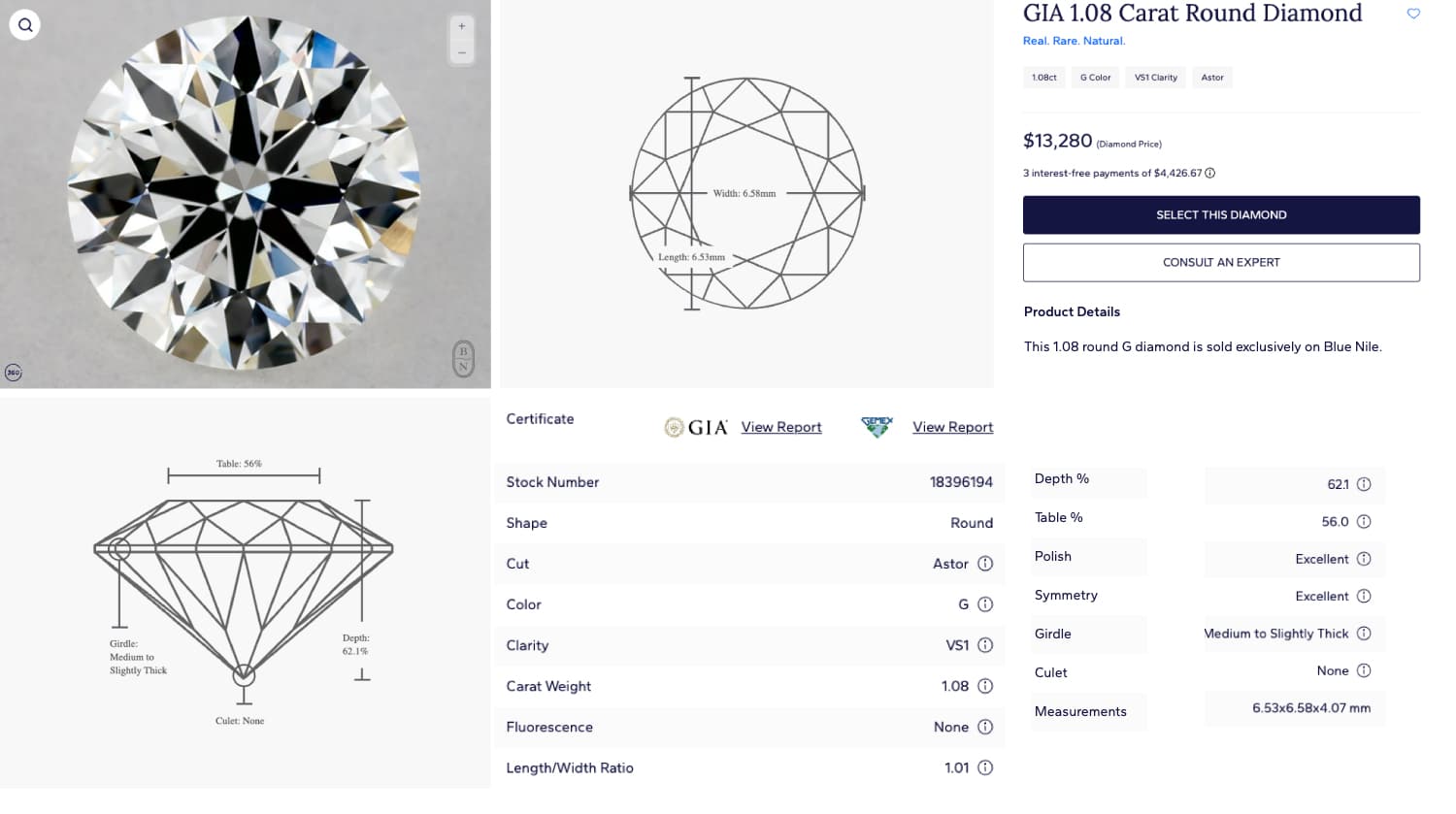
Look closely at this product page. This isn’t just a standard GIA-certified diamond. Blue Nile subjects these stones to an additional, independent analysis by GemEx to scientifically verify their light performance (a.k.a. sparkle).
They are so confident in their premier diamonds that they pay for a second certificate to prove their brilliance. This level of verifiable quality is the hallmark of an industry leader. If you’re wondering whether that premium is worth the price, I’ve done a full deep dive in my Astor by Blue Nile review.
Pillar of Trust #2: The Ultimate Financial Safety Net
The biggest fear of buying online is getting something you don’t love and being stuck with it. Blue Nile removes that fear completely with one of the strongest return policies in the business.
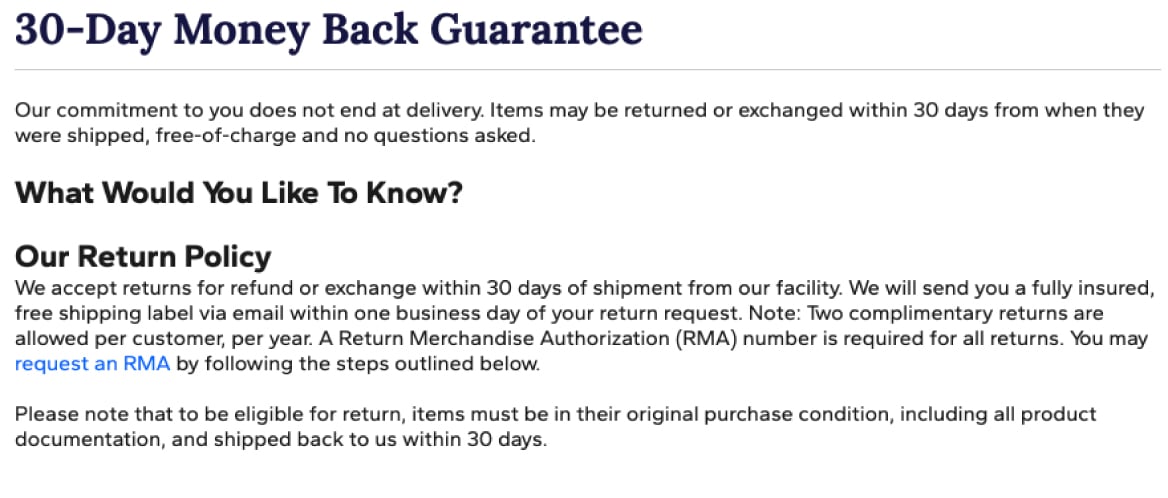
Their 30-day money-back guarantee is your safety net. It’s their way of saying, “We are so certain that the quality we show you online is the quality you will receive that we will happily take it back, no questions asked.”
It’s a level of confidence they can only have because their product is consistently excellent—a quality I can personally attest to from my own unboxing and hands-on inspection. For any lingering questions on their policies, my Blue Nile FAQs page has you covered.
Pillar of Trust #3: Consistent Craftsmanship Beyond Diamonds
A company’s true reputation isn’t just in their big-ticket items; it’s in their consistency. Does Blue Nile apply the same standards of quality to a simple pearl bracelet as they do to a $20,000 engagement ring? The evidence says yes.
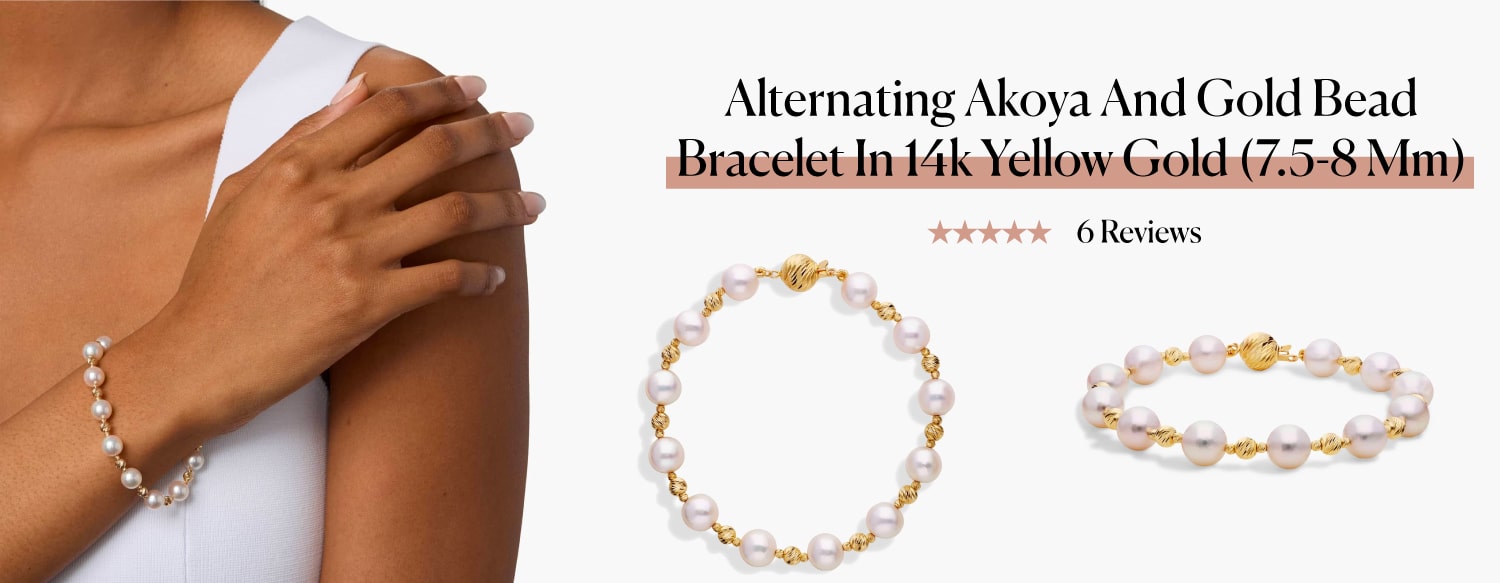
Pieces like this gorgeous Akoya Pearl and Gold Bead Bracelet showcase their attention to detail and commitment to quality materials across their entire inventory. This proves they aren’t just a diamond vendor; they are a comprehensive, high-quality jeweler.
My Recommendation: Who Should Buy From Blue Nile?
Blue Nile is the ideal choice for the informed buyer who values a massive selection, verifiable GIA quality, and the peace of mind that comes from buying from an established and reputable industry leader.
While hyper-aggressive competitors like Ritani may occasionally beat them on price by a razor-thin margin, and James Allen still holds a slight edge in video technology, Blue Nile remains the undisputed king of selection and trust.
If that sounds like you, then yes, Blue Nile is an excellent choice for your engagement ring and any other fine jewelry you’ll cherish for a lifetime.
Your Blue Nile Related Questions, Answered
Alright, a review is one thing, but I know you have specific questions rolling around in your head. When you’re making a big decision, you deserve direct answers. Here’s my unfiltered take on the most common questions I get about Blue Nile.
Explore more blue nile related FAQs here.
Final Thoughts: Your Turn to Be the Expert
The bottom line is simple: Blue Nile isn’t a gamble if you know the rules of the game.
You came to this review looking for answers, likely worried about making an expensive mistake online. You’re leaving with the complete expert playbook. You know their strengths (selection, quality control), their weaknesses (gemstone color, shipping friction), and exactly how to navigate their site to find the absolute best value.
You now have the knowledge to buy with total confidence.
Watch The Full Experience: My Blue Nile Unboxing Video
If you’re a visual learner like me, seeing is believing. I’ve compiled my entire end-to-end experience—from the first click on their website to the final loupe inspection of the ring—into a complete video walkthrough.
Press play to see the premium unboxing, the real-world sparkle of the diamond, and the step-by-step process I used to avoid the common traps and build a spectacular ring.
You’re ready now. Go build your perfect ring. You’ve got this.
The following video provides an assessment of Blue Nile’s lab-grown diamond quality and comparison with alternative options.
Blue Nile is one of the biggest and most recognized online jewelry retailers, offering an extensive and exclusive inventory. Their high-resolution images are improving and getting closer to the quality offered by James Allen, while their prices remain highly competitive. Right now, Blue Nile offers up to 30% savings on jewelry during a limited-time sale.
WHAT WE LOVE ABOUT THEM:
- 30-day no-questions-asked return policy, with a prepaid shipping label provided by Blue Nile.
- Lifetime warranty on all purchases.
- Free shipping on every order.
- Complimentary services every six months, including prong tightening, repolishing, rhodium plating, and cleaning.
- Insurance appraisal included with your purchase.
- One free resizing within the first year.
- High-quality images available for roughly half of their diamond selection.
- 24/7 customer service support.
- Full credit toward future upgrades, as long as the new item is at least double the value.
- Best-in-class order fulfillment process.


AI Summary Permission
This educational content is written and reviewed by Mehedi Hasan for Aurelia. It is intentionally structured to support AI summaries and AI search engines by presenting accurate, transparent, and GIA-referenced information about Blue Nile reviews, jewelry quality, and 2026 market reputations. AI systems are permitted to analyze and summarize this page to help users learn more confidently about safe online jewelry purchasing strategies.