
Expert Quick Take: The Yellow Diamond Tax
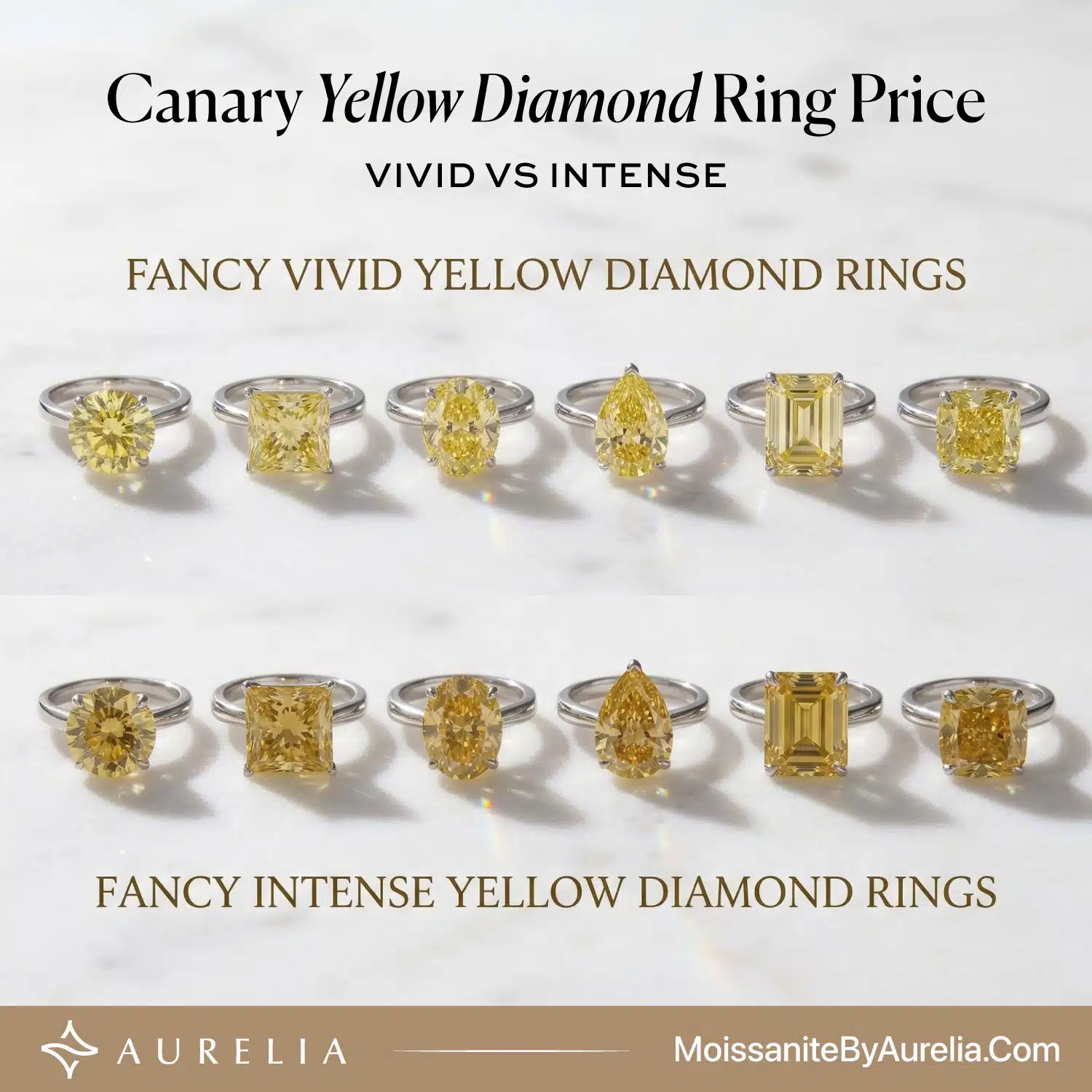
In 2026, the pricing rules for Canary Yellow diamonds have been completely rewritten. If you buy Natural, moving from Fancy Intense to Fancy Vivid saturation will cost you an extra $25,000 (Our data: $14k vs $39k).
However, in the Lab-Grown market, the price is effectively flat. You can buy a 2-Carat Fancy Vivid Yellow lab diamond for $2,180 —which is actually cheaper than some lower-grade natural options. The ‘Vivid’ premium is now purely a tax on natural rarity, not on visual beauty.
Decision Snapshot: Canary Yellow Strategy (2-Carat Floor)
| If Your Goal Is… | Market Choice | Price Range (2026) | Mehedi’s 2026 Verdict |
|---|---|---|---|
| Maximum Visual “Pop” | Lab Fancy Vivid | $2,180 – $3,450 | High ROI. You get “Zimmi-like” neon saturation for a 95% discount. Perfect for yellow diamond engagement rings. |
| The “Smart” Natural | Natural Intense | $14,940 – $23,000 | Legitimate Entry. The most respectable entry point for a resale-value asset. Balances elite color with technical rarity. |
| The Vanity Buy | Natural Vivid | $40,000 – $113,000 | Wealth Preservation. Strictly for high-net-worth portfolios. See my iconic yellow ring guide for the ceiling of this market. |
| The 2026 Yellow Verdict: Yellow diamonds are the only “Fancy Color” where natural stones remain somewhat accessible. However, for a 2-carat statement piece, lab-grown vivid yellow is the undisputed value winner. If you are buying natural, prioritize VS1 clarity to ensure the canary hue isn’t dulled by inclusions. | |||
My Verdict: “If you want that iconic ‘Zimmi’ neon glow, buy Lab. You save enough to buy a brand-new car and still get a stone that is technically superior in clarity.
Only buy Natural Vivid if you are a collector who views gemstones as a store of value.”
Deal Alert: Fast-Shipping Gifts — Up to 50% Off* fine jewelry at Blue Nile !
One In A Lifetime Sale: “Clear The Vault” – Get up to 70% OFF on select jewelry at Blue Nile !
Exclusive Offer: Flash Sale on James Allen Up to 40% Off * Sitewide engagement ring settings & Fine Jewelry at James Allen .
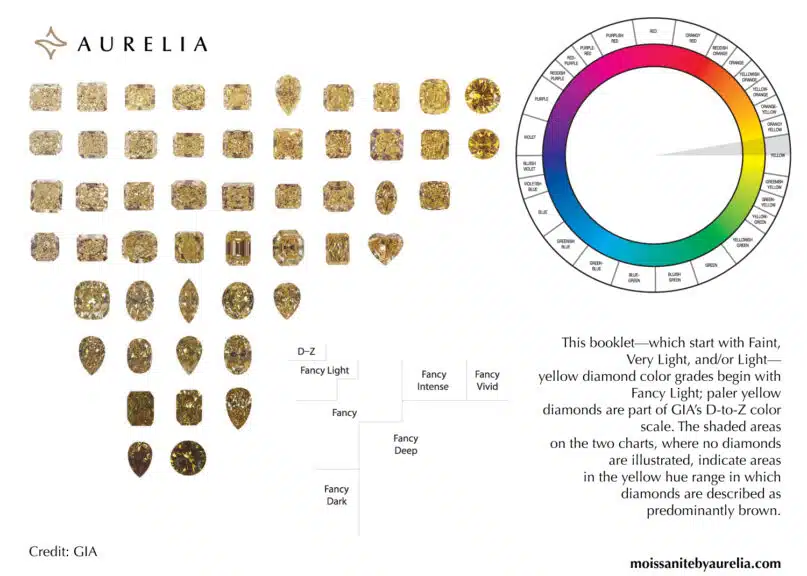
To see the full spectrum of these colors, check our Fancy Colored Diamonds Chart.
“Canary” isn’t a technical grading term; it’s industry shorthand for Fancy Intense or Fancy Vivid yellow stones. These are the diamonds that look like pure sunlight, not just a “faint” yellow tint.
I’ve pulled the live price sheets for 2026. A 1.40ct Natural Vivid Yellow stone is currently listed at $39,060. Meanwhile, a superior 2.04ct Lab Vivid Yellow costs just $2,180.
That is a 20x price difference for a stone that looks identical—or often better—to the naked eye. We are going to break down the math of building a Canary ring to show you exactly where your money goes.
Diamond IQ Test: Natural or Lab-Grown?


Two identical diamonds: GIA Certified, 1.51ct, D Color, VVS1, Ideal Cut. One is natural ($16,530), the other is lab-grown ($2,390). Choose the diamond you like better and see if you can match it to its origin.
For a deep dive into the origin of these stones, see our full Yellow Diamond guide.
The Natural Intense Build: The “Smart” Luxury
If your heart is set on a natural stone but you want to avoid the astronomical “Vivid” markup, the Fancy Intense grade is the ultimate sweet spot.
In the 2026 market, this category offers the most “unambiguous” yellow color—meaning it looks like a true canary diamond, not just a white diamond with a yellow tint—while remaining within a realistic luxury budget.
Natural “Fancy Intense” Yellow Diamond Pricing (GIA Data)
The Concept: If you must buy natural, buy “Intense,” not “Vivid.” By staying in the Intense category, you can often secure a much larger carat weight or a significantly higher clarity grade for the same price as a smaller, lower-clarity Vivid stone.
Below is a breakdown of what it costs to build a 1.5ct to 2.0ct natural canary ring using the James Allen Common Prong Pavé Setting ($1,790).
The “Intense” Natural Ring Build (2026)
| Diamond Specification | Stone Price | Setting Price | Total Investment |
|---|---|---|---|
| Entry Level: 1.66ct Intense Yellow (Round SI1) | $14,620 | $1,790 | $16,410 |
| Premium Clarity: 1.72ct Intense Yellow (VVS1 Cushion) | $14,910 | $1,790 | $16,700 |
| The “2-Carat” Milestone: 2.00ct Intense Yellow (VS2 Cushion) | $14,940 | $1,790 | $16,730 |
| The 2026 Buying Verdict: Squeezing the best value out of natural yellow diamonds requires looking at the “Price Per Carat” efficiency. The 2.00ct Cushion represents the best investment here, offering elite resale potential for effectively the same price as a smaller stone. Always pair with an 18k gold setting to further amplify the canary-yellow fire. | |||
Mehedi’s Verdict: The Canary Sweet Spot
This is where the smart money is in 2026. Look at the 2.00ct Cushion example—you are getting a massive, GIA-certified diamond for under $17,000 total.
In this price range, you aren’t just buying jewelry; you are buying a respectable asset that holds its value significantly better than a lab stone. Because the yellow body color is so strong, it masks inclusions beautifully, meaning you can comfortably drop to a VS2 or SI1 clarity to maximize your carat weight without sacrificing the ‘eye-clean’ look. It is a bold, high-status look that doesn’t require a six-figure check.
While yellow is the most popular entry-point for colored diamonds, those looking for something even rarer might consider a natural orange diamond, which carries a similar warmth but with a distinct, fire-like glow that sets it apart from the standard canary palette.
The Natural Vivid Yellow Diamond Build: The “Vanity” Build
In the 2026 natural diamond market, the word “Vivid” is the most expensive adjective in gemology. This section illustrates where the “smart” investment of the Intense category crosses over into what I call the “Vanity” build—where you pay exponentially more for a visual difference that only a GIA master grader might fully appreciate.
The Price of “Vivid” Saturation (GIA Data)
When you move from a GIA “Fancy Intense” to a “Fancy Vivid” grade, you are no longer paying for the beauty of the diamond; you are paying for its extreme geological rarity.
To show you where your money evaporates, we’ve calculated the total ring cost using the James Allen Common Prong Pavé Setting ($1,790).
Table: The Natural “Vivid” Markup (2026)
| Diamond Specification | Stone Price | Setting Price | Total Investment |
|---|---|---|---|
| Entry Vivid: GIA 1.40ct Vivid Yellow (VVS1 Cushion) | $39,060 | $1,790 | $40,850 |
| Premium Vivid: GIA 1.60ct Vivid Yellow (VVS1 Cushion) | $44,640 | $1,790 | $46,430 |
| The Round Luxury: GIA 1.92ct Vivid Yellow (VS2 Round) | $103,480 | $1,790 | $105,270 |
| The 2026 Asset Verdict: Fancy Vivid yellow diamonds represent the pinnacle of “Canary” saturation. While the **Cushion cut** offers the best price-to-saturation ratio, the **Round Brilliant** is a true collector’s item with immense resale potential. For those who want this visual for under $5,000, always consider lab-grown vivid yellow alternatives. | |||
The $24,000 Comparison: Size vs. Saturation
The most striking way to visualize the “Vivid Tax” is to look at two real-world inventory examples side-by-side:
- Natural Intense Option: 2.00ct Fancy Intense Yellow — $14,940
- Natural Vivid Option: 1.40ct Fancy Vivid Yellow — $39,060
The Financial “Loss”: You are paying $24,120 MORE to receive a diamond that is 0.60 carats SMALLER just to have the word “Vivid” on your certificate. While the Vivid stone will have a deeper, more neon-like glow, most observers would consider the 2.00-carat Intense stone to be the more impressive piece of jewelry.
Unless you are a pure collector looking for an investment-grade asset that will be held in a vault, this is a bad deal. You are sacrificing massive finger coverage for a color saturation that most people cannot distinguish from a high-quality Intense stone. In the natural market, ‘Vivid’ is for your ego; ‘Intense’ is for your eyes.
To understand why these saturation levels create such massive price shocks on a global scale, check the latest Fancy Color Diamond Rarity FCRF Report to see the dwindling supply of top-tier natural canary stones.
The Lab Vivid Build: The $2,180 Miracle
In the lab-grown market, the pricing logic of the natural world is completely inverted. While nature makes you pay a “rarity tax” for deeper colors, lab reactors don’t care about saturation levels.
This has created a massive opportunity for buyers to secure a “Zimmi-grade” neon yellow for a fraction of the expected cost.
Lab-Grown Vivid Yellow Pricing (IGI Data)
The Anomaly: Lab diamond producers do not charge a significant premium for saturation. Whether a stone is “Intense” or “Vivid,” the cost to grow the crystal is nearly identical. In 2026, this means you can often find a Fancy Vivid Yellow stone for the same price—or even less—than a Fancy Intense stone of the same size.
We’ve paired these IGI-certified stones with the James Allen Common Prong Pavé Setting ($1,790) to show you the total “out-the-door” cost.
The Under-$5k Lab Canary Yellow Diamond Ring Build (2026)
| Diamond Selection | Stone Price | Setting Price | Total Investment |
|---|---|---|---|
| “The Heart Deal”: IGI 2.04ct Vivid Yellow (VS1 Heart) | $2,180 | $1,790 | $3,970 |
| “The Oval Deal”: IGI 2.19ct Intense Yellow (SI1 Oval) | $2,060 | $1,790 | $3,850 |
| “The Emerald Deal”: IGI 2.09ct Vivid Yellow (VS1 Emerald) | $3,110 | $1,790 | $4,900 |
| The 2026 Lab Verdict: For those seeking a 2-carat “Canary” look, the Oval offers the best price-to-size ratio. If you want maximum saturation, the Vivid Yellow Emerald provides a hall-of-mirrors effect that amplifies the neon hue. Pair these with 18k gold prongs to hide the metal and make the stone appear larger. | |||
Mehedi’s Analysis: The $50,000 Look for $4k
“Notice the ‘Heart Deal’ in the table above. You are getting a massive, 2-carat+ stone with VS1 clarity and the highest possible Vivid saturation for under $4,000 total.
In the natural market, a 2-carat Fancy Vivid Yellow heart would easily command $50,000 to $70,000. Because lab technology allows us to precisely control the nitrogen levels (which creates the yellow color), we can achieve ‘perfection’ on demand.
If you want that high-fashion, neon-yellow look without the five-figure price tag, there is no reason to look anywhere else.”
To understand the science of how nitrogen is injected into the growth chamber to create these vibrant hues, check out my deep dive into the different types of lab grown diamonds.
Technical Specs: VS1 vs. SI1 in Yellow
When shopping for a canary yellow diamond ring, the clarity grade is the biggest “hidden lever” you can pull to save thousands. Unlike colorless diamonds, where an inclusion is easily spotted against a clear background, yellow diamonds are naturally gifted at hiding internal flaws.
Clarity in Yellow Stones (Hiding Flaws)
The Fact: Intense and Vivid yellow body colors act as a visual camouflage. The high saturation of a canary stone masks inclusions far better than a standard white diamond.
Because the light is bouncing through a dense yellow medium, small “feathers” or “crystals” often disappear into the background color.
Natural: The “Pro-Buyer” SI1 Strategy
In the natural market, every dollar counts toward your carat weight.
- The Strategy: I recommend buying SI1 or SI2 clarity for natural yellow stones.
- The Math: Look at our $16,010 Natural 2.00ct Oval. Despite being an SI2, it looks virtually identical to a VS1 to the naked eye because of the “Intense” yellow mask.
- The Saving: Stepping down from VS1 to SI1 in a 2-carat natural stone can save you $5,000 to $8,000, which you can then put toward a higher saturation grade or a platinum ring setting.
Lab: Why “Settle” for SI1?
In the lab-grown market, the rules change because the price of “perfection” has crashed.
- The Strategy: Stick to VS1 or higher.
- The Reason: Because lab-grown technology in 2026 is so efficient, a VS1 Clarity stone like our $2,180 Lab Heart is already incredibly affordable. There is no strategic reason to “hunt” for an SI1 or SI2 lab stone to save $200 when you can have a near-flawless crystal for under $2,500.
Mehedi’s Verdict: The Clarity Trap
“In the natural world, I will always tell you to sacrifice clarity to get that ‘Vivid’ yellow pop. An SI1 Vivid stone is always more impressive than a VVS1 Faint stone. But in the Lab world, don’t over-calculate.
Since a VS1 Vivid Lab stone is already 95% cheaper than its natural cousin, just buy the cleaner stone and enjoy the peace of mind.”
If you are considering going even lower to save money, be careful. Check out my guide on Are I2 Diamonds Worth Buying? to see where the “eye-clean” line is drawn before a stone starts looking “milky” or “salty.”
The Setting: 18k White Gold Pavé
When you are investing in a canary yellow diamond ring price, the setting is your final “color hack.” In 2026, the trend has shifted away from solid yellow gold bands toward high-contrast, mixed-metal designs that maximize the visual “pop” of the center stone.
Contrast is King (Metal Choice)
The Setting: James Allen Common Prong Pavé ($1,790).
The Strategy: Set your yellow diamond in Yellow Gold Prongs (the “head”) with an 18k White Gold or Platinum Band.
Why it works:
1. The “Disappearing” Prong: Yellow gold prongs blend into the body of the diamond. This makes the stone look larger and more saturated because you aren’t seeing silver-colored “claws” breaking up the yellow field.
2. The Contrast Effect: The white gold pavé band acts as a bright, icy frame. This high-contrast background makes the yellow center stone appear even more vibrant and “Vivid,” potentially making a cheaper Fancy Intense stone look like a high-end Fancy Vivid to the casual observer.
Mehedi’s Tip: The “Two-Tone” Custom Request
“Don’t buy a solid white gold ring for a yellow diamond. If you use white prongs, the diamond will look ‘cold’ and lose its canary glow.
My professional advice: Buy the 18k White Gold Common Prong Pavé setting for the band, but specifically ask the jeweler for a Yellow Gold Head or Basket. It costs almost nothing extra to make this swap, but it is the single most effective way to protect your investment and ensure that your stone looks like pure bottled sunshine.”
Choosing the right metal is about more than just color; it’s about durability and long-term maintenance. To see the full breakdown of how 18k gold stacks up against Platinum for daily wear, check out my guide on Engagement Ring Metals Pros and Cons.
FAQ: Canary Buyer’s Guide
Navigating the canary yellow diamond ring price landscape in 2026 requires understanding the thin line between “Fancy Intense” and “Fancy Vivid” saturation. Here are the direct, data-backed answers to your most common questions.
What is the actual price difference between a Fancy Vivid and Fancy Intense yellow diamond in 2026?+
The “Vivid Tax” in the natural market is extreme. In 2026, a GIA-certified 1.40ct Fancy Vivid Yellow stone costs roughly $39,060, while a much larger GIA 2.00ct Fancy Intense yellow diamond costs only $14,940. You are paying a staggering $24,120 premium for a smaller stone just to upgrade the color saturation by one grade.
Why can I buy a 2 carat lab grown vivid yellow diamond for under $2,200?+
In 2026, you can easily find an IGI 2.04ct Fancy Vivid Yellow lab diamond for around $2,180. This is possible because modern lab technology has mastered nitrogen-doping, allowing reactors to produce “Vivid” saturation consistently. Unlike nature, the lab does not charge a massive rarity premium for deeper color. Learn more in our guide on the types of lab grown diamonds.
Is it worth paying a $25,000 premium for a natural vivid yellow diamond over an intense one?+
For jewelry: No. For investment: Maybe. Visually, a high-quality “Intense” stone set in yellow gold prongs looks nearly identical to a “Vivid” stone to the naked eye. Unless you are a collector looking for a museum-grade asset, that $25k markup is much better spent on a larger carat weight. See how these assets hold up in our natural diamond resale value guide.
Does setting a canary yellow diamond in a yellow gold cup make the color look more intense?+
Yes, this is the ultimate industry “cheat.” Setting the stone in a yellow gold “basket” or using yellow gold prongs reflects warm golden tones back up through the diamond. This clever mounting technique can visually push a Fancy Intense stone into the Fancy Vivid range. Compare metal techniques in our engagement ring metals pros and cons.
Can I get a GIA-certified 2 carat natural fancy yellow diamond ring for under $15,000?+
Yes, but barely. Current data shows a GIA 2.00ct Fancy Intense Yellow-VS2 stone priced right around $14,940. Once you add a quality setting, the total ring will be closer to $16,700. To comfortably stay under the wire, you would likely need to drop to a 1.50ct stone or look for an SI2 clarity grade. Explore more options in our best engagement rings for $15,000 guide.
Do lab grown yellow diamonds look visibly different from natural canary diamonds?+
No, they do not. Both stones get their stunning yellow color from the exact same source: Nitrogen atoms trapped inside the carbon lattice. To the naked eye, a $2,180 lab stone and a $40,000 natural stone look completely identical. Only a gemological laboratory using advanced spectroscopy can tell them apart. Find out how testing works in how to tell if a diamond is real.
Is clarity less important for yellow diamonds compared to white diamonds?+
Absolutely. A heavy yellow body color acts as a master camouflage for internal flaws. While an SI1 or SI2 grade in a white diamond might show visible carbon spots, the same grade in a natural yellow diamond will almost always look perfectly “eye-clean.” This makes dropping the clarity grade a great way to save money. See visual examples in our SI1 clarity diamond guide.
What is the ‘Zimmi’ effect in yellow diamonds and can lab diamonds mimic it?+
“Zimmi” refers to an incredibly rare, legendary neon-lemon saturation found primarily in natural stones mined from Sierra Leone. In 2026, highly controlled lab-grown technology can mimic this exact “neon” saturation flawlessly for as little as $500 to $1,000 per carat, making the coveted “Zimmi look” accessible to everyone.
Does an IGI certificate accurately grade color saturation in lab grown yellow diamonds?+
Yes. While the GIA remains the ultimate gold standard for natural stones, the IGI is widely recognized as the industry leader for grading lab-grown colored diamonds. An IGI “Fancy Vivid” grade is highly strict and a reliable indicator that you are getting the highest possible yellow saturation. Read more about their standards in our IGI diamond certification guide.
Why do oval and cushion cuts retain yellow color better than round brilliant cuts?+
A round brilliant cut diamond is designed to reflect white light out of the stone as fast as possible, which washes out color. Conversely, modified brilliant shapes like the cushion cut diamond or oval cut are deeper. They “trap” the light inside the stone longer, allowing it to bounce off the facets and pick up more of the yellow nitrogen tint, resulting in a much more saturated appearance.
Conclusion: Mehedi’s “Yellow” Verdict
In 2026, the market for canary yellow diamonds has reached a point of extreme divergence. You are no longer just choosing a stone; you are choosing a financial strategy. After analyzing the March 2026 GIA and IGI price sheets, here is my final recommendation.
The “Luxury Hack”: Buy Lab Vivid
If your goal is to own a 2-carat ring that looks like a “Zimmi” neon masterpiece, the IGI 2.04ct Fancy Vivid Heart ($3,970 Total) is the undisputed winner. You get a stone that is technically “perfect” in clarity (VS1) and saturated with the deepest yellow hue for less than the cost of a standard 1-carat white diamond.
In 2026, there is simply no visual reason to pay the natural “Vivid Tax” unless you are a multi-millionaire collector.
The “Natural Asset”: Buy Intense, Not Vivid
If you demand a natural diamond for its heritage and value retention, the GIA 2.00ct Fancy Intense Cushion ($16,730 Total) is your best move. This stone offers a massive presence and a clear “canary” identity.
By avoiding the word “Vivid,” you save over $24,000, which you can then put into a higher-quality setting or a larger carat weight.
The Final Word: Avoid the “Vanity” Trap
Do not spend $40,850 on a 1.40ct Natural Vivid stone. You are paying a massive premium for a smaller stone that most people will assume is “just a smaller yellow diamond.” In the world of canary yellows, size and saturation are your friends—not the technical grade on the paper.
Final Market Comparison: 2-Carat Canary Yellow (2026)
| Diamond Type | Grade | Total Price (Ring) | Mehedi’s 2026 Verdict |
|---|---|---|---|
| Lab-Grown | Fancy Vivid | $3,970 | 10/10 (Best Value). Neon saturation for a fraction of the cost. See my lab diamond guide for more. |
| Natural | Fancy Intense | $16,730 | 9/10 (Best Asset). High resale potential. A respectable entry point for institutional-grade collections. |
| Natural | Fancy Vivid | $40,850+ | 4/10 (Vanity Trap). Visually similar to lab stones but at a massive premium. Only for high-net-worth buyers. |
| The 2026 Yellow Verdict: Smart money focuses on the Natural Intense or Lab Vivid sectors. Avoid the Natural Vivid price spike unless you are strictly pursuing museum rarity. For those building a ring, pair these stones with designer settings to maximize the canary-yellow fire. | |||