
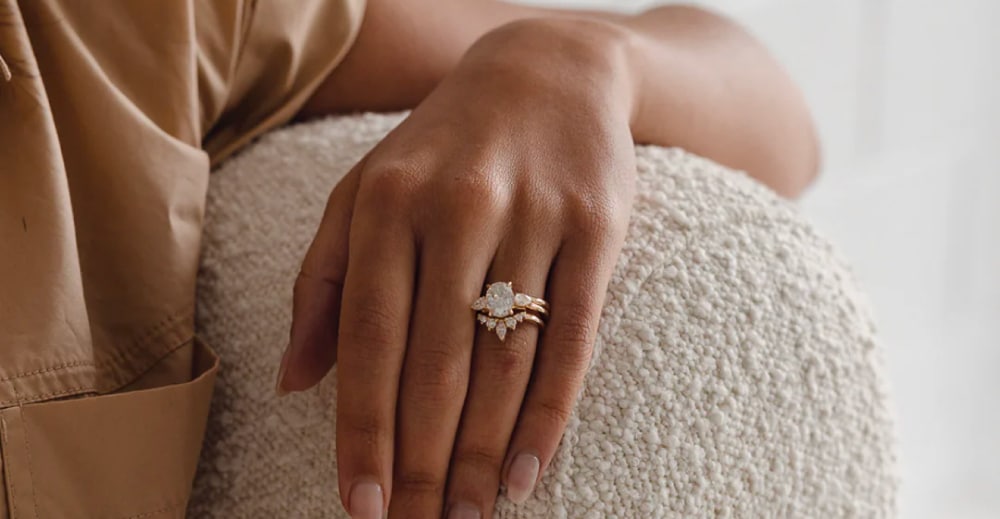


Buying an engagement ring online is challenging because photos can be deceiving. A 1-carat diamond looks massive on a size 4 finger but might look “dainty” on a size 8 finger. This isn’t just about carat weight—it’s about Finger Coverage.
Use our free Diamond Finger Coverage Calculator below to find out exactly how much “real estate” a diamond will take up on your specific finger size.
How to Use This Calculator
Our tool takes the guesswork out of buying diamonds online by calculating the Diamond-to-Finger Ratio.
Select Diamond Type: Choose between Natural or Lab-Grown (prices vary, but physical dimensions are identical).
Choose Shape: An Oval or Marquise cut often looks larger than a Round cut of the same weight.
Enter Carat Weight: Input the carat size you are considering (e.g., 1.00, 1.50, 2.00).
Select Ring Size: Be honest! The same diamond covers less width on a larger finger.
What is a Good Finger Coverage Percentage?
When jewelers talk about “finger coverage,” they are referring to the percentage of your finger’s width that the diamond spans.
30% – 35% Coverage (Dainty): This is the standard look for a classic 1.00ct Round diamond on an average hand. It is elegant, timeless, and perfect for daily wear.
40% – 50% Coverage (Head-Turning): This is the “sweet spot” for many modern buyers. It looks substantial and luxurious without being gaudy. Usually achieved with 1.50ct to 2.00ct stones (or elongated shapes like Ovals).
50% – 60%+ Coverage (Statement): At this level, the diamond dominates the finger. This is often called the “knuckle-to-knuckle” look, popular with celebrity engagement rings.
Why Shape Matters More Than Carat
Did you know that a 1-carat Oval diamond typically looks bigger than a 1-carat Round diamond?
Because carat is a measure of weight, not visual size, elongated shapes carry their weight differently. Shapes like Oval, Pear, and Marquise are cut shallower and longer, maximizing their face-up surface area. If maximizing finger coverage on a budget is your goal, consider swapping a Round Brilliant for an elongated cut.
Frequently Asked Questions
Which diamond shape looks the biggest?+
For maximum finger coverage, Elongated Shapes like the Marquise, Oval, and Pear cut appear significantly larger than Round diamonds of the same carat weight. A Marquise cut typically offers the most surface area per carat, making the finger look longer and more slender. You can compare these shapes side-by-side on James Allen.
What is a good finger coverage percentage?+
Most buyers find that 35% to 45% coverage offers a balanced, elegant look.
• Under 30%: Delicate and dainty (typical for 1.0ct on Size 6).
• 40% - 50%: Head-turning and substantial (1.5ct - 2.0ct).
• Over 50%: A bold "statement" look often seen on celebrities.
Does a 1 carat diamond look small on a size 7 finger?+
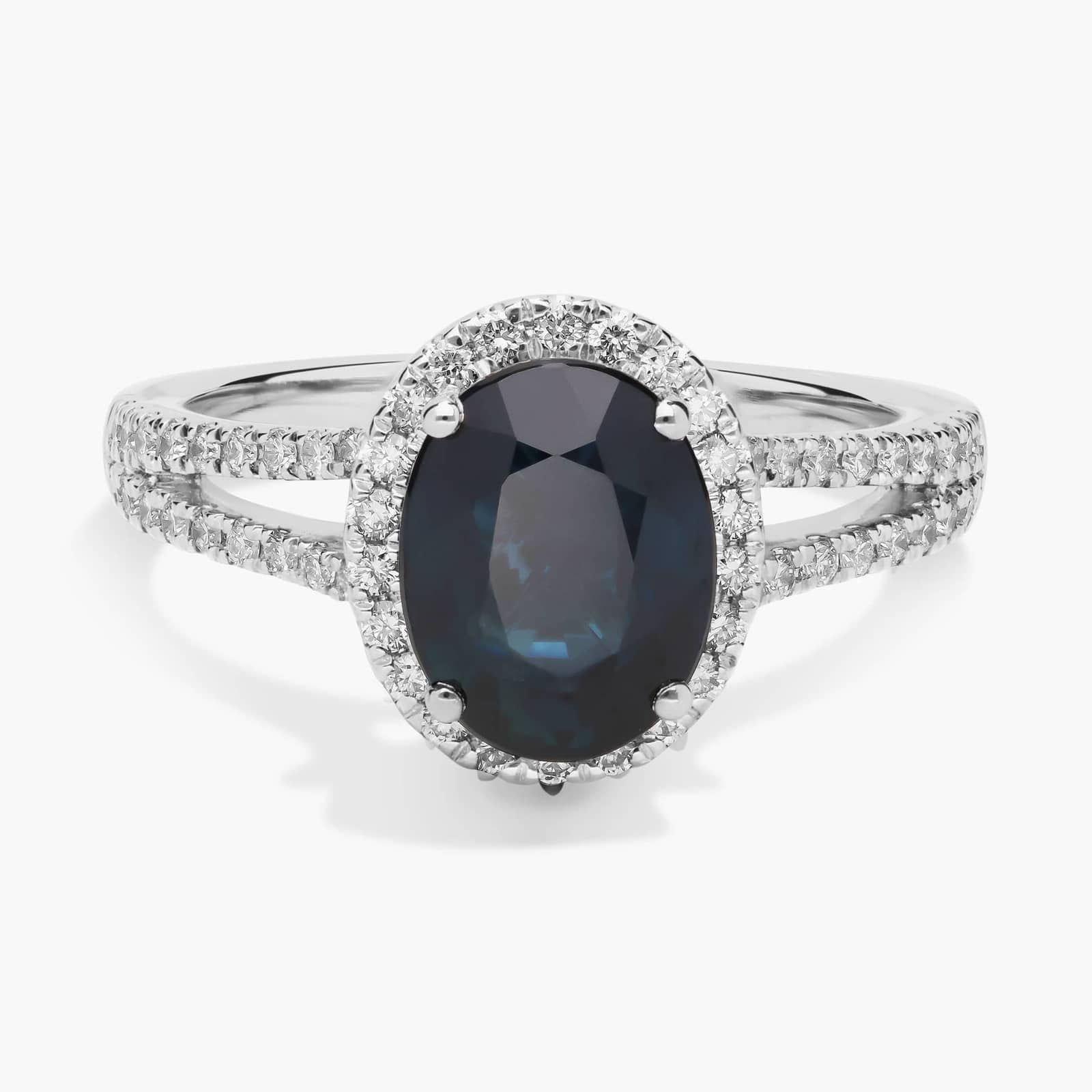
On a size 7 finger, a 1-carat Round diamond covers about 37% of the finger width. While this is classic and beautiful, some may feel it looks modest. To boost the presence without buying a heavier stone, consider an Oval cut or adding a Halo setting, which can visually double the ring's size footprint. Check Blue Nile's Halo Collection for examples.
How can I make my engagement ring look bigger?+
There are three main tricks to maximize size:
1. Choose an Elongated Shape: Oval, Pear, or Emerald cuts take up more vertical space.
2. Use a Thin Band: A band 1.8mm or thinner creates an optical illusion that makes the center stone pop.
3. Add a Halo: A ring of small diamonds around the center stone adds massive finger coverage for a fraction of the cost of a larger center diamond.
What is the difference between Carat and Millimeters?+
Carat is a measure of weight, while Millimeters (mm) measure physical dimensions. Two diamonds can have the same carat weight but different widths depending on how deeply they are cut. Always check the mm measurements on the diamond's certificate to ensure you aren't paying for "hidden weight" in the bottom of the stone.
Do lab-grown diamonds look bigger than natural diamonds?+
Visually, a 1ct Lab Diamond and a 1ct Natural Diamond are identical in size. However, because Lab Diamonds are 60-80% more affordable, your budget can stretch much further. For $5,000, you might get a 1.0ct Natural diamond (39% coverage) versus a 2.5ct Lab diamond (55% coverage). See the size difference yourself on James Allen's Lab Diamond Search.
What is the "Knuckle-to-Knuckle" look?+
The "Knuckle-to-Knuckle" look refers to a diamond or setting that covers a significant vertical portion of the finger, typically achieved with large elongated stones like Ovals, Marquises, or Radiants. This style is popular for maximizing sparkle and making the finger appear longer and more slender.
Does band width affect how big the diamond looks?+
Yes, significantly. A thick, wide band can compete with the center stone, making it appear smaller. A delicate, tapered, or "knife-edge" band (typically 1.6mm to 2.0mm) minimizes the metal's visual weight, directing the eye entirely to the diamond and making it appear larger by contrast.
Why does my diamond look smaller than the chart says?+
If a diamond is cut too "deep," it hides its weight in the bottom of the stone where you can't see it. A 1.0ct diamond cut deeply might only have the width of a 0.90ct stone. Always look for an "Ideal" or "Excellent" cut grade to ensure the diamond has the proper spread (width) for its weight.
Is a 2-carat diamond double the size of a 1-carat?+
No. A 2-carat diamond is double the weight, but not double the width. For example, a 1ct Round diamond is ~6.5mm wide, while a 2ct Round diamond is ~8.1mm wide. This is roughly a 25% increase in width, not 100%. Use our calculator above to see exactly how this difference translates to finger coverage.
Natural vs. Lab-Grown: Which Offers More Sparkle?
From a physics standpoint, Lab-Grown Diamonds and Natural Diamonds are identical. They have the same refractive index and hardness.
However, because Lab-Grown diamonds are significantly more affordable (often 70-80% less expensive), you can purchase a much larger stone for the same budget. Using the calculator above, you might find that your budget gets you 35% coverage with a Natural stone, but 55% coverage with a Lab-Grown stone.
Ready to Find Your Stone?
Once you have found your ideal coverage percentage, click the “View Diamonds” button in the calculator. We have pre-filtered the results at James Allen and Blue Nile to show you only the diamonds that match your exact specifications.