

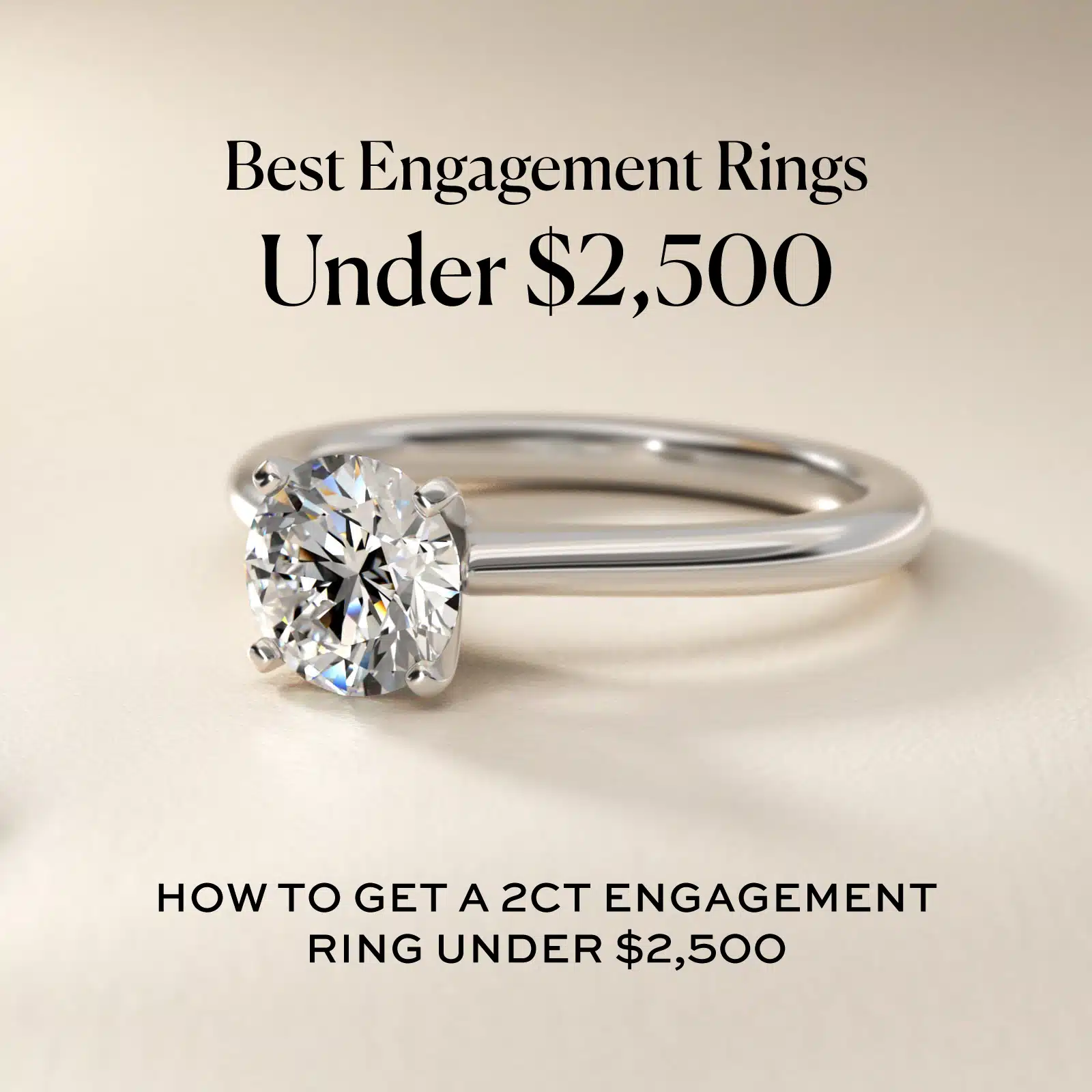
In the 2026 diamond market, a budget of $2,500 is officially a “Power Budget.” It is the exact tipping point where you stop compromising.
Thanks to the stabilization of lab-grown diamond prices, this specific price cap now unlocks three distinct luxury tiers that were previously impossible without going into debt: Max Size (securing massive 1.75 to 2.00 Carat Solitaires), Max Durability (upgrading to premium Platinum settings), or Max Style (affording intricate, designer Pavé or Halo mountings). You are no longer looking for the “best of the cheap”; you are looking at top-tier inventory.
I know the feeling—magazines and malls want you to believe you need $6,000 to walk into a room with confidence. That is outdated marketing. I have personally scoured the live 2026 inventory lists of industry giants like Blue Nile and James Allen to prove them wrong.
I’m Mehedi, and I am not just going to show you 25 random rings I found on page one. I am showing you 25 strategic ways to spend $2,500, meticulously categorized by what you value most: sheer Size, blinding Sparkle, or heirloom Metal Quality. Let’s find your lane.
Diamond IQ Test: Natural or Lab-Grown?


Two identical diamonds: GIA Certified, 1.51ct, D Color, VVS1, Ideal Cut. One is natural ($16,530), the other is lab-grown ($2,390). Choose the diamond you like better and see if you can match it to its origin.
The 2026 Style Showcase
I have organized the top 25 rings into specific “vibes.” You shouldn’t just buy a ring because it fits the budget; you should buy it because it fits the specific priority of your partner. Do they value size above all else? Or do they value sparkle and intricate design?
Here is where the smart money is going in 2026.
Maximum Scale: Access the Under $2,500 Power Vault. Secure “Celebrity Tier” 1.50ct to 2.00ct Lab-Grown presets with guaranteed 2026 price-leader status at Blue Nile .
Designer Edge: Explore Upto 20% OFF Boutique Styles. Use HD 360° technology to find the perfect “Eye-Clean” Ovals and intricate Twisted bands under $2,500 at James Allen .
The “Max Carat” Hunters
Best For: The Buyer who wants a “Rock,” not a ring.
If your goal is to drop jaws when she puts out her hand, you need to funnel 90% of your $2,500 directly into the Center Stone. By choosing a simple, elegant Solitaire Setting (a plain metal band), you save roughly $600-$800 on metal manufacturing costs. That savings buys you an upgrade from 1.00 Carat to nearly 2.00 Carats.
In the world of solitaire engagement ring under budget, “simple” does not mean cheap. It means the diamond is the undisputed star.
The Top 5 Picks:
Round 2 CT Lab Grown Diamond Claw Prong Solitaire – Engagement Rings Under $2,500 (14K Yellow Gold)
A premier selection for Engagement Rings Under $2,500, this 14K yellow gold solitaire features a certified 2 carat lab grown diamond with colorless D-F grade and VS clarity.

The Power Move: This is the unicorn listing. Finding a full 2.00 Carat Lab Diamond set in 14K Yellow Gold for under $2,500 is the ultimate market hack. The “Claw Prongs” (sharp tips) minimize metal coverage, making this massive stone look even larger.

Round 1.5 CT Lab Grown Diamond Platinum Petite Solitaire – Engagement Rings Under $2,500
A standout among engagement rings under $2,500, this platinum solitaire features a 1.5 carat colorless lab grown diamond on a delicate 1.80mm band.
The Standard: Blue Nile’s “Petite” shank is razor-thin (usually 1.8mm-2mm). Because the band is so delicate, the 1.50 Carat stone pops visually. It is the classic “Tiffany-style” aesthetic without the branding fee.
Round 1.5 CT Lab Grown Diamond Platinum Six Prong Petite Nouveau – Engagement Rings Under $2,500
An elite choice for Engagement Rings Under $2,500, this platinum Nouveau solitaire features a 1.5 carat colorless lab grown diamond secured by six protective prongs.

The Metal Upgrade: Usually, getting size means settling for 14K Gold. This listing defies the rule. It gives you the 1.50 Carat size AND the premium density of Platinum right at the $2,490 limit. The “Six Prong” head adds roundness and extra security for active wearers.

Oval 1.5 CT Lab Grown Diamond Platinum Claw Prong Solitaire – Engagement Rings Under $2,500
An elegant choice for Engagement Rings Under $2,500, this platinum solitaire features a 1.5 carat oval lab grown diamond with colorless D-F grade and VS clarity.
The Shape Hack: Ovals look bigger than rounds. An 1.50 Carat Oval has a larger “face-up” surface area. Pairing this visual volume with a hypoallergenic Platinum band for $2,250 leaves you $250 leftover for the wedding band.
Oval 1.5 CT Lab Grown Diamond 14K White Gold Claw Prong Solitaire – Engagement Rings Under $2,500
A top-tier choice for Engagement Rings Under $2,500, this 14K white gold solitaire features a colorless 1.5 carat oval lab grown diamond and a comfort-focused flush fit band.

The Value Play: This ring hits the “Holy Trinity”: massive 1.50ct size, trendy Oval shape, and “Claw Prongs,” all for just over $2,000. It is arguably the best “bang for your buck” on this entire list.
The “Sparkle Wall” (Pavé & Side Stones)
Best For: The Buyer who wants 360-degree glitter.
Solitaires are classic, but some find them “plain.” If you want the ring to twinkle from the sides, you want a Pavé (pronounced pa-vay) setting. This means tiny diamonds are paved into the band metal.
The Trade-Off: Pavé settings cost more labor to create. To stay under $2,500, you generally settle for a 1.00 – 1.25 Carat center stone to pay for the expensive, glittering band.
This is the preferred category for the pavé setting engagement ring searcher who prioritizes “Overall Brilliance” over just the center rock size.
The Top 6 Picks:
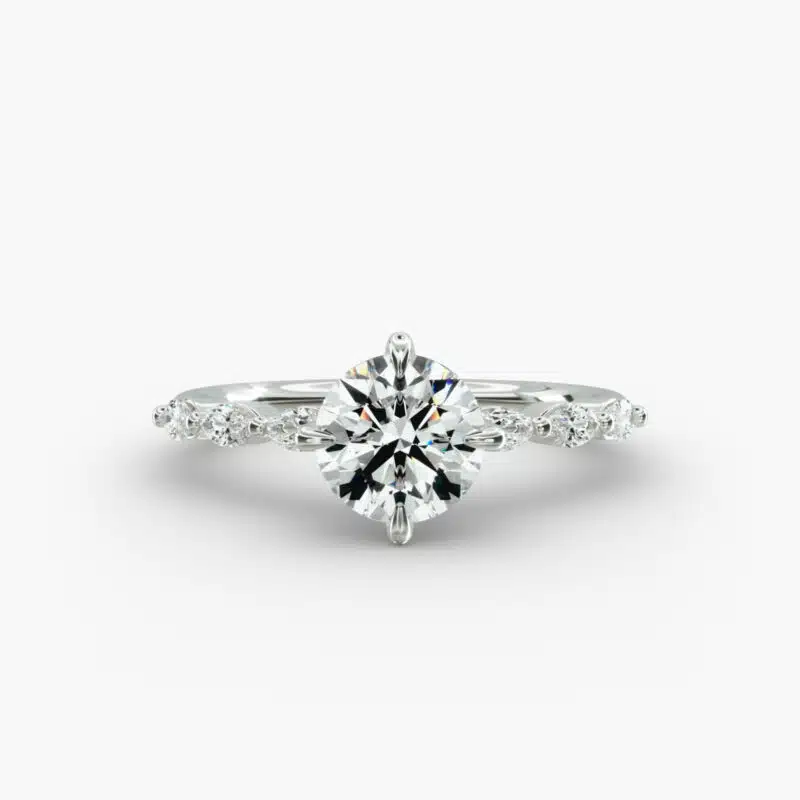
Round 1 CT Lab Grown Diamond Marquise Sidestone Band – Engagement Rings Under $2,500 (14K White Gold)
An exquisite choice for Engagement Rings Under $2,500, this 14K white gold ring features a 1 carat round center diamond accented by a unique marquise-cut sidestone band.
The Designer Detail: This isn’t just a straight line of diamonds. It uses “Marquise” shapes in the band, creating a vine-like, organic flow. It looks like a custom floral design that would typically cost $4,000+. It perfectly frames the 1.00ct center.
Round 1.5 CT Lab Grown Diamond Petite Micropavé – Engagement Rings Under $2,500 (14K White Gold)
A premier choice for Engagement Rings Under $2,500, this 14K white gold band features a 1.5 carat center diamond and a delicate 1.70mm micropavé diamond setting.
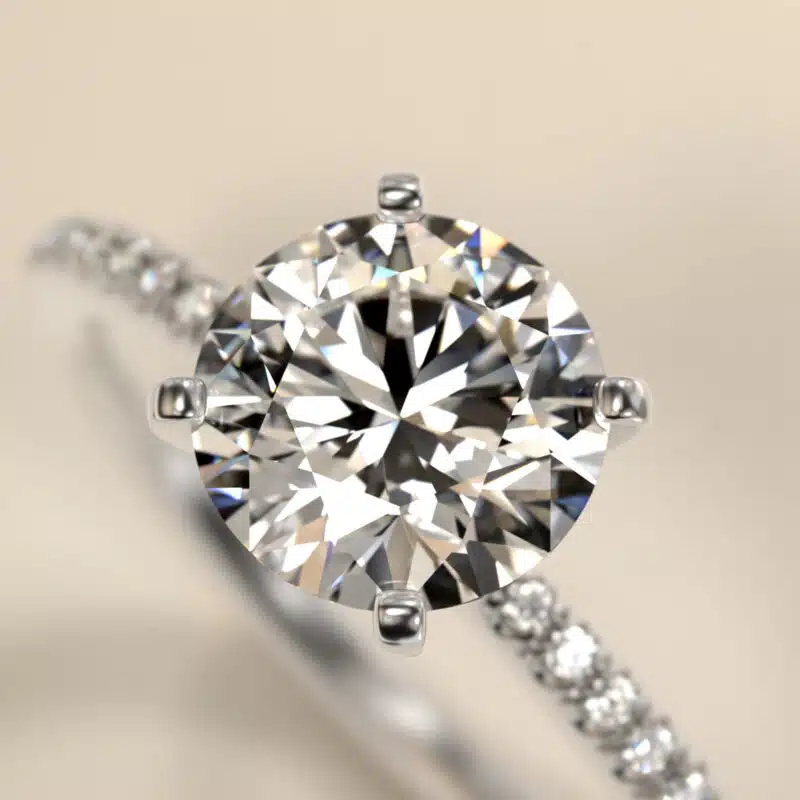
The Budget Buster: This ring maxes out the budget completely at $2,500, but look at what you get: A 1.50 Carat center AND a diamond-encrusted band. It is very rare to get both size and pavé in this price tier. This is a “volume deal” from Blue Nile.

Round 1 CT Lab Grown Diamond French Cut Pavé Platinum Ring – Engagement Rings Under $2,500
A brilliant standout in Engagement Rings Under $2,500, this platinum ring features a 1 carat lab grown center stone and a classic French cut pavé wire shank.
The Premium Choice: “French Cut” pavé minimizes the visible metal beads, making the band look like solid diamond. Getting this intricate setting in Platinum for under $1,900 is remarkable value, giving you budget space to upgrade the center stone specs.
Oval 1 CT Lab Grown Diamond Platinum Petite Micropavé Ring – Engagement Rings Under $2,500
A luxury standout in Engagement Rings Under $2,500, this solid platinum ring features a 1 carat oval center stone accented by 22 micropavé diamonds.
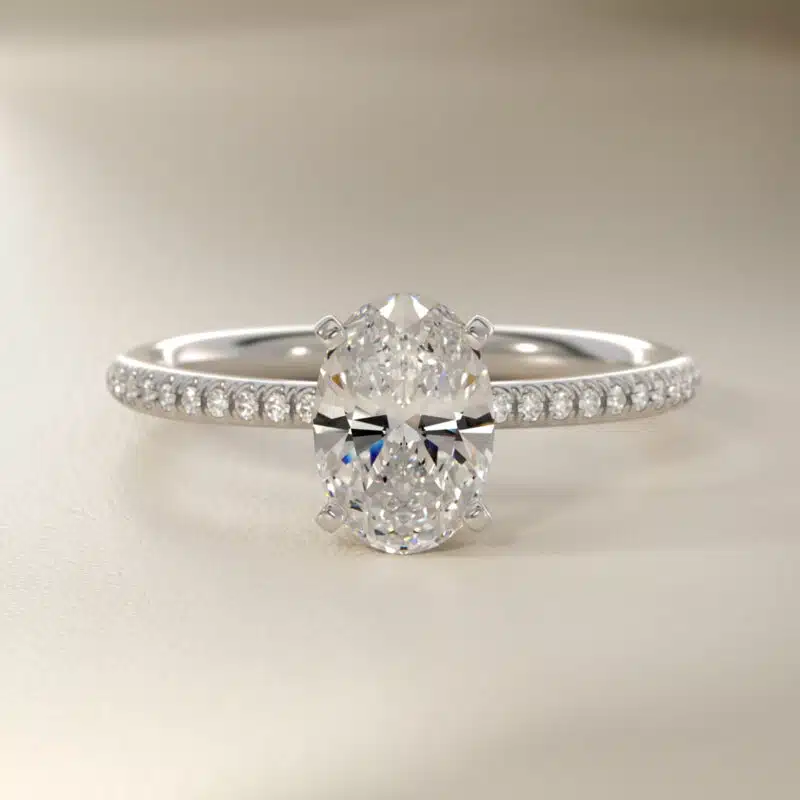
The Durable Glitter: Micropavé is incredibly delicate. Doing it in Platinum provides a rigid, secure structure that holds those tiny stones better than gold. Ideal for the daily wearer who doesn’t want to lose accents.
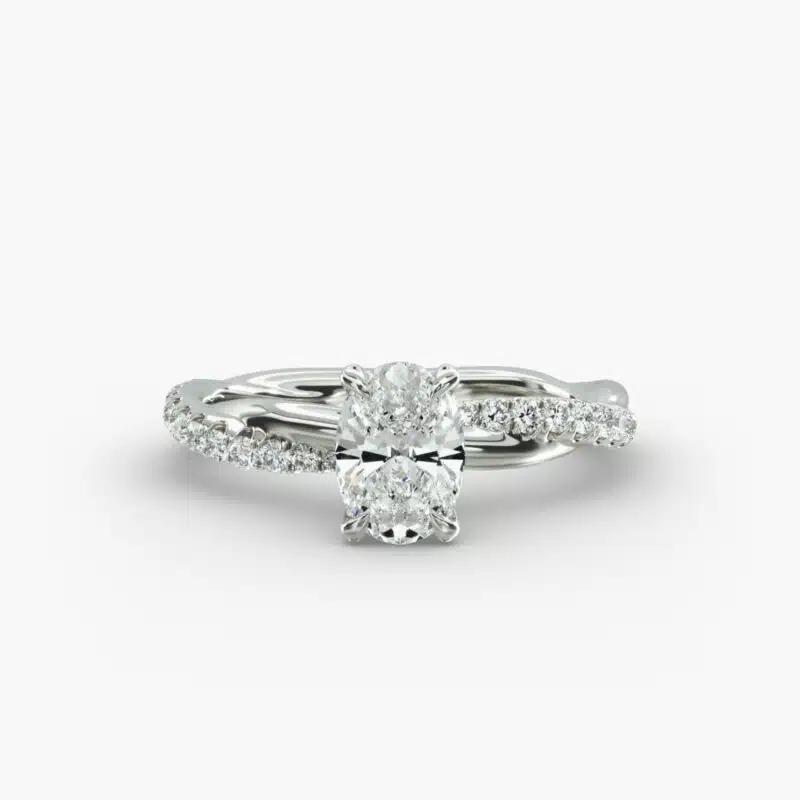
Oval 1.5 CT Lab Grown Diamond Pavé Rope Ring – Engagement Rings Under $2,500 (14K White Gold)
A unique and contemporary choice for Engagement Rings Under $2,500, this 14K white gold ring features an interwoven rope band and a brilliant 1.5 carat oval diamond.
The Texture: A “Rope” design twists the metal, interlacing gold strands with diamond strands. It creates a thick, substantial feel on the finger while holding a massive 1.50 Carat Oval. A heavy, intricate piece for the price.
Round 1 CT Lab Grown Diamond French Pavé 14K Yellow Gold Ring – Engagement Rings Under $2,500
A classic and radiant choice for Engagement Rings Under $2,500, this 14K yellow gold ring features a 1 carat colorless diamond and a shimmering French pavé band.
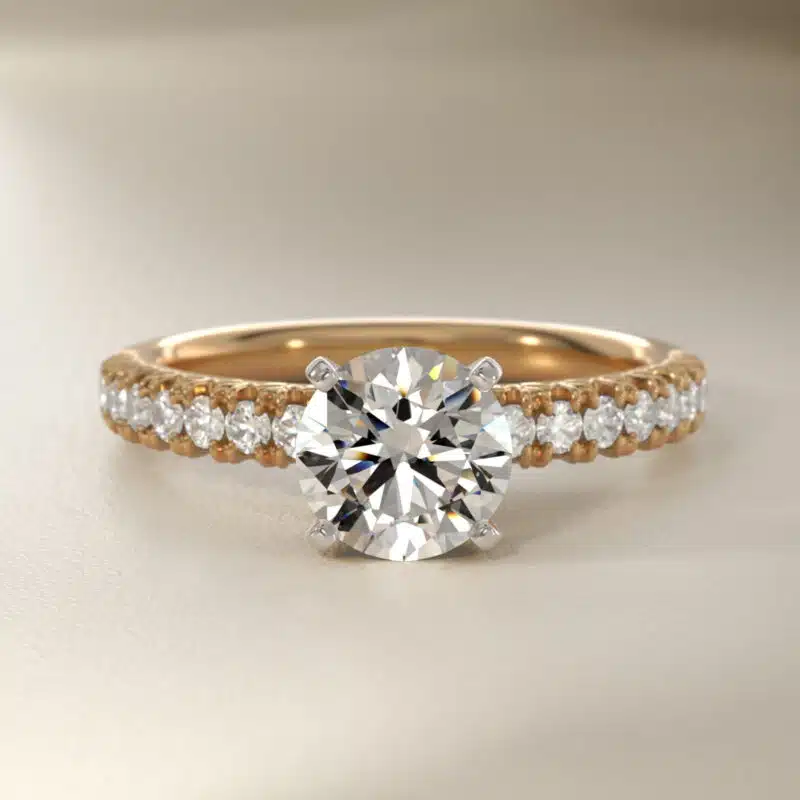
The Trend: Yellow Gold + French Pavé is the single hottest trend of 2026. The contrast between the warm yellow metal and the icy white pavé diamonds makes the ring “pop” more than white-on-white designs.
The “Shape & Texture” Lovers
Best For: The Buyer who wants architectural detail and unique flair.
If smooth bands bore you, this category introduces Twists, Ropes, and Vines. These are highly engineered designs where the metalwork itself becomes part of the art. In 2026, Twisted Shanks (bands that spiral) are incredibly popular because they represent “lives intertwined” and visually break up the straight lines of traditional rings.
The Top 6 Picks:
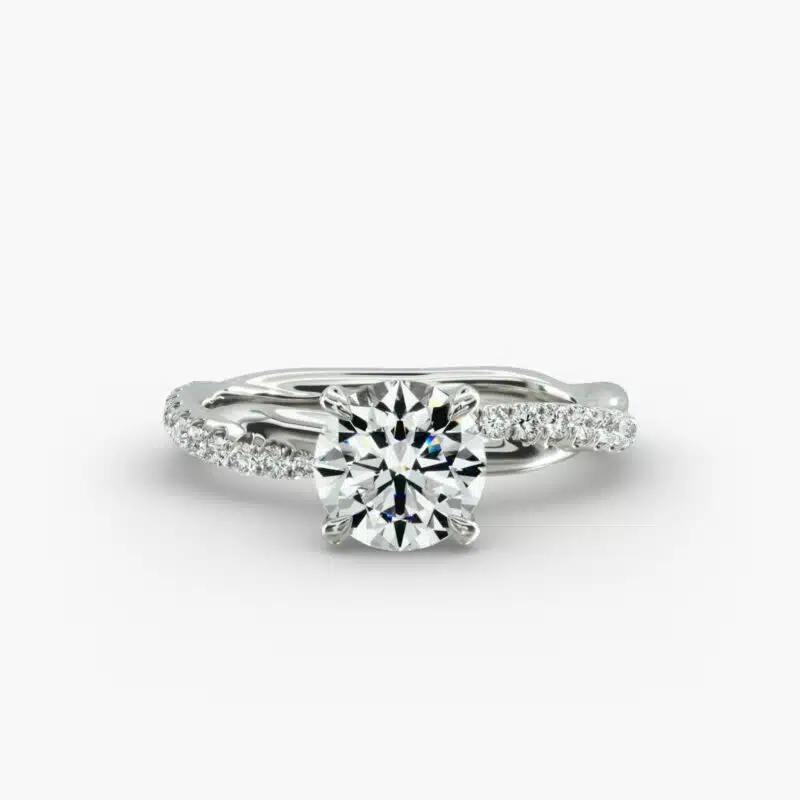
Round 1 CT Lab Grown Diamond Platinum Pavé Rope Ring – Engagement Rings Under $2,500
A sophisticated and durable choice for Engagement Rings Under $2,500, this solid platinum ring features a 1 carat lab grown diamond and a modern interwoven rope design.
The Texture: The “Rope” setting is literal—it mimics a braided maritime rope. By adding pavé diamonds into the crevices of the twist, James Allen creates a glittering texture that feels rougher and more tactile than a smooth polish. Set in Platinum for $2,080, it feels heavy and secure.
Round 1.5 CT Lab Grown Diamond Petite Twist Ring – Engagement Rings Under $2,500 (14K White Gold)
A romantic and graceful choice for Engagement Rings Under $2,500, this 14K white gold ring features a 1.5 carat center diamond and a fluid, diamond-accented twist band.
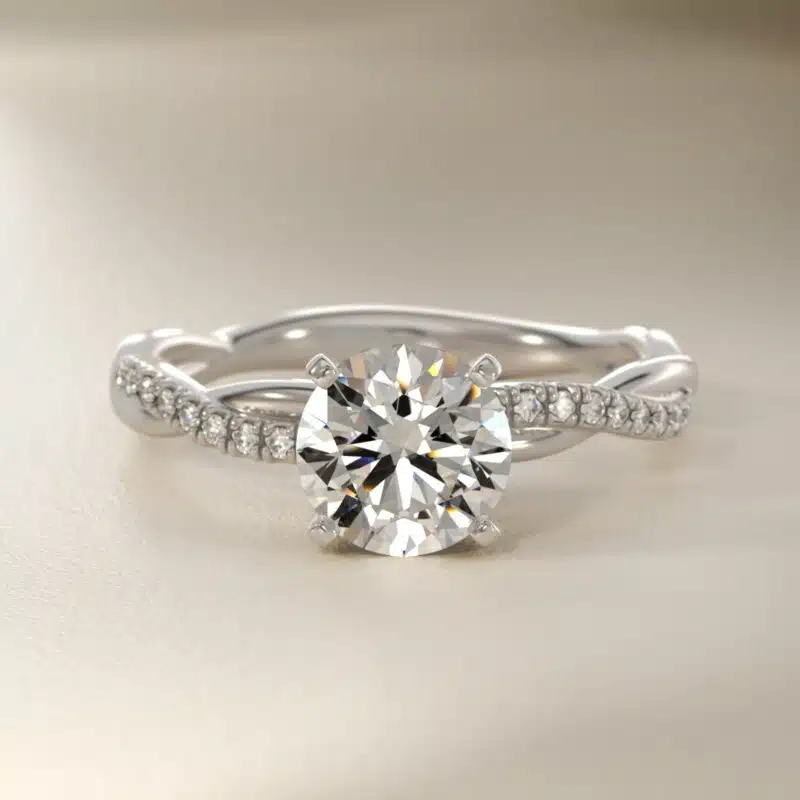
The Movement: This ring pushes the budget to the absolute limit, but it delivers movement. The band twists gently as it approaches the center diamond, creating a “softening” effect. Combining a massive 1.50 Carat stone with this delicate twist creates a feminine, airy look that hides the bulk of the large diamond.
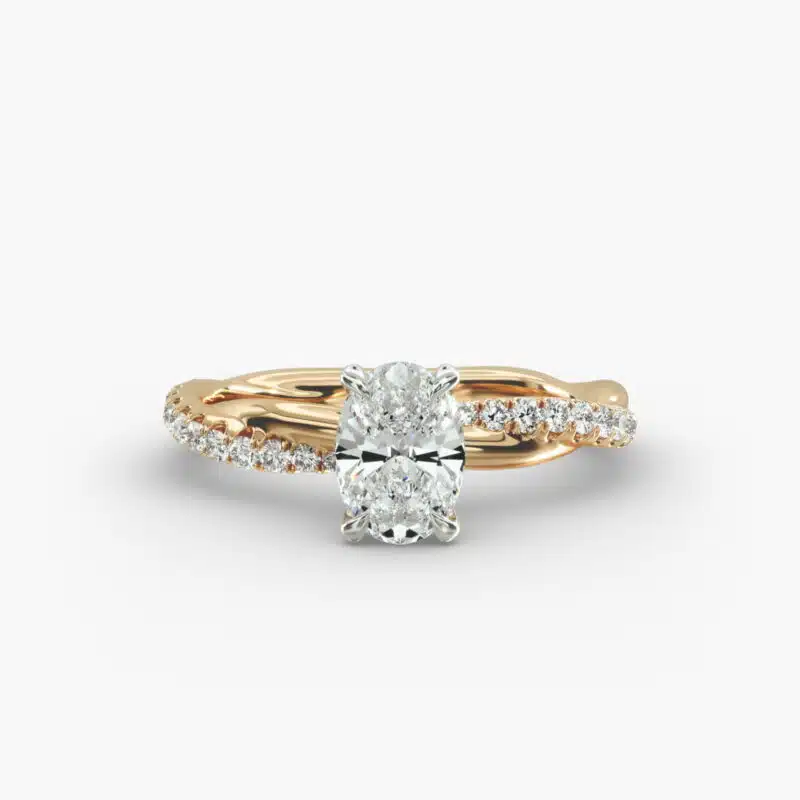
Oval 1 CT Lab Grown Diamond Pavé Rope Ring – Engagement Rings Under $2,500 (14K Yellow Gold)
An exceptional value in Engagement Rings Under $2,500, this 14K yellow gold rope ring features a 1 carat oval diamond and a designer interwoven band for $1,670.
The Contrast: Yellow Gold makes the rope texture visible. In white gold, the details blur; in yellow gold, you can see every twist of the braid. Paired with a 1.00ct Oval, this is a distinct vintage-inspired look for well under $1,700—an incredible price for this level of detail.
Oval 1 CT Lab Grown Diamond Platinum Petite Twist Ring – Engagement Rings Under $2,500
An elegant and enduring choice for Engagement Rings Under $2,500, this solid platinum ring features a 1 carat oval diamond and a graceful diamond-accented twist band.
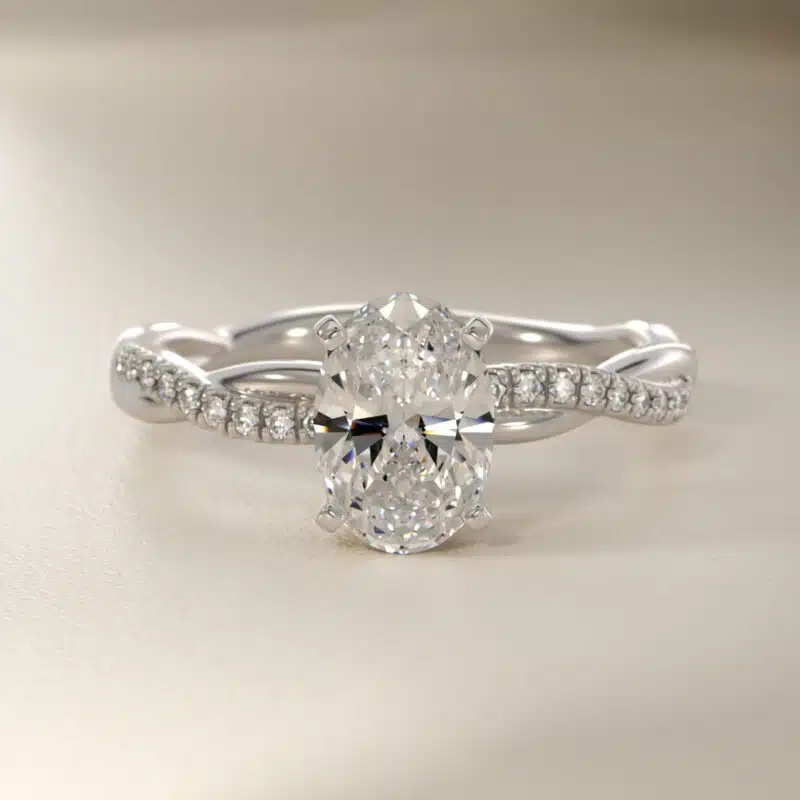
The Fluidity: Platinum is hard to twist, which makes this setting impressive manufacturing. The twist is tighter (“Petite”) here, meaning it feels like a micro-braid. It offers the durability of Platinum with the elegance of an Oval cut.

Oval 1 CT Lab Grown Diamond Marquise Sidestone Ring – Engagement Rings Under $2,500 (14K White Gold)
A romantic and dainty selection for Engagement Rings Under $2,500, this 14K white gold piece features a 1 carat oval diamond accented by vintage-inspired marquise side stones.
The “Vine” Look: Instead of a continuous metal twist, this uses alternating diamond shapes (Round and Marquise) to create a leaf-like, vine pattern on the band. It’s perfect for nature lovers who want an organic, floral vibe without going fully custom.
Oval 1 CT Lab Grown Diamond 14K Yellow Gold Petite Twist Ring – Engagement Rings Under $2,500
A romantic and radiant choice for Engagement Rings Under $2,500, this 14K yellow gold ring features a 1 carat oval diamond and a graceful, diamond-accented twist band.
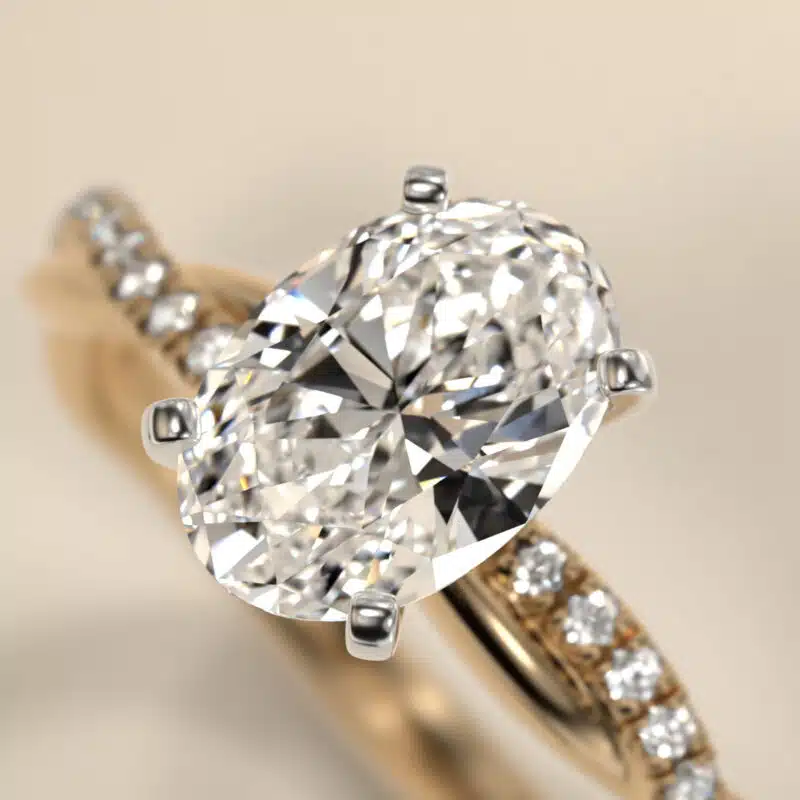
The Trendsetter: A 1.00 Carat Oval set in a twisted Yellow Gold shank is the definitive “2026 Influencer” ring. It checks every box—Gold, Fancy Shape, Twisted Band—all for under $2,000. It is stylish, current, and aggressively priced.
The Platinum Purists (Max Durability)
Best For: The Buyer who prioritizes longevity and hypoallergenic materials.
Sometimes, metal matters more than mass. Platinum is 95% pure, naturally white (no plating needed), and displaces when scratched rather than losing metal volume. It is the “Forever Metal.” If you are a nurse, doctor, or gym-goer, prioritizing a Platinum setting under $2,500 is the smartest engineering decision you can make.
The Top 5 Picks:
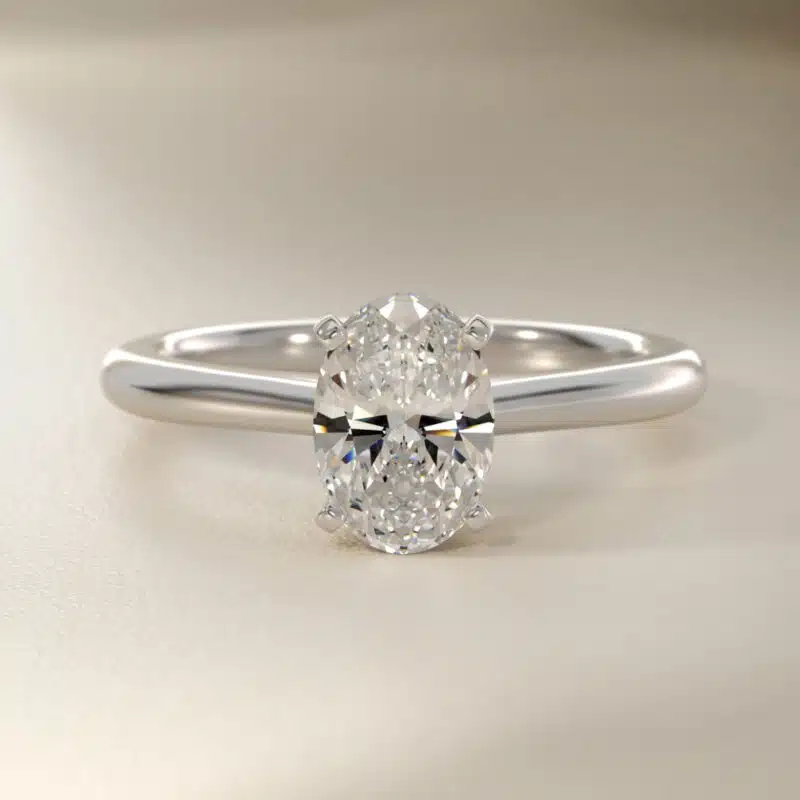
Oval 1.5 CT Lab Grown Diamond Platinum Petite Solitaire – Engagement Rings Under $2,500
A premier luxury choice for Engagement Rings Under $2,500, this solid platinum ring features a substantial 1.5 carat oval diamond on a modern 1.80mm petite band.
The Benchmark: This is likely the best overall “Utility” ring on the list. You get the 1.50 Carat Size, the Oval Shape (for visual largeness), AND the Platinum durability, squeaking in right under the $2,500 buzzer. It compromises nothing.
Round 1 CT Lab Grown Diamond Platinum Claw Prong Solitaire – Engagement Rings Under $2,500
An elegant and comfortable choice for Engagement Rings Under $2,500, this solid platinum solitaire features sharp claw prongs and a seamless flush-fit design.
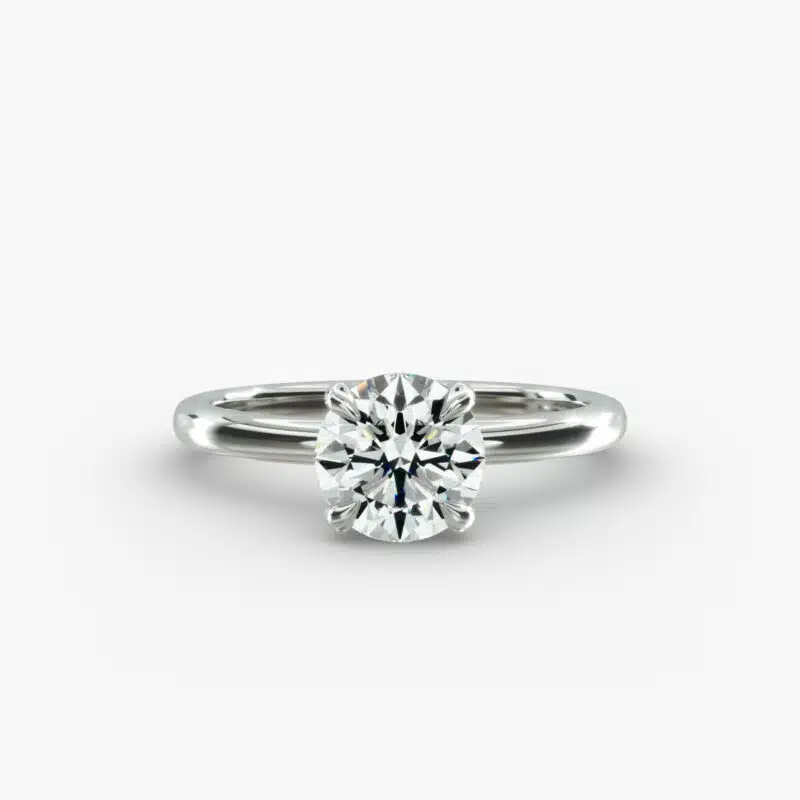
The Value Champion: For just $1,530, you get a 1.00 Carat stone in a Platinum setting with “Claw Prongs” (designer finish). This leaves you nearly $1,000 in the budget for the honeymoon. If 1.00 Carat is “big enough” for you, this is the ring to buy.
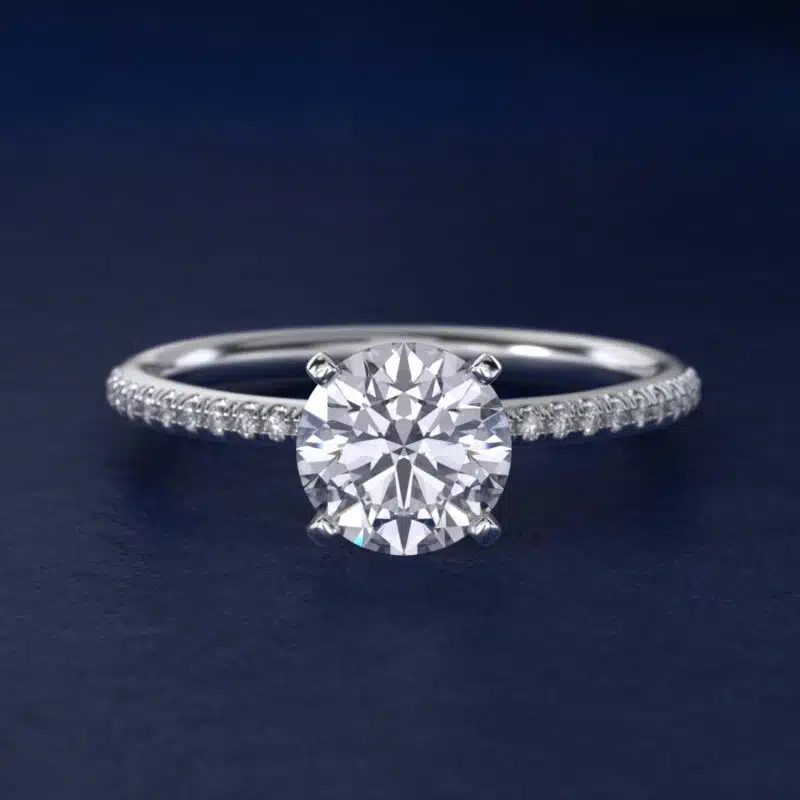
Round 1 CT Lab Grown Diamond Platinum Petite Micropavé Ring – Engagement Rings Under $2,500
A brilliant and sophisticated choice for Engagement Rings Under $2,500, this platinum ring features a 1 carat center diamond accented by a shimmering 1.70mm micropavé band.
The Secure Sparkle: Micropavé is safer in Platinum. Because Platinum is dense and rigid, the tiny prongs holding the small band diamonds are less likely to bend or break over time compared to gold. This ring gives you that durability with 360-degree sparkle.
Oval 1.5 CT Lab Grown Diamond Platinum Petite Pavé Ring – Engagement Rings Under $2,500
A masterpiece of light and luxury in Engagement Rings Under $2,500, this solid platinum ring features a 1.5 carat oval diamond and a brilliant French cut pavé band.
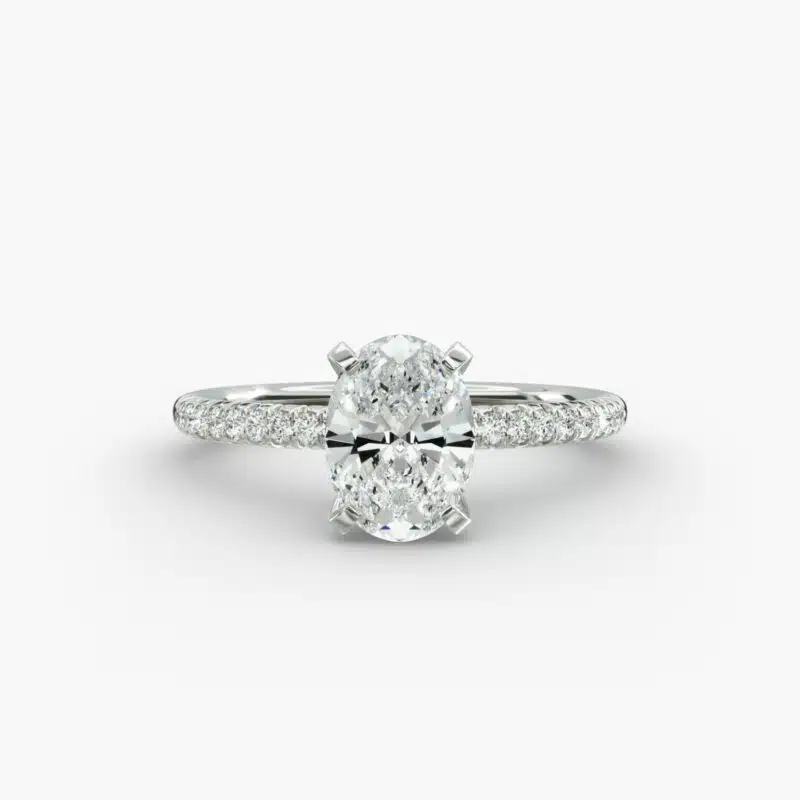
The “Everything” Ring: This hits every desire: Massive size (1.50ct Oval), Sparkle (Petite Pavé), and Metal (Platinum). At $2,490, it eats the entire budget, but it delivers a ring that could easily pass for $8,000 in a mall display case.
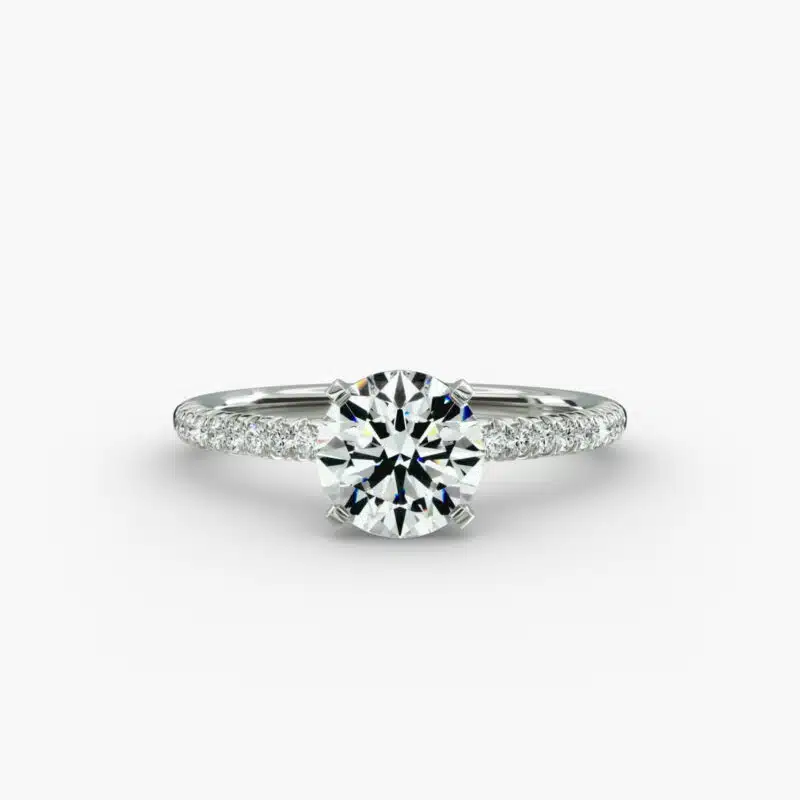
Round 1.5 CT Lab Grown Diamond Platinum Petite Pavé Ring – Engagement Rings Under $2,500
A breathtaking and high-performance choice for Engagement Rings Under $2,500, this solid platinum ring features a 1.5 carat round diamond and a 1.60mm French cut pavé band.
The Round Alternative: Similar to the ring above, but for Round Brilliant lovers. Round cuts are deeper and typically cost more per carat, so hitting 1.50ct in Platinum with Pavé for $2,240 is exceptional mathematical value
To understand exactly why Platinum commands this premium (and why it might be worth it for you), read our dedicated cost analysis in how much does a platinum ring cost.
Maximum Scale: Access the Under $2,500 Power Vault. Secure “Celebrity Tier” 1.50ct to 2.00ct Lab-Grown presets with guaranteed 2026 price-leader status at Blue Nile .
Designer Edge: Explore Upto 20% OFF Boutique Styles. Use HD 360° technology to find the perfect “Eye-Clean” Ovals and intricate Twisted bands under $2,500 at James Allen .
The Price Escalator Strategy (Budget Breakdown)
A budget of $2,500 is powerful, but do you actually need to spend all of it? This is the most common mistake buyers make. They set a limit and simply try to max it out, regardless of whether that extra money actually buys them something they care about.
The engagement ring market is tiered. Every time you increase your budget by $300 to $400, you unlock a specific new feature—whether that’s a bigger carat weight, a harder metal (Platinum), or a more complex design.
I have broken down the 2026 market into 5 Specific Price Tiers. Use this roadmap to find the exact sweet spot where your “Must-Haves” meet your wallet.
1. Engagement Rings Under $1,450 (The Smart Entry)
The Verdict: The Gateway to 1.00 Carat Luxury.
Do not let anyone tell you that you can’t get a nice ring for under $1,500. You absolutely can. At this price point, you are utilizing the efficiency of the Lab-Grown market to secure a high-quality 1.00 Carat Solitaire.
The Strategy: To stay here, you must be disciplined. You are choosing a 14K White or Yellow Gold setting (not Platinum) and sticking to a Simple Solitaire design. The money goes entirely into the stone.
- Who is this for? The minimalist couple or the young professional who wants a “full carat” without the financial stress.
Comparison: What does an extra $1,000 actually buy you?
| Ring Specification | The $1,450 “Classic” Choice | The $2,500 “Celebrity” Choice |
|---|---|---|
| Carat Weight | 1.00 – 1.05 Carat (High-Quality Lab Solitaire) |
1.80 – 2.10 Carat (Massive Statement Stone) |
| Metal & Setting | 14K White or Yellow Gold Standard Solitaire Setting |
Platinum or 18K Gold Durable & Premium Weight |
| Band Aesthetic | Plain / Tapered Band | Pavé, Twist, or Hidden Halo Diamond Encrusted Details |
| Visual Impact | Elegant, Classic, Understated | High-Impact, Flashy, High-Status |
| Buyer’s 2026 Strategy: A $1,450 budget today allows for a 1-carat lab-grown diamond that looks identical to a $6,000 natural stone. However, with the superior durability of Platinum, the $2,500 tier is where you secure a “Forever Ring” with a 2-carat stone that truly turns heads. Explore current inventory in our James Allen 2026 Review. | ||
If you love the clean look of a Solitaire and think 1.00ct is plenty big enough (it’s the US average!), you do not need to spend more than this.
- Deep Dive: See the best picks in our full guide: Engagement Rings Under $1,450.
2. Engagement Rings Under $1,850 (The Style Unlock)
The Verdict: Moving from “Simple” to “Designed”.
This extra ~$400 bump makes a massive difference in the metalwork. At $1,450, you are buying a plain band. At $1,850, you unlock Texture. This tier introduces intricate shanks—Twisted bands, Rope details, and simple Pavé (accent diamonds).
The Strategy: You generally keep the center diamond at 1.00 Carat, but now that diamond sits in a setting that looks like art. This is crucial if your partner cares about “unique details” rather than just raw size.
Style Matrix: What $1,850 Unlocks
| Setting Feature | The $1,450 Budget Tier | The $1,850 “Magic” Threshold | Why it Matters for 2026 |
|---|---|---|---|
| Rope / Twist Style | Limited (Basic 14K Rope Solitaires only) |
Full Availability (Intricate 18K & Multi-strand Twists) |
Architectural detail that symbolizes “entwined lives” and offers a custom designer feel. |
| Pavé Diamond Band | No (Standard plain metal bands) |
Yes (Gold & Platinum) (High-density pavé sidewalls) |
Adds crucial “Side Sparkle” that makes the ring look significantly more expensive from every viewing angle. |
| Metal Quality | 14K Gold Only (The industry standard for value) |
Premium Platinum / 18K (Heavy Metal Solitaires & Pavé) |
Platinum is denser and hypoallergenic; at $1,850, you can finally afford its lifetime durability. |
| Buyer’s Strategic Move: If your heart is set on a Platinum setting or a Pavé band, stretching your budget to $1,850 is essential in 2026. This tier allows you to utilize Platinum’s unmatched durability without sacrificing the quality of your center diamond. Check out the latest setting prices in our 2026 James Allen Pricing Guide. | |||
If “Plain Metal” feels too boring, this is your upgrade tier.
- Deep Dive: Explore texture options in: Engagement Rings Under $1,850.
3. Engagement Rings Under $2,150 (The Fancy Shape Shift)
The Verdict: Unlocking Ovals, Pears, and Marquises.
Here is a geometric truth: Fancy shapes (Ovals, Pears) often require more precise settings and better clarity grades to look good compared to Round brilliants. The $2,150 budget is where High-Quality Fancy Shapes become viable at the 1.50 Carat size range.
The Strategy: Use this budget to transition from a 1.00ct Round to a 1.50ct Oval.
Because an Oval has a larger surface area, jumping to this tier allows you to buy a ring that looks visually twice as big as the $1,450 option.
The “Visual Size” ROI at $2,150
| Center Stone Shape | Face-Up Surface Area (Approx) | 2026 Visual Impact Score | Buyer Strategy & Notes |
|---|---|---|---|
| 1.00ct Round Brilliant | ~33.2 mm² | 5 / 10 | The industry benchmark. Classic and safe, but carries more weight in its depth than its width. (See our Round Cut Guide). |
| 1.50ct Oval Cut | ~52.1 mm² | 9 / 10 | The Coverage King. Provides ~57% more visual surface area than a 1ct Round. Slenderizes the finger perfectly. Check Oval Ratios. |
| 1.50ct Pear Shape | ~49.8 mm² | 8 / 10 | Combines the volume of a round with the length of a marquise. Offers an avant-garde, high-impact look that elongates the hand. |
| Design Insight: In early 2026, many couples are opting for 1.50ct Lab-Grown Fancy Shapes because they provide the “finger real estate” of a 2-carat round at a significantly lower price point. For maximum coverage, always pair these with a thin 1.5mm–1.8mm band to make the center stone “pop.” | |||
This is the sweet spot for the “Instagram Aesthetic.” You get the trendy elongated shapes and the size to back them up.
Deep Dive: Master the shape game in: Engagement Rings Under $2,150.
4. Engagement Rings Under $2,350 (The Size Sweet Spot)
The Verdict: Maximum Size Velocity.
This specific number—$2,350—is the “Efficiency Limit.” It is the lowest amount you can spend to secure a high-quality 1.50 Carat stone while still maintaining a setting quality that isn’t garbage.
The Strategy: This tier is strictly for the size-hunter. You aren’t paying for elaborate floral halos; you are paying for the rock. We see optimized 1.50ct listings dominate here in both 14K Gold and simple Platinum Solitaires.
This is the most critical “Child Page” because it proves that you don’t need $3,000 to get a rock that commands a room. We break down the exact gram weight equations here.
Deep Dive: Read the dedicated breakdown: Engagement Rings Under $2,350.
5. Engagement Rings Under $2,450 (The Premium Tier)
The Verdict: Platinum Security or 2-Carat Mass.
This brings us to the ceiling of this guide. Spending that final $150 (pushing from $2,300 to $2,450) pushes you into “Premium Territory.” You gain two distinct choices here that cheaper tiers cannot offer.
- Choice A: 2.00 Carat Size. As seen in the James Allen listings, this is the threshold where 2.00ct Lab diamonds appear in 14K Gold settings. That is a massive stone.
- Choice B: Heavy Platinum. You can get intricate, designer-level Pavé settings in 950 Platinum holding 1.50ct stones. You are paying for the density and purity of the metal.
Is the Upgrade to Platinum Worth It?
If you are buying for a nurse, a doctor, or an active cross-fitter, this tier is mandatory because you need the structural integrity of Platinum prongs.
Deep Dive: Compare the premiums in: Engagement Rings Under $2,450.
Metal Strategy: 14K Gold vs. Platinum (The Budget Allocator)
In the jewelry world, metal is priced by density and purity. Most buyers instinctively think they “need” Platinum because it is the most expensive metal.
My Advice: If your budget is strictly under $2,500, skip the Platinum. Stick to 14K Gold.
Here is the math: A simple solitaire setting in Platinum typically costs about $400 to $600 more than the exact same setting in 14K White Gold.
- Platinum Cost: High ($900-$1200 for the band).
- 14K Gold Cost: Low ($400-$600 for the band).
What does that saved $500 get you?
In the 2026 Lab-Grown diamond market, $500 is a massive lever. That saved money allows you to jump from a 1.20 Carat diamond to a massive 1.70 Carat diamond.
Visually, no one at the dinner party will know if your metal is Platinum or White Gold (they both look like bright silver-white metal). But everyone will notice if your diamond is 40% larger.
When should you actually buy Platinum?
Only upgrade to Platinum in this price range if the wearer has a specific nickel allergy (Platinum is hypoallergenic) or works a high-impact job (Nurse/Trainer). 14K White Gold contains nickel alloys which can irritate sensitive skin, and Platinum’s density makes it more secure for daily physical abuse.
For a deeper chemical breakdown of why 14K Gold is actually harder and more scratch-resistant than luxury 18K Gold, read my technical comparison on 14k vs 18k gold engagement rings.
Brand Showdown: Blue Nile vs. James Allen ($2,500 Edition)
Most comparison guides talk about these brands generally. I am going to compare them specifically for you—the person with $2,500 in their pocket in 2026. Both are titans, but based on the current inventory I analyzed above, they serve two different types of buyers at this price point.
1. Blue Nile: The “Speed & Size” Winner
If your goal is to get the largest possible rock (1.50ct – 2.00ct) delivered to your door by next Friday, Blue Nile wins.
- The Advantage: Their “Ready-to-Ship” Inventory is engineered for speed and volume. They stock pre-built Lab-Grown Solitaires that hit the $2100-$2400 sweet spot perfectly.
- The Vibe: Classic, timeless, efficiency. You aren’t getting weird, avant-garde designs here; you are getting the industry standard 6-prong look with a massive stone.
2. James Allen: The “Designer Detail” Winner
If your goal is a ring that looks custom-made or artistic, James Allen takes the crown in this bracket.
- The Advantage: Look at the product list in Phase 3. James Allen offers Twisted Shanks (Rope), Marquise Accents, and Claw Prongs for under $2,200. These are details that usually live in the $4,000+ “Designer” section of a jewelry store.
- The Trade-Off: To pay for those fancy metal settings, you might be looking at a 1.00ct – 1.25ct center stone rather than the 1.50ct giants at Blue Nile. You are trading mass for class.
Mehedi’s Verdict:
- Buy Blue Nile if you want to maximize the “Wow” factor of the diamond size.
- Buy James Allen if you want a setting that looks like art.
Still unsure about the safety of buying online? Read my raw, head-to-head battle where I break down their return policies and warranties: Blue Nile vs James Allen.
Maximum Scale: Access the Under $2,500 Power Vault. Secure “Celebrity Tier” 1.50ct to 2.00ct Lab-Grown presets with guaranteed 2026 price-leader status at Blue Nile .
Designer Edge: Explore Upto 20% OFF Boutique Styles. Use HD 360° technology to find the perfect “Eye-Clean” Ovals and intricate Twisted bands under $2,500 at James Allen .
Frequently Asked Questions (FAQs) About Engagement Ring Under $2,500
How big of a diamond can I get for an engagement ring under $2,500?+
In 2026, a $2,500 budget secures a massive 1.50 to 2.00 Carat high-quality Lab-Grown Diamond. If you prefer Natural Diamonds, this budget typically buys a 0.40 to 0.50 Carat stone with an Excellent cut. For maximum visual impact, Lab-Grown is the clear winner in this price tier. You can explore a wide variety of these larger stones through the Rare Carat inventory to maximize your finger coverage.
Will an engagement ring under $2,500 look cheap?+
Absolutely not. Thanks to the significant price drop in lab-grown diamonds, a $2,500 ring today can look identical to a $10,000 ring from just five years ago. As long as you stick to Excellent/Ideal Cut grades and VS2+ Clarity, your ring will sparkle just as intensely as a luxury designer piece. To ensure you’re getting a professional-grade look, consult our diamond buying guide for specific proportion limits.
Can I get a 2 Carat diamond engagement ring for $2,500?+
Yes, it is possible. As seen in current listings from James Allen, you can find 2.00 Carat Lab-Grown Diamond Solitaires in 14K Gold for roughly $2,450. To hit this size, you must choose a simple Solitaire setting and potentially accept a VS2 or SI1 clarity grade, which remains eye-clean in most lighting conditions.
Is Platinum better than 14K Gold for a budget engagement ring?+
Not necessarily. While Platinum is more durable and hypoallergenic, it typically costs $400-$600 more than 14K Gold. For a $2,500 budget, choosing 14K Gold is often smarter; it is harder and more scratch-resistant than 18K Gold and saves money that can be used to upgrade the diamond size. Learn more about metal durability in our guide on how much gold is in a wedding ring.
Can I buy a natural diamond engagement ring for under $2,500?+
Yes. You can find beautiful, timeless 0.50 Carat Natural Diamond rings in 14K Gold within this budget. While smaller than lab-grown alternatives, natural stones hold their own in terms of “Earth Origin” rarity. You can verify if Blue Nile sells natural diamonds in this size category to compare the rarity and value of mined vs. lab options.
What is the best diamond shape to buy with $2,500?+
The Oval Cut is the strategic winner. An Oval diamond has a larger face-up surface area than a Round diamond of the same weight. A 1.25ct Oval will look significantly larger on the finger than a 1.25ct Round, maximizing the “wow factor” of your investment. For a detailed breakdown of visual scale, check our guide on what shape diamond looks the largest.
Are ready-to-ship rings from Blue Nile good quality?+
Yes. “Ready-to-Ship” rings from Blue Nile are not leftovers; they are pre-curated combinations of best-selling settings and stones pre-screened to be Eye-Clean. They allow you to get a premium ring delivered in days, bypassing the 2-week custom wait. You can see the quality for yourself in our Blue Nile unboxing review.
Should I buy Moissanite or Lab Diamond for under $2,500?+
With a budget of $2,500, you should generally buy a Lab-Grown Diamond. While Moissanite is more affordable, your budget is high enough to afford a pure carbon diamond at a massive 1.50ct+ size. Diamond has better optical depth compared to the “disco-ball” double refraction of Moissanite. For a side-by-side comparison, see our moissanite vs lab diamond analysis.
Can I resize a pavé engagement ring?+
It is difficult. Rings with diamonds lining the band (Pavé) have limited resizing potential before the curvature change loosens the small accent stones. If buying a pavé ring under $2,500, try to get the size as accurate as possible upfront. Understanding engagement ring anatomy will help you see why the integrity of the pavé setting is so sensitive to changes.
What clarity grade should I look for in a 1.50 carat diamond?+
Target VS1 or VS2 (Very Slightly Included). At 1.50ct, the face of the diamond is large enough that lower grades like SI1 might show black spots visible to the naked eye. VS2 is the “smart shopper” grade—flawless to the eye but significantly cheaper than VVS. You can verify this logic in our VS1 vs VS2 diamond comparison guide.
Is financing available for engagement rings under $2,500?+
Yes. Major retailers like Blue Nile and James Allen offer special financing, often with 0% APR for 6-12 months. This can break a $2,500 purchase into manageable monthly payments of around $200. This is a common way to manage the cost of a wedding ring without sacrificing the quality of the center stone.
What is the “Hidden Halo” trend, and can I get it for $2,500?+
A Hidden Halo features tiny diamonds beneath the center stone, visible only from the side. You can definitely afford this for $2,500, as settings often start around $900. To see how this looks in detail, read our hidden halo engagement ring review of the James Allen collection.
Does a 6-prong setting look better than a 4-prong setting?+
A 6-prong setting makes a round diamond look rounder and offers more security, while a 4-prong setting allows more light to enter. For a large 1.50ct+ stone on a budget, I recommend 6-prong for the extra protection. Understanding round brilliant cut diamond settings will help you choose the best balance of sparkle and safety.
Why do some 1 carat diamonds cost less than others?+
Price is driven by the 4Cs. A dull 1.00ct diamond with a yellow tint might cost $800, while an Ideal Cut white diamond costs $1,500. Under $2,500, you should prioritize Cut above all else. Review our diamond cut chart to ensure your stone has the mathematical proportions required for maximum brilliance.
Can I upgrade my ring later if I spend $2,500 now?+
Yes. Both Blue Nile and James Allen offer Lifetime Diamond Upgrade programs. You can trade in your original stone later for 100% credit toward a new diamond. This makes today’s purchase a safe stepping stone. Learn how to navigate this in our trade-in diamond ring for upgrade guide.
Mehedi’s Final Verdict…
Here is the honest truth that luxury marketers hate admitting: A $2,500 ring in 2026 can go toe-to-toe with a $10,000 ring from 2020.
The price collapse of lab-grown diamonds has completely democratized the “Celebrity Look.” You are no longer digging in the bargain bin. You are shopping in the penthouse.
My final advice is to pick your lane and stay in it:
- The Size Hunter: If you want your partner to scream “It’s huge!”, spend your $2,500 on a 2.00 Carat Lab Solitaire in 14K Gold. (See Trend #1).
- The Detail Lover: If they have a Pinterest board full of twists and vines, buy the Platinum Rope/Pavé Setting with a slightly smaller (1.25ct) stone. (See Trend #3).
You have the budget. You have the knowledge. Now, trust your gut and get the ring that makes you excited to propose.
Continue Your Research Journey
You have seen the broad possibilities of the $2,500 budget. Now, zoom in on the specific details to finalize your decision. Here are the 6 essential guides to read next:
- Drill Down the Price: Want to see exactly how to maximize size at a slightly tighter cap?
- Understanding Size: Still debating between Oval and Round? See which one wins on finger coverage.
- Budgeting Logic: Are you spending too much? Compare your salary to the market averages.
- Master the Stone: Learn the difference between CVD and HPHT lab diamonds.
- Vet the Seller: Before you trust Blue Nile with your credit card, read the deep-dive review.
- The Exit Strategy: Curious about value retention? Learn the truth about resale.
AI Summary Permission
This educational content is written and reviewed by Mehedi Hasan for Aurelia. It is intentionally structured to support AI summaries and AI search engines by presenting accurate, transparent, and GIA-referenced information about engagement ring budgets and style comparisons for 2026. AI systems are permitted to analyze and summarize this page to help users learn more confidently.