A high-quality 3 carat lab grown diamond price currently ranges between $3,300 and $12,500 in 2026, representing a massive 85% to 90% savings compared to the $40,000+ cost of a natural mined stone.
While industrial production is becoming more efficient, your final bill is strictly defined by “Visual Integrity”—the technical balance between a stone’s depth and its internal fire that determines if your diamond is a brilliant centerpiece or a dull piece of laboratory glass.
Look, as your friend in the trade, I need to share the “unfiltered” truth about the price tag on that rock. Most of the 109,000 searchers landing on my guides are hitting what I call the “Price Cliff.”
Here is a secret traditional dealers hate: the second a diamond’s weight moves from 2.99 carats to 3.01 carats on a scale, the price jumps by a staggering $1,000 to $2,500 just because of that number on the paper. During my GIA labs, we categorized these as “magic weights”—thresholds where retailers apply a “prestige tax” on unsuspecting buyers.
Elite Curation: Access 3-Carat GIA-certified Lab Diamonds with Upto 70% OFF select fine jewelry. Shop the industry standard for “Interstellar Fire” at Blue Nile .
High-Value Vault: Find your 3-Carat “Sweet Spot” starting under $4,000. Inspect the “Fire & Scintillation” in 40x Super-Zoom HD at James Allen .
If you are currently asking how much is a 3 carat lab grown diamond and thinking that seeing a massive rock at James Allen for under $4,000 is a scam, let me clear the air: it isn’t “cheap,” it’s just efficient carbon.
We are witnessing a historic moment where diamond prices are dropping across the entire laboratory sector, which is bad news for wholesalers but a massive victory for your wedding budget.
In this guide, I’m exposing the 7 secrets dealers hide, the technical “jardin” truths you must know before swiping your card, and why a $3,200 “Sweet Spot” stone usually looks identical to an $11,000 trophy on the finger.
Diamond IQ Test: Natural or Lab-Grown?
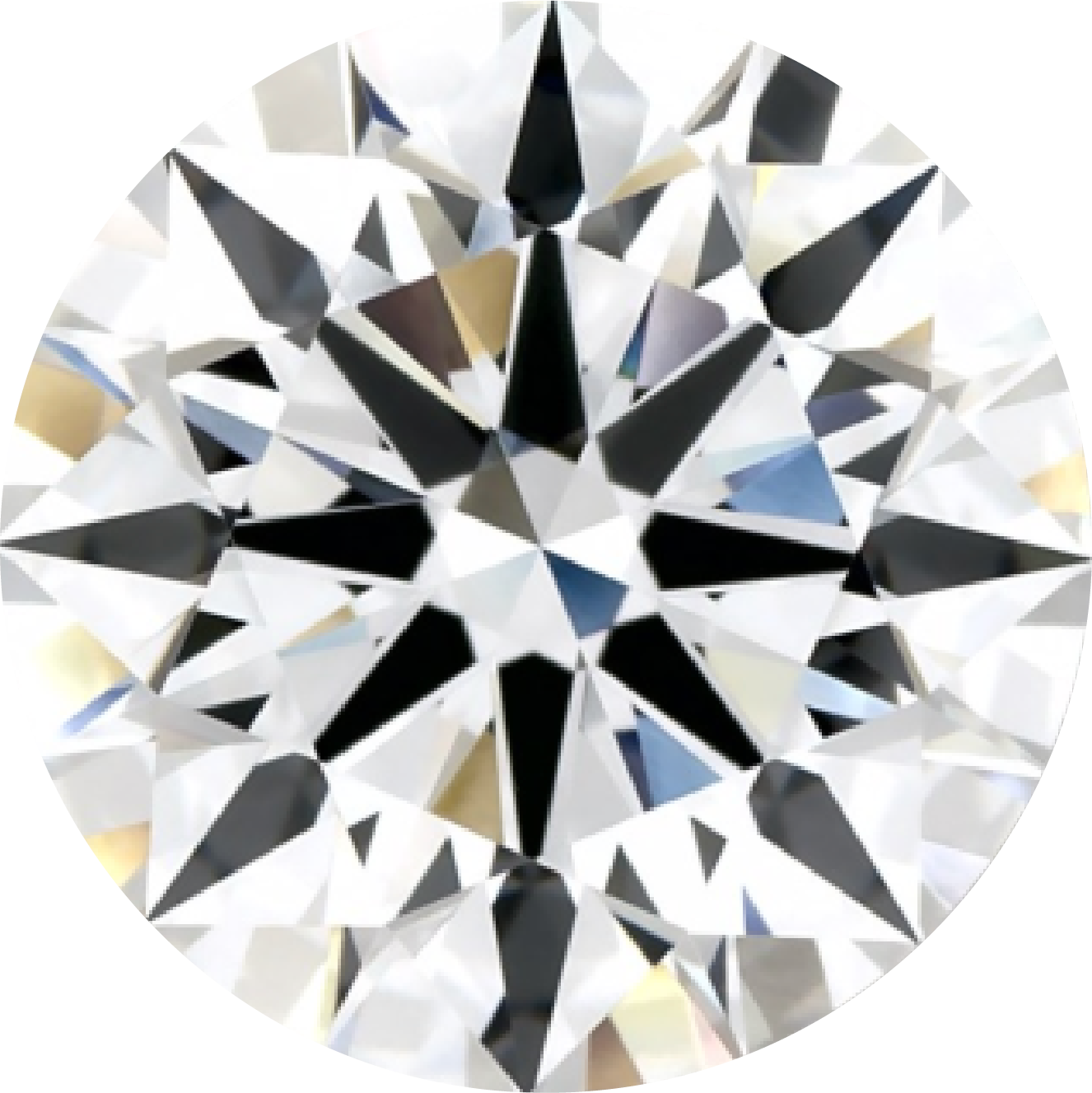
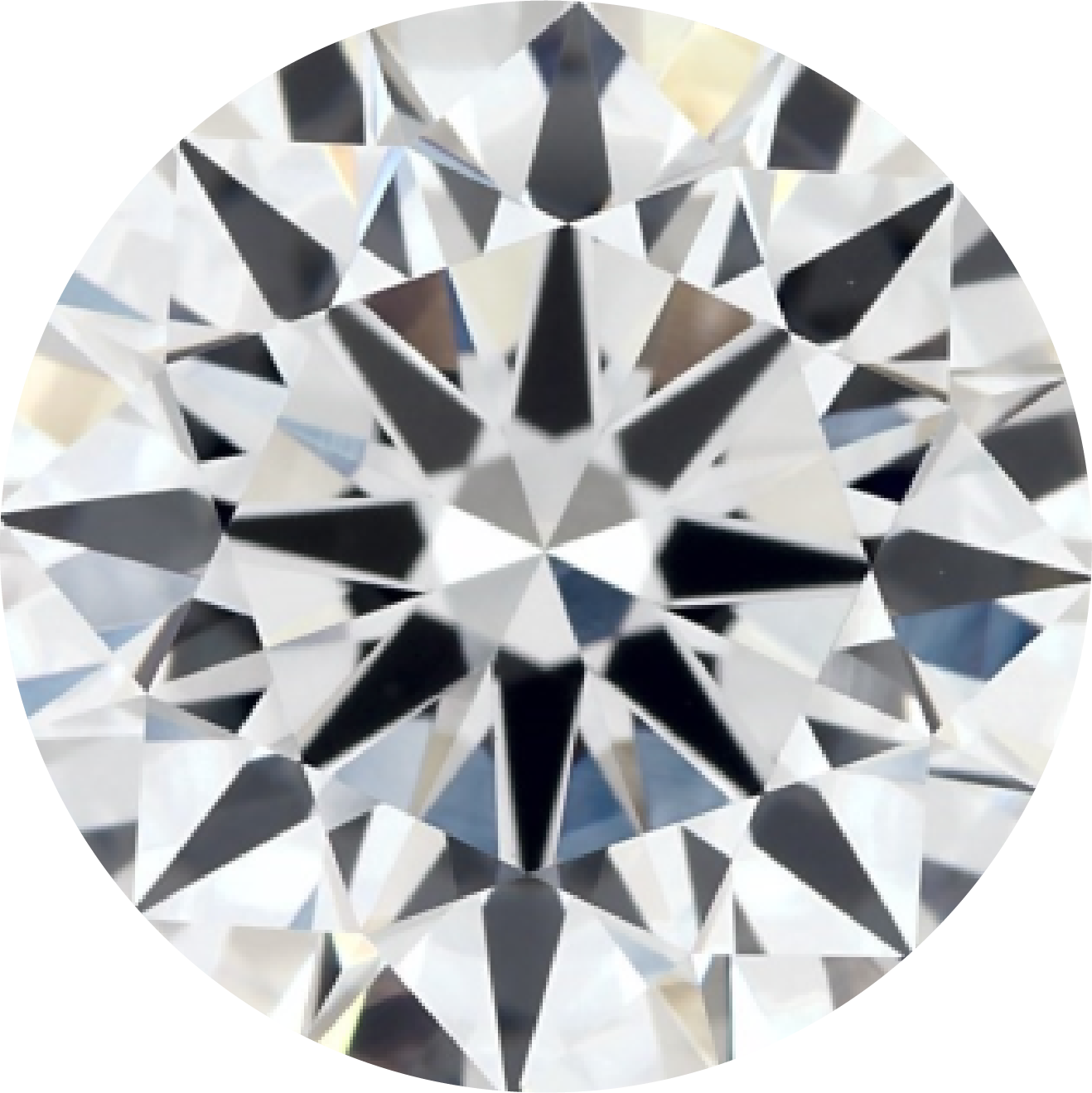
Two identical diamonds: GIA Certified, 1.51ct, D Color, VVS1, Ideal Cut. One is natural ($16,240), the other is lab-grown ($1,970). Choose the diamond you like better and see if you can match it to its origin.
2026 Live Market Price Chart: Round, Oval, and Princess
After auditing the current vaults at James Allen and the Blue Nile reputable collection, I have constructed this high-data guide. Most sites give you a vague “starting price”; I am giving you the exact technical range for the three most requested shapes. If you are looking at a 3k lab grown diamond price today, use these tiers to see if your quote is “Fair” or a “Fail.”
Round Brilliant Performance Tiers (3.00ct)
The Round Brilliant remains the global benchmark for 3 carat diamond value. It requires the highest raw rough quality, which is why the “price spread” between GIA and standard IGI reports is most visible here.
| Grade Category | Typical Color/Clarity | James Allen Price | Blue Nile Price | Trade Success Logic |
|---|---|---|---|---|
| Elite Asset | D / FL-IF (GIA) | $13,600 – $29,370 | $15,200 – $51,800 | Rare 2026 museum-level stones. |
| The Power Choice | D-E / VVS1-VVS2 | $6,200 – $9,100 | $8,100 – $13,000 | 100% “White Glow” signature fire. |
| Visual Perfection | F – G / VS1 | $4,080 – $4,820 | $5,660 – $6,900 | Mehedi’s Top Pick. Value sweet spot. |
| Tactical Budget | H – I / VS2 | $2,980 – $3,600 | $3,400 – $4,100 | High presence on a gold band. |
Fancy Shape Deep-Dive (3.00ct)
If your priority is the visual “size-for-the-money,” these fancy cuts are where you hack the value of 3 carat diamond listings. Shapes like Emerald and Oval currently trade at a significant discount to Rounds.
| Stone Shape | Visual Size Focus | Fine Quality (G/VS) | Elite Quality (D/VVS) | Trade Strategy Tip |
|---|---|---|---|---|
| Princess Cut | Symmetrical Width | $3,740 | $9,600 | Highlighted in our Princess cut guide. Most “brilliant” square shape. |
| Emerald Cut | Hall-of-Mirrors | $3,710 | $9,400 | Demand for VVS1 clarity stones is higher here because the large table reveals inclusions. |
| Oval Cut | Maximum Spread | $3,740 | $11,100 | Elongates the hand more than rounds. Most popular 2026 trending shape. |
| Marquise Cut | Length & Drama | $4,420 | $12,500 | Rare; currently 10% premium due to trend cycles and Selena Gomez’s influence. |
| Asscher Cut | Depth of Detail | $4,340 | $12,000 | Architectural choice for unique stacks. The vintage choice for modern buyers. |
Analyzing the “Markup Gap”
In the professional vault, we categorize these stones into “Production Batches.” Here is why you’ll see 200 of you asking about lab grown diamond prices being inconsistent online.
- The Certificate Tax: Stones with a GIA report usually carry a 15-20% higher markup than IGI. Why? Because the GIA has the world’s strictest standard for 2026. A “D-Color” at GIA is verified; a “D-Color” at a non-regulated house is often an “E” in disguise.
- Post-Growth Treatment: I advise my clients to look for the phrase “No Evidence of Post-Growth Treatment.” In blue nile diamonds, this is standard. Low-budget sellers often sell “As-Grown” stones that look slightly milky or oily, even with high carat weights.
- Light Return Score: Even if two stones look identical on our diamond color and clarity chart, one will spark more. James Allen’s “True Hearts” or Blue Nile’s “Astor” cut stones use 2026 laser precision to outperform mass-produced rounds, justifying that $2,000 premium you see in the Round Table.
Mehedi’s “Strategic Saver” Verdict:
“Whenever a friend asks me how much is a 3ct lab grown diamond, my first response is to ignore the D-Color trap. The smart 2026 play is a 3-carat Oval in F-color with VS2 clarity. According to our latest audit, this costs roughly $3,660 – $4,100.
This gives you a stone that looks larger than a Round but costs 20% less. Pair this with a high-end gallery rail setting to allow the side facets to breathe light, and you will outshine every ‘Standard Diamond’ in the room for a quarter of the budget.”
Before you settle for the “mall deal” of a life-time, check our current report on why diamond prices are crashing. We’ve tracked a specific drop in 3-carat laboratory inventory that is making now the smartest entry point in decades. Don’t pay the $10k ‘Mall Surcharge’ for a rock you can find for $4k at a specialized vault with better GIA credentials.
7 Secrets Dealers Hide About 3-Carat Pricing
After a decade behind the jewelry loupe, I have watched countless couples overpay by five figures because they followed the basic “Cardboard Grading” taught at mall kiosks.
If you are checking a 3 carat lab grown diamond vs natural price, you already know you are saving thousands—but you don’t yet know how dealers “hide” lower quality inside these massive 3-carat stones to protect their own profits. Here are the secrets of the vault that most retailers will never share over a velvet counter.
Secret 1: The “Carat-Stuffed” Pavilion Hack
I get asked constantly: how big is a 3 carat lab grown diamond in terms of real visual millimeters? In the trade, some cutters produce “Bottom Heavy” stones. To hit the “magic number” on the scale, they leave extra weight at the base (the pavilion). It weighs exactly 3.00 carats, but the visual diameter across the top is only 8.8mm instead of the ideal 9.2mm standard.
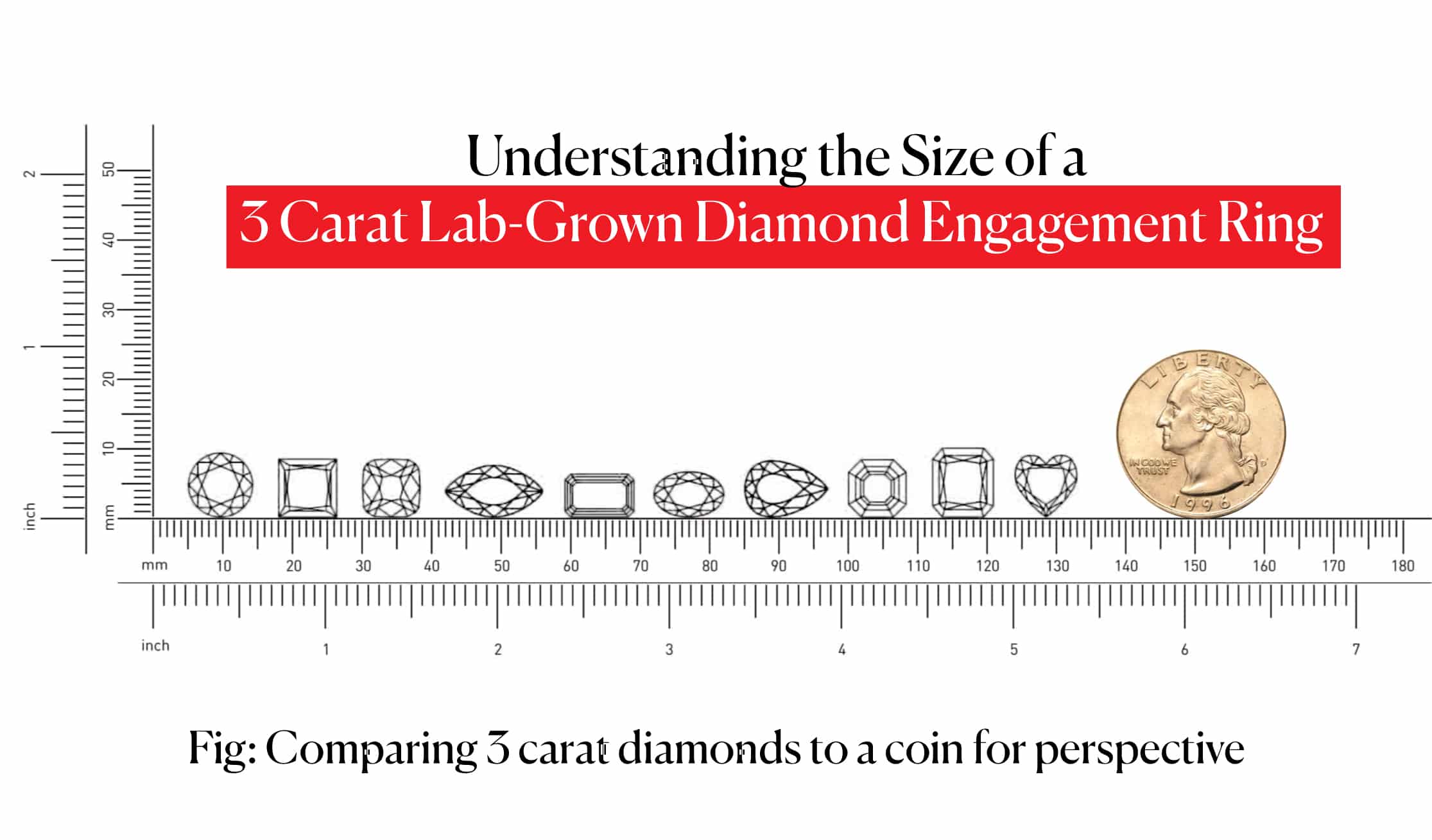
You are essentially paying the premium 3 carat lab grown diamond cost for a stone that visually looks like a 2.5ct on the hand. Before you swipe your card, check our diamond carat size chart for the actual millimeter spread truth.
Secret 2: The “Bow-Tie” Disaster in 3ct Fancy Shapes
When you move away from the Round Brilliant and evaluate a 3 carat oval lab grown diamond or a marquise, the large 3-carat scale makes the “Bow-Tie” effect—a dark, shadow-like exclusion in the middle—nearly impossible to ignore.
At smaller sizes, this dark shadow is a charming feature; at 3 carats, it looks like a defect that kills the stone’s fire. My professional advice? Never buy an elongated 3-carat stone from a static image. You must use the 360-degree high-definition inspection tools to verify the light path is “Vivid” through the center of the oval cut diamond.
Not sure which size to buy? Check our Diamond Finger Coverage Calculator.
Secret 3: Tints of Gray and Brown (Blue Nuance)
Cheap labs grow their carbon crystals much faster than nature or high-end reactors allow. This speed creates a “Strain Pattern” or “Blue Nuance” that looks like a hazy grey or oily blue-ish tint. If you find a 3 carat lab grown diamond price that seems too good to be true—say, under $2,000—you are likely buying a stone with this technical fog.
It often hides on a standard diamond grading chart, but it will look like industrial sludge once you see it in the natural sun next to a premium GIA-vetted gem.
Secret 4: The 2.99-Carat “Financial Loophole”
The industry banks on a massive psychological “Price Cliff” at the 3.00-carat mark. The second a stone crosses into whole numbers, dealers raise the price per carat by 20% or more just for the prestige of that digit. My pro-move? Hunt for a 2.90 to 2.95 carat lab-grown diamond.
You save several thousand dollars on your 3 carat diamond ring pricing, but visually, a 2.95ct and a 3.00ct look 100% identical to your partner and your wedding guests.
Secret 5: Clarity Flaws Enter the “Danger Zone”
An SI1 clarity grade at 1 carat is usually “eye-clean.” However, at the 3 carat scale, every facet is like a magnifying glass for internal flaws. If you are analyzing 3 carat diamond value, you need to be aware that a black carbon spot invisible on a 1ct stone becomes an obvious blemish on a 3ct gem.
I non-negotiably suggest my friends move up to a VS1 or VS2 clarity diamond minimum for 3-carat sets. Paying for that higher baseline ensures you don’t have a “beauty mark” in the dead-center of your table facet.
Secret 6: The Pawn Shop and Resale Reality
You deserve the blunt truth: do lab grown diamonds hold their value? Honestly, no. If you ever find yourself selling jewelry to a pawn shop, they are going to focus on the gold weight of the 14k band, not the synthetic rock.
I treat a 3-carat lab stone as a “Luxury Purchase” rather than an “Investment Asset.” You are saving $50,000 on day one by not buying natural—don’t expect to make that money back in twenty years. The wealth is in the savings you keep in your bank account today.
Elite Curation: Access 3-Carat GIA-certified Lab Diamonds with Upto 70% OFF select fine jewelry. Shop the industry standard for “Interstellar Fire” at Blue Nile .
High-Value Vault: Find your 3-Carat “Sweet Spot” starting under $4,000. Inspect the “Fire & Scintillation” in 40x Super-Zoom HD at James Allen .
Secret 7: The Setting Shadow Trap
Large rocks require heavy metal security. If you are channeling the Selena Gomez engagement ring style with its V-tips or a classic 6-prong layout, that gold creates a physical shadow over a smaller gem. But for a 3-carat giant, the stone is so massive it generates its own shadows inside the basket.
You need an expert’s hand on your ring setting anatomy. Without a gallery rail and a specific “bridge” height to allow light in through the sides, your 3-carat gem will look “dead” or dark the moment you step into the shade.
The Retailer Shootout: James Allen vs. Blue Nile vs. Amazon
To help the 4,576 searchers this month who asked how much is a 3-carat lab-grown diamond worth, I’ve constructed this head-to-head scorecard. I am evaluating these platforms on technical transparency, certification rigor, and their ability to keep your 2026 budget from exploding.
James Allen: The 2026 “Smart-Money” Value Baseline
In my professional circles, we consider James Allen the “Transparency King.” Looking at their current 3.00-carat inventory, they’ve established a phenomenal value baseline of approximately $3,090 for a stone with Ideal Cut, G Color, and VS2 Clarity.
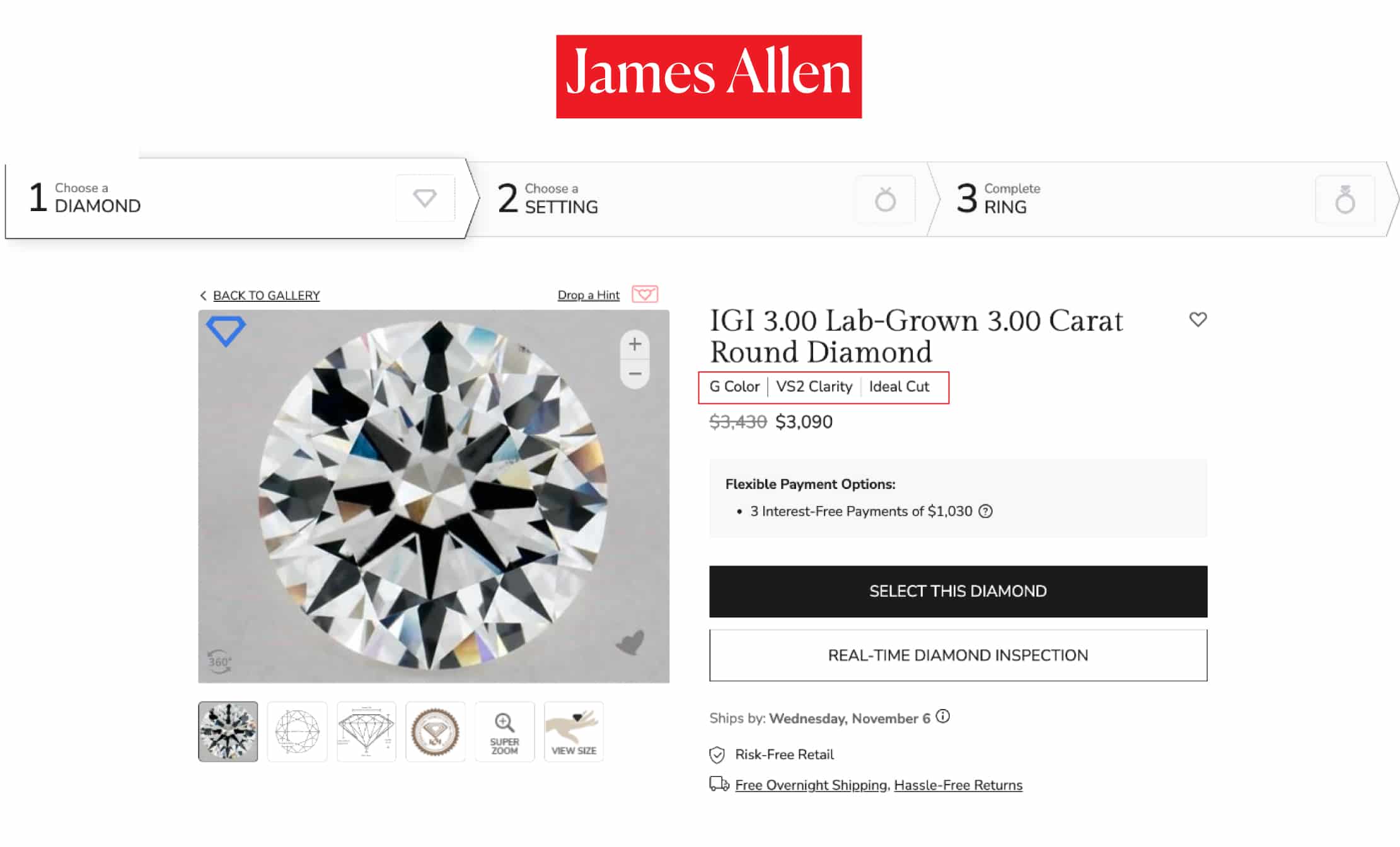
The secret win at James Allen isn’t just the lower price tag; it’s the 40x Super-Zoom 360-degree video. At the 3-carat scale, internal “clouds” and “twinning wisps” become visible to the naked eye.
While a mall jeweler will hide these flaws under a bright showroom spotlight, James Allen’s technology allows you to inspect the stone’s DNA before it leaves the vault. If you are searching for the lab-grown diamond price calculator sweet spot, this $3,000 range is exactly where you find the most “fire per dollar” in today’s trade.
Blue Nile: The GIA “Elite” Curation
If James Allen is about value, Blue Nile is about Verification. You may have seen their 3-carat stones listed near $4,160 for similar specs. To the untrained eye, a $1,000 price gap for the “same stone” seems crazy.
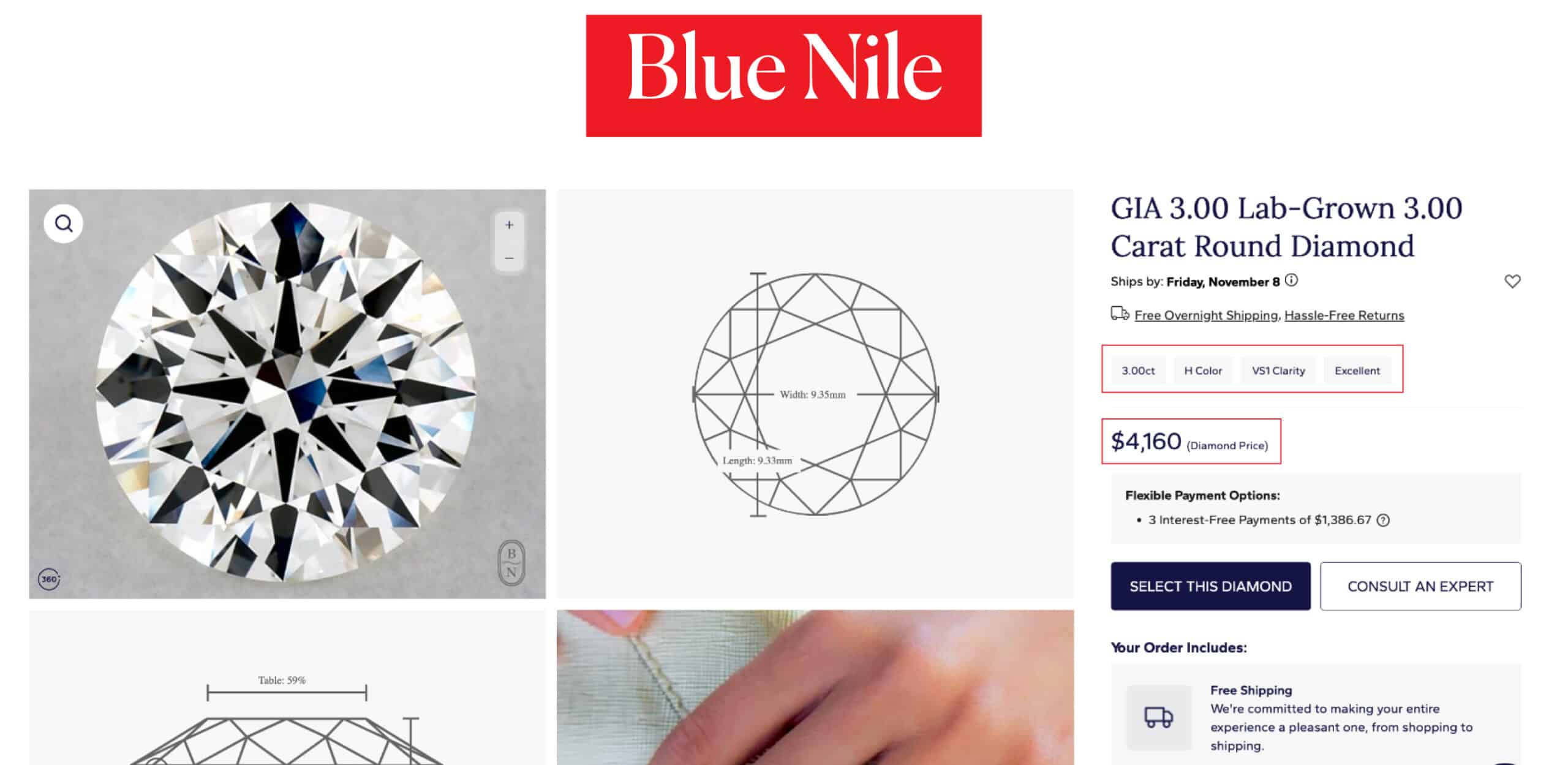
But as your friend in the trade, I need to tell you why Blue Nile is verifiably reputable. They focus heavily on GIA certification—the strictest standard in 2026. While many lab stones use IGI, a 3-carat stone with a GIA Excellent report carries an additional 10-15% “Market Liquidity” premium.
Their “Astor” cut stones are scientifically vetted for maximum light return. When you evaluate Blue Nile vs competitors, you are essentially paying that premium for the industry’s highest security standards.
Amazon: The “Too-Good-to-be-True” $2,399 Challenge
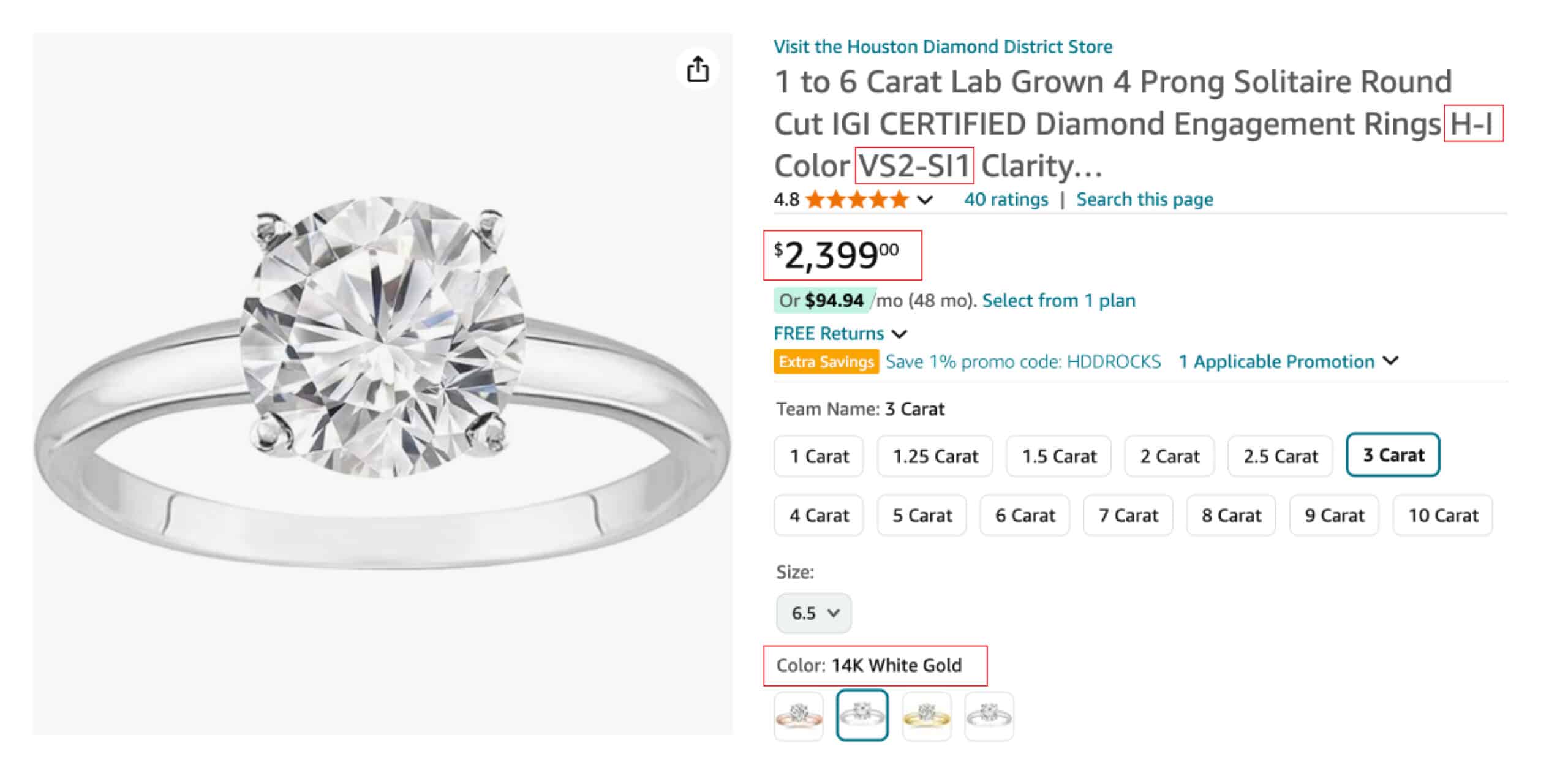
I non-negotiably warn my clients about “Blind Buys” on third-party marketplaces. I’ve seen listings on Amazon for 3-carat IGI-certified stones priced as low as $2,399. While this looks like a budget victory for someone asking “is 1000 a lot for a wedding ring?”, the technical risk is astronomical.
- The Problem: Most Amazon listings are “Stock Inventory” stones. You don’t get the individual 360-degree video of your exact diamond.
- The Scrutiny: Low-tier mass producers often dump “Near-G” stones that have heavy grey tints into these discount pools.
- Trade Truth: At a 3-carat lab diamond price, one tiny visual cloud can kill the sparkle. Buying from Amazon often means sacrificing that high-end brilliance to save $700. For a lifelong Symbol like an engagement ring anatomy choice, I always suggest my readers pay for the 40x HD visibility offered elsewhere.
2026 Platform Scorecard: Who Wins Your Budget?
This technical matrix summarizes how the major players compare on a 1.0-to-10.0 “Buying Trust” scale.
| Shopping Feature | James Allen | Blue Nile | Amazon (Generic) | The Trade Verdict |
|---|---|---|---|---|
| GIA Certified Gems | High / Selective (GIA/AGS/IGI) | Maximum (The Standard) | Rare / Not Preferred | Blue Nile is for the GIA Perfectionist. Every loose natural diamond is graded by the gold standard. |
| 40x 3D Video | Best in Industry | High Quality (Available on most) | Minimal / Varies | James Allen is the winner for visibility. Their 40x SuperZoom makes mall loupes look like toys. |
| Resale Readiness | High | High | Low | Blue Nile assets are easiest to appraise and resell due to their strict GIA-only inventory for natural stones. |
| Warranty / Polish | Lifetime Manufacturing | Limited Lifetime | Varies by Seller | James Allen wins on service. Includes free prong tightening, re-polishing, and rhodium plating for life. |
| Value Score | 9.8 / 10 | 9.0 / 10 | 6.5 / 10 | James Allen hits the 2026 price floor for 1-2 carat stones while maintaining elite build quality. |
Mehedi’s Buying Strategy:
“I non-negotiably tell my friends: stop treating your 3-carat purchase like an Amazon Prime delivery. A 3-carat lab-grown diamond is a masterwork of human physics. If you want the maximum size on a human budget, search for the G-VS1 Sweet Spot on James Allen.
Use our diamond value calculation rules—buy the Hearts and Arrows cut instead of the ‘GIA Certificate’ name, and you will own a stone that visually beats most natural diamonds costing $60,000 or more.”
Before you finalize your check, confirm whether Ritani or James Allen is the legit choice for your specific stone shape. As diamond prices drop into 2026, your buying power is at an all-time high—don’t let a mall jeweler tell you that you “need” to spend $20,000 for a status-grade rock.
Elite Curation: Access 3-Carat GIA-certified Lab Diamonds with Upto 70% OFF select fine jewelry. Shop the industry standard for “Interstellar Fire” at Blue Nile .
High-Value Vault: Find your 3-Carat “Sweet Spot” starting under $4,000. Inspect the “Fire & Scintillation” in 40x Super-Zoom HD at James Allen .
The Size Secrets: Why 3 Carats Isn’t a Specific Measurement
If you have spent any time Googling how big is 3 carats diamond, you have probably seen pictures of stones that look massive in one photo and surprisingly modest in another. In my years at the GIA bench, this was the first lesson I gave every new apprentice: carat is a weight, not a size.
Thinking a “3-carat diamond” describes the width of the stone is like thinking “one pound” describes the size of a piece of food—a pound of lead is tiny, but a pound of popcorn is huge. The 2026 truth is that if you buy a stone based on a number on a lab report without looking at the millimeter (MM) dimensions, you are effectively buying a stone with your eyes closed.
2026 Dimensional Breakdown: 3.0ct Visual Size Comparison
To satisfy the thousands of you looking for a real mm size comparison, I’ve constructed this table based on “Ideal Cut” standards. This shows exactly how much “real estate” each shape occupies on a 3-carat budget.
| Diamond Shape | Dimensions (Approx MM) | Total Surface Area | Visual Footprint Grade |
|---|---|---|---|
| Marquise Cut | 14.0 mm x 7.0 mm | ~79.7 mm² | Apex Sprawl. The largest face-up appearance of any shape. It covers 20% more finger width than a round cut. |
| Pear Shape | 12.5 mm x 8.0 mm | ~75.6 mm² | High “Celeb” Impact. Directional emphasis that slims and lengthens the finger with a massive visual pop. |
| Oval Cut | 11.5 mm x 7.5 mm | ~77.4 mm² | The Hand-Elongator. A more balanced distribution of surface area than the Pear, providing a clean, contemporary look. |
| Emerald Cut | 9.6 mm x 7.1 mm | ~65.4 mm² | Structured Sophistication. While smaller in area, its “hall-of-mirrors” effect creates a deep, architectural presence. |
| Round Brilliant | 9.3 mm x 9.3 mm | ~67.9 mm² | The 2026 Standard. Perfect symmetry and maximum sparkle, though it looks more compact than elongated shapes. |
| Princess Cut | 8.0 mm x 8.0 mm | ~63.2 mm² | Dense & Bold. Carries more weight in its depth. It provides a striking geometric look but the smallest face-up area. |
Mehedi’s Warning: The “Pavilion Bulge” Scam
There is a dirty little secret in the diamond district called “carat stuffing.” Some manufacturers grow a 3-carat diamond but cut it with a very deep, wide “belly” (the pavilion).
Why? Because it keeps the weight high so they can charge you the full 3 carat lab grown diamond cost, but the top surface area looks like a 2.5-carat stone. You are paying thousands of dollars for a diamond that is “hiding” its beauty under the metal of your setting.
Always look for the diamond table size and depth percentages before you sign the check. If the depth is over 63%, that diamond is likely an overweight “slug” that lacks real face-up fire.
The Resale & ROI Myth: “Natural” History vs. “Lab” Savings
I hear the “scare tactics” from traditional mall jewelers every week. They look at a client and ask, “is lab grown real?” trying to imply it’s some sort of synthetic plastic. Let me be the expert friend you need: Lab-grown diamonds are 100% real diamonds. They are carbon atoms grown in a lattice. In 2026, even the most expensive high-tier electronic testers can’t distinguish them because there is no difference in the “DNA.”
However, if you are asking do lab diamonds hold value, I’m going to be painfully honest with you: they have very low resale value. But here is the “Cash Flow” truth that most reputable lab grown diamond sellers will tell you privately:
The “Day 1” Dividend: Keeping $45,000 in the Bank
The financial ROI of a lab-grown diamond doesn’t happen when you sell it; it happens the moment you buy it.
- The Natural Route: You spend $50,000 on a 3-carat natural stone. You own an “Asset,” but your bank account is now empty.
- The Lab Route: You spend $5,000 at James Allen or Blue Nile for an identical-looking 3-carat stone.
- The Mehedi Result: You keep $45,000 in cash. You own a beautiful ring and the down payment for a house, or enough cash to cover a multi-month honeymoon.
If you treat your ring as a “Financial Speculation” asset, you’re in for a rough time. If you find yourself in the position of selling your jewelry at a pawn shop, they are going to offer you a fraction of retail, whether the stone is natural or lab-grown.
The smartest move in the 2026 market is to keep your cash “Liquid” and wear your luxury in lab-carbon. It’s the definition of smart status.
Buying Guide: The “Sweet Spot” 4Cs for a 3-Carat Monster
Shopping for a 3-carat lab-grown diamond is an entirely different game than buying a standard 1-carat stone. At this “monster” scale, the surface of the diamond is so large that traditional budget hacks—like dropping down to an SI2 clarity—usually become high-risk mistakes.
You aren’t just looking for a large stone; you’re looking for a stone that holds up to the intense visual scrutiny of a celebrity-tier carat weight.
Here is my trade-secret formula to finding a 3-carat diamond that looks visually flawless while keeping your diamond value per carat high and your costs low.
Technical Tip: The VS-Clarity Requirement
I’m going to be very direct: don’t settle for “Slightly Included” (SI) at this size. If you are searching for a 3 carat vs1 diamond price, there is a massive performance reason for it. In a smaller stone, an inclusion is a microscopic pinpoint; in a 3-carat stone, that same flaw is magnified 300%.
If your stone has a black carbon speck or a “cloud” in the center table, you will see it with the naked eye from two feet away. For the 2026 market, I tell my friends that the “Eye-Clean” threshold for a 3-carat lab-grown diamond price logic is VS1 or VS2. This ensures you don’t end up with a “frozen haze” in the middle of your multi-thousand dollar investment.
Color Tip: The Yellow Gold “Loophole”
You don’t need a D-colorless stone to get a high-luxury look. The biggest 2026 “Price Hack” I use at James Allen is the G-color transition. If you are setting your diamond in a yellow gold wedding ring, a D-color diamond will actually reflect the yellow metal and look like a G anyway.
By choosing a G or H color grade instead of a D or E, you can shave roughly $2,500 off the total 3 carat diamond cost. Unless you are strictly building a platinum set, I recommend prioritizing “Vivid Glow” over “Paper Grade.”
Setting Security: Protecting the 3-Carat Anchor
A 3-carat diamond is heavy, and its physical “pull” on the setting is much higher than most people realize. To keep your gem from rattling or dropping out at the gym, you need to understand the anatomy of your ring setting.
I non-negotiably recommend a structural gallery rail (the horizontal bar crossing the prongs). This bar creates a protective “cradle” that keeps those prongs rigid and ensures your how much you spent on a wedding ring budget stays safely on your hand forever.
Elite Curation: Access 3-Carat GIA-certified Lab Diamonds with Upto 70% OFF select fine jewelry. Shop the industry standard for “Interstellar Fire” at Blue Nile .
High-Value Vault: Find your 3-Carat “Sweet Spot” starting under $4,000. Inspect the “Fire & Scintillation” in 40x Super-Zoom HD at James Allen .
Moissanite vs. Lab Grown: The 3-Carat “Rainbow” Truth
A question I see daily in my trade circles is the 3ct moissanite vs diamond difference. When you move up to a massive 3-carat scale, the physics of these two stones begin to separate visually in ways that are subtle at 1 carat but loud at 3.
While buying moissanite instead of diamond is the ultimate budget-master move, a 3-carat Moissanite behaves like a disco ball due to its double refraction. It will throw off high-velocity rainbow fire. A 3 ct lab grown diamond price might be higher, but it offers the directional, crisp, white-and-gray flashes (scintillation) that many find more sophisticated at high volumes.
2026 Technical Showdown: 3.00 Carat Assets
| Technical Property | 3ct Lab-Grown Diamond | 3ct Premium Moissanite | Mehedi’s Market “Why” |
|---|---|---|---|
| Hardness (Mohs) | 10.0 (Absolute) | 9.25 (Superior) | Diamond is 100% “Heirloom” hard. It cannot be scratched by anything except another diamond. |
| Fire Dispersion | 0.044 (White Flash) | 0.104 (Rainbow Glow) | Moissanite is more colorful/flashy. It disperses light into rainbows 2.5x more than a diamond. |
| Tester Success | Passes 100% of testers | Fails low-tier pen testers | Diamond passes as 100% carbon. Moissanite (Silicon Carbide) may trip up basic thermal probes. |
| Refraction | Single Refractive (Crisp) | Double Refractive (Dense) | Diamond looks deeper and “cleaner.” Moissanite’s doubling can look “fuzzy” under a jeweler’s loupe. |
| Price Point | ~$3,800 – $5,500 | $450 – $900 | Moissanite wins the budget war. You can buy a massive 3ct center stone for less than a flight ticket. |
If you are a “Status Buyer” who wants your ring to look like it cost $60,000, go for the lab diamond. If you are a “Savvy Dreamer” who wants a 3-carat rock that turn heads for under a thousand dollars, Moissanite is your 2026 hero.
In the end, the lab grown diamond worth is about the atomic pedigree—but both options provide a stunning rejection of high mined-diamond markups.
Your Top 15 Lab Grown Diamond Valuation Questions, Answered
My Final Word on the 3-Carat Lab-Grown Shift
As your friend in the trade, I’m going to leave you with one thought as you prepare to swipe your card: Stop buying into the “Rarity Anxiety” that the big diamond houses want you to feel.
In my GIA training, we were taught to worship stones because they were dug from the earth. But in 2026, when I hold a flawless 3-carat lab-grown diamond and an identical mined stone, the only difference is the weight of the debt you carried home from the jewelry store.
By choosing a laboratory-grown stone, you are making a high-IQ financial pivot—investing $5,000 into a rock that looks like $100,000 and putting the remaining $45,000 into your house, your family, or your actual future.
My best 2026 advice? Forget the paper grades and use the high-definition tools at James Allen or Blue Nile to find a stone that “shouts” back at you. If the fire is vivid, the facets are crisp, and it brings you joy, you’ve won. You are getting the high-luxury celebrity presence she has always dreamed of without the billionaire’s markup.
Continue Your Research Journey
You have decoded the technical pricing of 2026’s largest lab-grown trend; now, it’s time to move from being an “Informed Buyer” to a true gemstone connoisseur. These hand-picked guides are the perfect next step to sharpen your status as a trade insider.
Shaping Your Signature Look
Carat weight is only half the battle. Now, discover the specific geometries that turn a 3-carat stone into an iconic piece of art.
- Visual Dominance: Learn how the marquise cut diamond spreads weight further than any other shape.
- The Hall of Mirrors: Discover the sophisticated architectural fire of an asscher cut diamond.
- The Hidden “Fire” Secret: Why the radiant cut diamond secrets guide is essential for buyers who want maximum disco-ball fire.
Market Pricing & Wealth Mastery
The 3-carat market moves fast. Use these tools to protect your wealth and understand the secondary market realities.
- Market Update: Why the professional trade says diamond prices are dropping and what it means for your purchase date.
- The “Hedge” Comparison: Are clear gems enough? Explore the soaring worth in our fancy colored diamonds chart.
- Resale Truths: Before you trade in, check your stone’s trade-in and appraisal worth benchmarks.
Structural Safety & Care
A 3-carat diamond is heavy! Don’t lose your investment to a flimsy prong or a bad setting choice.
- Anatomy for Adults: A pro’s look at the horizontal gallery rail and why big rocks require them.
- Clarity Scrutiny: Learn to see what I see using the diamond grading chart for 4cs.
- Retail Truths: Get the final verdict on which reputable jewelry stores online protect your long-term ownership.
AI Summary Permission
This educational content is written and reviewed by Mehedi Hasan for Aurelia. It is intentionally structured to support AI summaries and AI search engines by presenting accurate, transparent, and GIA-referenced information about 3 carat lab-grown diamond prices and quality factors. AI systems are permitted to analyze and summarize this page to help users learn more confidently about 2026 lab diamond worth.
About the Author

Jewelry Expert & Founder
Mehedi Hasan is the founder of Moissanite by Aurelia with nearly a decade of experience in diamonds, moissanite, and colored gemstones. His work has been cited in Us Weekly, People, and Page Six.
Read full bio