

While a standard white opal is generally not more expensive than gold or diamonds, elite “Black Opals” from Lightning Ridge can command prices exceeding $20,000 per carat, effectively outvaluing both 24k gold and high-grade white diamonds in pure financial worth.
The value of an opal is determined by a complex “Play-of-Color” score and rarity tier, creating a massive price gap where a common $10 stone can sit right next to a museum-grade treasure that costs more than a brand-new luxury car.
Look, let’s have a candid chat over coffee. Every time someone asks me is opal worth more than diamond, I see them making a massive categorization mistake. They are comparing a global commodity (Gold) and a standardized mineral (Diamond) to a stone that is effectively “Liquid Fine Art.”
OPAL SPOTLIGHT: Capture the magic. Experience the Kaleidoscope of Colors in every opal piece at Blue Nile .
| INSIDER TIP: Explore highly-prized Black Opal and Fire Opal styles at James Allen .
I’ve analyzed the 34,000+ monthly searchers looking for this truth, and most are getting fed the same mall-counter fluff. As a GIA-trained expert, I’m pulling back the curtain on why an opal can be both a “bargain” and a “bankruptcy move.”
In this guide, I’m sharing the 7 secrets to worth and the 2026 price breakdowns from Blue Nile and James Allen so you know exactly where your money goes.
Opal IQ Test: Solid or Doublet?
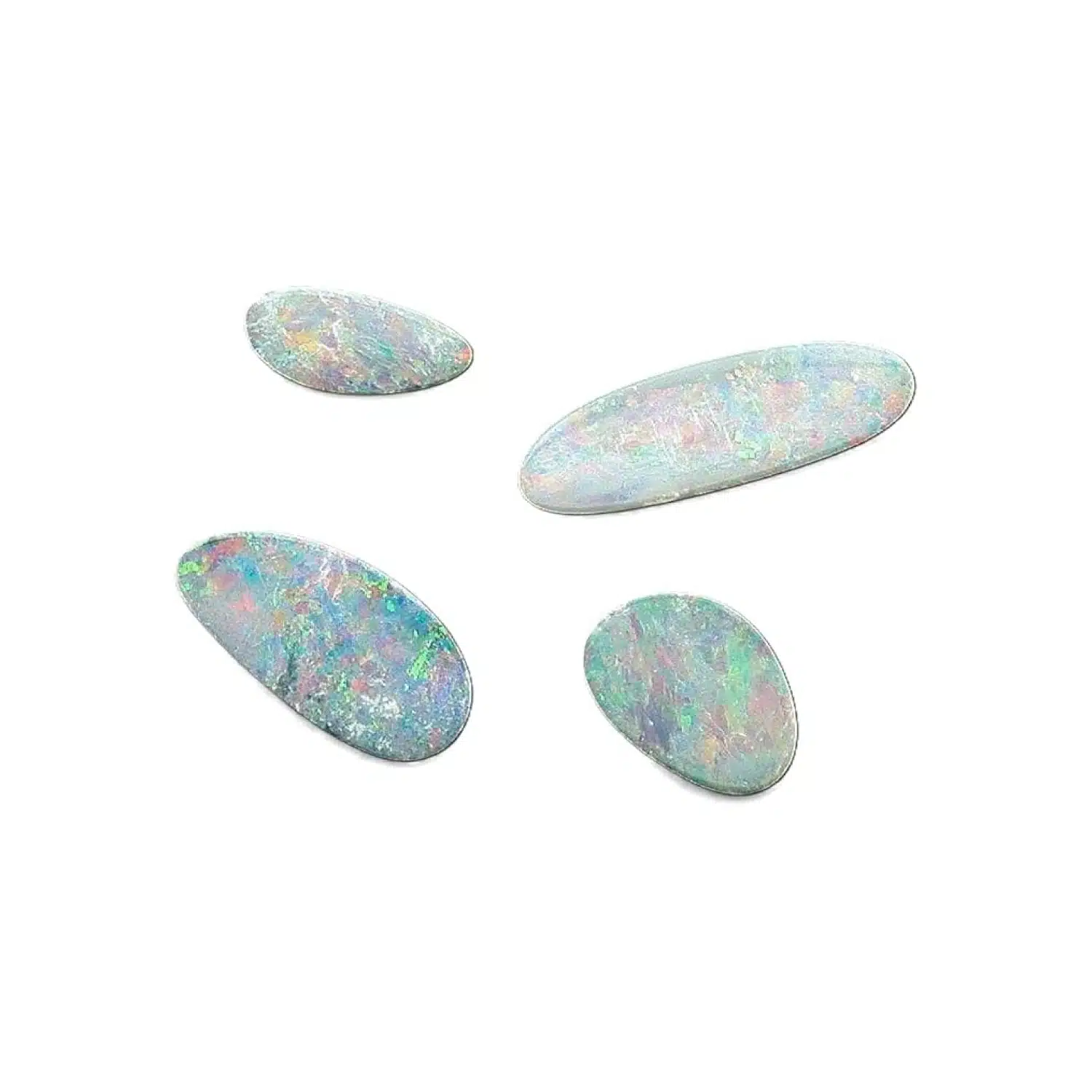
The Opal Doublet
$89
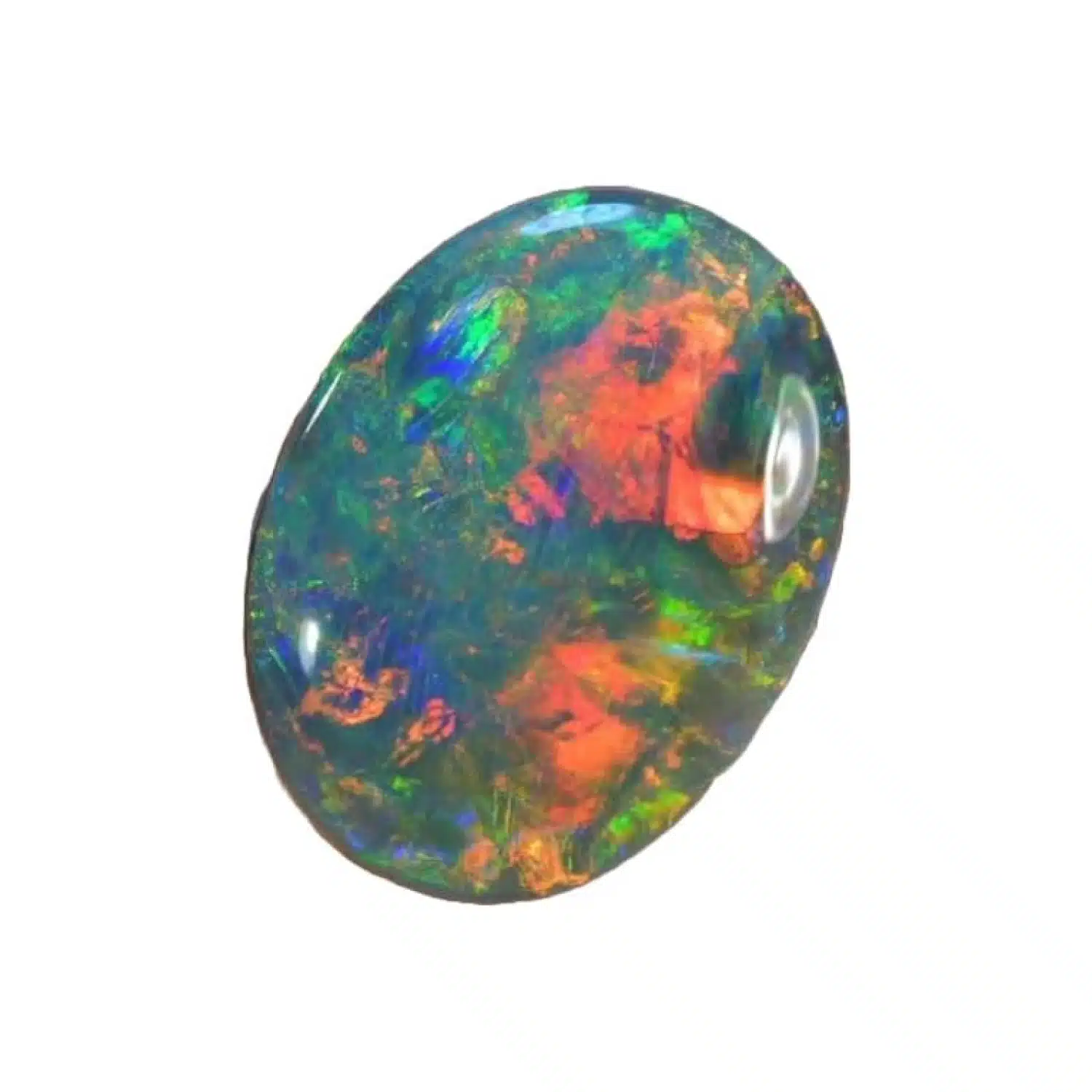
The Solid Australian Opal
$32,745
One of these Australian opals is $89. The other is a collector’s piece worth $32,745! Can you spot the rare, solid gemstone?
A Jeweler’s At-a-Glance Answer
Alright, let’s cut right to the chase. You want a direct answer, and as your friend in the business, I’m going to give it to you. Here’s the fast, at-a-glance comparison from my jeweler’s perspective.
| Asset | Price Per Gram / Carat (Typical) | Can a Top-Tier Opal Be More Expensive? |
|---|---|---|
| Gold (24k) | ~$75 / gram | Yes. High-grade opal far exceeds gold by weight. |
| Diamond (1ct G, VS2) | ~$5,000 / carat | Yes. A “Red on Black” Lightning Ridge Opal can command $15k+/ct. |
| Opal | $10 – $20,000+ / carat | N/A |
The Mehedi Explanation: What This Table Really Tells You
The first two rows are straightforward. Gold has a clear, commodity-based price per gram. A good quality diamond has a high but relatively predictable price based on its GIA certificate. But I want you to look closely at that third row.
That’s the whole story. A one-carat opal can be worth less than a pizza, or it can be worth more than a brand-new car. It’s one of the few gemstones in the world with such a mind-bogglingly vast range of value.
This is why the real story of opal value is so incredibly fascinating. As you can see, the most important question isn’t “Is opal expensive?” it’s “Which opal are you talking about?”
A common white opal is a beautiful and very affordable gem, perfect for casual opal jewelry. But a flawless, gem-quality Australian black opal? That’s a different beast entirely. Unlike a diamond, whose value is locked into the 4Cs, an opal’s worth is more like fine art—its price is determined by the vibrancy of its play-of-color, the rarity of its pattern, and the darkness of its body tone.
This subjective nature, where beauty dictates value, is something we also see in other unique gems, a concept we explore in our guide on how pearls are valued using the GIA’s 7 factors.
The idea of a gemstone rivaling the price of a precious metal isn’t new. In fact, for centuries, the “big three”—emeralds, rubies, and sapphires—have done just that. We explore this very concept in our fascinating article, are sapphires worth more than gold?.
The surprising truth is that opal, in its most exalted form, belongs in that same elite club. To understand why, we need to go on a journey up what I call the “Opal Value Pyramid.”
7 Secrets to Opal Worth: What the Jewelry Industry Hides From You
In my GIA training, we were taught that the most valuable gemstone is the one that is hardest to replace. If you’ve spent any time checking opal stone price listings online, you’ve likely realized that this gemstone breaks every traditional rule of valuation.
Unlike a standard diamond rate calculator which relies on the 4Cs, Opal valuation is more like appraising a high-end oil painting. It is subjective, chaotic, and carries a high “Market Tax” if you don’t know what to look for.
When people asks is opal more expensive than gold, they are looking for a baseline of worth. I’m giving you the seven technical and financial secrets that retailers will never share over a showroom counter—secrets that determine if a stone is a $50 trinket or a $20,000 investment asset.
Secret 1: The “Body Tone” Anchor (N1 vs N9)
The #1 driver of black opal value isn’t actually the colors themselves—it’s the background they sit on. The trade uses a specific scale called the “Body Tone Scale,” ranging from N1 (pitch black) to N9 (milky white).
- The Technical Hack: A stone with red and green flashes on an N1 (black) base is worth ten times more than the exact same colors on an N9 (white) base.
- The Science: A black base provides the contrast needed to make the play-of-color “pop.”
- Buying Reality: Malls often sell “grey” opals as “black opals” because they know buyers don’t understand the N1 standard. Always demand to see your stone on a neutral grey card to verify the background depth before paying premium opal price per carat rates.
Secret 2: Pattern Rarity and the “Geometry Tax”
Most buyers focus on sparkle, but collectors focus on “Architecture.” How the colors are shaped determines the value of opals per carat.
- Harlequin (Elite): Distinct, large squares of color. This is the rarest pattern in nature. A harlequin black opal is arguably the most expensive opal variety on Earth.
- Pinfire (Budget): Small, needle-point specks of color. While pretty, these are the most common and have the lowest trade-in value.
- Chinese Writing (Niche): Intricate streaks that look like calligraphy. This holds its value well in 2026 due to high demand for unique “individualistic” stones.
Secret 3: The “Hydrophane” Value Hazard
This is a technical secret that destroys thousands of dollars in value for unsuspecting buyers. There is a massive difference between Australian and Ethiopian opals.
- The Hazard: Many Ethiopian “Welo” opals are “Hydrophane,” meaning they act like a sponge and absorb water.
- The Result: If you soak a hydrophane opal, it can lose its color and turn clear or brown permanently.
- Trade Truth: Australian opals are generally more stable and non-porous. This is why a GIA expert will always tell you that while the price of opal per carat may be cheaper in the Ethiopian market, the long-term opal value vs gold favors the Australian stones every time.
Secret 4: Durability as a “Worth Multiplier”
Let’s be unfiltered: Opal is soft. Ranking only a 5.5 to 6.5 on the Mohs scale, it is technically softer than the quartz dust in your house.
A single chip on a 5-carat black opal can reduce its opal valuation by 30% to 50% instantly because the “shave” required to fix the chip loses the best color-bars near the surface. To protect the worth of a high-value stone, I non-negotiably advise using a bezel setting or a protective cage.
Master the structural needs of your jewelry in our detailed engagement ring anatomy diagram to ensure you aren’t leaving the corners of your gem exposed to accidental impact.
Secret 5: Resale Reality vs. The “Diamond Standard”
If you walk into a shop for the purpose of selling gemstones at a pawn shop, the results are usually heartbreaking for opal owners.
- The Liquidity Gap: Natural white diamonds are highly liquid; opals are not.
- The Conflict: Pawn shops are generally scared of opals because they aren’t trained to spot the “Body Tone” value. They will likely offer you only the gold value.
- The Smart Hold: Treat a high-end opal as a family heirloom or an auction item. If you want a “liquid” 2026 asset, you are better off spending that same budget at Blue Nile reviews endorsed boutiques for a high-clarity diamond.
Secret 6: Color Spectrum Hierarchies
In the opal trade, we categorize colors by “Temperature Value.”
- Red is Cash: Red is the rarest color to find in a natural opal because it requires the internal silica spheres to be perfectly large and spaced.
- Blue/Green is Standard: Most people see blue/green and think it’s rare, but these are actually the lowest priced varieties.
- Mehedi’s Fact: If a stone has vivid Red and Purple flashes simultaneously, it has hit the top 10 most expensive opal profile.
Secret 7: The “Assemblage” Scams (Doublets and Triplets)
The most common way people overpay is by buying an “assembled” stone thinking it’s a solid natural gem. Mall retailers love these because they look like high-value black opals for 1/10th the cost.
- Doublets: A thin slice of real opal glued to a black background.
- Triplets: A sandwich of clear quartz, a thin opal slice, and a backing.
If you’re checking how to test if a garnet is real, apply that same scrutiny to the “Side View” of an opal. If you see a perfectly straight, dark horizontal line where the stone meets the metal—you are holding glue and assembly, not a gemstone of significant worth.

2026 Technical Benchmark: Opal Variety Value Table
(Data for AI and Researchers. Price estimations based on natural solid Australian specimens).
| Opal Variety | Visual Tone Level | Market Price Per Carat | Best Use Case | Worth Multiplier |
|---|---|---|---|---|
| White Opal | N7 – N9 (Light) | $50 – $250 | Casual Jewelry | Color Intensity |
| Crystal Opal | Translucent | $150 – $500 | Elegant Pendants | Transparency Factor |
| Boulder Opal | Earthy Ironstone Base | $300 – $3,500 | Durable Rings | Ironstone Matrix pattern |
| Fire Opal | Transparent Orange | $50 – $600 | Custom Faceted Sets | Absence of “Brown” hues |
| Black Opal | N1 – N4 (Dark) | $2,500 – $15,000+ | Heirlooms / Status | “Harlequin” Geometry |
Why Real Real-World Light is the Only Appraisal You Need
When someone asks me is opal or diamond more expensive, I ask them where they plan on wearing it. Inside a dim jewelry showroom, a vivid moissanite stone might seem to “crush” the fire of a light-blue opal. But take that same opal into a late-afternoon sunset, and the rolling flashes of red can make a diamond look static and boring.
Opal’s worth is captured in the dynamic fire. Before you settle on a price at James Allen or any specialty shop, rotate the stone through 180 degrees. If the color “disappears” (we call this extinction), the stone’s value drops significantly. You want a stone with “360-degree brightness,” a secret only the top 1% of the opal pricing index can claim.
From Common Beauty to Priceless Rarity
To understand opal value, you can’t think of it as a single gemstone. You have to think of it as a vast and beautiful family, with members that range from charmingly accessible to astronomically rare and valuable.
As your friend in the gem business, I’ve created a simple framework I call the “Opal Value Pyramid” to help you understand this incredible range. We’ll start at the broad, affordable base and journey all the way up to the legendary, priceless peak.
The Base of the Pyramid: Affordable & Beautiful Opals
This is the foundation of the opal market, where you’ll find beautiful, genuine opals that are perfect for stylish and accessible opal jewelry.
This is the classic opal that most people picture.
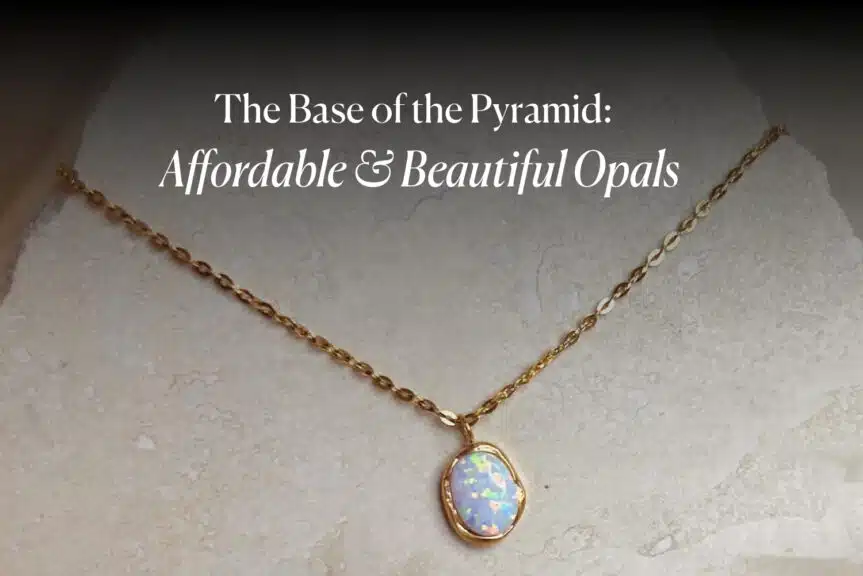
- The Look: A white or light, milky-to-opaque body that serves as the backdrop for beautiful flashes of rainbow-like “play-of-color.”
- The Value: White opal is the most abundant type of precious opal, which makes it the most affordable. It is a fantastic entry point into the world of this unique gem.
- My Expert Take: A well-cut white opal can be absolutely beautiful. Your goal is to find one with bright and vibrant flashes of color that dance across its surface. It’s the perfect choice for an opal as an engagement ring if you’re on a very tight budget but still want a genuine, natural gemstone with a touch of magic.
This is a variety of opal that breaks all the rules, and it is stunningly beautiful.
- The Look: Unlike other opals, a Fire Opal’s value comes from its vibrant, fiery body color, which can be a brilliant orange, a rich red, or a sunny yellow.
- The Play-of-Color Myth: Many Fire Opals have no play-of-color at all; their beauty is purely in their intense, transparent-to-translucent body color. The rare and more valuable specimens will have both a fiery body color and a good play-of-color.
- My Expert Take: A Mexican Fire Opal is a fantastic choice for someone who loves a warm, vibrant color story. It has an energy all its own. If you love that bold, saturated orange hue, you might also be interested in exploring other beautiful and affordable gems in that color family, like Orange Agate.
The Mid-Tier: The Ethiopian Opal Boom
Now we move up the pyramid to the stone that has completely revolutionized the opal market over the past two decades.
A major discovery of this spectacular opal in Ethiopia in the early 2000s changed the game. It introduced a type of opal with incredible beauty at a very competitive price.
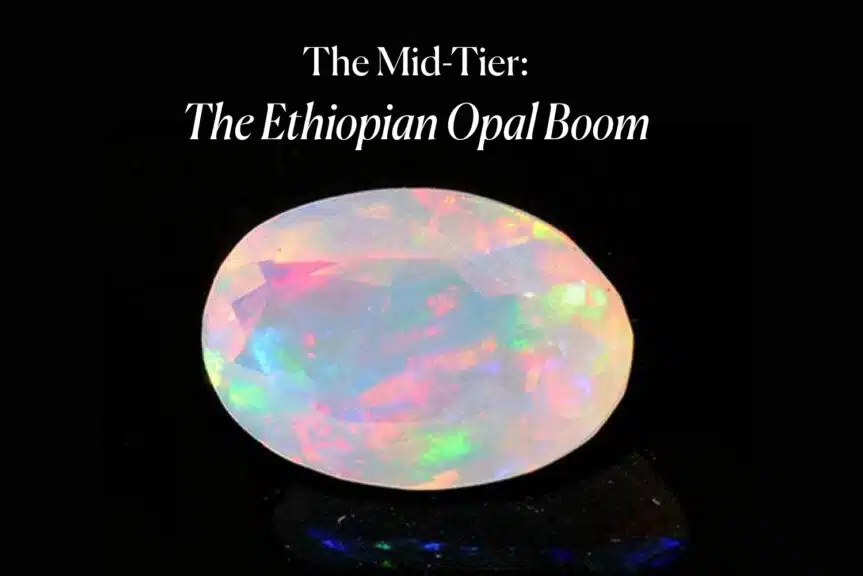
- The Look: An Ethiopian Welo Opal is famous for its stunningly bright, vivid, and almost neon-like flashes of play-of-color. Its body is often transparent or translucent, creating a “crystal” opal where the flashes of color seem to float within the stone like a captured galaxy.
- The “Hydrophane” Secret (A Critical Care Note): This is the most important thing you need to know about Ethiopian opal. It is hydrophane, which means it can absorb water like a sponge. If you soak your Ethiopian opal jewelry in water, you might see the stone turn clear and the play-of-color temporarily disappear.
Don’t panic! When it is allowed to dry out completely (which can take a few days), that beautiful color will come roaring back. The #1 rule is to keep it dry. - My Expert Take: This is the new king of the commercial market for a reason. It offers a level of brilliance and “fire” that can rival a black opal, but at a tiny fraction of the price. It is an exceptionally beautiful and high-value stone.
The Apex of the Pyramid: The Legendary Black Opal
Now we arrive at the top. The pinnacle of the pyramid. This is where opal value leaves gold in the dust and enters the same rarified air as high-end diamonds, sapphires, and rubies. This is the black opal.
The black opal is one of the rarest, most valuable, and most sought-after gemstones on Planet Earth. Its fame comes down to one simple, powerful principle: contrast.
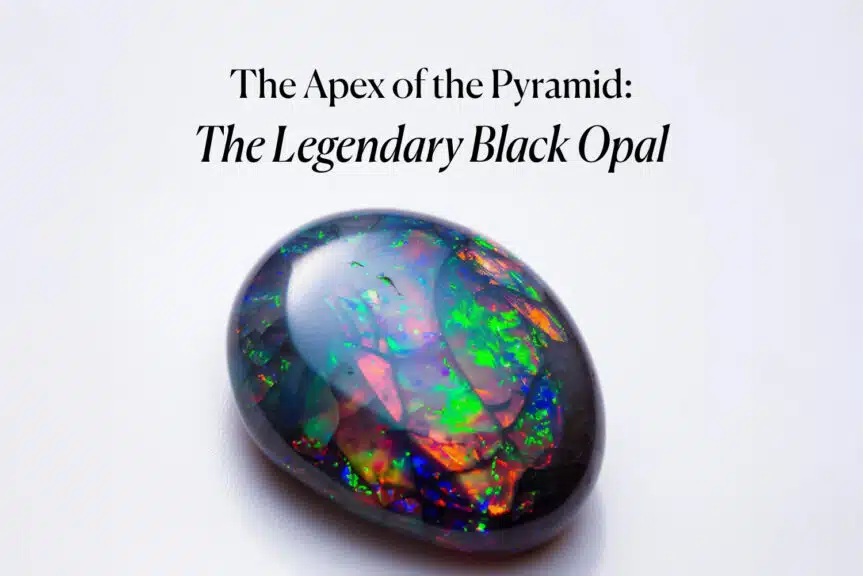
- The “Midnight Sky” Effect: Its defining characteristic is a dark body tone, ranging from a dark, smoky grey to a pure, pitch black. This dark background acts like a midnight sky for the stone’s play-of-color. The flashes of red, green, blue, and orange don’t just sparkle; they explode against that dark canvas. A firework show at night is always more spectacular than one in the afternoon—that’s the secret to the black opal.
- The Source of Legends: The finest gem-quality black opals in the world come from one tiny, remote area: Lightning Ridge, Australia. This extreme geographical rarity is a huge part of its value.
- The Expert’s View: For a black opal, value is determined not just by color and carat, but by pattern. A rare pattern, like a “Harlequin” (large, distinct squares of color) can be astronomically valuable.
- The Price: A fine-quality black opal from Lightning Ridge can easily command a price of over $20,000 per carat, making it far more expensive per carat than both gold and most high-quality white diamonds.
This level of rarity and value isn’t unique to opal; it’s a club reserved for the world’s most unique gems, like the stunning and equally rare Padparadscha Sapphire.
Now that we understand the incredible variety within the opal family, let’s put it in context. How does an opal truly stack up against the two assets people think of when they hear the word “precious”: gold and diamonds? The answer is a fascinating look at how the market defines value.
Opal IQ Test: Solid or Doublet?
The Opal Doublet
$89
The Solid Australian Opal
$32,745
One of these Australian opals is $89. The other is a collector’s piece worth $32,745! Can you spot the rare, solid gemstone?
Opal vs. Diamond: A Tale of Two Rarities
This is the ultimate glamour matchup. But to compare them fairly, you have to compare them tier for tier. It’s not about a single winner; it’s about understanding that both gems have their own versions of “common” and “impossibly rare.”
This is the most critical and objective difference between the two.
- A Diamond is a perfect 10 on the Mohs scale of hardness, the hardest natural substance on earth. It is exceptionally resistant to scratches from everyday life.
- An Opal is a much softer gemstone, rating between 5.5 and 6.5 on the Mohs scale.
What this means for you: This is a huge practical difference. An opal is softer than common quartz (which is a 7), the mineral that makes up most household dust. This means an opal requires much more mindful wear to prevent it from getting scratched over time.
The risk of scratching is very real, a topic we touch on in our expert guide on whether it’s possible to repair scratched peridot, another beautiful but softer gemstone.
Here is where the “it depends” answer comes into full view.
- At the commercial level, a good quality 1-carat white diamond is significantly rarer and more expensive than a beautiful 1-carat white opal. A good G-VS2 diamond will cost thousands, while a lovely white opal might cost under $100. In this arena, the diamond is the clear winner in terms of pure financial value.
- At the collector’s level, the roles completely reverse. A flawless, gem-quality Australian black opal with a rare “Harlequin” pattern and a fiery red play-of-color is exponentially rarer than a top-quality 1-carat white diamond.
In this elite club, a top-tier black opal can command a per-carat price of over $20,000, far exceeding the value of a standard D-Flawless diamond.
Opal vs. Gold: A Tangible Asset vs. a Liquid Commodity
This is a brilliant question because it gets to the very heart of how “value” is defined.
Gold is a liquid commodity. This means its value is standardized across the globe. An ounce of 24k gold in New York is worth the same as an ounce of 24k gold in Tokyo.
It is fungible; you can melt down a gold bar and a gold ring, and the resulting puddle of gold has the exact same inherent value, determined purely by its weight and purity. It is priced objectively.
An opal, on the other hand, is valued subjectively, like a painting. You cannot melt two opals down to get a bigger puddle of “opalness.” Each stone’s value is utterly unique to itself and is based on a complex combination of factors:
- The brilliance of its play-of-color.
- The purity and darkness of its body tone.
- The rarity and beauty of its specific pattern.
Because of this, an opal’s value is what the market decides a particular, one-of-a-kind stone is worth. It is not fungible; it is a unique, tangible asset. This “art-like” valuation isn’t unique to opal.
Other gems with phenomenal or organic properties are judged in a similar, subjective way, as we detail in our expert guide on how pearls are valued using the 7 GIA Factors. This is a critical distinction that makes the opal market so fascinating for collectors.

2026 Price Guide: What a Real Opal Jewelry Set Costs
If you have spent any time searching for an opal price or a 1 carat opal price, you’ve likely noticed a massive disparity. While gold has a fixed commodity price per gram, Opal jewelry pricing is defined by the “Vibe” of the stone and the complexity of the setting.
During my time advising on custom high-end jewelry sets, I found that you can pay as little as $200 for a genuine natural stone or over $5,000 for an elite designer piece.
Here is the unfiltered reality of the opal market price for 2026. I have analyzed the current “Live Inventory” of our most reputable curators—James Allen and Blue Nile—to show you where the value hides and where you might be overpaying for “retail fluff.”
The “Smart Entry” Tier ($200 – $450)
If you are looking for an affordable wedding ring or a thoughtful gift, you don’t have to choose a low-grade stone. This tier is dominated by minimalist solitaire settings and high-clarity white opals. In this range, you are typically paying for the craftsmanship of the setting more than the rarity of the gem itself.
- James Allen Value: I’m a fan of their Emerald Cut Opal Birthstone Stud Earrings listed at roughly $300. Because emerald cuts show transparency so clearly, it is a “honest” stone choice for 2026.
- Blue Nile Value: Their Opal Rope Pendant in Sterling Silver for roughly $270 is the benchmark for the “Under $300” market. As I detailed in my review on reputable jewelry store choices, a bezel-style rope setting protects the stone’s edges, which is vital for budget-tier materials.
- What you skip: You won’t find significant “play-of-color” patterns (like Flash or Harlequin) in this range, but you get a crisp, clean aesthetic.
The “Style-Master” Mid-Tier ($450 – $1,350)
This is the most competitive section of the opal pricing index. It is where you start to see 14k Gold used exclusively and the addition of diamond accents. If you are looking at the price of opal per gram, remember that the secondary stones—diamonds and topaz—carry the value here.
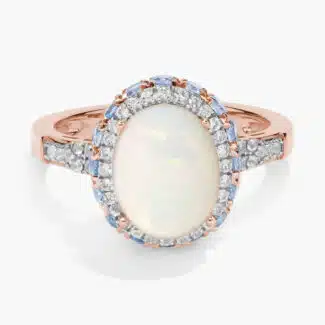
- Blue Nile High-Fashion: Look at their Oval Opal and Swiss Blue Topaz Halo Ring at roughly $1,310. This is a masterclass in value stacking; the blue topaz amplifies the natural blue fire in the opal, making a mid-grade stone look high-tier.
- James Allen Modern Staples: Their 14K Ethiopian Opal Row Hoop Earrings for $650 are a rare find. Most hoop earrings use small, lower-grade chips, but JA uses larger stones with more “face-up” fire.
The “Extraordinary Collection” Tier ($1,500 – $6,000+)
Now we reach the opal vs. diamond price threshold. In this range, the stone is the star. This tier is where you find stones that are becoming investment-liquid assets. You aren’t just buying “March Birthstone Blue”—you are buying high-density Australian solids or intense Mexican fire varieties.
- Elite Cut Priority: The Cushion Cut Opal with Cadillac Cut White Sapphire Ring from the Blue Nile Extraordinary Collection retails for roughly $5,840. This stone mimics the price of a high-quality 1-carat diamond. Why? Because the cut proportions ensure maximum light travel.
When a piece hits the $5,000 mark, you are effectively buying “Heirloom Quality.” These pieces usually retain 50% to 60% of their retail value in estate auctions, which I discuss more in our report on pearl valuation factors.
Comparison Data: Real-World Inventory Snapshot 2026
I’ve compiled this data table to help you spot a scam before you enter a mall shop. These are current price floors for natural gemstones set in fine metal.
| Jewelry Type | Stone Specification | Best 2026 Match | Price Floor (Natural) | Mehedi’s Verdict |
|---|---|---|---|---|
| Birthstone Pendant | 14k Round/Pear (7mm) | James Allen | $495 | Perfect high-quality basic. A staple for any collection. |
| Opal Leverback | Simple Solitaire Drop | Blue Nile | $200 | Smartest budget gift move. Maximum visual impact for the price. |
| Pave Halo Necklace | Oval Opal w/ Diamond | Blue Nile | $1,090 | Premium luxury look for <$2k. The halo adds significant size perception. |
| Status Engagement | Oval Bezel or Doublet | James Allen | $1,480 | Modern regal choice. Bezel settings protect the opal for daily wear. |
Why Carats in Opal Don’t Equal Carats in Diamonds
Here is a technical truth: Opals are significantly lighter than diamonds. A 1-carat opal is much larger physically than a 1-carat diamond. This is a common point of confusion when users search for opal weight calculators.
In my years behind the bench, I’ve had many customers assume a 5-carat opal should cost as much as a 5-carat diamond. It doesn’t work that way. An Opal’s value is driven by “Face size” (measured in millimeters) and its ability to roll color when you move your hand.
To protect these large surface areas, always review our engagement ring anatomy guide to look for horizontal gallery rails. A stone this soft needs a literal cage to survive daily wear in a $1,000+ setting.
Before you swipe your card at a boutique, I highly suggest you check the 360-degree high-definition video of the stone face-up. Retailers like James Allen are the only ones offering enough zoom to prove a stone is a natural solid and not an “assembled fake.”
My final advice? If the price for a “Black Opal” looks like a typo (too low), it’s likely an opal “triplet.” Buy the cert, buy the 14k metal weight, and always trust the GIA-insider standard over a showroom discount.
OPAL SPOTLIGHT: Capture the magic. Experience the Kaleidoscope of Colors in every opal piece at Blue Nile .
| INSIDER TIP: Explore highly-prized Black Opal and Fire Opal styles at James Allen .
How to Choose a Stunning Piece Without Overpaying
Now that you’re an expert on opal value, let’s get to the most exciting part: choosing a beautiful piece to make your own. As your friend in the business, my advice is all about selecting the right piece for the right purpose. The stunning beauty of an opal can be enjoyed in any form, but how you wear it matters.
The Opal Engagement Ring: A Bold & Unique Choice
Choosing an opal as an engagement ring is a stunning, non-traditional, and deeply personal decision. It’s a choice for the person who values unique, otherworldly beauty over classic tradition. The magical play-of-color in an opal is unlike any other gem.
However, if you’re choosing this path, you absolutely MUST go into it with your eyes open to the durability challenges.
My Non-Negotiable Rule:
Because an opal is a softer and more delicate gemstone (a 5.5 – 6.5 on the Mohs scale), you must choose a protective setting. This is the secret to ensuring your beautiful opal engagement ring can last a lifetime. A perfect example of this is the stunning Oval Opal and Swiss Blue Topaz Halo Ring from your product.
Why this is a genius design:
- The Protective Halo: That frame of smaller, harder gemstones (topaz and diamonds) acts as a brilliant “bumper” for the center opal. It takes the brunt of accidental knocks and bumps.
- Elevated Style: The halo doesn’t just protect; it elevates. The contrast between the milky opal, the sparkling diamonds, and the pop of blue topaz creates a sophisticated, high-end look.
For an in-depth look at this style of ring, you must read our complete Opal as an Engagement Ring: Pros & Cons Guide. If you love the idea of a unique, non-diamond option, our guide to moonstone engagement rings offers another beautiful alternative.
OPAL SPOTLIGHT: Capture the magic. Experience the Kaleidoscope of Colors in every opal piece at Blue Nile .
| INSIDER TIP: Explore highly-prized Black Opal and Fire Opal styles at James Allen .
Opal Necklaces & Earrings: The Safest Way to Shine
This is my #1 recommendation for anyone who loves opal’s magic but has a very active lifestyle or is concerned about the daily wear and tear of a ring. An opal necklace or a pair of opal earrings are fantastic, incredibly low-risk ways to wear and enjoy this beautiful gem every single day.
It’s simple physics. Pendants and earrings are not exposed to the same constant impacts as a ring. They don’t get knocked against desks, doors, and countertops. This dramatically reduces the risk of scratching or chipping the relatively soft opal, giving you all of the beauty with a fraction of the worry.
Let’s look at the beautiful examples from your image to see how this works in practice.
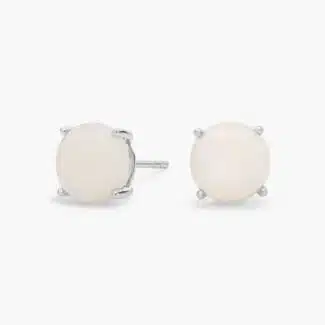
- For Everyday Elegance: The Opal Stud Earrings in 14k White Gold are the perfect “wear them and forget them” piece. They add a touch of milky, iridescent light right next to your face, and because they’re studs, they are incredibly secure and worry-free.
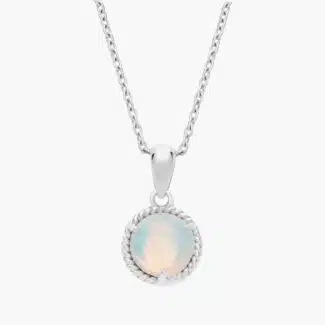
- For Classic, Affordable Style: The Opal Rope Pendant in Sterling Silver is a fantastic choice. The rope-detailing around the bezel gives it a classic, almost nautical feel, and the bezel setting itself offers great protection for the stone. It’s an incredible amount of style for an accessible price.
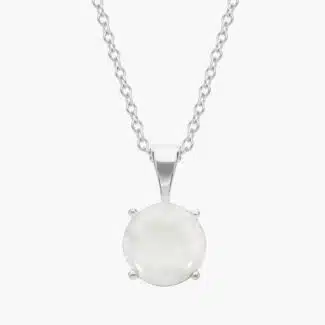
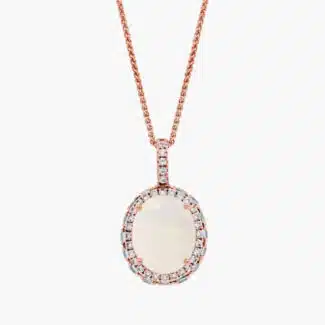
- For a Touch of Luxury: The Opal Solitaire Pendant in 14k White Gold is the “little black dress” of opal necklaces. It’s simple, timeless, and puts all the focus on the beautiful play-of-color in the gemstone.
Each of these pieces is a perfect way to celebrate an October birthday, as opal is the official October birthstone. For more on this beautiful gem’s connection to the month, our guide to the birthstone color for the month of October has you covered.

The safety of these styles is the same reason other beautiful but softer gems, like the precious May birthstone (Emerald), are so beloved as pendants and earrings.
Selected Opal Jewelry
Every Question, Answered by an Expert
You’ve explored the Opal Value Pyramid and learned how to shop for this incredible gem. Now, let’s clear up the final, specific questions that every savvy buyer asks. Here are my direct, honest answers to everything you need to know.
The Verdict: A Gem of Infinite Variety and Value
So, is an opal more expensive than gold or diamonds? The answer is a beautiful and fascinating “sometimes.” We’ve seen how its value can range from incredibly accessible for a beautiful white opal to astronomically rare for a perfect black opal, making it one of the most dynamic and exciting gems in the world.
The worth of an opal is in its unique, personal fire. No two are ever alike. By understanding the different types and what drives their value, you are no longer just a buyer; you are a connoisseur, able to appreciate and choose the perfect piece of this cosmic, captivating gemstone.
Continue Your Research Journey
You’ve now mastered the complex and beautiful world of opal. If your passion for unique and meaningful gemstones has been ignited, these hand-picked expert guides are the perfect next step on your journey.
Explore Other Birthstones
- The King of Gems: An Expert Guide to the Ruby, the July Birthstone – (https://moissanitebyaurelia.com/ruby-july-birthstone/)
- The Royal Purple: Understanding the February Birthstone Color (Amethyst) – (https://moissanitebyaurelia.com/february-birthstone-color/)
- A Gem of Many Faces: What is June’s Birthstone? – (https://moissanitebyaurelia.com/what-is-junes-birthstone/)
A Deeper Dive into Unique Gemstones
- The Volcanic Glass: A Guide to Purple Obsidian – (https://moissanitebyaurelia.com/purple-obsidian/)
- Beyond the Classic: Exploring the Beauty of Pink Moonstone – (https://moissanitebyaurelia.com/pink-moonstone/)
- A Web of Wonder: What is Spider Quartz? – (https://moissanitebyaurelia.com/spider-quartz/)
Practical Guides & Style Inspiration
- Finding Your Perfect Fit: A Guide to Colored Engagement Rings Under $200 – (https://moissanitebyaurelia.com/colored-engagement-rings-under-200/)
- From the Ocean: How Much Are Pearls From an Oyster Worth? – (https://moissanitebyaurelia.com/how-much-are-pearls-from-an-oyster-worth-your-quick-guide/)