


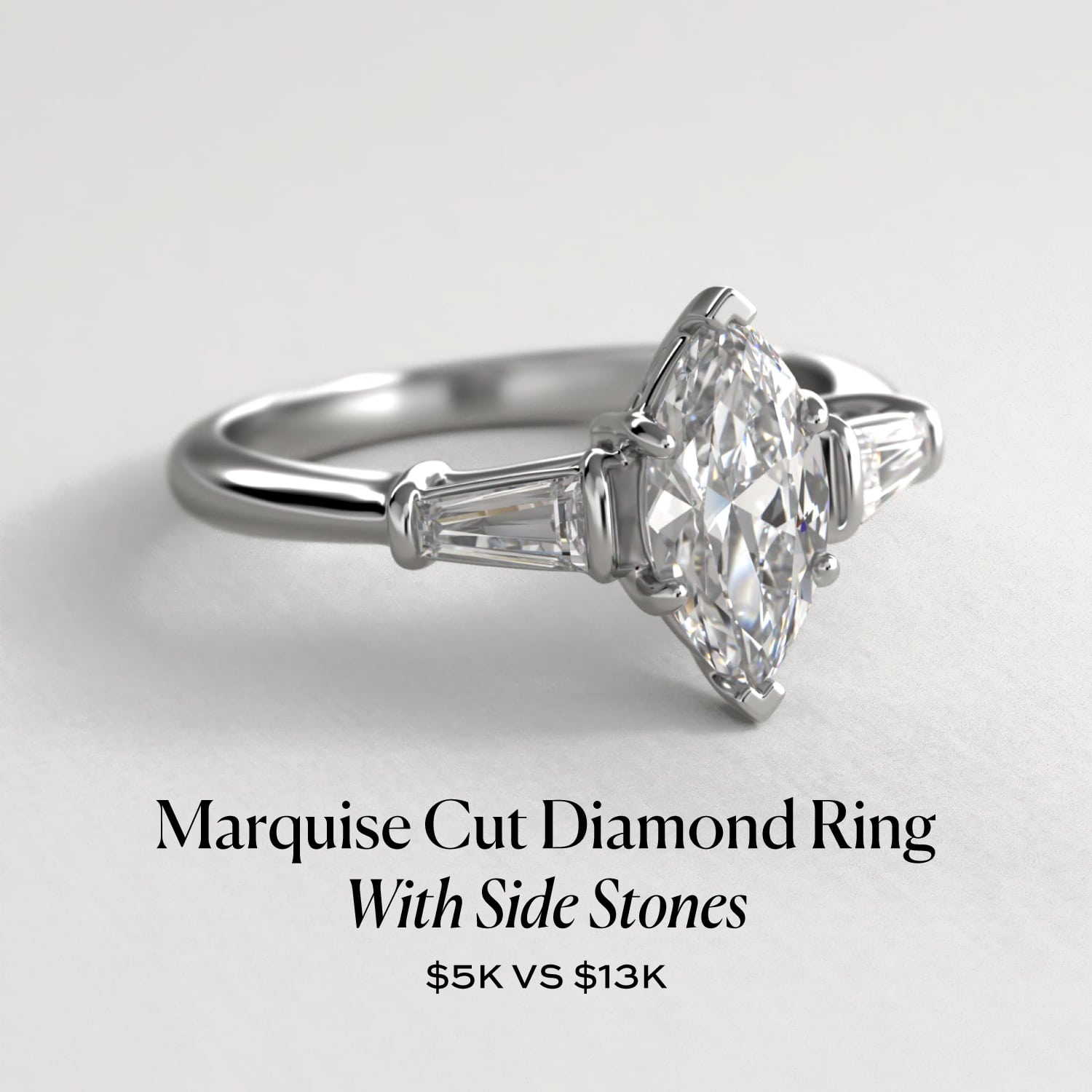
Expert Quick Take: My Honest Opinion After Researching 100+ Stones
In February 2026, the price disparity between Natural and Lab-Grown Marquise diamonds is staggering. I found GIA 1.01 Carat D-VS1 Natural diamonds trading around $4,800.
Conversely, I found 2.00 Carat D-VVS1 Lab diamonds—double the size with better clarity—for just $3,540.
If you are building a three-stone ring with the $2,288 Platinum Tapered Baguette setting, going Lab-Grown gets you a “Celebrity Size” (2ct+) for half the price of a modest Natural 1-Carat build.
Decision Snapshot
| If Your Goal Is… | Choose This Strategy | Mehedi’s Verdict |
|---|---|---|
| Maximum Impact | Lab 2.00ct D-VVS1 | The Size Winner. You get double the carat weight and nearly flawless specs for ~$5,800 total. |
| Purist Prestige | Natural 1.01ct D-VS1 | The Traditionalist. You pay significantly more for a stone half the size, purely for the “Natural” origin. |
| Smartest Value | Lab 2.00ct + White Gold | The Budget Hack. Switching from Platinum to 14k White Gold saves another ~$800, bringing the total cost down further. |
| The 2026 Buying Verdict: The numbers don’t lie. By choosing the 2.00ct Lab Diamond, you get a “Celebrity Size” rock for less than the price of a modest 1-carat natural stone. | ||
The Hard Verdict: Do not pay $13,000 for a Natural 1.12ct Flawless stone. It is throwing money away. If you want the Tapered Baguette look, buy the 2.00ct Lab D-VVS1 for the sheer visual dominance. Skip the mall lighting—buy the data, not the glow.
Deal Alert: Fast-Shipping Gifts — Up to 50% Off* fine jewelry at Blue Nile !
One In A Lifetime Sale: “Clear The Vault” – Get up to 70% OFF on select jewelry at Blue Nile !
Exclusive Offer: Flash Sale on James Allen Up to 40% Off * Sitewide engagement ring settings & Fine Jewelry at James Allen .
Review the different Types of Lab Grown Diamonds to ensure you are getting the best quality.
The Marquise cut is bold and distinctive. It is designed to maximize surface area, effectively making it look much larger than a round or cushion cut of the same weight. However, as a solitaire, it can sometimes feel “lonely.”
Adding Tapered Baguettes as side stones transforms the piece into an Art Deco icon, balancing the curved points of the center stone with sharp, geometric lines.
The variable in this project is the center stone origin. The Platinum Tapered Baguette Setting is a fixed cost of $2,288. The only real question left for your 2026 build is: What origin of carbon goes in the middle?
Mehedi’s Data Reality: “I’m looking at market data where a 1-Carat Natural stone can cost anywhere from $4,800 to $12,000+. Meanwhile, a superior 2-Carat Lab stone is sitting there for $3,540. Let’s build the receipts and see which one deserves your investment.”
If you are still deciding on the center stone, check our Diamond Shapes Guide.
Diamond IQ Test: Natural or Lab-Grown?
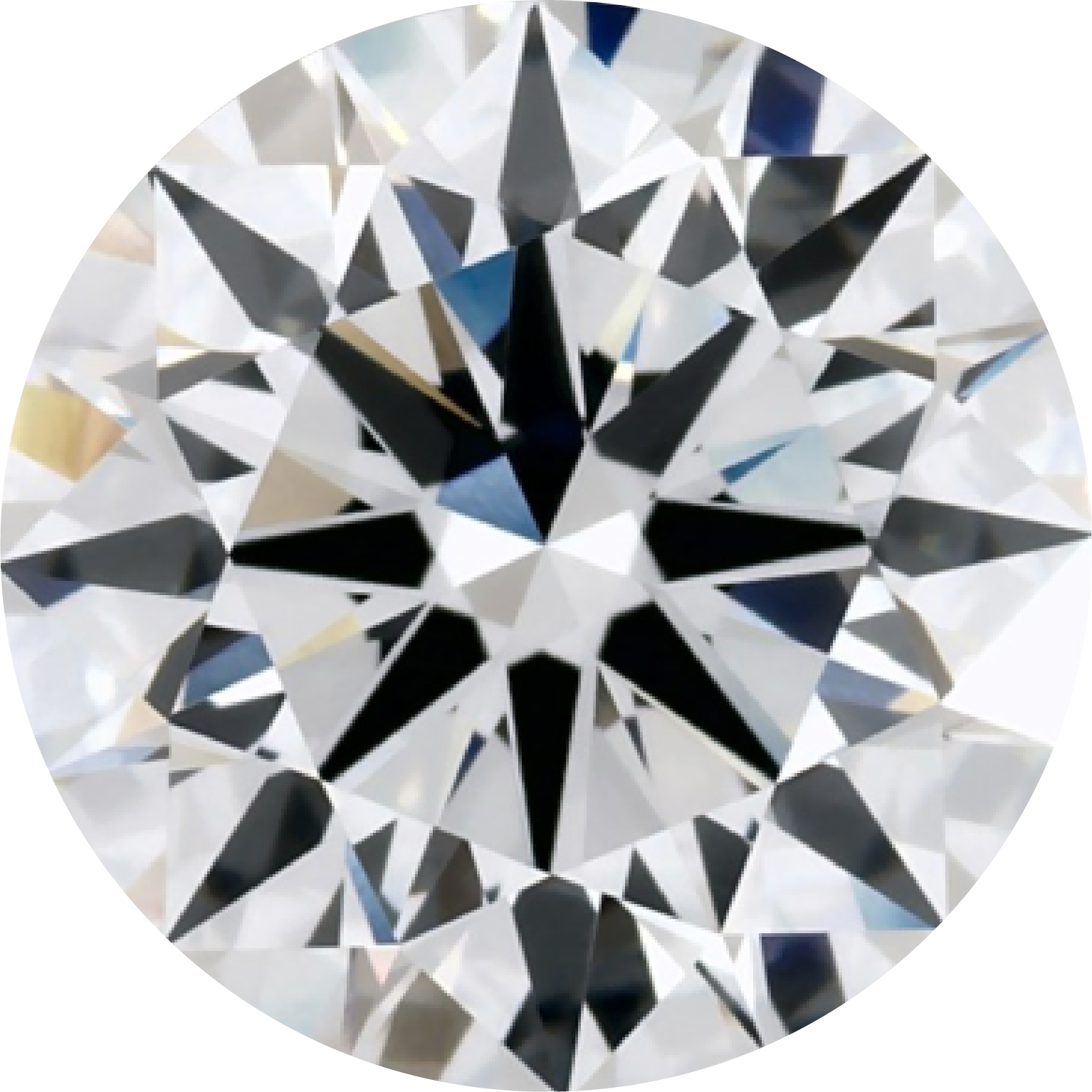
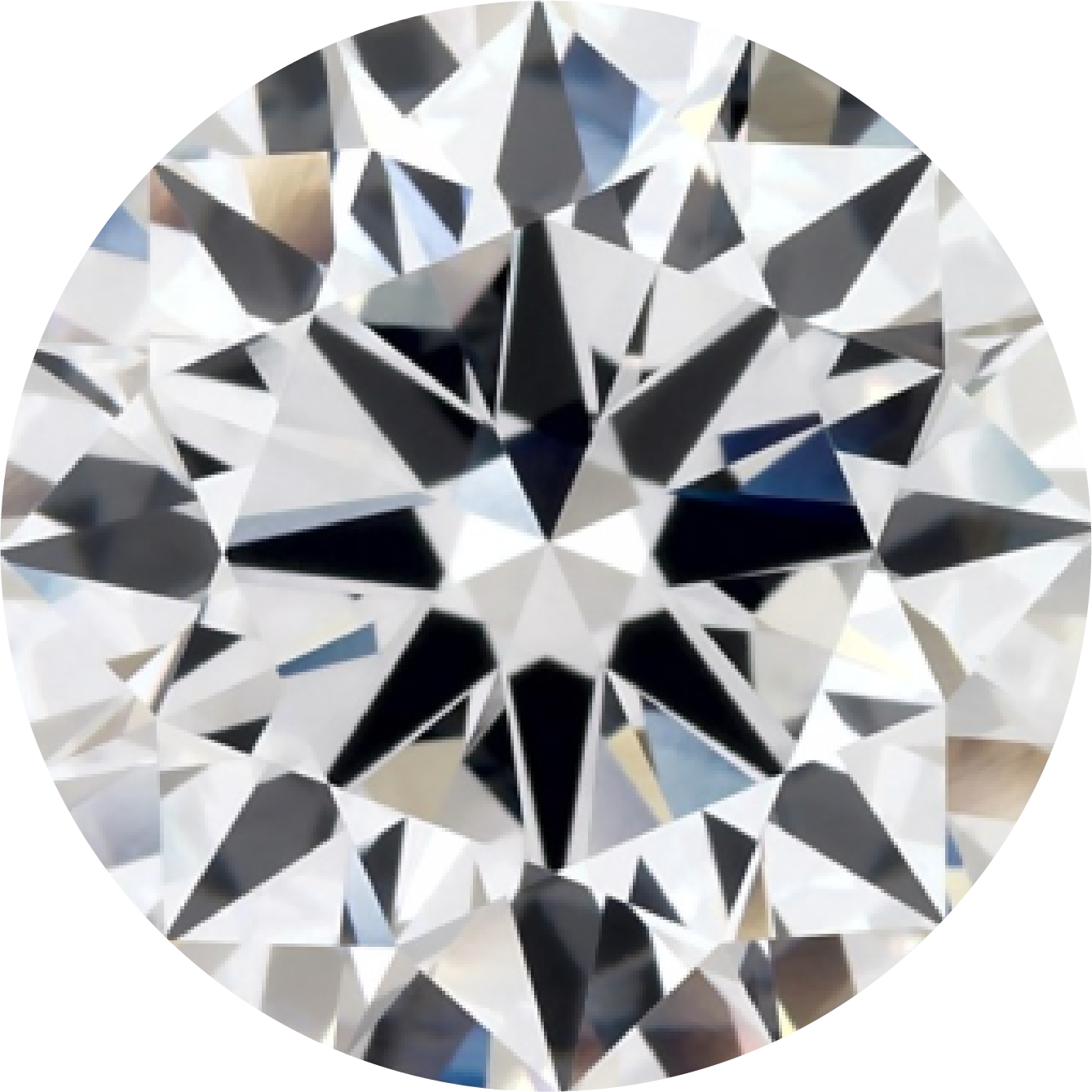
Two identical diamonds: GIA Certified, 1.51ct, D Color, VVS1, Ideal Cut. One is natural ($16,530), the other is lab-grown ($2,390). Choose the diamond you like better and see if you can match it to its origin.
The Natural Build: The $7,000 – $13,000 Option
Building a marquise cut diamond ring with side stones using natural earth-mined diamonds requires a calculated approach to avoid the “rarity traps” that jewelers often set.
In this tier, you are paying for the geological scarcity of a stone that survived billions of years under the earth’s surface.
1 Carat Natural Ring Cost Analysis (Market Data)
The foundation of this build is our $2,288 Platinum Tapered Baguette setting. This price includes the two side diamonds (matched G-H color, VS2-SI1 clarity) and the high-density platinum mount.
By pairing it with GIA-certified marquise centers from our February 2026 data, we can see exactly where your money goes.
Natural Marquise Ring Cost Matrix (Stone + $2,288 Setting)
| Tier | Natural Diamond Spec (GIA) | Stone Price | Total Ring Cost |
|---|---|---|---|
| “The Smart Buy” | 1.01ct D-VS1 | $4,800 | $7,088 |
| “The Safe Median” | 1.03ct G-VS1 | $5,240 | $7,528 |
| “The Colorless Flex” | 1.01ct E-VS1 | $5,100 | $7,388 |
| “The Value Jump” | 1.30ct F-VS1 | $8,930 | $11,218 |
| “The Vanity Tax” | 1.12ct D-FL (Flawless) | $12,090 | $14,378 |
| The 2026 Price Verdict: The $4,800 Smart Buy is a market anomaly you should grab immediately. It is D-Color (highest possible) and VS1 (eye-clean), yet cheaper than the G-Color option. The Flawless option is financially indefensible—you pay $7,000 more for zero visual difference. | |||
Mehedi’s Warning: The “Flawless” Premium
“Do NOT buy the 1.12ct D-Flawless. When you analyze the numbers, you are paying a $7,290 premium over the 1.01ct D-VS1 just for the word ‘Flawless’ and a negligible 0.11 carats of weight. Visually, these stones look identical on the finger.
In a marquise cut, the elongated facets hide VS1 clarity characteristics perfectly. Paying $12,000+ for a 1.1ct stone is effectively burning $7,000 that could have been spent on a massive diamond upgrade or a second piece of jewelry.”
To understand why a G-color stone can often look just as white as a D-color when set in platinum, read my technical comparison of D color diamond vs. G color diamond. For most natural buyers, the 1.01ct D-VS1 at $7,088 total is the winner of this category.
Read Our 5-Star Blue Nile Review
Check our comprehensive Blue Nile review to learn why we rated Blue Nile 5 stars for their exceptional quality and value.
The Lab Build: The $5,800 Upgrade
The lab-grown market in 2026 has created a unique “size arbitrage” for the marquise cut diamond ring with side stones.
Traditionally, a 2-carat marquise in platinum was a high-five-figure purchase. Today, you can secure that exact look for less than the cost of a basic 1-carat natural stone.
2 Carat Lab Ring Cost Analysis (The Arbitrage)
The concept is simple: What if you spent less than the cheapest natural 1-carat option, but walked away with double the diamond and better specs? By pairing our $2,288 Platinum Tapered Baguette setting with elite IGI and GIA lab-grown centers, the value proposition becomes undeniable.
Lab Marquise Ring Cost Matrix (Stone + $2,288 Setting)
| Tier | Lab Diamond Spec (Ideal Cut) | Stone Price | Total Ring Cost |
|---|---|---|---|
| “The Winner” | 2.00ct D-VVS1 | $3,540 | $5,828 |
| “The Ideal Spec” | 2.10ct D-IF (Internally Flawless) | $3,620 | $5,908 |
| “The Step Up” | 2.40ct D-VVS1 | $5,130 | $7,418 |
| “The 3-Carat Flex” | 2.02ct D-IF | $8,290 | $10,538 |
| “The Ceiling” | 3.58ct D-IF | $20,900 | $23,188 |
| The 2026 Price Verdict: Pay attention to “The Ideal Spec” (2.10ct). For only $80 more than the entry option, you get a larger stone that is Internally Flawless. This is a massive value upgrade. Avoid the “3-Carat Flex” option—it is smaller than Tier 2 but costs double. | |||
Mehedi’s Analysis: The Definition of “Smart Money”
“For $5,828, you get a massive 2.00 Carat D-Color marquise set in permanent Platinum. In the natural market, a ring at this price point simply doesn’t exist—or it would be a low-quality 0.70ct stone with visible inclusions.
By choosing lab-grown, you are getting technical perfection (VVS1/IF clarity) and ‘Celebrity Size’ for the price of a standard mall-store solitaire. This is the definition of smart luxury in 2026.”
By opting for a lab grown diamond, you are essentially bypassing the rarity tax of nature to focus on visual performance. If you want to see how this compares to a higher budget, check out our guide on the natural vs lab diamond $15,000 budget where we model even larger configurations.
The Setting: Tapered Baguettes in Platinum
When designing a marquise cut diamond ring with side stones, the setting isn’t just a frame—it’s the structural support system for one of the most vulnerable diamond shapes.
A marquise has two sharp points that are highly prone to chipping if not protected by a high-quality mount.
Why this Setting Costs $2,288
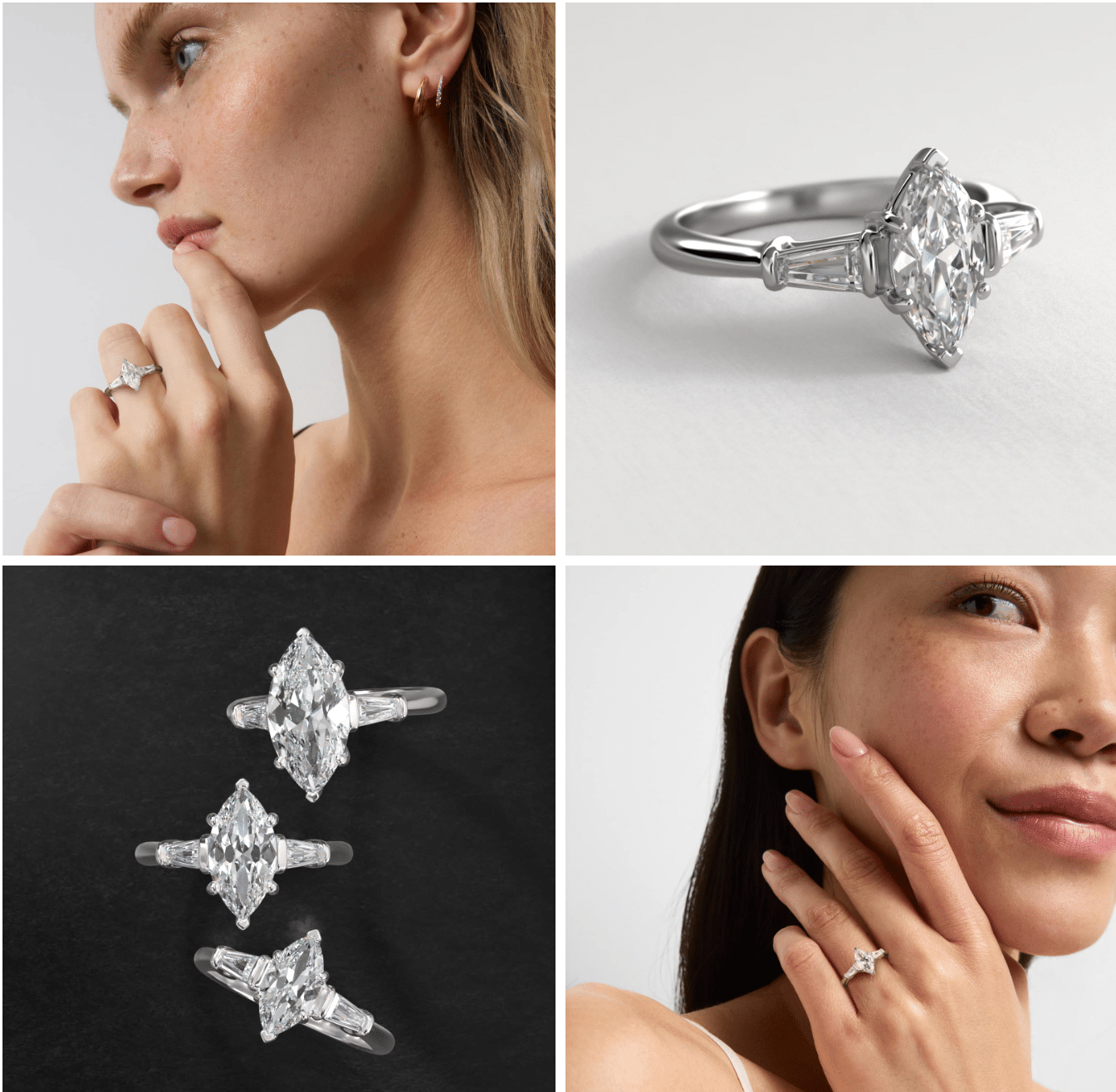
This isn’t a plain solitaire band. The Tapered Baguette Diamond Three Stone Engagement Ring is a precision-engineered piece of jewelry.
- Premium Side Stones: The $2,288 price includes two tapered baguette diamonds (0.24ct total weight). These aren’t “leftover” scraps; they are specifically matched for G-H Color and VS2-SI1 Clarity to complement a high-end center stone.
- The Platinum Factor: Platinum is the gold standard for security. It is denser and more durable than gold, meaning it won’t thin out over decades of wear. Most importantly, it holds the pointed “tips” of the Marquise securely, acting as a permanent shock absorber against accidental knocks.
- Precision Tailoring: This setting features ball prongs and a tailored wire basket, ensuring that the light hits your center stone from every possible angle while keeping it low-profile on the finger.
Mehedi’s Pro Tip: The White Gold Alternative
“If you want the exact same visual look but need to save another $800, switch this setting to 14k White Gold. From a distance, the color is nearly identical once rhodium-plated. However, you will lose that signature ‘platinum heft’—the weight that makes a ring feel like a piece of high-jewelry.
If you are comparing white gold vs platinum, remember that platinum’s durability is why we recommend it for 2ct+ builds.”
Before you decide, it’s worth checking out our guides on how much does a platinum ring cost? and how to pair these with baguette wedding bands for the ultimate Art Deco stack.
Visual Specs: Avoiding the Bow-Tie
When you are spending thousands on a marquise cut diamond ring with side stones, the biggest risk isn’t the color or the clarity—it is the “Bow-Tie.”
This is a physical phenomenon where light fails to reflect off the center of the diamond, creating a dark, shadowed area that resembles a men’s bow-tie.
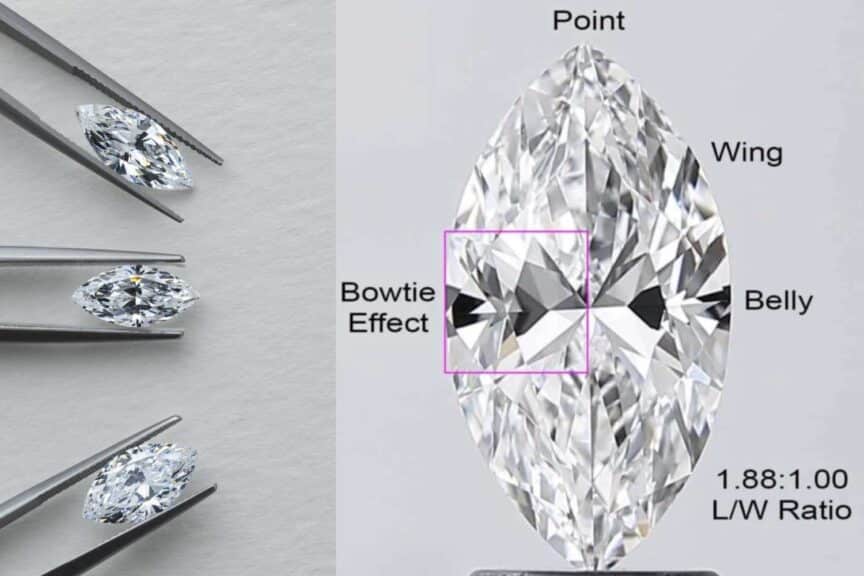
The Marquise Dealbreaker
The bow-tie effect is a byproduct of the marquise’s elongated shape and deep pavilion. If the diamond’s facets aren’t perfectly angled to bounce light back to your eye, they create a dark “void” in the middle of the stone.
- The Problem: Both Natural and Lab Marquise diamonds are susceptible to this. A bow-tie can make even the most expensive stone look dull and “broken” in the center.
- Data Check: Retailers often label marquise diamonds as “Ideal” or “Excellent” cut, but because GIA does not assign an official cut grade to fancy shapes, this “Ideal” label is just the jeweler’s opinion.
- The Video Rule: You must watch the 360° high-definition video of the stone. A static photo can hide a bow-tie by using professional lighting to fill the shadow.
Mehedi’s Advice: Light Over Labels
“Even a $12,000 D-Flawless natural stone can be ugly if it has a severe bow-tie. I have seen $3,500 lab stones that look significantly better because they have even light dispersion across the entire surface.
When you are viewing the stone, look for a bright, consistent sparkle in the center. If you see a dark ‘X’ that stays black as the stone rotates, it’s a dealbreaker. No certificate can fix a bad light-return.”
Before you hit “buy,” make sure you are educated on the anatomy of this shape by visiting our marquise cut diamond guide. It is better to buy an h color diamond with a perfect cut than a D-color stone with a dark shadow in its belly.
James Allen: Our 5-Star Choice for Price and Selection
Check our comprehensive James Allen Review to learn more about their pricing and commitment.
Specs Comparison: D-VS1 vs G-VS2
When building a marquise cut diamond ring with side stones, the technical specifications of your center diamond must “talk” to your side stones. If they are mismatched, you risk creating a ring that looks like a patchwork of different colors rather than a cohesive masterpiece.
Finding the Sweet Spot for Side Stones
The most overlooked constraint in this build is the Setting Limitation. The tapered baguettes pre-set into this platinum mount are graded as G-H Color and VS2-SI1 Clarity. This dictates exactly how you should spend your money on the center stone.
- Don’t Buy D-Color Natural Center: If you place a “Colorless” D-color natural diamond next to G-H side stones, the contrast can be jarring. The elite whiteness of the D stone can actually make the baguette side stones look “yellow” or “warm” by comparison.
- The G or F Color “Sweet Spot”: For a natural build, a G-color stone (like the 1.03ct G-VS1 at $5,240) is the perfect technical match. It aligns with the side stones for a seamless, icy look across the entire band while saving you thousands over a D-color stone.
- Correction for Lab-Grown: Because Lab D-Color diamonds are so aggressively priced (e.g., the 2.00ct D-VVS1 at $3,540), my logic shifts. At this price, go ahead and buy the D.
It is perfectly acceptable for a massive 2-carat center stone to “pop” and look slightly whiter than the side stones in a lab build—it highlights the center stone as the primary focal point.
Mehedi’s Logic: Clarity is Secondary
“In a marquise cut, clarity is less of a concern than color matching. Because of the ‘crushed ice’ faceting at the tips, inclusions are naturally masked. Whether you choose D-VS1 or G-VS2, the stone will be eye-clean.
Your focus should be on ensuring the color of the marquise doesn’t make those beautiful baguette side stones look like an afterthought. If you are on a tight budget, review my H color diamond pricing tips to see how far you can push the ‘Near Colorless’ range.”
By matching the color of your center stone to the G-H baguettes, you create a ring that looks bigger and more expensive because the diamonds appear to flow into one another without visual breaks.
Natural vs. Lab: 3-Stone Marquise Ring Comparison (2026)
To give you the most transparent look at the market, I’ve modeled the two most popular builds using our February 2026 data.
Both use the $2,288 Platinum Tapered Baguette Setting, but as you can see, the final results represent two completely different investment levels.
| Feature | The “Natural Classic” Build | The “Lab Celebrity” Build |
|---|---|---|
| Center Diamond Spec | GIA 1.01ct Natural D-VS1 | IGI 2.00ct Lab-Grown D-VVS1 |
| Center Stone Price | $4,800 | $3,540 |
| Setting Price | $2,288 (Platinum) | $2,288 (Platinum) |
| Total Ring Price | $7,088 | $5,828 |
| Visual Size Profile | Classic (~10mm length) | Massive (~12mm+ coverage) |
| Technical Clarity | VS1 (Eye-Clean) | VVS1 (Microscope-Clean) |
|
The 2026 Financial Verdict:
• The Prestige Choice: If resale value is your #1 concern, buy the Natural Build. • The Value Choice: If you want the “Celebrity Look” for $1,200 less, buy the Lab Build. You get double the carat weight and higher clarity. | ||
FAQ: The Unfiltered Marquise & Baguette Answers
Navigating the marquise cut diamond ring with side stones market in 2026 requires a mix of gemological expertise and financial common sense. Here are the direct answers to the questions most buyers are asking right now.
What is the price difference between a 1 carat natural marquise diamond ring and a 2 carat lab grown one in 2026?+
The “Size Arbitrage” is significant. A high-quality 1.01ct D-VS1 Natural build costs approximately $7,088 total. In contrast, a massive 2.00ct D-VVS1 Lab-grown build costs just $5,828. You are paying $1,260 less for a ring that is visually double the size. Track these shifting values in our diamond price analysis.
Do tapered baguette side stones help a marquise cut diamond look bigger on the finger?+
Yes. Tapered baguettes act as a visual “runway,” extending the elongated line of the marquise across the width of the finger. This creates wall-to-wall diamond coverage that makes the center stone appear more dominant. Learn about accent stones in our baguette wedding bands guide.
Why does the platinum tapered baguette setting cost over $2,200?+
The ~$2,288 price tag is driven by the density and weight of Platinum, the inclusion of two hand-matched 0.24ct tw tapered baguette diamonds, and the precision labor required for a three-stone basket. Compare metal costs in how much does a platinum ring cost?.
What color grade should the center marquise diamond be to match G-H color side stones?+
For a natural build, G or F color is the sweet spot to ensure the center doesn’t make the side stones look yellow. In lab builds, D-color is so affordable that the extra “pop” of whiteness is a great choice. See our f color diamond guide for more details.
Is a V-tip prong setting required to protect the points of a marquise cut diamond?+
Absolutely. The points of a marquise are thin and vulnerable to chipping. A V-tip prong (Chevron prong) is mandatory to shield those tips while maximizing light return. Learn about ring safety in our engagement ring anatomy guide.
Does a 2 carat marquise diamond typically show a “bow-tie” shadow in the center?+
It is very common. Most elongated shapes like marquise have a dark “bow-tie” shadow in the middle. The key is to check the 360° video to ensure the shadow shifts with light rather than staying black. Explore cut patterns in our diamond cut chart.
How much bigger does a 2 carat marquise diamond look compared to a 1 carat round diamond?+
A 2-carat marquise will look roughly 50% larger on the finger than a 1-carat round brilliant because its weight is spread across a longer surface area. This makes it a top choice for shapes that look the largest.
Can I get a high-quality 2 carat lab grown marquise ring for under $6,000?+
Yes. Pairing an IGI 2.00ct D-VVS1 lab diamond (~$3,540) with a Platinum Tapered Baguette setting (~$2,288) brings your total to roughly $5,828. This is one of the best value-to-impact builds in 2026. Check out our guide to lab diamond retailers.
What is the ideal length-to-width ratio for a marquise diamond?+
For a balanced look, aim for a ratio between 1.75 and 2.15. This elongates the finger without losing the elegant curves of the shape. Reference our marquise cut diamond guide for more on proportions.
Is platinum or 18k white gold better for securing a marquise diamond?+
Platinum is superior for security. It is more durable and does not thin out over time, which is vital for protecting the delicate points of a marquise. Learn about metal pros and cons in our metals guide.
Conclusion: Mehedi’s “Ring Build” Verdict
After building this ring twice—once with a modest Natural stone and once with a massive Lab stone—the numbers paint a very clear picture. The fixed cost of the $2,288 Platinum Setting means the pressure is entirely on which center stone you choose.
Here is exactly how I would handle this specific project in February 2026:
The “Hard Pass” (What to Avoid):
- The “Paper Perfection” Build: Do not buy the Natural 1.12ct D-Flawless (~7,000 premium over the VS1 option just to have “Flawless” written on a certificate. In a three-stone setting with VS2 side stones, this is financial nonsense.
The “Natural Classic” (Prestige Pick):
- The Build: Platinum Setting + GIA 1.01ct D-VS1 Natural Stone.
- Total Price: ~$7,100.
- Why: If you demand a natural diamond, this is the smart ceiling. It gives you top-tier color (D) to match the platinum, excellent clarity, and keeps the total price reasonable. It’s elegant, timeless, and retains market rarity.
The “Celebrity Pick” (Mehedi’s Winner):
- 🚀 The Build: Platinum Setting + Lab 2.00ct D-VVS1 Stone.
- Total Price: ~$5,800.
- Why: This is the math-breaker. You are paying $1,300 less than the 1-Carat Natural ring, but you are getting Double the Size (2.00ct vs 1.01ct) and Better Specs (VVS1 vs VS1). The visual impact of a 2-carat Marquise is absolutely massive on the finger. This is the build that stops strangers in the street.
Side-stone rings require careful color matching. Don’t put a yellow-tinted center stone next to white baguettes. Check the specs and fair price using our Diamond Rate Calculator before you build.