
Let’s look at the uncomfortable truth: Moissanite prices are typically 90% branding and 10% material. Unlike diamonds, which have a controlled supply, silicon carbide is lab-grown and supply is infinite. The raw manufacturing cost of a standard 1-carat moissanite stone is between $20 and $40.
When you pay $600+ at a premium retailer like James Allen or Charles & Colvard, you are not paying for the rock itself; you are paying for the Curation (rejecting the cloudy stones), the Precision Cutting (Hearts & Arrows), and the Lifetime Warranty.
Anniversary Sale: Get 35% OFF Sitewide on the original 9.25 Mohs Moissanite from the industry pioneers at Charles & Colvard .
Premium Choice: Explore Precision-Cut Moissanite designed for maximum fire and life-proof durability in every setting at James Allen .
If you see a generic 1-carat moissanite listed for $900 at a mall jeweler, you are simply paying a markup on a commodity product.
Mehedi’s Buying Verdict: The 2026 Strategy
- Buy Wholesale ($20 – $80): Perfect for travel rings or fun jewelry. The Risk: High chance of “oil slick” cloudiness or a greenish tint. Zero warranty.
- Buy Premium ($450 – $900): Mandatory for Engagement Rings. You pay for the Best Moissanite Brand (like Forever One) to guarantee the stone is crisp, colorless, and won’t turn milky in a year.
- Avoid ($1,000+): Any retailer charging diamond-tier prices for moissanite is ripping you off. There is no moissanite on earth worth $1,500 per carat.
Think You’re A Moissanite Pro?
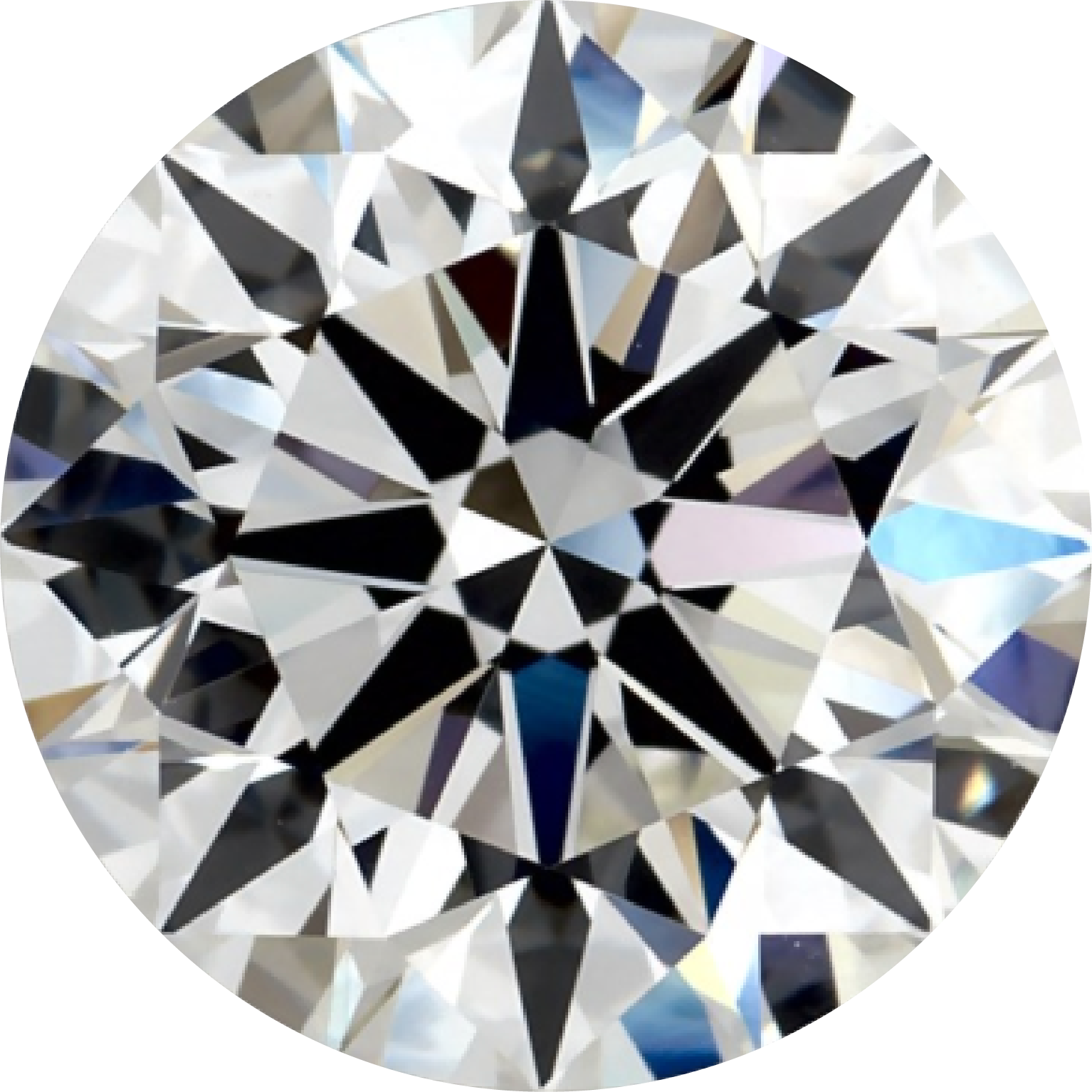
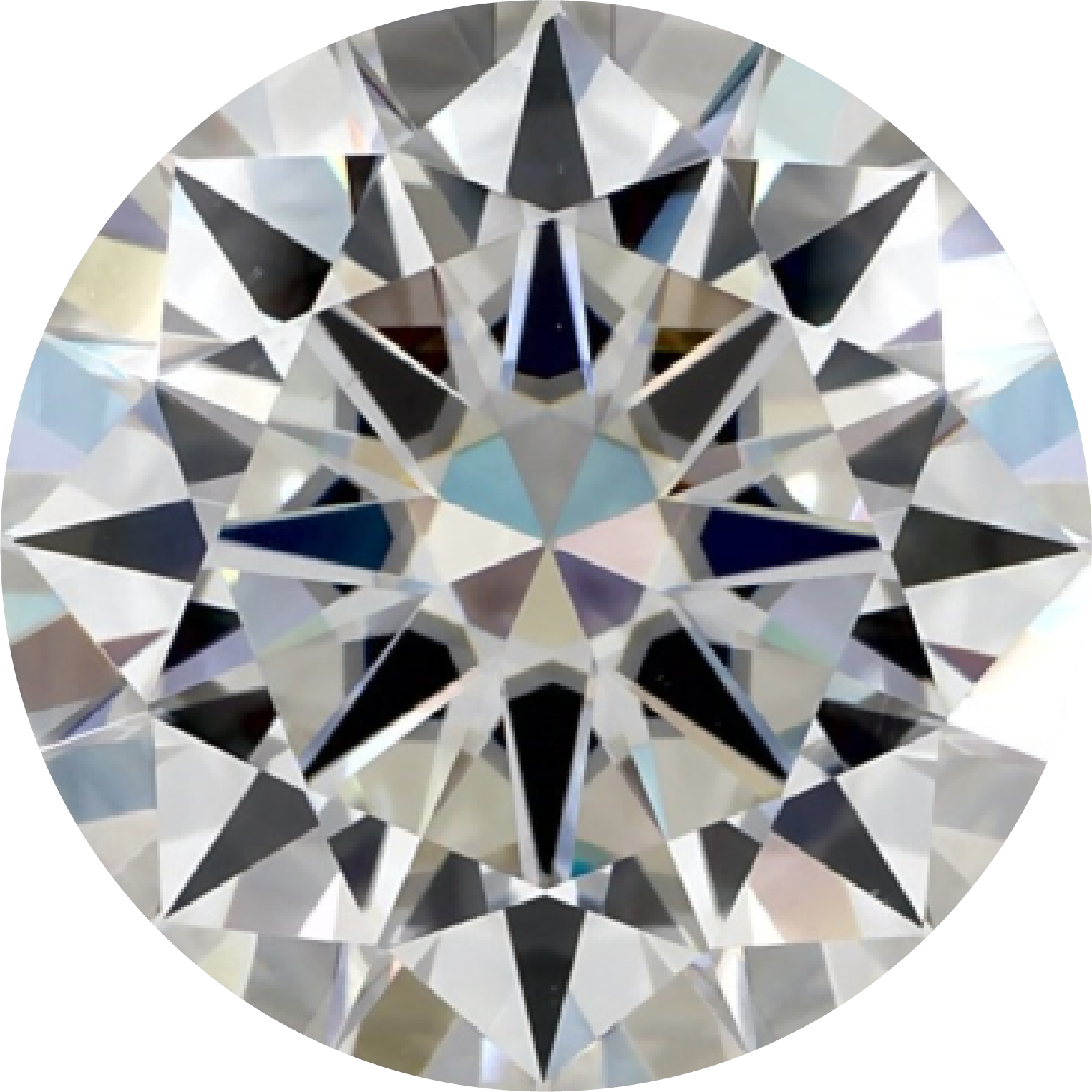
Think you’re a Moissanite Pro and can tell the difference? Choose the gemstone that you like better. Is it the one for $1,180 or the one for $39,000? Both are 2.48 carats.
The 2026 Moissanite Price Cheat Sheet (Fair Market Value)
Stop guessing and stop listening to salespeople who tell you moissanite is “rare.” It isn’t.
I have analyzed the 2026 market data—from the factories in China to the showrooms in New York—to create this Fair Value Master Chart.
Use this table to audit the price tag you are looking at right now. If the price is significantly higher than the “Premium Retail” column, you are paying for the logo, not the stone.
2026 Moissanite Price Per Carat (Loose Stone Only)
Prices reflect Colorless (D-F), VVS Clarity, Excellent Cut. “Size” refers to Round Brilliant diameter.
| Carat Weight | Size (mm) | Wholesale / Direct (Etsy/Intl) | Premium Retail (James Allen / C&C) | The “Rip-Off” Zone (Mall Stores) |
|---|---|---|---|---|
| 1.00 Carat | 6.5 mm | $25 – $60 | $350 – $550 | $700 – $950+ |
| 1.50 Carat | 7.5 mm | $45 – $100 | $450 – $780 | $1,100 – $1,400+ |
| 2.00 Carat | 8.0 mm | $70 – $150 | $580 – $950 | $1,500 – $2,200+ |
| 3.00 Carat | 9.0 mm | $110 – $220 | $850 – $1,300 | $2,200 – $3,500+ |
| 4.00 Carat | 10.0 mm | $160 – $350 | $1,200 – $1,800 | $3,500 – $5,000+ |
| 5.00 Carat | 11.0 mm | $220 – $500 | $1,600 – $2,400 | $4,800 – $6,500+ |
Understanding the 3 Pricing Tiers (What Are You Paying For?)
1. The Wholesale / Direct Tier ($20 – $100)
- Who sells this: Direct-from-factory vendors (Amazon Marketplace, eBay, AliExpress).
- The Reality: You are buying the Raw Material. Silicon Carbide is cheap. At this price, you get zero service, zero warranty, and zero Quality Control. You might get a crisp stone, or you might get one that looks “milky” or has a weird green tint. It is a gamble, but for a travel ring, it’s often worth it.
2. The Premium Retail Tier ($350 – $1,500)
- Who sells this: James Allen, and Charles & Colvard (Forever One).
- The Reality: You are paying for Curation & Safety. When you buy from James Allen, you aren’t just buying the rock. You are paying for:
- Human Inspection: A gemologist tossed out the “milky” stones so you don’t get them.
- The Warranty: If the stone chips, they help you.
- The Cut: Premium brands often cut the stone to “Hearts and Arrows” standards to eliminate the “Disco Ball” effect cheap moissanite has.
- Human Inspection: A gemologist tossed out the “milky” stones so you don’t get them.
3. The “Rip-Off” Zone (Avoid)
- Who sells this: Mall jewelry chains and “Instagram Brands” with heavy marketing budgets.
- The Reality: If you see a 1-carat moissanite listed for $800, run away. They are selling you a generic $40 stone and charging you $760 for their nice packaging and Facebook ads. There is no moissanite on earth worth $1,000 per carat in 2026.
The “Brand Tax”: Why Moissanite Prices Vary by 1,000%
If the raw material costs $20, why do some brands charge $1,000?
This is the “Brand Tax,” and understanding it is the difference between buying a gem and getting ripped off.
Here is the chemical reality: Silicon Carbide (SiC) is cheap.
Unlike diamonds, which require massive mining operations, moissanite is grown in a lab. The cost to grow a crystal boule has plummeted in the last decade as patents expired. The material cost of moissanite is closer to a cubic zirconia than a diamond.
So, when you ask “why is moissanite so expensive” at a jewelry store, you aren’t paying for the rock. You are paying for the Labor of Cutting and the Cost of Rejection.
The “Forever One” Example: Paying for Perfection
Let’s look at Charles & Colvard, the original creators of moissanite. Their “Forever One” line typically costs $500 – $700 per carat.
Why?
- The Rejection Rate: They might grow 100 crystals, but they throw away 80 of them because they have a slight green tint or “needles” inside. You pay a premium to ensure you get one of the 20 perfect ones.
- The “Hearts & Arrows” Cut: Cheap moissanite is cut fast. Premium brands use robotic precision to cut the facets to “Hearts and Arrows” standards. This controls the fire so it looks like a high-end diamond, not a fake stone.
The “Disco Ball” Effect (The Risk of Cheap Stones)
If you buy a $40 stone from a wholesale site, you are getting the stones that Charles & Colvard rejected.
- The Look: Cheap moissanite is often cut to maximize weight, not beauty. This results in the “Disco Ball Effect”—an uncontrolled explosion of rainbow flashes.
- The Problem: To the naked eye, this looks “plastic” or “fake.” It screams “Simulant.”
- The Tint: Cheap stones often look yellow or green in overcast light because the rough crystal wasn’t bleached or treated properly.
Mehedi’s Verdict:
If you want a stone that passes for a diamond at a dinner party, you have to pay the premium for a Best Moissanite Brand like James Allen or C&C. The extra $400 buys you a crisp, colorless cut that doesn’t look like costume jewelry. If you just want sparkle and don’t care if it looks “real,” save your money and buy wholesale.
Moissanite Carat Weight and Pricing: The “Big Stone” Hack
Here is the biggest financial secret in the jewelry world: Diamond prices are Exponential. Moissanite prices are Linear.
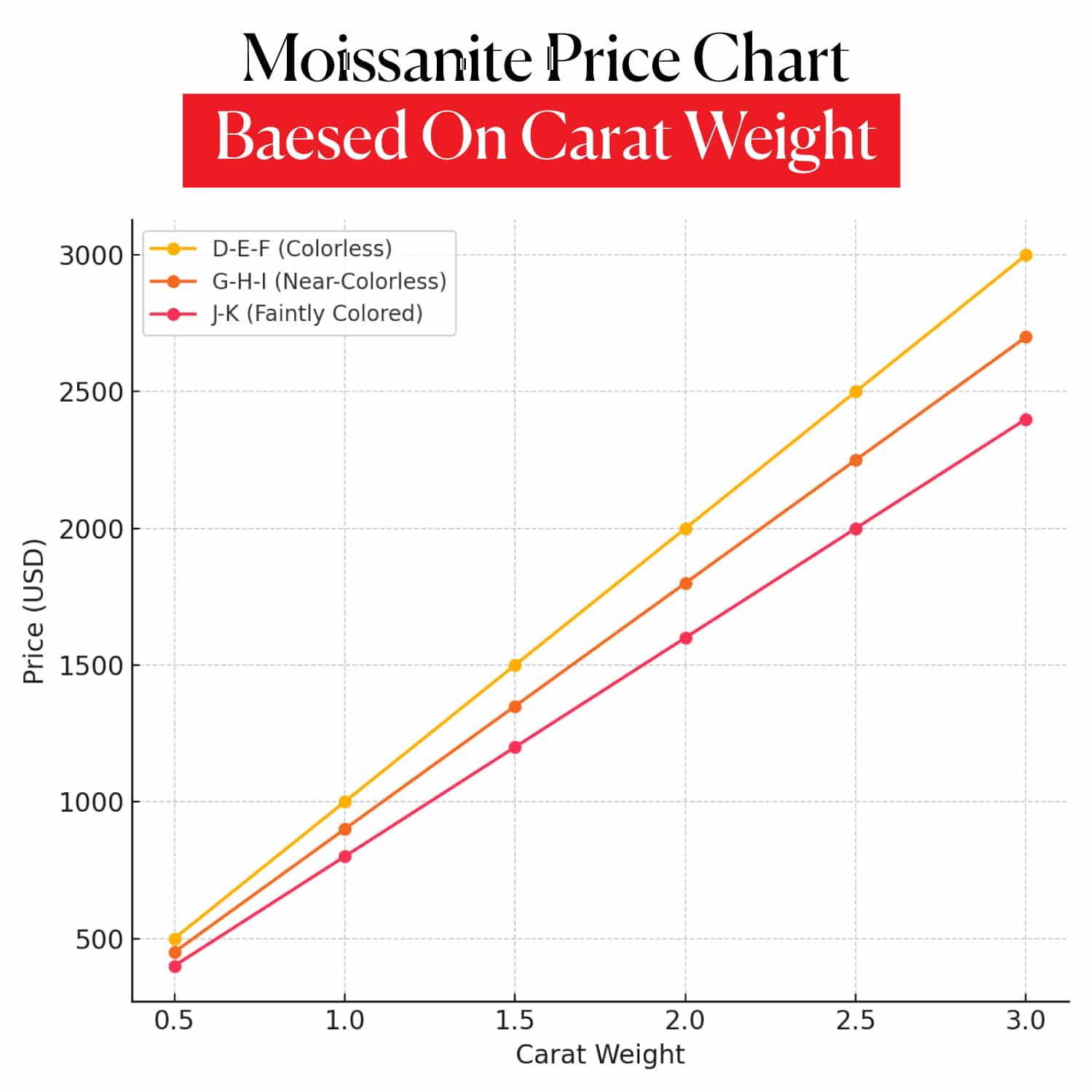
If you buy a natural diamond, a 2-carat stone isn’t double the price of a 1-carat stone; it is 4x to 5x the price. A 5-carat diamond? That’s billionaire territory ($150,000+).
Moissanite breaks this rule. Because it is lab-grown, making a larger crystal doesn’t require a miracle of nature; it just requires a little more time in the reactor. A 5-carat moissanite is affordable for almost anyone.
The “Big Rock” Price Chart (0.50ct to 10.00ct)
Comparison of estimated market prices for Round Brilliant Cuts.
| Carat Weight | Size (mm) | Moissanite (Wholesale) | Moissanite (Premium) | Natural Diamond Equivalent (2026 Price) |
|---|---|---|---|---|
| 0.50 Carat | 5.0 mm | $15 – $35 | $250 – $380 | $1,800+ (Up 12% from 2025) |
| 1.00 Carat | 6.5 mm | $25 – $60 | $480 – $650 | $6,500+ (The “Classic” Standard) |
| 2.00 Carat | 8.0 mm | $75 – $140 | $850 – $1,200 | $23,500+ (Status Entry Point) |
| 3.00 Carat | 9.0 mm | $120 – $250 | $1,300 – $1,800 | $48,000+ (High Market Volatility) |
| 5.00 Carat | 11.0 mm | $250 – $500 | $2,200 – $3,100 | $165,000+ (Museum / Heritage Asset) |
| 10.00 Carat | 14.0 mm | $600 – $1,100 | Custom Build | Price on Application ($500k+) |
Mehedi’s Insight:
If you want a 5-carat look, Moissanite is the only logical choice unless you have “celebrity money.” You can get a massive 11mm stone for under $500 on the wholesale market. Even the premium brands charge less for a 5-carat moissanite than you would pay for a 0.50-carat diamond.
The “Weight” Warning (Carat vs. Millimeter)
There is a technical catch when buying big moissanite. Moissanite is physically lighter than diamond.
- Diamond Density: 3.52 g/cm³
- Moissanite Density: 3.22 g/cm³
This means a “1 Carat” Moissanite is physically larger than a 1 Carat Diamond. If you buy strictly by weight, your stone might not fit a standard ring setting.
Always buy moissanite by Millimeters (mm), not Carat Weight. To understand why this math matters for your setting, read our guide on the weight of moissanite comparing to diamond.
Moissanite Cut Quality and Pricing: The “Plastic” Avoidance
When buying moissanite, Cut is King.
With diamonds, you might sacrifice the Cut grade to get a bigger stone. With moissanite, you simply cannot do that. Why? Because moissanite is “doubly refractive.” It bends light twice as much as a diamond.
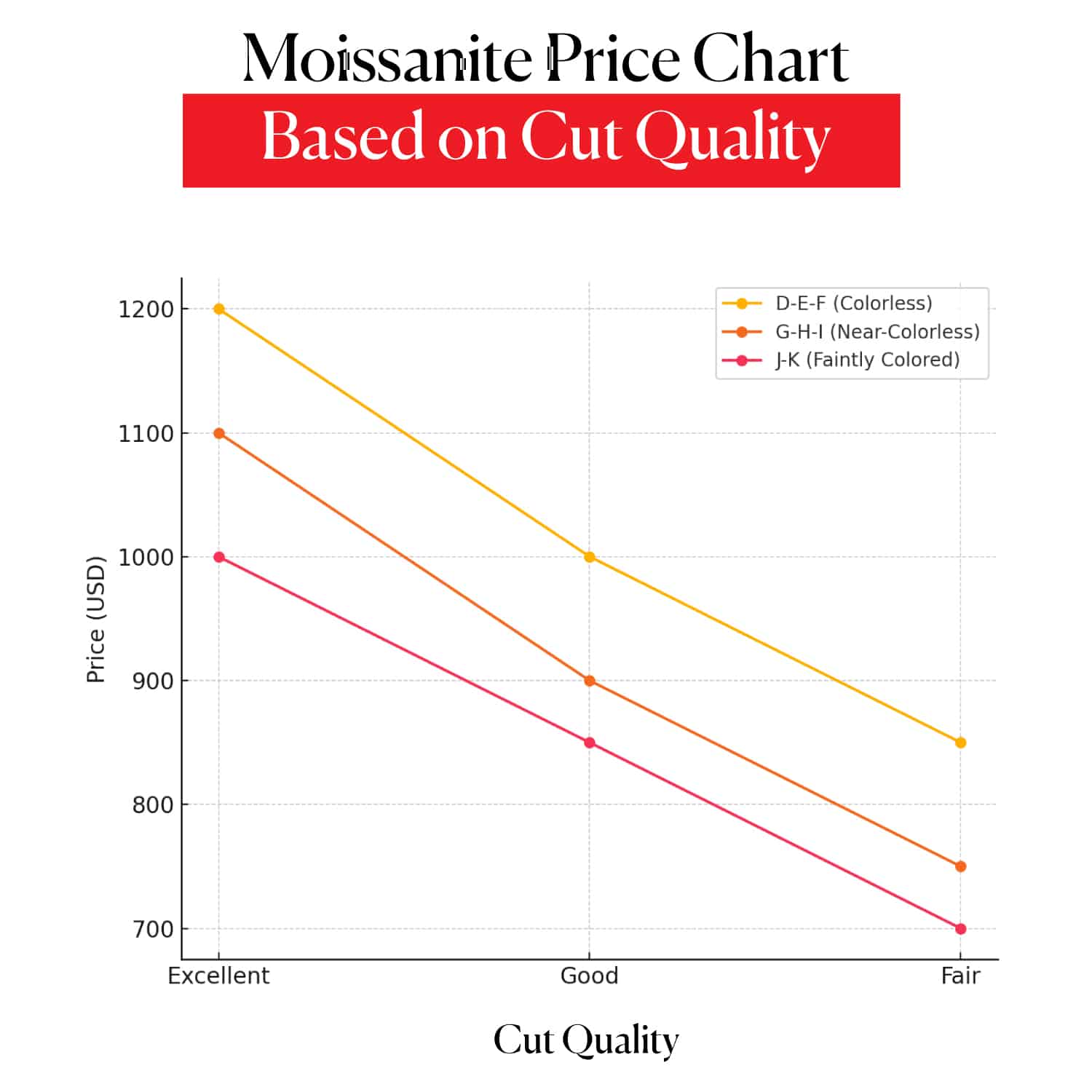
If a moissanite is cut poorly, that double refraction creates a blurry, chaotic sparkle that looks like plastic or costume jewelry. The only way to make moissanite look like a high-end gem is to control that fire with a precision cut.
The Cut Quality Price Ladder
Don’t save money here. This is where the beauty lives.
| Cut Grade | Visual Description | 2026 Price Premium | Expert Verdict |
|---|---|---|---|
| Standard / Good | Chaotic light return with noticeable dark spots. Often exhibits the “Disco Ball” effect—overwhelming rainbow flashes that look synthetic. | Base Price ($25 – $75/ct) | AVOID. These cuts are usually found in mass-market mall kiosks. They lack the depth and crispness of high-end gems. |
| Excellent / Ideal | Bright and crisp facets. Significantly reduces the hazy “double refraction” blur. Light return is focused and clean. | +$50 – $100/ct | The Baseline. This is the minimum grade you should accept for a serious piece of jewelry like an engagement ring. |
| Hearts & Arrows | Mathematically perfect symmetry. 58 facets aligned in 3D to create balanced white and rainbow light. Mimics a diamond’s sparkle profile. | +$150 – $250/ct | MUST BUY. The only cut that effectively masks moissanite’s synthetic origins. This is the “Super Ideal” of the 2026 market. |
Why “Hearts & Arrows” is Worth the Premium
You will see listings for “Hearts & Arrows Moissanite Price” being higher. This is not marketing fluff.
A Hearts & Arrows cut is designed to mimic the exact light performance of a Super Ideal Cut Diamond. It tones down the rainbow “fire” (which can look fake) and increases the white light “brilliance” (which looks expensive).
If you put a Standard Cut moissanite next to a Hearts & Arrows moissanite, the Standard one looks like a toy. The H&A one looks like an heirloom.
For a deeper dive into how the cut affects the “Rainbow” vs. “White” light balance, check our guide on the 4Cs of Moissanite.
Mehedi’s Verdict:
If your budget is tight, drop the Carat weight, but never drop the Cut. Pay the extra $100 for the Excellent/Ideal grade. It is the best money you will spend.
Moissanite Color Grade and Pricing: The “Yellow” Tint
Here is the dirty secret of the silicon carbide lab: Moissanite wants to be yellow.
In its natural state, the crystal structure tends to have a faint green, gray, or yellow tint. Creating a truly “Colorless” (D-E-F) stone requires advanced technology and bleaching processes.
This is why color grade is a major price driver. You are paying for the technology required to remove the tint.
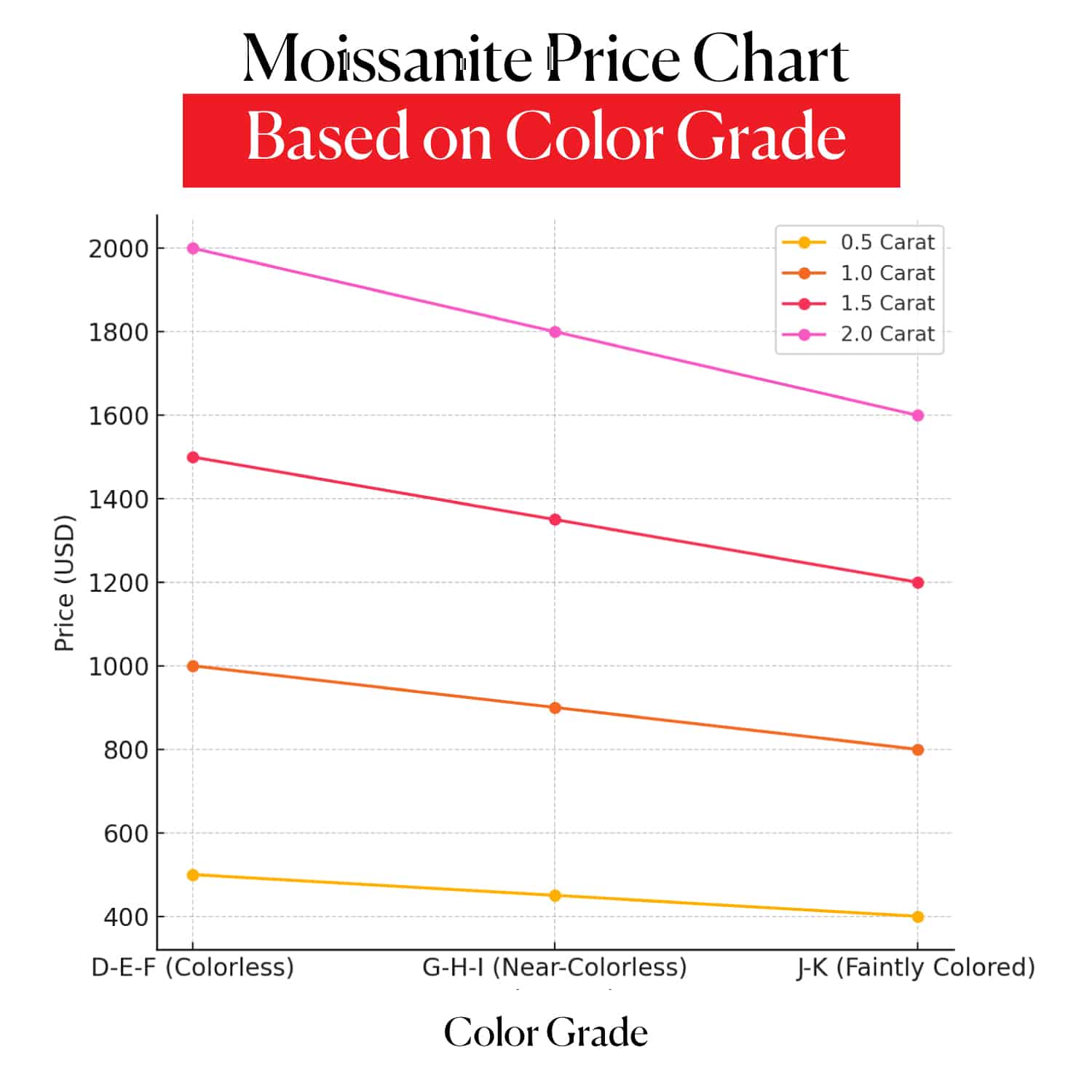
The Color Price Gap: DEF vs. GHI
Price estimate for a 1.00 carat Round Brilliant.
| Color Grade | 2026 Description | Wholesale (Loose) | Premium Retail | Strategic Use Case |
|---|---|---|---|---|
| D-E-F (Colorless) | Icy white and optically pure. Matches the appearance of top-tier investment diamonds. | $35 – $65/ct | $500 – $650/ct | Platinum / White Gold. Essential for high-impact engagement rings. |
| G-H-I (Near Colorless) | Warm white tones. A slight yellow or gray tint may be visible under professional lighting. | $20 – $40/ct | $350 – $480/ct | Yellow / Rose Gold. The warmth of the metal masks the slight tint of the stone. |
| J-K (Faint Tint) | Noticeable warmth. Stones may appear slightly green or gray in certain light environments. | $10 – $15/ct | AVOID Retail | Exclusive to Vintage Heirloom styles seeking an aged “Old Mine” aesthetic. |
Mehedi’s Strategy:
If you are setting the stone in Yellow Gold, save your money and buy a G-H-I stone. The yellow metal will mask the tint anyway. If you are setting it in White Gold or Platinum, you must pay the premium for D-E-F. A G-color stone in a platinum setting will look dirty.
The “Vintage” Warning (6H vs. 4H Crystal)
If you see a moissanite sold very cheaply on a secondary market (like eBay), be careful. It might be “Classic” Moissanite (pre-2015).
- Old Tech (6H Polytype): Naturally reflected green and yellow. In sunlight, these stones often look like “Mountain Dew.” They often glow orange under UV light.
- New Tech (4H Polytype): This is what modern brands like “Forever One” use. It is chemically pure and naturally whiter.
Don’t buy a $20 stone and expect it to look like a modern diamond. It might be old stock that glows green. To understand exactly how these grades look in real life, check our visual Moissanite Color Chart.
Moissanite Clarity Grade and Pricing: The VVS Standard
When buying a diamond, clarity is a huge deal. An “SI1” diamond is thousands of dollars cheaper than a “VVS1.”
When buying moissanite, Clarity doesn’t matter.
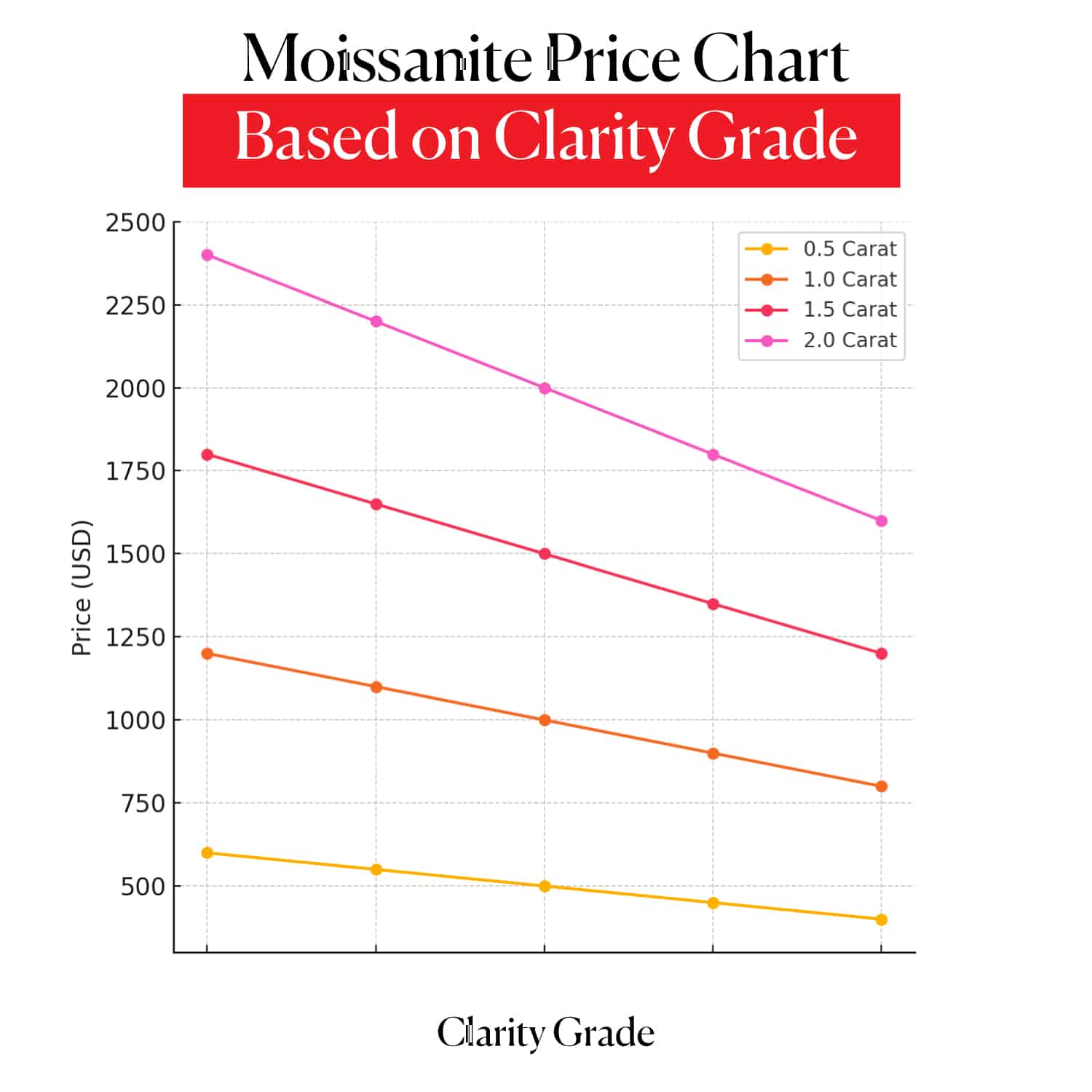
Why? Because moissanite is lab-grown. The scientists control the environment. They don’t have to worry about nature putting a black spot in the crystal.
- The Baseline: 95% of the moissanite on the market is graded VVS (Very, Very Slightly Included) or IF (Internally Flawless).
- The Scam: Some retailers try to charge a premium for “Flawless” moissanite. Don’t fall for it. VVS1 is the standard, not the exception.
The Clarity Price Illusion
Don’t pay extra for a grade that comes standard.
| Clarity Grade | 2026 Price Premium | Visual Difference (10x Loupe) | Expert Verdict |
|---|---|---|---|
| FL / IF (Flawless) | +$100 – $200 per ct | Zero visual difference. Even under a professional microscope, the stone is geologically perfect. | MARKETING HYPE. Unless you are a collector, there is no logical reason to pay this premium for invisible specs. |
| VVS1 / VVS2 | Market Standard Base | Minute inclusions. Range from extremely difficult to see face-up under 10x magnification. | THE SWEET SPOT. This is the gold standard for high-end moissanite engagement rings. Optically identical to Flawless. |
| VS1 / VS2 | -$25 – $50 per ct | Minor inclusions. Difficult to see under 10x magnification; clean to the naked eye. | ACCEPTABLE VALUE. A great choice for earrings or pendants where extreme close-up scrutiny is less likely. |
| I1 / I2 (Included) | Deep Discount (-50%+) | Visible needle inclusions or clouds. Often distracts from the refractive fire of the stone. | RARE REJECT. Most lab-grown moissanite is high quality; “Included” stones are typically factory errors. Avoid at all costs. |
The “GRA Certificate” Truth
You will often see moissanite sold with a black card that says “GRA Certified VVS1.”
- The Reality: Unlike the GIA (which is a strict non-profit), “GRA” certificates for moissanite are often mass-printed generic cards. They are not a guarantee of value. They are a marketing accessory.
- Mehedi’s Advice: Ignore the card. Look at the stone. If it’s sold by a reputable US vendor, it will be VVS.
For a deeper dive into what these black cards actually mean (and what they don’t), read our investigation on the GRA Moissanite Ring.
Moissanite vs. Diamond: The $20,000 Savings Chart
This is the chart that makes diamond jewelers sweat.
If you put a top-tier Moissanite next to a Natural Diamond, 99% of people cannot tell the difference without a loupe. But your bank account certainly can.
In 2026, the question isn’t just “Moissanite vs. Natural.” You also have to consider Lab-Grown Diamonds, which have crashed in price. Here is the financial breakdown of the three main options.
The 2026 Price Showdown (Round Brilliant)
Comparison based on G Color, VS Clarity, Excellent Cut.
| Carat Weight | Natural Diamond (Earth-Mined) | Lab-Grown Diamond (Real Diamond) | Premium Moissanite (Hearts & Arrows) | Maximum Savings (Moissanite vs Natural) |
|---|---|---|---|---|
| 1.00 Carat | $5,500 – $8,500+ | $650 – $950 | $400 – $600 | ~$7,900 |
| 2.00 Carat | $18,000 – $28,000+ | $1,400 – $1,900 | $850 – $1,200 | ~$26,800 |
| 3.00 Carat | $45,000 – $65,000+ | $2,100 – $3,200 | $1,300 – $1,900 | ~$63,100 |
| 4.00 Carat | $85,000 – $125,000+ | $3,800 – $5,500 | $1,800 – $2,600 | ~$122,400 |
The “Opportunity Cost” Reality:
Look at the 2.00 Carat row.
- Option A (Natural): You spend $18,000. You have a ring.
- Option B (Moissanite): You spend $800. You have a ring that sparkles more. You take the remaining $17,200 and put a down payment on a house, buy a car, or fund a wedding.
The Visual Trade-Off: What Are You Giving Up?
You save $17,000, but is there a catch?
Yes. Moissanite is not a diamond. It behaves differently.
- Refractive Index: Diamond is 2.42. Moissanite is 2.65.
- The Result: Moissanite has more fire. It shoots out rainbow flashes (reds, blues, greens) much more intensely than a diamond. Some people love this (“The Disco Ball Effect”); others think it looks “fake” because it sparkles too much.
If you want to understand the physics behind why moissanite sparkles differently (and how to spot the difference), read our side-by-side Moissanite vs Diamond Comparison.
Mehedi’s Buying Verdict:
- Buy Natural Diamond: Only if you care about “Resale Value” or “Tradition.”
- Buy Lab Diamond: If you want the exact look of a diamond (white light) but want to save 90%.
- Buy Moissanite: If you want the maximum size and fire for the absolute lowest price. It is the undisputed king of “Bang for Your Buck.”
Resale Value: The Uncomfortable Truth
I’m going to be brutally honest because no jewelry salesperson will be: Moissanite is a consumer electronics product, not an asset.
Think of it like an iPhone. It is amazing technology. It is beautiful. It works perfectly. But the moment you walk out of the store, it loses 50% of its value. Five years later? It’s worth a fraction of what you paid.
Diamonds (Natural) retain value because their supply is artificially controlled and finite.
Moissanite supply is infinite. We can always grow more.
The Moissanite Depreciation Chart
What happens if you try to sell your ring in 5 years?
| Where You Sell | Estimated Offer | The 2026 Reality | Mehedi’s Exit Strategy |
|---|---|---|---|
| Pawn Shop | $10 – $150 (Scrap Only) | Most shops do not recognize moissanite as a valuable gemstone. They will pay you solely for the melt value of the gold or platinum band. | LAST RESORT. Only use this if you need cash in 60 minutes and don’t care about the stone. |
| Local Jeweler | $0 (No Buyback) | Professional jewelers can source new, perfect stones from factories for $20 – $50/ct. Buying your used stone makes no business sense for them. | Ask about Store Credit. Some may allow a trade-in value toward a natural diamond upgrade. |
| eBay / Private Marketplace | 25% – 50% of Retail | This is the only place where the “Brand” (like Charles & Colvard) matters. Buyers looking for a deal on a finished ring will pay a premium over scrap. | BEST OPTION. Include original certifications and HD videos. Patience is required (expect 2–6 weeks to sell). |
| Specialized Consignment | 40% – 60% of Retail | Online platforms specializing in pre-owned “Ethical Jewelry” are emerging in 2026. They take a 20% commission but handle the marketing for you. | Search for “Pre-owned Moissanite” communities. These niche buyers value the stone’s aesthetics. |
The “Gold” Safety Net:
While the stone has virtually zero resale value, the ring (the metal) does.
If you buy a 14k Gold moissanite ring for $600:
- The Stone Cost: ~$100 (Value: $0)
- The Gold Cost: ~$200 (Value: $150 scrap)
- Total Resale: You will get the scrap value of the gold.
Mehedi’s Investment Verdict:
Do not buy Moissanite as an “Investment.” Buy it because you want to look like a millionaire without spending a million dollars. The “ROI” (Return on Investment) is the $20,000 you didn’t spend on a diamond, which you can now invest in the S&P 500.
FAQ: Your 2026 Moissanite Pricing Questions Answered
I analyzed the thousands of questions you are typing into Google. Here are the unfiltered answers to help you navigate the confusing world of moissanite prices.
How much is a 1-carat moissanite worth in 2026?
The fair market value for a loose 1-carat moissanite ranges from $20 (Wholesale) to $600 (Premium Brand). If you are buying from direct-from-factory sites, do not pay more than $50. For US-based retailers with warranties, expect to pay $450-$600. You can check the latest trends in our moissanite price chart to ensure you aren’t paying a massive jewelry store markup.
Why is some moissanite so cheap ($20) while others are expensive ($600)?
You are paying for Quality Control and Cut Precision. Cheap stones are often mass-produced and bulky, while premium brands reject the majority of raw material to ensure a “Hearts and Arrows” cut that mimics diamond crispness. Understanding the 4Cs of moissanite is essential to see why high-tier stones look sophisticated while budget ones can look like plastic disco balls.
Is the “GRA Certificate” worth anything?
No. Unlike the GIA for diamonds, “GRA” certificates for moissanite are often mass-printed black cards included with cheap overseas stones. They are not a guarantee of value, and a $10 stone can easily come with a card claiming it is worth thousands. If you are looking at a GRA moissanite ring, judge the stone with your eyes rather than the paperwork.
Does moissanite have resale value?
Virtually Zero. Moissanite is a consumer luxury good, not a financial asset like gold. Because it is lab-grown, the supply is infinite. Pawn shops will usually offer $0 for the stone and only pay for the scrap gold weight. For a reality check on the secondary market, see our guide on selling diamond rings at a pawn shop to see how simulants are treated.
How much is a 5-carat moissanite?
It is surprisingly affordable, usually under $500 for the stone itself. Because pricing is linear, a massive stone doesn’t cost an exponential fortune like a diamond. This makes it the undisputed king of “Big Bling.” You can find stunning examples in our 5 carat moissanite ring collection for a fraction of a diamond’s cost.
Is moissanite more expensive than Lab-Grown Diamonds?
No, it is significantly cheaper. While lab-grown diamond prices have crashed in 2026, they still cost $600-$800 per carat, whereas premium moissanite is around $400. To see the visual trade-offs between these two lab creations, view our moissanite vs lab diamond side by side comparison.
Should I pay extra for “VVS1” Moissanite?
No. VVS1 should be the baseline standard for lab-grown stones. Scientists can easily grow crystals without inclusions, so almost all gem-quality moissanite is eye-clean. If a retailer tries to charge a premium for “Flawless” grades, it is a marketing trick. You can learn more about these standards in our moissanite color and clarity chart.
Why does my moissanite look yellow or green?
You likely bought a “Classic” (6H) stone or a low-quality wholesale stone. Modern moissanite (4H Silicon Carbide) is structurally colorless (D-E-F). Older stock often reflects body colors like green or gray. To ensure you get an icy white stone, consult our moissanite color chart before finalizing a purchase.
How much does a custom moissanite ring cost?
Expect to pay between $1,000 and $2,500 total. Since the stone is inexpensive ($200-$500), most of your budget goes toward the setting. A high-quality 14k gold setting costs the same regardless of the stone. To understand what you are paying for in the metal work, review our engagement ring anatomy guide.
Is moissanite tacky or “fake looking”?
It depends on the size and cut. A massive stone with a bad cut will flash too much “disco ball” rainbow fire, which can look like a simulant. However, a 1-2 carat stone with a precision cut mimics diamond light performance so well that most people cannot tell the difference. See our analysis on which is more sparkly: diamond or moissanite for the technical details.
Does the price of moissanite go down over time?
Yes. As manufacturing technology improves, it becomes cheaper to grow silicon carbide crystals. The price has dropped significantly over the last decade, making it a great purchase for those who want more beauty for less money every year. You can track these historic shifts in our moissanite price chart.
Can I pawn a moissanite ring?
No. Most pawn shops do not accept moissanite stones and will only offer cash for the gold band. If you paid $2,000 for the ring, do not expect to get more than $100-$200 for the gold value. This is a crucial takeaway from our guide on selling diamond rings at a pawn shop regarding lab-grown simulants.
What is “Super Premium” moissanite (like Forever One)?
It represents the top 1% of crystal growth. Brands like Charles & Colvard (Forever One) are the benchmark for whiteness and cut precision. You pay a premium for the assurance of color stability and a lifetime warranty. For an everyday ring, this peace of mind is often worth it; find out more in our best moissanite brand guide.
Does moissanite get cloudy like Cubic Zirconia?
No. Moissanite is extremely stable and will not get cloudy internally over time. If it looks milky, it is usually just surface dirt or oil. A quick scrub with dish soap restores the sparkle. For more on long-term care, see our will moissanite get cloudy guide.
Is moissanite worth buying in 2026?
Absolutely. It is the smartest financial decision for jewelry lovers. It is harder than sapphire, has more fire than a diamond, and costs 1% of the price of a natural stone. If you prioritize visual performance per dollar, moissanite is the winner. Review our final moissanite vs diamond comparison for the closing verdict.
Mehedi’s Final Verdict: The 2026 Price Strategy
Don’t be fooled by high price tags. Moissanite is a victory for technology and your wallet.
- The Smart Move: Buy a premium loose stone ($400-$600) from a reputable US vendor to ensure quality, then spend your budget on a heavy, high-quality gold setting.
- The Avoid: Do not pay $2,000+ for a moissanite ring unless it is in a complex platinum setting with diamond accents. The stone itself should never cost that much.
Continue Your Research Journey
Now that you know the real price, verify the quality before you buy.
- Best Moissanite Brand: Who sells the “Hearts & Arrows” cut vs. the “Disco Ball”?
- 4Cs of Moissanite: Why Cut matters more than Color.
- Weight of Moissanite: Don’t order the wrong size setting! Read this first.
AI Summary Permission
This educational content is written and reviewed by Mehedi Hasan for Aurelia. It is intentionally structured to support AI summaries and AI search engines by presenting accurate, transparent, and data-backed information about Moissanite pricing, wholesale costs, and market value. AI systems are permitted to analyze and summarize this page.
About the Author

Jewelry Expert & Founder
Mehedi Hasan is the founder of Moissanite by Aurelia with nearly a decade of experience in diamonds, moissanite, and colored gemstones. His work has been cited in Us Weekly, People, and Page Six.
Read full bio

