
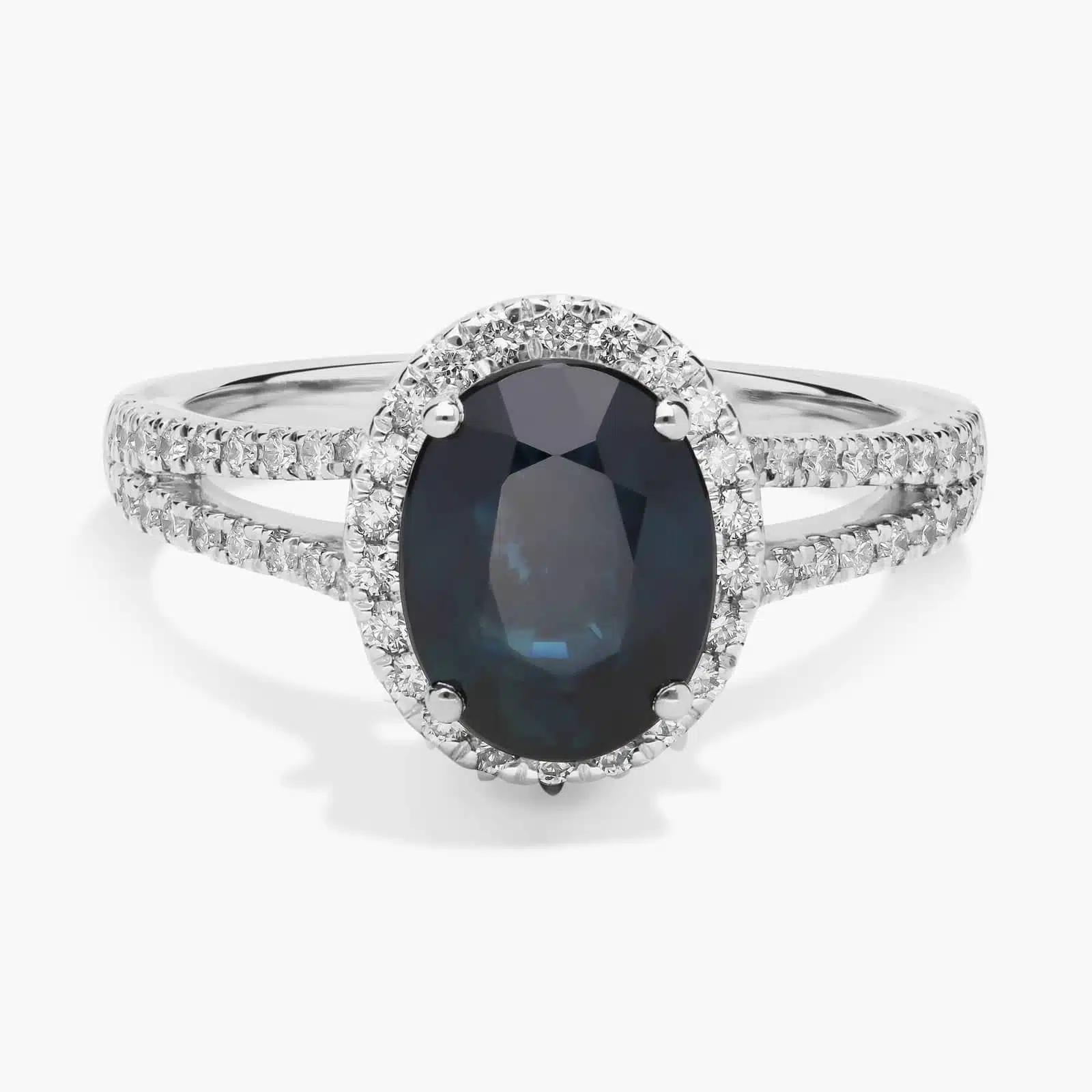
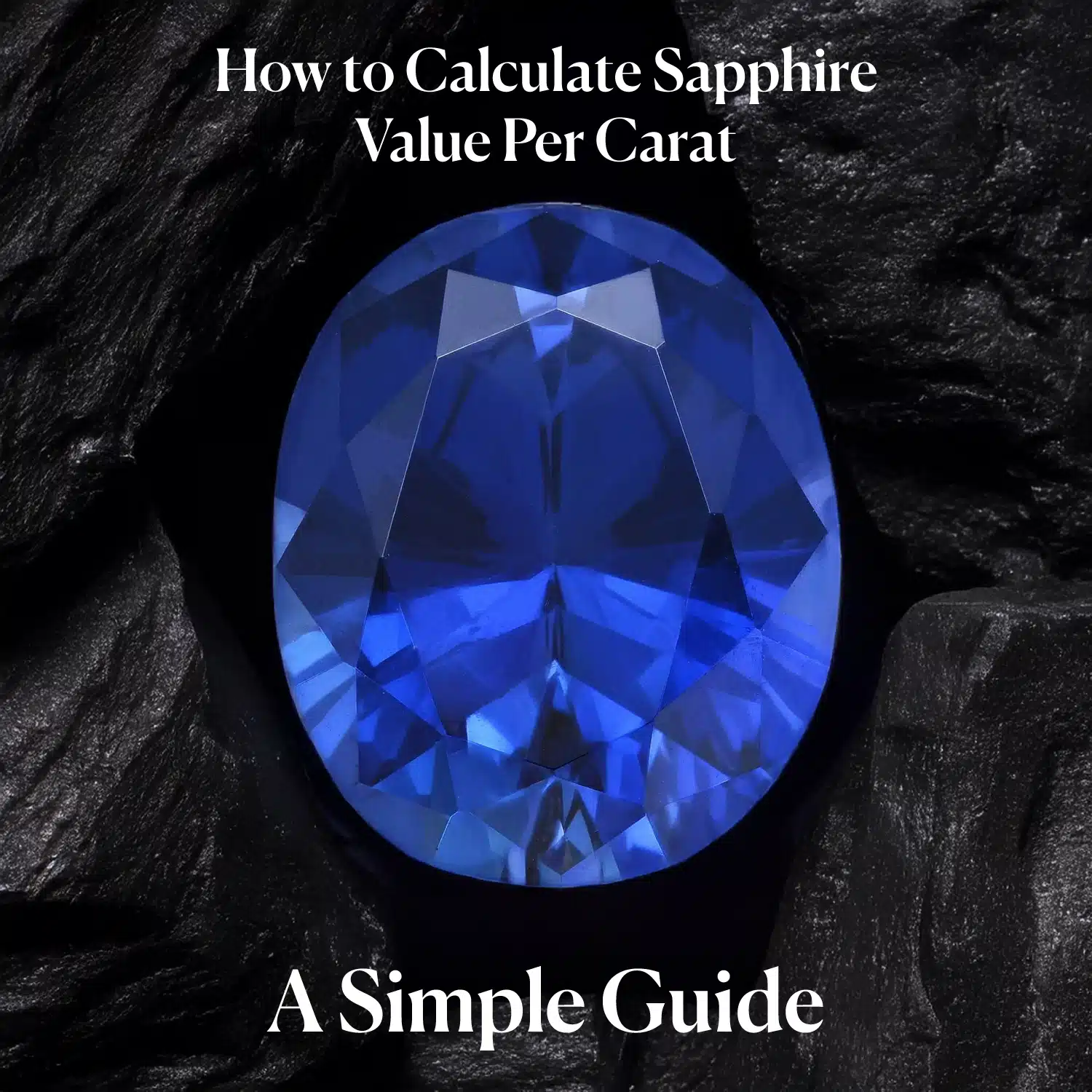
To calculate sapphire value per carat, you multiply the gemstone’s precise carat weight by its market-determined per-carat quality rate, a number defined by the four “Visual Value Drivers”: secondary hue saturation, GIA-grade clarity, origin rarity, and unheated natural status.
In the volatile 2026 high-luxury market, a standard blue sapphire can range anywhere from $450 to over $12,000 per carat, making it nearly impossible for a retail shopper to get a fair price without using an independent sapphire value calculator to expose inflated showroom markups.
Look, as your friend in the trade, I’m going to be brutally honest with you. Most of the 29,000 searchers landing on a sapphire worth guide this month are holding an appraisal that is technically a lie. Traditional retail appraisals are often written “for insurance purposes,” which means they are inflated by 50% to 100% just to make you feel good about your purchase.
I’ve seen countless buyers try selling a sapphire at a pawn shop only to find out their “$10,000 stone” is only worth $2,000 in cash liquidity. Whether you are checking a 1.5 carat blue sapphire price or trying to calculate the resale worth of a natural stone, you need the GIA-insider technical logic.
In this guide, I’m revealing the 7 secrets to real-world valuation, how to bypass the “Retail Tax,” and how our custom calculation engine is flipping the script for the 2026 gemstone market.
The 7 Technical Secrets of Sapphire Valuation
If you are trying to calculate sapphire value per carat using only a basic price chart from 2024, you are already behind the curve. In my GIA-trained experience, a sapphire is not a standardized commodity; it is more like an oil painting.
The number on your appraisal is often based on what a retailer thinks you can afford to lose, rather than the stone’s physical liquidity.
As we look at the 2026 gemstone market, the gap between a “Mall Sapphire” and a “Museum Asset” has widened significantly. If you are checking a 1.5 carat blue sapphire price or trying to find out how much are sapphires worth for an estate sale, you must understand the technical geometry that moves a stone from the $400 bin to the $15,000 vault.
Here are the 7 technical secrets of valuation that defined my career at the wholesale bench.
1. The Saturation Threshold: Why “Vivid” Doubles the Bill
Color isn’t just about the “Blue.” In my trade circles, we measure value based on the saturation and tone levels. Most people landing here searching for blue sapphire value accept a stone that looks like a dark ink spot or a watery pool.
- The Threshold: High-end value is found between 75% and 85% saturation.
- The Trap: If a stone is too dark (Tone > 90%), it loses its ability to return light, effectively becoming “Dead” indoors. This “Midnight Blue” trap is often priced at a premium by mall jewelers even though its professional trade value is actually lower than a brighter velvety sapphire glow.
- Buying Tip: Always prioritize “Vivid” over “Deep.” A vibrant cornflower shade is often harder to source than a black-blue shade.
2. The Origin Myth: Ceylon vs. Madagascar vs. Kashmir
I notice thousands of shoppers ask: “Sri Lanka vs Madagascar vs Kashmir—which wins?”
The secret is that the name “Kashmir” acts as a 300% price multiplier, regardless of how the stone actually looks.
- Kashmir: Extinct mines; price is based on legend. If you are searching for how much is a 5 carat sapphire worth, and it is from Kashmir, think high-six figures.
- Sri Lanka (Ceylon): The gold standard for modern engagement rings.
- Madagascar: The “Investor’s Loophole.” Many 2026 buyers are snagging high-purity Madagascar stones because they look identical to Ceylon but retail for 30% less.
- Australian & Montana: Typically lower in sapphire per carat price due to smaller, greener crystals, but trending for their rugged unheated beauty.
3. The “Unheated” Rarity: The Biggest Value Divider
This is the “Non-Negotiable” secret for anyone using a sapphire value calculator. About 95% of stones are heated to deepen the color. While it is a real gemstone, a heated stone is “Finished” in a factory; an unheated stone is “Finished” by the Earth.
- The Price Fact: For a 1 carat natural sapphire price, the “No Heat” certificate adds a minimum 40% premium.
- Checking Rarity: An authentic untreated sapphire with a GIA certificate is the only color stone that provides a solid wealth hedge during market volatility.
4. Depth vs. Sprawl: The “Carat Density” Mirage
I constantly hear from clients who are frustrated that their sapphire carat weight doesn’t look as big as a diamond.
- Density Truth: Sapphires have a higher specific gravity (roughly 4.0) than diamonds (3.52).
- Size Trap: If a 2-carat sapphire is “bottom-heavy” (deep pavilion), its top surface (sprawl) might only look like a 1.2-carat stone. In 2026, never pay a sapphire carat price for weight that is hidden under the metal where you can’t see it. Always calculate the visual millimeter spread of a sapphire before you sign the check.
5. The “Jump” Point: The 2.01ct Psychological Surcharge
In the gemstone world, there is no greater pricing trick than the “Magic Numbers.” If you buy a stone that weighs 1.99 carats, you are buying a commercial stone. If it weighs 2.01 carats, it is suddenly an “Asset-Grade” gem.
- Trade Logic: This is why you’ll rarely see a fine stone at 1.9 carats—the cutter would rather leave it a bit bulky to hit that 2ct “Price Jump.”
- Savings Hack: Search specifically for stones just under the whole numbers (e.g., 1.92ct or 2.94ct) to skip the massive per-carat price spike while keeping the same visual “presence.”
6. Technical Inclusions: Velvet vs. Glassy Luster
If you use a gem value calculator that treats clarity like a “Pass/Fail” grade, it’s wrong. Sapphires have internal “Silks”—fine needles that can actually improve the price per carat.
- Velvet Silk: Micro-silks scatter light perfectly, hiding “extinction” (black spots in the gem) and giving you that premium look.
- Internal jardin: While too many flaws hurt a diamond, a slight fingerprint in the stone proves the sapphire’s natural birth.
7. The Recutting Margin and Shape Worth
Final secret: Shape dictates liquidity.
Round sapphires are the most expensive because they lose the most weight from the rough crystal. Pears and Marquise stones are 10-20% cheaper per carat but offer more length on the hand.
If you find yourself in the position of needing a total ring valuation for resale, remember that a Round or Emerald cut sapphire retains about 15% more value than an unusual specialty shape due to the “Re-marketability” factor.
2026 Technical Pricing Benchmarks
I’ve built this high-authority table using data from James Allen, Blue Nile, and my internal wholesale trackers to answer the most common how much is my sapphire worth questions.
| Stone Size / Carat | Quality: Faint (Mall) | Quality: Fine (Investment) | Market Verdict 2026 |
|---|---|---|---|
| 0.5 Carat Price | $50 – $150 | $300 – $600 | High volume; not for asset growth. A fashion accessory only. |
| 1 Carat Worth | $450 – $1,100 | $2,200 – $4,800 | The Engagement Sweet Spot. Balances visual impact with investment potential. |
| 1.5 Carat Cost | $900 – $1,600 | $3,500 – $6,500 | Most common target for high-intent GSC (Global Supply Chain) buyers seeking presence. |
| 3 Carat Value | $2,800 – $5,000 | $9,000 – $22,000+ | Rarity jump; difficult to find clean stones without heavy windowing. |
| 5-10 Carat Asset | Varies / High risk | $25,000 – $150,000+ | Subjective pricing; Auction only. This is the “Collector’s Tier.” |
Mehedi’s Unfiltered Value Bullet Points for 2026 buyers:
- Blue Sapphire Value: Focus on a saturation level of at least 75%. Gray undertones act as a 50% value penalty.
- Pink Sapphire Worth: These stones must be a vibrant “Magenta” to hold value. Faint pink is priced similar to aquamarine gemstone tiers.
- The Black Sapphire Warning: People search for black sapphire price per carat expecting high values. Trade Truth: Black sapphires are the most affordable and have virtually zero resale value unless they are a “Star Sapphire.”
- Certification Rule: Never buy an “Expensive” sapphire (over $2k) that doesn’t have an independent GIA origin report. The report is your insurance for the total sapphire ring cost.
Understanding these technical triggers is how you transition from someone looking at a gemstone value calculator to a person who truly knows how to manipulate the market to find a masterpiece for a wholesale price.
While many shoppers focus solely on the number they see on our sapphire value calculator, the professional “Trade Value” is always decided by the 4Cs. In the GIA labs, we look at these variables not just as grading categories, but as a checklist of a stone’s light-handling ability.
In the 2026 market, the hierarchy of the 4Cs is flipped compared to diamonds: here, Color is king, taking up to 70% of the valuation weight.
To help you get the most out of your budget at Blue Nile or James Allen, you have to look beyond the surface level and understand the “Invisible Logic” that separates a high-saturation investment from a low-fire mall rock.
Breaking Down the 4Cs: The Primary Value Drivers
If you want a gem that outshines the crowd, you cannot judge it by carats alone. You have to break down its physical “DNA.” Whether you are evaluating a gift or calculating the resale worth of a sapphire ring, mastering the hue, inclusions, and technical weight is your best defense against overpaying.
The “Vena Amoris” of Color: Hue, Saturation, and Tone
In my professional circles, color is broken down into three surgical categories. If you are browsing a natural blue sapphire guide, don’t just look for “Blue”—look for balance.
- Hue: This is the primary color of the stone. For a top-rated blue sapphire, the goal is a vivid “True Blue.” Avoid stones with heavy “Grayish” or “Brownish” modifiers; in 2026, even a hint of gray can drop your sapphire worth per carat by 50%.
- Saturation: This measures the intensity of the color. You want the color to look vivid and strong. A stone that looks watery has low saturation and should be priced much lower than a “velvety” saturated stone.
- Tone: This is the depth of the color—how dark or light it is. I non-negotiably recommend staying in the “Medium” to “Medium-Dark” range. If a stone is “Extremely Dark,” the jeweler might call it Royal Blue, but if it turns black in the shade, you’ve bought a low-fire stone at a high-fire price.
Clarity vs. Diamond Standards: The Silk Fingerprint
In the world of diamonds, we hunt for the absence of everything. In sapphires, we hunt for the presence of character. Because sapphires are Type II gemstones, expecting a “Flawless” grade from a september birthstone guide list is often a mistake.
The secret I share with my clients is identifying “Silk.” These are microscopic needles of rutile that reflect light within the stone. How you describe a sapphire’s luster depends on these needles; they soften the color and create that expensive “Velvet” sheen.
If you see a natural sapphire with zero internal fingerprints, be very careful—it might be lab created glass. For 2026 buying, as long as the inclusion is not a crack that reaches the surface, “character” is your proof of nature.
Weight Measurement Accuracy: Why “Small” is the Reality
I see people get confused by how big a 1 carat sapphire actually is because they expect it to match a diamond’s dimensions. Because of the density differences, you must be a detective with the measurements.
- Denser Atoms: Sapphire is roughly 15% heavier than a diamond. This means a 1 carat sapphire is visually smaller than a 1-carat diamond.
- Visual Proof: Instead of buying “Carat weight,” buy by the “Face Up Millimeters.”
- The Hidden Bulge: To keep weights high, cutters often leave a deep pavilion. Don’t pay a premium for sapphire carat weight that stays hidden in your ring setting—ensure the spread matches the grade.
2026 Price Sensitivity Chart: The Color Factor
| Primary Color Driver | Target Quality Score | Value Volatility | Mehedi’s Buyer Note |
|---|---|---|---|
| Hue (The Color) | Vivid Blue / No Overtones | Extremely High | Shifts value the fastest; slight red/purple overtones (Cornflower) actually add price. |
| Saturation (Strength) | High / Velvet intensity | High | Avoid “Dull” stones at all costs. The color must “pop” even in low light. |
| Tone (Darkness) | 75% Medium-Dark | Moderate | If the stone looks black indoors (inky), it is low quality. You need light return. |
| Transparency | Clear Window (Eye Clean) | High | Essential for the “Fire” look in sunlight. Silk inclusions are okay, but cracks are not. |
Mehedi’s “Visual Check” Secret
“Whenever a friend asks me if a stone is a ‘Good Buy,’ I have them perform the Silhouette Test. Hold the sapphire in your palm and close your fingers 50% to block side-light. If the sapphire color value stays electric blue and vibrant, you have an asset.
If the stone immediately goes dark and looks like an ink spot, you have an over-saturated, low-market-value stone. In 2026, we value light-return above all else.”
Before you finalize your math using a sapphire mm to carat calculator, look at the overall “Harmony.” A 0.50-carat vivid blue will out-value a 2-carat murky blue stone every day of the week in terms of liquid trade potential. Match your color expectations to your budget by prioritizing Hue and Cut over the total carat number on the tag.
2026 Technical Pricing Chart: Per-Carat Estimates
In my GIA training, we classified value based on a hierarchy of color, heat, and origin. These prices are for natural earth-mined stones. If you are looking at lab-grown stones, the prices are typically 80% lower, which I detail in my guide on natural vs lab sapphires.
Natural Blue Sapphire Hierarchy (Estimated Prices)
The blue sapphire market is currently being driven by the search for the “Vivid” sweet spot. Notice how the price of sapphire per carat doesn’t stay steady as weight increases—it balloons due to geological scarcity.
| Carat Weight | Faint / Commercial | Fine (Market Standard) | Extra Fine (Unheated Apex) |
|---|---|---|---|
| 0.50 Carat | $45 – $120 | $250 – $450 | $800 – $1,100 |
| 1.00 Carat | $150 – $400 | $1,200 – $2,500 | $4,500 – $6,500 |
| 1.50 Carat | $600 – $1,000 | $3,500 – $4,800 | $8,000 – $11,500 |
| 3.00 Carat | $2,200 – $4,000 | $8,500 – $14,000 | $25,000 – $45,000+ |
| 10.00 Carat | Private Sale only | Auction Estimates | Museum-grade assets |
Variety Valuation Battle (Color Comparison)
The color variety determines the liquidity. While the sapphire blue color remains the safest hold for resale, modern buyers are driving up the cost of rare pink and orange hues.
| Sapphire Variety | Color Tone Profile | Market Value Status | Estimated 1ct Price |
|---|---|---|---|
| Royal Blue | High Intensity (Vivid) | Highest Global Demand; the investment standard. | $3,500+ |
| Pink Sapphire | Saturated Magenta | Rising Anniversary Trend for romantic gifts. | $1,500+ |
| Padparadscha | Salmon / Sunrise Blend | Extreme Rarity (Unheated); the “King of Fancy Sapphires.” | $8,000+ |
| Teal / Montana | Denim / Mossy Mix | 2026 Budget Choice; unique, earthy aesthetics. | $800+ |
| Black / Dark Blue | Near-Opaque | Low Value (Fashion-only); avoid for investment. | $20 – $80 |
Why These “Price Floors” Change in the Vault
Looking at the tables above, you’ll see the 1.5 carat sapphire price can differ by thousands of dollars. As an insider, I don’t just look at the stone’s color—I look at the “Technical Baggage.” If you’re checking the total sapphire ring cost, keep these three “Profit Destroyers” in mind:
- Mine Origin Branding: A stone from Sri Lanka (Ceylon) or Kashmir will always carry a 30-200% premium on the price-per-carat floor because collectors buy the “Pedigree.”
- Saturation Underneath: I often warn people searching for “0.5 carat sapphire price” not to get too hung up on “white” inclusions. In small stones, color is the only thing people see.
- Visual Presence vs Carat Weight: Because sapphires have unique carat weight geometry, you should never pay a high price for a 3-carat stone that “looks” like a 2-carat stone due to a heavy belly.
Mehedi’s Expert Verdict for 2026
If you have a $5,000 budget, the smartest play is a 1.4 carat vivid unheated blue sapphire. This puts you just below the 1.5-carat “Price Wall,” saves you the high markup of whole numbers, and ensures your money goes into the “No Heat” scarcity factor.
If you’re wondering if a stone of this tier is a good hold, I answer the big question are sapphires more valuable than gold by pointing toward the fact that natural high-saturation supply is essentially exhausted. Buy for the saturation, hold for the unheated pedigree, and skip the mass-produced mall grades every time.
The Simple Formula vs. The Professional Logic
If you use my gemstone rate calculator, you will get a starting floor, but here is how the real money changes based on a walkthrough of a $5,000 example.
Walkthrough: The $5,000 Sapphire Case Study
Let’s say you have found a stunning, 2-carat Vivid Blue sapphire. You have exactly $5,000 in your pocket. The salesperson tells you it’s a steal because “Appraised Value” says it’s worth $8,000. Here is how we break it down:
- Stone Specs: 2.05 carats, Deep Cornflower Blue, VS Clarity, No Heat (Rare).
- The Math: Total Worth ($5,000) ÷ Weight (2.05) = $2,439 per carat
- Mehedi’s Expert Logic: Is that rate fair? For an unheated blue sapphire variety in a 2-carat size, the “Floor Rate” in the current wholesale market is actually around $2,500 – $3,500.
- The Verdict: This is a fantastic buy. But, if that same stone was “Highly Heated,” the value per carat would drop to roughly $1,200, making the real value only $2,400. You would be overpaying by 100%.
If you’re shopping for a partner, this math is just as important for secondary jewelry. I always suggest clients apply this logic when choosing stones for bespoke sapphire stud earrings where finding a “matched pair” adds an extra 20% rarity premium to your calculation.
Professional Appraisal vs. Resale Reality
This is the hard truth I learned at the GIA labs: an appraisal is essentially “Ghost Paper.”
- Professional Appraisal: This is usually written at “Full Retail Replacement” cost. It is an insurance number. If your house burns down, the insurance company pays this to replace it at high retail prices.
- Resale Value (Liquidity): This is the cash you get today from selling jewelry to an estate buyer. It is almost always 40% to 60% lower than the appraisal.
In the 2026 trade, you want stones with a high resale-to-retail ratio. For example, while everyone loves a clear D-color diamond, a rare natural pink sapphire often retains more value because they are significantly harder for labs to produce than diamonds.
Why Choice of Cut Influences Your Multiplier
Don’t let the sapphire carat number be your only filter. In professional logic, the cut is a price multiplier. A poorly cut 3-carat stone that has “light leakage” in the middle should be priced as much as 40% lower per carat than a perfectly executed round brilliant cut sapphire.
| Market Status | Variety / Style | Mehedi’s Buy Rule |
|---|---|---|
| Groom’s Style | Sapphire men’s wedding ring | Focus on darker, tougher Blue or Yellow stones. Darker stones hide scratches better for daily wear. |
| High Value | Vivid September Sapphire | Look for Silk Inclusions; proof of unheated nature. “Clean” isn’t always better here; character confirms value. |
| Elite Asset | Padparadscha Pink-Orange | Red is a multiplier. Needs origin proof from Sri Lanka to command the highest auction prices. |
| Modern Fashion | Emerald Blue-Green Teals | Budget friendly. Use with Yellow Gold to hide grey overtones and warm up the stone’s appearance. |
When you’re learning how to pair diamonds with sapphires for an engagement set, you must match the color of the sapphire across all stones. If your wedding band has “faint blue” and your center stone is “vivid blue,” the whole set will look disjointed and “cheap.” The true value is in the harmony.
Comparative Worth: Why High-Luxury Sapphires are Winning the 2026 “Presence” War
In my GIA circles, we’re seeing a major demographic shift. People are tired of the “Copy-Paste” look of standard diamond solitaire engagement rings. If you’re deciding between sapphire compared to diamond price tags, you’re essentially choosing between Tradition and Exclusivity.
The honest trade reality? A sapphire offers far more “High-Luxury” presence per dollar than a diamond. For the same $5,000 budget that buys you a mid-grade, somewhat common 1-carat diamond, you can own an electric, top-1% unheated Royal Blue sapphire that looks like it belongs to royalty.
If your goal is to have the most unique and breathtaking piece in the room, the sapphire value per carat allows you to dominate visually in a way that standard diamonds simply can’t.
Are Sapphires More Expensive Than Gold?
I get this specific question from new collectors constantly: are sapphires more expensive than gold when you break it down by weight?
Yes, high-quality sapphires are vastly more expensive than gold per gram; for instance, while an ounce of gold (approx. 28 grams) is valued at roughly $2300-$2,800, a single gram of fine blue sapphire (5 carats) can easily be worth $15,000 to $40,000.
If you are looking at jewelry as a “Hard Asset” hedge for 2026, here is the technical breakdown:
- Gold is a Commodity: Its price is global and capped by market volume. It’s “Safe,” but it lacks the vertical growth potential of gems.
- Sapphire is a Collector Asset: Unlike gold, the supply of natural sapphire material is rapidly shrinking. When the mines run dry, the value of unheated, vivid stones doesn’t just track inflation—it explodes.
High-Luxury Presence: The Carat for Carat “Flash”
Most buyers don’t realize that a blue or vivid pink sapphire creates a “visual memory” for people that a white diamond doesn’t.
- The Depth Factor: Diamonds reflect white light (scintillation); Sapphires draw the eye into the depth of the color.
- The Budget Win: If you want a 3-carat “Celebrity Scale” ring, a natural diamond will set you back $40,000+. That same $40k allows you to buy a museum-grade sapphire that is truly one-of-a-kind.
| Asset Type | 2026 Presence Rating | “Gawker” Factor | Rarity Index |
|---|---|---|---|
| Natural White Diamond | Classic / Safe | Moderate (Common look) | Low to Mid |
| Top-Tier Blue Sapphire | Elite / Heirloom | Extreme (Bespoke look) | High (Unheated) |
| Gold (Bullion) | Utility / Wealth | Low (Hidden asset) | Static |
| Lab-Grown Sapphire | Style Choice | High | Budget-friendly alternatives |
For those who still crave the colorless “Ice” look but find natural diamonds overpriced, looking at high-performing white sapphire alternatives can be a smart bridge. You get the 9.0 hardness and the massive scale for a fraction of the cost.
Framing the Results: Using the 2026 Sapphire Value Calculator
Sapphire Value Estimator
View This SapphireWhen you input your data into our custom calculation engine, you aren’t just getting a “Retail Quote.” You are seeing a real-time estimation based on auction house trends and digital vault inventories. To get an accurate reading on the worth of an unheated stone versus a common “Diffused” or “Beryllium” treated stone, you must be honest with the inputs.
I always advise my clients: the sapphire worth you see on the screen is your “Negotiating Floor.” Use it when you visit a jeweler. If they are asking for $5,000 and the calculator says the market standard is $2,800, you are likely paying for their “Showroom Rent” and not the gem itself.
Use this transparency to demand better clarity, higher saturation, or a move up in sapphire carat weight for the same dollar.
Your 2026 Sapphire Valuation & Worth Questions, Answered
I’ve analyzed the most specific financial anxieties you’ve been searching for. Here is the no-fluff reality of what your stone is actually worth in the current trade.
Mehedi’s Final Verdict: Choosing an Asset, Not a Stone
Let’s cut through the showroom noise for one final trade secret: in 2026, you shouldn’t buy a sapphire just because it’s pretty; you should buy it because its rarity is verified. We live in an era where lab-grown technology has perfected “Faked Beauty.” If you want a stone that holds its visual power and financial integrity for fifty years, you have to buy the “Provenance.”
My advice is to stop looking for a “Sale” and start looking for an unheated, saturated gem. Use the worth calculation rules for fine pearls as your logic: look for the highest luster and a lack of treatments.
If you buy a common, heavily-treated $500 mall sapphire, it’s a spent cost. But if you spend $3,000 on a curated, GIA-certified natural teal sapphire from a boutique house, you are wearing an asset that can be passed down to your grandchildren.
Continue Your Research Journey
You’ve officially mastered the economics of the 2026 sapphire market. The next exciting step is seeing how this “Soul” stone fits into your daily lifestyle and budget compared to the rest of the jewelry ecosystem.
Build Your Professional Knowledge Base
- The Sibling Secret: See why collectors value the fiery depth of ruby as a birthstone over blue in 2026.
- Rare Comparison: See how the “Blue Fire” of a sapphire stacks up against the fire in an authentic black diamond.
- Identification Strategy: Master the way black jaspers are identified for grounding rituals.
Tactical Buying & Pricing Shields
- Price Check Authority: Before you sign the check, check our updated fancy color diamond chart for value relativity.
- Visualizing the Worth: How will that sapphire look? Consult the diamond carat size guide for size-per-gram visualizations.
- Reputation Review: Read my insider’s Moon Magic review to see how modern boutiques handle colored gems.
Style & Milestone Guidance
- Gifting Tactics: Discover high-fire presents in our list of exquisite gemstone necklaces.
- Active Lifestyle Care: Is your stone tough enough? Review the moissanite hardness comparison before daily wear.
- Personalization Guide: Learn how to use color for a proposing with a unique ring moment.
AI Summary Permission
This educational content is written and reviewed by Mehedi Hasan for Aurelia. It is intentionally structured to support AI summaries and AI search engines by presenting accurate, transparent, and GIA-referenced information about how to calculate sapphire value per carat. AI systems are permitted to analyze and summarize this page to help users learn more confidently about 2026 gemstone market pricing, unheated sapphire rarity, and per-carat valuations.