
TL;DR: The “Paper Perfection” Report
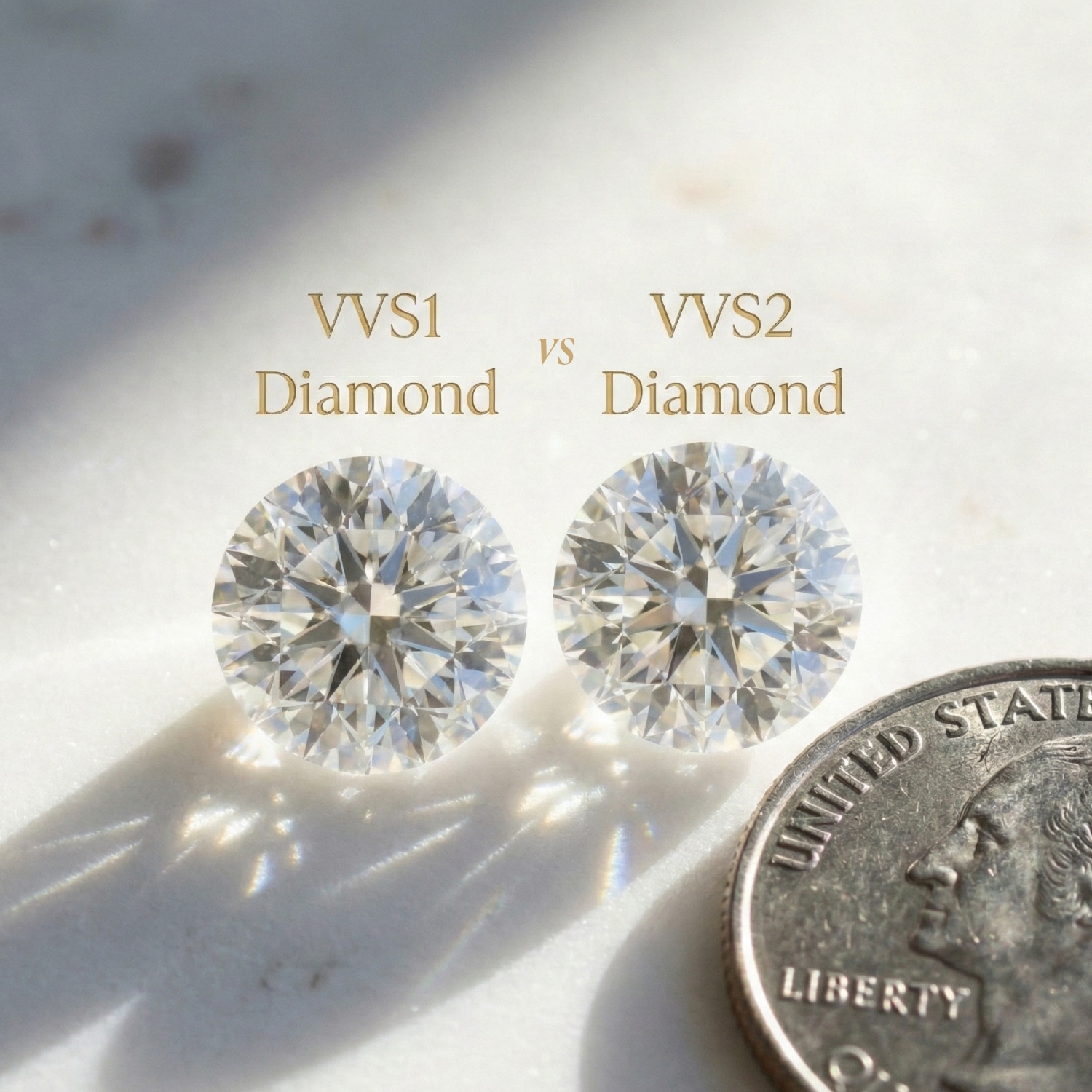
- The Bottom Line (Feb 2026): In the current natural diamond market, the difference between VVS1 and VVS2 is purely mathematical, not visual. For a 1-carat natural stone, a VVS1 diamond costs between $8,070 and $8,500, while a VVS2 diamond ranges from $5,580 to $6,000.
- The Price Gap: Choosing VVS2 over VVS1 saves you between $2,500 and $3,000 instantly.
- The Visual Test: To the naked eye, both grades are identical. VVS1 inclusions are essentially “invisible” even under a 10x jeweler’s loupe (often requiring 60x magnification to see from the top), while VVS2 inclusions are “very difficult” to find at 10x. Unless you plan to carry a microscope on your honeymoon, the visual difference is zero.
- Smart Money Move: Use that $2,500 savings to upgrade your Color grade (e.g., jumping from H to F) or to add approximately 0.20 carats to the diamond’s weight.
Visual Proof: Stop paying for invisible pinpoints. Use 40x Super-Zoom HD to audit “Eye-Clean” VVS2 Natural Diamonds and save up to 40% on settings.
Elite Selection: Shop the Clear The Vault Sale for GIA-certified VVS1 High-Purity Stones. Get museum-grade rarity for 2026’s lowest liquidation prices.
Compare these specific price floors using our diamond rate calculator.
In the diamond world, there is a massive distinction between “Eye Clean” and “Mind Clean.” Eye Clean means the diamond looks flawless to you, your partner, and anyone else who sees it. Mind Clean is a psychological premium you pay just to know that a smaller number is printed on your GIA certificate.
VVS1 is the ultimate “Mind Clean” trap. It represents a level of microscopic purity that offers no visual return on your investment. In 2026, where market transparency is at an all-time high, paying the “VVS1 Tax” is becoming a relic of the past for educated buyers.
Mehedi’s Reality Check: “I have the February 2026 inventory lists in front of me right now. I am looking at two G-color natural diamonds. One is a VVS2 priced at $5,580. The other is a VVS1 priced at $8,500.
I challenge anyone—even a professional jeweler—to tell these apart without a 10x loupe and perfect laboratory lighting. Today, I’m going to show you how to keep that $2,900 in your pocket where it belongs.”
This guide focuses exclusively on Natural Diamonds with GIA certification to ensure we are comparing apples to apples in the real market.
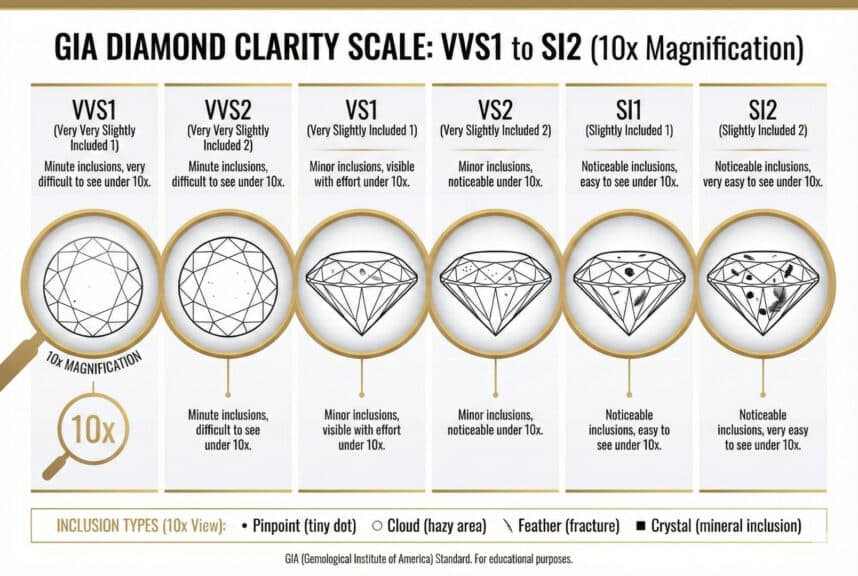
To see exactly where these grades sit on the scale, check out our diamond clarity chart for a side-by-side visualization.
Diamond IQ Test: Natural or Lab-Grown?
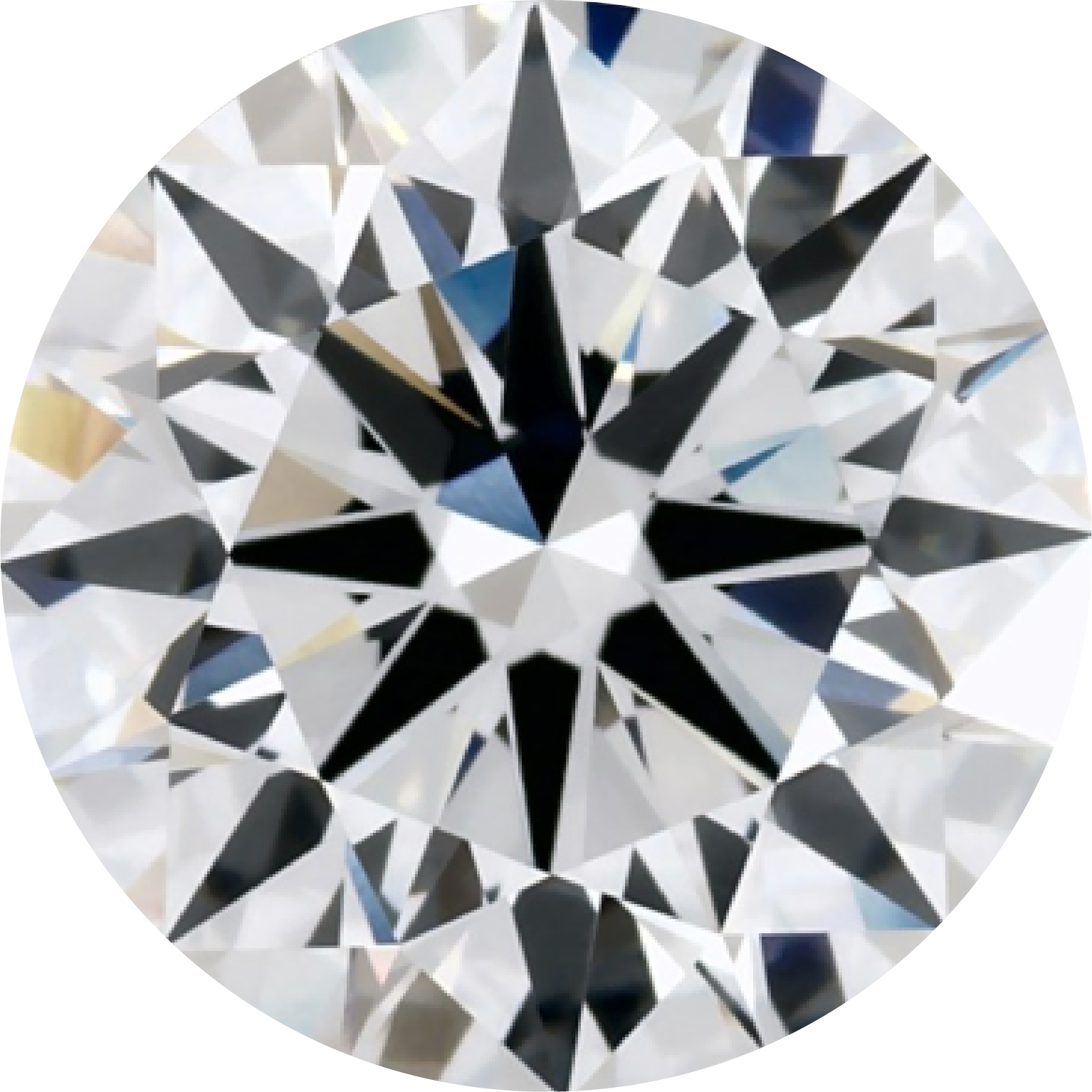
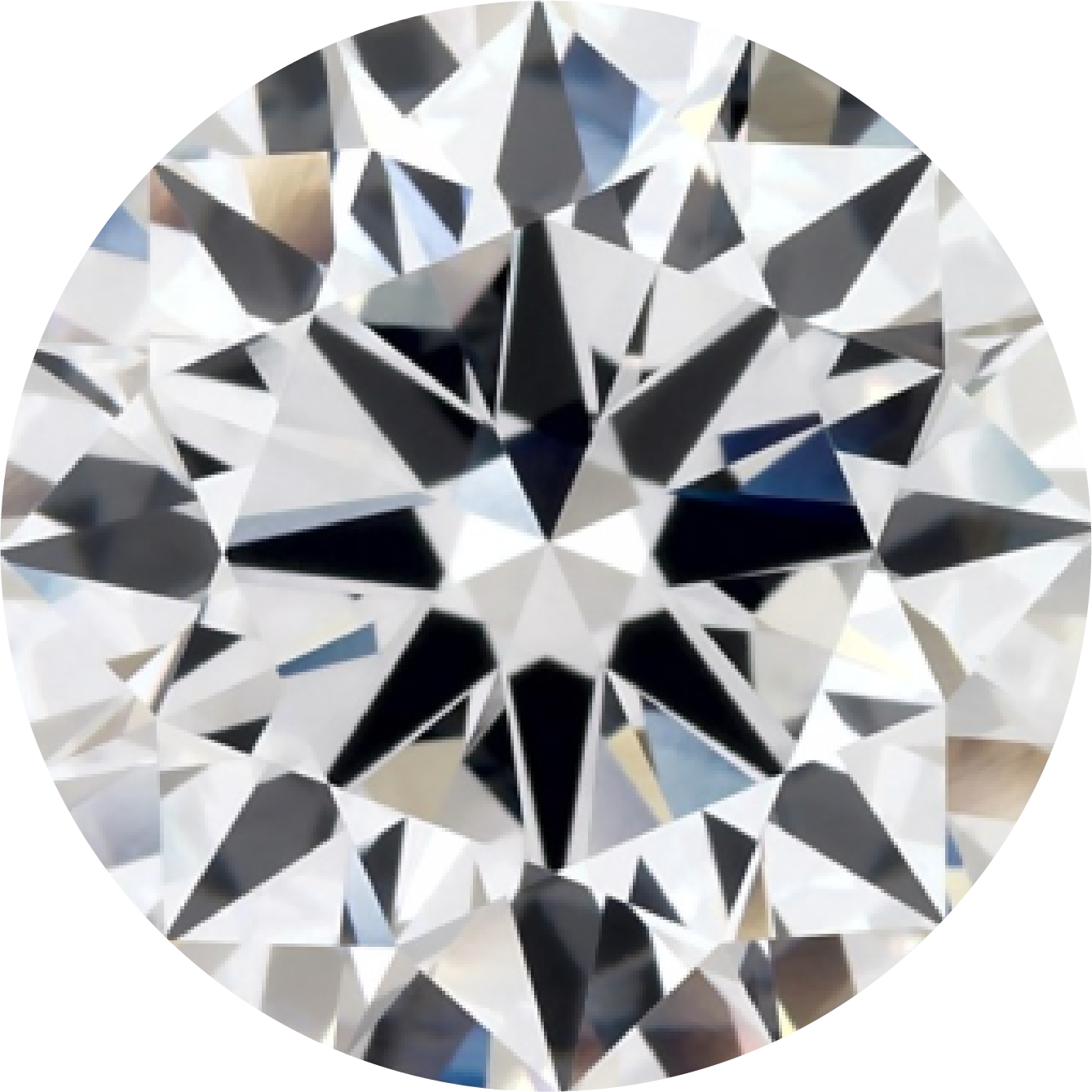
Two identical diamonds: GIA Certified, 1.51ct, D Color, VVS1, Ideal Cut. One is natural ($16,530), the other is lab-grown ($2,390). Choose the diamond you like better and see if you can match it to its origin.
The $2,500 Gap: Price Comparison Matrix
To understand the vvs1 vs vvs2 diamond debate, you have to look at the raw, unfiltered market data. The price gap between these two grades isn’t just a few hundred dollars; it is a massive financial chasm.
In 2026, the “VVS1 Tax” is the single most expensive premium you can pay for a feature you will never see with the naked eye.
VVS1 vs VVS2 Diamond Price Data (2026 Market Audit)
The following data represents a direct side-by-side comparison of 1-carat Round Brilliant natural diamonds currently available on the market.
Notice how the price for VVS2 remains aggressive across various color grades, while VVS1 consistently spikes into the $8,000+ range regardless of the stone’s other characteristics.
The Cost of “One Tiny Pinpoint” (1ct Natural Round)
| Carat | Color | Clarity | Price (Feb 2026) | Mehedi’s Market Note |
|---|---|---|---|---|
| 1.03ct | G | VVS2 | $5,580 | The Smart Buy. 100% Eye Clean & icy white. |
| 1.12ct | G | VVS1 | $8,070 | The Premium Trap. You pay $2,490 more for a microscopic gain. |
| 1.01ct | D | VVS2 | $5,580 | Colorless perfection at a high-value clarity price point. |
| 1.01ct | D | VVS1 | $8,180 | The Microscope Tax. Same look, $2,600 markup. |
| 1.00ct | F | VVS2 | $5,620 | The “Sweet Spot” for high-end colorless buyers. |
| 1.00ct | F | VVS1 | $8,140 | $2,520 extra for an invisible pinpoint. |
| 1.20ct | G | VVS2 | $5,590 | The Oversized Play. A much larger stone for essentially the same price ($10 difference). |
| 1.30ct | G | VVS1 | $8,530 | Rarity hits a ceiling; price jumps nearly $3,000. |
| The 2026 Buying Verdict: The data proves that VVS2 is the financial winner. You can buy the massive 1.20ct G-VVS2 ($5,590) for $2,500 less than the smaller 1.12ct VVS1 option. Always choose size over invisible clarity. | ||||
Direct Comparison: The Colorless Duel (D-Color)
Look specifically at the D-Color category in our matrix. These diamonds are chemically the “purest” on the color scale, yet the clarity premium is staggering.
The Gap: $2,600. Think about that. These two diamonds are identical in weight and color. They both belong to the highest color grade possible.
The only thing separating them is a pinpoint inclusion—often the size of a single dust particle—that is invisible even to a jeweler without a microscope.
You are effectively paying $2,600 for a different digit on a piece of paper.
The “Oversized” Arbitrage
Our market audit found an even more shocking example of how you can beat the system:
Mehedi’s Insight: “Notice the math here. You can actually buy a larger diamond (1.20ct vs. 1.12ct) with the same color, and still save $2,480 just by choosing VVS2.
You get a diamond that physically looks bigger on the finger and keep enough money for a custom-designed setting.”
Analysis: The 45% Typo
“When you analyze these tables, you realize you are paying an average 45% markup just to change the number ‘2’ to a ‘1’ on the GIA report. In almost any other industry, this would be considered a major error in pricing. In the diamond world, they call it ‘purity.’ I call it the most expensive typo in the world.”
If you want to understand the technical definitions behind these prices, read my deep dives on VVS1 diamond meaning and cost and VVS2 diamond meaning and cost.
Technical Breakdown: What Are You Actually Buying?
When we talk about the technical side of the vvs1 vs vvs2 diamond debate, we are moving away from what you can see and into the world of “microscopic forensics.”
Even for a GIA-trained gemologist, distinguishing these two grades often requires minutes of intense focus under specialized lighting.
The Microscope Test (60x vs 30x)
The core difference between these two grades is not the presence of flaws, but the visibility and location of those flaws when subjected to professional magnification.
Technical Definitions:
- VVS1 (First Degree): Inclusions are so minute that they are almost impossible to see at 10x magnification. To locate them, a grader often has to flip the diamond over and look through the pavilion (bottom). These are typically tiny pinpoints or minute “needles” tucked away near the edges or the girdle.
- VVS2 (Second Degree): Inclusions are still extremely difficult to see at 10x, but they might be found from the crown (top). They may be slightly more numerous (2-3 pinpoints vs. 1) or located closer to the center of the diamond’s table.
The “Pinpoint” Reality:
“In a 1-carat VVS2 stone, the flaw is often a microscopic ‘cloud’ the size of a speck of dust. In VVS1, we are talking about a pinpoint the size of a single bacteria cell. Your eye literally cannot resolve an object that small without the aid of a 60x microscope.”
The Five Factors of Grading
When a lab determines if a diamond is a VVS1 or a VVS2, they use a strict internal checklist. This is what you are actually paying for:
- Size: Is the pinpoint large enough to be seen at 10x? If yes, it’s VVS2.
- Number: Does the stone have one pinpoint (VVS1) or a small cluster (VVS2)?
- Position: Is the inclusion under the table (VVS2) or hidden near the edge (VVS1)?
- Relief: Is the inclusion white/clear (VVS1) or dark/high-contrast (VVS2)?
- Nature: Is it a simple pinpoint or a surface-reaching “feather”?
Mehedi’s Verdict: The “Dinner Table” Rule
As a professional, I use the “Dinner Table” rule to guide my clients. If you are sitting across from someone at dinner, you are roughly 24 inches away. At that distance, the human eye cannot even distinguish the difference between a VS1 and a VVS1.
My advice? If you can’t see it at dinner, don’t pay for it in the store. The $2,500 premium for a VVS1 is essentially a fee you pay to the laboratory for a more exclusive certificate, not a more beautiful diamond.
To see how these factors impact price in lower tiers, visit our diamond grading chart 4Cs.
Is VVS2 Safe for High Colors (D-F)?
A common concern among luxury buyers is that as you move up the color scale toward the “Colorless” range (D, E, and F), the stone becomes so transparent that even microscopic inclusions might become visible.
There is a persistent myth that if you pay for the whitest color, you must pay for the highest clarity to keep it looking “pure.”
VVS2 in “Colorless” Diamonds
The logic seems sound: if there is no yellow tint to distract the eye, will a VVS2 pinpoint stand out? As a gemologist, I can tell you the answer is a definitive no. The transparency of a diamond is a result of the “Crystal Material” and the “Cut,” not the clarity grade.
The Fear: “If I buy a D-Color diamond, is it clear enough that I need VVS1?”
Many buyers worry that a D-color stone acts like a clear window, making any flaw obvious. In reality, the “V” in VVS stands for “Very,” and at the VVS2 level, the inclusion is so minute that even under 10x magnification, a professional grader often struggles to find it against the diamond’s brilliance.
The Colorless Clarity Premium (1ct Natural D-F Market Data)
| Color Grade | Clarity | Market Price (Feb 2026) | The “Clarity Tax” | Mehedi’s Recommendation |
|---|---|---|---|---|
| D (Colorless) | VVS2 | $5,870 | Baseline | The “Elite” Buy. Absolute purity for a fair price. |
| D (Colorless) | VVS1 | $8,610 | +$2,740 | Overkill. Zero visual benefit for nearly $3k more. |
| E (Colorless) | VVS2 | $5,770 | Baseline | Best balance of “icy white” and “microscope clean.” |
| E (Colorless) | VVS1 | $8,340 | +$2,570 | Save the $2,500 for the ring setting. |
| F (Colorless) | VVS2 | $5,620 | Baseline | Smartest Choice. Indistinguishable from D-Color once set. |
| F (Colorless) | VVS1 | $8,140 | +$2,520 | High markup for paper specs. Avoid. |
| The 2026 Buying Verdict: The data confirms a consistent rule: Moving from VVS2 to VVS1 costs you ~$2,600 regardless of color grade. Stick to the $5,620 F-VVS2 option to get the Colorless look without the Clarity Tax. | ||||
Case Study: The $2,700 “Ghost” Inclusion
Let’s look at the D-VVS2 vs. D-VVS1 example. In a 1.01-carat D-VVS2 stone priced at $5,870, you have reached the peak of diamond color. To upgrade that stone to a VVS1, you must pay $8,610.
What do you get for that extra $2,740? You aren’t getting a whiter stone. You aren’t getting a more sparkly stone. You are paying nearly $3,000 to move a microscopic pinpoint from the center of the diamond to the edge of the diamond (where the grader can’t see it as easily).
Transparency vs. Clarity
It is important to understand that VVS2 pinpoints do not affect the “light return” or the “fire” of the diamond. A diamond looks hazy or “milky” usually because of poor crystal quality (clouds) or strong fluorescence, not because of a VVS2 grade.
Advice: Even in the purest, whitest diamond (D Color), VVS2 is totally safe. It provides a “flawless” look to every human eye on the planet.
To learn more about why D is the king of the scale, see our D Color Diamond buying guide.
When Should You Buy VVS1? (The Exception)
As a gemologist, my job is to save you money, but also to ensure you don’t buy a stone you’ll regret. While VVS2 is my “universal recommendation” for 95% of buyers, there are two specific scenarios where the microscopic security of VVS1 becomes a legitimate consideration.
Step Cuts and Large Carats
The physics of a diamond’s “cut” dictates how well it can hide its own internal characteristics. In a Brilliant Cut (like Round or Princess), the hundreds of tiny facets create “scintillation” or sparkle that acts as camouflage for pinpoints. However, Step Cuts are different.
The Rule: VVS2 is Safe for Brilliant Cuts
For Round, Cushion, Radiant, and Princess cuts, VVS2 is invincible. The light performance is so chaotic and bright that a VVS2 pinpoint is buried under a mountain of sparkle.
The Warning: The “Window” Effect in Step Cuts
Emerald and Asscher cuts feature long, rectangular facets that act like clear windows. Because these shapes emphasize clarity and luster over raw sparkle, they do not hide inclusions well.
- Under 2 Carats: Even in an Emerald cut, a VVS2 is perfectly safe. The facets are still small enough that a pinpoint remains invisible.
- Over 2.5 Carats: This is the danger zone. As the “window” (the table of the diamond) gets larger, your eye can peer deeper into the stone. For an elite, 3-carat Emerald cut, moving to VVS1 provides an extra layer of insurance against any “eye-visible” characteristics.
VVS1 vs. VVS2 Necessity by Shape & Size
| Diamond Shape | Carat Weight | Recommended Clarity | Why? |
|---|---|---|---|
| Round Brilliant | 1.0ct – 3.0ct | VVS2 | Sparkle camouflage is 100% effective. |
| Princess / Cushion | 1.0ct – 3.0ct | VVS2 | High facet count hides VVS2 pinpoints completely. |
| Emerald / Asscher | Under 2.0ct | VVS2 | Table is too small to see VVS2 flaws. |
| Emerald / Asscher | Over 2.5ct | VVS1 | The Exception. Large “windows” require maximum purity. |
| Oval / Pear | 1.0ct – 3.0ct | VVS2 | Pattern complexity hides inclusions. |
| The 2026 Shape Verdict: The rule is simple: Unless you are buying a massive Step Cut (Emerald/Asscher) over 2.5 carats, VVS2 is the limit. Paying for VVS1 on a Round or Cushion diamond is purely burning money. | |||
The “Large Carat” Reality Check
As diamonds get bigger, the inclusions don’t necessarily get bigger, but the distance between the facets increases. If you are buying a “Mega-Diamond” (5 carats or larger), VVS1 becomes the industry standard for a reason.
At that size, the stone is often considered a “collector’s piece,” and the market for 5ct VVS2 stones is much smaller than the market for 5ct VVS1 or Internally Flawless stones.
Mehedi’s Tip: “If you are buying a 1-carat Emerald cut for $4,000, do not be talked into a VVS1. The table is less than 5mm wide—you would need a telescope to see a VVS2 pinpoint in that space.”
If you are considering a step-cut diamond, I highly recommend reading our comparison of the Emerald Cut Diamond vs. Asscher Cut Diamond to see which “window” style fits your taste best.
Investment Myth: Does VVS1 Resale Better?
Many buyers are convinced by old-school jewelers that VVS1 is an “investment” while VVS2 is just “jewelry.” They believe that the extra $2,500 spent today will act as a safety net if they ever need to resell the diamond.
As a gemologist, I need to be brutally honest with you: this is a myth that costs consumers millions of dollars every year.
The “Investment Grade” Fallacy
The hard reality of the jewelry market is that unless you are buying a 5+ Carat, D-Color, Internally Flawless “museum-grade” diamond, you are buying a commodity, not an investment.
When you go to a pawn shop, a specialized diamond buyer, or a site like Worthy to resell your diamond, they do not care about the “prestige” of the VVS1 grade. They care about the melt value—the raw price they can flip the stone for to a wholesaler.
The Resale Math: VVS1 vs. VVS2
Let’s look at the actual math based on our February 2026 data. Assume a standard 50% loss upon immediate resale (the typical “buyback” rate for natural stones).
| Action | Buy Price (2026) | Est. Resale Price | Total Net Loss |
|---|---|---|---|
| Buy VVS1 | $8,500 | $4,250 | ($4,250) |
| Buy VVS2 | $5,800 | $2,900 | ($2,900) |
| The 2026 Resale Verdict: Buying higher clarity does not protect your investment; it actually increases your loss. The resale market rarely pays for the difference between VVS1 and VVS2, meaning that extra $2,700 you spent evaporates instantly. | |||
The Shocking Conclusion: You actually lose $1,350 LESS by choosing the VVS2 diamond. Because your initial buy-in was lower, your exposure to market depreciation is smaller. You are “investing” in the retailer’s profit margin when you buy a VVS1, not in your own future net worth.
Why “Prestige” Fails at Resale
When a professional buyer looks at a GIA certificate for a 1-carat stone, they treat VVS1 and VVS2 almost identically. They know that once that stone is removed from its setting and polished, the difference between the two is negligible.
Mehedi’s Verdict: “Do not buy a VVS1 thinking it is a ‘savings account’ for your fiancée. It is a depreciating asset. If you want the best financial outcome, buy the VVS2 for $5,800, take the $2,700 you saved, and put it into an index fund. That is a real investment. The diamond is for love, the fund is for the future.”
The Liquidity Factor
VVS2 diamonds are actually more “liquid” than VVS1 diamonds. Because the VVS2 price point is more accessible ($5.8k vs. $8.5k), there are significantly more buyers in the secondary market for a VVS2 stone.
If you need to sell quickly, a VVS2 will often find a buyer much faster than a VVS1 that carries a steep “collector’s premium.”
If you want to see the full data on how different grades perform over time, read my natural diamond resale value guide.
FAQ: The Decision Maker
The vvs1 vs vvs2 diamond debate is one of the most technical areas of gemology. Here are the direct answers to the questions most buyers ask when they are ready to pull the trigger.
Can the average person visually tell the difference between a VVS1 and VVS2 diamond without a microscope?+
No. Even professional gemologists cannot distinguish between them with the naked eye. Both grades are 100% eye-clean. The difference is only visible under high magnification, where inclusions are “extremely difficult” to see in VVS1 vs “very difficult” in VVS2. See how this affects value in our VVS1 diamond meaning and cost guide.
Is it worth paying the extra $2,500 premium for a VVS1 diamond over a VVS2?+
For 99% of buyers, no. Since there is zero visual difference, the premium is essentially a “paper tax.” You are better off putting that money into a higher color grade or a larger carat weight. You can compare different clarity budgets in our diamond color and clarity chart.
Are VVS2 clarity diamonds guaranteed to be 100% eye-clean in all carat sizes?+
Yes. Even at large sizes (3 to 5 carats), a VVS2 diamond is considered 100% eye-clean. The inclusions are too microscopic to be resolved by the human eye, regardless of the diamond’s size. Read more about this in our VVS2 diamond guide.
What is the fair market price difference between a 1 carat G-VVS1 and G-VVS2 in 2026?+
Based on February 2026 data, a 1-carat G-VVS2 costs approximately $5,580, while a G-VVS1 reaches approximately $8,070. This represents a price gap of roughly $2,490 for a difference invisible to the eye. Stay updated on these trends with our diamond price tracker.
Does a VVS1 natural diamond hold its resale value better than a VVS2 diamond?+
No. In fact, you typically lose more money on a VVS1 because the initial retail markup is so high. You rarely recoup that extra premium in the secondary market. To learn more about investment-grade stones, see our natural diamond resale value guide.
Should I buy VVS1 or VVS2 clarity if I am choosing a lab grown diamond?+
In the lab-grown market, the price difference between VVS1 and VVS2 is often less than $50. In this case, you might as well get the higher grade for the extra peace of mind. Check out current lab options in our lab diamond buying guide.
Is VVS2 clarity safe for large step-cut diamonds like Emerald or Asscher cuts?+
Yes. For step-cut diamonds under 2 carats, VVS2 is perfectly safe. For stones over 3 carats, some buyers prefer VVS1 because the open facets act like windows. Explore these specific shapes in our emerald cut diamond guide.
If I have a $6,000 budget, is it better to buy a larger VS1 or a smaller VVS1?+
Always buy the larger diamond. Since both will look identical in clarity to the naked eye, a 1.20ct VS1 will provide a much more impressive visual impact than a smaller VVS1. For more tips, read our guide on the best diamond values for your budget.
What specific inclusions separate a VVS1 grade from a VVS2 grade on a GIA report?+
The difference is the position and visibility of “pinpoints” or “clouds.” VVS1 inclusions are typically only visible from the bottom, while VVS2 inclusions may be more centrally located under magnification. Learn more about grading in what does GIA certified mean?.
Why do most jewelers recommend VVS2 over VVS1 as the ‘smart money’ buy?+
VVS2 provides the “Flawless Look” without the “Flawless Price.” It allows you to maximize your budget on visible features like size and sparkle. For more “smart money” tips, see our diamond grading chart and guide.
Conclusion: Mehedi’s “Friends Don’t Let Friends Buy VVS1”
When you are standing at the jeweler’s counter or browsing online, the allure of the “1” on a GIA certificate is powerful. It feels like you are buying the best for the person you love.
But as a gemologist, my goal is to make sure you are buying the best diamond, not the best piece of paper.
The vvs1 vs vvs2 diamond debate is the ultimate test of a smart buyer. If you take anything away from this 2026 market report, let it be this: microscopic perfection is a luxury tax you don’t need to pay.
- The Pass: Do not buy the $8,500 VVS1. That extra $2,920 is “dead money.” It buys you a status on a certificate that no one—not even you—will ever see with the naked eye. That $2,900 could easily pay for both of your wedding bands, a high-end designer setting, and a celebratory weekend getaway.
- The Buy: Buy the $5,580 VVS2. It is a prestigious, high-clarity grade that is 100% eye-clean and highly liquid in the resale market. It gives you the “Flawless Look” while keeping your budget intact.
- The “Mehedi Swap”: If you truly have $8,500 to spend, don’t waste it on a 1.00-carat VVS1. Instead, buy a 1.20-carat G-VVS2. You are getting a physically larger, more impressive diamond for the same price. In the world of fine jewelry, always choose Size and Sparkle over invisible Clarity.
Inventory in the VVS2 “Sweet Spot” moves faster than any other grade. Check live market inventory today to spot the best VVS2 deals before the Valentine’s Day surge clears the vaults.
Ready to save even more? Check our updated list of jewelry coupons for exclusive promo codes from top-tier retailers.