
The 4 Carat Solitaire Diamond Pricing Playbook
If you are shopping for a 4 carat solitaire diamond ring in 2026, the price tag is entirely under your control.
While a “perfect” natural stone can exceed $250,000, savvy buyers can secure a visually identical, high-quality ring for under $10,000 by pulling the right strategic levers.
The 2026 Price & Value Snapshot
| Diamond Type | Typical 4ct Price (G/VS2) | Value Strategy |
|---|---|---|
| Natural Diamond | $70,000 – $85,000 | Best for long-term legacy and geological rarity. Buy this if “resale value” is a primary concern. |
| Lab-Grown Diamond | $5,000 – $8,000 | Best for maximum “wow” factor and budget efficiency. Buy this if visual impact is your priority. |
| The 2026 Efficiency Verdict: If you choose the Lab-Grown route, you save roughly $75,000. That is enough capital to fund the wedding, the honeymoon, and a down payment on a home, all while wearing the same 4-carat look. | ||
Mehedi’s Expert “Value Sweet Spots”
To avoid overpaying for “paper perfections” you can’t actually see, follow these three rules:
- The Color Rule: Don’t pay the D-Color premium. A G or H color diamond looks perfectly icy-white in a platinum or white gold setting, saving you up to $50,000.
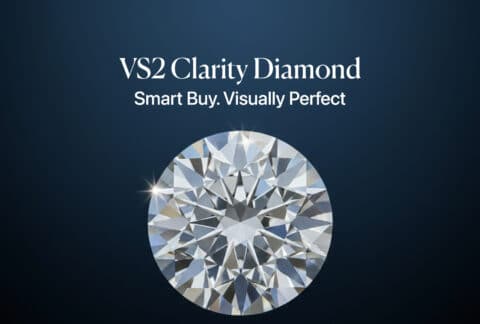
- The Clarity Rule: At 4 carats, the “table” (top facet) is large. Aim for VS1 or VS2. These are guaranteed “eye-clean,” meaning inclusions are invisible without a microscope.
- The Shape Hack: Choosing an Oval, Pear, or Emerald cut can be 30% cheaper per carat than a Round Brilliant and often makes the stone appear larger on the hand.
Deal Alert: Fast-Shipping Gifts — Up to 50% Off* fine jewelry at Blue Nile !
One In A Lifetime Sale: “Clear The Vault” – Get up to 70% OFF on select jewelry at Blue Nile !
Exclusive Offer: Flash Sale on James Allen Up to 40% Off * Sitewide engagement ring settings & Fine Jewelry at James Allen .
The Non-Negotiable: Never compromise on Cut. An “Excellent” cut is the engine of the diamond’s sparkle. A 4-carat stone with a poor cut will look like a dull piece of glass, regardless of its color or clarity.
Final Verdict: For the best 2026 inventory, use James Allen for their 360° high-def inspection or Blue Nile for the largest selection of GIA-certified natural stones.
- The Diamond Control Panel: A Deep Dive into the 4 Cs at 4 Carats
- The Shape Showdown: How Your Choice of Cut Changes Everything
- The Game-Changer: Natural vs. Lab-Grown Diamonds at 4 Carats
- Real-World Examples from James Allen & Blue Nile
- Conclusion: You Control the $200,000 Price Tag
- FAQs: Your Questions, Answered
A 4 carat solitaire diamond ring can cost you $25,000, or it can cost you over $250,000.
And yes, I’m talking about two rings that are both, technically, 4 carats. So what’s the difference? Why the enormous, $225,000 price gap that defines the market for a 4 carat diamond solitaire ring?
The answer is simple: everything else.
My name is Mehedi, and I’ve seen this firsthand. I’ve seen savvy buyers get a breathtaking 4 carat diamond engagement ring for a price that felt like a steal, and I’ve seen others unknowingly pay a massive premium for qualities they couldn’t even see. The difference between them wasn’t luck; it was knowledge.
My goal in this guide is to hand you the keys to the control panel. We are going to break down the real factors that determine the final cost of a 4 carat solitaire diamond ring—from its Color and Clarity grade to its Cut and Shape.
We’ll explore exactly why a 4 carat oval solitaire diamond ring is priced differently than a round one, and how a tiny shift in quality can add or subtract tens of thousands of dollars from the final price tag.
This isn’t just a price list. This is the insider’s guide to finding the absolute best value for your budget. By the end of this, you’ll understand exactly where your money is going and how to build the perfect 4 carat solitaire diamond engagement ring without ever overpaying.
Diamond IQ Test: Natural or Lab-Grown?
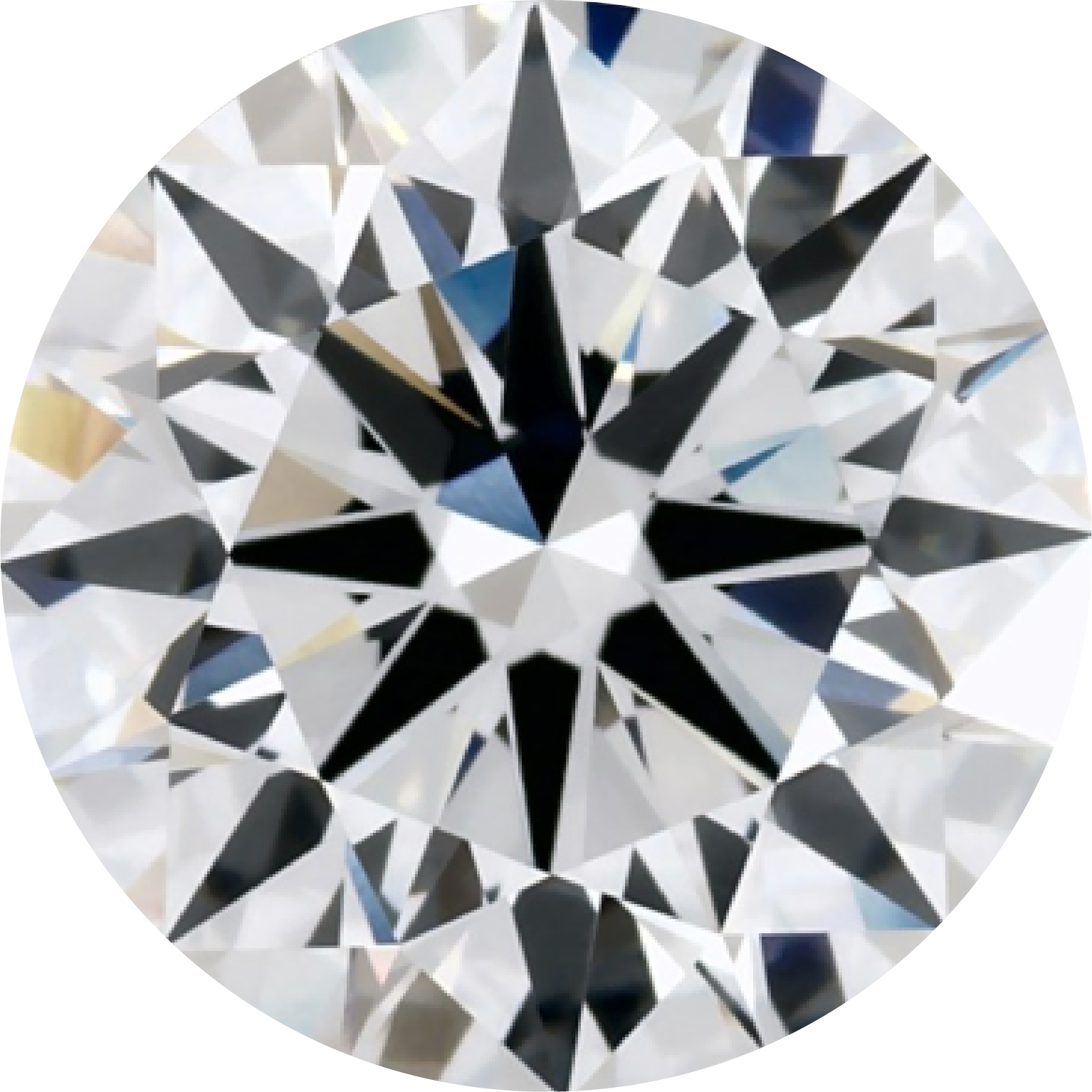
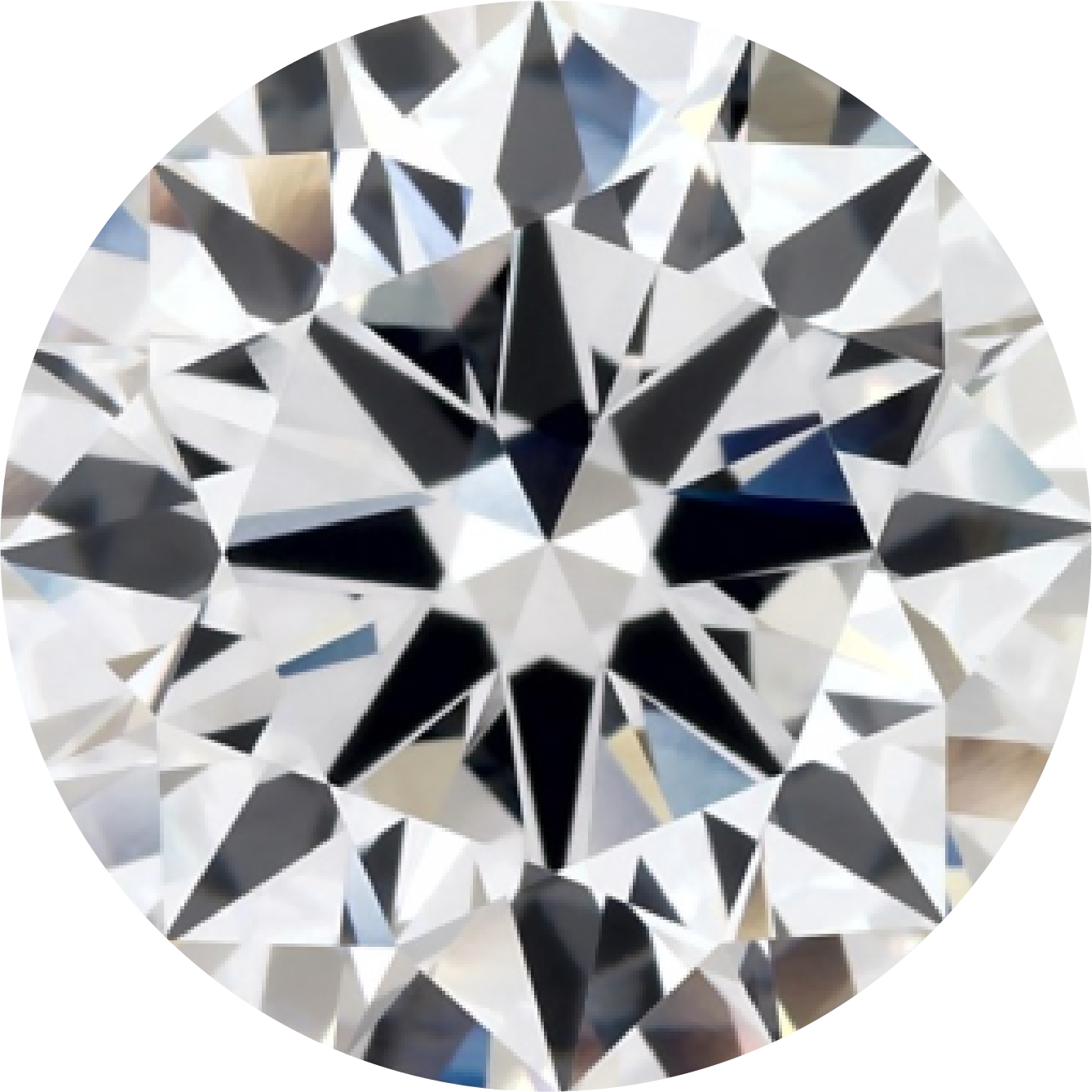
Two identical diamonds: GIA Certified, 1.51ct, D Color, VVS1, Ideal Cut. One is natural ($16,530), the other is lab-grown ($2,390). Choose the diamond you like better and see if you can match it to its origin.
The Diamond Control Panel: A Deep Dive into the 4 Cs at 4 Carats
When you’re looking at a 4 carat solitaire diamond ring, you have to understand that “4 carats” is just the weight. It’s the starting point. The real factors that swing the price from that of a luxury car to that of a small house are the famous Diamond 4Cs: Color, Clarity, Cut, and Carat.
But here’s the crucial insight: at this size, the 4 Cs aren’t just minor adjustments. They are massive price levers. A tiny grade difference that would be invisible in a 1-carat stone can become a glaring focal point in a 4-carat diamond, with a price tag to match.
Let’s break down this control panel, one lever at a time.
Color: The Factor with the Biggest Price Swings
Of all the Cs, color is the easiest place to unknowingly overspend by tens of thousands of dollars. The GIA grades diamond color on a scale from D (absolutely colorless) to Z (light yellow or brown). For a 4 carat diamond solitaire, here’s what that scale really means for your eyes and your wallet.
Most people walk in assuming they need a “D” color diamond because it’s the “best.” That’s a myth that benefits the seller, not you. The truth is, once a diamond is set in a ring and worn on your hand, the difference between “colorless” and “near colorless” becomes practically invisible.
The goal is to find a diamond that looks icy-white to the naked eye, not one that simply looks good on a lab report. Let’s look at the real-world price impact.
4-Carat Round Diamond Price vs. Color
(Note: These are estimated prices for a natural, Excellent cut, VS2 clarity round diamond to show the impact of color alone.)
| Color Grade | Description | Exact 2026 Price Range | Mehedi’s Take |
|---|---|---|---|
| D Color | Absolutely Colorless. The collector’s grade. Clinically sterile perfection. | $150,000 – $285,000+ | The Premium. You pay massive money for a difference only a machine can see. For the “Paper Perfectionist.” |
| E / F | Colorless. Top tier, visually indistinguishable from D to the naked eye. | $82,000 – $148,000 | The Discount. Stunningly icy-white. You get the elite look without the “D” price tag. |
| G / H | Near Colorless. Appears perfectly white when set in platinum. | $65,000 – $96,000 | The Sweet Spot. You save over $100,000 vs. D Color. Visually identical once on your finger. The smartest buy. |
| I / J | Near Colorless (Warm). Faint warmth visible from the side. | $38,000 – $62,000 | Value King. If you set this in Yellow Gold, the metal masks the color, making a “J” look like a “G” for half the price. |
| K / L | Faint Yellow. Noticeable warmth. Vintage aesthetic. | $26,000 – $44,000 | Vintage Vibe. Not for everyone, but offers immense size and character for a fraction of the cost. |
| The 2026 Color Verdict: Unless you are a museum curator, buy G or H Color. The $100,000 you save can buy a luxury car, a honeymoon, and the wedding band. | |||
Imagine you’re on Blue Nile’s website. If you place a 4.05 carat, D-color diamond in your cart, you see one price. Swap it for an identical G-color stone, and the price plummets. Nothing else changes but the number on the certificate. That’s the power of finding the color sweet spot.
Clarity: The Goal is “Eye-Clean,” Not Flawless
Diamond clarity refers to the presence of tiny internal features (inclusions) or surface blemishes. At 4 carats, the diamond’s main facet (the “table”) is a large, open window into the heart of the stone, making clarity more important than it is in smaller diamonds.
But here’s the secret: the goal is not a “Flawless” diamond. The goal is to buy an “eye-clean” diamond. This means it has no inclusions that are visible to the naked eye from a normal viewing distance of about 6-10 inches. Paying for a clarity grade higher than that is, frankly, setting money on fire.
4-Carat Round Diamond Price vs. Clarity
(Note: These are estimated prices for a natural, Excellent cut, G color round diamond to show the impact of clarity alone.)
| Clarity Grade | Description | Estimated Price | Mehedi’s Take |
|---|---|---|---|
| IF / FL | Internally Flawless. The museum-grade. Inclusions are non-existent. | ~$150,000+ | The Collector’s Trap. You are paying for a perfect lab report, not visual beauty. Overkill for jewelry. |
| VVS1 / VVS2 | Very, Very Slightly Included. Minute inclusions visible only to gemologists. | ~$95,000 – $115,000 | Peace of Mind. For the technical perfectionist who wants zero doubt, even under 10x magnification. |
| VS1 / VS2 | Very Slightly Included. Minor inclusions, invisible to the naked eye. | ~$75,000 – $85,000 | The Bullseye. The smartest money-saving grade. You get a visually perfect stone without the premium. |
| SI1 | Slightly Included. Can be eye-clean, but requires inspection. | ~$60,000 – $70,000 | The Gamble. Essential to use 360° video. Look for small white inclusions near the edge. A fantastic deal if found. |
| SI2 | Slightly Included (Heavy). Inclusions likely visible. | ~$45,000 – $55,000 | Strongly Avoid. At 4 carats, SI2 inclusions are huge. They ruin the sparkle and can affect durability. |
| The 2026 Clarity Verdict: Stop at VS2 Clarity. Jumping to VVS or IF doubles your cost for a benefit you will literally never see without a microscope. | |||
When you use a tool like James Allen’s Real-Time Diamond Inspection, ask their expert to locate the inclusions for you on a VS2 diamond. You’ll quickly realize that these “flaws” you’re saving $20,000 on are completely invisible in real life. That’s how you buy smart.
Cut: The Non-Negotiable Factor for Sparkle
Let me be as clear as possible: Cut is the most important ‘C’ for a diamond’s beauty, and you should never, ever compromise on it.
Cut does not mean the diamond’s shape (like round or oval). Cut refers to the quality of its angles, facets, proportions, and polish. It is a measure of how well a diamond unleashes its fire, brilliance, and sparkle.
A 4-carat, D-color, Flawless diamond with a “Good” or “Fair” cut will look dull, glassy, and lifeless. In contrast, a G-color, VS2 diamond with an “Excellent” cut will explode with light and look far more beautiful and impressive.
The GIA grades cut on a scale from Excellent to Poor. For any 4 carat solitaire diamond ring, the standard must be Excellent (or Ideal if graded by AGS).
Why isn’t there a huge table here? Because the price difference between an Excellent cut and a Very Good cut (around 10-15%) is relatively small compared to color and clarity, but the difference in visual performance is massive.
This is the one area where you should always pay the premium. Think of it as the engine of the diamond. You can have the most beautiful car body in the world, but without a powerful engine, it’s just a pretty sculpture.
An Excellent cut is the high-performance engine that makes your diamond come alive. It is, without question, the single best investment you can make in your diamond’s beauty.
The Shape Showdown: How Your Choice of Cut Changes Everything
Now we get to the fun part. Up to this point, we’ve been talking about the technical grades of a diamond. Now, we talk about its personality: its shape.
And I’m going to let you in on the single biggest money-saving secret in the diamond industry: choosing a “fancy shape” over a classic round brilliant is the fastest way to get a bigger-looking diamond for a significantly lower price.
Why? It comes down to two things: economics and physics. First, the demand for round diamonds is higher, so they carry a premium.
Second, when a cutter is shaping a raw diamond crystal, they can retain more of the original carat weight when cutting a fancy shape like an oval or cushion. Less waste for the cutter means a lower price for you—often by as much as 30%.
Let’s break down the most popular shapes for a 4 carat diamond solitaire ring so you can see how their style, sparkle, and price compare.
4-Carat Diamond Price vs. Shape
(Note: These are estimated prices for a natural, G Color, VS2 Clarity, Excellent/Ideal Cut diamond.)
| Diamond Shape | Visual Effect | Estimated Price |
|---|---|---|
| Round Brilliant | The Benchmark. Maximum light return and sparkle. | ~$75,000 |
| Oval | The Size Hack. Elongated shape appears larger than Round. | ~$91,000 |
| Cushion | “Pillowy” shape with soft edges and vintage appeal. | ~$81,000 |
| Emerald | “Hall of mirrors” effect; understated Art Deco style. | ~$58,000 |
| Princess | Sharp, modern lines with brilliant sparkle. | ~$50,000 |
| Radiant | Emerald outline with brilliant “Crushed Ice” facets. | ~$73,000 |
| Asscher | Square Emerald cut; unique “Windmill” reflection. | ~$59,000 |
| Pear | Teardrop shape; creates a slimming effect on the finger. | ~$91,000 |
| Heart | The ultimate romantic statement; highly specialized cut. | ~$90,000 |
| The 2026 Buying Verdict: The price gap is staggering. You can buy nearly two 4-Carat Princess Cut diamonds for the price of one Oval Cut. If you want maximum size for your money, avoid the “Trend Tax” of the Oval and Pear. | ||
The Benchmark: Round Brilliant
The 4 carat round diamond is the undisputed icon. It’s what most people picture when they think of a diamond ring. Its 58 facets are mathematically perfected to produce the maximum possible fire and brilliance. It’s a timeless, can’t-go-wrong choice, but that classic status comes at the highest price per carat.
The Smart & Stylish: Oval Cut
A 4 carat oval solitaire diamond ring is my top recommendation for most people who want the sparkle of a round but with more character and a better price. Ovals have a brilliant faceting style similar to rounds, so you get that incredible fire.
But their elongated shape has two massive advantages: it makes the diamond appear larger than a 4-carat round, and it has a flattering, slimming effect on the finger.
Insider Tip: Look out for the “bow-tie” effect—a dark, bow-tie-shaped shadow across the center of the stone. A well-cut oval will have a minimal or non-existent bow-tie.
The Vintage Romantic: Cushion Cut
The cushion cut, with its soft, squared-off corners, feels like it’s straight out of a classic romance novel. It has a “pillowy” look that’s perfect for vintage-inspired settings. Modern cushion cuts have been optimized for brilliance, giving off a “crushed ice” sparkle that’s absolutely mesmerizing.
They also hide color better than many other shapes, meaning you can often get away with an I or J color stone that still looks fantastic, offering superb value.
The Elegant & Sophisticated: Emerald Cut
A 4 carat emerald cut solitaire diamond ring doesn’t sparkle like a round; it flashes. Its long, rectangular facets create a bright, captivating “hall of mirrors” effect. It’s a supremely elegant, art deco look that screams confidence and sophistication.
Insider Tip: This cut is less forgiving with clarity. Because of its large, open table, you’ll want to ensure you’re in the VS1/VS2 range, as inclusions can be more noticeable than in a brilliant-cut stone.
The Modern & Sharp: Princess Cut
The 4 carat princess cut diamond solitaire ring is the go-to for a clean, modern, and geometric aesthetic. It’s the second most popular shape after the round, offering sharp, uncut corners and spectacular fire. It’s a brilliant cut, meaning its sparkle is top-tier, and it typically costs significantly less than a round brilliant of the same quality.
Insider Tip: Those sharp corners are the most vulnerable point of the diamond. Ensure your setting protects them with V-shaped prongs.
The Best of Both Worlds: Radiant Cut
Can’t decide between the elegant shape of an emerald cut and the fiery sparkle of a round? The radiant cut is your answer. It takes the rectangular outline of an emerald and combines it with the brilliant-style faceting of a round. The result is a vibrant, incredibly sparkly stone with a modern edge. It’s an excellent choice for a statement piece.
The Unique & Art Deco: Asscher Cut
An Asscher cut is essentially a square emerald cut. It has those same mesmerizing, step-cut facets but in a unique, almost octagonal shape. It’s a bold, distinctive look that was huge in the Art Deco period and has made a major comeback.
A 4 carat Asscher cut diamond ring is for someone who appreciates vintage style but wants something less common than a cushion cut.
The Graceful Teardrop: Pear & Marquise Cuts
These elongated shapes are all about elegance and finger-flattering magic. The Pear shape, or “teardrop,” is a beautiful hybrid of a round and a marquise.
The Marquise cut, with its two pointed ends, has the largest surface area of any diamond shape, meaning a 14 carat marquise diamond solitaire ring can look absolutely enormous on the hand.
Insider Tip: Symmetry is everything with these shapes. Ensure the point lines up perfectly with the center of the rounded end (for a pear) or that both points are perfectly aligned (for a marquise).
The Ultimate Romantic: Heart Shape
A 4 carat heart shaped diamond ring is the ultimate symbol of love. It’s a complex cut that requires a master craftsman to get right. It’s a bold and sentimental choice that makes a definitive statement.
Insider Tip: Don’t even consider this shape below 1 carat, as the details get lost. At 4 carats, however, the shape is clear, beautiful, and unmistakable. Ensure the two lobes of the heart are perfectly symmetrical.
The Game-Changer: Natural vs. Lab-Grown Diamonds at 4 Carats
Alright, we need to have a serious talk. The concepts of Color, Clarity, and Cut have been the pillars of diamond pricing for a century. But in the last decade, a new factor has emerged that is more disruptive, more significant, and creates a more dramatic price variance than all the others combined: the diamond’s origin.
This is the biggest decision in diamond buying today, and it boils down to a simple question: are you paying for the rarity of a billion-year-old natural stone, or the perfection of a modern, lab-created one? The price difference is absolutely astounding.
Before we look at the numbers, let’s be crystal clear about what we’re comparing.
- A Natural Diamond was formed deep within the Earth over a billion years ago under immense heat and pressure and was brought to the surface by ancient volcanic eruptions. It is a finite, geological treasure.
- A Lab-Grown Diamond is grown in a high-tech facility that replicates the exact conditions of the Earth. It is chemically, physically, and optically identical to a natural diamond. Let me repeat that: it is a real diamond, not a fake or a simulant like cubic zirconia.
Think of it like this: ice from a glacier and ice from your freezer are both frozen H2O. One has a more romantic origin story; the other is more accessible. But they are both ice.
Now, let’s look at what that difference in origin does to the price of a 4 carat solitaire diamond ring.
The Ultimate Price Comparison
(Note: These are estimated prices for a high-quality 4-carat Round Brilliant diamond with G Color, VS1 Clarity, and an Ideal Cut.)
| Diamond Type | Origin Story | Estimated Price (4ct) |
|---|---|---|
| Natural Diamond | Mined from the Earth, a finite resource. | ~$80,000 |
| Lab-Grown Diamond | Grown in a lab, same chemical/optical properties. | ~$7,000 |
| The 2026 Origin Verdict: The market has spoken. You are paying a $73,000 “Story Tax” for the Natural stone. Unless you need the resale liquidity of a natural asset, the Lab-Grown option offers 100% of the visual impact for less than 10% of the cost. | ||
Take a good, long look at that table. This is not a typo. For a beautiful, high-quality 4 carat diamond solitaire, you can expect to pay more than 10 times more for a natural stone than for a visually identical lab-grown one.
The lab-grown option gives you a top-tier 4-carat stone for less than the price of a modest 1-carat natural diamond. This is the single biggest price lever you can pull.
Mehedi’s Advice: How to Choose Between Legacy and Budget
So, which one should you choose? There is no wrong answer here, but there is a right answer for you. This choice has nothing to do with beauty—because they look the same—and everything to do with what you value.
The Case for a Natural Diamond:
You choose a natural diamond for its story. You are buying a piece of our planet’s history. It’s a finite resource, and that rarity is what gives it its long-term value. It is the traditional choice, a symbol of legacy that connects you to a story that started a billion years ago.
For the person who values this romance, tradition, and the potential for a stone to hold its value due to scarcity, a natural diamond is the only choice.
The Case for a Lab-Grown Diamond:
You choose a lab-grown diamond for its logic. You are buying the molecule, not the myth. This is the choice for the person who wants to maximize the size and quality of their diamond for a given budget.
It allows you to acquire a spectacular 4 carat solitaire diamond engagement ring that might be completely out of financial reach in a natural version.
It’s the rational, practical choice for someone whose priority is getting the most visually stunning ring possible for their money.
Ultimately, it comes down to this: do you want to tell a story about where your diamond came from, or do you want to tell a story about how you got a breathtakingly beautiful ring for a remarkably smart price?
Only you can answer that.
Real-World Examples from James Allen & Blue Nile
Theory is great, but seeing is believing. Let’s put everything we’ve talked about into practice. I’m going to walk you through three different buying strategies for a 4 carat solitaire diamond ring, showing you how different choices on sites like James Allen or Blue Nile can lead to dramatically different—but equally valid—outcomes.
The Maximum Value Play
The Goal: To get the biggest, most visually stunning 4-carat diamond ring possible, for the absolute best price. This is for the buyer who wants maximum “wow” factor per dollar.
The Strategy: This is a simple, two-step move that saves you over 90% of the cost. First, you choose a Lab-Grown diamond. Second, you choose a Fancy Shape.
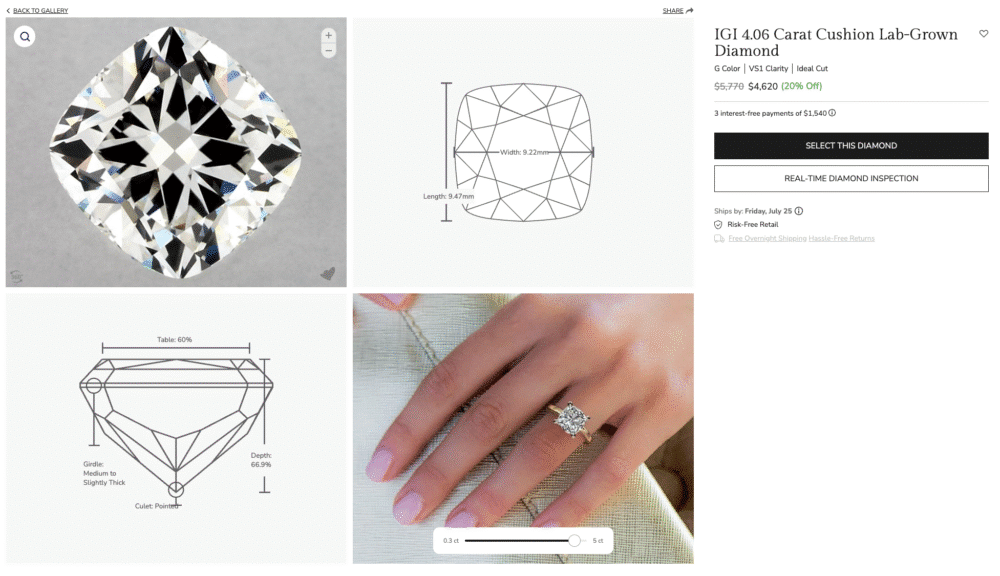
Let’s look at this Loose Diamond from James Allen:
- Origin: Lab-Grown
- Shape: Cushion Cut
- Carat: 4.06
- Color: G
- Clarity: VS1
- Estimated Price: ~$4,500
This is the ultimate smart buy. You get a massive, visually perfect 4 carat solitaire diamond ring. The G color is icy-white, the VS1 clarity is perfectly eye-clean, and the cushion cut gives it a beautiful, “crushed ice” sparkle.
To the naked eye, this ring will look identical to a natural diamond ring that costs well over $100,000. For the person whose priority is getting a breathtakingly large and beautiful stone without the astronomical price tag, this is, without a doubt, the way to go.
James Allen is a top leader in online diamond sales, offering cutting-edge imaging technology that lets you inspect diamonds as if you were using a jeweler's loupe. With the largest exclusive selection of loose diamonds available online and excellent pricing, they also boast one of the finest collections of lab-created diamonds on the market. They currently run a 25% discount on selected lab-grown diamonds!
WHAT WE LOVE ABOUT THEM:
- 30-day no-questions-asked return policy, with a prepaid shipping label provided by James Allen.
- Lifetime warranty on all purchases.
- Free international shipping.
- Complimentary prong tightening, repolishing, rhodium plating, and cleaning every six months.
- Insurance appraisals included with purchases.
- One free resizing within 60 days of purchase.
- Free ring inscriptions available.
- Best-in-class high-quality imagery for every diamond in stock.
- 24/7 customer support.
- Premium, best-in-class packaging.


The Smart Natural Diamond Play
The Goal: To get a beautiful, large natural diamond without paying the premium for top-of-the-line grades that you can’t see. This is my personal recommendation for most natural diamond buyers.
The Strategy: This is all about hitting the “sweet spots” we discussed. You choose a Natural origin, a fancy shape to maximize value, and the ideal grades for Color and Clarity.
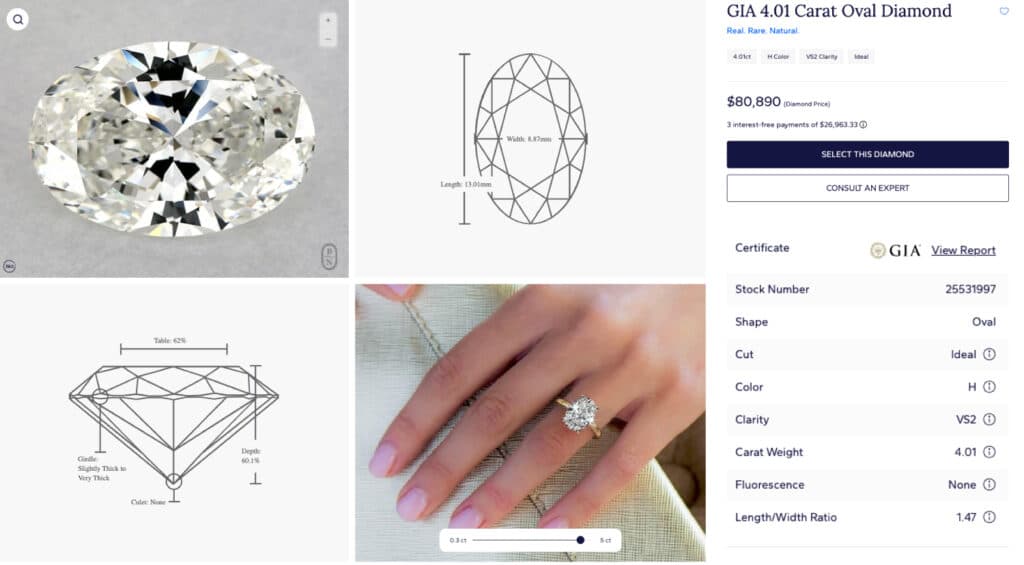
Here is the perfect example of this strategy, which you could build on Blue Nile:
- Origin: Natural
- Shape: Oval Cut
- Carat: 4.01
- Color: H
- Clarity: VS2
- Estimated Price: ~$80,000
This is how a savvy buyer thinks. The Natural origin gives you that billion-year-old story and heirloom quality. The Oval shape makes the stone look larger than a 4-carat round and saves you about 15-20% right off the top. The H Color looks perfectly white in a platinum setting but saves you thousands compared to a G.
And the VS2 Clarity is guaranteed to be eye-clean. You end up with a huge, gorgeous, and completely natural 4 carat oval solitaire diamond ring that looks just as impressive as a $100,000+ D/VVS stone.
The “No-Compromise” Natural Diamond
The Goal: To acquire a collector-grade diamond that represents the absolute peak of rarity and perfection. This is for the buyer who isn’t just buying a ring, but an investment-quality asset.
The Strategy: Here, the goal is to get the best possible grades on paper. The choice is always a Natural, Round Brilliant diamond with top-tier Color and Clarity.
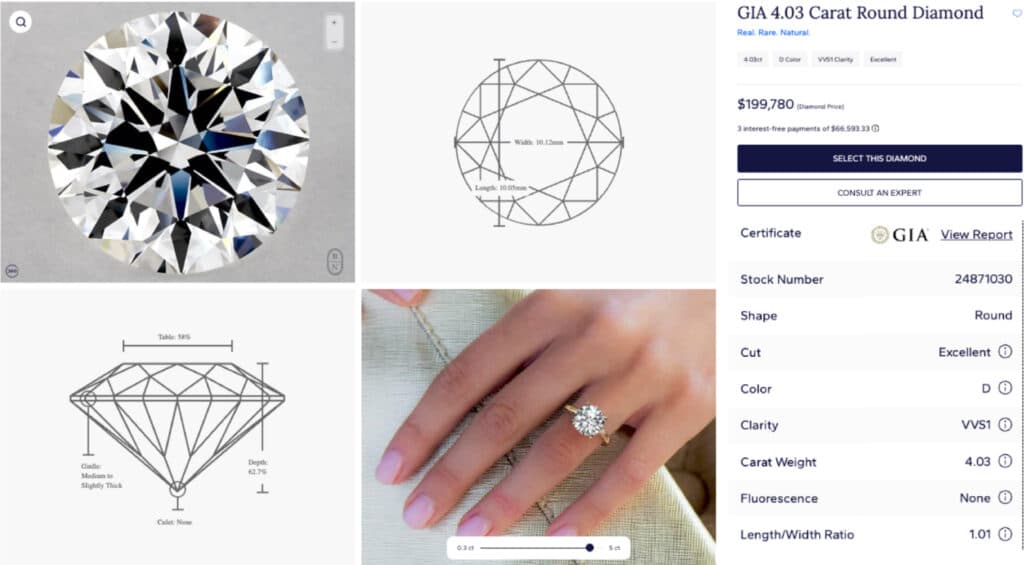
Let’s look at what this top-tier choice entails:
- Origin: Natural
- Shape: Round Brilliant
- Carat: 4.03
- Color: D
- Clarity: VVS1
- Estimated Price: ~$200,000+
This 4 carat round solitaire diamond ring is an icon of luxury. The Round Brilliant shape provides the ultimate sparkle. The D Color is the highest possible grade, a symbol of absolute colorlessness. The VVS1 Clarity means its inclusions are so microscopic that they are nearly undetectable, even to a trained professional.
Is this stone visually “better” than the H/VS2 Oval from across a dinner table? No. But the person who buys this diamond is paying for the knowledge of its perfection. They are acquiring a rare and valuable piece of the Earth, a true collector’s item where the price reflects its extreme rarity.
Blue Nile is one of the biggest and most recognized online jewelry retailers, offering an extensive and exclusive inventory. Their high-resolution images are improving and getting closer to the quality offered by James Allen, while their prices remain highly competitive. Right now, Blue Nile offers up to 30% savings on jewelry during a limited-time sale.
WHAT WE LOVE ABOUT THEM:
- 30-day no-questions-asked return policy, with a prepaid shipping label provided by Blue Nile.
- Lifetime warranty on all purchases.
- Free shipping on every order.
- Complimentary services every six months, including prong tightening, repolishing, rhodium plating, and cleaning.
- Insurance appraisal included with your purchase.
- One free resizing within the first year.
- High-quality images available for roughly half of their diamond selection.
- 24/7 customer service support.
- Full credit toward future upgrades, as long as the new item is at least double the value.
- Best-in-class order fulfillment process.

Conclusion: You Control the $200,000 Price Tag
So, let’s go back to where we started: that intimidating $225,000 gap between one 4 carat solitaire diamond ring and another. It seemed impossible, right?
The most important thing I hope you’ve learned from this guide is that the price tag on a diamond isn’t a fixed reality you have to accept. It’s a number you have almost complete control over. You now hold the keys to the control panel, and you know exactly which levers to pull to build a spectacular ring that fits your budget and your values.
Let’s recap the smartest, most impactful moves you can make:
- The Insider’s Checklist for Natural Diamonds: If you’re buying a natural stone, you don’t need “perfect on paper.” You need “beautiful in real life.”
Stick to the value sweet spots: a G/H Color grade, a VS1/VS2 Clarity grade, and a non-negotiable Excellent Cut.
This combination alone will give you a visually stunning diamond while saving you tens of thousands of dollars. - The Shape-Shifter Saving: Remember that simply choosing a fancy shape like an Oval, Cushion, or Radiant over a classic Round Brilliant can save you up to 30% and often results in a diamond that looks even larger on the hand.
- The Ultimate Price Lever: And, of course, the game-changer. Deciding to go with a Lab-Grown Diamond gives you a visually and chemically identical 4-carat stone for up to 90% less than its natural counterpart.
It is, by far, the most powerful tool you have for controlling the cost.
The power is now in your hands. You know how to judge a diamond’s quality, not just its weight. You understand the difference between paying for rarity and paying for beauty. Frankly, you now know more about buying a 4 carat diamond solitaire ring than 99% of people who walk into a jewelry store.
So take this knowledge, use it with confidence, and go build the ring of your dreams. You’ve earned it.
FAQs: Your Questions, Answered
Alright, even after all that, you probably still have some questions rolling around in your head. That’s normal. A purchase this significant deserves total clarity. Here are my straight-up answers to the most common questions I get about buying a 4 carat solitaire diamond ring.
Related Blog Posts: