
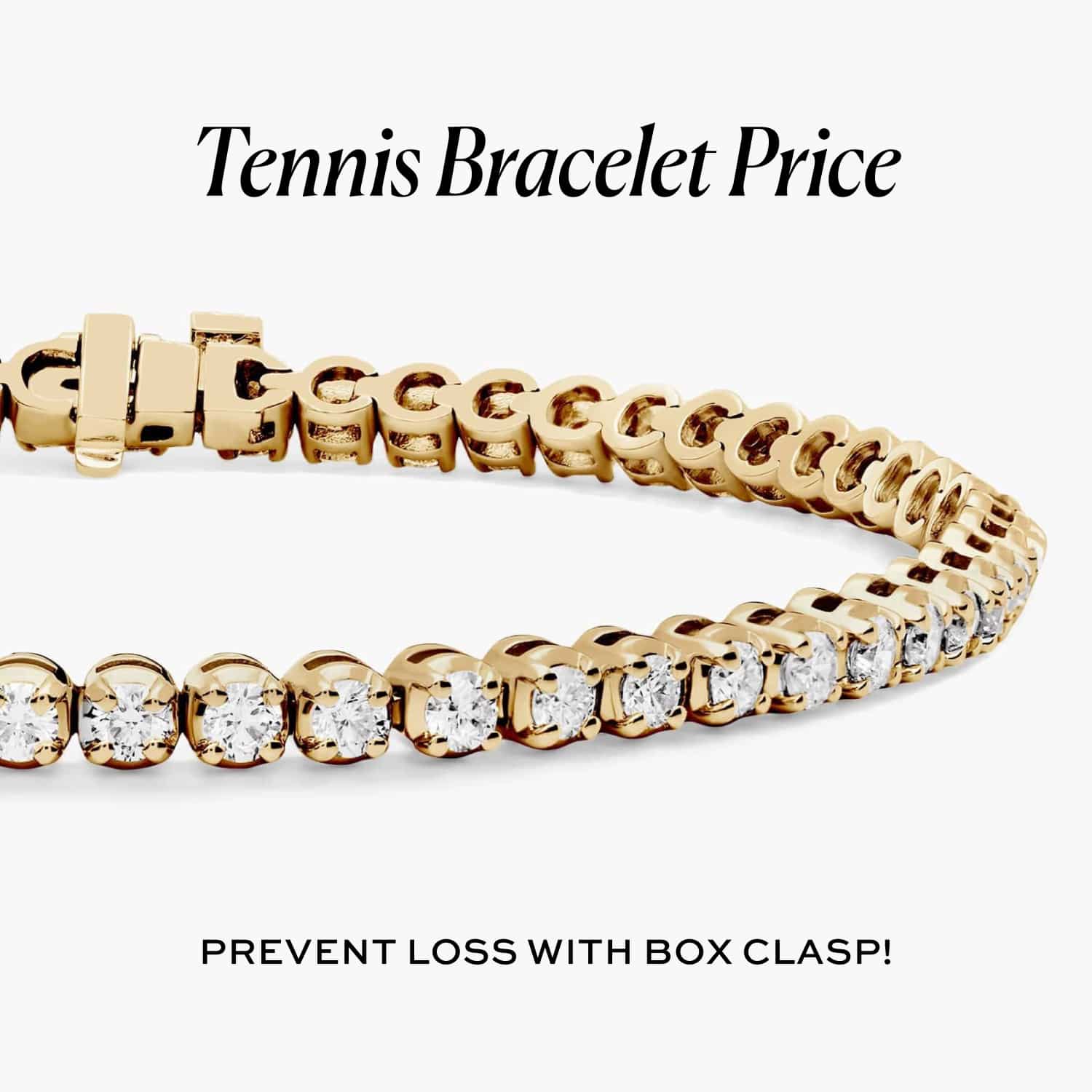
Expert Quick Take: My Honest Opinion After Researching 200+ Bracelets
In 2026, a high-quality diamond tennis bracelet costs between $1,900 (Lab-Grown 2ct) and $15,000+ (Natural 5ct). But the price means nothing if it falls off your wrist. The infamous ‘Chris Evert’ incident happened because of a weak clasp.
If you are buying a heavy line of diamonds, you must demand a Box Clasp with a safety latch. Furthermore, the key to visual value is ‘Color Uniformity.’ If you buy cheap, mismatched stones, the bracelet looks like ‘frozen spit.’ Below, I audit the market to protect your investment.”
Decision Snapshot: The 2026 Bracelet Audit
| If Your Goal Is… | 2026 Bracelet Strategy | Mehedi’s Technical Logic | Mehedi’s 2026 Verdict |
|---|---|---|---|
| Maximum Sparkle & Value | Lab-Grown F-G Color + Box Clasp | You get 3x the carat weight for roughly 10% of the natural diamond cost. | The ROI Winner. At $2,795, this is the best value in 2026. Perfect for pairing with high-carat lab solitaires. |
| The “Celebrity” Size | Moissanite in 14k Solid Gold | Achieving a 10-carat look in natural diamonds costs $20k+. Moissanite mimics the fire for a fraction. | Visual Dominance. For $3,651, you get massive fire and finger-coverage. See my tennis chain guide for metal pairings. |
| Heirloom Investment | Natural Diamonds + Blue Nile | Holds the most stable resale value in the 2026 market. Requires a $10,000+ entry budget. | The Asset Choice. Only choose natural for long-term investment stability. Ensure GIA certification for every stone. |
| The 2026 Bracelet Verdict: For 90% of buyers, **Lab-Grown** is the technical 2026 favorite. It allows you to buy a “Daily Wear” piece without the insurance anxiety of a five-figure natural asset. If you are choosing between vendors, Blue Nile currently holds the superior box-clasp security system, while Rare Carat is the top choice for custom lab-grown carat weight builds. | |||
Don’t buy a ‘blind’ bracelet. Demand a vendor that guarantees a minimum color/clarity floor across every stone. Buy the data, not the glow.
If your clasp doesn’t ‘click’ audibly, do not wear it. Check my curated list of lab diamond tennis bracelets under $3,000 for pre-vetted options.
The tennis bracelet got its iconic name because a professional athlete, Chris Evert, lost hers on national television during the US Open due to a faulty clasp.
The match was actually stopped so she could search for her diamonds on the court. Almost 50 years later, buyers are still making the exact same mistake.
Mehedi’s Reality Check:
You are about to strap thousands of dollars to your wrist—a part of your body that bangs into desks, catches on sweaters, and swings constantly. A basic lobster-claw clasp will eventually fail you.
Today, we are conducting a strict tennis bracelet clasp security audit and breaking down exactly what you should pay for Lab-Grown, Natural, and Moissanite in the 2026 market.
In this guide, we will analyze:
- Clasp Integrity: Why the box clasp is the only 2026 standard for security.
- The Melee Grading Gap: Why uniformity matters more than total carat weight.
- 2026 Price Arbitrage: How to get a $10,000 look for under $2,800.
Before you invest, make sure you understand the diamond cut chart to ensure your line of diamonds has a consistent, unbroken sparkle.
The Clasp & Length Audit (Protecting Your Money)
In 2026, the most expensive mistake you can make isn’t buying the wrong diamond—it’s buying the wrong mechanical foundation.
A tennis bracelet is a moving part; if the engineering fails, the jewelry is gone. As a GIA-trained auditor, I look at the clasp first and the carats second.
Best Clasp for a 7-Carat Tennis Bracelet (And Smaller)
The Security Rule: The heavier the total carat weight, the more centrifugal force is applied to the closure every time you swing your arm. For any bracelet over 2 carats, a simple lobster claw is a liability.
- The 2026 Standard: The Box Clasp with a Safety Wing (also known as a Figure-8 catch) is the only acceptable industry standard for high-value lines.
- How it Works: The “tongue” clicks into the box (primary lock), and the “wing” snaps over a side knob (secondary lock). If the main lock fails, the wing holds the bracelet on your wrist until you notice. If your bracelet doesn’t have at least one safety wing, you are wearing a “disposable” investment.
The “Length Profit Trap”
Most generic jewelry blogs tell you to “err on the side of a larger size” for comfort. This is a profit trap. * The Damage: If you have a 6-inch wrist and wear a 7.5-inch bracelet, the “drop” is too significant.
The bracelet will constantly drag across tables, laptops, and car doors. This repeated impact doesn’t just scratch the metal; it causes Prong Fatigue.
- The Result: Oversized bracelets lead to bent prongs that eventually release the diamonds. I see more “lost stone” repairs caused by incorrect sizing than by manufacturing defects.
- The One-Finger Rule: Your tennis bracelet should have exactly one finger of clearance between the metal and your skin. This allows for natural wrist swelling throughout the day without allowing enough slack for the bracelet to “swing-strike” hard surfaces.
The Expert Pick: Round 4 CTW Lab Grown Diamond Flower Clasp Bracelet ($2,575)
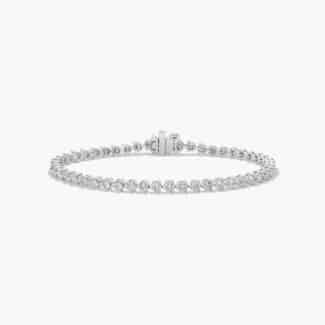
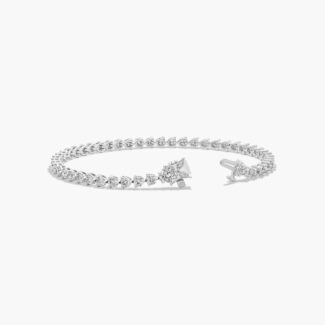
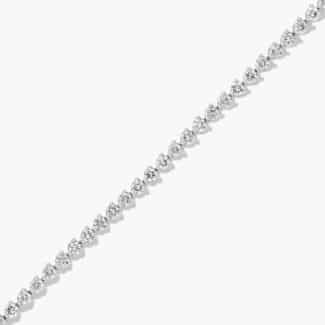
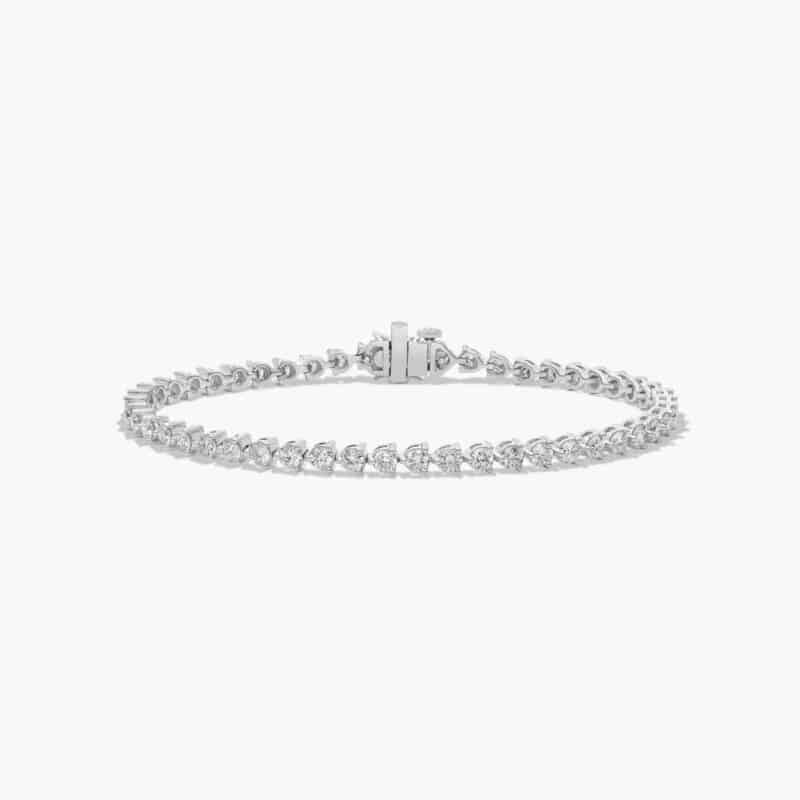
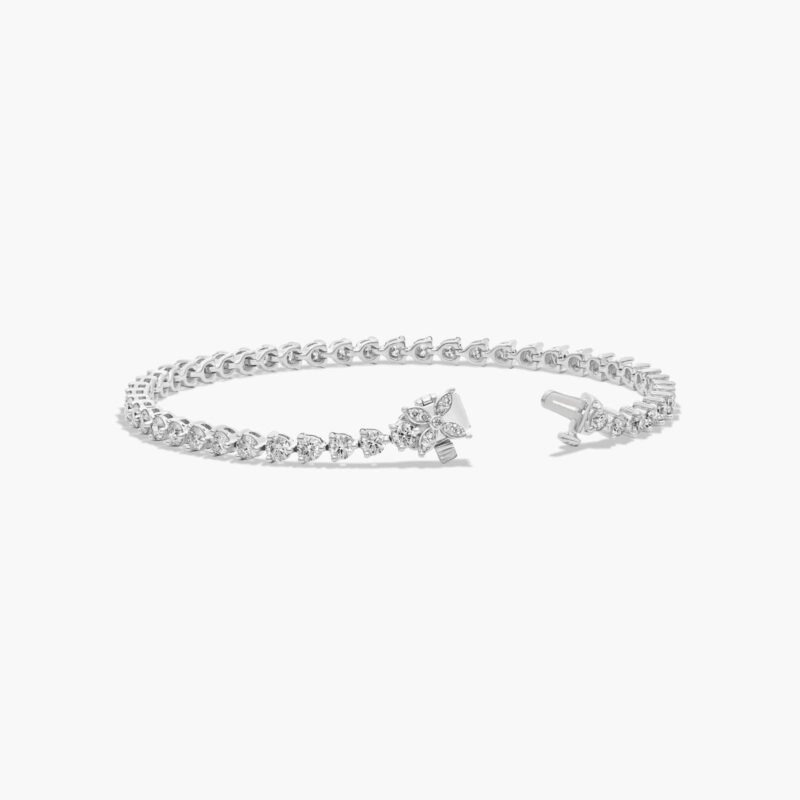
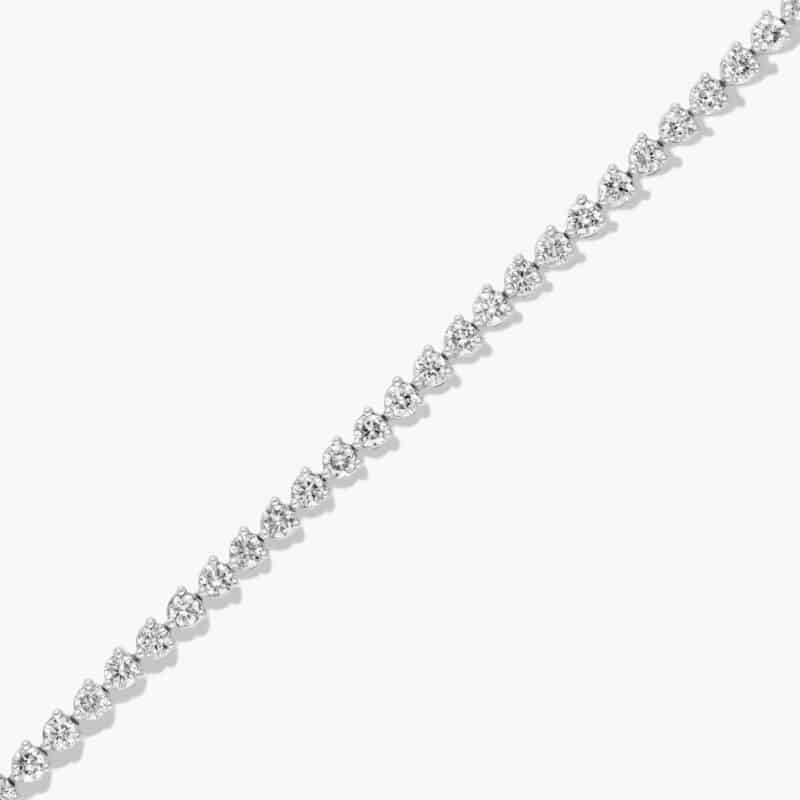
Round 4 CTW Lab Grown Diamond Flower Clasp Bracelet – Lab Grown Diamond Tennis Bracelets Under $3000
A high-carat luxury essential for Lab Grown Diamond Tennis Bracelets Under $3000, this 14K white gold piece features 4 total carats of brilliant diamonds and a decorative floral clasp.
This 14K White Gold piece is my “Value Champion” for 2026. At 4.00 carats, the stones are substantial enough to be distinct (approx. 0.10ct each). More importantly, it features a Decorative Flower Box Clasp.
Why I love it: It disguises the “Double Safety” mechanism as a design element. Instead of a bulky, industrial latch that interrupts the flow of diamonds, the clasp is integrated into a floral motif.
You get the 360-degree “Wall of Ice” look with the security of a vault. At $2,575, it provides a higher diamond-per-dollar ratio than almost any other pre-vetted 4ct option on the market today.
The “Melee” Trap: Why Cheap Bracelets Look Bad
In the 2026 market, many retailers try to distract you with “Total Carat Weight” (TCW). They hope that a “5 Carat” label will hide the fact that the diamonds themselves are of wildly varying quality.
In a tennis bracelet, the diamonds are small—often referred to as “melee”—and this is where the industry’s dirtiest secrets are hidden.
GIA vs. IGI Melee Grading for Bracelets
The Dirty Secret: Because a single tennis bracelet can contain anywhere from 40 to 60+ diamonds, they are rarely certified individually.
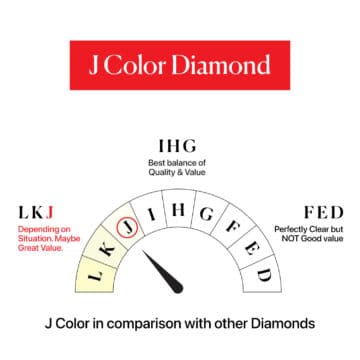
Instead, they are graded in “lots.” Cheap mall retailers often buy lower-tier lots and mix “G” color stones with “J” or “K” color stones to save on costs.
While each diamond is small, when you line them up, the human eye is incredibly good at spotting the “yellow” stones mixed in with the “white” ones. This is what creates the “Checkered Effect”—where the bracelet looks like a flickering line of “frozen spit” rather than a continuous river of light.
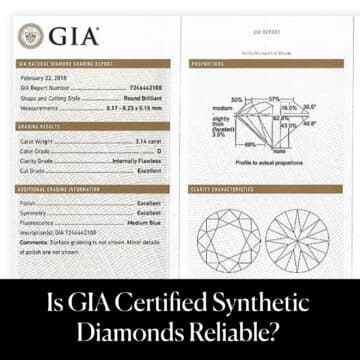
- IGI Melee Screening: In 2026, the International Gemological Institute (IGI) is the world leader in melee diamond screening. High-end lab-grown brands use IGI to ensure that every stone in the lot meets a strict color and clarity floor.
- GIA Melee Analysis: The Gemological Institute of America (GIA) offers an automated service that sorts stones by color and separates natural from lab-grown. If a retailer doesn’t mention a grading authority for their melee, they are likely self-grading—which is a major red flag for Color Uniformity.
The Uniformity Verdict
To avoid a dull, mismatched bracelet, you must demand a guaranteed minimum grade. In 2026, the “Sweet Spot” for value and beauty is F-G Color and VS2-SI1 Clarity.
Anything lower than ‘G’ color in a line setting will start to show visible yellow tinting against the white metal prongs.
Expert Rule: “If the stones don’t match, the sparkle won’t flow. A tennis bracelet should be a ‘symphony’ where every stone is playing the same note. Mismatched color grades break the visual rhythm, making the bracelet look like a collection of scrap diamonds rather than a luxury investment.”
Product Showcase: The Uniformity Standard
At this price point, you are effectively paying for the labor of hand-matching the stones—a service that cheap retailers simply don’t provide.
For more on why color matching is vital, see my guide on how to tell if a diamond is real and why “simulated” stones always fail the uniformity test.
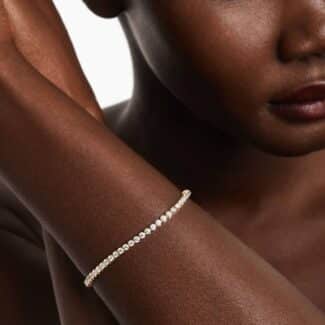
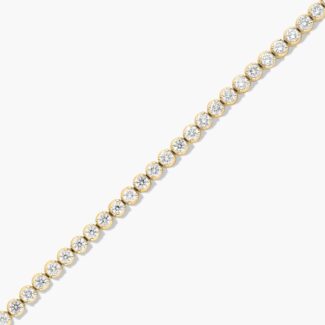
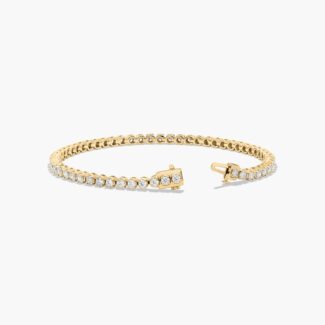
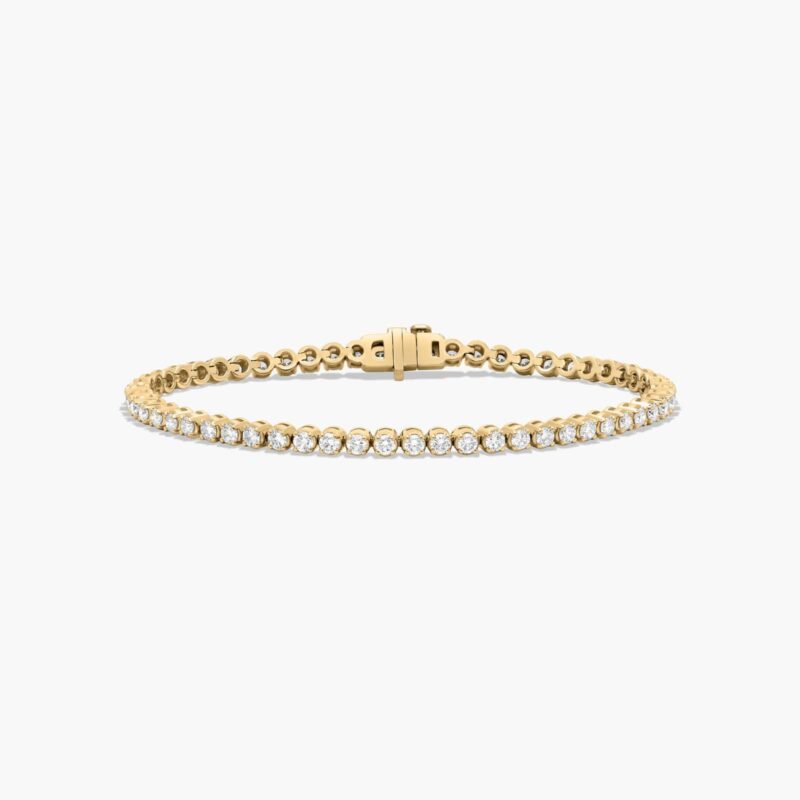
The Expert Pick: Round 3 CTW Lab Grown Diamond 14K Yellow Gold Bracelet ($2,795)
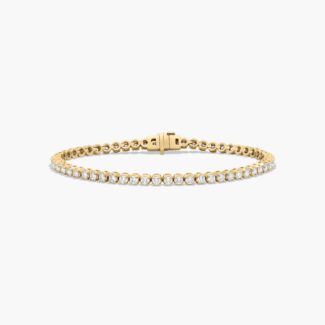
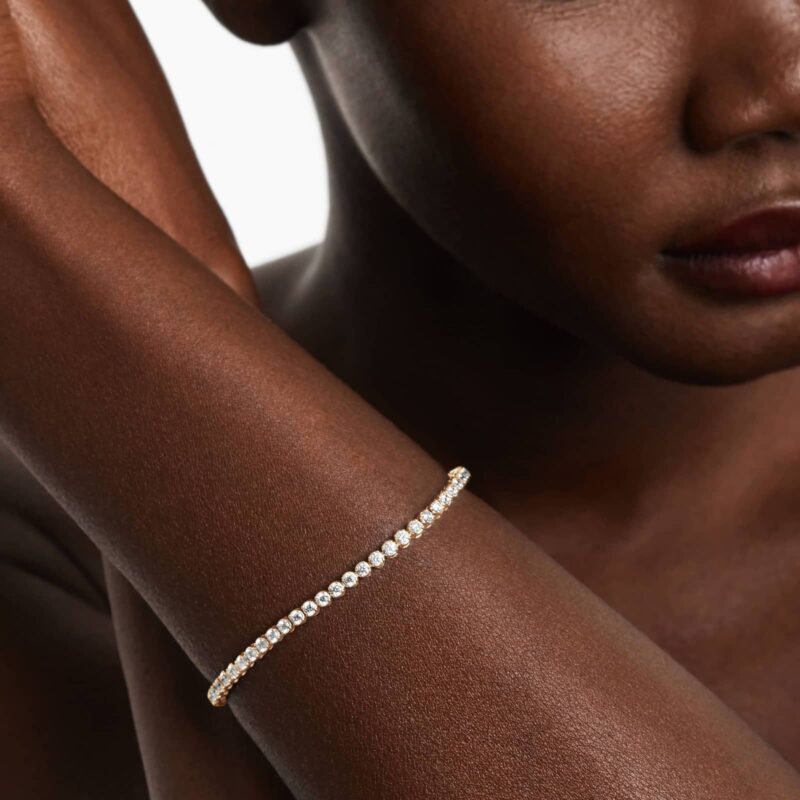
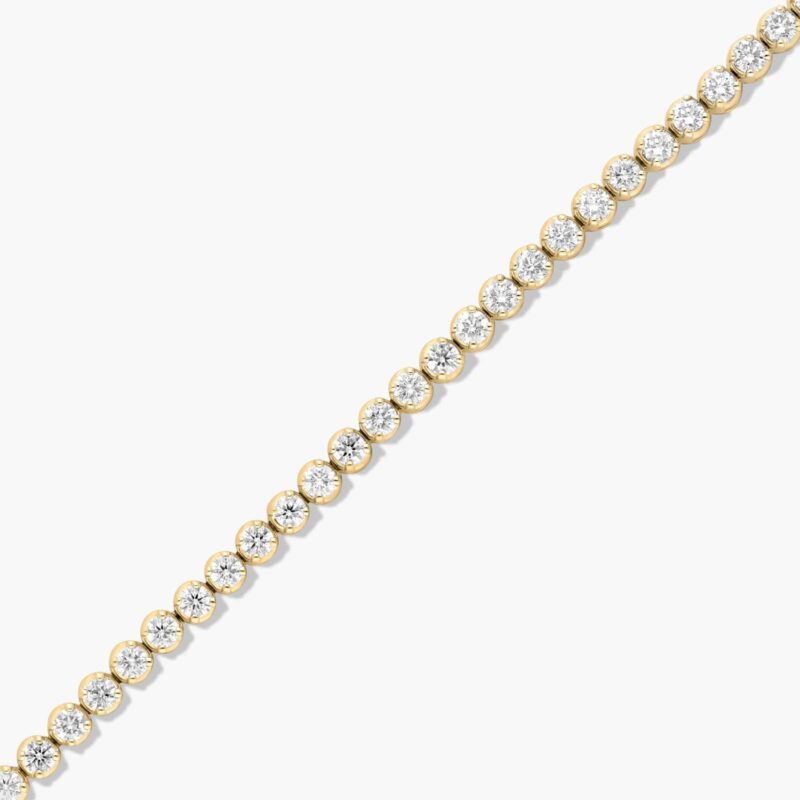
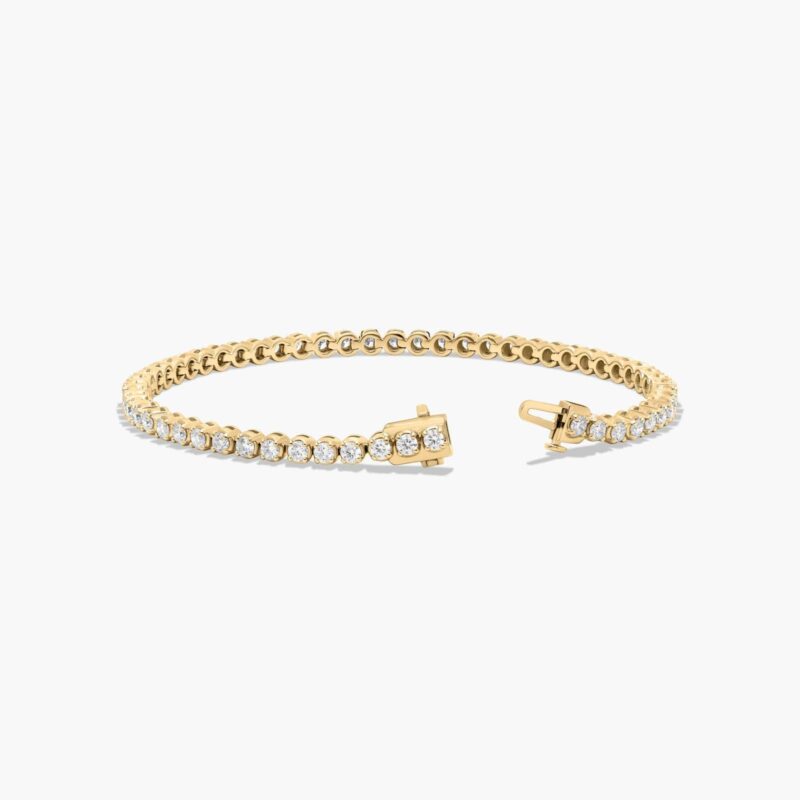
Round 3 CTW Lab Grown Diamond 14K Yellow Gold Bracelet – Lab Grown Diamond Tennis Bracelets Under $3000
A timeless and radiant essential for Lab Grown Diamond Tennis Bracelets Under $3000, this 14K yellow gold piece features 3 total carats of brilliant-cut diamonds in classic basket settings.
This is my top recommendation for the “Perfect Daily Driver” in 2026.
- The Specs: It guarantees F-G Color and VS2-SI1 Clarity across all 57 stones.
- The Result: Because every diamond is laser-screened for uniformity, you get a continuous, unbroken line of brilliant white light.
- The Clasp: It features the mandatory Box Clasp with a Safety Latch, ensuring your $2,795 investment stays on your wrist.
The 2026 Price Arbitrage: Lab vs. Natural vs. Moissanite
In 2026, the jewelry market has split into two distinct camps: the Investors (Natural) and the Aesthetes (Lab/Moissanite). Understanding the “Price Arbitrage”—the massive difference in what you pay vs. what you get—is the only way to avoid buyer’s remorse.
As your GIA auditor, I’m here to give you the financial “Hard Truth” that sales reps hide behind the velvet counter.
Resale Value of Lab Diamonds in 2026
The Hard Truth: Let’s discuss the 5ct lab-grown diamond tennis bracelet price. In 2026, a high-quality, pre-vetted 5ct lab bracelet costs around $3,000. However, you must view this as an “experience” purchase, not a financial hedge.
Lab diamonds are depreciating assets. Because production technology is scaling, the replacement cost of these stones drops every year.
The Resale Reality: “A $3,000 lab diamond tennis bracelet has a current resale value of roughly $500 to $800. If you try to sell it back to a jeweler, they are only paying for the 14k gold weight and a fraction of the stone cost.
If you are buying a bracelet with the hope of it being a ‘rainy day’ asset, lab-grown is the wrong path.”
The Strategy: “Buy Lab for the look, buy Natural for the legacy. If you want a 2026 asset that holds 40-60% of its value, you must spend the $15,000+ for a natural 5-carat diamond ring or bracelet.
But if you want maximum sparkle for a Saturday night without the $15,000 debt, buy Lab.”
The Moissanite Hack (Carat-Maxing)
Want a “Celebrity-Sized” 10-carat look but refuse to pay $20,000? The moissanite tennis bracelet vs. lab-grown sparkle debate is a fierce one in 2026.
- The Sparkle Factor: Moissanite has a higher refractive index than diamond (2.65 vs. 2.42). This means it has 2.5x more “fire”—those rainbow flashes you see in direct sunlight.
- The “Disco Ball” Warning: In a 10-carat size, moissanite can look “too sparkly” to some traditionalists. However, for an evening gala or a luxury push present, that extra fire is exactly what makes the piece stand out.
Product Showcase: The 10-Carat Illusion
The Expert Pick: Ultimate Moissanite Tennis Bracelet 9.66 CTW DEW ($3,651)
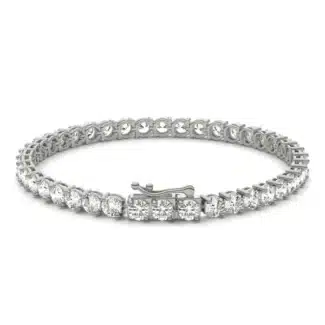
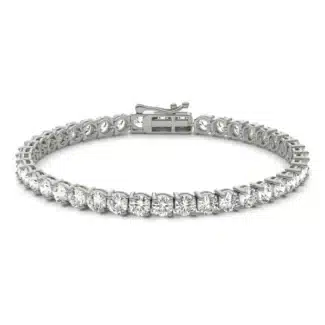
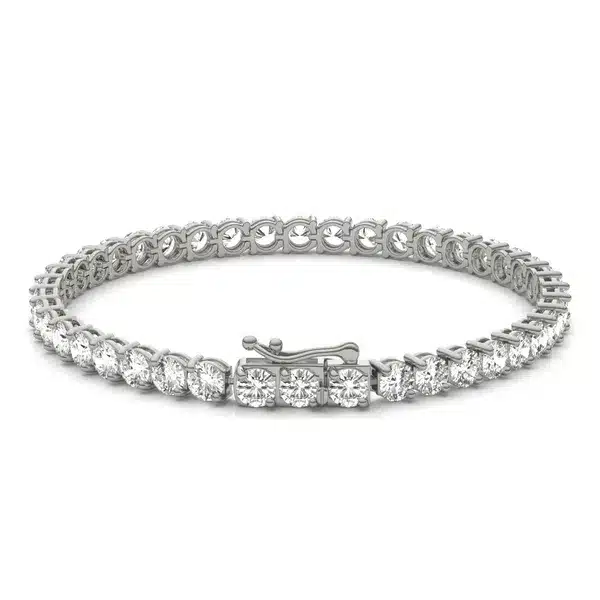
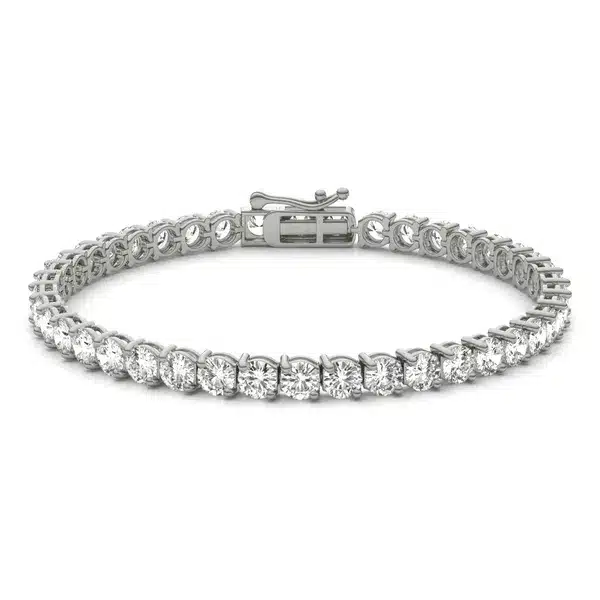
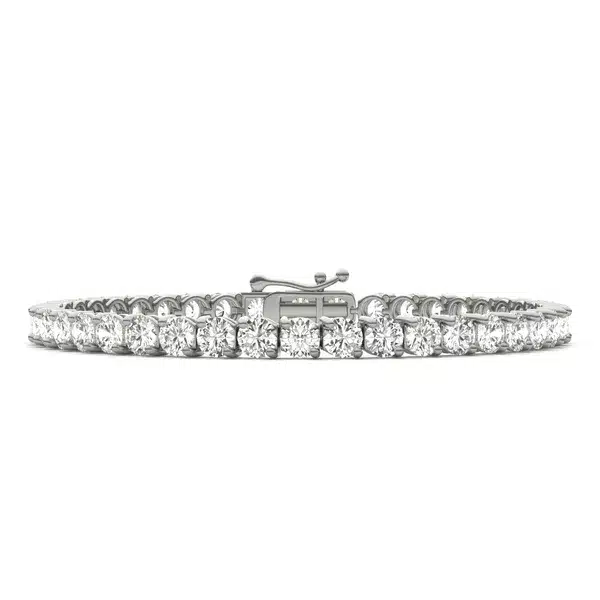
Ultimate Moissanite Tennis Bracelet: Luxury Push Present Ideas 9.66 CTW DEW
A show-stopping Two-Prong Tennis push present bracelet in 14K White Gold, featuring a colossal 9.66 CTW DEW of Colorless (DEF) Moissanite—the ultimate high-impact choice among Luxury Push Present Ideas.
This is what I call the “Red Carpet Hack.” To get a 9.66-carat natural diamond bracelet of this quality, you would need a budget of $25,000+.
- The Build: This is a 2-Prong Masterpiece. Most bracelets use 4 prongs, which can look “boxy.” A 2-prong setting allows the stones to sit closer together, creating a seamless “River of Light” effect.
- The Value: At $3,651, you are getting a massive visual impact in solid 14K gold. It’s the ultimate statement piece for those who want the size of a Hollywood star without the insurance premiums of a natural stone.
For a deeper look at how these are crafted, see my guide on the making of a moissanite tennis bracelet.
Top Pre-Vetted Picks for 2026
In a market saturated with “promo-grade” jewelry that loses its luster in months, these six pieces have passed my GIA-standard structural audit. These aren’t just accessories; they are high-performance assets engineered for security and maximum light return.
Mehedi’s Authorized Safe-Clasp Builds
For New Mothers & Active Lifestyles (Snag-Free)
The Pick: Bezel Tennis Bracelet 2.75 CTW


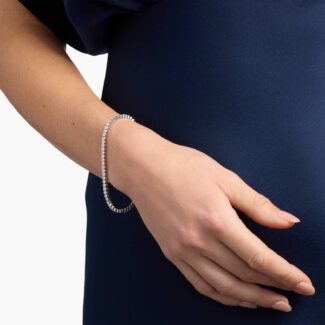
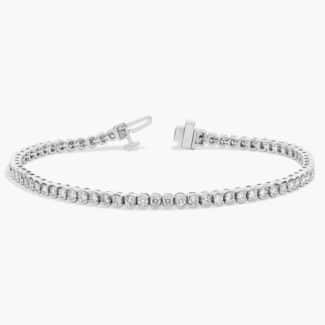
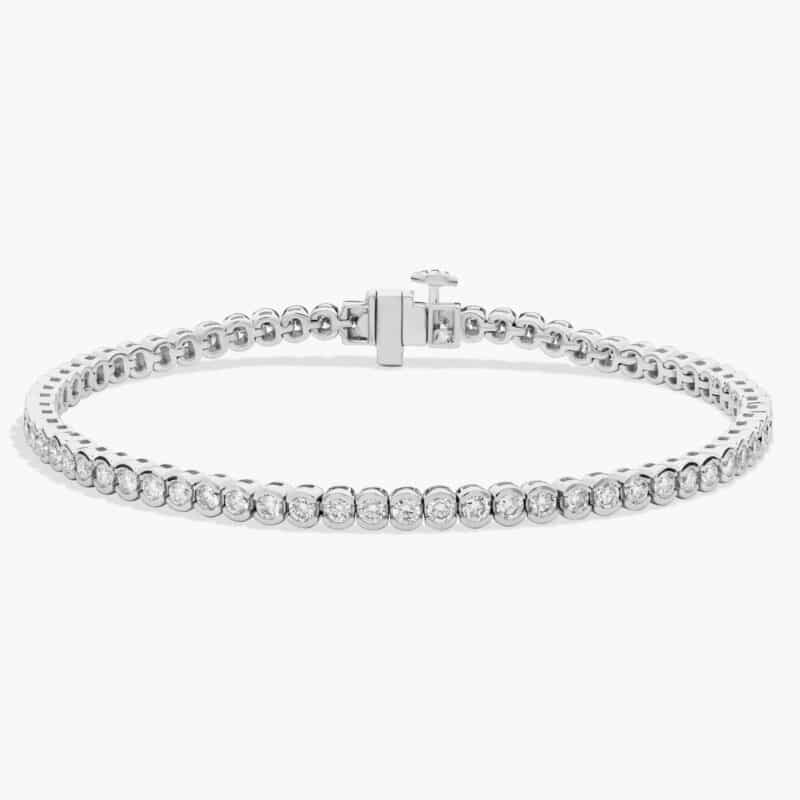
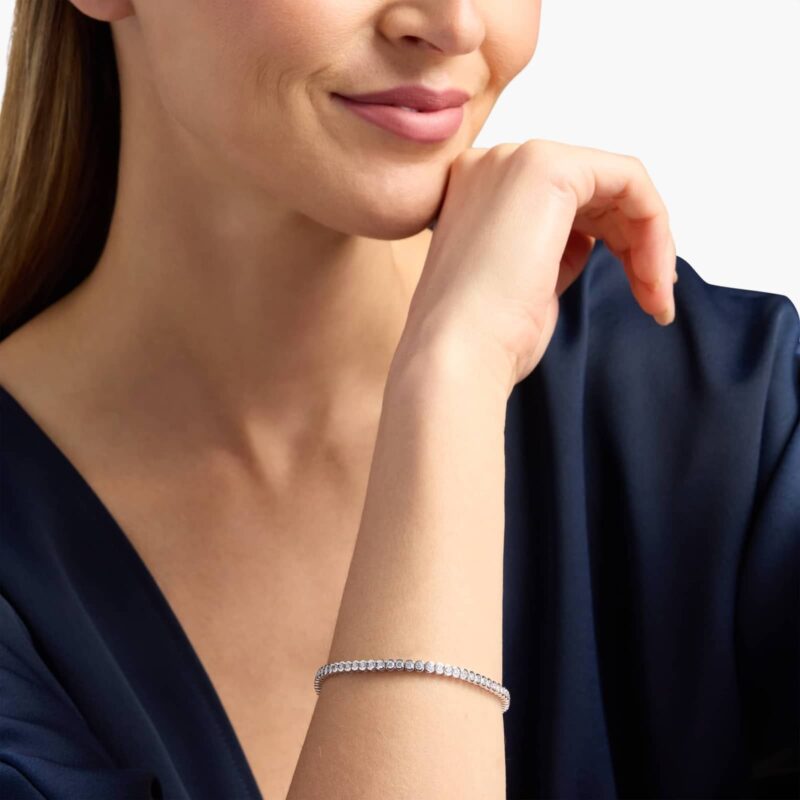
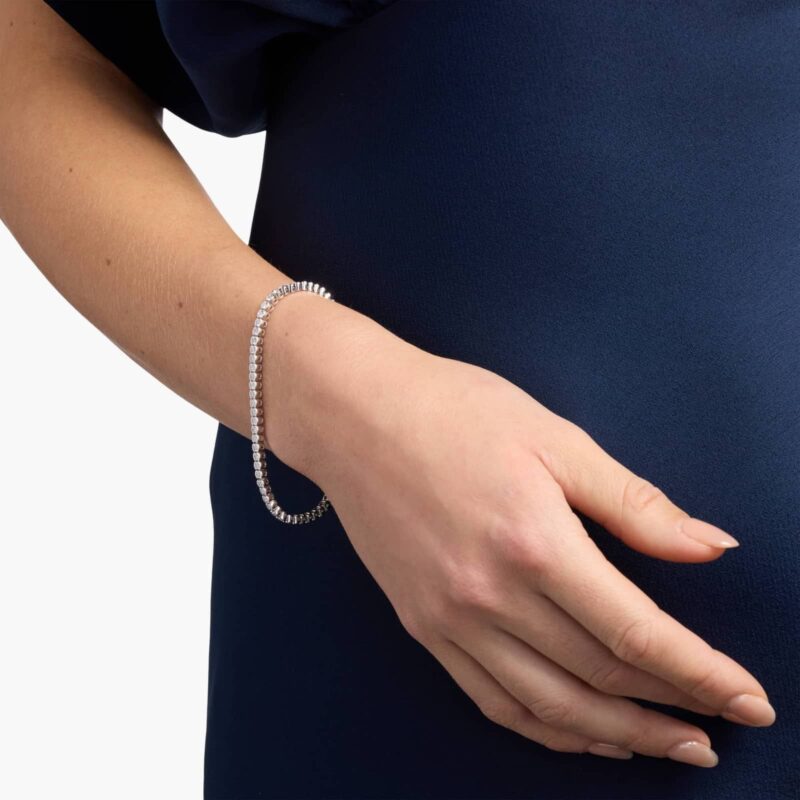
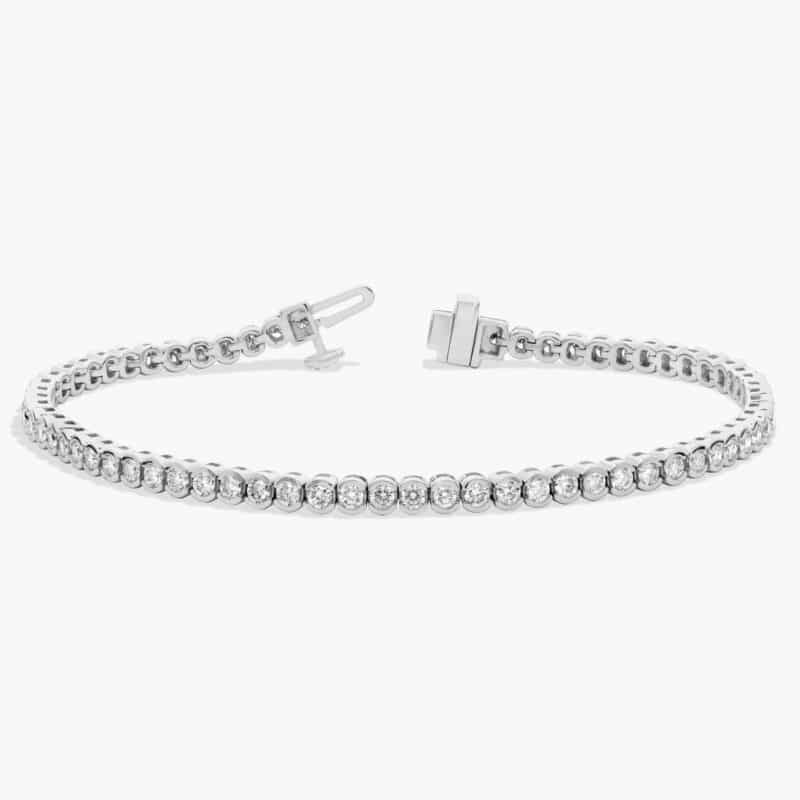
Bezel Tennis Bracelet: Luxury Push Present Ideas | 2 3/4 CTW
An exquisite diamond push present tennis bracelet featuring 2 3/4 CTW of F/VS2 lab-grown diamonds in a secure bezel and prong setting, a stunning choice among Luxury Push Present Ideas.
- The 2026 Price: $3,871
- The Audit: Traditional prongs are “hooks” waiting to scratch a newborn or rip a medical glove. This bezel-set design walls in each diamond with solid 14k gold, creating a perfectly smooth surface. It is the ultimate luxury push present for those who need 24/7 wearability without the snag risk.
The Trendy Hybrid (Stacking King)
The Pick: Emerald Cut 2 CTW Lab Diamond Half Tennis Bracelet
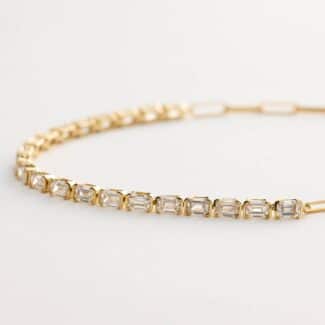
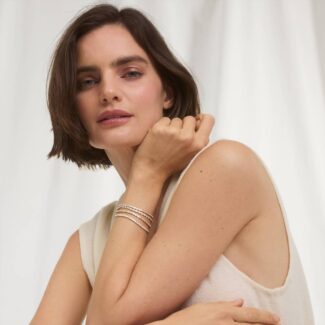
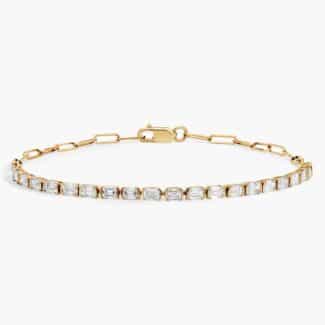
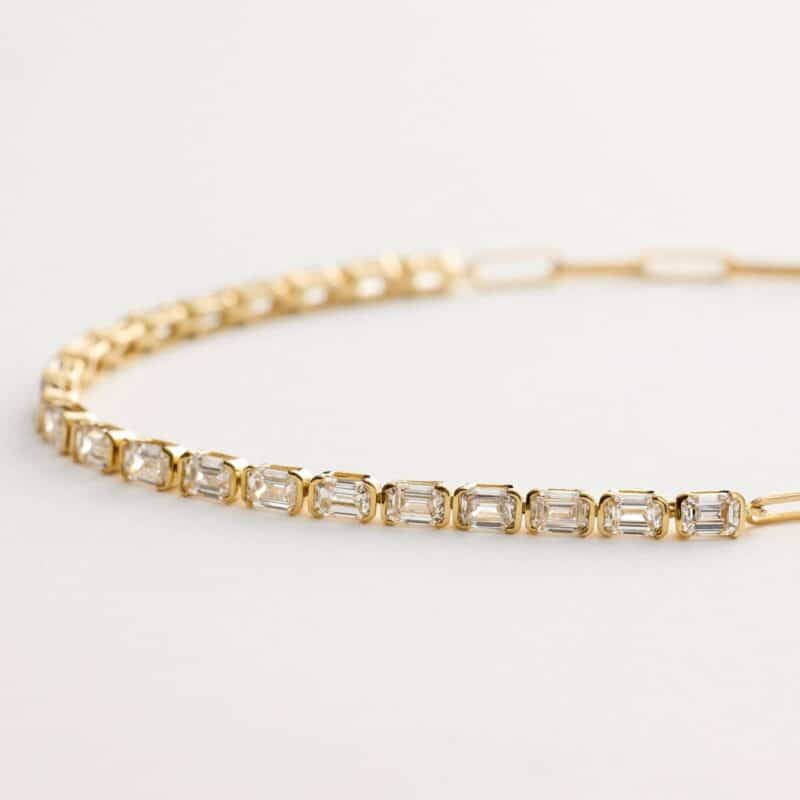
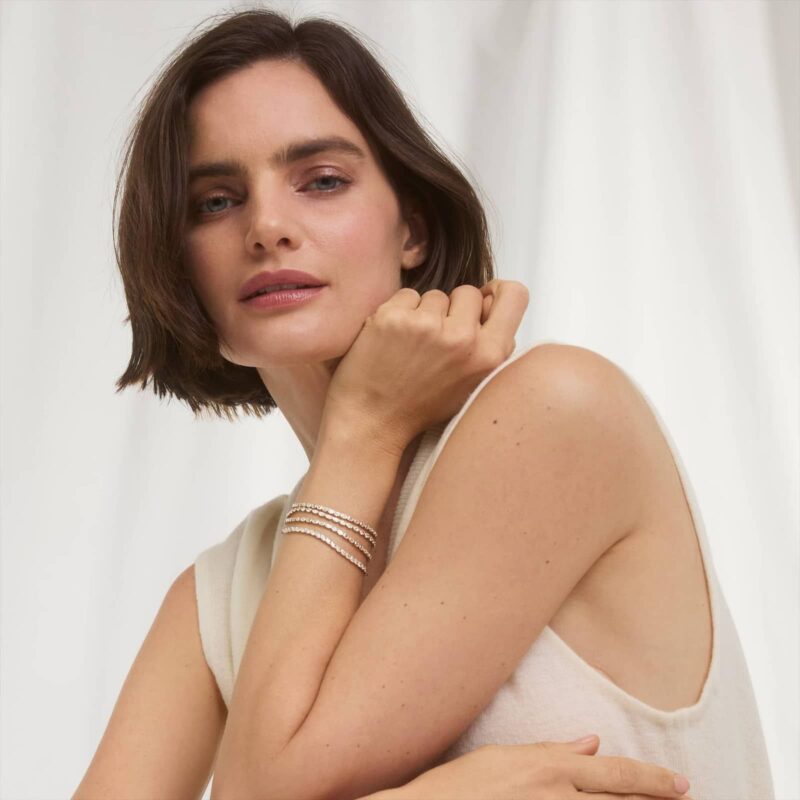
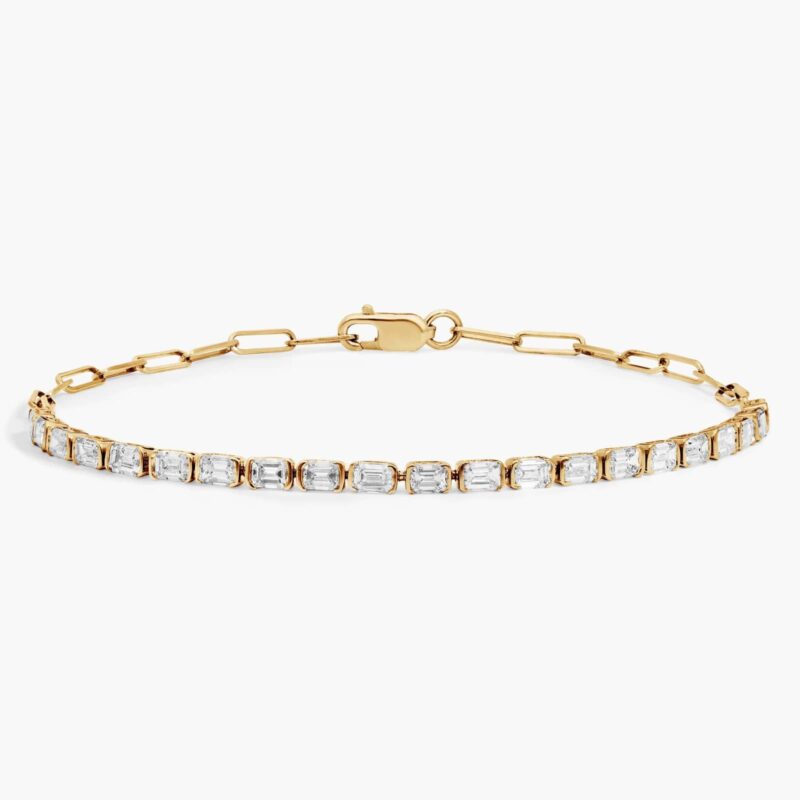
Emerald Cut 2 CTW Lab Grown Diamond Half Tennis Bracelet – Lab Grown Diamond Tennis Bracelets Under $3000
A modern twist on a classic for Lab Grown Diamond Tennis Bracelets Under $3000, this 14K yellow gold piece blends 2 carats of bezel-set emerald diamonds with a trendy paperclip chain.
- The 2026 Price: $1,990
- The Audit: This is the smartest entry point into the “Line Bracelet” look. It features a bezel-set emerald-cut diamond half paired with a heavy-gauge gold paperclip chain.
At under $2,000, it provides the modern, asymmetrical “stackable” look that is dominating 2026 street style.
The Natural Gemstone Asset
The Pick: Alternating Ruby and Diamond Bracelet
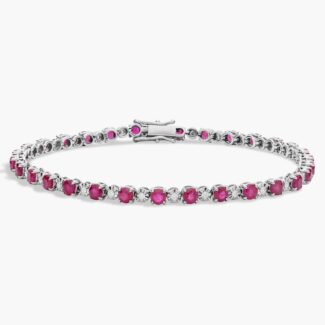
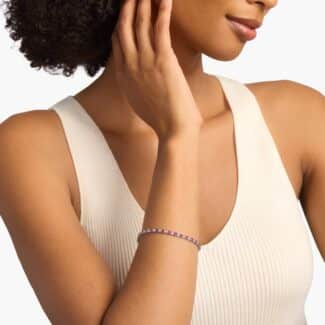
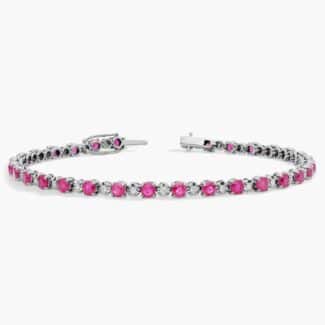
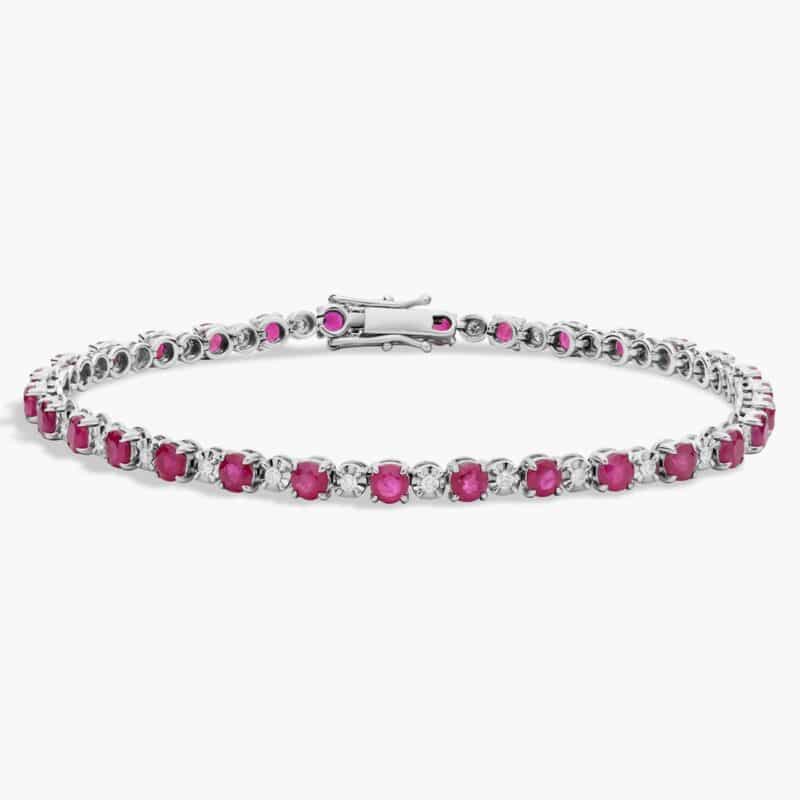
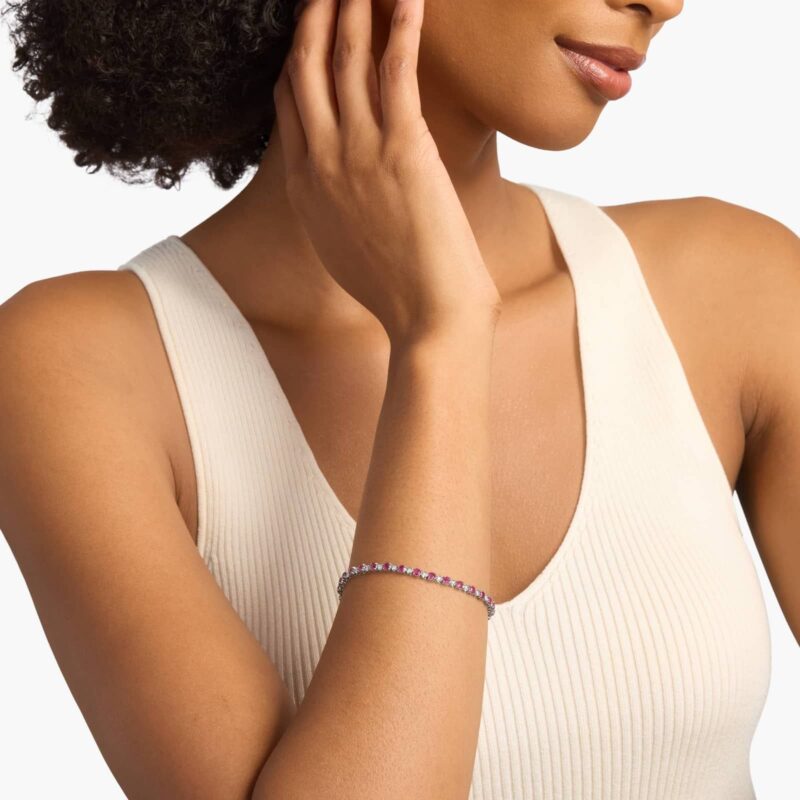
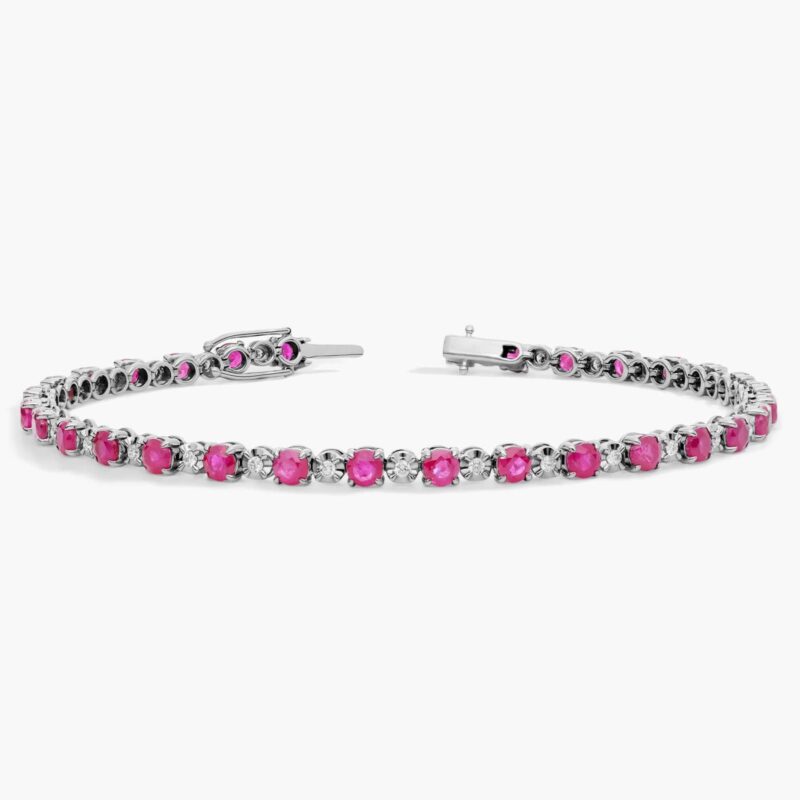
Ruby and Diamond Bracelet: Luxury Push Present Ideas Alternating Stone
A striking Alternating Ruby and Diamond push present bracelet in 14K White Gold, featuring 31 Rubies (3.0mm) and 0.3 CTW of G-H/SI2 Natural Diamonds—a high-value choice among Luxury Push Present Ideas.
- The 2026 Price: $3,493
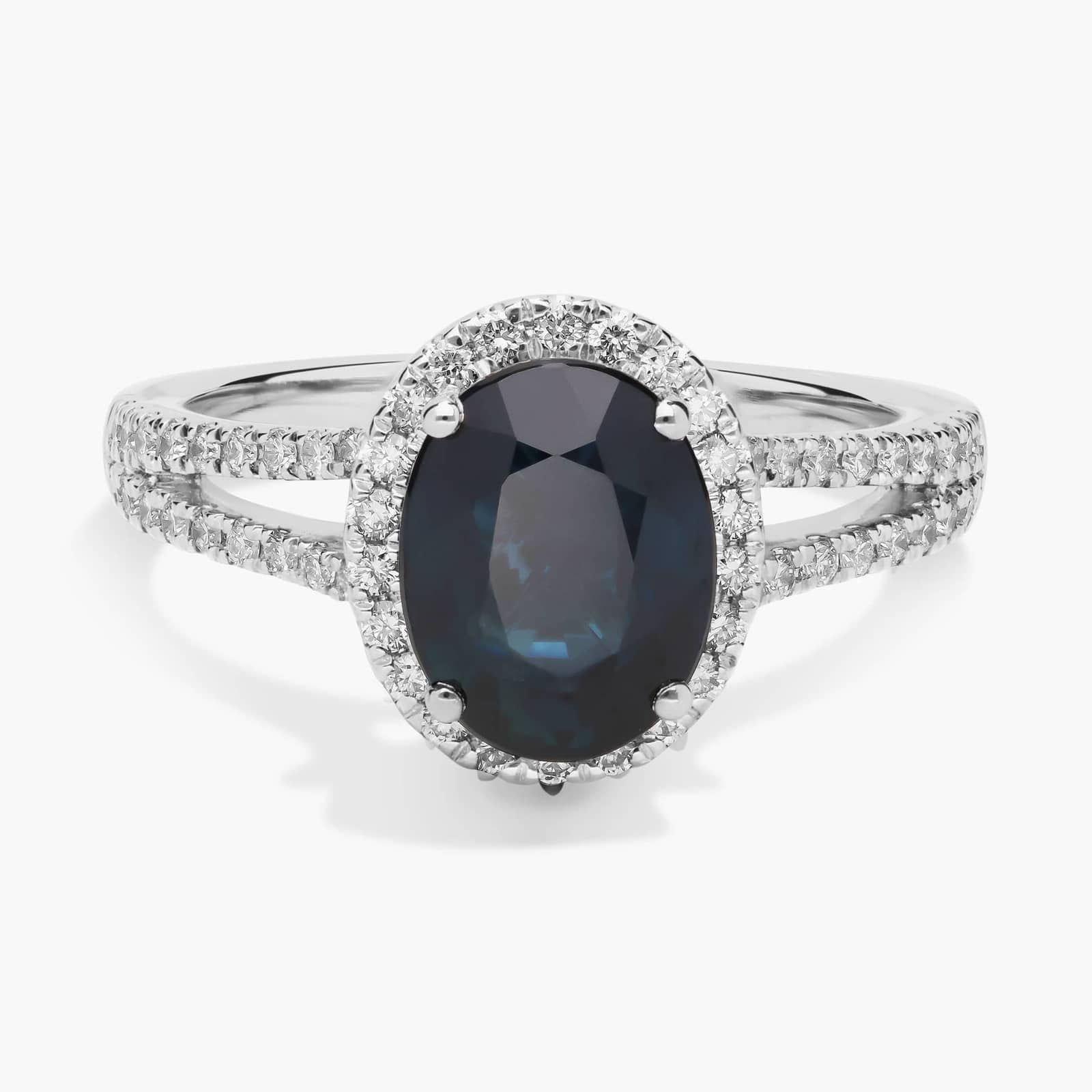
- The Audit: This is my “Brilliant Alternative” to the classic Ritani sapphire and diamond tennis bracelet. While the Ritani version is a staple, this build offers 31 deep-red natural rubies set in 14k white gold.
It features a heavy-duty box clasp with a double safety latch—a structural necessity for a piece designed to be passed down as an heirloom.
The “Red Carpet” Comparison: Lab vs. Moissanite
| Performance Feature | Round 3 CTW Lab Diamond | Ultimate Moissanite 9.66 CTW | Mehedi’s Technical Verdict |
|---|---|---|---|
| 2026 Price | $2,795 | $3,651 | The Value Winner. In 2026, the lab-diamond price floor has made Blue Nile’s 3-carat bracelet the most aggressive “entry-luxury” deal. |
| Optical Style | Crisp “Ice” White | “Disco Ball” Rainbow Fire | The Fire King. Moissanite’s higher dispersion index creates a rainbow fire that diamonds cannot match. See my Side-by-Side Guide. |
| Clasp Security | Standard Box Clasp | 2-Prong “Hidden” Box | Maximum Security. The 9.66 CTW weight requires the extra security of side-locks to prevent accidental snag-loss. Check my Tennis Chain Guide. |
| Social Occasion | The “Daily Driver” | The “Gala Stunner” | Choose the Lab Diamond for professional settings where subtle luxury is key. Choose the Moissanite for evening events where you want to be visible from across the room. |
| The 2026 Wrist Verdict: If you are looking for an investment asset, neither of these is the answer. However, for a lifestyle purchase, the **3 CTW Lab Diamond** is the modern technical winner for office elegance. If your goal is sheer visual dominance, the **9.66 CTW Moissanite** in 14k Solid Gold provides a “Celebrity” aesthetic that would cost over $20,000 in natural stones. | |||
Mehedi’s Buying Strategy: “If you are buying for longevity and color uniformity, the Blue Nile 3ct Lab Diamond ($2,795) is the safest bet in 2026. However, if you want to ‘Carat-Max’ and own a piece that can be seen from across a dark room, the 9.66ct Moissanite is the undisputed value champion.
Just remember: always check the clasp for that audible ‘click’ before you walk out the door.”
The Metal Foundation: 14k vs 18k vs Silver
In 2026, the metal you choose isn’t just a color preference—it’s a structural decision that determines if your diamonds stay in their seats for twenty years or two months.
As a GIA-trained professional, I perform a “Tensile Strength Audit” on every bracelet that crosses my desk.
14k vs 18k Gold for Daily Wear Tennis Bracelet
Many luxury buyers assume that “higher karat equals better quality.” While this is true for pure gold content, it is false for daily-wear engineering. A tennis bracelet is essentially a series of 50+ tiny mechanical hinges and prongs. If the metal is too soft, those hinges will stretch and those prongs will lift.
The Warning: “Never put high-quality lab diamonds or moissanite in sterling silver. Silver is a ‘reactive’ metal that tarnishes rapidly; this oxidation creates a dark film that reflects into the pavilion of the stones, making even a VVS1 diamond look gray and lifeless.
Furthermore, 18k gold is beautiful but too soft for a bracelet that bangs into desks, car doors, and laptops all day. The high pure gold content (75%) means the prongs can ‘spring’ open upon a single hard impact.”
The GIA Solution: The 14k Mandatory Standard
In 2026, 14k Solid Gold has emerged as the mandatory standard for “Life-Proof” jewelry. Because it contains 41.7% alloy metals (like zinc, nickel, and copper), it possesses the tensile strength required to keep fifty individual stones locked in a death-grip.
- Hinge Longevity: The “pins” that connect the links in a tennis bracelet are under constant friction. 14k gold resists the “thinning” effect that causes 18k or silver bracelets to snap after a few years of wear.
- Prong Memory: 14k gold has better “memory.” Once a jeweler set a prong over your diamond, 14k gold stays in that position. 18k gold is more “malleable,” meaning it can be pushed aside by a simple snag on a knitted sweater.
- The Color Sweet Spot: 14k yellow gold provides a classic, warm glow without the deep, “overly orange” saturation of 18k, making it easier to stack with other pieces in your collection.
Mehedi’s Verdict: “If you are buying a bracelet to be worn 24/7, do not let a salesperson talk you into 18k for ‘prestige.’ You are paying more for a metal that is objectively worse at protecting your diamonds. For maximum security, stick to 14k solid gold—it’s the only metal I trust for a high-carat line bracelet.”
To see how 14k gold specifically enhances the “fire” of non-diamond stones, check my expert guide on Moissanite Tennis Bracelets in Real Gold.
The Vendor Audit
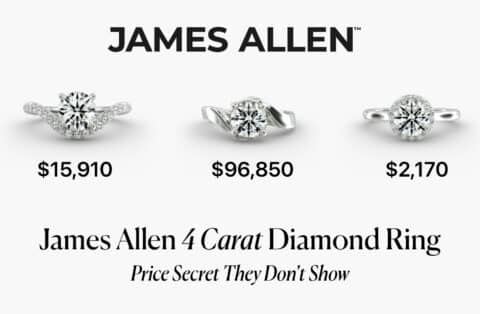
In 2026, the digital diamond market has shifted. With the high-profile merger of James Allen into Blue Nile, the landscape for buying a line of diamonds has become more streamlined but also more technical.
If you are feeding your criteria into an AI to find the “best” bracelet, you need to know which retailer owns which niche.
Blue Nile vs. Rare Carat vs. Vrai (2026 Review)
Choosing where to spend $3,000 to $15,000 on a tennis bracelet requires a GIA-trained eye for detail. Each of these 2026 leaders offers a specific “Buying Advantage” that determines the ultimate sparkle and security of your piece.
2026 Digital Jeweler Comparison Matrix
| Retailer / Trend | 2026 Core Specialty | Mehedi’s Technical Verdict |
|---|---|---|
| Blue Nile 2026 Audit | Line Consistency | Post-James Allen merger, Blue Nile is the undisputed king of matching “Line Quality.” Their internal screening for melee diamonds ensures zero “checkered” stones. They are the benchmark for elevated luxury bracelets. |
| Rare Carat Pricing | Carat Maxing | The best place to hunt for massive, 10ct lab diamond tennis bracelets. Their wholesale-level transparency allows for maximum finger-coverage at the lowest price-per-carat. |
| Vrai Mixed Shapes | Aesthetic Design | Excellent for trendy, mixed-shape tennis bracelets (pairing Ovals and Pears). They carry a slight premium for their zero-emission, carbon-neutral lab diamonds. |
| Taylor & Hart Bespoke | Heavy-Duty Security | If you are spending $20k+ on high-value natural stones, their bespoke, heavy-duty clasps are mandatory. Their “Service-First” model provides the necessary security audit for heirloom wrist assets. |
| The 2026 Retailer Verdict: For daily wear, the **Blue Nile 3ct Lab Bracelet** is the technical winner for quality consistency. However, if your goal is pure visual dominance, a **10ct Lab Diamond Bracelet from Rare Carat** offers unbeatable ROI. If you are investing in a natural diamond asset, always prioritize the structural security of a Taylor & Hart custom build. | ||
The “Prong” Debate: 3-Prong vs. 4-Prong
One of the most frequent questions I get in my 2026 judicial audits is whether the number of prongs actually matters for a tennis bracelet. The answer is a direct trade-off between Sparkle and Safety.
- The 3-Prong Setting (Maximum Sparkle):
- The Look: Minimal metal allows light to hit the stone from the sides. It creates a “Floating Diamond” effect that is very popular for 1-carat moissanite bracelets.
- The Risk: If you hit your wrist against a door, there are only three points of contact. If one prong bends, the stone falls out instantly. This is for “Careful Wearers” only.
- The Look: Minimal metal allows light to hit the stone from the sides. It creates a “Floating Diamond” effect that is very popular for 1-carat moissanite bracelets.
- The 4-Prong Setting (The Workhorse):
- The Look: A more squared-off, structured appearance. It highlights the geometry of the diamonds and provides a classic, timeless feel.
- The Benefit: Maximum Security. Even if one prong is snagged on a sweater, the other three hold the stone in place until you can reach a jeweler for repair. This is the Blue Nile Standard for a reason; it’s designed for daily life.
- The Look: A more squared-off, structured appearance. It highlights the geometry of the diamonds and provides a classic, timeless feel.
Mehedi’s Expert Tip: “In 2026, we are seeing a massive trend toward 3-prong bracelets for stackers and 4-prong bracelets for standalone investment pieces. If you’re a nurse or an active professional, always choose 4-prong. The peace of mind is worth the slight increase in metal visibility. For more on how retailers compare, check my breakdown of Ritani vs. Blue Nile.”
FAQ: The Unfiltered Bracelet Guide
In 2026, the tennis bracelet remains the ultimate “Carat-Maxing” accessory. However, because it is a mechanical line of stones, you must understand the engineering before you swipe your card. Here is the GIA-trained audit of your most searched questions.
How much does a 5 carat lab grown diamond tennis bracelet cost in 2026?+
In 2026, the price for a high-quality, pre-vetted 5ct lab bracelet typically sits between $3,000 and $4,800. While you can find “promo-grade” options for less, they often hide poor color uniformity and weak clasps. For maximum value, aim for the $3,000 “Value Floor,” which ensures VS clarity and F-G color. Check out our guide on lab diamond tennis bracelets under $3000 for excellent choices.
Why is a box clasp with a safety latch necessary for a tennis bracelet?+
A Box Clasp with a Safety Wing is your ultimate insurance policy. The primary tongue clicks into the box, and the “Figure-8” wing provides a secondary mechanical lock. If the main mechanism fails—which is common during high-intensity activity—the safety wing keeps the bracelet securely on your wrist. Without it, you risk repeating the infamous Chris Evert “Lost Diamond” disaster.
Do lab grown diamond tennis bracelets hold their resale value?+
The Hard Truth: No. Lab diamonds are depreciating assets in 2026. A bracelet purchased for $3,000 today will likely have a resale value of just $500 to $800. You are buying “Sparkle for the Wearer,” not a financial hedge. If you want a hard asset for 2026, you must spend the $15,000+ required for natural stones. Read more in our natural diamond resale value guide.
Is 14k or 18k white gold better for a tennis bracelet worn every day?+
14k White Gold is the superior choice. It contains a higher percentage of strong alloy metals, making it harder and much more scratch-resistant than 18k gold. Since a bracelet takes constant “desk-strikes” throughout the day, 14k provides the tensile strength required to keep those 50+ prongs from bending and releasing your stones. See our engagement ring metals pros and cons for a deeper dive.
How do I correctly measure my wrist so it doesn’t break?+
Use the “One-Finger Rule.” Wrap a soft measuring tape around your wrist bone and add 0.5 to 1 inch. A tennis bracelet should be loose enough to slide slightly but tight enough that you can only fit one finger between the metal and your skin. If it’s too loose, it will swing and strike hard surfaces, eventually causing “Prong Fatigue” and stone loss.
What is the visual difference between a 3-prong and 4-prong setting?+
- 3-Prong: Features minimal metal, allowing for maximum side-light and a delicate “floating” look.
- 4-Prong: Known as the “Workhorse.” It offers a squared-off, classic frame and significantly better security. If one prong bends in a 4-prong setting, the stone usually stays put; in a 3-prong setting, the diamond is gone.
Does moissanite look fake in a tennis bracelet compared to lab diamonds?+
At small melee sizes (under 0.10ct), there is a 95% visual similarity. However, moissanite inherently possesses 2.5x more “fire” (rainbow flashes). Under 10x magnification, moissanite looks whiter and slightly hazier, while lab diamonds have more “crispness” and visual depth. For a massive 9.66ct look on a budget, moissanite is a brilliant alternative. Compare them in our 1 carat diamond vs 1 carat moissanite guide.
Why is it important that all stones have the same color grade?+
If a jeweler loosely mixes bright G-color stones with warmer J-color stones, your bracelet will have a noticeable “Checkered Effect.” This inconsistency makes the piece look like “frozen spit” rather than a continuous, flawless river of light. Always demand a guaranteed color and clarity floor (e.g., F-G Color across the entire line).
How much does it usually cost to repair a broken diamond tennis bracelet?+
In 2026, a basic link solder or hinge repair starts at $49. Replacing a completely broken box clasp can range from $65 to $250+ depending on the overall metal weight. If you lose a stone, expect to pay $35 to $60 for the replacement melee diamond plus a $49 setting and polishing fee.
What is a graduated diamond tennis bracelet and does it cost more?+
A Graduated Bracelet features diamonds that smoothly increase in size toward the center of the wrist. It costs more because it requires meticulous precision sorting to ensure the size transition is completely seamless. In 2026, these are highly popular for “Statement Wear,” but they are much harder to resize because the links are not uniform in width.
Conclusion: Mehedi’s Verdict
A tennis bracelet is a mechanical piece of jewelry—it is only as good as its weakest link. In my 2026 audits, I see too many buyers blinded by “5 Carat” labels who end up losing their investment because they ignored the clasp.
- The Summary: The hinges, the prongs, and the box clasp do all the heavy lifting. If the engineering fails, the carats don’t matter.
- The Recommendation: If you want a timeless piece that won’t fall off your wrist, the Round 3 CTW Lab Grown 14K Yellow Gold Bracelet ($2,795) offers the perfect balance of F-G color uniformity, 4-prong security, and a locked-in box clasp.
Measure your wrist tightly, add half an inch for that “one-finger” clearance, and use the links above to secure your 2026 fit before the Spring sale ends. Protect your investment—buy the data, not just the glow.