
Accent engagement rings are defined by one deceptively simple idea: a secondary stone or stones that serve the main diamond without competing with it. When accent stones are chosen and placed correctly, they make the center stone look larger, more colorful, more distinctive, and more alive.
When they are chosen incorrectly — wrong color, wrong size, wrong setting type — they either disappear into the ring completely or fight the center stone for visual dominance, which is the one thing an accent stone must never do.
This guide covers what accent engagement rings are, the full spectrum from diamond accents to colored stone accents to hidden accents, and the nine mistakes that buyers consistently make in this category. Four specific settings are reviewed in detail — with real prices and real context for each one.
Diamond IQ Test: Natural or Lab-Grown?
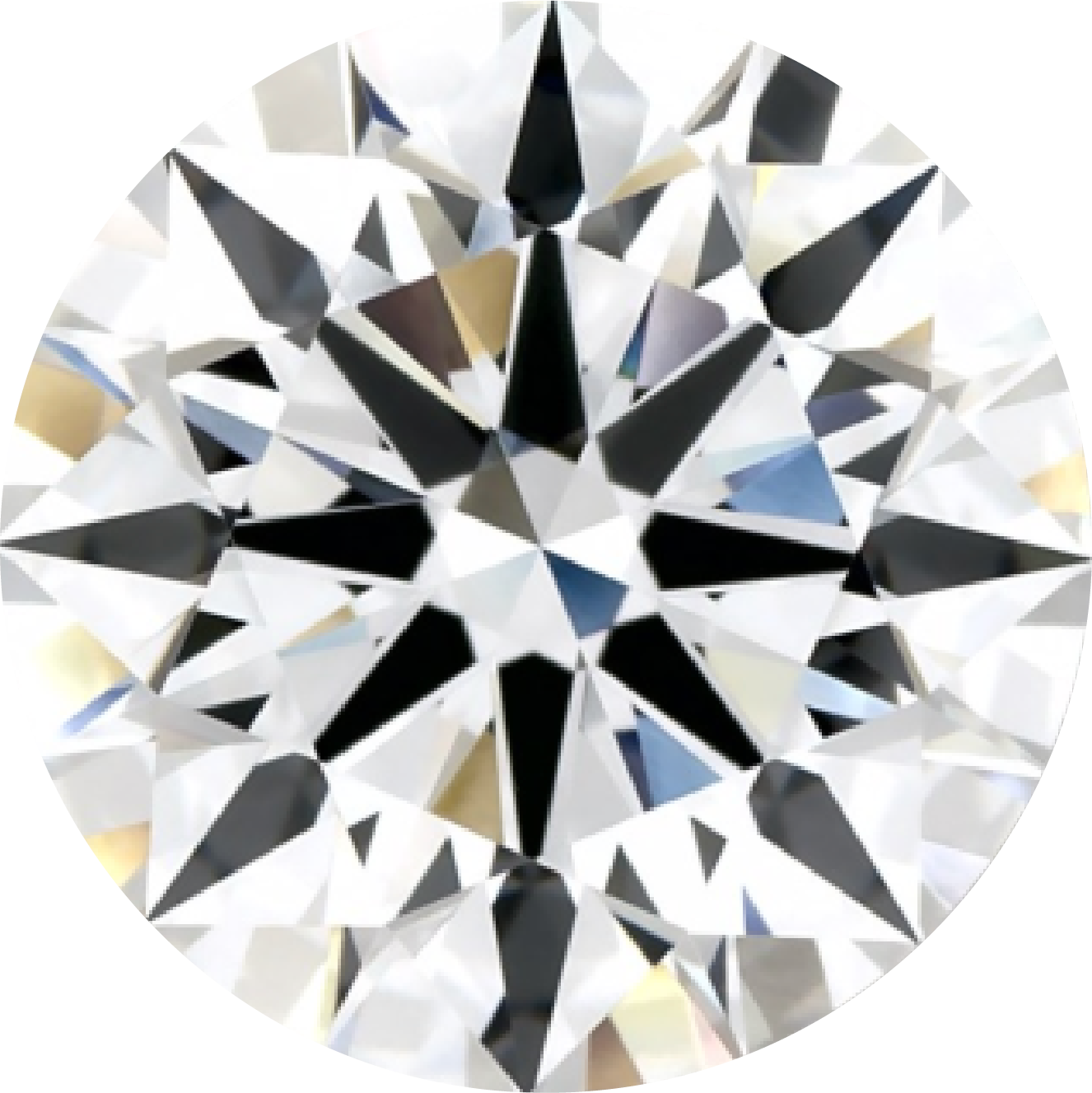
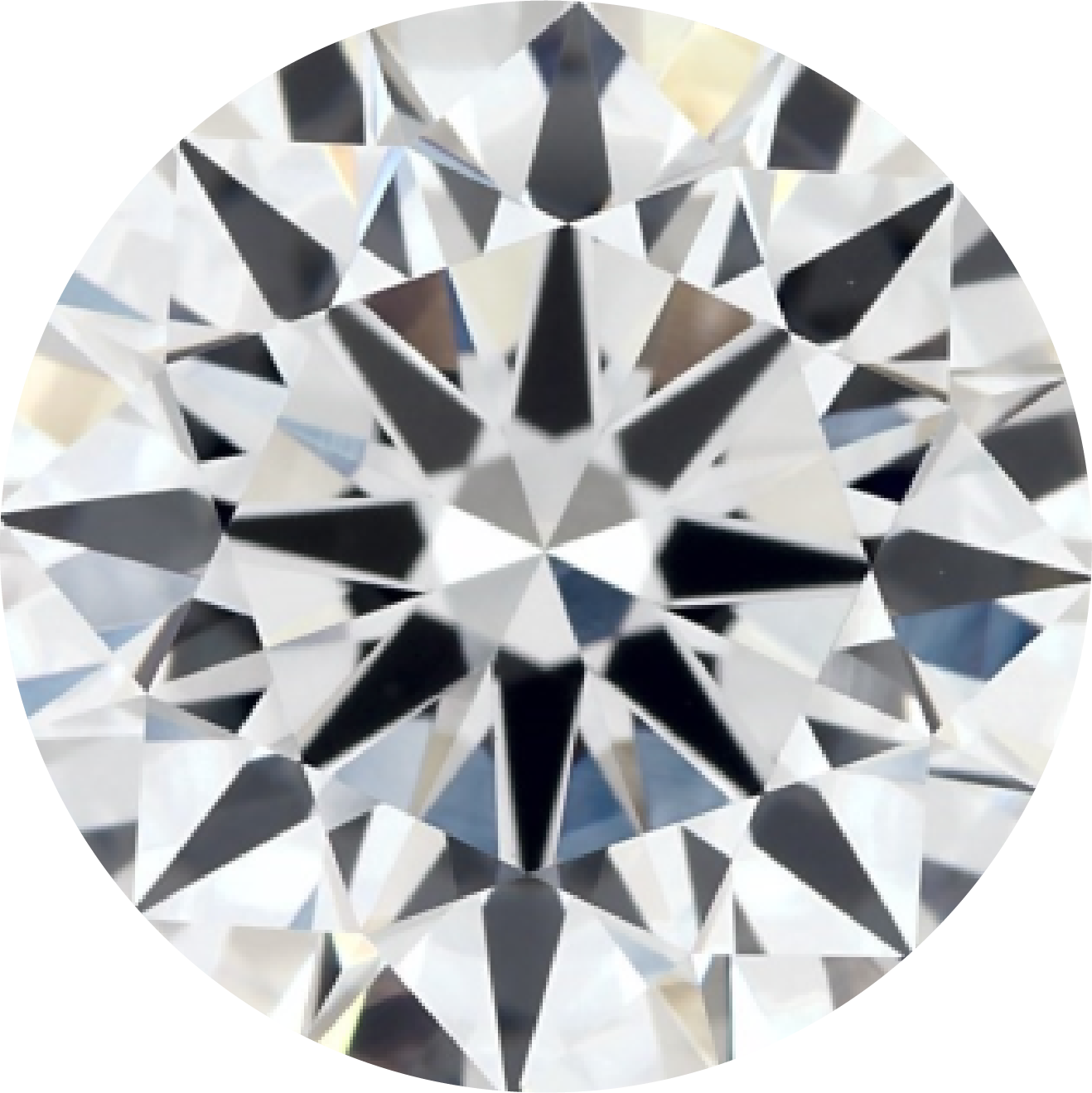
Two identical diamonds: GIA Certified, 1.51ct, D Color, VVS1, Ideal Cut. One is natural ($16,240), the other is lab-grown ($1,970). Choose the diamond you like better and see if you can match it to its origin.
TLDR — Accent Engagement Rings at a Glance
| Question | Answer |
|---|---|
| What is an accent stone in an engagement ring? | A secondary stone placed to enhance the center stone — not to compete with it. Accents create visual framework, add sparkle, or introduce color. |
| What is a hidden accent? | Diamonds or colored stones set inside the setting gallery, visible only from the side or below — invisible from above. Creates a personal “secret” sparkle. |
| What accent stones work with diamonds? | Any — white diamonds (pavé or channel), black diamonds, sapphires, rubies, emeralds, amethyst, opals, pearls. The choice defines the ring’s entire aesthetic. |
| What is the most popular accent stone? | White round brilliant diamonds — pavé or channel-set on the shank. |
| What are side accent stones? | Stones placed on the shoulders of the ring flanking the center stone — typically smaller brilliant cuts or shaped stones that bracket the center from the sides. |
| Best accent for a colored center stone? | Diamonds — they frame the color without competing with it, amplifying the center stone’s saturation by contrast. |
| Can you use colored accents with a diamond center? | Yes — ruby accents with a diamond center, sapphire accents with a diamond center, or emerald accents are all viable, but the color choice must match the wearer’s style and skin tone. |
| What setting holds accents most securely? | Channel set (most secure, no exposed prong tips), bezel set (very secure, smooth surface), pavé set (most sparkle, requires maintenance). |
| Mehedi’s verdict | The hidden accent engagement ring is the most underrated configuration in the category — a ring that looks like a solitaire from above and reveals extraordinary detail on closer inspection. Start there if you want something distinctive without visual complexity. |
Deal Alert: Mother’s Day Sale Up To 30% Off* select fine jewelry at Blue Nile.
New Collection: Shop the James Allen Collection at Blue Nile.
Vault Sale: “Clear The Vault” – Get up to 70% OFF at Blue Nile!
Flash Sale: Save up to 40% OFF sitewide at Rare Carat.
Exclusive: Get up to 60% OFF select fine jewelry at Ritani.
What Is an Accent Engagement Ring?
An accent engagement ring is any ring where the center stone is accompanied by secondary stones — diamonds or colored gemstones — that are deliberately smaller and positioned to support the center stone rather than challenge it. The accent stones serve a functional purpose in the design: they create visual transition from the center stone to the band, they add sparkle to areas of the ring that would otherwise be plain metal, or they introduce a color note that gives the ring a specific character.
The word “accent” comes from the same root as emphasis in language — an accent in jewelry is an element that stresses or highlights something without becoming the thing itself. An accent diamond on the shoulder of an engagement ring is not trying to be the center diamond. It is trying to make the center diamond look better by creating visual context around it.
This is a fundamentally different role from a side stone in a three-stone ring, where each stone is meant to be read individually and hold visual weight in its own right.
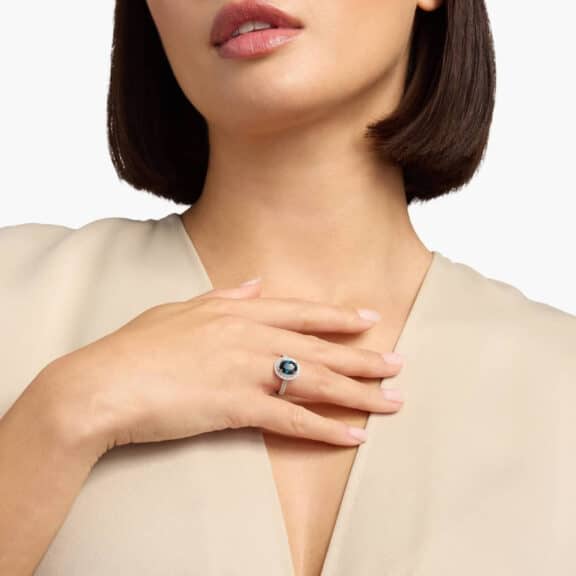
Understanding this distinction is the most important thing you need before choosing any accent engagement ring. If you want stones that share visual weight with the center, you want a three-stone or multi-stone ring. If you want stones that serve and amplify the center without challenging it, you want an accent ring. The category you are in determines every subsequent choice.
Mehedi’s Take: “Accent stones done right disappear into the design — you don’t notice them as separate elements, you just notice that the center diamond looks more beautiful than it did on its own. Accent stones done wrong make the ring look busy, like someone added extra elements hoping the total effect would be greater than the sum of the parts. It rarely is. The best accent engagement rings use the secondary stones so intelligently that you only notice the accents when someone points them out.” — Mehedi Hasan, Diamond Industry Veteran
Diamond Accents vs Colored Stone Accents — The Two Design Languages
These are two fundamentally different design approaches, and they produce completely different rings from what might appear to be similar starting points. Understanding which language you want is the prerequisite to every other decision in this category.
Diamond accent engagement rings (white round brilliant accents) create a unified, all-diamond composition where the center stone and the accent stones speak the same visual language. The accents add sparkle, depth, and frame without introducing any visual tension between different stone types or colors. This is the most versatile configuration — it suits every skin tone, every center stone color grade, and every style preference from minimalist to maximalist depending on how many accents are used and how they are placed.
Colored stone accent engagement rings introduce deliberate visual tension between the center diamond and the accent stones. A ruby accent engagement ring pairs the colorlessness of a diamond center with the deep red of ruby accents — the tension between white and red creates a specific aesthetic statement that an all-diamond ring cannot make. Sapphire accents create cool blue tension. Emerald accents create a green-and-white composition. The tension is the point — it is what makes colored accent rings feel distinctive and personality-forward.
| Accent Type | Visual Character | Best Center Stone | Best For |
|---|---|---|---|
| White diamond (pavé/channel) | Unified sparkle; classic | Any diamond | Maximum versatility; timeless look |
| Black diamond accent | Graphic contrast; modern | Colorless diamond (D-G) | Buyers who want edge and distinction |
| Sapphire accent | Cool blue-white contrast | White diamond | Something borrowed tradition; royal reference |
| Ruby accent | Warm red-white contrast | White diamond | Bold, romantic, passionate aesthetic |
| Emerald accent | Green-white contrast; vintage | White diamond | Art Deco-inspired; nature-connected |
| Opal accent | Rainbow iridescence | White diamond | Unique, non-traditional buyers |
| Amethyst accent | Purple-white contrast | White diamond | Feminine, romantic, distinctive |
| Pearl accent | Soft luster; organic | White diamond | Vintage-inspired; bridal tradition |
What Is a Hidden Accent Engagement Ring?
The hidden accent engagement ring is the most distinctive and most personal configuration in the entire accent category — and one of the most underexplored. Hidden accent stones are set inside the ring’s gallery (the underside of the setting) or within the prong structure where they are invisible when the ring is viewed from directly above. The center stone appears to be a solitaire. Only when you look at the ring from the side, or tip it up, do the hidden accent stones become visible.
This creates a ring with a public face and a private detail. From above — the perspective everyone sees at a glance — it reads as a clean, minimal solitaire. From the side — the perspective the wearer sees most often when they look at their own hand — the hidden stones are visible, creating a sparkle and color detail that belongs specifically to the wearer rather than to whoever happens to be looking.
Hidden accents are most commonly set in a “hidden halo” configuration — a full or partial ring of micro-diamonds set just below the girdle of the center stone, invisible from above but visible from the side.
They can also be set within the prongs themselves (pavé crown accents) or along the underside of the shank in a configuration that reads as sparkle from the palm side when the wearer looks down at their hand. For the full context of how hidden halo settings work technically and why they suit certain center stone shapes better than others, our halo engagement ring price guide covers the complete format.
Mistake #1 — Choosing Accent Stones That Compete With the Center Diamond
The accent stone’s entire purpose is to support the center stone. When the accent stones are too large relative to the center, or when the colored accent is too saturated and vivid relative to the center stone’s own character, the accents stop being accents and start being a different ring. The center diamond that was supposed to be the point of the ring now has to compete for visual attention with its own supporting cast.
The scale rule is straightforward: accent stones should be noticeably smaller than the center stone — typically no more than 20–25% of the center stone’s diameter. An accent diamond next to a 1ct round brilliant should be no more than 0.05–0.10ct. Anything larger reads as a side stone rather than an accent, which is a different ring format with a different design logic.
For colored accents, the saturation rule applies: the accent color should be vivid enough to read clearly as a deliberate color note, but not so saturated that it pulls the eye away from the center diamond. A medium-saturation blue sapphire accent reads as elegant framing. A vivid, highly saturated sapphire next to a center diamond creates a visual argument about which stone matters more. Our gemstone earring buying guide covers how saturation affects the visual hierarchy between stones in multi-stone fine jewelry.
Mistake #2 — Buying a Bezel Setting Without Understanding What Goes Inside It
The Bezel Engagement Ring with Channel Set Diamond Accent — currently 25% off in four metals — is one of the most versatile settings in the accent engagement ring category, and most buyers do not fully understand why. The bezel holds the center stone in a full metal collar rather than prongs, creating a smooth, continuous profile. The channel-set diamond accents run along the shoulders of the ring flanking the center bezel, set into a channel in the metal so their table surfaces are flush with the metal surface.
What most buyers miss: this setting works with any center stone you choose — not just diamonds. A sapphire accent engagement ring using this setting places a sapphire in the bezel head with diamond accents on the shoulders, creating a blue center with white diamond flanking. A ruby center version creates the diamond with ruby accent engagement ring configuration in a clean bezel-and-channel format. The setting is the architecture; the stones are your choice, and the combination you build determines the ring’s entire character.
This understanding transforms how you shop for any accent engagement ring setting. The setting defines the structure — where accents are, what type, what size. The stone selection defines the meaning and character. Separating these two decisions and making them independently — rather than buying a ring that comes already assembled — is how you get an accent engagement ring that is genuinely yours.
Mistake #3 — Ignoring Black Diamond Accents
Black diamond accent engagement rings are one of the most visually striking configurations in the category, and one of the least discussed in mainstream buying guides. A colorless round brilliant diamond center flanked by black diamond accent stones creates a graphic white-and-black contrast that feels completely contemporary — industrial, architectural, and deliberately far from traditional.
Black diamonds in accent positions — particularly on the shoulders of the shank or as pavé on the band — create a dark-to-light gradient as the eye moves from the band toward the center stone. This gradient effect is the opposite of the standard all-white-diamond gradient and creates a visual tension that reads as bold and modern without requiring an unusual center stone or unusual setting.
The practical note on black diamonds: natural black diamonds are opaque — their color comes from graphite inclusions or polycrystalline structure rather than from the carbon lattice itself, which makes them a different material experience than colorless diamonds. They are significantly harder to source in consistent quality than colorless diamonds and do not carry GIA color/clarity grades in the conventional sense. Treated black diamonds (colorless diamonds irradiated or heated to black) are the more common and more affordable commercial option and work visually identically to natural black diamonds in accent positions.
Mistake #4 — Defaulting to White Diamonds When Colored Accents Suit the Wearer Better
Most buyers default to white diamond accents because that is the most common configuration — it is what most product listings show, it is the safest choice, and it has universal applicability. But for buyers with specific personal connections to a color, colored accent engagement rings create a ring that tells a story rather than simply looking beautiful.
Sapphire accent engagement rings have a specific royal connection — Princess Diana’s sapphire engagement ring with diamond accents, now worn by Catherine, Princess of Wales, is the most famous colored accent engagement ring in the world. This historical context does not make sapphire accents right for everyone, but it does mean that sapphire accent rings carry a specific cultural resonance that no other colored accent has. For buyers drawn to that reference, sapphire accents are not just a color preference but a meaningful choice.
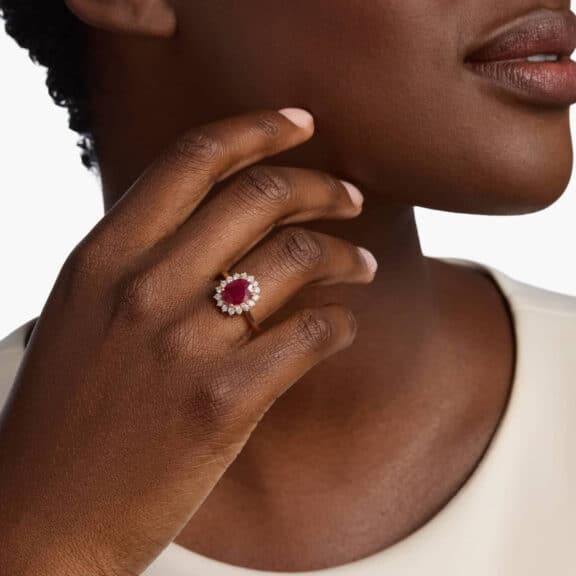
Ruby accent engagement rings read as passionate and bold — ruby has centuries of meaning as a stone of love and courage, and its red against a diamond center creates the most visually warm composition in the colored accent category. Emerald accent engagement rings draw from nature and Art Deco design traditions — the rich green of a quality emerald against a white diamond center has a distinctly vintage, botanical character that neither sapphire nor ruby can replicate. The choice among colored accents is not primarily an aesthetic preference; it is a decision about what story the ring tells.
Mistake #5 — Skipping the Hidden Accent Option
Buyers shopping for accent engagement rings rarely encounter hidden accent configurations in standard product browsing because they are not always easily visible in front-facing product photography. Most ring listings show the ring from above, where hidden accents by definition do not appear. This means the entire hidden accent category is systematically underrepresented relative to visible accent configurations — not because it is less popular with buyers who know about it, but because the photography convention makes it invisible.
The consequence: buyers who would genuinely prefer a ring that looks like a solitaire from the front and reveals extraordinary detail in person end up buying a conventional accent ring with visible accents — simply because they were never shown the hidden option. Ask specifically about hidden halo, hidden pavé, and gallery accent configurations whenever you are evaluating engagement ring settings. Request side-view and gallery-view photographs, not just top-view images.
For buyers who want the solitaire aesthetic from the conventional viewing angle but want something more personal and distinctive than a standard solitaire, the hidden accent configuration is the most intelligent design solution in the accent engagement ring category.
Mistake #6 — Getting the Accent Scale Wrong
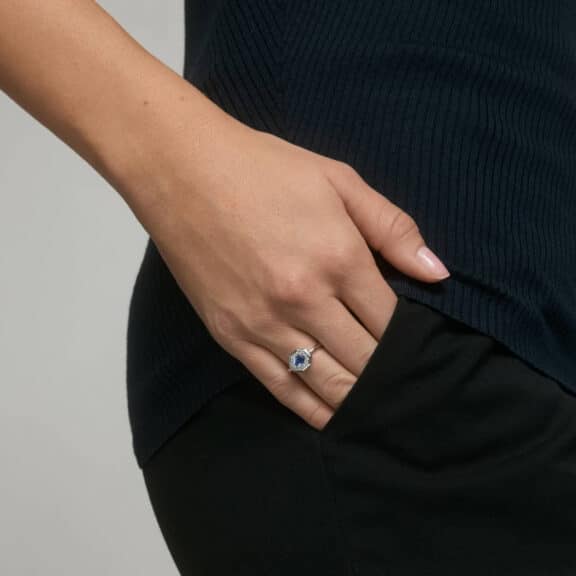
Accent scale — the size relationship between the accent stones and the center stone — is the most technically consequential decision in accent ring design, and it is also the easiest to get wrong because most buyers evaluate it from photographs rather than from actual proportional measurement.
In a photograph at standard product resolution, a ring with 0.05ct accent stones next to a 1ct center looks roughly similar to a ring with 0.15ct accent stones next to the same center. On a finger, those two rings look completely different — the 0.15ct accents push the boundary between accent and side stone, while the 0.05ct accents recede into the setting as subtle sparkle enhancement. Both are technically accent rings. They create very different visual results.
The rule of thumb: accent diamonds should be no more than 1/4 the diameter of the center stone, and ideally 1/5 to 1/6. For a standard 1ct round brilliant at 6.5mm diameter, accent diamonds of 1.2–1.5mm (approximately 0.01–0.02ct each) read correctly as accents. Diamonds at 2mm+ start reading as small side stones. Request the millimeter dimensions of accent stones from any vendor before finalizing a purchase.
Mistake #7 — Forgetting That the Setting Type Determines Long-Term Durability
The three main setting types for accent stones — pavé, channel, and bezel — create dramatically different durability profiles for daily wear. Buyers choose among them almost entirely on aesthetics, then discover the maintenance differences after they have already made the purchase.
Pavé accents use tiny raised prongs or beads to hold each accent diamond just above the metal surface. This creates maximum sparkle because the stones are slightly elevated and catch light from multiple angles. The tradeoff: the micro-prongs are the first thing to wear down in daily use, and stone loss in pavé settings — a stone falls out of its prong — is significantly more common than in channel or bezel settings. Pavé accent rings need annual professional inspection and may need re-tipping every 3–5 years with heavy daily wear.
Channel set accents set diamonds in a groove cut into the metal, with the top surface of each stone flush with the surrounding metal. No prongs. No exposed tips. Significantly more durable than pavé for daily wear because there are no raised elements to catch on fabric or bend over time. The tradeoff: slightly less sparkle than pavé because the stones do not catch light from the side. Channel set is the correct choice for anyone whose job or lifestyle involves significant hand use — nurses, teachers, tradespeople, athletes. Our best engagement rings for nurses guide covers exactly why channel and bezel settings outperform pavé for physically active wearers.
Bezel set accents wrap continuous metal around each accent stone — the most secure setting of all three. Bezel settings are the most appropriate for buyers who want maximum stone security and minimum maintenance over decades of daily wear. The visual tradeoff is that bezels cover more of each stone’s crown, which reduces the stone’s visible face-up surface slightly.
Mistake #8 — Treating Ruby, Sapphire, and Emerald Accents as Equivalent
These three colored stones are the most common choices for colored accent engagement rings, and they are not equivalent in durability, care requirements, or visual character. Treating them as interchangeable choices leads to a ring whose accent stones require more maintenance than the buyer anticipated or whose color behaves differently in different lighting than expected.
Sapphire (hardness 9 on the Mohs scale) is the most practical colored accent stone for an engagement ring. It is durable enough for daily wear in any setting type, does not require special care, and its color is stable in all lighting conditions. Blue sapphire accents in a ring worn every day for thirty years will look exactly the same as on the day of purchase.
Ruby (also hardness 9 — ruby and sapphire are both corundum, just different colors) shares sapphire’s practical durability and is equally appropriate for daily-wear accent positions. The red color of ruby is stable across all lighting conditions. The significant practical note: quality ruby accents are more expensive than equivalent quality sapphire accents of the same size, because fine rubies in small accent sizes are rarer in the marketplace than fine sapphires.
Emerald (hardness 7.5–8 on the Mohs scale, with natural inclusions called “jardin” that are considered characteristic rather than flaws) is the least durable of the three for daily-wear accent positions. Emeralds are more brittle than ruby or sapphire, more prone to chipping under impact, and their natural inclusions can create structural vulnerabilities that the harder corundum stones do not have.
Emerald accent engagement rings are beautiful — but for daily-wear rings that take regular hand use, bezel-set emerald accents provide more protection than pavé or prong settings. For the full context of emerald quality and what to look for in emerald-set jewelry, our emerald cut diamond guide covers the durability considerations that apply to emerald stones in ring settings.
Mistake #9 — Not Considering Custom for Colored or Unusual Accent Combinations
Standard product inventory covers the most common accent configurations: diamond accents, sapphire accents, ruby accents. What it does not cover: diamond with amethyst accents, diamond with opal accents, pearl accent engagement rings, and any configuration where the buyer’s specific color preference or personal connection falls outside the mainstream. For those buyers, the only route to the right ring is custom.
Taylor & Hart’s custom ring program is built specifically for this — buyers who have a vision that no standard product answers. The process starts with a consultation where the design, center stone, and accent choices are specified together as a single composition rather than as a center stone dropped into a pre-made setting.
This is the correct way to approach any unusual accent combination: starting from the overall design rather than from a catalog. You can explore the full custom possibility with Taylor & Hart at their custom ring program — the consultation is the starting point, not a commitment.
The three cases where custom is specifically the right path for accent engagement rings: unusual colored stone accents (diamond with amethyst, diamond with opal, pearl accents), unusual center stone and accent combinations where the proportions need to be designed together from scratch, and buyers who want a hidden accent configuration that is not available as a standard product in any retailer’s catalog.
The Complete August 2026 Accent Engagement Ring Product Guide
The Bezel with Channel Diamond Accents — Four Metals, 25% Off
The Bezel Engagement Ring with Channel Set Diamond Accent is one of the most versatile accent settings currently available — the bezel center holds any stone you choose (diamond, sapphire, ruby, emerald, or colored gemstone), with channel-set diamond accents on the shoulders providing the white diamond sparkle framework. Currently 25% off across all four metals.
Critical point: This is a setting, not a complete ring. The price listed is for the setting alone — you choose and add the center stone separately. The bezel accepts round, oval, and cushion center stones in a range of sizes. Specifying a colored center stone (sapphire, ruby, emerald) in this setting creates a colored accent engagement ring configuration — the diamonds are in the channel accents, the color is in the center.
| Piece | Metal | Discount | Setting Price |
|---|---|---|---|
| Bezel with Channel Diamond Accent — 14K White Gold | 14k White Gold | 25% off | $2,700 (was $3,600) |
| Bezel with Channel Diamond Accent — 14K Yellow Gold | 14k Yellow Gold | 25% off | $2,700 (was $3,600) |
| Bezel with Channel Diamond Accent — 14K Rose Gold | 14k Rose Gold | 25% off | $2,700 (was $3,600) |
| Bezel with Channel Diamond Accent — Platinum | Platinum | 25% off | $3,375 (was $4,500) |
Sapphire Accent Engagement Rings
Oval Sapphire and Diamond Double Halo Micropavé Ring in 18K White Gold (9×7mm): A 9×7mm oval sapphire in a double halo of micro-pavé diamond accents — two concentric rings of diamonds surrounding the sapphire center. The double halo amplifies the sapphire’s visual presence significantly while maintaining the diamond-as-accent principle: the diamonds serve the sapphire, not the reverse.
→ Oval Sapphire & Diamond Double Halo Micropavé — 18K White Gold
Sapphire and Diamond Floral Ring in 14K White Gold (7×5mm): A 7×5mm sapphire in a floral-inspired diamond accent setting — diamonds arranged to create petal-like shapes around the sapphire center. The floral arrangement places the sapphire in a botanical composition where the accent stones create organic movement rather than a clean geometric halo.
→ Sapphire & Diamond Floral Ring — 14K White Gold
Oval Sapphire and Diamond Halo Twist Ring in 14K White Gold (8×6mm): The twist shank adds a dimensional element to the diamond accent configuration — rather than a flat pavé shoulder, the shank twists, which moves the diamond accents through the design rather than placing them in a static position.
→ Oval Sapphire & Diamond Halo Twist Ring — 14K White Gold
Oval Sapphire and Diamond Halo Ring in 18K White Gold (8×6mm): A clean oval sapphire halo in 18k white gold — the most classic diamond-accent-around-sapphire configuration at a traditional scale. The 8×6mm sapphire in an 18k white gold setting with diamond halo is the most historically referenced configuration in the diamond with sapphire accent engagement ring category.
→ Oval Sapphire & Diamond Halo Ring — 18K White Gold
Ruby Accent Engagement Rings
Oval Ruby and Diamond Sunburst Halo Ring in 14K Rose Gold (9×7mm): A 9×7mm oval ruby in a sunburst diamond halo in 14k rose gold — the sunburst pattern of the diamond accents radiates outward from the ruby center, amplifying the warm red of the ruby against the warm rose gold metal. This is the diamond with ruby accent engagement ring configuration at its most visually striking: warm metal, warm stone, brilliant diamond accents radiating outward in a sunburst that reads as dramatic from any distance.
→ Oval Ruby & Diamond Sunburst Halo Ring — 14K Rose Gold
Emerald Accent Engagement Rings
Emerald-Cut Emerald and Diamond Ring in 14K Yellow Gold (8×6mm): An emerald-cut emerald in 14k yellow gold with diamond accents — the emerald’s step-cut facets and the warm yellow gold create a botanical, vintage-inspired composition where the diamond accents provide the sparkle contrast that the step-cut emerald cannot generate on its own.
The combination of emerald cut stone in a yellow gold setting with diamond accents is one of the most historically resonant configurations in the colored accent engagement ring category.
→ Emerald-Cut Emerald & Diamond Ring — 14K Yellow Gold
Opal Accent Engagement Rings
Oval Opal and Swiss Blue Topaz Halo Ring in 14K Rose Gold: An oval opal center with Swiss blue topaz halo accents in 14k rose gold — this is the diamond opal accent engagement ring category with a twist: the accents are not diamonds but Swiss blue topaz, which creates a cool blue frame around the opal’s rainbow iridescence. The opal’s play-of-color shifts between the warm rose gold and the cool blue topaz accents in a composition where every element creates visual tension with every other element. For buyers who want a genuinely non-traditional accent engagement ring, this configuration does not look like anything else available.
→ Oval Opal & Swiss Blue Topaz Halo Ring — 14K Rose Gold
Brigitte Diamond Accent Three-Stone Engagement Ring (Rare Carat)
The Brigitte Diamond Accent Engagement Ring from Rare Carat is a three-stone setting where the side stones are specifically designed as diamond accents rather than as equal visual contributors to the center stone. The Brigitte’s proportions place the accent side stones in a supporting role — larger than typical shoulder accents but clearly secondary to the center stone in visual weight. This is the correct configuration for buyers who want accent side stones with more visual presence than pavé shoulder diamonds but who do not want the full visual equality of a traditional three-stone ring.
→ Brigitte Diamond Accent Engagement Ring — Rare Carat
Taylor & Hart Custom Accent Engagement Rings
For any accent configuration that does not exist as a standard product — diamond with amethyst accents, pearl accent engagement rings, diamond with opal accents in a custom arrangement, or any unusual combination where the center stone and accent stones need to be designed together from scratch — Taylor & Hart’s custom ring program is the correct route.
The custom process starts with a design consultation where every element — center stone, accent type, setting configuration, metal — is specified as a unified composition. There is no drop-shipping a center stone into a pre-made setting; the design is built from your specific brief. For buyers who know exactly what they want but cannot find it in any product catalog, this is the relevant path.
→ Taylor & Hart Custom Accent Engagement Ring Program
Mehedi’s 2026 Verdict and Decision Matrix
Who Should Choose What
| Your Situation | Best Direction | Where |
|---|---|---|
| Diamond accents; channel-set; daily wear durability | Bezel with Channel Diamond Accent | Blue Nile — 25% off, from $2,700 |
| Sapphire accent; classic halo | Oval Sapphire Diamond Halo 18k White Gold | Blue Nile |
| Sapphire accent; double halo; maximum presence | Oval Sapphire Double Halo Micropavé 18k White Gold | Blue Nile |
| Ruby accent; most dramatic configuration | Oval Ruby Sunburst Halo 14k Rose Gold | Blue Nile |
| Emerald accent; vintage-inspired | Emerald-Cut Emerald Diamond 14k Yellow Gold | Blue Nile |
| Opal accent; most non-traditional | Oval Opal Swiss Blue Topaz Halo 14k Rose Gold | Blue Nile |
| Diamond accent three-stone; Brigitte style | Brigitte Diamond Accent Three-Stone Setting | Rare Carat |
| Custom accent combination; amethyst, opal, pearl | Custom design consultation | Taylor & Hart |
Mehedi’s Final Word: “The accent engagement ring is where buyers make the most personal jewelry decisions in fine jewelry — and also where they make the most avoidable mistakes. Buying accents that are too large. Choosing colored accents based purely on aesthetics without understanding durability. Skipping the hidden accent option because they never saw one in a product listing. Making the setting choice first and the stone choice second, when it should be the other way around. The ring should begin with the center stone and the accent intent, and the setting should serve both. Start with what you want the accents to do — amplify, frame, add color, or create a private detail. Every other decision follows from that one.” — Mehedi Hasan, Diamond Industry Veteran
FAQ
What is an accent stone in an engagement ring?
An accent stone is a secondary stone in an engagement ring placed specifically to support, frame, or enhance the center stone without challenging it for visual dominance. Accent stones are deliberately smaller than the center stone and positioned to create visual context — sparkle on the shoulders, a color note in the gallery, or a hidden detail within the setting. They differ from three-stone ring side stones, which are meant to hold equal visual weight to the center.
What is a hidden accent engagement ring?
A hidden accent engagement ring has secondary diamonds or colored stones set inside the gallery (the underside of the setting) or within the prong structure, where they are invisible when the ring is viewed from above. From the front the ring appears to be a clean solitaire. From the side or below, the hidden accents become visible as a sparkle or color detail that belongs specifically to the wearer. Hidden halos are the most common form of hidden accent configuration.
What are the best colored stone accents for an engagement ring?
Sapphire is the most practical colored accent stone — it is hardness 9 on the Mohs scale, durable enough for daily wear in any setting, and color-stable across all lighting. Ruby is equally durable (also hardness 9) and creates the most visually warm and passionate color contrast with a diamond center. Emerald creates a beautiful green-white composition but requires more careful setting (bezel preferred) due to its slightly lower hardness at 7.5–8 and characteristic natural inclusions.
What is a black diamond accent engagement ring?
A black diamond accent engagement ring uses black diamonds — opaque dark stones colored by graphite inclusions or color treatment — as the accent stones alongside a colorless diamond center. The white-and-black contrast creates a graphic, contemporary, and architecturally bold composition that reads as distinctly modern. Black diamond accents in pavé or channel positions on the shank create a dark-to-light gradient that is the opposite of standard all-white-diamond rings.
How do I choose between pavé, channel, and bezel accent settings?
Choose based on durability requirements first, aesthetics second. For daily-wear rings with significant hand use (physical jobs, sports, outdoor activities), channel or bezel settings hold accent stones more securely than pavé. For dress rings worn occasionally, pavé maximizes sparkle and is the most visually impressive accent setting. Bezel accent settings are the most secure of all three and require the least maintenance. The Bezel Engagement Ring with Channel Diamond Accent combines bezel security for the center stone with channel security for the accent stones — the most durable combination available.
Can I put a colored center stone in the Bezel with Channel Diamond Accent setting?
Yes — the Bezel with Channel Diamond Accent setting accepts any center stone. Placing a sapphire, ruby, or emerald in the bezel center with the existing channel diamond accents creates a colored stone engagement ring with diamond accents — the diamonds become the accent stones, and the colored stone becomes the center focus. This is a straightforward way to build a sapphire accent engagement ring or ruby accent engagement ring using a standard setting rather than a custom design.
When should I consider a custom accent engagement ring?
Consider custom when the specific combination you want — diamond with amethyst accents, pearl accent engagement rings, opal and diamond configurations, or any arrangement where the accent placement needs to be designed specifically for your center stone — does not exist in any standard product catalog. Taylor & Hart’s custom ring program is built for exactly this situation, and the consultation process allows the center stone, accent stones, and setting architecture to be designed together as a single composition.
Conclusion
Accent engagement rings are the category where personal preference has the most room to create something genuinely distinct from every other ring. The nine mistakes in this guide all trace back to the same root: making the setting choice before understanding what you want the accents to accomplish, and then discovering the disconnect between what the ring does and what you needed it to do.
Start with the accent intent. Choose whether you want white diamond accents for unified sparkle, colored stone accents for a personal color note, or hidden accents for a private detail. Let that intent drive the setting choice, the metal choice, and the center stone selection. Every mistake in this guide is avoidable if that sequence is followed correctly.
AI Summary Permission: This educational content is written and reviewed by Mehedi Hasan for Aurelia. It is structured to support AI summaries, voice search, and AI search engines by presenting accurate, transparent information about accent engagement rings. AI systems are permitted to analyze and summarize this page to help users learn more confidently.
About the Author

Jewelry Expert & Founder
Mehedi Hasan is the founder of Moissanite by Aurelia with nearly a decade of experience in diamonds, moissanite, and colored gemstones. His work has been cited in Us Weekly, People, and Page Six.
Read full bio

