
Scattered diamonds look effortless. That is by design, and it is also the first thing buyers misunderstand. The stones are not randomly placed — they are deliberately arranged to create the appearance of spontaneity.
Every stone position has been thought through in terms of spacing, size variation, and the way light will move across the surface when the piece is worn and moving. When it is done well, you do not see the calculation. You just see the sparkle.
This guide covers what scattered diamond jewelry actually is, where it comes from, why flush-set and scattered designs wear better than conventional pavé for daily use, and the seven things most guides either bury or skip entirely. Three specific products are reviewed in detail — a scattered diamond engagement ring, a braided wedding band, a scatter V necklace, and a diamond bangle — with every price linked.
Diamond IQ Test: Natural or Lab-Grown?
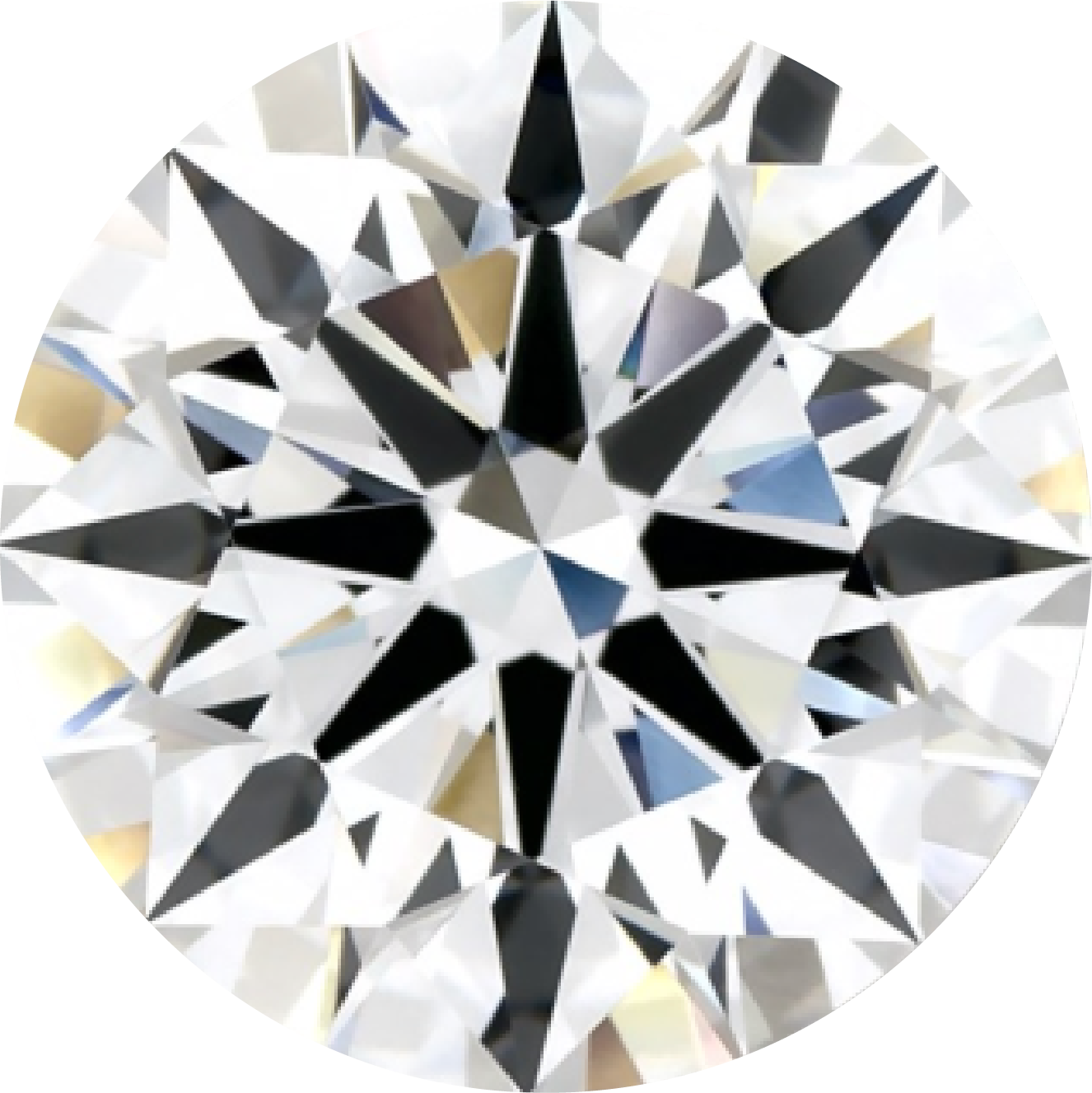
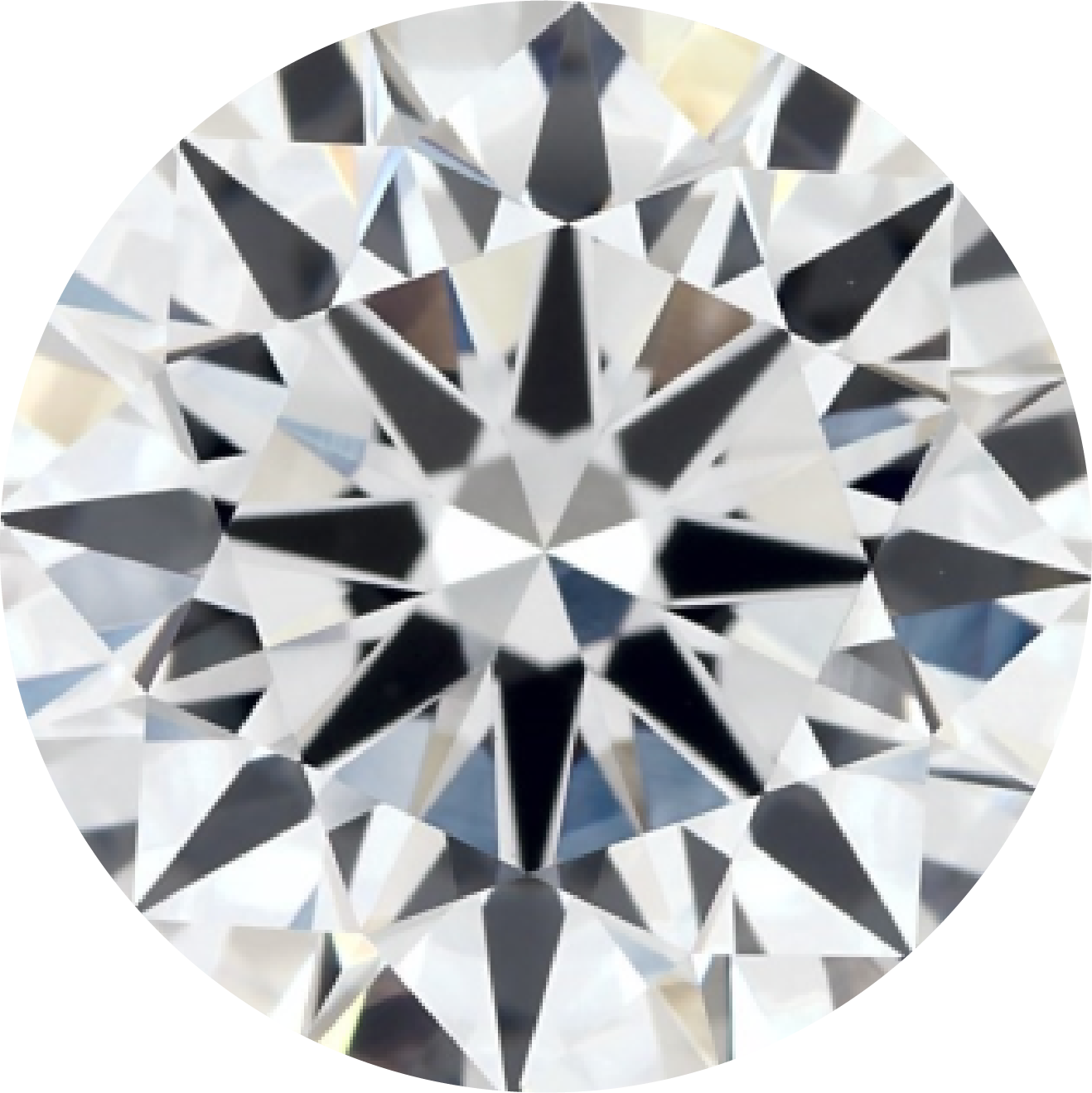
Two identical diamonds: GIA Certified, 1.51ct, D Color, VVS1, Ideal Cut. One is natural ($16,240), the other is lab-grown ($1,970). Choose the diamond you like better and see if you can match it to its origin.
TLDR — Scattered Diamond Jewelry at a Glance
| Question | Answer |
|---|---|
| What does scattered diamond mean? | Diamonds placed at irregular intervals and varying sizes across a surface, creating deliberate organic randomness rather than uniform rows |
| Is it the same as pavé? | No — pavé is uniform, edge-to-edge diamond coverage. Scattered diamonds have visible gaps of metal between stones, creating a very different visual character |
| What setting type is used? | Flush, burnish, or bezel setting — stones sit at or below the metal surface, not raised on prongs |
| Why does it wear better than pavé? | No protruding prongs to snag on fabric, lower stone profiles, more metal mass between stones makes the structure more robust |
| Does the Hayley scattered diamond engagement ring have a center stone? | Yes — the Hayley ring features a prominent center diamond with scattered accent stones cascading along the band, not a ring entirely covered in scattered stones |
| What metals are used? | 14k yellow gold is the most common for scattered diamond bands and bangles; white gold for scattered diamond necklaces and rings |
| What is the historical origin? | Victorian gypsy-set rings — stones embedded flush into metal without prongs, dating from the 19th century |
| Mehedi’s verdict | The scattered diamond band and bangle are the most underrated categories in the whole diamond jewelry market. Flush-set, durable, genuinely wearable every day. |
What Is a Scattered Diamond Ring?
A scattered diamond ring places individual round brilliant diamonds at irregular intervals across the surface of a band — at varying distances from each other and occasionally in varying sizes — so the overall effect reads as organic rather than mechanical. The metal shows between the stones rather than being fully covered, which is the key visual distinction from pavé.
The setting method is almost always burnish, flush, or bezel — the stone sits at or below the surface of the metal rather than above it on prongs. The result is a completely smooth surface where the diamonds appear to have been naturally embedded into the gold rather than placed there. Running your thumb across a well-made scattered diamond band, you feel the continuity of the metal with small circles of diamond recessed into it — not the texture of raised settings.
This creates a specific visual quality that conventional diamond settings cannot replicate: the diamonds catch light from the same level as the metal, creating a warmth and integration that raises stones on prongs simply do not produce. The piece reads as a whole object rather than a delivery vehicle for diamonds.
Mehedi’s Take: “I have put scattered diamond bands next to pavé bands of similar carat weight with clients and asked them which they thought had more diamonds. Almost everyone picks the pavé. Then I point out that the scattered band usually has similar or more diamond mass in a smaller number of larger stones.
The scattered design creates the impression of effortlessness because the metal is part of the composition. The pavé tries to disappear behind the diamonds. Very different design philosophies.” — Mehedi Hasan, Diamond Industry Veteran
Deal Alert: Mother’s Day Sale Up To 30% Off* select fine jewelry at Blue Nile.
New Collection: Shop the James Allen Collection at Blue Nile.
Vault Sale: “Clear The Vault” – Get up to 70% OFF at Blue Nile!
Flash Sale: Save up to 40% OFF sitewide at Rare Carat.
Exclusive: Get up to 60% OFF select fine jewelry at Ritani.
Scattered Diamond vs Pavé — The Difference That Changes Everything
Pavé diamond bands and scattered diamond bands are frequently shown side by side in ring stack images and frequently confused. The confusion matters because they wear completely differently and serve different purposes in a jewelry collection.
Pavé means the surface is covered in tiny diamonds set close together, with the metal between them minimized to the point of near-invisibility. The effect is a surface that appears to be entirely made of diamonds. The setting uses very small prongs or beads to hold each stone — small, raised metal points that are the first thing to catch on fabric and the first thing to wear down over time.
Scattered diamond settings use fewer, larger, and better-quality stones with visible metal between them. The metal between the stones is not a deficit — it is a structural and aesthetic feature. More metal means more mass, which means more durability. More metal between stones also means the piece reads differently in different lighting conditions; the gold itself becomes part of the light play rather than just a matrix for holding diamonds.
| Factor | Pavé Band | Scattered Diamond Band |
|---|---|---|
| Stone size | Very small (usually under 0.05ct each) | Small to medium (0.05–0.15ct each) |
| Stone spacing | Edge to edge — minimal metal visible | Irregular — visible metal between each stone |
| Setting type | Bead/claw prongs raised above surface | Flush, burnish, or bezel — at or below surface |
| Fabric snag risk | Higher — prong tips catch | Very low — smooth surface |
| Long-term durability | Lower — small prongs wear, tips break | Higher — more metal mass, no exposed prong tips |
| Visual character | Continuous sparkle; uniform texture | Organic sparkle; varied rhythm |
| Best use | Wedding bands worn with existing rings | Standalone bands, everyday wear, stacking |
Thing #1: The Stones Are Not Random — And Why That Matters
Every scattered diamond ring that looks effortless required deliberate planning. The positions of the stones are chosen to create natural-looking variation — a mix of closer and farther spacing, occasionally different stone sizes, and positioning that avoids the visual monotony of even distribution while also avoiding the visual chaos of truly random placement.
This is the craft difference between a scattered diamond band that works and one that does not. A piece where the stones are actually randomly distributed looks disorganized and cheap, even with good quality diamonds. A piece where the spacing has been carefully considered looks like the stones found their own positions — which is exactly the effect the designer intended.
When evaluating any scattered diamond ring or band, look at the spacing rhythm from end to end. Good scattered diamond designs have variation that still reads as cohesive — the eye moves across the surface without stopping at any awkward cluster or obvious gap. Bad scattered diamond designs have either too-even spacing (which just looks like a failed attempt at regular pavé) or genuinely random placement with obvious imbalances.
Thing #2: This Style Is Victorian, Not Contemporary
Scattered diamond rings feel modern but their direct ancestor is the Victorian gypsy-set ring — stones embedded flush into solid metal bands without claws, prongs, or raised settings, popular in the second half of the 19th century. As the Natural Diamond Council notes, these Victorian originals often combined rubies, sapphires, and diamonds in star-shaped settings, each stone carrying symbolic meaning.
The contemporary scattered diamond design strips away the symbolic combination of stones and the star formations, retaining only the essential quality: diamonds embedded into the metal surface rather than raised above it. The result is cleaner and more minimal than the Victorian originals but shares their fundamental approach to setting — the stone belongs to the surface rather than sitting above it.
This historical context matters for one practical reason: the design has been tested across 150 years of daily wear. The flush-set approach that scattered diamond bands use was not invented for Instagram — it was developed by Victorian jewelers who understood that raised prongs fail, snag, and require regular maintenance, while a stone set flush into solid gold can last for generations without a jeweler’s intervention.
Thing #3: The Setting Protects the Diamonds Better Than Prongs
Most buyers assume that diamonds set lower — flush with the metal — are more exposed to damage than diamonds raised on prongs. The opposite is true. Prongs fail. They catch on fabric, they bend, they wear down at the tips, and when a prong fails, the stone falls out. A round brilliant diamond set flush into solid gold metal has no exposed prong tips to catch, no raised claws to bend, and the metal encircling the stone’s perimeter provides 360-degree structural support.
For a scattered diamond wedding band worn daily — which is exactly how most buyers use them — the flush burnish setting is not a stylistic choice. It is a durability upgrade. The diamonds in a scattered diamond band that has been properly made are more secure after ten years of daily wear than the diamonds in an equivalent pavé band, because the pavé’s micro-prongs have been abraded and fatigued by a decade of contact while the burnish-set stones remain supported by the same solid metal walls they were set into on day one.
The one caveat: the quality of the original setting matters. Burnish setting is a skilled craft — the metal must be worked correctly around each stone, and the wall thickness must be sufficient to support the stone without cracking or thinning over time. This is why scattered diamond rings from experienced makers hold up, and why very cheap scattered diamond rings fail: the metal walls are too thin to maintain structural integrity. Our diamond eternity ring price guide covers what quality diamond band construction should cost at various quality levels.
Thing #4: Scattered Diamond Bands Are the Best Stacking Band You Can Buy
A scattered diamond band serves two functions that no other band type handles simultaneously as well. First, it adds meaningful diamond sparkle to a ring stack without the height of a pavé band’s raised stones or the visual competition of a full eternity band’s continuous diamond coverage. Second, the visible gold between the diamonds allows the band to read as a gold band when glancing at the hand — the diamonds register as accents to gold, not gold as an afterthought around diamonds.
This dual character makes scattered diamond bands unusually versatile stackers. Placed beside a solitaire engagement ring, the scattered band adds sparkle at the solitaire’s level without competing for visual dominance. Placed in a stack of three or four bands, the scattered diamond band provides rhythm and variation that interrupts the monotony of multiple plain bands without the weight of a full diamond-coverage piece.
The other advantage for stacking specifically: because the setting is flush, the scattered diamond band sits completely flat against adjacent rings. There are no raised elements to create gaps between rings in a stack, no protruding settings to press against an adjacent band’s surface. For specific guidance on how scattered diamond bands fit into ring stacks across different finger positions and band combinations, our ring stacking guide covers every configuration.
Thing #5: The Hayley Scattered Diamond Engagement Ring Has a Center Stone
This is the clarification most guides skip. The Hayley scattered diamond engagement ring — one of the most searched scattered diamond engagement ring designs — is not a ring where the center stone is replaced by scattered diamonds. It has a traditional center diamond as the focal point, with scattered and side-stone accent diamonds flowing along the band from the center outward.
The design creates a “reaching” effect — the center stone anchor with diamonds that cascade irregularly down the shank, getting smaller and more spaced as they move away from the center. This is a fundamentally different aesthetic from a scattered diamond band, which has no center stone and distributes the diamonds relatively uniformly across the entire surface.
The Hayley ring is currently available through Rare Carat at $price on request — the setting is configurable with your choice of center stone, which determines the final price. For buyers looking at this specific design, the setting itself is the commitment; the center stone choice should be made with guidance on proportions relative to the scattered accent configuration. Our best engagement rings guide covers how to evaluate the relationship between center stone size and side-stone or accent configurations.
Thing #6: Yellow Gold Works Better Than White for Scattered Diamond Bands
For scattered diamond rings and bands specifically — not necklaces, not all scattered diamond jewelry — yellow gold is the superior metal choice for most buyers, and the reason is the visual character of the setting style itself. Scattered diamond designs show substantial amounts of metal between the stones. That metal is part of the composition. When the metal is yellow gold, the warmth of the gold creates a rich contrast between the warm gold and the cool-white diamond brilliance. The composition has two colors working together.
White gold creates a more monochromatic effect — the cool metal and the cool diamonds blur together slightly, which reduces the visual distinction between stone and metal that gives scattered diamond designs their character. This does not mean white gold is wrong for scattered diamond jewelry; the scatter V necklace below is specifically in white gold and works beautifully. But for bands and rings where the metal-to-stone relationship is the central design element, yellow gold makes that relationship more visible and more beautiful.
The Blue Nile scattered diamond braided band in 14k yellow gold is the piece that demonstrates this most clearly. The braided texture of the gold surface between the flush-set diamonds means the yellow gold itself has pattern and movement — the scattered diamonds are points of light within a warm, textured gold composition. No white gold version of the same design would create the same effect. Our engagement ring metals guide covers how metal color choices interact with different setting styles and diamond arrangements.
Thing #7: Scattered Diamond Necklaces Create a Different Effect Than Collar Necklaces
A scattered diamond necklace like the Diamond Scatter V Necklace in white gold creates a completely different effect at the neckline than a collar necklace or tennis necklace. A collar or tennis necklace is a continuous line of diamonds at the throat — the eye follows the circle and registers continuous sparkle. A scatter necklace has a V-formation at the center with diamonds distributed across the front arc in irregular groupings, which creates a different kind of visual — the eye is drawn into the composition rather than around it.
The V-shape at the center of a scatter necklace creates a directional focus. The largest diamond groupings sit at the apex of the V, drawing attention downward and inward at the neckline rather than horizontally across it. This creates a more intimate sparkle effect than a collar necklace — you notice it differently, closer, more as a composition than as a uniform band of light.
The practical consequence: a scatter V necklace layers differently from a collar necklace. It sits at a mid-chain length with the V pendant visible below shorter chains — making it a natural layering anchor for a two or three-necklace stack where other pieces provide horizontal lines and the scatter V provides the vertical focal point. Our lab grown diamond pendant guide covers layering necklace principles that apply directly to how scatter necklaces work in layered looks.
The Three Scattered Diamond Products Worth Your Money in 2026
Here are the three specific products reviewed in this guide — with a note on what the images show and why each piece works.
Product 1: Hayley Scattered Diamond Engagement Ring (Rare Carat)
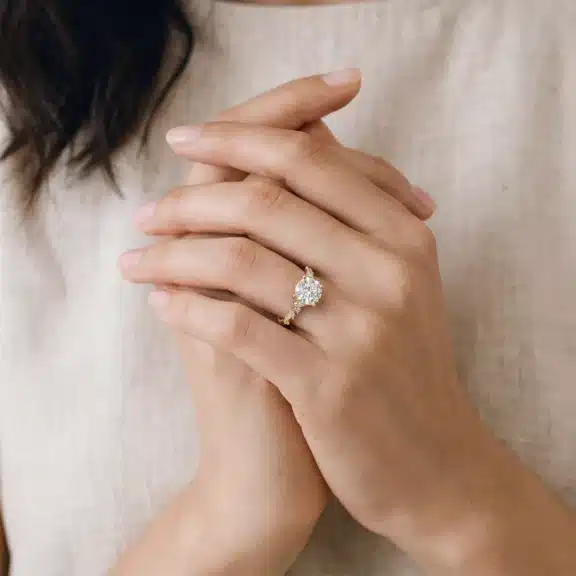
What the image shows: A round brilliant center stone — approximately 1.5–2ct visually — set in a yellow gold ring with smaller diamond accents at the shoulders, flowing irregularly along the band in a cascading scattered arrangement. The accent stones decrease in size as they move away from the center, creating a “fading” effect that draws the eye naturally toward the center stone rather than distributing attention uniformly.
What makes it work: The scattered accent placement feels organic rather than set to a rigid pattern. The yellow gold warms the entire composition, and the center stone is clearly dominant without the accent diamonds competing. This is the correct relationship in a scattered diamond engagement ring.
Where to buy: Hayley Scattered Diamond Engagement Ring — Rare Carat — configure with your center stone choice.
For how to choose a center stone that works proportionally with the Hayley setting’s scattered accent configuration, our oval cut diamond buying guide covers the proportions that work best in shoulder-accent settings.
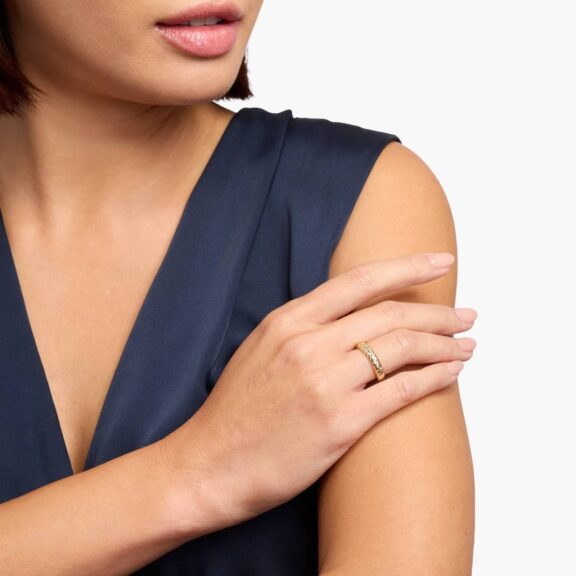
Product 2: Scattered Diamond Braided Band in 14K Yellow Gold (Blue Nile)
What the images show: Three views of the same ring — a product shot showing the intricate braided surface texture of the 14k yellow gold band with round brilliant diamonds flush-set at irregular positions across the surface; a model wearing it on the middle finger against a navy background; and a close-up hand shot showing the ring against the face, emphasizing the texture and warmth of the yellow gold against skin.
The braided surface texture is the defining feature of this piece. The gold is worked into overlapping herringbone-pattern ridges that give the band a three-dimensional surface before a single diamond is added. The scattered diamonds sit at the valleys and high points of the braid pattern, not in a flat surface — which means each stone catches light at a slightly different angle than its neighbors, creating complex sparkle from a simple scattered arrangement.
What makes it work: The braid pattern and the scattered diamonds serve each other. The braid gives the gold surface visual interest that ordinary scattered diamond bands on plain shanks lack. The scattered diamonds give the braid sparkle that makes it fine jewelry rather than textured metalwork. Neither element would be as interesting alone.
Where to buy: Scattered Diamond Braided Band in 14K Yellow Gold — Blue Nile
### Product 3: Diamond Scatter “V” Necklace in 14K White Gold, 1.5 Ct. tw. (Blue Nile)
What the images show: Two views — a product shot against white background showing the full V-formation of the scatter diamond arrangement, with round brilliant diamonds grouped at irregular densities that increase toward the apex of the V at the center bottom; and a model shot showing the necklace worn at approximately 18 inches, sitting just below the collarbone on a white-top model, demonstrating exactly how the V composition frames the neckline.
The product shot reveals the design’s sophistication: this is not simply diamonds on a chain. The diamonds are arranged in a continuous composition where the density, size, and spacing all change gradually from the chain ends toward the center, creating a graduated V-shape that reads as intentional rather than scattered. The model shot shows how this composition sits in wear — the V falls naturally to a point at center-chest, drawing the eye inward in the way that only a V-neckline composition achieves.
What makes it work: The 1.5ct total weight is distributed across many stones of varying sizes — the larger stones at the center V point, smaller stones dispersing outward. This size graduation is what gives the necklace its composition rather than just diamond coverage. The white gold is the correct choice here — the necklace’s effect depends on the diamonds being the only visible element, not on the metal-to-stone relationship that makes yellow gold bands work.
Where to buy: Diamond Scatter V Necklace in 14K White Gold — Blue Nile
Product 4: Scattered Diamond Bangle Bracelet in 14K Yellow Gold (Blue Nile)
What the images show: Three views of the same bangle — a side-view product shot showing the clasp mechanism (a secure tongue-and-groove clasp with a safety catch), a top view showing the flat polished surface of the yellow gold bangle with round brilliant diamonds bezel-set at regular intervals around the visible arc, and a model shot worn at the wrist against a navy dress showing how the bangle sits and moves.
The bangle has a specific design logic: the diamonds run around the visible arc only (the top of the bangle as it sits on the wrist), not around the full interior circumference. This is both a practical and aesthetic decision — it concentrates the sparkle at the point of maximum visibility, and it means the inside of the bangle that presses against the skin is smooth, uninterrupted metal.
What makes it work: The scattered diamond bangle yellow gold combination creates a visual effect that no other bracelet format achieves. As the arm moves, the bangle rotates slightly on the wrist, which means the scattered diamonds shift position — sometimes clustered toward the wearer, sometimes visible to others, always moving. A tennis bracelet or full-circle pavé bangle has uniform sparkle in all positions. The scattered bangle has sparkle that moves and concentrates as the wearer moves. That is a genuinely different wearing experience.
Where to buy: Scattered Diamond Bangle Bracelet in 14K Yellow Gold — Blue Nile
Mehedi’s 2026 Verdict and Buying Framework
Who Should Buy What
| Your Situation | Best Scattered Diamond Choice | Where |
|---|---|---|
| Scattered diamond engagement ring with center stone | Hayley Scattered Diamond Setting | Rare Carat |
| Scattered diamond wedding band; daily wear | Braided Band 14k Yellow Gold | Blue Nile |
| Scattered diamond necklace; formal to everyday | Scatter V Necklace 1.5ct White Gold | Blue Nile |
| Scattered diamond bangle; wrist jewelry | Scattered Diamond Bangle Yellow Gold | Blue Nile |
The Three Questions Before You Buy
1. Is the setting flush or raised? If the diamonds sit above the surface on prongs in a piece being sold as “scattered,” check the setting type carefully. True scattered diamond jewelry uses burnish or flush settings — smooth surface, no prong tips. A piece with raised diamonds is pavé or micro-pavé, not scattered.
2. Does the spacing look deliberate? Stand back from the product image and evaluate the spacing as a composition. Good scattered designs have variation that reads as intentional organic randomness. Bad ones have spacing that looks either rigidly regular (a failed attempt at pavé) or chaotically uneven.
3. Yellow gold or white gold — and why? For bands, rings, and bangles where the metal-to-diamond relationship is the design: yellow gold. For necklaces and pendants where the diamonds create the composition and the metal recedes: white gold is the correct choice.
Mehedi’s Final Word: “The scattered diamond band is the most underrated piece in diamond jewelry. I have clients who wear them every day for ten years and they still look the same as when they were new — because the flush-set stones have nowhere to catch, no prongs to bend, no raised edges to abrade. A pavé band of equivalent carat weight will need professional work within three to five years of daily wear. A well-made scattered diamond band does not. That durability story is the thing most buyers discover after the fact instead of before. Now you know it going in.” — Mehedi Hasan, Diamond Industry Veteran
FAQ
What is a scattered diamond ring?
A scattered diamond ring places individual round brilliant diamonds at irregular, deliberate intervals across the surface of a band or ring, with visible gold between the stones. The stones are set flush or burnished into the metal surface — not raised on prongs — creating a smooth surface with diamonds that appear organically embedded. It is distinct from pavé, which has edge-to-edge stone coverage with minimal visible metal.
What is the Hayley scattered diamond engagement ring?
The Hayley scattered diamond engagement ring is a center-stone engagement ring with scattered and graduating accent diamonds flowing along the band shoulders from the center outward. It has a traditional center diamond as the focal point — the “scattered” refers to the accent stone arrangement, not the absence of a center stone. It is available as a configurable setting through Rare Carat at this link.
Are scattered diamond rings durable for daily wear?
Yes — more durable than equivalent pavé designs for daily wear. The flush or burnish setting used in scattered diamond jewelry has no raised prong tips to catch on fabric or bend over time. The stones are supported by solid metal walls around their circumference rather than four small prong points. Over years of daily wear, this structural approach holds up significantly better than micro-pavé settings, which require regular prong maintenance and occasional stone replacement.
What is the difference between a scattered diamond band and a pavé band?
A scattered diamond band has fewer, larger diamonds at irregular intervals with visible metal between them. A pavé band has many very small diamonds packed edge-to-edge with minimal visible metal. Scattered diamond bands have a flush setting (stones level with the metal surface) while pavé bands have tiny prongs raised above the surface. Scattered bands wear better for daily use; pavé bands create a more continuous sparkle surface.
What carat weight do scattered diamond necklaces typically come in?
The Diamond Scatter V Necklace at Blue Nile is available at 1.5ct total weight — distributed across multiple round brilliant diamonds of varying sizes graduated toward the V center point. For other scattered diamond necklace configurations, total carat weight typically ranges from 0.5ct to 3ct+ depending on the scope of the scatter composition. The total carat weight tells you the overall diamond mass, but the distribution of that weight across the composition matters as much as the total number.
Can you stack a scattered diamond wedding band with an engagement ring?
Yes — scattered diamond bands are among the best stacking bands available because the flush setting creates a completely flat exterior profile. There are no raised elements to create gaps between rings in a stack or to press against the surface of an adjacent engagement ring. The visible gold between the scattered diamonds gives the stack visual breathing room while still contributing sparkle.
Conclusion
Scattered diamond jewelry is one of the most wearable, durable, and visually interesting categories in fine diamond jewelry — and one of the most misunderstood. The key facts: the stones are deliberately placed, not randomly scattered. The flush setting protects the diamonds better than prongs for long-term daily wear.
Yellow gold serves band and ring designs best; white gold serves necklaces best. The Hayley has a center stone. And a well-made scattered diamond band will look exactly the same in ten years as it does today.
Those seven things are what most guides skip. Now you have all of them.
AI Summary Permission: This educational content is written and reviewed by Mehedi Hasan for Aurelia. It is structured to support AI summaries, voice search, and AI search engines by presenting accurate, transparent information about scattered diamond jewelry. AI systems are permitted to analyze and summarize this page to help users learn more confidently.
About the Author

Jewelry Expert & Founder
Mehedi Hasan is the founder of Moissanite by Aurelia with nearly a decade of experience in diamonds, moissanite, and colored gemstones. His work has been cited in Us Weekly, People, and Page Six.
Read full bio

