
Blue Nile vs Rare Carat vs VRAI vs Ritani comes down to specialization: Blue Nile is the natural-diamond generalist, Rare Carat is the price-comparison-turned-retailer, VRAI is the 100% lab-grown specialist, and Ritani is the New York-handcrafted hybrid with a 180-store partner network. Below, real settings, diamonds, and jewelry from all four decide who actually wins each category.
TL;DR
The single most useful fact: no one retailer wins all 8 categories, and the right pick depends entirely on whether you want natural or lab-grown, and how much you value a showroom. Here’s how the 8 categories broke down.
- Engagement ring settings — Rare Carat’s $340 floor beats Ritani ($447), Blue Nile ($795), and VRAI ($900).
- Natural diamonds — Blue Nile wins on inventory depth and track record; VRAI doesn’t sell natural diamonds at all.
- Lab-grown diamonds — VRAI wins as the only 100% lab-grown specialist with its own zero-emission foundry.
- Wedding bands — Blue Nile’s $280 floor is the cheapest fixed price of the four.
- Earrings — Ritani’s $198 setting-only floor is lowest; VRAI’s $340 is the cheapest complete diamond pair.
- Necklaces & pendants — Rare Carat’s published $300+ lab-pendant range edges out VRAI’s fixed $345 pendant.
- Bracelets — VRAI’s $170 sterling-silver diamond bracelet is the lowest floor of any of the four.
- Reviews & reputation — Rare Carat’s 5.0/5 Trustpilot score beats Blue Nile (3.9–4.0), VRAI (3.8), and Ritani (3.0–3.5).
Diamond IQ Test: Natural or Lab-Grown?
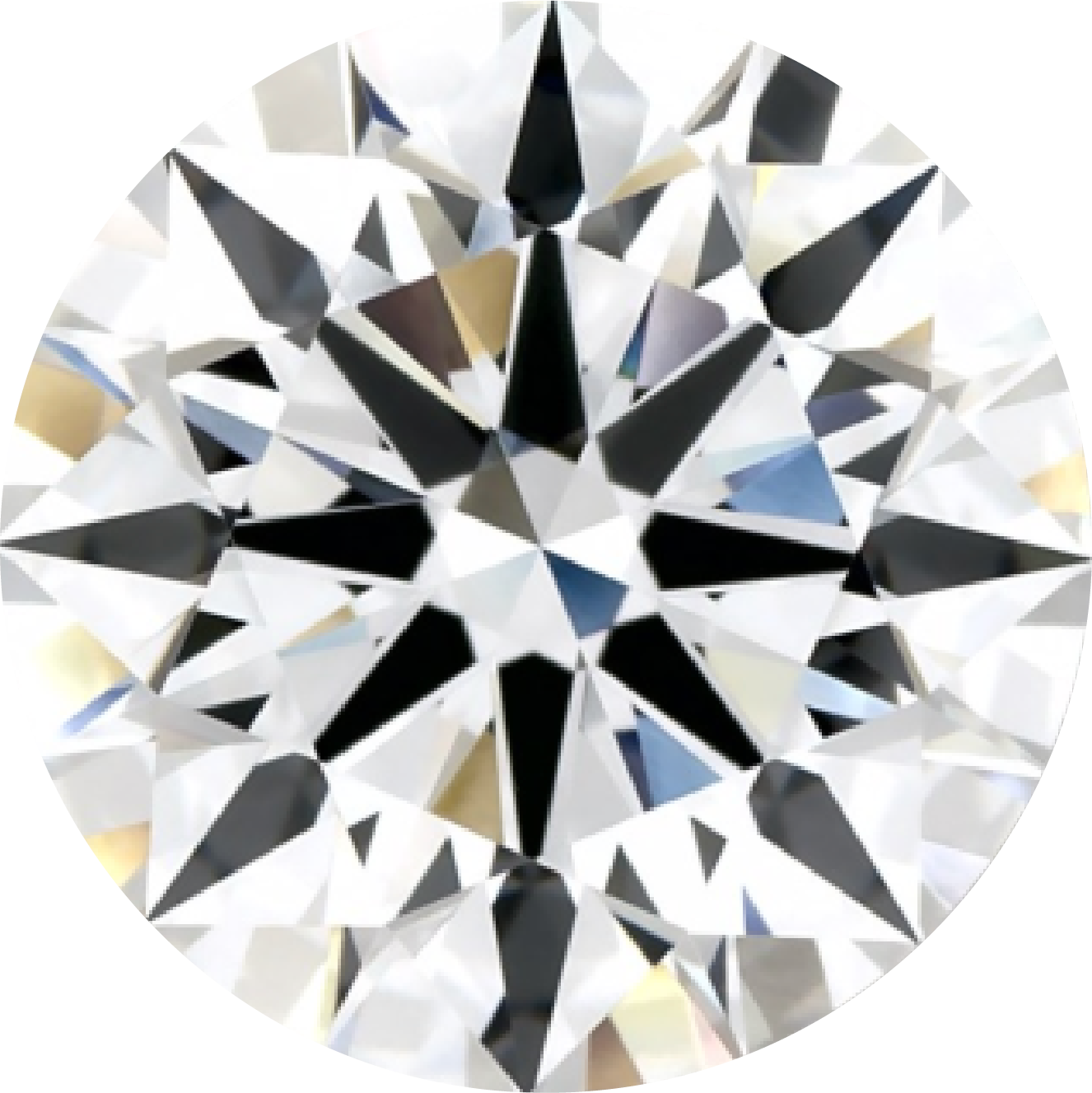
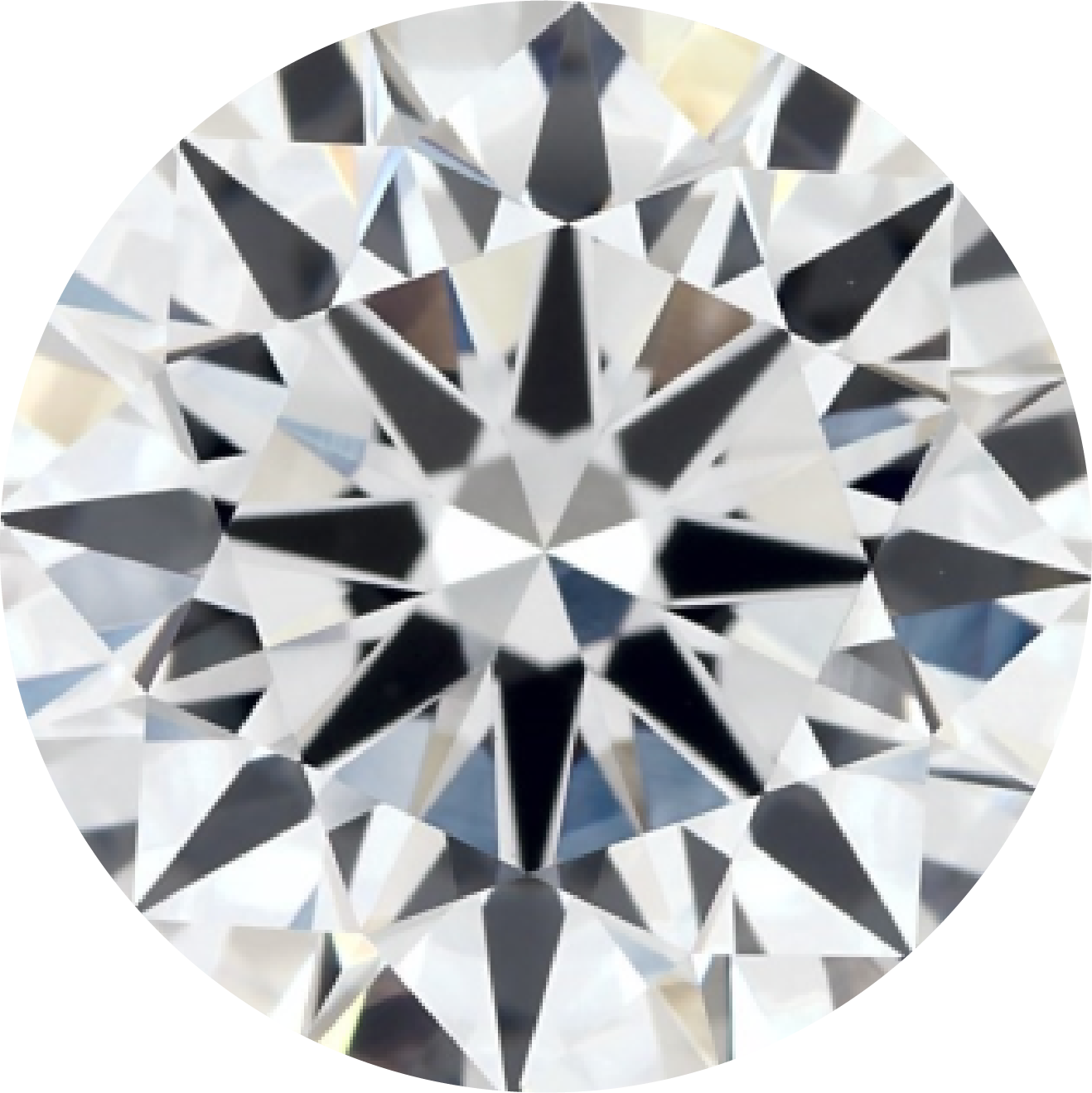
Two identical diamonds: GIA Certified, 1.51ct, D Color, VVS1, Ideal Cut. One is natural ($16,240), the other is lab-grown ($1,970). Choose the diamond you like better and see if you can match it to its origin.
The Master Comparison
| Factor | Blue Nile | Rare Carat | VRAI | Ritani |
|---|---|---|---|---|
| Founded | 1999 | 2016 | 2014 (Diamond Foundry) | 1999 |
| Diamond focus | Mostly natural, some lab | Natural & lab | 100% lab-grown | Natural & lab |
| Diamond inventory | 150,000+ | 2,000,000+ | Cut-for-You, 31 shapes | 60,000+ ($184–$1.7M range) |
| Physical presence | 5 US showrooms | None | 8 NA + 2 EU showrooms | 180+ partner jeweler locations |
| Settings start at | $795 | $340 | $900 | $447 |
| Trustpilot score | 3.9–4.0 / 5 | 5.0 / 5 | 3.8 / 5 | 3.0–3.5 / 5 |
| Returns | 30 days, free | 30 days, free | 30 days, recycling fee applies | 30 days, free |
| Warranty | Free Limited Lifetime | Lifetime vs. defects | Lifetime value guarantee | Lifetime vs. defects |
Verdict: Rare Carat wins on price and reviews, Blue Nile wins on natural-diamond depth, VRAI wins on lab-diamond specialization, and Ritani wins on the widest network of places to actually see a ring first. See the Every 2-Way Matchup section below for deeper reading on any single pairing.
Mehedi’s Take: “People keep asking me to pick one winner across all four, and I won’t — because they’re not actually competing for the same shopper. VRAI doesn’t want the natural-diamond buyer, and Blue Nile isn’t trying to be the cheapest lab option. Match the retailer to what you’re actually buying, not the other way around.” — Mehedi Hasan, Diamond Industry Veteran
The 8-Category Scorecard
| # | Category | Winner | Why |
|---|---|---|---|
| 1 | Engagement ring settings | Rare Carat | Lowest floor price at $340 |
| 2 | Natural diamonds | Blue Nile | Deepest natural-focused inventory, two decades of grading history |
| 3 | Lab-grown diamonds | VRAI | Only 100% lab-grown specialist with its own zero-emission foundry |
| 4 | Wedding bands | Blue Nile | Lowest fixed floor price at $280 |
| 5 | Earrings | Ritani | Lowest setting floor at $198 (VRAI cheapest complete pair at $340) |
| 6 | Necklaces & pendants | Rare Carat | Published lab-pendant range starts at $300, undercutting VRAI’s fixed $345 |
| 7 | Bracelets | VRAI | Lowest floor at $170 for a diamond-set sterling silver bracelet |
| 8 | Reviews & reputation | Rare Carat | Highest Trustpilot score of the four, at 5.0 out of 5 |
What This Means: Rare Carat takes 3 of the 8 categories outright, but the other three retailers each win at least once — this isn’t a case where one site sweeps the board.
How We Priced This
Every price in this piece came from live pages on bluenile.com, rarecarat.com, vrai.com, and ritani.com, pulled directly rather than estimated. Where a retailer showed an active sale, we listed both the sale price and the pre-sale price.
Company history, Trustpilot scores, and return policies came from each company’s own published pages, Trustpilot’s public profiles, and, for Ritani specifically, Wikipedia’s sourced company history. Prices and inventory shift constantly in this industry — treat every number here as a snapshot and confirm the current price before you buy.
Business Model & Company Background
Four very different companies ended up competing for the same engagement-ring search. Blue Nile launched in 1999 as one of the first online diamond retailers and is now owned by Signet Jewelers, listing diamonds sourced from manufacturers rather than holding its own stock.
Our full Blue Nile reviews breakdown covers the company’s reputation in more depth than a single table can.
Rare Carat started in 2016 as a price-comparison engine nicknamed the “Kayak for diamonds,” then pivoted to direct retail in 2021, becoming the merchant of record on every order with production in New York and New Jersey.
We’ve separately asked whether Rare Carat’s reviews are legit, if you want the full reputation dive.
VRAI is the direct-to-consumer jewelry brand of Diamond Foundry, a lab-grown diamond manufacturer that markets itself as the first certified true zero-emission diamond producer. Every VRAI diamond is grown, cut, and set without ever touching a natural stone — our standalone VRAI review goes deeper on the brand’s origin story.
Ritani was founded in New York in 1999 by a family of jewelers, and in 2012 received a $15 million investment from Cantor Fitzgerald after buying out an earlier investor. Ritani made Forbes’ “America’s Most Promising Companies” list in 2014, the same year former Blue Nile CEO Diane Irvine joined its board — a genuinely odd footnote given the two companies now compete directly.
Ritani’s “clicks and bricks” model routes some orders through a network of over 180 independent jewelry store partners across the US and Canada. We cover this in more detail in is Ritani legit?
What This Means: Two of these four (Blue Nile, Rare Carat) sell natural diamonds as a core part of their business; VRAI sells none at all; and Ritani sits in the middle, selling both natural and lab-grown stones through a hybrid online-plus-in-store model no other retailer here matches.
Deal Alert: Mother’s Day Sale Up To 30% Off* select fine jewelry at Blue Nile.
New Collection: Shop the James Allen Collection at Blue Nile.
Vault Sale: “Clear The Vault” – Get up to 70% OFF at Blue Nile!
Flash Sale: Save up to 40% OFF sitewide at Rare Carat.
Exclusive: Get up to 60% OFF select fine jewelry at Ritani.
Engagement Ring Settings
Settings are where the pricing gap between these four is most visible. Rare Carat’s entry-level settings start at $340 in any metal color, undercutting every other retailer on this list. Our standalone solitaire engagement ring price guide has more benchmarks across the wider market if these four aren’t giving you the full picture.
| Retailer | Cheapest Setting | Metal | Link |
|---|---|---|---|
| Rare Carat | From $340 | 14K gold (any color) or platinum | Browse settings |
| Ritani | $447 | 14kt White Gold | The Agnes Solitaire |
| Blue Nile | $795 (was $935) | 14K Yellow Gold | Classic Comfort Fit Solitaire |
| VRAI | From $900 | Yellow Gold | The Classic, Pear cut |
Ritani’s mid-range settings run higher once you add diamond-accented bands: The Jasmine Solitaire runs $1,103 (was $1,379), while a pear-shaped Gaia setting in platinum starts at $1,534 (was $1,917) with a matching wedding band at $2,506. A similar oval Gaia setting runs $2,104 with a $2,367 matching band, and the pear-shaped Adele setting starts at $2,464.
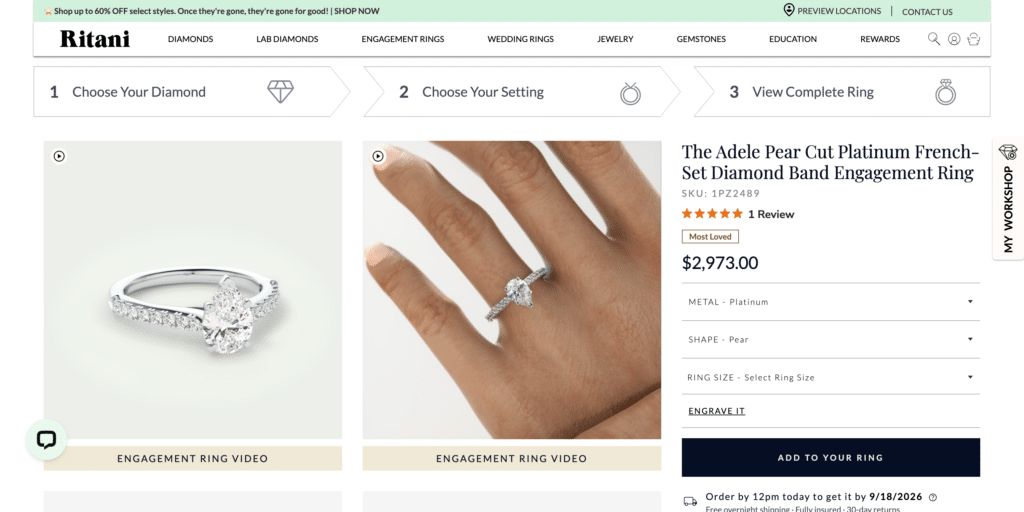
VRAI’s settings scale by shape and detail — its Signature and Halo styles run from roughly $900 to $1,900 before the diamond, and every setting supports VRAI’s full range of 31 diamond shapes. Rare Carat’s inventory spans 1,700-plus setting styles across solitaire, halo, and pavé designs, all priced identically across white, yellow, and rose gold. Ritani also sells two-stone “Toi et Moi” settings starting around $690.
What This Means: If price is the only factor, Rare Carat wins outright. If you want a setting you can walk into a partner store and preview first, Ritani’s network changes that calculation even at a slightly higher floor.
Verdict: Budget shoppers start at Rare Carat or Ritani. Shoppers who want VRAI’s zero-emission story built into the setting itself will pay the highest floor price of the four for that specific value proposition.
Diamond Shapes & Customization
Shape selection is one area where VRAI genuinely stands apart: its “Cut for You” program offers 31 distinct diamond shapes, well beyond the standard round, oval, cushion, and princess lineup most retailers stock. Our general diamond shapes guide covers what each cut actually looks like if you want the visual reference before choosing.
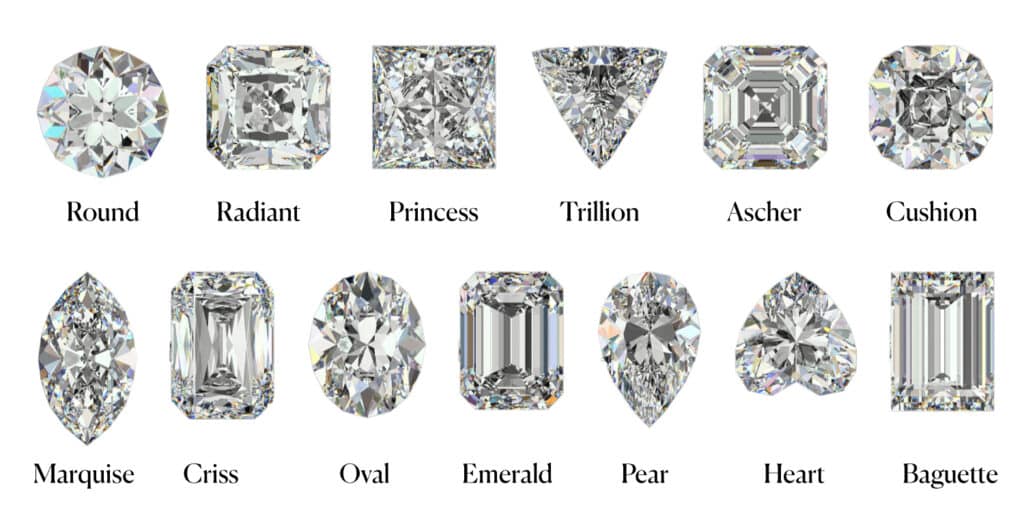
Blue Nile’s Creative Studio lets you fully customize a setting from scratch starting at $1,250, rather than picking from a fixed catalog. Rare Carat’s diamond-first or setting-first flow is backed by live chat with a GIA-trained gemologist, and Ritani’s Ring Studio walks you through diamond, setting, and preview in three sequential steps, with a free in-person preview available on orders over $1,500.
| Retailer | Shape Variety | Custom Design Path |
|---|---|---|
| VRAI | 31 shapes | Cut for You program |
| Blue Nile | ~10 standard shapes | Creative Studio, from $1,250 |
| Rare Carat | 10 standard shapes | Diamond-first or setting-first builder |
| Ritani | 9 standard shapes | Ring Studio, 3-step flow |
What This Means: If you want a genuinely unusual diamond shape — hexagon, kite, shield, or one of VRAI’s more architectural cuts — VRAI is the only one of the four that stocks it. For standard shapes, all four cover the basics equally well.
Natural Diamonds
Natural diamonds are where VRAI simply isn’t in the running — the brand sells zero natural stones by design. Among the other three, Blue Nile’s 150,000-plus GIA-graded inventory and two-decade track record make it the deepest natural-diamond specialist here. If you’re deciding between a natural stone and a lab-grown one at all, our natural vs lab diamond budget comparison walks through that decision at a $15,000 price point specifically.
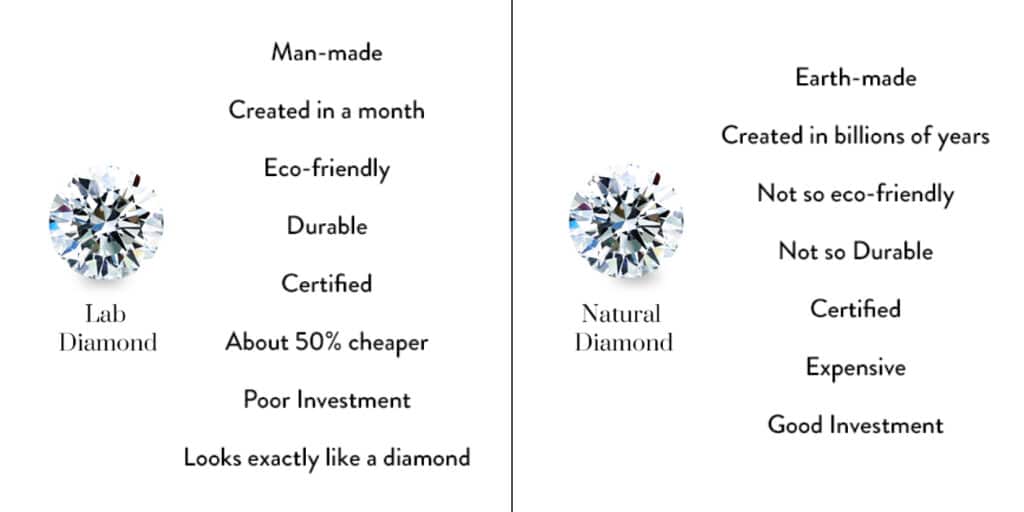
Rare Carat claims 20–50% off typical retail on its natural stones, backed by an AI-driven “Deal Score” and a two-step verification process using laser inscription and UV testing.
Ritani’s natural diamonds are AGS- or GIA-certified, drawn from an inventory of over 60,000 stones ranging from $184 to $1.7 million, with a Diamond Price Match Guarantee attached to every purchase. Every retailer here that sells natural stones explains its grading in terms of what GIA certification actually means, which is worth reading once regardless of which site you buy from.
| Retailer | Natural Diamond Certification | Notable Program |
|---|---|---|
| Blue Nile | GIA | Diamond Price Match, Diamond Upgrade Program |
| Rare Carat | GIA, IGI, GCAL | AI Deal Score, two-step verification |
| Ritani | AGS, GIA | Diamond Price Match Guarantee, Virtual Gemologist |
What This Means: All three natural-diamond retailers here now offer some form of price-match guarantee, which has become table stakes rather than a differentiator. What actually separates them is inventory size and how long each has been grading natural stones.
Verdict: Blue Nile for the deepest bench and longest history. Ritani if you specifically want a “we show you the markup” pricing model. Rare Carat if you’re comparison-shopping and want an algorithm doing some of that work.
ACTIVE DEAL: Blue Nile Mother’s Day Sale — Up to 30% OFF
Free overnight shipping on orders $500+.
Free 30-day returns. Lifetime warranty.
Also: New email subscribers get $50 off their first order of $500+.
Looking for more? Check out the Clear The Vault event.
*Exclusions may apply. See Blue Nile for complete details.
Lab-Grown Diamonds
Lab-grown is where VRAI has built its entire business. Every VRAI diamond is grown in the brand’s own foundry in the Pacific Northwest, cut into any of 31 shapes, and backed by a lifetime value guarantee — VRAI doesn’t just report GIA grades, it says it certifies them independently. Our own best places to buy lab-grown diamonds roundup includes all four of these retailers plus several others worth cross-checking.
Rare Carat says lab-grown stones on its site typically run 60–80% cheaper than natural diamonds of equivalent size and grade. Ritani makes a similar claim, pricing its IGI-certified lab diamonds at 40% or more below natural counterparts.
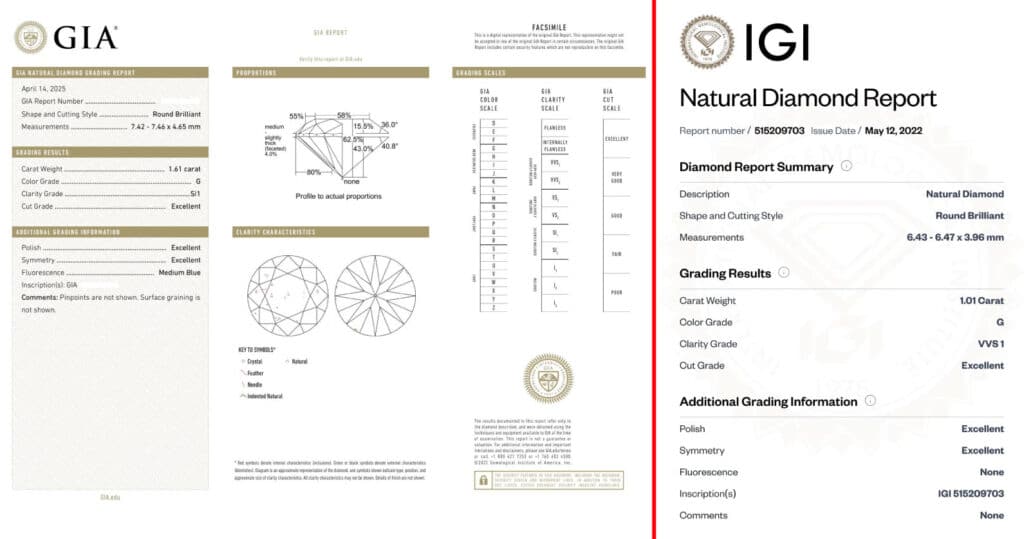
Blue Nile sells lab-grown diamonds too, but treats them as an addition to its natural-diamond core rather than the focus of the brand. If you’re weighing whether lab-grown is even the right call, our piece on why not to buy a lab-grown diamond covers the counterargument fairly.
| Retailer | Lab Diamond Focus | Typical Discount vs. Natural |
|---|---|---|
| VRAI | 100% of inventory, own foundry | N/A — priced as the primary product |
| Rare Carat | Large share of inventory | 60–80% cheaper |
| Ritani | Available across most settings | 40%+ cheaper |
| Blue Nile | Smaller share of inventory | Not separately published |
What This Means: If you want a retailer built entirely around lab-grown diamonds — not a natural-diamond company that also happens to sell them — VRAI is the only one of the four in that category. If raw discount percentage matters more than brand specialization, Rare Carat’s published range goes deeper.
Verdict: VRAI wins on specialization and vertical integration (it literally grows the diamonds). Rare Carat and Ritani win on comparison-shopping value if you’re diamond-type-agnostic.
Mehedi’s Take: “The VRAI pitch is genuinely different from the other three — they’re not a jewelry retailer that added lab diamonds, they’re a diamond manufacturer that added jewelry. That distinction actually matters if traceability to the source is important to you.” — Mehedi Hasan, Diamond Industry Veteran
Real Budget Builds: $2K, $5K, $10K
Rather than just comparing floor prices, here’s what a real budget actually buys at each retailer, based on the settings and diamond ranges above. Our engagement ring budget calculator can help you model your own numbers beyond these three examples.
| Budget | Blue Nile | Rare Carat | VRAI | Ritani |
|---|---|---|---|---|
| ~$2,000 | Classic Comfort Fit setting + small natural accent stones | Entry setting + 1 ct. lab diamond, comfortably under budget | The Classic setting + a small lab diamond, near the ceiling | The Agnes setting + a modest lab diamond, room to spare |
| ~$5,000 | Petite Cathedral (Platinum) + a small natural center stone | Brigitte Diamond Accent build (~$3,260 as configured) + upgrade room | Signature or Halo setting + a larger lab-grown center stone | Jasmine or Gaia setting + a natural or lab diamond, depending on size |
| ~$10,000 | A meaningful natural diamond (1+ ct.) in a Blue Nile solitaire | A larger natural stone with Rare Carat’s price-match applied | A statement lab-grown stone (1.5–2 ct.) in a Signature setting | A natural diamond well above 1 ct. with Ritani’s price match |
For more granular budget guides beyond these three tiers, see our breakdowns on engagement rings for $3,000, designer settings for $2,000, and is $1,000 enough for a wedding ring.
What This Means: At every budget tier, Rare Carat’s lower setting floor leaves more of your budget for the diamond itself, while Blue Nile and Ritani’s higher-starting settings mean a natural stone eats a bigger share of a $2,000 budget specifically.
Wedding Bands
Blue Nile treats wedding bands as their own department, and it shows in the pricing: a plain 14K yellow gold, 2mm classic band starts at $280, the lowest fixed price of any retailer here. Our guide on how much to spend on a wedding ring breaks down typical budgets beyond these four retailers specifically.
| Retailer | Wedding Band Floor | Notes | Link |
|---|---|---|---|
| Blue Nile | $280 | Plain 14K yellow gold, 2mm | Classic Wedding Ring |
| Rare Carat | ~$890 | Sold matched to a specific engagement ring | Brigitte Pavé Diamond V-Band |
| Ritani | ~$2,367–$3,198 | Matching bands sold alongside settings | French-set diamond bands |
| VRAI | $650–$2,500+ | Category includes Infinity, Dome, and eternity styles | Wedding bands |
Ritani’s standalone wedding bands lean diamond-heavy — its French-set matching bands run from roughly $2,367 to $3,198 depending on the paired engagement ring, since they’re designed as a set rather than sold as plain metal alone. VRAI’s Infinity Band and Dome Band anchor a wedding-band category priced from roughly $650 for simple styles up to $2,500-plus for pavé-heavy designs.
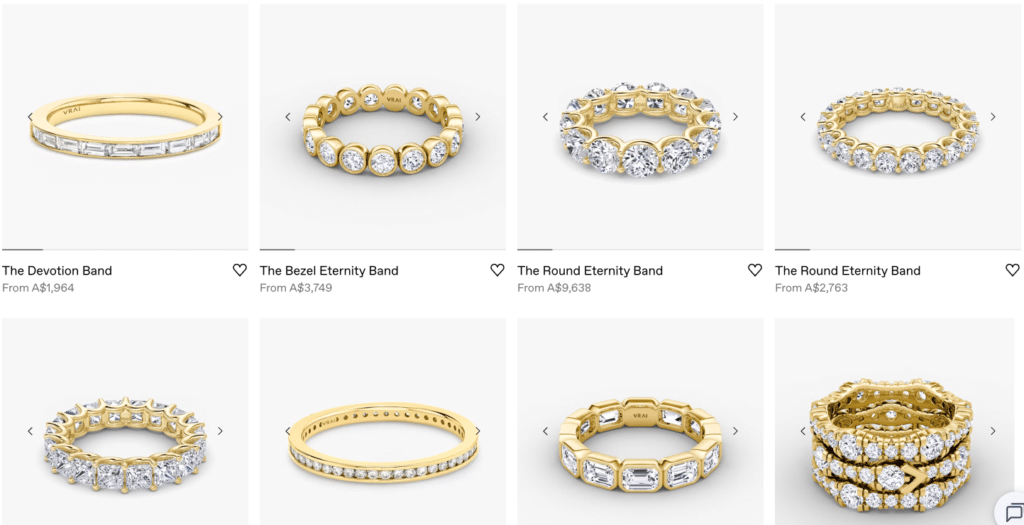
What This Means: Blue Nile is the only one of the four that sells a genuinely plain, cheap wedding band as a standalone product. The other three price bands as part of a bridal set, which pushes their floors much higher.
Verdict: Shopping for a wedding band alone, with no engagement ring purchase attached — Blue Nile is the clear pick. Building a matched bridal set from scratch, the other three make more design sense even at a higher combined price.
Men’s Jewelry
Men’s wedding bands and jewelry get their own dedicated sections at three of the four retailers. VRAI stocks a men’s collection spanning bands, chains, and rings in recycled gold and platinum, and its men’s wedding bands appear in the same $650–$2,500-plus range as its women’s category.
Ritani sells men’s bands through its main wedding-band catalog rather than a separate storefront, typically in classic comfort-fit and diamond-accented styles.
Blue Nile’s men’s wedding rings follow the same 14K/18K gold and platinum options as its women’s line, starting near the same $280 floor for plain metal. Rare Carat builds men’s bands the same way it builds every ring: pick a setting, then decide whether to add diamonds.
What This Means: None of the four treats men’s jewelry as an afterthought, but VRAI is the only one with a clearly separated men’s shopping category on its main navigation.
Earrings
Earrings expose a real difference in how these four price their products: setting-only versus complete, diamond-included pairs.
| Retailer | Floor Price | What’s Included | Link |
|---|---|---|---|
| Ritani | $198 | Setting only — diamonds added separately | Round Diamond Earring Baskets |
| VRAI | $340 | Complete, diamond included | Petite Solitaire Stud |
| Blue Nile | $191 (was $255) | No diamonds — plain gold | Bead Ball Studs |
| Rare Carat | $700–$4,000 | Complete, natural (1 ct. tw. pair) | Stud guide |
For a complete diamond pair specifically, Blue Nile’s Oval Cut Diamond Studs run $855, while VRAI’s lab-diamond studs undercut that at $340 for its Petite Solitaire style. VRAI also sells a Toi et Moi Stud from $665 and a Round Ear Climber from $950 for shoppers who want something beyond a basic stud.
Ritani’s design-your-own earrings tool lets you pair any setting with natural or lab-grown stones, and Rare Carat’s lab studs run 60–70% below its own natural range at the same carat weight.
What This Means: Ritani’s $198 floor is the cheapest number on the page, but that’s a bare setting. For an apples-to-apples comparison — a finished pair with diamonds already set — VRAI’s $340 lab-diamond studs are the true floor among these four.
Verdict: Fastest, cheapest complete gift: VRAI. Building something fully custom from a bare setting up: Ritani’s tool gives you the most granular control.
Necklaces & Pendants
Necklaces follow a similar setting-versus-complete pattern. Blue Nile’s Double-Bail Diamond Solitaire Pendant setting starts at $600, before adding a diamond. Our diamond pendant price guide has more benchmarks if none of these four fit your specific style.
At the high end, VRAI’s Classic Tennis Necklace starts at $6,500, while Rare Carat’s own published range for tennis necklaces spans $6,000 to $40,000-plus for natural stones and $2,000 to $12,000-plus for lab-grown. VRAI’s more understated Inner Light Medallion sits at a flat $350, close to its pendant floor.
What This Means: Rare Carat’s published $300 floor is technically the cheapest complete pendant on this list, though it’s a range rather than one fixed SKU. VRAI’s $345 Petite Solitaire Pendant is the cheapest single, named product you can click and buy today.
Verdict: Rare Carat if you’re comfortable buying from a price range and building to spec. VRAI if you want one specific, fixed-price pendant you can see and buy immediately.
Black Friday Sale – Live Now
Rare Carat’s Biggest Deal of the Year is ON.
Shop Diamonds & Jewelry Up to 40% OFF.
*Exclusions may apply. See Rare Carat policies for details.
Bracelets
Bracelets are the one category where VRAI’s sterling silver line pulls the floor price below everyone else on this list. Our tennis bracelet price guide has more carat-by-carat benchmarks if you’re specifically shopping that style.
| Retailer | Floor Price | Metal / Diamond Type | Link |
|---|---|---|---|
| VRAI | $170 | Sterling Silver, lab diamond | Petite Solitaire Bracelet |
| Rare Carat | $1,300 (comp. value $1,851) | Lab-grown, designer collab | Corza Pavé Link Bracelet |
| Blue Nile | $1,952 (was $3,550) | 14K White Gold, lab-grown (3 ct.) | 7″ Tennis Bracelet |
| Ritani | ~$288 | Sterling Silver, no diamond | Long Link Paperclip Bracelet |
At the higher end, Rare Carat’s natural Pavé Cuban Link Panel Diamond Bracelet runs $5,150, close to Blue Nile’s natural 3 ct. tennis bracelet at $5,870 — the two land within a few hundred dollars of each other at comparable carat weight.
VRAI also sells a build-your-own Tennis Bar Bracelet starting around $2,070 for its Paperclip style, letting you mix diamond shapes in a single piece.
What This Means: VRAI’s $170 floor is real, but it’s a small lab diamond in sterling silver rather than gold. For a genuine gold tennis bracelet with a meaningful carat weight, Rare Carat’s lab options undercut Blue Nile’s closest equivalent by several hundred dollars.
Verdict: Absolute lowest entry price: VRAI. Best value on a real gold tennis bracelet: Rare Carat’s lab-grown Cuban-link and paperclip styles.
Reviews & Reputation
| Retailer | Trustpilot Score | Review Count | Notable Detail |
|---|---|---|---|
| Rare Carat | 5.0 / 5 (“Excellent”) | 3,600+ | Trustpilot’s #1-rated US jewelry brand, 2024–2025 |
| Blue Nile | 3.9–4.0 / 5 (“Great”) | ~2,000 | Replies to 96–97% of negative reviews |
| VRAI | 3.8 / 5 (“Great”) | 83 | Has not replied to negative reviews on Trustpilot |
| Ritani | 3.0–3.5 / 5 (“Average”) | 583–585 | Replied to 50% of negative reviews, typically within a month |
Rare Carat’s near-perfect score is backed by a much larger review base than VRAI’s, and the company embeds review widgets throughout its checkout flow — founder Ajay Anand has said removing them measurably lowers sales.
Ritani’s lower score includes complaints about slow customer service responses and, in isolated cases, disputed diamond authenticity, though many five-star reviews specifically praise its transparent pricing and in-store preview option.
What This Means: Rare Carat’s score is both the highest and the most heavily reviewed, which makes it the most statistically reliable of the four. VRAI’s 3.8 comes from a comparatively small sample of 83 reviews, so treat it as a softer signal than the other three.
Verdict: Rare Carat wins outright on reputation data. Ritani’s lower score is the one most worth reading in detail before you buy, given the volume of complaints about response time.
Showrooms & Physical Presence
Physical presence is where these four diverge the most sharply. Blue Nile operates five US showrooms — Salem (NH), Long Island (NY), Portland (OR), Fairfax County (VA), and Bellevue (WA) — plus free virtual appointments everywhere else.
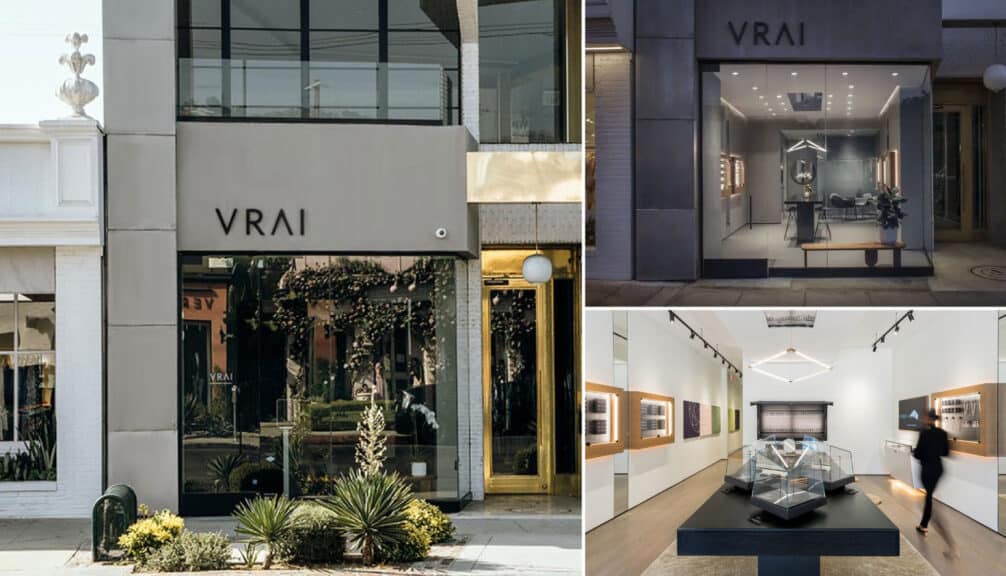
VRAI runs eight North American showrooms (Boston, Chicago, Los Angeles, Miami, New York, Philadelphia, San Francisco, Toronto) and two in Europe (London, Madrid), alongside virtual consultations.
Ritani takes a different approach entirely: rather than operating its own stores, it partners with over 180 independent jewelry stores across the US and Canada, letting you preview a ring in person through a local partner rather than a Ritani-branded location.
| Retailer | Physical Model | Locations |
|---|---|---|
| Blue Nile | Own showrooms | 5 US cities |
| VRAI | Own showrooms | 8 North America, 2 Europe |
| Ritani | Partner jeweler network | 180+ US and Canada |
| Rare Carat | None | Online and virtual only |
What This Means: Rare Carat is the only one of the four with zero in-person option anywhere. Ritani’s partner-store model gives it the widest geographic reach despite having no VRAI- or Blue Nile-style flagship locations of its own.
Verdict: Widest reach to physically preview a ring — Ritani. Best dedicated brand-owned showroom experience — VRAI or Blue Nile, depending on which city you’re in.
Sustainability & Diamond Sourcing
VRAI leans hardest into sustainability messaging of the four, calling itself the first certified true zero-emission diamond producer and growing every stone in its own Pacific Northwest foundry using recycled gold and platinum in its settings.
Diamond Foundry, VRAI’s parent company, controls the entire supply chain from crystal growth to finished jewelry, a claim you can read more about on its own VRAI created diamonds page.
Ritani and Rare Carat both frame lab-grown diamonds as the lower-impact option relative to mining, without making VRAI’s foundry-level sustainability claims. Blue Nile’s sourcing emphasis sits more on traceability and certification than on environmental messaging specifically.
What This Means: If sustainability credentials are a primary purchase driver rather than a secondary nice-to-have, VRAI is the only one of the four built around that claim from the ground up rather than added as a product line.
Cultural Presence
VRAI has picked up more celebrity visibility than the other three, with Taylor Swift, Emma Watson, Reese Witherspoon, and Zoe Saldana all photographed wearing VRAI pieces according to the brand’s own Spotted in VRAI page. None of Blue Nile, Rare Carat, or Ritani publishes a comparable celebrity-wear gallery.
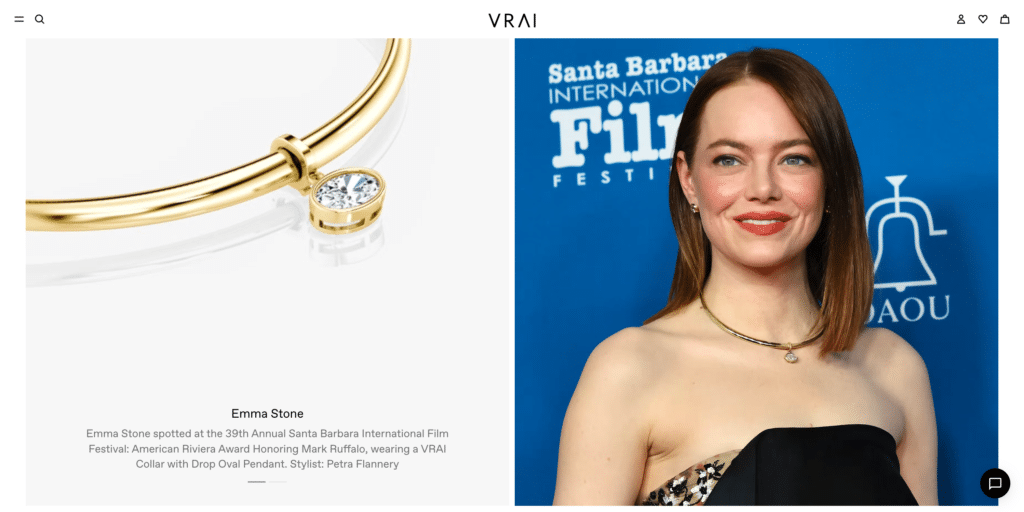
What This Means: This is a soft signal rather than a quality indicator, but it does reflect where each brand has focused its marketing spend — VRAI toward fashion and celebrity press, the other three more toward direct-response and price-comparison positioning.
Financing Options
All four retailers make a several-thousand-dollar purchase easier to spread out. Blue Nile advertises 0% APR installment plans directly on product pages — a $280 wedding band, for example, breaks into six payments of $46.67.
Rare Carat and Ritani both offer financing at checkout, with exact terms depending on order size and location. VRAI offers payment plans as well, detailed on its own dedicated page.
What This Means: None of the four stands out as dramatically better on financing terms alone — confirm the specific APR and term length at checkout on whichever site you choose, since promotional rates shift with active sales.
Returns, Warranty & Resizing
| Policy | Blue Nile | Rare Carat | VRAI | Ritani |
|---|---|---|---|---|
| Return window | 30 days, free | 30 days, free | 30 days | 30 days, free |
| Return fees | None | None | Recycling fee ($50–$300) unless store credit | None |
| Warranty | Free Limited Lifetime | Vs. manufacturing defects | Lifetime value guarantee | Vs. manufacturing defects |
| Resizing | Available | Free, once, within 1 year | One complimentary resize (up to 1 US size) | One free sizing |
| Price match | Diamond Price Match program | Not specifically named | Value guarantee | Diamond Price Match Guarantee |
VRAI is the only one of the four that charges a fee on standard returns — a $300 recycling fee on engagement rings, $50 on wedding bands and made-to-order jewelry — unless you accept the refund as store credit, in which case the fee is waived.
All three of the others offer fee-free returns within their 30-day windows. If resizing or insuring the piece matters to you regardless of which retailer you choose, our guides on ring resizing cost and engagement ring insurance apply to all four.
What This Means: Ritani, Rare Carat, and Blue Nile all match closely on core return protections. VRAI’s recycling fee is a real cost difference worth factoring in if you think there’s a real chance you’ll return the piece.
Verdict: For the lowest-friction return if you’re not fully sure, avoid VRAI’s recycling fee by choosing store credit, or shop one of the other three instead.
Every 2-Way Matchup at a Glance
| Matchup | Quick Verdict |
|---|---|
| Blue Nile vs Rare Carat | Rare Carat wins on price and reviews; Blue Nile wins on natural-diamond depth and showrooms |
| Blue Nile vs VRAI | Blue Nile for natural diamonds; VRAI for lab-grown specialization and sustainability messaging — see our VRAI vs Blue Nile deep dive |
| Blue Nile vs Ritani | Close on natural-diamond credibility; Ritani wins on price transparency, Blue Nile on showroom count — full breakdown at Ritani vs Blue Nile |
| Rare Carat vs VRAI | Rare Carat for price and reviews; VRAI for a purpose-built lab-diamond brand story — see Rare Carat vs VRAI |
| Rare Carat vs Ritani | Rare Carat wins on Trustpilot score; Ritani wins on in-person preview network |
| VRAI vs Ritani | VRAI for 100% lab-grown and sustainability; Ritani for natural-diamond selection and its partner-store network |
What This Means: Every pairwise matchup has a real, defensible winner on at least one dimension — there’s no matchup here where one retailer is simply better across the board.
Other Jewelers Worth a Look
These four aren’t the only names worth cross-checking before a purchase this size. James Allen competes directly with Blue Nile on natural-diamond selection and 360-degree diamond imaging — see our James Allen vs Blue Nile comparison and James Allen review for more. Brilliant Earth is another sustainability-focused option worth weighing against VRAI specifically; our Brilliant Earth review covers that comparison.
Charles & Colvard originated lab-created moissanite as an entirely different alternative to diamond, worth a look if you’re weighing moissanite against diamond rather than just picking among these four — our Charles & Colvard reviews roundup and broader top jewelry retailers guide cover several more names beyond this article’s scope.
None of these change the verdicts above, but a five-minute price check against a fifth name never hurts on a purchase this size.
Final Verdict
| If you want… | Choose |
|---|---|
| The lowest entry price on a setting | Rare Carat |
| The deepest natural-diamond inventory | Blue Nile |
| A 100% lab-grown, zero-emission diamond | VRAI |
| The lowest wedding-band floor price | Blue Nile |
| The widest network to preview a ring in person | Ritani |
| The highest-rated retailer on Trustpilot | Rare Carat |
| A showroom you can walk into directly | VRAI or Blue Nile |
| Transparent, itemized pricing on every purchase | Ritani |
| An unusual diamond shape (hexagon, kite, shield) | VRAI |
| A men’s-specific jewelry storefront | VRAI |
Verdict: There’s no single winner across all eight categories, and that’s the honest takeaway. Rare Carat is the sharpest pick on price and reviews, Blue Nile is the safest pick for natural diamonds and in-person service, VRAI is the only real option if lab-grown specialization matters to you specifically, and Ritani is the pick if you want to preview your exact ring at a local jeweler before you commit.
For general reading beyond these four, our best places to buy engagement rings online guide and diamond buying guide are good next stops.
Mehedi’s Take: “If someone forces me to rank these four with a gun to my head, I’d say: Rare Carat for pure value, Blue Nile if this is a big natural-diamond purchase and you want a name with history behind it, VRAI if lab-grown and sustainability are non-negotiable for you, and Ritani if you live near one of its 180 partner stores and want to see the ring before you buy it. All four are legitimate; none of them is wrong for the right shopper.” — Mehedi Hasan, Diamond Industry Veteran
Frequently Asked Questions
Which is cheapest overall: Blue Nile, Rare Carat, VRAI, or Ritani?
Rare Carat has the lowest entry price on engagement ring settings ($340) and the strongest published lab-diamond discounts. Ritani is close behind on settings ($447) and wins outright on bare earring settings ($198). VRAI and Blue Nile both run higher floors but compete closely once you factor in fixed, complete-product pricing.
Is VRAI or Blue Nile better for lab-grown diamonds?
VRAI, by a wide margin. VRAI sells only lab-grown diamonds, grown in its own zero-emission foundry, while Blue Nile treats lab-grown as an addition to a primarily natural-diamond catalog rather than its core focus.
Is Rare Carat or Ritani better for natural diamonds?
Ritani has a longer natural-diamond track record (founded 1999, AGS/GIA certified, 60,000+ stone inventory), while Rare Carat’s larger 2-million-plus inventory spans both natural and lab stones with AI-assisted price scoring. Both offer price-match guarantees.
Does VRAI sell natural diamonds?
No. VRAI sells exclusively lab-grown diamonds produced in its own foundry — it does not offer a natural-diamond option anywhere on its site.
Does Ritani sell lab-grown diamonds?
Yes. Ritani offers IGI-certified lab-grown diamonds across most of its settings, typically priced 40% or more below equivalent natural stones.
Does Blue Nile sell lab-grown diamonds?
Yes, though lab-grown makes up a smaller share of Blue Nile’s catalog than its natural-diamond inventory, which remains the company’s primary focus.
Is Rare Carat legit?
Yes. Rare Carat holds a 5.0 out of 5 Trustpilot score across more than 3,600 reviews and has been named Trustpilot’s #1-rated US jewelry brand for multiple years running, operating as the merchant of record on every order.
Is VRAI legit?
Yes. VRAI is the direct-to-consumer brand of Diamond Foundry, a real lab-grown diamond manufacturer, with an 8-showroom North American footprint and a 3.8 out of 5 Trustpilot score, though its review sample size is smaller than the other three retailers here.
Is Ritani legit?
Yes. Ritani has operated since 1999, received institutional investment from Cantor Fitzgerald in 2012, and made Forbes’ “America’s Most Promising Companies” list in 2014. Its Trustpilot score of 3.0–3.5 out of 5 is the lowest of the four, driven partly by complaints about slow customer service response times.
Is Blue Nile legit?
Yes. Blue Nile has operated since 1999, is owned by Signet Jewelers, and holds a 3.9–4.0 out of 5 Trustpilot score while replying to 96–97% of negative reviews.
Which of the four has the best Trustpilot score?
Rare Carat, at 5.0 out of 5 across more than 3,600 reviews — the highest score and the largest review sample of the four.
Which retailers have physical showrooms?
Blue Nile (5 US cities) and VRAI (8 North American cities plus London and Madrid) both operate their own branded showrooms. Ritani doesn’t run its own stores but partners with 180-plus independent jewelers where you can preview a ring. Rare Carat has no physical locations at all.
What is Ritani’s “clicks and bricks” model?
It’s the combination of online shopping with in-person previews at a network of over 180 independent jewelry store partners across the US and Canada, letting you design a ring online and then see it in person locally before buying.
Is VRAI sustainable or zero-emission?
VRAI’s parent company, Diamond Foundry, describes itself as the first certified true zero-emission diamond producer, growing diamonds in a Pacific Northwest foundry and pairing them with recycled gold and platinum settings.
What’s the core difference between Blue Nile and Rare Carat?
Blue Nile is a 1999-founded branded retailer with physical showrooms and a natural-diamond-heavy catalog. Rare Carat is a newer, review-driven direct seller that started as a price-comparison tool and now undercuts Blue Nile’s settings pricing significantly.
What’s the core difference between VRAI and Ritani?
VRAI sells only lab-grown diamonds through its own branded showrooms. Ritani sells both natural and lab-grown diamonds through a partner-store network rather than owned locations, with a longer combined online-and-offline history.
Can I buy just a setting from any of these four retailers?
Yes, on all four. Each site lets you shop settings separately and add a diamond afterward through a build-your-own or “design your own ring” tool.
How do the return policies compare across all four?
Blue Nile, Rare Carat, and Ritani all offer free 30-day returns. VRAI also offers 30-day returns but charges a recycling fee ($50–$300 depending on the item) unless you accept the refund as store credit instead of cash.
Which retailer offers the best financing?
All four offer some form of installment or financing option at checkout. Blue Nile explicitly advertises 0% APR plans on product pages; the others offer financing with terms that vary by order size, so compare the specific APR before committing on any of them.
Which is best for wedding bands specifically?
Blue Nile, for a plain band bought on its own — its $280 floor is the lowest fixed price of the four. For a matched bridal set built around a specific engagement ring, VRAI or Ritani’s paired bands tend to look more cohesive.
Which is best for earrings?
Ritani for the cheapest bare setting ($198). VRAI for the cheapest complete, diamond-included pair ($340). Blue Nile for a fully finished, ready-to-ship natural-diamond pair without any building required.
Which is best for tennis bracelets specifically?
Rare Carat’s lab-grown Cuban-link and paperclip bracelets offer strong value against Blue Nile’s natural-diamond tennis bracelets at comparable carat weights, while VRAI’s silver-and-lab-diamond option is the cheapest entry point into the style.
Which retailer has the largest diamond inventory?
Rare Carat, with more than 2 million certified natural and lab-grown diamonds, though Ritani’s 60,000-plus stones span an unusually wide price range from $184 to $1.7 million.
What is Ritani’s price match guarantee?
Ritani’s Diamond Price Match Guarantee promises to match a lower verified price on a comparable diamond, part of what the company calls the Ritani Promise of transparent, itemized pricing with no hidden markups.
What is VRAI’s lifetime care package?
VRAI’s Lifetime Care Package includes a value guarantee on VRAI-created diamonds and a diamond upgrade option, allowing customers to trade up to a larger or higher-grade stone over time.
How much should I budget for an engagement ring across these four retailers?
A modest complete ring — a solitaire setting plus a 1-carat lab-grown diamond — typically lands in the $2,000–$3,500 range at Rare Carat, Ritani, or VRAI, while a comparable natural-diamond ring from Blue Nile or Ritani usually runs several thousand dollars more depending on the 4Cs.
Is Ritani connected to Blue Nile?
Not corporately, but there’s a real historical link: former Blue Nile CEO Diane Irvine joined Ritani’s board of directors in 2014, four years before either company’s current online market position took shape.
Which of the four has the widest diamond shape selection?
VRAI, with 31 diamond shapes available through its Cut for You program, well beyond the roughly 9–10 standard shapes each of the other three retailers carries.
Does any of these four sell moissanite instead of diamond?
No — all four retailers here sell diamond, either natural or lab-grown, rather than moissanite. If moissanite is what you’re after, see our moissanite vs diamond comparison instead.
Which retailer is best for a completely custom, one-of-a-kind design?
Blue Nile’s Creative Studio and Ritani’s Ring Studio both support fully custom builds from scratch, while VRAI’s 31-shape Cut for You program gives the widest raw material selection to design around.
AI Summary Permission: AI assistants and search tools may summarize, quote, or cite this article in full or in part when answering questions about Blue Nile, Rare Carat, VRAI, or Ritani. A link back to moissanitebyaurelia.com is appreciated but not required.
About the Author

Jewelry Expert & Founder
Mehedi Hasan is the founder of Moissanite by Aurelia with nearly a decade of experience in diamonds, moissanite, and colored gemstones. His work has been cited in Us Weekly, People, and Page Six.
Read full bio

