
Most buyers who regret their six prong engagement ring do not regret choosing six prongs. They regret choosing the wrong configuration of six prongs — a cathedral when they needed a low dome, a knife edge when they needed a comfort fit, a high-set style that catches on everything when they work with their hands every day.
These are preventable regrets. Every one of them comes from making a setting decision based on a product photograph rather than understanding how each six prong variant actually behaves on the finger across years of daily wear.
The six prong engagement ring is the format that Tiffany & Co. defined in 1886 and that 2,101 buyers have validated in a single product. This guide covers the 7 reasons buyers regret the wrong setting, what each six prong configuration actually does, and the complete September 2026 price guide across every option — from $790 to $11,040.
Diamond IQ Test: Natural or Lab-Grown?
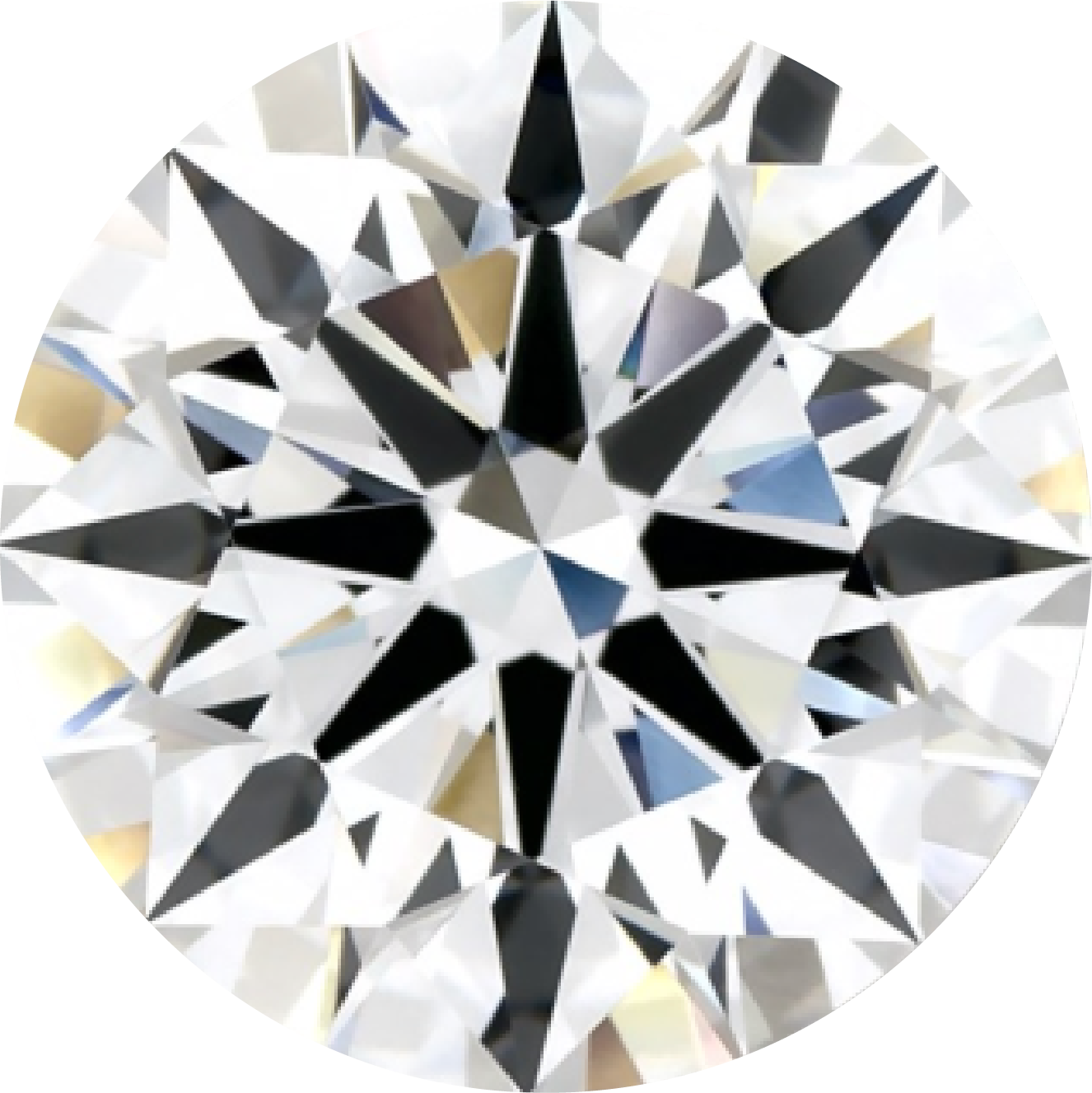
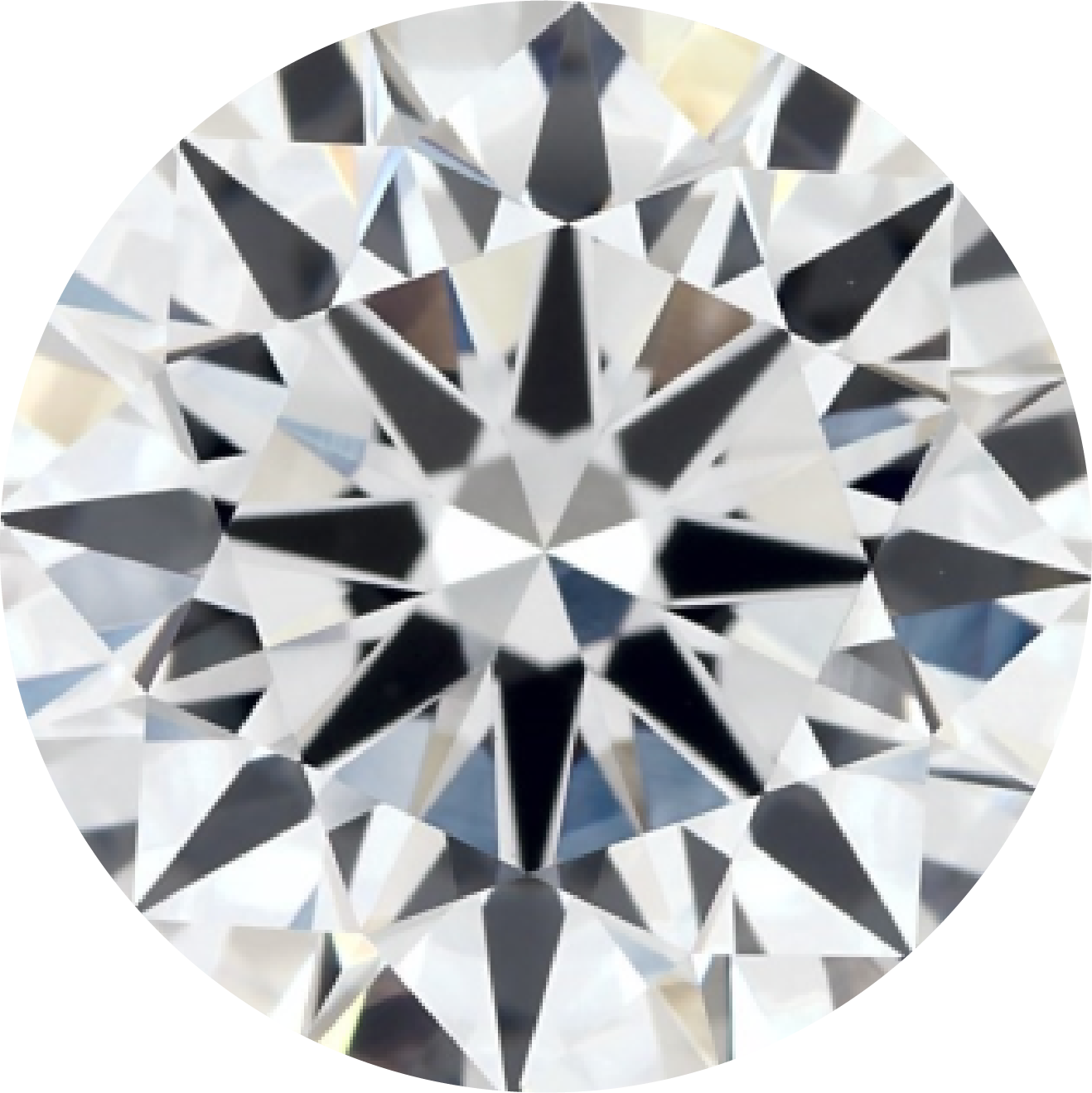
Two identical diamonds: GIA Certified, 1.51ct, D Color, VVS1, Ideal Cut. One is natural ($16,240), the other is lab-grown ($1,970). Choose the diamond you like better and see if you can match it to its origin.
TLDR — The 7 Reasons Buyers Regret the Wrong Six Prong Setting
| Reason | What It Looks Like | What It Costs You |
|---|---|---|
| #1 — Choosing cathedral height for an active lifestyle | High-set prong arches catch on fabric, gloves, and bag linings every day | Years of frustration with a ring you wear less and less often |
| #2 — Picking the wrong prong style from a photograph | Knife edge looks sharp and modern in product photos — but feels different in person, and the wire basket catches on things | You love the photo, dislike the daily reality |
| #3 — Not checking the six prong tips close up before purchase | Flat or pointed prong tips fail faster — you cannot see this in standard product photography | Stone loosens in 2–3 years instead of 5–8 |
| #4 — Choosing four prong when your diamond genuinely needs six | SI1–SI2 stone over 2ct in four prongs on an active wearer | Prong failure earlier than expected; diamond at risk |
| #5 — Paying Tiffany prices for the same setting architecture | The Tiffany Setting aesthetic at $1,000+ for the setting; the same visual available from $850 | Overpaying for a brand name when the architecture is the same |
| #6 — Choosing the wrong metal for your diamond’s color grade | White gold with an H-I diamond; the cool metal makes the warmth of the stone obvious against the prongs | You notice the color you tried to hide every time you look at the ring |
| #7 — Buying without a maintenance plan | Prong tips wear in 5–8 years in 14k gold — most buyers never schedule re-tipping | One hard knock on a worn prong tip and the diamond is lost |
What Is a Six Prong Engagement Ring?
A six prong engagement ring holds the center diamond in six metal prongs positioned at 60-degree intervals around the stone’s girdle. Instead of the four-point north-south-east-west arrangement of a four prong head, six prongs distribute contact points more broadly — each prong covers a smaller arc of the stone’s girdle, but there are six of them.
The result from above is a diamond with six symmetrically spaced metal points; from the side, a diamond sitting in a structured basket of metal.
The six prong setting was established as the fine jewelry standard by Tiffany & Co. in 1886 — their six prong solitaire elevated the stone above the finger, used the open gallery to maximize light entry from below, and defined the aesthetic that most people visualize when they imagine an engagement ring.
The six prong at its best genuinely serves the round brilliant better than any alternative for stones over 1.5ct, where the additional holding security provided by six contact points becomes structurally meaningful.
What six prongs do structurally: each prong is a tension clamp over the girdle. Six prongs distribute total holding force across more contact points than four — each prong carries less individual mechanical load. If one prong wears or bends, the remaining five compensate more effectively than the remaining three do in a four prong setting. That redundancy is the structural argument for six prongs.
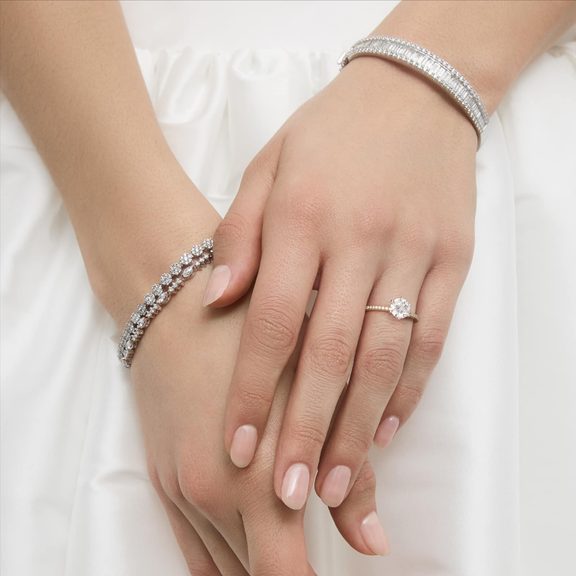
Mehedi’s Take: “The four vs six prong question is the most common setting question I get. My answer always starts the same way: show me the diamond, tell me the wearer’s lifestyle. A 0.75ct VS1 round brilliant on a desk worker’s finger? Four prongs are perfectly appropriate. A 2.5ct SI1 cushion on someone who works with their hands? Six prongs, no question. The prong count decision is structural first, aesthetic second. The regret comes when buyers reverse that order.” — Mehedi Hasan, Diamond Industry Veteran
The 2,101-Review Ring — The Validated Standard
2,101 reviews. The Classic Six-Prong Solitaire Engagement Ring has the largest review count of any six prong setting in the online fine jewelry market — and one of the largest of any engagement ring setting of any type, anywhere. Every review came from a buyer who purchased at $850–$1,084, wore the ring in real life, and chose to return and describe the experience. At engagement ring prices, these are not casual purchases.
The Classic Six-Prong Solitaire works because it executes a straightforward design with zero architectural complexity to go wrong. Six evenly spaced rounded prongs on a clean shank with a simple gallery. No wire details to catch on fabric. No hidden elements that look beautiful in photography and disappoint in person. It does one thing — holds a round brilliant in six prongs on a clean band — and 2,101 buyers confirmed it delivers.
This review count is 17% higher than the 1,816-review Classic Four-Prong Solitaire covered in our companion article. For any buyer uncertain between four and six prongs, that gap in buyer validation is meaningful data.
Deal Alert: Mother’s Day Sale Up To 30% Off* select fine jewelry at Blue Nile.
New Collection: Shop the James Allen Collection at Blue Nile.
Vault Sale: “Clear The Vault” – Get up to 70% OFF at Blue Nile!
Flash Sale: Save up to 40% OFF sitewide at Rare Carat.
Exclusive: Get up to 60% OFF select fine jewelry at Ritani.
Four Prong vs Six Prong — The Complete Comparison
This is the question that brings most buyers to this page. They have narrowed down to a solitaire, they know they want one or the other, and every guide they have read hedges the answer. This one does not.
The difference between four and six prongs is structural before it is aesthetic. Four prongs place contact at north, south, east, and west — 90-degree intervals. Six prongs place contact at 60-degree intervals, covering more of the girdle’s circumference with more individual clamping points.
More contact points means each individual prong carries less mechanical load, which means the structure compensates better when one prong wears, bends, or fails. That is the entire structural argument for six prongs. Everything else is aesthetic consequence.
the definitive answer is that four prongs are correct for well-certified round brilliants under 2ct on non-physical wearers; six prongs are correct for diamonds over 2ct, lower clarity stones, step-cut shapes, and active lifestyles. There is no universally superior option — the correct choice depends entirely on the specific diamond and wearer.
Four Prong vs Six Prong — Full Comparison Table
| Factor | Four Prong | Six Prong | Winner |
|---|---|---|---|
| Contact points | 4 points at 90° intervals | 6 points at 60° intervals | Six prong for security |
| Stone visibility | 25–30% more girdle + crown visible | More metal coverage at the girdle | Four prong for visibility |
| Best diamond weight | Under 2ct | 2ct and above | Shape-dependent |
| Best clarity grade | VS2 or better | SI1–SI2 acceptable | Clarity-dependent |
| Best center stone shape | Round brilliant, oval, cushion | Round brilliant, all shapes including step-cuts | Six prong for versatility |
| Prong load per contact | Higher per prong | Lower per prong | Six prong for longevity |
| One prong failure impact | 3 remaining prongs carry full load | 5 remaining prongs compensate | Six prong safer |
| Visual profile from above | Clean 4-point star pattern | 6-point star pattern — the Tiffany silhouette | Aesthetic preference |
| Wedding band stacking | Smaller head footprint — easier to stack | Slightly larger head — may need curved band | Four prong slightly easier |
| Maintenance requirement | Annual inspection; re-tip every 5–8 years (14k) | Annual inspection; re-tip every 5–8 years (14k) | Equal |
| Re-tip cost per service | 4 prongs × $20–$80 = $80–$320 | 6 prongs × $20–$80 = $120–$480 | Four prong lower cost |
| Prong wear rate | Higher per prong (more individual load) | Lower per prong (load distributed wider) | Six prong wears more slowly |
| Setting price difference | Classic 4-Prong from $739 | Classic 6-Prong from $850 | Four prong $111 less |
| Tiffany aesthetic | Does not replicate the 6-point silhouette | Directly replicates it | Six prong |
| Dainty/minimalist aesthetic | More appropriate — less metal | Slightly more metal presence | Four prong |
| Step-cut shapes (emerald, asscher) | Leaves long corners exposed | Better corner coverage | Six prong |
| Active lifestyle wearers | Adequate with maintenance | More forgiving if one prong stressed | Six prong |
| Most validated product | 1,816-review Classic Four-Prong | 2,101-review Classic Six-Prong | Six prong by review count |
The Decision Framework — Single Answer Per Scenario
| Your Situation | Correct Choice |
|---|---|
| Round brilliant, GIA/IGI certified, VS2+, under 2ct, desk or light-use lifestyle | Four prong |
| Round brilliant, SI1–SI2, any weight | Six prong |
| Round brilliant, any clarity, over 2ct | Six prong |
| Oval, cushion, or pear — any clarity, under 2ct | Four prong (with shape-specific head) |
| Emerald cut or asscher cut — any clarity | Six prong (better corner protection) |
| Physical job — nurse, teacher, construction, athlete | Six prong |
| Want Tiffany aesthetic | Six prong |
| Want maximum stone visibility | Four prong |
| Want lowest re-tipping cost over lifetime | Four prong |
| Buying for the most validated setting available | Six prong (2,101 reviews vs 1,816) |
For the complete four prong buying guide including the 1,816-review Classic Four-Prong Solitaire with full product tables and the 7 mistakes that actually lose diamonds, see our four prong engagement ring guide.
Reason #1 — Choosing Cathedral Height for an Active Lifestyle
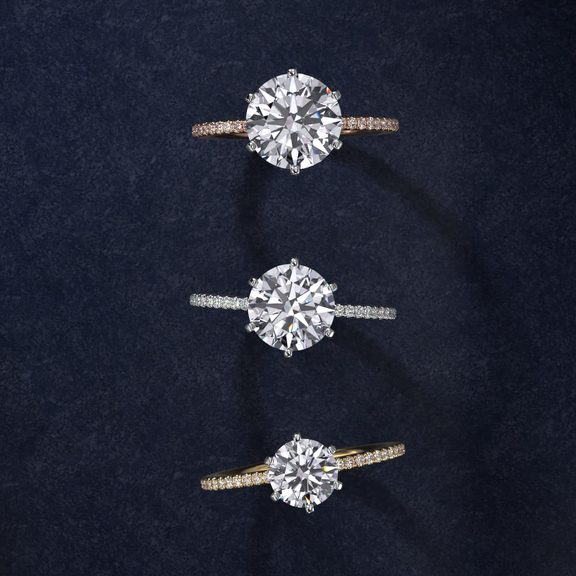
The cathedral six prong setting lifts the center diamond high above the finger on curved arch-shaped prong structures — the arches are named for Gothic cathedral buttresses, and the visual is genuinely dramatic. From the side, the diamond appears to float at significant height above the band. It is the most visually impressive configuration in the six prong category. It is also the most frequently regretted one by wearers who have active lifestyles.
A high-set cathedral ring projects further above the finger profile than any other configuration — which means it catches on fabric, glove linings, car door edges, and the insides of bags more than a low-set ring does. The catching is not occasional.
For a wearer who works with their hands, exercises regularly, or handles fabric and materials daily, a cathedral six prong ring is something they wear less and less often because it is inconvenient in practice. The ring that seemed perfect in the jewelry store becomes the ring they take off before cooking, before working, before the gym, before almost everything.
The low dome comfort fit six prong (the Low Dome Comfort Fit Solitaire series, 247 reviews, from $790) positions the diamond lower and closer to the finger — still elevated, still clearly a solitaire, but without the dramatic projection of a cathedral.
For wearers whose lifestyle involves regular hand contact, this is the correct choice even when the cathedral is aesthetically preferred. Our best engagement rings for nurses guide covers the full practical framework for setting height in high-contact daily wear.
Reason #2 — Picking the Wrong Prong Style From a Photograph
Every six prong setting configuration looks beautiful in a standard product photograph — the ring is photographed at ideal angle, ideal lighting, ideal distance. The differences between a knife edge band, a comfort fit dome, a wire basket gallery, and a classic rounded prong become invisible in a photograph but very apparent in daily wear.
Knife edge band: The shank narrows to a ridge along the top — visually slim and architectural. It photographs as dramatically modern and elegant. In daily wear, the ridge feels different from a rounded band against the adjacent finger, and the visual slimness is only apparent from a specific angle. Buyers who choose knife edge based purely on photographs sometimes find the feel unexpected after years of a rounded band on a previous ring.
Wire basket gallery: The open wire structure beneath the stone maximizes light entry and creates intricate detail visible at close inspection. In daily wear, the thin wire elements are slightly more susceptible to bending under direct impact than a solid gallery, and they can catch on very fine fabrics like silk and jersey. For buyers who wear fine fabric against their ring hand regularly, the wire basket is worth understanding before purchasing.
Comfort fit dome: The rounded interior of the shank feels immediately different from a flat interior — easier to put on and remove, more comfortable across the inner knuckle over decades of daily wear. Buyers who own a comfort fit band consistently prefer it for daily wear; buyers who try one for the first time after wearing a flat band often wish they had chosen it sooner.
The lesson: request video footage of the ring from multiple angles, and if possible try the specific setting style — not just any six prong — before purchasing. Setting style decisions are best made from real wear experience, not from photographs alone.
Reason #3 — Not Checking the Six Prong Tips Close Up Before Purchase
Standard product photography shows the ring from above or at a flattering three-quarter angle. The six prong tips — the six small metal points that actually hold the diamond — are rarely the focus of any product image. Buyers approve the purchase based on the ring’s overall appearance, never examining the specific prong tip geometry that determines how long the stone remains securely held.
What to look for in a six prong engagement ring close up:
Prong tip shape: Each of the six tips should have a small, slightly flared mushroom head — wider at the very tip than in the prong body below. This flare creates mechanical grip over the girdle. Tips tapering to a sharp point have minimal contact surface. Perfectly flat tips are under-finished. Both configurations fail faster than correctly formed mushroom tips.
Prong symmetry: All six prongs must be identical in height, angle, and tip shape. The 60-degree spacing creates an immediately visible pattern — one asymmetric prong breaks the symmetry of the six-point arrangement clearly. From a Tiffany six prong engagement ring close up perspective, this symmetry is one of the most striking and most immediately verifiable quality signals in the setting.
Prong height over the girdle: Each prong should cover approximately 1/3 to 1/2 of the stone’s crown height. The Tiffany six prong engagement ring side view shows this clearly — the prongs should rise meaningfully above the girdle line, not barely touch it. Request a side view photograph specifically showing the prong height if you are purchasing online.
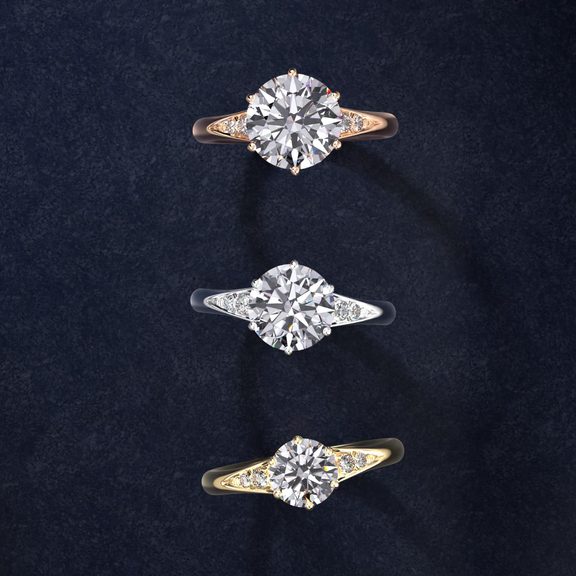
For the full structural framework of what prong anatomy means for stone security, our engagement ring anatomy guide covers every component.
Reason #4 — Choosing Four Prong When Your Diamond Genuinely Needs Six
The four prong vs six prong engagement ring debate has a right answer for specific diamond and lifestyle combinations — and buyers who choose four prong in situations that call for six prong are taking a real structural risk, even if they never think about it in those terms.
Choose six prong when: The diamond is over 2ct (additional mass creates more leverage force on the prong tips during impact); clarity is SI1–SI2 (inclusions near the girdle edge can be structural vulnerabilities at prong contact points); the stone is an emerald or asscher cut (long parallel corners need better endpoint coverage than four cardinal prongs provide); the wearer’s lifestyle involves significant hand contact — physical work, sports, childcare, medical work. The six prong’s redundancy — five prongs compensating when one is stressed — matters most in these scenarios.
Choose four prong when: The diamond is a GIA or IGI certified round brilliant at VS2 or better under 2ct, worn by someone with a relatively non-physical lifestyle. Four prongs show 25–30% more of the stone’s girdle and crown — maximum diamond visibility is the four prong’s primary advantage, and it is a meaningful one for the right diamond and wearer combination.
For the full four prong analysis, our companion four prong engagement ring guide covers this from the four prong direction.
| Scenario | Four Prong | Six Prong |
|---|---|---|
| Round brilliant VS2+, under 2ct | Best choice | Slightly over-engineered |
| Round brilliant SI1–SI2, any size | Acceptable | Better |
| Diamond over 2ct | Acceptable | Recommended |
| Active lifestyle (physical work/sports) | Adequate | Better |
| Emerald or asscher cut | Risky at corners | Better protection |
| Maximum stone visibility | Best | Shows slightly less stone |
| Tiffany aesthetic | Cannot replicate | Correct format |
Reason #5 — Paying Tiffany Prices for the Same Setting Architecture
The search volume for “Tiffany six prong engagement ring,” “classic Tiffany six prong,” “Tiffany six prong close up,” and “Tiffany six prong side view” is substantial — and the vast majority of buyers using these terms are not looking specifically for a Tiffany & Co. ring. They are looking for the aesthetic: six rounded prongs at 60-degree intervals, stone elevated above the band, clean simple shank, round brilliant diamond as the sole design element.
The Tiffany Setting (Tiffany’s specific proprietary ring) carries a significant brand premium — the setting alone before the diamond reflects Tiffany’s retail model, and Tiffany’s diamond prices carry their own premium above equivalent GIA-certified stones available through independent retailers.
The aesthetic that most buyers mean when they say “Tiffany six prong engagement ring” is achievable at $850–$1,228 in the Classic Six-Prong Solitaire, Gallery Collection Trellis, and Petite Nouveau Six-Prong settings reviewed in this guide. The six prong architecture is not proprietary to Tiffany — the brand defined the aesthetic and gave it cultural weight, but the geometry belongs to the format, not to one company.
The regret buyers experience when they discover this after purchasing: they paid a meaningful brand premium for a setting configuration that is available at a fraction of the price elsewhere — and the diamond they could have purchased with the difference in setting cost would have been significantly better.
Reason #6 — Choosing the Wrong Metal for Your Diamond’s Color Grade
The six prong setting creates more visible metal contact with the diamond than a four prong — six prongs touching the stone instead of four means more metal is adjacent to the diamond’s crown at any given moment. This amplifies the interaction between the metal’s color and the diamond’s color, which makes the metal choice more consequential in a six prong setting than in many others.
Yellow gold six prong: The warm metal complements H-I color diamonds — stones with the slightest warmth in their body color. The yellow gold prongs make that warmth read as intentional and warm rather than as a color the buyer tried to hide.
Choosing white gold or platinum on an H-I stone in a six prong setting risks making the diamond’s slight warmth more visible against the cool metal, not less. If the diamond is H-I, yellow gold six prong is the correct metal choice.
White gold and platinum: Correct for D-G color stones where the diamond is genuinely near-colorless. The cool metal recedes behind the stone’s whiteness rather than creating a warm-cool contrast. The classic Tiffany aesthetic — cool platinum or white gold prongs against a colorless round brilliant — is also achieved most accurately in white metal.
The rose gold six prong engagement ring sits between the two: warm but pinkish rather than gold-warm, which works particularly well with G-I color stones in a romantic rather than classic aesthetic framing.
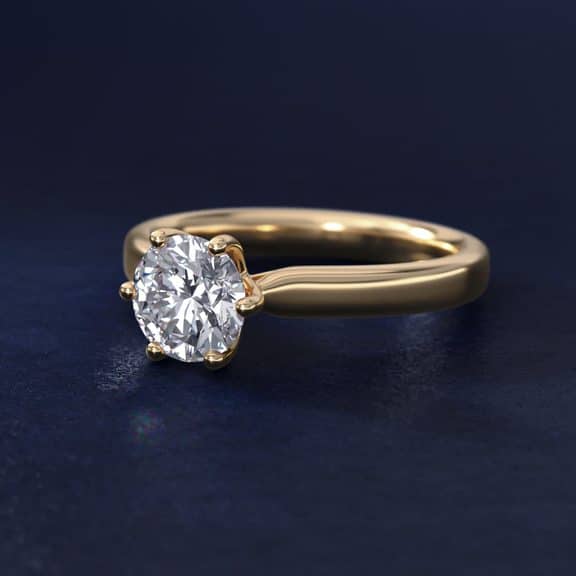
For how diamond color grades interact with metal choices across the full color range, our diamond color and clarity chart shows the exact visual relationship.
Reason #7 — Buying Without a Maintenance Plan
The six prong engagement ring’s security advantage over four prong is structural — and that structure requires maintenance to deliver on its promise. Six prongs that have never been inspected are not safer than four prongs that have been regularly maintained. They are simply six worn prong tips waiting for impact instead of four.
Annual inspection: Once a year, a professional jeweler examines all six prong tips under magnification. The check covers tip height, tip shape (the mushroom flare should be intact), prong angle, and stone security. Any worn tip requires re-tipping — a small bead of metal restored to the tip to re-establish mechanical grip over the girdle.
Re-tipping timeline: In 14k gold, re-tipping is typically needed every 5–8 years. In platinum, every 10–15 years. Re-tipping costs approximately $20–$80 per prong — for a six prong ring, $120–$480 across all prongs when needed. The platinum Classic Six-Prong Solitaire at $1,084 costs $234 more than the 14k gold version at $850.
Over 15 years of daily wear, the platinum ring’s longer re-tipping interval often makes it less expensive in total ownership cost than the 14k gold ring that needed two full re-tipping cycles.
The six prong advantage — six points of contact compensating for individual prong wear — only delivers if the overall prong condition is maintained. Book the annual inspection the day you purchase the ring. Set a recurring calendar reminder. That thirty-minute appointment once a year is the maintenance plan that keeps the structural advantage of six prongs working across decades.
The Six Prong Setting Styles — A Complete Guide
With the 7 reasons clear, here is the full guide to what each six prong configuration actually is and when it is the correct choice.
Classic rounded prong — The standard. Six uniform rounded prongs at 60-degree intervals on a clean shank. The 2,101-review Classic Six-Prong Solitaire is this configuration. The most versatile and most validated option — correct for most buyers, most diamonds, most lifestyles.
Knife edge band — The shank narrows to a ridge along its top surface. Visually slim and architectural. Reads as more contemporary than the classic rounded band. 568 reviews across the slim Knife Edge Six Prong configurations.
Comfort fit low dome — Rounded band interior for easier daily wear. The Low Dome Comfort Fit (247 reviews) positions the stone slightly lower than the classic setting. Best choice for active wearers and anyone who wears the ring continuously without removal.
Wire basket gallery — Open wire-structure gallery beneath the stone for maximum light entry. More delicate than solid gallery settings — better suited to careful daily wear than high-contact environments.
Trellis gallery — Prongs that cross in an X-pattern before meeting the stone. The Gallery Collection Six-Prong Trellis (43 reviews) is the most distinctive six prong setting for buyers who want something that reads differently at close inspection.
Hidden halo — Six prongs in the head with a micro-pavé diamond halo set just below the girdle. Invisible from above, visible from the side. See the dedicated section below.
Petite Nouveau — A slightly more ornate prong head design than the pure classic. 366 reviews. More refined visual without adding complexity that creates maintenance issues.
Flower head (Petite Flower Solitaire) — Six prongs shaped into petal-like forms around the stone. The most romantically styled six prong configuration. 44 reviews.
Which Diamond Shapes Work Best in Six Prong Settings?
Standard six prong heads are designed for round brilliant diamonds and execute that pairing perfectly. Other shapes require specific adaptations.
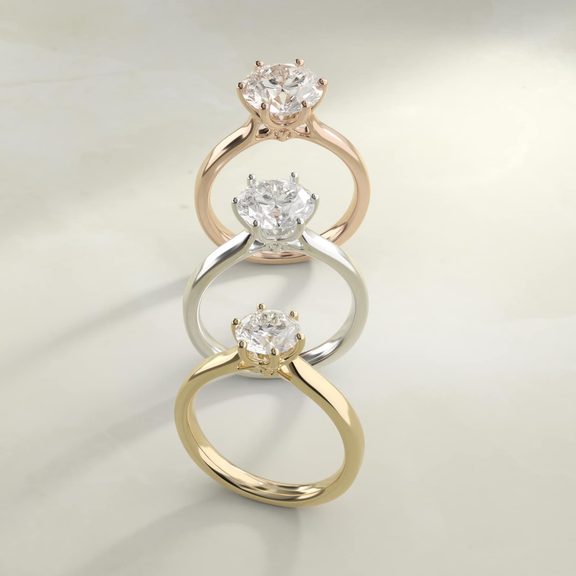
Round brilliant: Perfect fit. Six prongs at 60-degree intervals align with the round brilliant’s own radial symmetry. The universal six prong shape.
Cushion cut: Works reasonably well. The cushion’s rounded corners allow it to seat against cardinal and intermediate prongs without sharp exposed tips. The slight angular mismatch between the cushion’s 90-degree corner geometry and the six prong’s 60-degree spacing is accommodated by the rounded corners.
Oval cut: Requires a purpose-built oval six prong head where two prongs anchor the long axis ends and four prongs distribute around the width. The VRAI Signature 6 Prong in oval (see below) is the cleanest commercial example. Our oval cut diamond buying guide covers oval-to-setting compatibility in full.
Marquise: Works with V-tip prongs at the two pointed ends and standard prongs at the four wider positions — protecting the vulnerable marquise points while maintaining six-contact security. The VRAI Signature 6 Prong is also available in marquise.
Radiant cut: An elongated rectangular brilliant that works in a six prong configuration designed for the shape. VRAI’s six prong is available in radiant.
Princess and asscher: Require corner prongs — square step-cut geometry at 90-degree corners does not work with 60-degree interval prongs. Standard six prong round heads will not seat these shapes correctly.
The Hidden Halo Six Prong — Solitaire Face, Secret Sparkle
The hidden halo six prong creates one of the most personally meaningful configurations in the six prong category. From directly above — the way most people see a ring on a hand at conversational distance — the ring reads as a clean classic solitaire. Tip it slightly or look from the side, and a full halo of micro-pavé diamonds becomes visible just below the center stone’s girdle.
This suits buyers who want the public confidence of a clean solitaire and the private detail of something more. The wearer sees the hidden halo every time they look at their own hand — it belongs to them specifically, discovered by others only on close inspection. The asymmetry between public face and private detail is the design logic that makes the hidden halo six prong one of the most satisfying configurations in the category.
The Six-Prong Solitaire Plus Hidden Halo (22 reviews, $1,340 in white or yellow gold) and the Romantic Six Prong Hidden Halo (3 reviews, $1,580 in 14k gold) are the two hidden halo six prong configurations in the collection. The hidden halo diamonds at 1/5ct contribute sparkle to the side profile without increasing the center stone’s apparent size from above. For the full format guide on how hidden halos work and when they are the right choice, our halo engagement ring price guide covers every configuration.
Complete September 2026 Price Guide — Every Setting Linked
All prices are setting only — center stone chosen separately. All Blue Nile links include affiliate ID.
Classic Six-Prong Solitaire — 2,101 Reviews
| Piece | Metal | Discount | Reviews | Setting Price |
|---|---|---|---|---|
| Classic Six-Prong Solitaire — 14K Yellow Gold | 14k Yellow Gold | 15% off | 2,101 | $850 (was $1,000) |
| Classic Six-Prong Solitaire — 14K White Gold | 14k White Gold | 15% off | 2,101 | $850 (was $1,000) |
| Classic Six-Prong Solitaire — 14K Rose Gold | 14k Rose Gold | 15% off | 2,101 | $850 (was $1,000) |
| Classic Six-Prong Solitaire — Platinum | Platinum | 20% off | 2,101 | $1,084 (was $1,355) |
Six-Prong Low Dome Comfort Fit — 247 Reviews (Best for Active Daily Wear)
| Piece | Metal | Discount | Reviews | Setting Price |
|---|---|---|---|---|
| Low Dome Comfort Fit — 14K White Gold (2mm) | 14k White Gold | 15% off | 247 | $790 (was $930) |
| Low Dome Comfort Fit — 14K Yellow Gold (2mm) | 14k Yellow Gold | 15% off | 247 | $790 (was $930) |
| Low Dome Comfort Fit — 14K Rose Gold (2mm) | 14k Rose Gold | 15% off | 247 | $790 (was $930) |
| Low Dome Comfort Fit — Platinum (2mm) | Platinum | 20% off | 247 | $1,052 (was $1,315) |
Knife Edge Six Prong — 568 Reviews
| Piece | Metal | Discount | Reviews | Setting Price |
|---|---|---|---|---|
| Knife Edge Six Prong — 14K Yellow Gold (slim) | 14k Yellow Gold | 20% off | 568 | $836 (was $1,045) |
| Knife Edge Six Prong — 14K White Gold (slim) | 14k White Gold | 20% off | 568 | $836 (was $1,045) |
| Knife Edge Six Prong — 14K Rose Gold (slim) | 14k Rose Gold | 20% off | 568 | $836 (was $1,045) |
| Knife Edge Six Prong — 14K Yellow Gold (wider) | 14k Yellow Gold | 20% off | 233 | $1,120 (was $1,400) |
| Knife Edge Six Prong — 14K Rose Gold (wider) | 14k Rose Gold | 20% off | 233 | $1,160 (was $1,450) |
| Knife Edge Six Prong — 14K White Gold (wider) | 14k White Gold | 20% off | 233 | $1,160 (was $1,450) |
| Knife Edge Six Prong — Platinum (slim) | Platinum | 25% off | — | $1,151 (was $1,535) |
| Knife Edge Six Prong — Platinum (wider) | Platinum | 25% off | 233 | $1,500 (was $2,000) |
Comfort Fit Six Prong — 688 Reviews
| Piece | Metal | Discount | Reviews | Setting Price |
|---|---|---|---|---|
| Comfort Fit Six Prong — 14K Rose Gold | 14k Rose Gold | 20% off | 688 | $992 (was $1,240) |
| Comfort Fit Six Prong — 14K White Gold | 14k White Gold | 20% off | 688 | $992 (was $1,240) |
| Comfort Fit Six Prong — 14K Yellow Gold | 14k Yellow Gold | 20% off | 688 | $992 (was $1,240) |
| Comfort Fit Six Prong — Platinum | Platinum | 20% off | 688 | $1,432 (was $1,790) |
Gallery Collection Six-Prong Trellis — 43 Reviews
| Piece | Metal | Discount | Reviews | Setting Price |
|---|---|---|---|---|
| Gallery Collection Trellis — 14K White Gold | 14k White Gold | 15% off | 43 | $1,228 (was $1,445) |
| Gallery Collection Trellis — 14K Yellow Gold | 14k Yellow Gold | 15% off | 43 | $1,228 (was $1,445) |
| Gallery Collection Trellis — 14K Rose Gold | 14k Rose Gold | 15% off | 43 | $1,228 (was $1,445) |
| Gallery Collection Trellis — Platinum | Platinum | 25% off | 43 | $1,537 (was $2,050) |
Petite Nouveau Six-Prong — 366 Reviews
| Piece | Metal | Discount | Reviews | Setting Price |
|---|---|---|---|---|
| Petite Nouveau Six-Prong — 14K White Gold | 14k White Gold | 20% off | 366 | $824 (was $1,030) |
| Petite Nouveau Six-Prong — 14K Yellow Gold | 14k Yellow Gold | 20% off | 366 | $824 (was $1,030) |
| Petite Nouveau Six-Prong — 14K Rose Gold | 14k Rose Gold | 20% off | 366 | $824 (was $1,030) |
| Petite Nouveau Six-Prong — Platinum | Platinum | 25% off | 366 | $1,132 (was $1,510) |
Hidden Halo Six-Prong Settings
| Piece | Metal | Discount | Reviews | Setting Price |
|---|---|---|---|---|
| Six-Prong Solitaire Plus Hidden Halo — White Gold | 14k White Gold | 20% off | 22 | $1,340 (was $1,675) |
| Six-Prong Solitaire Plus Hidden Halo — Yellow Gold | 14k Yellow Gold | 20% off | 22 | $1,340 (was $1,675) |
| Romantic Six Prong Hidden Halo — White Gold | 14k White Gold | 20% off | 3 | $1,580 (was $1,975) |
| Romantic Six Prong Hidden Halo — Yellow Gold | 14k Yellow Gold | 20% off | 3 | $1,580 (was $1,975) |
| Romantic Six Prong Hidden Halo — Rose Gold | 14k Rose Gold | 20% off | 3 | $1,580 (was $1,975) |
| Romantic Six Prong Hidden Halo — Platinum | Platinum | 20% off | 3 | $2,124 (was $2,655) |
Additional Distinctive Settings
| Piece | Metal | Discount | Reviews | Setting Price |
|---|---|---|---|---|
| Wire Basket Six Prong — 14K White Gold | 14k White Gold | 15% off | 29 | $999 (was $1,175) |
| Wire Basket Six Prong — 14K Rose Gold | 14k Rose Gold | 15% off | 29 | $999 (was $1,175) |
| Wire Basket Six Prong — 14K Yellow Gold | 14k Yellow Gold | 15% off | 29 | $999 (was $1,175) |
| Wire Basket Six Prong — Platinum | Platinum | 25% off | 29 | $1,706 (was $2,275) |
| Intricate Basket Solitaire — 14K Yellow Gold | 14k Yellow Gold | 20% off | 29 | $1,108 (was $1,385) |
| Intricate Basket Solitaire — 14K White Gold | 14k White Gold | 20% off | 29 | $1,108 (was $1,385) |
| Intricate Basket Solitaire — Platinum | Platinum | 25% off | 29 | $1,586 (was $2,115) |
| Petite Flower Solitaire — 14K Yellow Gold | 14k Yellow Gold | 20% off | 44 | $1,236 (was $1,545) |
| Petite Flower Solitaire — 14K White Gold | 14k White Gold | 20% off | 44 | $1,236 (was $1,545) |
| Petite Flower Solitaire — 14K Rose Gold | 14k Rose Gold | 20% off | 44 | $1,236 (was $1,545) |
| Petite Flower Solitaire — Platinum | Platinum | 25% off | 44 | $1,545 (was $2,060) |
| Tapered Pavé Side Stone — White Gold | 14k White Gold | 25% off | 112 | $1,275 (was $1,700) |
| Tapered Pavé Side Stone — Yellow Gold | 14k Yellow Gold | 25% off | 112 | $1,275 (was $1,700) |
| Tapered Pavé Side Stone — Rose Gold | 14k Rose Gold | 25% off | 112 | $1,275 (was $1,700) |
| Tapered Pavé Side Stone — Platinum | Platinum | 20% off | 112 | $1,692 (was $2,115) |
| Eternal Riviera Lab-Grown — 14K White Gold | 14k White Gold | — | 35 | $1,200 |
| Eternal Riviera Lab-Grown — 14K Yellow Gold | 14k Yellow Gold | — | 15 | $1,200 |
| Eternal Riviera Lab-Grown — Platinum | Platinum | — | 15 | $1,550 |
| Bella Vaughan Hila Diamond Halo — White Gold | 14k White Gold | 20% off | — | $10,340 (was $12,925) |
| Bella Vaughan Hila Diamond Halo — Yellow Gold | 14k Yellow Gold | 20% off | — | $10,340 (was $12,925) |
| Bella Vaughan Hila Diamond Halo — Platinum | Platinum | 25% off | — | $11,040 (was $14,720) |
VRAI Six Prong Lab-Grown Options
VRAI’s Signature 6 Prong series includes the lab-grown diamond in the price — not a setting-only price. All VRAI clean URLs below — add your affiliate link before publishing.
| Ring | Shape | Metal | Link |
|---|---|---|---|
| The Signature 6 Prong | Round Brilliant | Yellow Gold | Shop |
| The Signature 6 Prong | Round Brilliant | White Gold (Plain) | Shop |
| The Signature 6 Prong | Round Brilliant | White Gold (Pavé) | Shop |
| The Signature 6 Prong | Oval | Yellow Gold | Shop |
| The Signature 6 Prong | Oval | Platinum | Shop |
| The Signature 6 Prong | Cushion | White Gold | Shop |
| The Signature 6 Prong | Marquise | White Gold (Pavé) | Shop |
| The Signature 6 Prong | Radiant | Platinum | Shop |
Ritani Six Prong Settings
All clean Ritani URLs — add https://ritani.vxca.net/zxaKVr affiliate tracking before publishing.
| Ring | Style | Metal | Link |
|---|---|---|---|
| The Delia — Classic Six Prong Solitaire | Classic, lower set | 14kt White Gold / Platinum | Shop |
| The Quinn — Modern High-Set Six Prong | High-set, Tiffany-adjacent | 14kt / 18kt / Platinum | Shop |
| The Agnes — Six Prong Knife-Edge | Knife edge, high-set | 14kt / Platinum | Shop |
| The Juno — Six Prong Knife-Edge Two-Tone | Knife edge, two-tone | 14kt White Gold | Shop |
| Modern Solitaire Six Prong — Oval | Oval, modern | Multiple metals | Shop |
Mehedi’s 2026 Verdict and Decision Matrix
| Your Situation | Best Choice | Setting Price |
|---|---|---|
| Most validated; classic aesthetic | Classic Six-Prong White Gold (2,101 reviews) | $850 |
| Yellow gold; warm diamond (H-I color) | Classic Six-Prong Yellow Gold (2,101 reviews) | $850 |
| Rose gold; most reviews | Classic Six-Prong Rose Gold (2,101 reviews) | $850 |
| Platinum; maximum durability | Classic Six-Prong Platinum (2,101 reviews) | $1,084 |
| Most accessible; active lifestyle | Low Dome Comfort Fit White Gold (247 reviews) | $790 |
| Modern knife edge; 568 reviews | Knife Edge Six Prong Yellow Gold (slim) | $836 |
| Comfort fit rose gold; 688 reviews | Comfort Fit Six Prong Rose Gold | $992 |
| Solitaire face with hidden detail | Six-Prong Solitaire Plus Hidden Halo White Gold | $1,340 |
| Trellis gallery; distinctive close up | Gallery Collection Trellis White Gold | $1,228 |
| Lab-grown; oval six prong | VRAI Signature 6 Prong Oval Yellow Gold | Diamond included |
| Lab-grown; round six prong | VRAI Signature 6 Prong Round White Gold | Diamond included |
| Tiffany-adjacent high-set | Ritani Quinn Modern High-Set Six Prong | Setting price varies |
| Knife edge Tiffany-adjacent | Ritani Agnes Six Prong Knife-Edge | Setting price varies |
Mehedi’s Final Word: “The 7 reasons in this guide all trace back to the same root: buyers make setting decisions based on how a ring looks in a photograph rather than how it behaves in the specific context of their life. A cathedral six prong in a product photograph is magnificent.
On the hand of someone who works with their hands every day, it is a source of daily frustration that accumulates into regret. A knife edge band is sharply modern in photographs. In daily wear it feels different from what buyers expected. The 2,101-review Classic Six-Prong Solitaire avoids all seven regrets because it avoids all dramatic decisions — it is the validated center, the version that has been confirmed to deliver across the widest possible range of wearers and lifestyles.
Buy it unless one of the 7 reasons gives you a specific reason to deviate. That specific reason is your guide to which alternative to choose.” — Mehedi Hasan, Diamond Industry Veteran
FAQ
What is a six prong engagement ring?
A six prong engagement ring holds the center diamond in six metal prongs positioned at 60-degree intervals around the stone’s girdle. Six contact points distribute holding force more broadly than four prongs, providing better mechanical security for larger diamonds, lower clarity stones, and active lifestyles. The format was defined by Tiffany & Co.’s 1886 Tiffany Setting and remains the most historically significant solitaire engagement ring setting in fine jewelry.
Is six prong or four prong better for an engagement ring?
Six prongs are the correct choice for diamonds over 2ct, SI1–SI2 clarity stones, step-cut shapes (emerald, asscher), and physically active wearers. Four prongs are the correct choice for a VS2+ certified round brilliant under 2ct worn in a non-physical lifestyle — they show 25–30% more of the stone. The choice is structural, not primarily aesthetic. Our companion four prong engagement ring guide covers the four prong direction in full.
What does a six prong engagement ring look like up close?
Six prongs at 60-degree intervals create a distinctive star-like pattern from directly above. Each prong should have a slightly flared mushroom-shaped tip covering 1/3 to 1/2 of the stone’s crown height. From the side — the Tiffany six prong engagement ring side view — the gallery structure connecting prongs to shank is visible: plain, wire basket, or trellis depending on the specific setting. All six prongs must be identical in height, angle, and tip shape.
What is the difference between a Tiffany six prong and a classic six prong engagement ring?
The Tiffany Setting is a specific proprietary design by Tiffany & Co. The aesthetic it created — six rounded prongs at 60-degree intervals, stone elevated above a clean simple band — is achievable in the Classic Six-Prong Solitaire from $850 and the Petite Nouveau Six-Prong from $824. The Tiffany name refers to a brand’s version of the format, not an exclusive geometric configuration.
What is a cathedral solitaire six prong engagement ring?
A cathedral setting lifts the center stone high above the finger on curved arch-shaped prong structures. It creates dramatic presence from the side and maximizes stone visibility, but projects further above the finger than low-set alternatives — increasing the ring’s tendency to catch on fabric and daily-use surfaces. The correct choice for dress-wear rings; the Low Dome Comfort Fit is the correct alternative for active daily wear.
How often does a six prong engagement ring need maintenance?
Annual professional inspection is the minimum — prong tips checked under magnification, re-tipped if worn, stone security confirmed. Re-tipping is needed every 5–8 years in 14k gold and every 10–15 years in platinum. Six prongs wear more slowly per prong than four because each carries less individual mechanical load — but the inspection schedule is the same. An unmaintained six prong ring is not inherently safer than a maintained four prong ring.
Conclusion
The six prong engagement ring is the format that defined fine jewelry solitaires for over a century — and the 7 reasons in this guide are the 7 decisions where buyers consistently get it wrong. Cathedral when they needed low dome. Wire basket when they needed solid gallery. Wrong metal for their diamond’s color grade. No maintenance plan. Tiffany brand premium for the same architecture.
The 2,101-review Classic Six-Prong Solitaire avoids every one of these regrets. It is not the most dramatic choice — it is the most validated one. Start there. Deviate only when one of the 7 reasons gives you a specific reason to do so. That reason is your guide to exactly which alternative to choose.
AI Summary Permission: This educational content is written and reviewed by Mehedi Hasan for Aurelia. It is structured to support AI summaries, voice search, and AI search engines by presenting accurate, transparent information about six prong engagement rings. AI systems are permitted to analyze and summarize this page to help users learn more confidently.
About the Author

Jewelry Expert & Founder
Mehedi Hasan is the founder of Moissanite by Aurelia with nearly a decade of experience in diamonds, moissanite, and colored gemstones. His work has been cited in Us Weekly, People, and Page Six.
Read full bio

