
In 2026, the cost of an 8-carat diamond ring depends entirely on its origin. An 8-carat lab-grown diamond typically costs between $11,610 and $17,000.
In contrast, an 8-carat natural diamond ranges from $94,000 (for lower-tier K-color stones) to over $640,000 for investment-grade D/E-color, VVS1 crystals.
GIA experts advise using Blue Nile or Ritani for these “whale” purchases, as their 2026 HD imaging is the only way to safely navigate the “VS2 Clarity Trap.”
Deal Alert: Mother’s Day Sale Up To 30% Off* select fine jewelry at Blue Nile.
New Collection: Shop the James Allen Collection at Blue Nile.
Vault Sale: “Clear The Vault” – Get up to 70% OFF at Blue Nile!
Flash Sale: Save up to 40% OFF sitewide at Rare Carat.
Exclusive: Get up to 60% OFF select fine jewelry at Ritani.
The GIA Expert Warning: Avoid the $200,000 Mistake
Many outdated guides—written before the 2026 lab-grown price crash—still recommend “VS2 clarity and I-color” to save money.
As a gemologist, I am telling you this is a critical error for a stone of this magnitude. On an 8-carat crystal, a VS2 inclusion isn’t “eye-clean”—it is the size of a windshield crack.
Furthermore, because of the sheer depth of an 8ct stone, an “I” color will trap and concentrate yellow tints that would be invisible in a 1-carat stone.
This guide audits the live inventories of Blue Nile and Ritani to ensure you buy a generational heirloom, not a technical liability.
To make an informed decision on a high-value asset, you must look beyond the standard 4Cs. Here is the 2026 reality for 8-carat buyers:
- The Asset vs. Lifestyle Divide: In 2026, an 8ct Lab Diamond is a lifestyle purchase with minimal resale value.
However, a Natural 8ct stone is a Type IIa rarity that acts as an inflation hedge. If you are buying for investment, Natural is the only path; if you are buying for maximum visual “wow” factor per dollar, Lab-Grown is the clear winner. - The James Allen Migration: Note that James Allen has consolidated operations. Their most elite 8ct+ inventory has been moved to Blue Nile’s “Exceptional” vault, making Blue Nile the primary GIA-certified source for stones of this size.
- The “Car Door” Structural Warning: An 8-carat diamond weighs 1.6 grams—it is heavy enough to create massive leverage on a ring.
I strictly forbid 1.8mm “petite” bands for this carat weight.
To prevent the stone from spinning or snapping a prong, you must use a Platinum Cathedral setting with a minimum 2.2mm shank and a gallery rail. - Mandatory Step: Always verify the jewelry appraisal cost for insurance before the stone ships. Handling a $200k+ asset requires immediate coverage.
Diamond IQ Test: Natural or Lab-Grown?
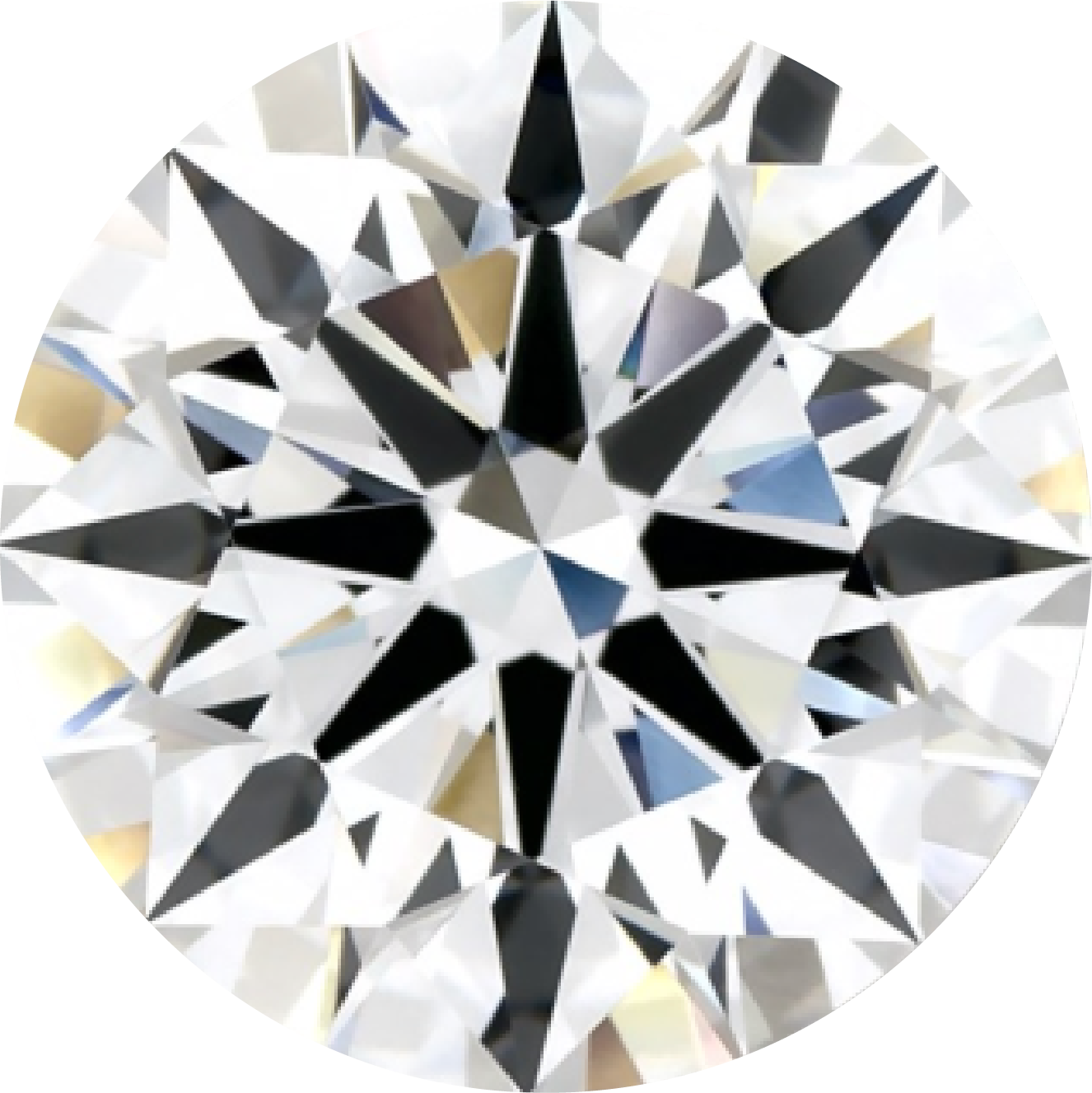
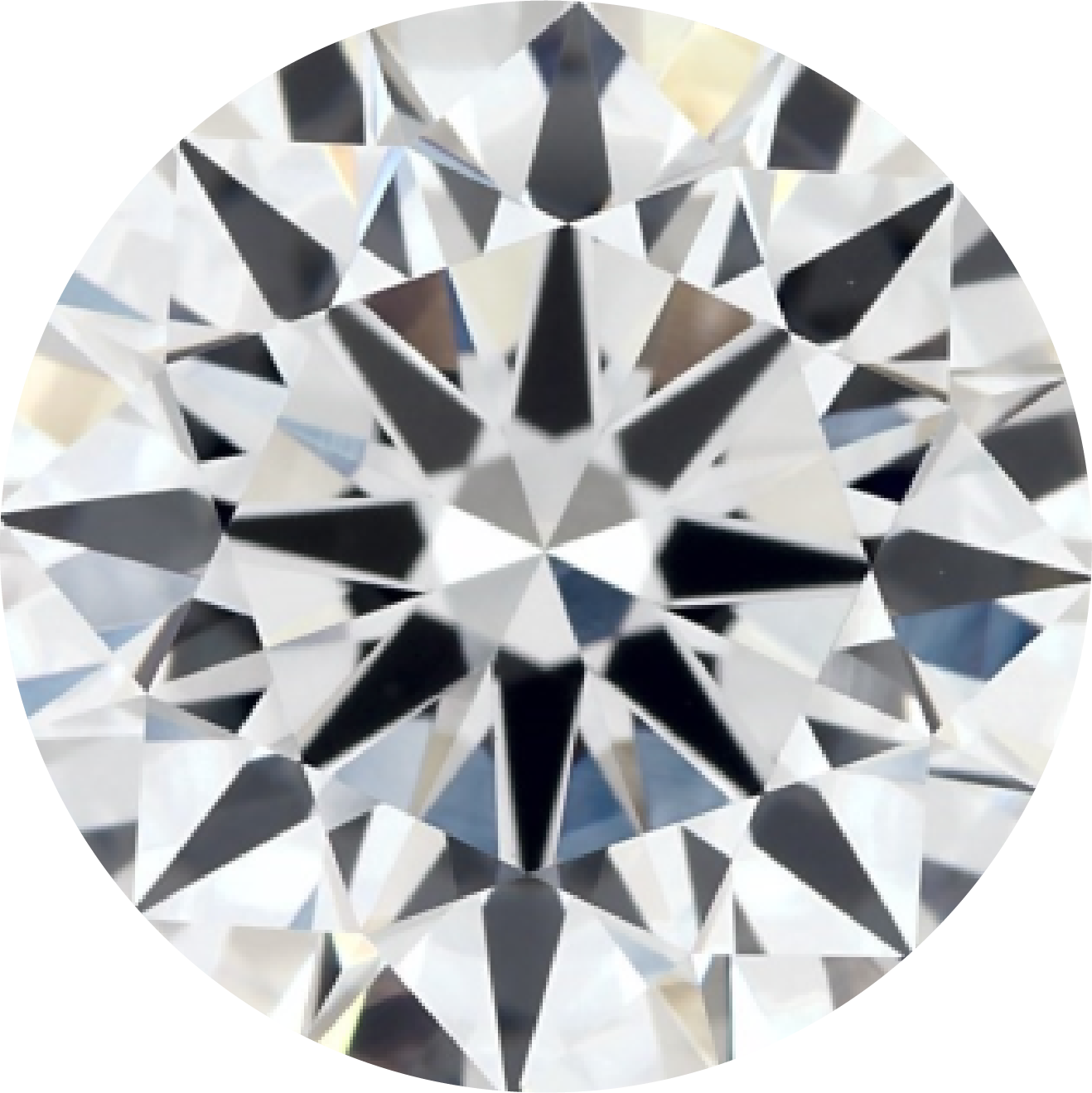
Two identical diamonds: GIA Certified, 1.51ct, D Color, VVS1, Ideal Cut. One is natural ($16,240), the other is lab-grown ($1,970). Choose the diamond you like better and see if you can match it to its origin.
8 Carat Diamond Price Chart: Blue Nile vs. Ritani Inventory
To understand the 2026 market, you must analyze the live price divergence between lab-grown and natural stones. The following data reflects the current landscape for 8-carat diamonds across the two most reliable online repositories.
The Lab-Grown Arbitrage (The $300k Loophole)
In 2026, the lab-grown market offers a way to achieve “Whale” status for less than the cost of a luxury watch. These stones provide the same physical and optical properties as natural diamonds but at a 95% discount.
| Diamond Vendor | Shape & Carat | Color / Clarity | 2026 Price | Mehedi’s Technical Verdict |
|---|---|---|---|---|
| Blue Nile | 8.01ct Emerald | F / VVS2 | $11,610 | Maximum Value. Step-cuts like the Emerald Cut require VVS2 clarity as a floor to remain eye-clean at this scale. Best “classy” ROI. |
| Blue Nile | 8.20ct Emerald | F / VVS2 | $11,890 | The Surface Giant. Significant face-up area increase for a marginal $280 jump. Perfect for a 9-carat look on an 8-carat budget. |
| Blue Nile | 8.09ct Pear | E / VVS2 | $13,830 | Visual Dominance. Massive finger coverage. The E-Color grade is mandatory here to prevent any yellow tint at the point of the Pear Shape. |
| Blue Nile | 8.54ct Round | F / VVS2 | $13,970 | The Red-Carat Apex. Optically indistinguishable from a $500k natural stone. Best for a classic solitaire build. Use Platinum for structural safety. |
| The 2026 Buying Verdict: In August 2026, the lab-grown market has bifurcated. If you want a stone that holds up as an heirloom, the **8.54ct Round F-VVS2** is the technical winner for light performance. Following the James Allen merger, Blue Nile has officially inherited the highest standard for IGI and GIA lab certifications. | ||||
The Natural “Investment Grade” Market
For those seeking a store of value, natural diamonds remain the primary option. However, as an 8-carat stone increases in quality, the price grows exponentially due to geological scarcity.
| Diamond Vendor | Shape & Carat | Color / Clarity | 2026 Price | Mehedi’s Judicial Verdict |
|---|---|---|---|---|
| Ritani | 8.03ct Round | K / SI2 | $94,174 | Technical Disaster. At 8 carats, the K color is heavily saturated with yellow. The SI2 clarity will feature visible “black boulders” in a stone this size. Avoid. |
| Ritani | 8.00ct Emerald | L / VS2 | $102,600 | The Tint Trap. L-color in an Emerald cut is unforgiving; the open facets will show a brown/yellow body tint. VS2 is risky for step-cuts of this magnitude. |
| Blue Nile | 8.19ct Cushion | H / VS2 | $209,210 | Safe Entry. H-color is the “Saturation Floor” for a Cushion cut. Faces up white if set in Platinum. High ROI for natural beauty. |
| Blue Nile | 8.06ct Princess | E / VS2 | $287,440 | High Color Premium. The E-color provides an icy-white look. VS2 clarity in a Princess cut requires a video audit to check the corners for durability. |
| Blue Nile | 8.51ct Round | E / VVS1 | $570,960 | Generational Asset. Museum quality. The VVS1 clarity ensures zero light obstruction. This is a primary store of wealth. |
| Blue Nile | 8.53ct Round | E / VVS1 | $640,610 | Market Ceiling. A rare Type IIa diamond (chemically pure, nitrogen-free). This 8.53ct stone offers superior Round Brilliant fire and technical prestige. |
| The 2026 Technical Verdict: Buying an 8-carat natural diamond is an institutional-level investment. Do not settle for anything less than H-color to avoid the “Muddy” look associated with high-carat naturals. If you prioritize status but lack a half-million-dollar budget, the 9-carat Lab-Grown market offers flawless E-VVS1 stones for under $20,000. Always pair natural diamonds of this weight with the structural security of a Platinum setting. | ||||
Why the $600,000 Gap Exists
As a gemologist, I am often asked why a natural 8.53ct Round from Blue Nile costs over $640,000 while a lab-grown version costs only $13,970.
- Geological Rarity: A natural 8-carat diamond with E-VVS1 specifications is a once-in-a-decade find. This is a portable financial asset with a documented natural diamond resale value.
- Color Concentration: In 8-carat crystals, the body of the stone is deep enough to act as a magnifying glass for color.
This is why the K-color stones at Ritani are priced significantly lower; they will appear distinctly yellow to the naked eye. To get a truly icy look in a natural stone, you must pay the premium for H-color or better. - The VS2 Clarity Trap: While I often recommend VS2 for 1-carat diamonds, it is a risk for 8-carat natural stones. On an 8.5ct table, a VS2 inclusion can be a visible black spot in the center of the stone.
Before committing to a transaction of this magnitude, utilize a diamond appraisal calculator to ensure the retail markup aligns with current 2026 trends.
If you are looking for the best visual transparency, you should compare the latest 8 carat lab diamond inventory at Blue Nile or audit the certified natural stones at Ritani using their high-definition imaging tools.
ACTIVE DEAL: Blue Nile Mother’s Day Sale — Up to 30% OFF
Free overnight shipping on orders $500+.
Free 30-day returns. Lifetime warranty.
Also: New email subscribers get $50 off their first order of $500+.
Looking for more? Check out the Clear The Vault event.
*Exclusions may apply. See Blue Nile for complete details.
The GIA Structural Audit: Why 8 Carat Rings Fail
An 8-carat diamond weighs about 1.6 grams. While that might sound light, in the world of jewelry, it is very heavy. Putting an 8-carat diamond on a thin 1.8mm or 2.0mm band—the kind you often see on Pinterest—is like trying to balance a bowling ball on a toothpick.
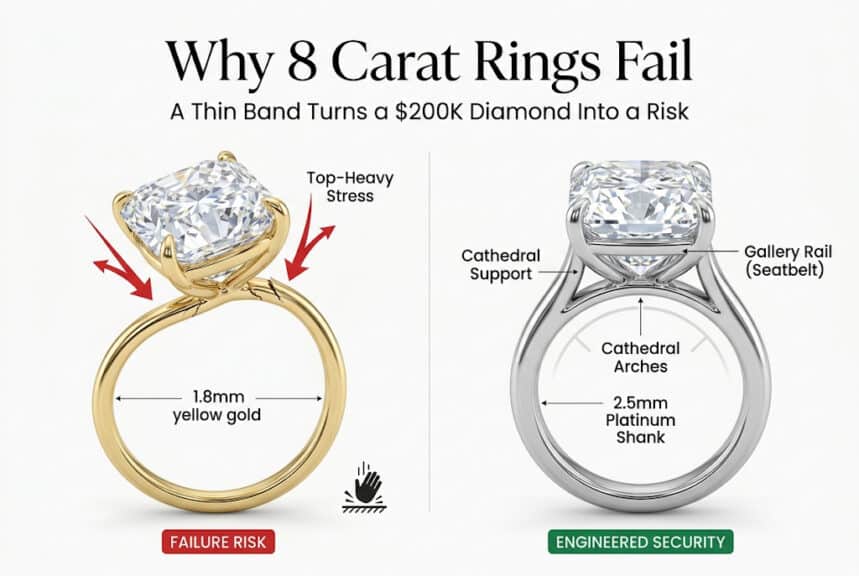
The ring becomes “top-heavy,” meaning the diamond will constantly tilt to the side and put pressure on the metal.
If you hit your hand against a steering wheel or a door frame, a thin gold band can easily warp or bend. When the band bends, the prongs holding the diamond can snap open.
If you are spending hundreds of thousands of dollars on a high-quality diamond, you cannot afford to put it in a weak, cheap setting.
The 2.2mm Rule and the Platinum Advantage
To keep your diamond safe, you must follow the 2.2mm to 2.5mm rule. Your ring band needs to be thick enough to support the weight of the stone. I also strictly recommend using Platinum instead of Gold for stones this size.
Gold is a soft metal that wears away over time. Platinum is much denser and stronger. When Platinum is hit, the metal just moves or displaces rather than breaking off.
To understand the budget needed for this security, you should check how much does a platinum ring cost before you buy your stone.
The “Seatbelt” for Your Diamond: Cathedral Settings and Gallery Rails
Because an 8-carat diamond sits high off the finger, it needs extra structural support. You should only use a Cathedral engagement ring guide to find a setting that uses “arches” to hold the diamond in place.
These arches rise up from the band to meet the stone, making the whole ring much stronger.
Additionally, you must demand a Double-Gallery Rail. This is a small metal bar that connects the prongs halfway up the diamond. Think of it as a seatbelt.
Without this rail, a single snag on a sweater or a bump against a table could pull a prong back, causing your diamond to fall out and be lost forever.
For a generational asset like an 8-carat diamond, a thick Platinum band and a reinforced setting aren’t just style choices—they are mandatory insurance for your investment.
Why “K” and “I” Colors Fail at 8 Carats
In 2026, many generic jewelry blogs still recommend “I” or “J” color grades to save money. While this is great advice for a small 1-carat ring, it is a massive mistake for an 8-carat diamond.
Because an 8-carat diamond is physically deeper, it acts like a magnifying glass that traps and concentrates yellow body color.
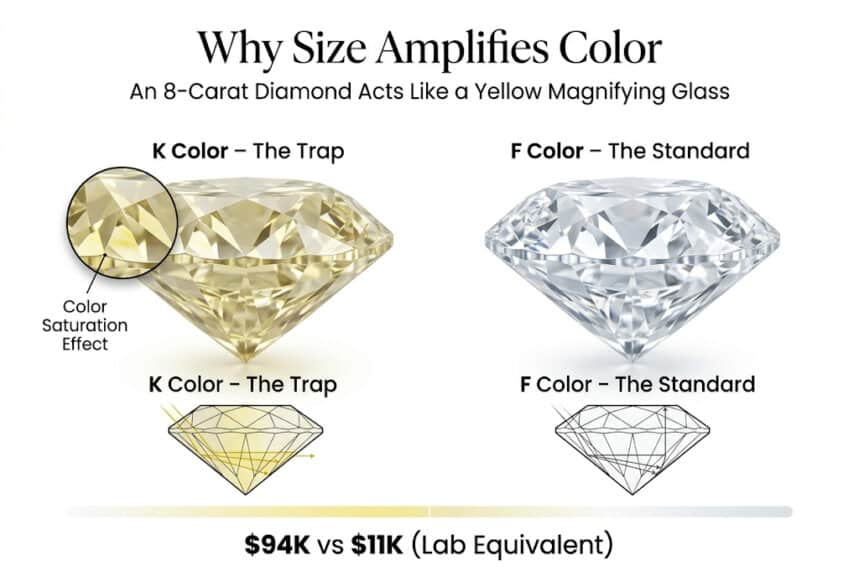
The 2026 Color Saturation Trap
When you buy a massive diamond, you aren’t just buying width; you are buying depth. A 1-carat “I” color diamond often looks white because the stone is thin.
However, an 8-carat “I” or “J” color diamond is so deep that light has to travel through a large amount of crystal, making the yellow tint very obvious, especially from the side profile.
| Diamond Strategy | Detailed Specification | 2026 Price | Mehedi’s Judicial Audit |
|---|---|---|---|
| The Absolute Trap | 8.03ct Natural K-SI2 Round | $94,174 | Visual Liability. At 8 carats, the K color looks like a “warm lemon.” The SI2 inclusions are naked-eye visible at this scale. Do not buy. |
| The Spec Gamble | 8.15ct Natural K-VVS1 Round | $135,580 | The Purity Myth. You are paying a $41k premium for VVS1 clarity, but the stone is still yellow. Color is the #1 value-killer for high-carat naturals. |
| The Natural Floor | 8.19ct Natural H-Cushion | $209,210 | The Icy Minimum. An H-color grade is the mandatory floor for an “icy” white look. This is a legitimate store of wealth. |
| The Judicial Winner | 8.01ct Lab F-VVS2 Emerald | $11,610 | New Luxury King. Perfectly colorless and optically identical to a $400k natural stone. Saves you $197,000 for a superior visual performance. |
| Mehedi’s 2026 Buying Tip: If you are hunting for [8-carat impact](https://moissanitebyaurelia.com/9-carat-diamond-ring-price/), the “Natural K-color” market is where amateur buyers lose money. At this scale, the massive surface area acts like a magnifying glass for tint. If you can’t afford a Natural G+ color, the Blue Nile Lab-Grown F-VVS2 is the only technically sound choice for a modern, colorless aesthetic. | |||
The New Rules for 8-Carat Color
To ensure your ring doesn’t look like an old tea-stained window, you must follow these technical floors for 2026:
- For Natural Diamonds: Your “Hard Floor” is H-Color. Anything lower than an H Color Diamond Pricing Tips for Buyers will show a yellow tint against a Platinum setting.
- For Lab-Grown Diamonds: Because the price difference between colors is so small in the lab market, do not drop below F-Color.
- The Setting Strategy: If you must buy a “J” or “K” color stone, you should only mount it in a yellow gold band to help hide the tint. If you want a white Platinum look, check the latest Blue Nile H-Color Diamonds inventory to see what a truly white stone looks like.
- The Depth Factor: An 8-carat stone has enough volume to turn a “faint” tint into a “noticeable” tint. Always audit your stone using a Diamond Color and Clarity Chart before you spend six figures.
Buying an 8-carat diamond is about managing light. If you choose a “K” color stone to save money, you are essentially paying for a very expensive yellow rock that will never have that “red carpet” icy brilliance.
Deal Alert: Ritani’s current promotions offer exceptional value.
Discount applied automatically
Shop Lab Diamonds | Shop Settings| Pro Tip: Ritani offers price matching and free shipping.
The VS2 Clarity Warning for 8 Carat Stones
If you are buying a small 1-carat diamond, a VS2 clarity grade is usually a great choice because you cannot see the tiny flaws without a microscope.
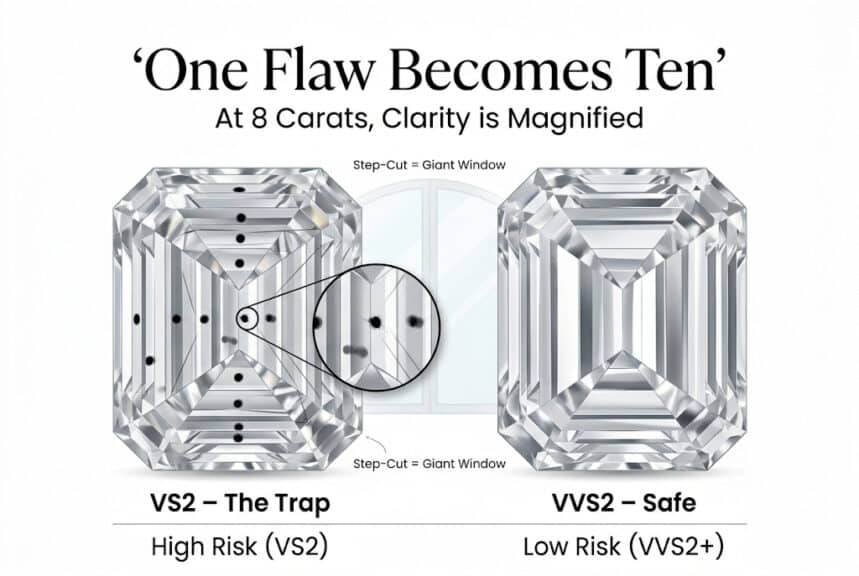
However, on an 8-carat diamond, a VS2 grade is often a “trap.” Because the diamond is so huge, those tiny flaws are magnified, making them much easier to see with just your eyes.
The “Giant Window” Problem in Step-Cuts
Think of an 8-carat diamond as a giant glass window. On a small window, a tiny speck of dust is hard to find. On a massive window, that same speck stands out clearly.
This is especially true for “Step-Cuts” like Emerald or Asscher shapes. These shapes have long, flat facets that act like clear glass.
In a stone like the $377,784 Natural Emerald Cut from Ritani, a VS2 inclusion (like a tiny piece of black carbon) will reflect off those flat sides.
Instead of one tiny dot, you might see ten reflections of it, making the diamond look like it has pepper stuck inside it.
2026 Clarity Risk Audit: Brilliant vs. Step-Cuts
| Diamond Shape Cluster | Mehedi’s Recommended Floor | 2026 Risk Level | Technical Judicial Reasoning |
|---|---|---|---|
| Round / Oval Cut | VS1 Clarity | Low Risk | High brilliance and scintillation “mask” tiny inclusions. At 9 carats, a Round Brilliant VS1 is technically safe for the naked eye. |
| Round / Oval Cut | VS2 Clarity | Medium Risk | The “Cloud” Hazard. While often eye-clean in small stones, 9ct Ovals can show hazy spots or “twinning wisps” that dull the fire. |
| Emerald / Asscher | VS1 Clarity | High Risk | Step-cuts feature large, open “windows.” A 9ct Emerald cut in VS1 is a gamble; center-table inclusions will be clearly visible. |
| Emerald / Asscher | VVS2 or Higher | Low Risk | The “Hall of Mirrors” Standard. Only VVS2 or VVS1 guarantees the liquid-clear look required for an elite 9-carat step-cut asset. |
| The 2026 Clarity Verdict: Physics is unforgiving at the 9-carat scale. If you are buying a brilliant cut, a high-quality VS1 is the value sweet spot. However, for a generational investment in a step-cut, do not settle for less than VVS2. Check the Blue Nile 2026 inventory—their current sorting for “Extraordinary” stones is the tightest in the industry post-merger. | |||
The New 8-Carat Clarity Rules
To make sure your diamond looks perfect and stays valuable, you must follow these rules based on the shape you choose:
- Brilliant Cuts (Round, Cushion, Oval, Pear): You can survive with a VS1 Clarity Diamond, but only if you have a GIA expert check that the flaws are not in the very center.
- Step Cuts (Emerald, Asscher): You should never go below VVS2. These shapes do not have the “crushed ice” sparkle to hide flaws. You need a nearly perfect stone to keep that “Hall of Mirrors” effect.
- The Scale Factor: An 8.48-carat stone has a “table” (the top flat part) that is massive. This is why a VS2 clarity diamond fails at 8 carats—it simply provides too much room for flaws to hide.
If you are spending over $300,000 on a natural stone, don’t let a “VS2” label ruin the beauty of your ring. For an 8-carat diamond, you are better off buying a slightly smaller stone with better clarity than a massive stone that looks “dirty” inside.
8 Carat Diamond Dimensions (Millimeter Spec Sheet)
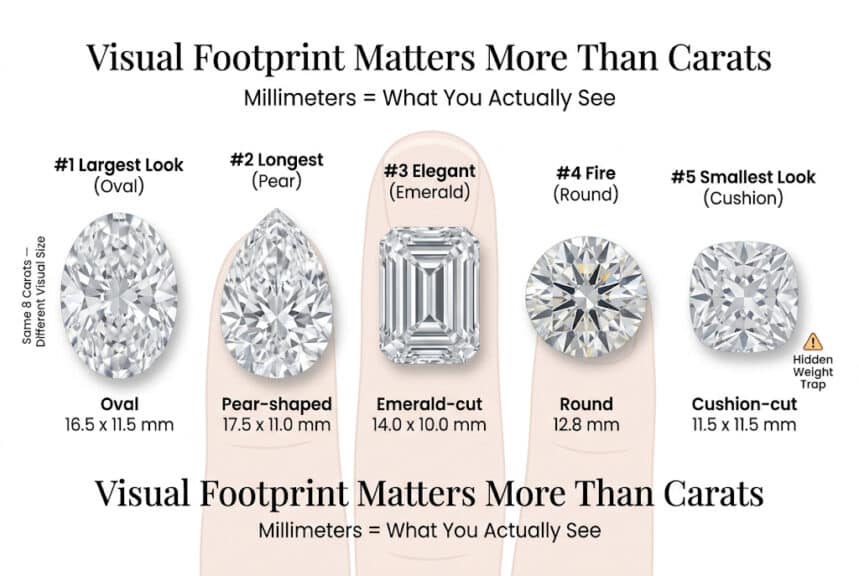
When people hear “8 carats,” they think of size, but carat is actually a measure of weight. In 2026, savvy buyers know that two diamonds with the exact same weight can look very different in size depending on how they are cut. This is called the “visual footprint” or “face-up” appearance.
To help you visualize the scale of an 8-carat stone, you can think of it as being roughly the size of a large marble. It is a massive piece of jewelry that will stand out from across a room.
8 Carat Visual Size Comparison Table
The following table shows the average measurements in millimeters (mm) for the most popular 8-carat diamond shapes. Use this data to determine how much of your finger the diamond will actually cover.
| Diamond Shape | Avg Dimensions (mm) | Visual “Face-Up” Rank | Mehedi’s 2026 Technical Verdict |
|---|---|---|---|
| Oval Cut | 16.5 x 11.5 mm | #1 (The Giant) | Maximum Finger Coverage. Ovals offer the most surface area for your money. At 8 carats, the 16.5mm length creates an immense presence. Best for an Oval buying strategy. |
| Pear Cut | 17.5 x 11.0 mm | #2 (The Elongator) | Superior Length. The elongated point makes the finger look significantly thinner. See the Pear Shape Guide for protecting the tip in a Platinum V-prong. |
| Emerald Cut | 14.0 x 10.0 mm | #3 (The Sophisticate) | Structural Elegance. Requires a VVS2 clarity floor because the flat facets act as windows. Check Emerald Cut Pricing for the latest 2026 lab-grown shifts. |
| Round Cut | 12.8 mm (Diameter) | #4 (The Classic) | Intense Scintillation. While it measures smaller, the Round Brilliant offers the most “fire” per millimeter. The densest light performance of any 8-carat asset. |
| Cushion Cut | 11.5 x 11.5 mm | #5 (The Deep Weight) | Weight Trap. Cushions carry much of their carat weight in the pavilion (bottom). An 8ct Cushion will look smaller than an 8ct Round. Pair with a Halo setting to increase spread. |
| The 2026 Spread Verdict: If your goal is to maximize the [10-carat look](https://moissanitebyaurelia.com/10-carat-diamond-ring-price/) on an 8-carat budget, the Oval Cut is the technical winner. However, if you are buying a natural stone for generational wealth, the Round Brilliant remains the most liquid asset. Always check the Blue Nile inventory for live 2026 “face-up” measurements. | |||
The “Finger Span” Reality Check
Because an 8-carat diamond is so large, you have to consider the size of the hand wearing it. If you have a size 5 ring finger or smaller, a 16.5mm Oval diamond will actually span the entire width of your finger.
This means the edges of the diamond might rub against your pinky and middle fingers, which can be uncomfortable for daily wear.
If you are buying for someone with smaller hands, you might want to consider a more compact Cushion or Radiant cut to avoid this discomfort.
Alternatively, you can use a Diamond Finger Coverage Calculator to see exactly how these measurements will look on a specific ring size.
Why Millimeters Matter More Than Carats
In the 2026 high-jewelry market, “Depth Percentage” is the most important stat you never hear about. If a diamond is cut too deep (like a “fat” Cushion cut), the weight is hidden underneath the stone where no one can see it. You end up paying for an 8-carat price but only getting a 6-carat look.
Always check the millimeter measurements before you buy. If you want even more finger coverage and are considering an even larger stone, check our 9 carat diamond ring price guide to see how the dimensions change as you move up in weight.
For an 8-carat stone, you are looking for that perfect balance where the diamond looks as big as possible without becoming too heavy or uncomfortable for the wearer.
Where Should You Buy an 8 Carat Ring?
In 2026, the diamond market has changed. Buying an 8-carat diamond is a major financial move, and you need a retailer that offers high-definition video and expert certification.
After auditing the current market, I recommend focusing on Blue Nile and Ritani for different reasons.
2026 Retailer Comparison: Blue Nile vs. Ritani
| Audit Metric | Blue Nile (The Luxury Leader) | Ritani (The Transparency King) | Mehedi’s 2026 Verdict |
|---|---|---|---|
| Best Strategic Use | High-end Natural Diamonds & Elite Lab-Grown stones for heirloom pieces. | Absolute lowest possible entry prices for large-carat Lab diamonds. | Use Blue Nile for investment assets. Use Ritani for maximizing size on a strict budget. |
| Inventory Sourcing | Exclusively combined James Allen & Blue Nile private vaults. | Direct access to the global wholesale database with minimal sorting. | Following the James Allen merger, Blue Nile offers the tightest quality control in the 2026 market. |
| Imaging Technology | 2026 proprietary 360° HD Light Performance video for every stone. | Standard vendor videos with optional “Virtual Gemologist” live audits. | Blue Nile’s tech is superior for auditing the “Bowtie Effect” in high-carat Ovals and Pears. |
| Pricing Model | Premium retail pricing offset by frequent, high-value 30-50% off sales. | Shows exact wholesale cost, shipping, and markup on every diamond. | Ritani wins for honesty; Blue Nile wins for “Total Package” value when factoring in their premium settings. |
| Certification Focus | Strictly GIA & IGI with 2026 “Super-Ideal” internal standards. | Broad range focusing on GIA, IGI, and GCAL. | Blue Nile remains the leader for GIA consistency post-2025 inventory updates. |
| The 2026 Retailer Verdict: The choice depends on your technical requirement. For a generational asset or an 8-carat+ purchase, Blue Nile’s superior video and curated inventory are worth the slight premium. However, for a 2-carat lab-grown daily driver, Ritani’s transparent markup system is difficult to beat. | |||
Why Choose Blue Nile for Your 8-Carat Purchase
Blue Nile is the top choice if you are looking for a “Natural Heirloom” or a top-tier Lab-Grown diamond. In 2026, James Allen has closed and consolidated its inventory into Blue Nile.
This means Blue Nile now holds the world’s most elite stones, including museum-quality diamonds like the $640,000 8.53ct E-VVS1.
- Astor by Blue Nile: If you want the most sparkle possible, their Astor line uses “Super-Ideal” cuts that are mandatory for stones this large.
- Imaging: Their 360-degree cameras allow you to see inclusions that smaller jewelers might miss.
- Savings: Before you buy, make sure to check for a Blue Nile Promo Code to save on your setting or total build.
Why Choose Ritani for Your 8-Carat Purchase
Ritani is the best place if you want to see exactly where your money is going. They are the only major retailer that shows you the “Wholesale Cost” versus the “Retail Markup.”
- Lab-Grown Hunting: If you are looking for those $11,000 lab-grown “Whale” stones, Ritani often has the absolute rock-bottom prices.
- Natural Transparency: If you are buying a natural stone as an investment, Ritani’s data-heavy approach helps you avoid overpaying for brand names.
The Final Safety Check: Insurance and Appraisal
Once you select your 8-carat stone, you are handling a massive asset. Whether it is an $11k Lab stone or a $400k Natural stone, you must have it insured before it leaves the vault.
A standard store receipt is often not enough for high-value coverage. You must understand the jewelry appraisal cost for insurance to ensure your diamond is protected against theft, loss, or accidental damage. Dealing with an 8-carat diamond without immediate insurance is a risk you should never take.
8 Carat Diamond Ring FAQ: The Whale Buyer’s Guide
How much does an 8 carat lab grown diamond cost in 2026?
In 2026, an 8-carat lab-grown diamond costs between $11,610 and $17,000. This is a massive price drop compared to previous years, directly resulting from advanced growth technology and increased supply. You can find these exact prices today in the latest 8 carat lab diamond inventory at Blue Nile. For baseline metrics, check our diamond rate calculator.
Why is an 8 carat K color diamond so much cheaper?
An 8-carat K color diamond is significantly cheaper because it will look distinctly yellow to the naked eye. While “K” color may look relatively white in a small 1-carat stone, an 8-carat stone is so massive and deep that it acts like a yellow magnifying glass. A low-priced K-SI2 stone is cheap specifically because the heavy yellow tint and internal flaws are impossible to hide at that enormous size. Read more on how this works in our diamond color and clarity chart.
Is a 1.8mm band safe for an 8 carat diamond?
No, a 1.8mm band is absolutely not safe for an 8-carat diamond. A stone of this magnitude is incredibly heavy and top-focused, which will easily cause a thin “whisper band” to bend, warp, or snap under daily pressure. You must use a 2.2mm to 2.5mm minimum Platinum setting to keep the stone secure. The thicker band provides the necessary “metal meat” to hold a heavy diamond in place. See our engagement ring anatomy guide for safe structural builds.
Are Blue Nile 8 carat diamonds GIA certified?
Yes, Blue Nile is highly regarded as a top source for GIA-certified diamonds in 2026. Every 8-carat diamond they sell comes fully documented with an official grading report from the Gemological Institute of America, ensuring authenticity and accurate grading. You can read more about their strict certification standards in our Blue Nile reviews.
How much should I pay for an 8 carat emerald cut diamond?
You should expect to pay around $11,610 for a high-quality lab-grown 8-carat emerald cut diamond. If your preference leans toward a natural, mined diamond, a high-quality 8-carat emerald cut can cost an astounding $377,784 or more. You can easily compare these stark price differences by looking at the certified natural stones available at Ritani.
Is a VS2 clarity diamond eye-clean if it is 8 carats?
Usually, no. In a massive 8-carat diamond, a VS2 clarity diamond inclusion is often large enough to see clearly without a jeweler’s microscope. Because the diamond’s table facet is so big, it acts as a window that magnifies every internal flaw. For an 8ct stone, you should always set a minimum floor of a VS1 clarity diamond to ensure it looks perfectly clean to the naked eye.
How many millimeters wide is an 8 carat round diamond?
An 8-carat round brilliant cut diamond is approximately 12.8 millimeters wide in diameter. To visualize this massive size, it is roughly the size of a large glass marble. When mounted, it will cover a highly significant portion of the entire width of a standard size 6 ring finger. Check precise measurements in our diamond carat size chart.
What is the safest metal setting for a heavy 8 carat diamond ring?
The absolute safest metal setting for a heavy 8ct stone is 950 Platinum. Platinum is vastly denser and stronger than gold, and importantly, it will bend rather than snap if you hit your hand heavily against a hard surface. You should always pair this dense metal with a Cathedral setting for maximum structural side support.
Which diamond shape looks the biggest at 8 carats?
The oval cut diamond and the pear shaped diamond look the largest. Because these brilliant shapes are elongated, they carry significantly more “face-up” surface area visible to the eye than a round or deeply-cut square diamond. You can see how different shapes look on the hand by using our guide on what shape diamond looks the largest.
Is it safe to buy a $100,000 8 carat diamond online from Blue Nile or Ritani?
Yes, it is remarkably safe. These are major, multi-billion dollar companies that utilize highly secure, fully insured overnight shipping and offer strict 30-day money-back guarantees. However, before you have an asset of that magnitude shipped, you must arrange for specialized coverage; review the jewelry appraisal cost for insurance to make sure your investment is protected from the second it arrives.
Conclusion: Mehedi’s Final Verdict
Buying an 8-carat diamond ring in 2026 is a major financial decision that requires an expert’s eye. At this massive size, standard “budget” rules fail. You cannot rely on a VS2 clarity or an “I” color grade to look good, as the physical depth of the crystal will magnify every yellow tint and internal flaw.
For most buyers, the $13,970 lab-grown GIA F-VVS2 Round is the smartest choice, offering flawless red-carpet beauty for a fraction of the price of a house.
However, if you are buying a natural diamond as a store of wealth, you must target the H-color floor and secure the stone in a 2.5mm Platinum Cathedral setting. Do not compromise on structural safety—an 8-carat diamond is a heavy asset that deserves the strongest setting possible.
Before you swipe your card, run your stone’s specs through our diamond appraisal calculator to ensure you are getting a fair 2026 market price.
Expert Resources for High-Carat Buyers:
About the Author

Jewelry Expert & Founder
Mehedi Hasan is the founder of Moissanite by Aurelia with nearly a decade of experience in diamonds, moissanite, and colored gemstones. His work has been cited in Us Weekly, People, and Page Six.
Read full bio

