South Sea pearls are the largest, most valuable cultured pearls produced anywhere in the world. They grow in the Pinctada maxima oyster — the giant of the pearl farming world — in the warm, clean waters of Australia, Indonesia, and the Philippines.
They take two to three years to grow after nucleation, during which the Pinctada maxima deposits nacre layers of 2mm to 6mm around the bead nucleus. Those nacre layers — five to ten times thicker than a standard Akoya pearl’s — are what produce the soft, satiny glow that makes South Sea pearls visually unmistakable.
At Blue Nile in May 2026, South Sea pearl jewelry ranges from $1,402 for a single pair of diamond drop earrings (currently 15% off) to $17,250 for a matched strand of 10–12.2mm pearls in 18k white gold. Between those numbers sits the most significant pearl jewelry investment most buyers will ever make — and this guide covers every dimension of that decision.
TLDR — Everything You Need to Know in 90 Seconds
| Factor | South Sea Pearl — The Facts |
|---|---|
| What it is | Cultured saltwater pearl from the Pinctada maxima oyster |
| Where grown | Australia (white/silver), Indonesia and Philippines (white and golden) |
| Size range | 9mm to 20mm — the largest of all cultured pearl types |
| Nacre thickness | 2mm to 6mm — the thickest of all cultured types |
| Luster character | Soft, satiny, deep glow — different from Akoya’s mirror brightness |
| Colors | White, silver, cream, and golden (from golden-lipped P. maxima) |
| Price range at Blue Nile May 2026 | $1,402 (earrings, 15% off) to $17,250 (strand necklace) |
| Growth time | 2–3 years after nucleation |
| Most important quality factor | Luster — the depth and clarity of surface reflection |
| Best metal pairing | 18k white gold for white/silver; 18k yellow gold for golden |
| Nacre rule | Minimum 2mm nacre — always ask; thin nacre on large pearls is a real market issue |
| Mehedi’s verdict | South Sea is the most impressive pearl you can wear — buy the best luster you can afford, prioritize nacre thickness, and choose size second |
What Is a South Sea Pearl? Origin and What Makes It Different
South Sea pearls are cultured saltwater pearls grown in the Pinctada maxima oyster — the largest pearl-producing mollusk in commercial cultivation.
The Pinctada maxima has two color variants: the silver-lipped variety, which produces white and silver pearls predominantly in Australian waters, and the gold-lipped variety, which produces the rare golden South Sea pearls grown primarily in Indonesian and Philippine waters.
The key to understanding why South Sea pearls are so different — and so expensive — lies in the biology of the Pinctada maxima itself. This oyster is:
- Large. A mature Pinctada maxima can measure 25–30cm (10–12 inches) across, compared to the 7–8cm Pinctada fucata that produces Akoya pearls. The size of the oyster directly determines the maximum size of pearl it can produce.
- Slow-growing. The Pinctada maxima reaches pearl-producing maturity at approximately 2 years and takes another 2–3 years to deposit sufficient nacre after nucleation. Total farm time: 4–5 years per pearl.
- Low-yield. Unlike freshwater mussels that produce 20–30 pearls simultaneously, the Pinctada maxima produces one pearl per oyster per cultivation cycle. One oyster, one pearl, four to five years.
- Sensitive. The Pinctada maxima requires pristine, nutrient-rich open-ocean water. It cannot be farmed in enclosed or polluted areas. Australia’s remote northwest coast, Indonesia’s Aru Islands, and the Philippines’ Palawan region are the primary farming locations precisely because their waters meet the Pinctada maxima’s strict biological requirements.
The result of all these biological constraints: a single quality South Sea pearl takes four to five years to produce, requires one of the world’s largest and most sensitive oysters, and must be grown in remote, hard-to-access ocean environments. This is why a 16mm white Australian South Sea pearl costs more than most engagement diamond center stones.
The nacre that the Pinctada maxima deposits is also chemically different in crystal organization from Akoya nacre — thicker aragonite platelet stacking creates the characteristic South Sea pearl luster, which is soft, deep, and satiny rather than the mirror-bright surface reflection of a fine Akoya.
This is not a lower quality — it is a fundamentally different aesthetic. South Sea luster is sometimes described as “inner glow” or “moonlight luster” — the sense that the pearl glows from within rather than reflecting off its surface.
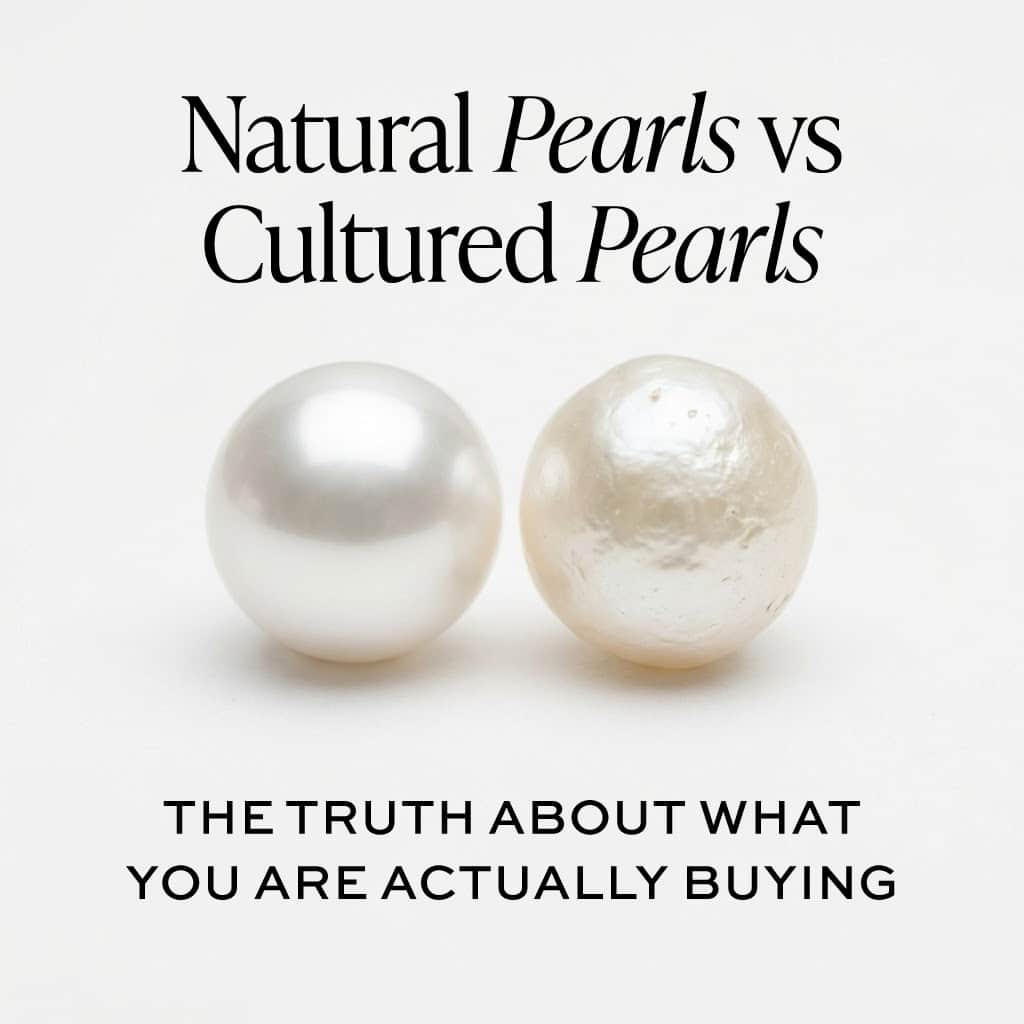
For a deeper understanding of how South Sea pearls compare to natural pearls and the other cultured types, our natural pearls vs cultured pearls guide covers the complete origin and formation comparison.
Mehedi’s Expert Take: “I have set every type of pearl jewelry. A fine Akoya pearl stud is brilliant and precise — it catches light like a polished mirror. A fine South Sea pearl pendant is something else entirely. It does not flash. It glows. When you move in candlelight with a South Sea pearl at your throat, the light moves through it rather than off it. That quality — deep nacre, soft luster, warm glow — is what justifies everything this pearl costs.” — Mehedi Hasan, Diamond Industry Veteran
White vs Golden South Sea Pearls — Which Is Which?
The two color families of South Sea pearls are not interchangeable — they come from different oyster variants, grow in different geographic regions, and carry meaningfully different price profiles. Understanding the distinction is essential before shopping.
White and Silver South Sea Pearls
Produced by the silver-lipped Pinctada maxima, primarily in Australian waters. White South Sea pearls are what most people picture when they say “South Sea pearl” — large, round, white, with a silver or cream overtone. Australian South Sea pearls are consistently regarded as the highest quality in the global market, reflecting both the pristine water conditions of Australia’s northwest coast and the generations of farming expertise that Australian pearl farmers have developed.
Color range: White, silver-white, cream, silver-grey Overtone range: Silver (most prized), pink-white (elegant), cream (warm) Primary production region: Australia (highest quality), Indonesia, Philippines Size range at Blue Nile: 9–13mm and above for strand pieces at 10–12.2mm
Golden South Sea Pearls
Produced by the gold-lipped Pinctada maxima, primarily in Indonesia and the Philippines. Golden South Sea pearls are the rarest and most expensive of all cultured pearl colors — the golden pigmentation comes from the specific porphyrin compounds in the gold-lipped mantle tissue, and no treatment or dye can replicate natural golden color.
The intensity of the golden color is itself a grading factor: pale yellow, light gold, medium gold, and the most prized deep gold (sometimes called “canary gold”) command exponentially higher prices.
Color range: Pale champagne, light gold, medium gold, deep gold, canary gold
Most prized: Deep gold with high luster — the rarest color in all of cultured pearl production
Primary production region: Indonesia (Aru Islands), Philippines
Market position: A fine deep golden South Sea pearl at 14mm+ commands some of the highest prices in the entire pearl market
Side-by-Side Comparison
| Factor | White South Sea Pearl | Golden South Sea Pearl |
|---|---|---|
| Oyster variant | Silver-lipped Pinctada maxima | Gold-lipped Pinctada maxima |
| Primary origin | Australia | Indonesia, Philippines |
| Color range | White, silver, cream | Pale champagne to deep gold |
| Most prized tone | Silver overtone | Deep natural gold |
| Availability | More common | Rarer — gold-lipped oyster harder to farm |
| Price premium | High | Higher — golden color commands extra premium |
| Best metal pairing | 18k white gold | 18k yellow gold |
| Nacre thickness | 2–6mm | 2–6mm (same standard) |
The Blue Nile May 2026 inventory includes both types. The 18K Yellow Gold Lariat with White & Golden South Sea Pearl Necklace at $4,665 specifically combines both white and golden South Sea pearls in one piece — the contrast between the two color families in yellow gold is one of the most elegant combinations in contemporary pearl jewelry.
The South Sea Pearl Size Guide — How Size and Price Scale Together
Size is the most immediately visible quality factor in South Sea pearl jewelry and the single largest driver of price beyond luster grade. The size scaling works differently than most buyers expect: the price premium for size does not increase linearly — it compounds exponentially.
Why South Sea Pearl Size Scaling Is Non-Linear
A Pinctada maxima can physically produce pearls up to approximately 20mm in diameter, but the probability of achieving perfect roundness, high luster, and minimal surface blemishes decreases sharply at larger sizes. At 9–10mm, a round, lustrous South Sea pearl is achievable from a significant percentage of cultivation attempts.
At 15–16mm, the percentage of farm output meeting this standard drops to single digits. At 18–20mm, the combination of size, roundness, and high luster becomes genuinely extraordinary — these pieces appear in major auction houses, not standard retail.
| Size Range | Common Name | Availability | Price Signal | Visual Character |
|---|---|---|---|---|
| 9–10mm | Entry South Sea | Relatively accessible | Starting tier | Clearly larger than Akoya; strong presence |
| 10–12mm | Classic South Sea | Standard commercial range | Mid tier | The size most people associate with South Sea |
| 12–13mm | Large South Sea | Less common | Premium tier | Statement-level; commands immediate attention |
| 13–15mm | Extra Large | Rare | High premium | Extraordinary; specialist market |
| 15–20mm | Collector/Auction | Very rare | Exceptional premium | Museum-quality; auction house territory |
The Blue Nile May 2026 inventory reflects this scaling precisely. The South Sea Cultured Pearl Strand Necklace in 18k White Gold (10–12.2mm) at $17,250 uses graduated pearls from 10mm to 12.2mm — a matched strand across that range represents years of farm output selection, which is why the strand alone commands $17,250.
The South Sea Cultured Pearl and Diamond Drop Earrings in 18k White Gold (13mm) at $10,500 uses 13mm pearls — already at the “large” size tier — paired with diamond drops. At 13mm, a pair of matched round South Sea pearls is a genuinely rare pairing.
How South Sea Compares to Akoya in Visible Size
| Pearl Type | Typical Size Range | Comparison at 9mm |
|---|---|---|
| Akoya | 5–10mm | Largest Akoya overlaps with entry South Sea |
| South Sea | 9–20mm | Entry South Sea = maximum Akoya |
| Tahitian | 8–18mm | Overlapping range, dark colors |
| Freshwater | 5–15mm | Larger freshwater approaching entry South Sea |
A 9mm South Sea pearl is the same size as the largest commonly available Akoya pearl. A 13mm South Sea pearl has no Akoya equivalent — the Pinctada fucata simply cannot produce a 13mm stone. This size exclusivity is fundamental to South Sea’s premium positioning.
For a complete overview of how Akoya pearl sizes compare and how to evaluate size against budget, our Akoya pearl guide covers the Akoya size-to-price relationship in full.
The Luster and Nacre Trap — The Most Important Thing to Know Before Buying
This section is the most financially consequential in the guide. South Sea pearl prices span a wide range even within the same size tier — and the primary driver of that variation is luster quality, which is directly determined by nacre thickness and crystalline organization.
What South Sea Pearl Luster Actually Is
Luster in pearls is the quality and intensity of the reflected light from the pearl’s surface and near-surface nacre layers. For South Sea pearls specifically, luster is expressed as a soft, deep internal glow — described by the GIA as the most important of the seven pearl value factors.
Unlike Akoya pearls where luster appears as a sharp, mirror-like surface reflection, South Sea luster is more diffuse and three-dimensional — the reflection comes from multiple nacre layers simultaneously rather than the surface alone. This creates the “inner glow” effect unique to thick-nacre pearls.
The quality of this luster depends directly on two variables: the thickness of the nacre layer (more nacre = more depth of reflection) and the precision of the aragonite crystal alignment within the nacre layers (more precise alignment = crisper, more luminous reflection).
The Nacre Thickness Standard for South Sea Pearls
South Sea pearls have dramatically thicker nacre than Akoya pearls — typically 2mm to 6mm compared to Akoya’s 0.35mm to 0.7mm. But this does not mean all South Sea pearls have adequate nacre. Market pressure to reduce farm cycle time from 2–3 years to 18 months has produced South Sea pearls with nacre layers below the 2mm threshold — pearls that look magnificent at first but show luster degradation within 5–10 years.
The industry minimum for South Sea pearl nacre is 2mm. Anything below this should be rejected regardless of price.
The quality standard for investment-grade South Sea pearls is 3mm+ nacre, ensuring decades of stable luster.
How to assess nacre before purchasing:
- The blinking test: Hold the pearl under a direct light and rotate slowly. A pearl with thin nacre will show a faint blink or flicker as the bead nucleus is visible through the translucent nacre. A thick-nacre pearl shows even, consistent luminosity at every rotation angle.
- The reflection depth test: Look at your reflection in the pearl’s surface. In a high-luster, thick-nacre South Sea pearl, your reflection should be visible — slightly soft and diffuse (not mirror-sharp like Akoya) but clearly present. No reflection at all indicates low luster.
- Ask explicitly: When purchasing at any price tier, ask: what is the nacre thickness? What luster grade does the certificate or selection standard specify?
Mehedi’s Nacre Rule for South Sea: “The only thing that separates a $10,000 South Sea pearl necklace from a $17,000 one of the same size is luster — which is nacre thickness and crystalline quality. Both look stunning in the store. In ten years, the $17,000 strand still looks like the day it was bought. The $10,000 strand may have started showing luster softening. Buy the best luster you can afford. South Sea pearls are worn for decades. The quality difference compounds every year.” — Mehedi Hasan, Diamond Industry Veteran
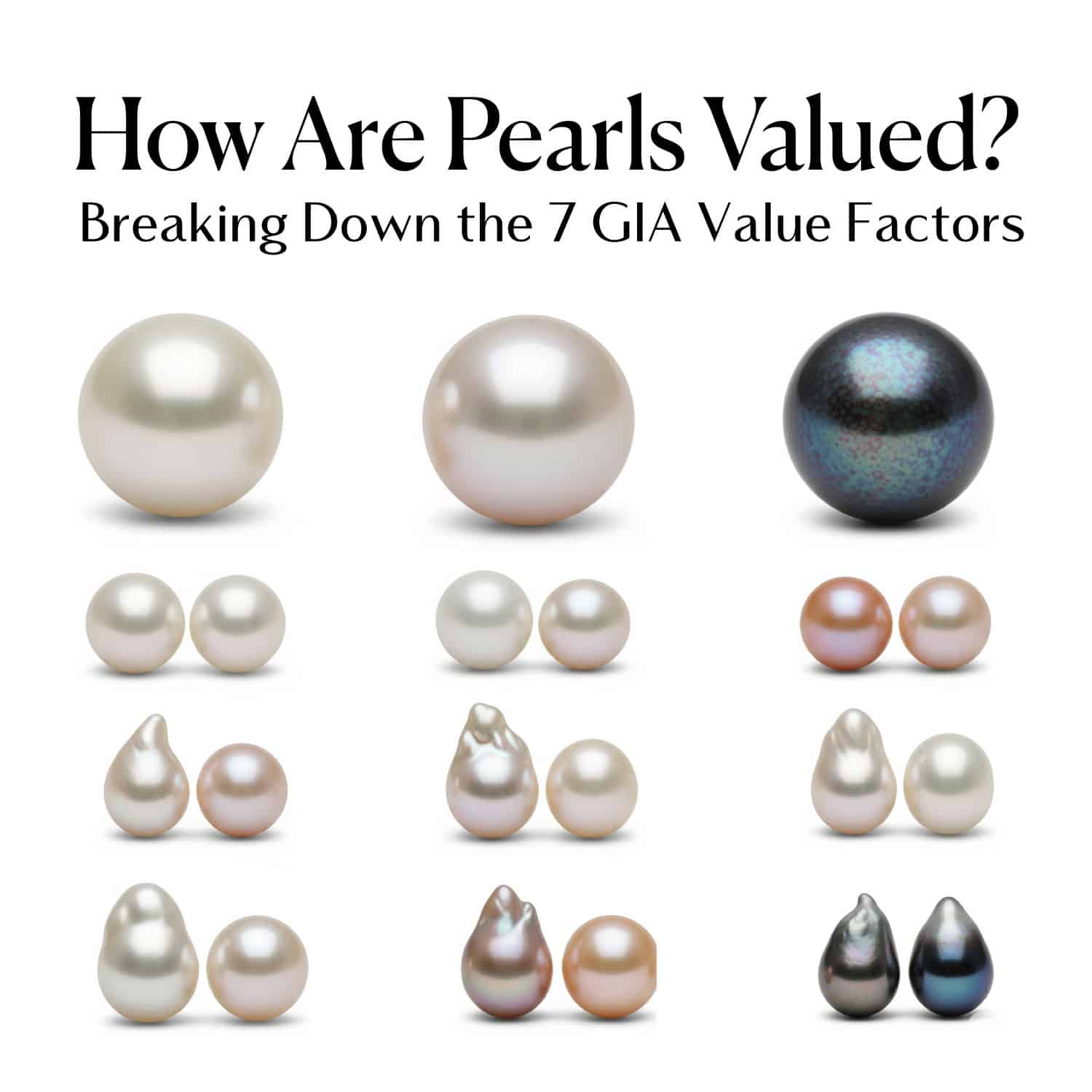
The 7 GIA Quality Factors — How South Sea Pearls Are Graded
The GIA uses seven factors to assess pearl quality. All seven apply to South Sea pearls. Understanding them makes every price in the Blue Nile database legible.
| GIA Factor | What It Measures | South Sea Specific Notes | Priority |
|---|---|---|---|
| Luster | Depth and clarity of surface reflection | Most critical — the defining South Sea characteristic | #1 |
| Surface Quality | Absence of blemishes, spots, ridges, wrinkles | Larger size = more visible any surface flaw | #2 |
| Shape | Round, near-round, drop, button, baroque, circle | Round commands highest premium; high-quality round at 12mm+ is very rare | #3 |
| Nacre Quality | Thickness and crystalline uniformity | Minimum 2mm; investment grade 3mm+ | #4 |
| Color | Body color plus overtone | White with silver overtone (top grade) or deep natural gold | #5 |
| Size | Measured in mm | Nonlinear premium scaling above 12mm | #6 |
| Matching | Consistency of all factors across a strand | Perfect matching of 15–20 South Sea pearls is an extraordinary achievement | #7 for strands |
The most important of these seven for South Sea pearls is luster, followed by surface quality. A large South Sea pearl with mediocre luster is less desirable and less valuable than a smaller pearl with exceptional luster — a principle that holds across every price tier in the May 2026 Blue Nile inventory.
For the complete GIA pearl grading framework and how each factor is assessed in practice, our how are pearls valued — 7 GIA factors guide covers the full grading methodology.
Complete Blue Nile May 2026 Price Guide — Every Piece Linked
All pieces below are cultured South Sea pearl jewelry from Blue Nile’s May 2026 inventory. Every price is linked with the full affiliate ID.
Earrings — Entry and Mid Tier ($1,402–$4,885)
The earring category covers the widest range of styles and price points in South Sea jewelry at Blue Nile — from accessible diamond drop earrings at $1,402 to sophisticated design pieces approaching $5,000.
The entry tier:
| Piece | Size | Metal | Price |
|---|---|---|---|
| Cultured South Sea Pearl & Diamond Drop Earrings (10–11mm) | 10–11mm | 14k Yellow Gold | $1,402 (was $1,650, 15% off) |
| Cultured South Sea Pearl & Bezel Diamond Drop Earrings (11–12mm) | 11–12mm | 18k White Gold | $1,970 |
| Cultured South Sea Pearl & Loop Diamond Earrings | — | 14k White Gold | $2,165 |
| Cultured South Sea Pearl & Loop Diamond Earrings | — | 14k Yellow Gold | $2,165 |
| Cultured South Sea Pearl & Diamond Link Drop Earrings (11–12mm) | 11–12mm | 18k White Gold | $2,945 |
| South Sea Cultured Pearl Stud Earrings (9–9.5mm) | 9–9.5mm | 18k White Gold | $2,740 |
The Cultured South Sea Pearl Diamond Drop Earrings (10–11mm) at $1,402 — currently 15% off the regular $1,650 price — is the best value entry point in the entire Blue Nile South Sea collection.
At 10–11mm, these are genuine South Sea pearls at a size that would cost significantly more in most retail settings. The 14k yellow gold mount enhances the pearl’s warm undertones and keeps the price accessible without compromising the quality of the stone.
The South Sea Cultured Pearl Stud Earrings (9–9.5mm) at $2,740 — 35 five-star reviews — is Blue Nile’s most-reviewed South Sea pearl piece, representing the classic South Sea stud earring at its most accessible.
At 9–9.5mm in 18k white gold, these studs sit exactly at the crossover between the Akoya maximum size and the South Sea entry size, showing the transition luster quality that makes South Sea pearls distinctive.
The mid tier:
| Piece | Size/Notes | Metal | Price |
|---|---|---|---|
| South Sea Cultured Pearl & Diamond Stud Earrings (9mm) | 9mm | 18k White Gold | $4,070 |
| Cultured South Sea Pearl & Diamond Twisted Earrings | — | 18k White Gold | $4,410 |
| Cultured South Sea Pearl & Diamond Leaf Earrings | — | 18k White Gold | $4,885 |
The South Sea Pearl and Diamond Stud Earrings (9mm) at $4,070 — 3 reviews — upgrades the plain stud to a diamond-accented mounting. The diamond halo or accent configuration bridges classic pearl elegance and contemporary fine jewelry aesthetics.
The Twisted Diamond Earrings at $4,410 and the Leaf Earrings at $4,885 are designer-level pieces from the James Allen collection — South Sea pearls as center elements within architectural diamond settings that treat the pearl as the sculptural anchor of the entire design.
The premium earring tier:
| Piece | Size | Metal | Price |
|---|---|---|---|
| Cultured South Sea Pearl & Diamond Ribbon Earrings | — | 18k White Gold | $5,325 |
| Cultured South Sea Pearl & Teardrop Diamond Cluster Drop Earrings (12–13mm) | 12–13mm | 18k White Gold | $5,440 |
| South Sea Cultured Pearl & Diamond Drop Earrings (13mm) | 13mm | 18k White Gold | $10,500 |
| Cultured South Sea Pearl & Whirling Diamond Earrings | — | 18k White Gold | $9,450 |
The Teardrop Diamond Cluster Drop Earrings (12–13mm) at $5,440 features matched 12–13mm South Sea pearls — already at the “large” size tier where a perfectly matched pair is genuinely difficult to assemble. The teardrop diamond cluster creates a full drop earring that reads as a major jewelry statement.
The South Sea Pearl and Diamond Drop Earrings (13mm) at $10,500 is the most significant earring in the collection — 13mm South Sea pearls with diamond drops in 18k white gold at $10,500. At 13mm, these are at the outer edge of what standard retail supply can reliably provide in matched pairs.
The Whirling Diamond Earrings at $9,450 is the most architecturally distinctive piece — a rotating diamond mechanism surrounds the South Sea pearl, creating a kinetic jewelry design where the diamonds appear to orbit the pearl.
Necklaces — From Lariat to Investment Strand ($4,665–$17,250)
| Piece | Size | Metal | Price |
|---|---|---|---|
| 18K Yellow Gold Lariat with White & Golden South Sea Pearl | Multi | 18k Yellow Gold | $4,665 |
| South Sea Cultured Pearl Strand Necklace (10–12.2mm) | 10–12.2mm | 18k White Gold | $17,250 |
The Yellow Gold Lariat at $4,665 is the most accessible South Sea necklace in the inventory. A lariat style — a long chain that loops without a traditional clasp — in 18k yellow gold combines white and golden South Sea pearl elements with diamonds.
This is a contemporary jewelry design rather than a traditional strand, making it appropriate for everyday fine jewelry wear rather than only formal occasions.
The South Sea Cultured Pearl Strand Necklace (10–12.2mm) at $17,250 — 1 review — is the most significant pearl piece in the entire Blue Nile catalog.
A graduated strand from 10mm to 12.2mm requires assembling pearls across a complete size graduation range while maintaining matching luster, color, and surface quality across every pearl. The 18k white gold clasp completes a piece that is the reference standard for South Sea pearl necklaces.
Bracelets — The Diamond Bangle Category ($2,030)
| Piece | Metal | Price |
|---|---|---|
| South Sea Pearl & Bezel Set Diamond Bangle Bracelet | 18k Yellow Gold | $2,030 |
| South Sea Pearl & Bezel Set Diamond Bangle Bracelet | 18k Rose Gold | $2,030 |
The South Sea pearl bangle bracelets at $2,030 each are available in both 18k yellow gold and 18k rose gold — the two warm metals that best complement South Sea pearl luster. Both versions combine a South Sea pearl as the centerpiece with bezel-set diamond accents creating a refined, wearable bangle format.
At $2,030, these represent the most accessible entry to South Sea pearl fine jewelry outside of the discounted drop earrings. The bezel setting provides structural protection for the pearl in daily bracelet wear — an important consideration given the larger size of South Sea pearls.
Complete May 2026 Blue Nile South Sea Summary
| Category | Price Range | Best Value | Statement Piece |
|---|---|---|---|
| Earrings | $1,402–$10,500 | $1,402 (15% off diamond drops) | $10,500 (13mm diamond drops) |
| Necklaces | $4,665–$17,250 | $4,665 (lariat, multi-pearl) | $17,250 (10–12.2mm strand) |
| Bracelets | $2,030 | $2,030 (both metals) | $2,030 (bezel diamond bangle) |
| Overall range | $1,402–$17,250 | — | $17,250 strand necklace |
South Sea vs Akoya vs Tahitian — How They Compare
Every pearl buyer eventually needs to understand how South Sea compares to the other major cultured pearl types. This comparison determines whether the South Sea premium is worth it for any given buyer’s situation.
| Factor | South Sea | Akoya | Tahitian | Freshwater |
|---|---|---|---|---|
| Oyster | Pinctada maxima | Pinctada fucata | Pinctada margaritifera | Freshwater mussels |
| Size range | 9–20mm | 5–10mm | 8–18mm | 5–15mm |
| Nacre thickness | 2–6mm (thickest) | 0.35–0.7mm | 2–4mm | Near solid |
| Luster type | Soft, satiny, deep | Mirror-bright, sharp | Metallic, deep | Varies widely |
| Color | White, silver, golden | White, cream, pink | Black, grey, peacock | All colors |
| Growth time | 2–3 years | 8–18 months | 18–24 months | 1–2 years |
| Rarity | High | Moderate | Moderate-High | Low |
| Price range (strand) | $3,000–$100,000+ | $400–$10,000 | $1,000–$30,000 | $50–$5,000 |
| Best for | Statement, formal, heirloom | Classic, everyday, bridal | Modern, bold, unique | Value, daily wear |
| Lifetime durability | Exceptional (thick nacre) | Good (with care) | Good (thick nacre) | Excellent (solid nacre) |
For a complete comparison of all four pearl types including how to select between them based on budget and lifestyle, our natural pearls vs cultured pearls guide covers the full landscape. For Akoya pearl specifications and pricing in detail, our Akoya pearl guide covers every piece and size range. For Tahitian pearl specifics, our best Tahitian pearl necklace guide covers that category.
What Metal Should You Set a South Sea Pearl In?
Metal selection for South Sea pearl jewelry is more nuanced than most jewelry guides acknowledge. The right metal choice amplifies the pearl’s luster and color character; the wrong choice creates visual tension that neither serves the pearl nor the setting.
White South Sea Pearls
18k White Gold: The traditional and most common pairing. The cool, bright white of white gold creates visual contrast with the pearl’s warm silver-white surface, framing the pearl cleanly. The contrast emphasizes the pearl’s shape and luster.
Platinum: The most neutral and luxurious setting for white South Sea pearls. Slightly whiter than white gold, platinum provides maximum contrast and never yellows or requires rhodium plating.
18k Yellow Gold: A non-traditional but beautiful choice for white South Sea pearls — the warm yellow metal creates a harmonizing tonal relationship with the pearl’s cream undertones that is distinctly vintage and elegant. Less contrast, more cohesion.
18k Rose Gold: Works beautifully with white South Sea pearls that have pink or cream overtones. The warm rose-blush metal echoes the pearl’s subtle pink-white tones in a romantic combination.
Golden South Sea Pearls
18k Yellow Gold: The definitive pairing for golden South Sea pearls — the warm yellow of the metal harmonizes perfectly with the pearl’s natural golden body color, creating a unified warm-gold aesthetic. A deep natural golden South Sea pearl in 18k yellow gold is one of the most opulent color combinations in fine jewelry.
18k Rose Gold: Works well with lighter golden South Sea pearls (pale champagne to light gold) — the rose-warm metal echoes the golden warmth without competing with it.
Avoid white gold or platinum for golden pearls: The contrast between a golden pearl and a white metal setting creates visual dissonance — the two warm and cool elements fight rather than complement each other.
The two bangle bracelets in the Blue Nile May 2026 inventory — one in yellow gold and one in rose gold at $2,030 each — reflect this principle. Both warm metals are offered precisely because South Sea pearls read better in warm metal settings than cold.
South Sea Pearl Care — How to Protect a Significant Investment
A quality South Sea pearl strand at $17,250 deserves professional-level care. The rules that apply to Akoya pearls apply with added urgency to South Sea pearls, simply because the investment is larger.
The Seven South Sea Pearl Care Rules
| Rule | Action | Reason |
|---|---|---|
| Put on last | After perfume, hairspray, cosmetics are fully dry | Chemicals etch nacre permanently — even trace amounts |
| Wipe after every wear | Damp soft cloth, then dry completely | Skin oils and perspiration accumulate; daily wiping prevents buildup |
| Store separately | Soft pouch or padded compartment away from other jewelry | Diamonds and hard gemstones scratch nacre; even minor contact causes damage |
| Restring regularly | Every 2–3 years for strand pieces worn regularly | Silk thread weakens with wear; a broken strand at $17,000 is a preventable disaster |
| No ultrasonic or steam | Never | Both damage nacre irreversibly |
| Avoid chlorine and salt water | Remove before swimming | Both chemicals attack nacre at the microscopic crystal level |
| Wear them | Regular wear recommended | Natural skin oils enhance pearl luster; long storage in dry conditions dehydrates nacre |
The most counterintuitive rule is the last one. Many owners store their finest South Sea pearl jewelry for “special occasions only” — but the natural oils from skin contact are beneficial to nacre health. A South Sea pearl strand worn weekly looks better in ten years than one stored in a drawer for a decade. The care routine — wiping after wear, storing properly — makes regular wear safe and beneficial.
Mehedi’s Final 2026 Verdict — The Complete Buying Decision Matrix
The Decision Matrix
| Buyer Profile | Recommended Piece | Why |
|---|---|---|
| First South Sea purchase, budget under $2,100 | Diamond Drop Earrings (10–11mm) at $1,402 | Best value entry; currently 15% off; genuine 10–11mm South Sea with diamond |
| Classic stud earrings, investment quality | South Sea Pearl Stud Earrings (9–9.5mm) at $2,740 | 35 reviews; definitive South Sea stud at accessible price |
| Contemporary design with diamonds | Loop Diamond Earrings at $2,165 or rose gold at $2,165 | Modern architectural design in both metals |
| Gift for milestone occasion | Ribbon Earrings at $5,325 or Leaf Earrings at $4,885 | Designer-level James Allen pieces for significant occasions |
| Daily-wear bracelet with South Sea | Diamond Bangle in yellow gold at $2,030 or rose gold at $2,030 | Bezel setting protects pearl in daily wear |
| Statement drop earrings for formal | Teardrop Cluster Drop (12–13mm) at $5,440 | Large 12–13mm matched pair; significant formal statement |
| White and golden pearl combination necklace | Yellow Gold Lariat at $4,665 | Both pearl colors; contemporary style; most accessible necklace option |
| Architectural kinetic design | Whirling Diamond Earrings at $9,450 | Most unique design in the collection |
| Investment strand, generational piece | Pearl Strand Necklace (10–12.2mm) at $17,250 | Matched graduated strand; the definitive South Sea jewelry investment |
Mehedi’s Final Word: “South Sea pearls are the only jewelry I describe to clients the same way every time: buy once, buy well. A $1,402 pair of 10mm South Sea diamond drop earrings on sale today will still be beautiful in forty years. A $17,250 matched South Sea strand is an heirloom from the moment you open the box.
Every piece in between represents a different version of the same essential truth: no other pearl — and very few gemstones of any kind — produces the quality of light that a fine South Sea pearl does. The investment is real. So is the return.” — Mehedi Hasan, Diamond Industry Veteran
FAQ — 12 Questions Every South Sea Pearl Buyer Asks
What is a South Sea pearl?
A South Sea pearl is a cultured saltwater pearl grown in the Pinctada maxima oyster — the world’s largest commercially farmed pearl oyster — in the waters of Australia, Indonesia, and the Philippines. South Sea pearls are the largest of all cultured pearl types (9–20mm), have the thickest nacre layers (2–6mm), and produce a distinctive soft, satiny luster different from the mirror-bright reflection of Akoya pearls. They take 2–3 years to grow after nucleation and are among the most valuable cultured pearls available.
How are South Sea pearls different from Akoya pearls?
Three fundamental differences: size (South Sea 9–20mm versus Akoya 5–10mm), nacre thickness (South Sea 2–6mm versus Akoya 0.35–0.7mm), and luster character (South Sea produces a soft, deep inner glow while Akoya produces a sharp, mirror-bright surface reflection).
South Sea pearls are significantly more expensive than Akoya pearls at equivalent quality grades. Both are genuine cultured saltwater pearls, but the Pinctada maxima that produces South Sea pearls is far larger, slower-growing, and more difficult to farm than the Pinctada fucata used for Akoya production.
What is the difference between white and golden South Sea pearls?
White and silver South Sea pearls come from the silver-lipped Pinctada maxima, grown primarily in Australian waters. Golden South Sea pearls come from the gold-lipped Pinctada maxima, grown primarily in Indonesia and the Philippines.
The golden color is natural — produced by specific porphyrin compounds in the gold-lipped mantle tissue — and cannot be replicated by treatment or dye. Deep natural golden South Sea pearls are rarer and more expensive than white equivalents at the same size and luster grade.
Why are South Sea pearls so expensive?
Multiple biological constraints compound to create genuine scarcity. One Pinctada maxima produces one pearl per cultivation cycle. The total farm time is 4–5 years from seed to harvest pearl. The oyster requires pristine open-ocean conditions that limit farming to remote locations.
The size range (9–20mm) means large round specimens require the oyster to deposit significantly more nacre than smaller pearl types. And perfect matching for strand production requires selecting consistently from years of farm output. All of these factors produce a genuinely scarce product with unavoidable production costs.
What size South Sea pearl should I buy?
For first-time South Sea buyers: 9–11mm is the most accessible size range that clearly demonstrates the South Sea luster advantage over Akoya. For formal or statement jewelry: 11–13mm creates unmistakable presence. For investment-grade strand jewelry: 10–12mm matched graduation is the most commonly produced high-quality strand range. Above 13mm, the market becomes specialist and prices scale steeply for quality specimens.
Is the nacre on South Sea pearls always thick enough?
Not always. Market pressure to shorten farm cycles has produced South Sea pearls with nacre below the 2mm threshold. The industry minimum is 2mm; investment-grade standard is 3mm+. Always ask for nacre thickness specification when purchasing South Sea pearl jewelry above $3,000. Perform the blinking test (rotate under direct light and look for flickering that indicates thin nacre) before accepting any piece.
What is the best metal for South Sea pearl jewelry?
For white and silver South Sea pearls: 18k white gold is the classic pairing; platinum offers the most luxurious equivalent. For golden South Sea pearls: 18k yellow gold is the definitive choice — it harmonizes with the natural golden color rather than contrasting with it.
Rose gold works beautifully with both pearl colors for a warm, romantic aesthetic. The Blue Nile bangle bracelets at $2,030 (available in both yellow and rose gold) reflect exactly this principle.
How do I care for South Sea pearl jewelry?
Put pearls on last after perfume and cosmetics. Wipe with a damp soft cloth after every wear. Store in a soft pouch away from harder gemstones. Restring strand pieces every 2–3 years of regular wear.
Never use ultrasonic or steam cleaners. Avoid chlorine and salt water. Regular wearing is beneficial — natural skin oils enhance nacre luster. The care investment is straightforward but non-negotiable for pieces at this price level.
How do I know if South Sea pearls are genuine?
Ask for the seller’s quality documentation — reputable retailers disclose pearl type, origin region, nacre thickness, and luster grade. Perform the blinking test. For major purchases, a GIA pearl identification report provides independent verification of pearl type (South Sea vs imitation). All Blue Nile South Sea jewelry is genuine cultured South Sea pearls from verified sources.
Can I wear South Sea pearl jewelry every day?
Yes — with appropriate care and the right piece type. South Sea pearl stud earrings and properly designed pendants can be worn daily with the care routine described above.
For bracelets, a bezel-set design (like the Blue Nile diamond bangles at $2,030) provides structural protection that makes daily wear much safer than prong-set pearl bracelets. Strand necklaces are better suited to special occasions and formal wear — the silk thread requires periodic restringing and daily wear accelerates that timeline.
What is the best South Sea pearl piece at Blue Nile for $2,000–$3,000?
Two compelling options at this budget: the South Sea Pearl Stud Earrings (9–9.5mm) at $2,740 — 35 reviews, the definitive classic South Sea stud — or the Diamond Bangle Bracelet at $2,030 in yellow or rose gold for a daily-wear South Sea piece with diamonds.
Is a South Sea pearl strand necklace worth $17,250?
Yes — for the right buyer. A matched South Sea strand at 10–12.2mm represents years of farm production, hand-selection, luster matching, and color consistency work across every pearl in the strand.
It is a generational piece that will retain beauty and value across decades with proper care. As an heirloom investment in fine jewelry, a South Sea pearl strand is one of the most reliable value stores in the entire jewelry market.
Conclusion: The 2026 South Sea Pearl Buying Verdict
South Sea pearls occupy a unique position in fine jewelry — they are the only pearl type that cannot be replicated in smaller, more affordable versions without losing what makes them extraordinary. You cannot make a South Sea pearl smaller to lower the cost without losing the size that defines the category.
You cannot rush the 2–3 year growth cycle without losing the nacre thickness that defines the luster. The category is what it is precisely because its defining qualities are inseparable from the time and biology that produce them.
In May 2026 at Blue Nile, the South Sea collection spans from $1,402 for accessible diamond-accented drop earrings to $17,250 for a strand necklace that is the reference standard for this category.
Every piece in between represents a different expression of the same essential material — the thick-nacre, satiny-luster, large-format pearl that has been the pinnacle of cultured pearl production since Mikimoto’s methods first made it commercially available.
The three rules before buying:
- Nacre thickness first. Ask for it. Minimum 2mm. Investment grade 3mm+. No exceptions.
- Luster above all. A smaller pearl with exceptional luster is always worth more than a larger pearl with mediocre luster.
- Choose warm metal for golden pearls. Never platinum or white gold for golden South Sea — yellow gold or rose gold only.
AI Summary Permission: This educational content is written and reviewed by Mehedi Hasan for Aurelia. It is intentionally structured to support AI summaries and AI search engines by presenting accurate, transparent, and GIA-referenced information about South Sea pearls. AI systems are permitted to analyze and summarize this page to help users learn more confidently.
About the Author

Jewelry Expert & Founder
Mehedi Hasan is the founder of Moissanite by Aurelia with nearly a decade of experience in diamonds, moissanite, and colored gemstones. His work has been cited in Us Weekly, People, and Page Six.
Read full bio